
Chia Seeds – How Much Fibre They Really Have and How to Eat Them Without Harm
2026-08-14
A hundred grams of chia seeds contain 34 g of fibre, and in this respect nothing else in the superfoods section comes close. Except nobody eats a hundred grams. A realistic serving is 12.5 g, i.e. a flat tablespoon — and that gives about 4.3 g of fibre. With a daily norm of 25 g for an adult, one tablespoon of chia covers roughly a sixth of the day.
With vitamins, things look different than the headlines promise. Chia is not a vitamin bomb, and there’s no point pretending it is: the label states 0.62 mg of vitamin B1 per 100 g, which is 56% of the reference value, and that’s practically the whole list. The strength of these little seeds lies elsewhere — in minerals (860 mg of phosphorus and 335 mg of magnesium per 100 g) and in the mucilage that, after a quarter of an hour in water, turns a spoonful of seeds into gel. Below I break everything down into numbers: how much fibre is in a serving, how much water chia needs, how much to eat daily, and when it can be harmful. Because it can be, if you eat it dry.
How much fibre do chia seeds have?
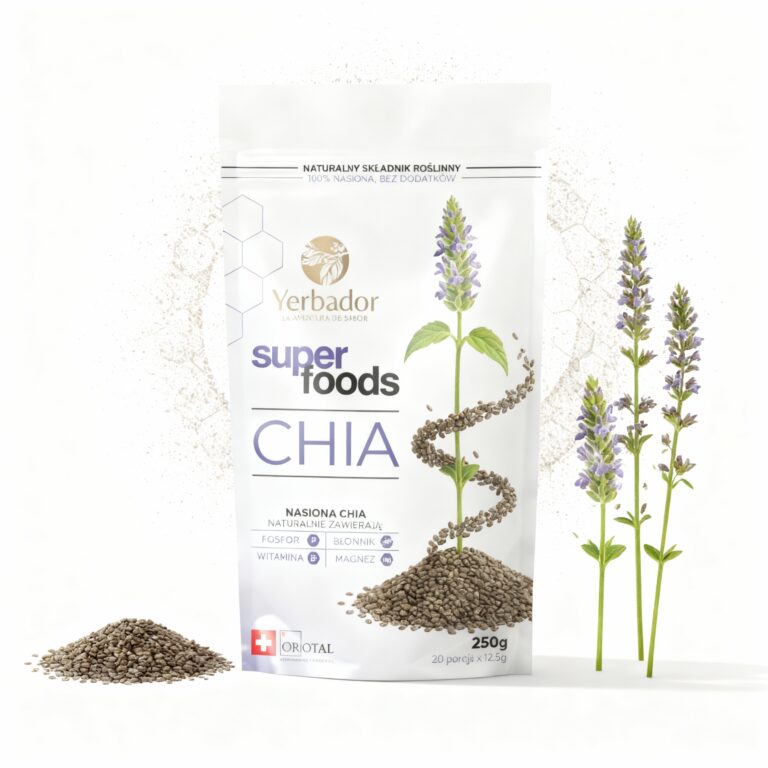
34 g per 100 g of product — that’s what the label of Yerbador chia seeds states, and that’s roughly what nutritional value tables show for Salvia hispanica. That’s over a third of the seed’s mass. For comparison: oat flakes have about 10 g of fibre per 100 g, wholemeal bread just under 7 g, and an apple with skin about 2.4 g per piece.
The problem is that comparing “per hundred grams” always makes chia look favourable, and in doing so it slightly misleads. You eat porridge in 50 g portions, bread in slices, and chia in spoonfuls. The numbers that actually matter look like this:
- 1 flat tablespoon (12.5 g) — about 4.3 g of fibre
- 2 tablespoons (25 g) — about 8.5 g of fibre
- Daily norm for an adult — at least 25 g
One tablespoon is a sixth of the norm, two tablespoons is a third. Not bad for an addition you stir into yoghurt in five seconds, but it’s still an addition, not the foundation of a diet. Vegetables, legumes and whole grains do the heavier lifting here.
What kind of fibre is it — soluble or insoluble?
Mainly insoluble, the kind responsible for bowel function and bulking up food content. But the outer layer of the seed is mucilage, i.e. the soluble fraction, and it’s responsible for the whole effect people reach for chia for: gel formation, slower stomach emptying, a longer feeling of fullness. That’s exactly why chia pudding for breakfast keeps you full until noon, while the same spoonful of seeds eaten dry does absolutely nothing besides crunching between your teeth.
What vitamins do chia seeds have?
Honestly: one, in a sensible amount. Vitamin B1 (thiamine) — 0.62 mg per 100 g, which corresponds to 56% of the reference intake value. Thiamine is involved in energy metabolism and the nervous system, so it’s not there just for show — but you need to convert it straight to a serving: in a tablespoon of seeds that leaves 0.08 mg, or about 7% of the daily value. The other vitamins occur in chia in trace amounts only, and the manufacturer rightly doesn’t list them.
The minerals, on the other hand, look solid, and it’s these, alongside the fibre, that are the real reason to keep chia in your kitchen.
| Ingredient | W 100 g | Per 12.5 g serving |
|---|---|---|
| Energy value | 436 kcal | approx. 55 kcal |
| Fibre | 34 g | approx. 4.3 g |
| Protein | 17 g | approx. 2.1 g |
| Fat (of which saturates) | 31 g (3,3 g) | approx. 3.9 g |
| Carbohydrates (of which sugars) | 42 g (0,5 g) | approx. 5.3 g (0.06 g) |
| Phosphorus | 860 mg | approx. 107 mg (15% NRV) |
| Magnesium | 335 mg | approx. 42 mg (11% NRV) |
| Vitamin B1 | 0.62 mg | approx. 0.08 mg (7% NRV) |
Take note of the sugars: 0.5 g per 100 g. Chia is one of the few “sweet” breakfast options that on its own contributes no sugar at all — the sweetness only comes from the fruit or honey you add. The fat, meanwhile, is mostly unsaturated, with a high share of alpha-linolenic acid, and this is responsible for two practical things: calories (55 per serving) and the fact that the seeds need to be kept cool, since in warmth they simply go rancid.
Why soak chia seeds and how much water do they need?
Chia seeds bind roughly ten to twelve times more water than their own weight. The manufacturer gives the simplest ratio, which always works: 12.5 g of seeds per 200 ml of liquid, leave for 15–20 minutes. Water, milk, plant-based drink, yoghurt, juice — it doesn’t matter. After a quarter of an hour you get a jelly-like, slightly crunchy mass with the flavour of whatever you added, since the seeds themselves taste neutral.
And here we come to the part that needs to be said plainly. Dry chia seeds should not be put in your mouth and washed down with water. Medical literature describes the case of a man who did exactly that — the seeds swelled up in his oesophagus, formed a plug, and it ended with an endoscopy. This is a rare situation, but entirely avoidable: if the seeds are going to swell, let them swell in a glass, not inside you.
The second conclusion from this same property: drink more when eating chia. The fibre that binds water needs it from an outside source, otherwise the effect can be the opposite of what’s intended, causing constipation instead of lightness. A glass of water per serving is the minimum, and if you fancy something with more character, a cup of yerba mate works just as well — it hydrates just the same, while also waking you up.
How many chia seeds can you eat per day?
Up to 15 g a day — that’s the limit stated on the label and the value used in European recommendations for this ingredient. In practice, that’s one heaped tablespoon or a 12.5 g portion with a bit to spare.
If your diet is rather low in fibre (white bread, few vegetables, lots of coffee), start with half a portion for the first week. A sudden jump of 4 g of fibre a day for someone who used to eat 12 g can cause bloating and a feeling of heaviness — not because chia is harmful, but because the gut prefers changes introduced gradually. After a week, move on to a full tablespoon and stick with it. Three tablespoons a day won’t give you three times the effect, but they will give you 165 kcal and discomfort.
When can chia seeds be harmful?
Most often when someone treats them like medicine and overdoes the amount. Four situations worth being careful about:
- Too much at once, too little fluid. A classic. Bloating, gas, a feeling of a stone in the stomach, sometimes constipation instead of the promised lightness.
- Flare-ups of digestive tract conditions. With inflammatory bowel disease, strictures, or after surgery, insoluble fibre is often restricted — whole seeds can be poorly tolerated then. Consult your doctor.
- Long-term medication. Fibre can affect the absorption of medicines taken at the same time, so keep a gap between them and check the details with your doctor, especially with anticoagulants and blood pressure medication.
- Seed allergy. Rare, but documented. If you notice itching, lip swelling or hives after chia, stop and check with an allergist.
Also remember the calorie content. Chia is 31% fat, so “healthy” doesn’t mean “unlimited” — a 55 kcal portion is harmless, but half a cup poured into a smoothie bowl is not.
How to eat chia seeds so they actually become part of your routine
The best solution is one you do without thinking. For me, four options work:
Overnight chia pudding. A tablespoon of seeds, 200 ml of milk or a plant-based drink, a jar in the fridge. In the morning, add fruit and you’ve got a ready breakfast with one of the best satiety-to-effort ratios I know.
Into porridge, after taking it off the heat. Added at the end of cooking, they’ll have time to swell in the warmth and thicken the whole thing. Added straight into cold milk, they need that quarter of an hour.
Into a smoothie, but before the blender. Seeds soaked beforehand blend smoothly. Thrown in dry, they get stuck in your teeth.
Chia egg for baking. A tablespoon of seeds plus three tablespoons of water, ten minutes, and you’ve got a plant-based substitute for one egg in cakes or pancakes. It works in baked goods where the egg needs to bind, not aerate.
Chia also works in savoury dishes — a tablespoon in a salad or in a cream soup, which it thickens without flour. The taste is neutral, so you can’t go wrong.
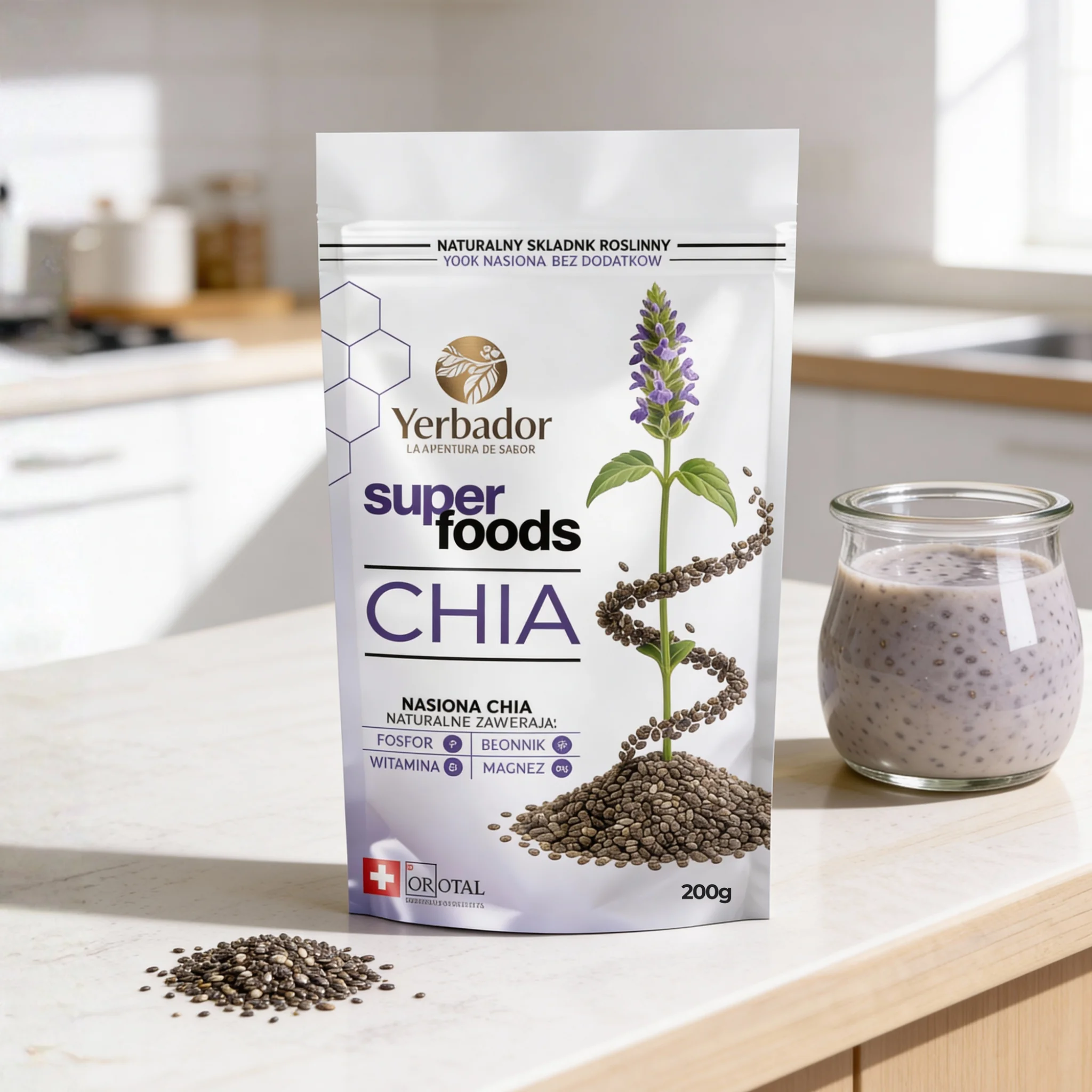
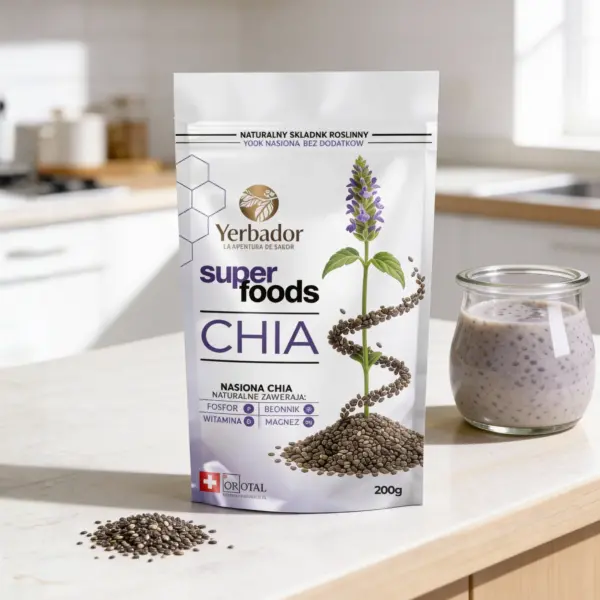
Chia Seeds 200 g — how long does one pack last?
For 16 portions of 12.5 g. With a daily tablespoon, that’s a bit over two weeks, and at a realistic pace of three to four times a week — over a month. A good size to start with: enough to check whether chia pudding will stick in your routine, without sitting in the cupboard for half a year.
Inside there’s just one ingredient: 100% chia seeds (Salvia hispanica), with no additives and no sugar. The quality of production, transport and distribution is certified by the Swiss company OROTAL Commodities Trading SA, with KIWA certification — the same standards apply across the entire Yerbador superfoods line. Store in a dry, cool place, in a closed pack; with 31 g of fat per 100 g, a warm windowsill is the worst possible spot.
You can buy them directly on the Chia Seeds – 200 g product page in the Yerbador store, along with the rest of the superfoods line. Check the current price and availability on the spot.
Chia, pumpkin seeds or white mulberry — what to take and why?
These three items most often end up in the same cart and are most often confused, so here’s a quick rundown of the differences.
Chia is for the fibre and the gel: satiety, meal volume, a calmer digestive rhythm. There’s no sensible alternative if it’s exactly that jelly-like texture you’re after.
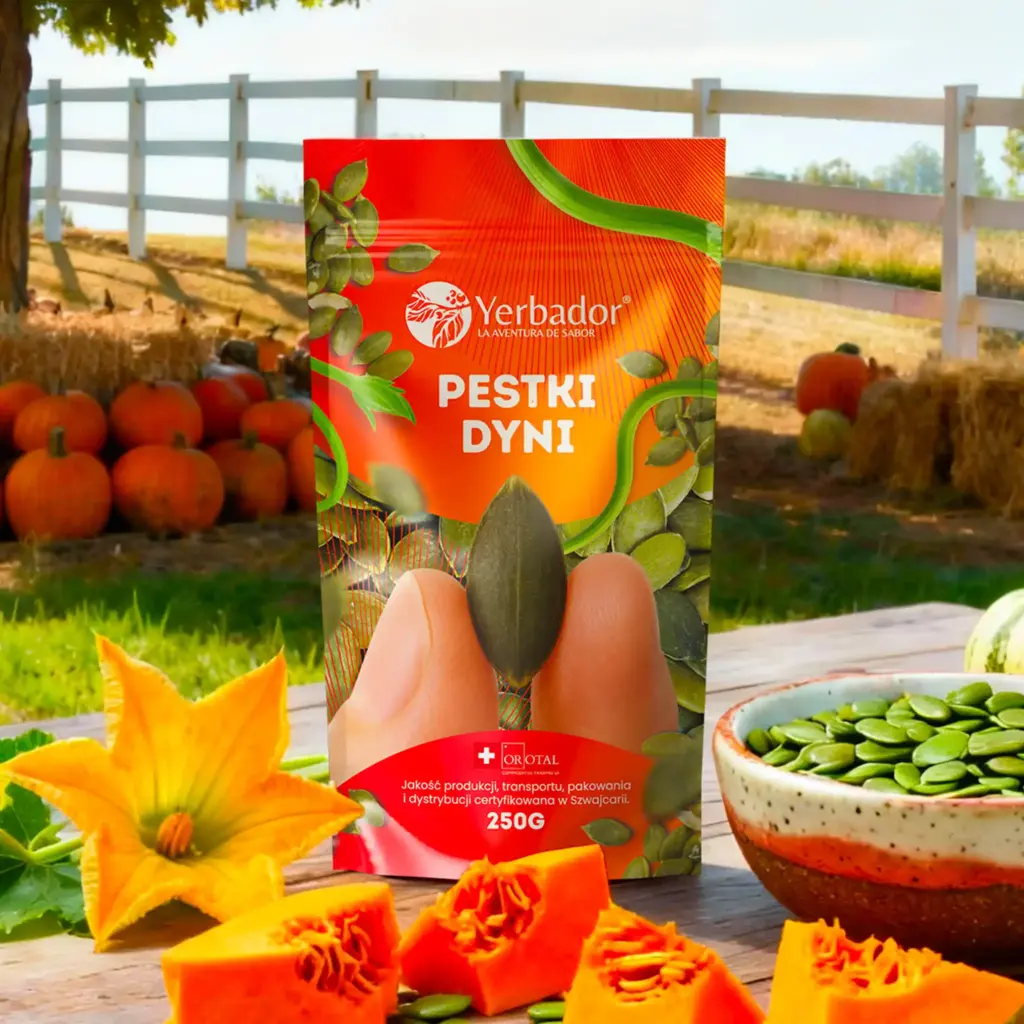
Pumpkin seeds are a completely different story — around 30 g of protein and nearly 600 mg of magnesium per 100 g, plus zinc. They have noticeably less fibre than chia, but they’re great as a snack straight from the bowl. We’ve covered this in detail in the article about sunflower seeds and pumpkin seeds, and you’ll find the shelled pumpkin seeds 250 g in the same line.
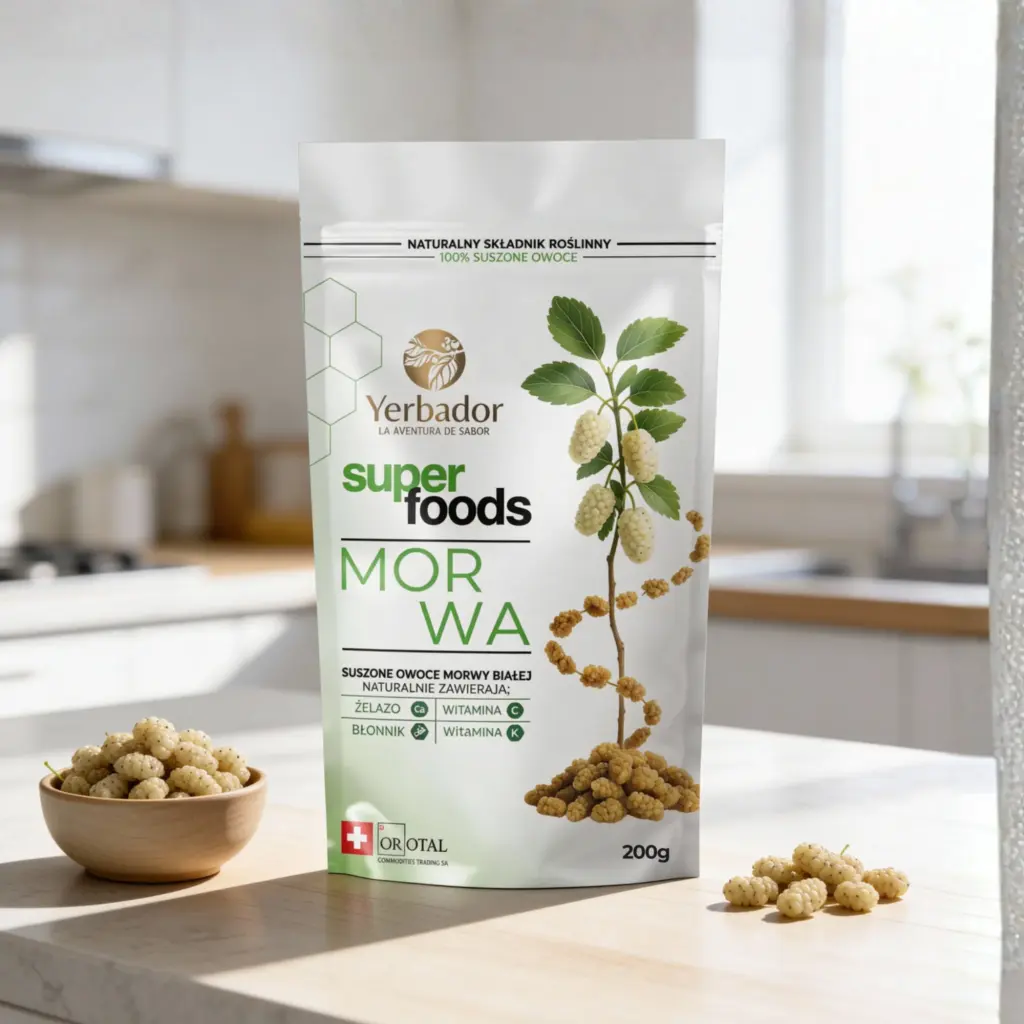
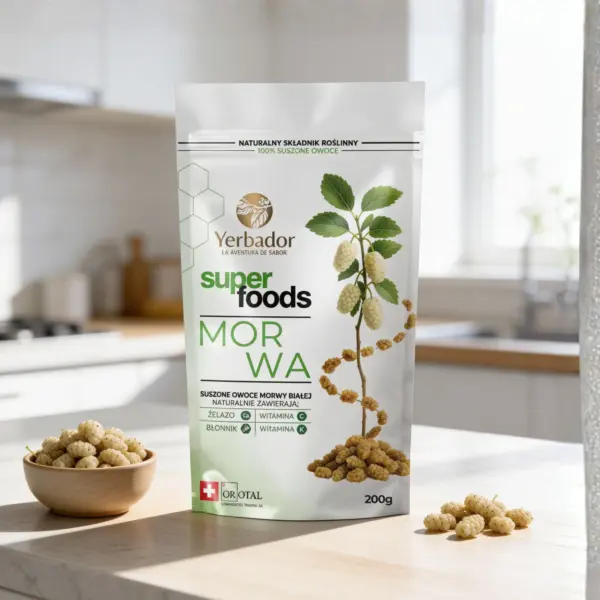
White mulberry, on the other hand, is a dried fruit — sweet, crunchy, with fibre, iron and vitamin C. If you add chia to breakfast for texture, you throw in mulberry for flavour, instead of raisins or sugar. It works great in the same jar with chia pudding.
If you’re building yourself a cupboard of add-ins, it’s also worth checking out the articles about acai berries and baobab powder, which actually has even more fibre than chia, just in a completely different form. And if you’re curious where the antioxidants everyone writes about actually come from in plants — we have a separate piece about what polyphenols are.
Frequently asked questions
How much fibre is in a tablespoon of chia seeds?
About 4.3 g in a 12.5 g serving, i.e. a flat tablespoon. That’s roughly a sixth of the daily fibre requirement for an adult, which is taken to be at least 25 g.
What vitamins do chia seeds have?
In a meaningful amount, one — vitamin B1 (thiamine), 0.62 mg per 100 g, i.e. 56% of the reference value. In a 12.5 g serving that leaves about 7%. The other vitamins are only trace amounts in chia; the seeds’ strong point is minerals: 860 mg of phosphorus and 335 mg of magnesium per 100 g.
Do chia seeds need to be soaked?
Yes, and it’s not a culinary quirk. Pour 200 ml of liquid over 12.5 g of seeds and leave for 15–20 minutes. Don’t swallow dry seeds and wash them down with water — they swell up several times over and can form a blockage in the oesophagus.
How many chia seeds can you eat per day?
Up to 15 g, i.e. roughly one heaped tablespoon. If your diet has so far been low in fibre, start with half that amount and drink more water.
Do chia seeds help with weight loss?
Not on their own. They help maintain satiety between meals, because the gel slows down stomach emptying, which can be a real support during a calorie deficit. But a serving is 55 kcal, so it needs to be counted into the balance, not added on top. If you have chronic conditions or are on pharmacological treatment, consult your doctor before making dietary changes.
Discover our TOP products!
Your dream figure
Discover new flavors

Yerba mate with tea



Accessories


Superfoods

Certified raw honeys from Poland


Check the current price
free shipping
Up to 90 days
free returns
24 H
shipping