
Brazil Nuts and Selenium – How Many a Day Is a Safe Dose?
2026-08-14
One Brazil nut a day is more than enough to cover your daily selenium requirement. Two is the upper limit of reason for most adults, and at three or more per day you’re getting close to the tolerable intake limit for this element. That’s the whole answer. The rest of the text explains these numbers.
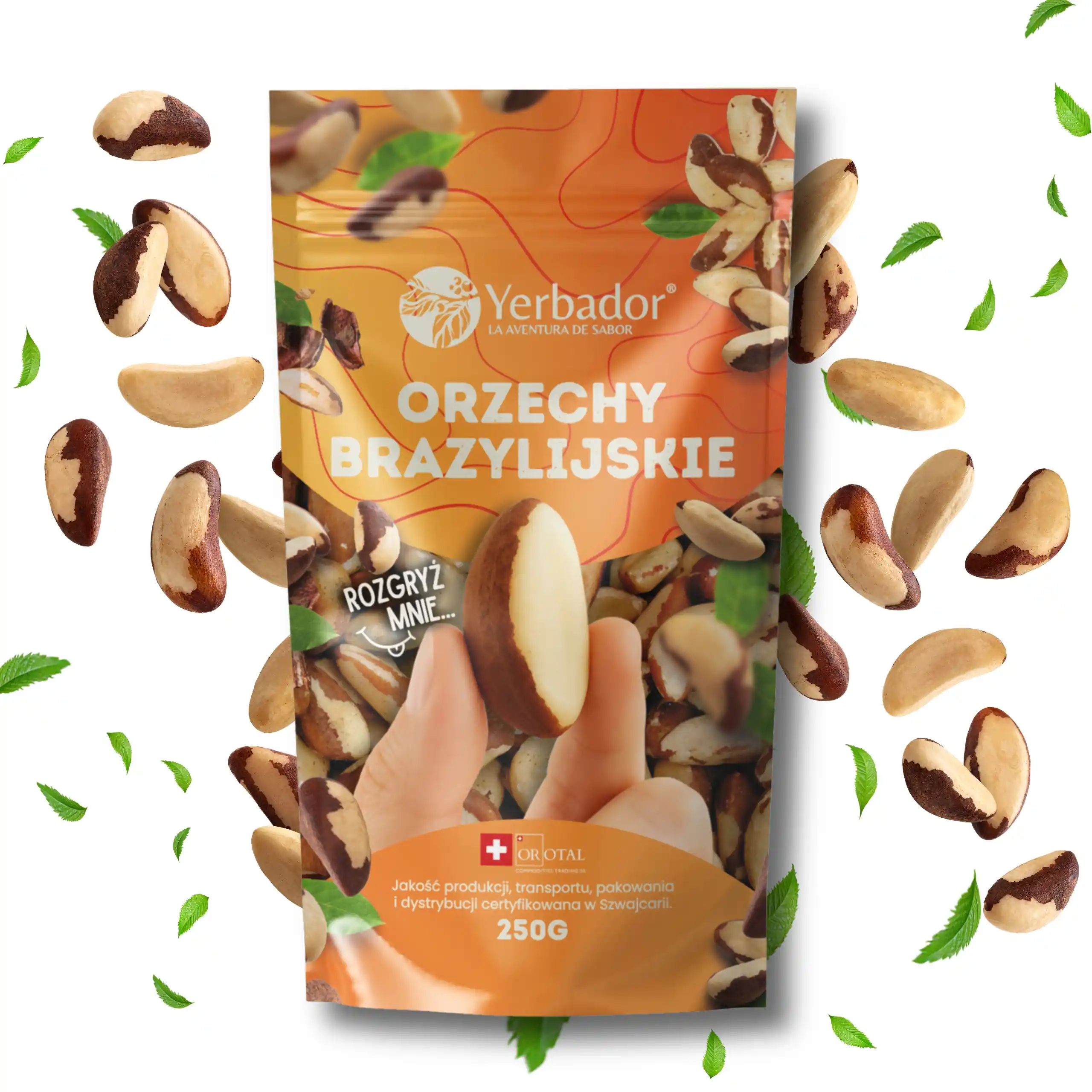
The reason for this dosage is simple: no other food comes close to the Brazil nut in terms of selenium content. The label on our 250 g pack shows 1917 µg of selenium per 100 g. A single nut usually weighs 4–5 g, meaning one nut is roughly 77–96 µg. The reference intake for adults in the European Union is 55 µg per day. Eat just one nut and you’re already above the norm — something most “healthy snacks” guides somehow forget to mention.
How many Brazil nuts a day is a safe dose?
Let’s calculate this directly, based on the selenium content from our label (1917 µg/100 g) and a nut weighing 4–5 g:
- 1 nut – about 77–96 µg of selenium, i.e. 140–175% of the reference intake
- 2 nuts – about 155–190 µg, still comfortably below the limit
- 3 nuts – about 230–290 µg, already at or above the upper limit
- A handful, say 10 pieces – about 770–960 µg, several times the limit in one go
The European Food Safety Authority (EFSA) lowered the tolerable upper intake level of selenium for adults from 300 to 255 µg per day in 2023. This is the level above which chronic, daily intake is no longer considered safe. A single handful at a party won’t harm anyone, but a handful every day for six months is a different story.
Practically: 1–2 nuts a day or 3–4 nuts twice a week. Both approaches work, because selenium is stored in the body and doesn’t need to be replenished by the hour. If you take a selenium supplement, add its dose to the total. That’s the most common way people accidentally overdo it.
How much selenium is in one Brazil nut, and why do the numbers online differ so much?
Check a few sources and you’ll find values ranging from 50 to over 200 µg per nut. No one is lying: selenium gets into the nut from the soil, and Amazonian soils vary dramatically in this respect. Nuts from neighbouring regions, looking identical, can have several times different content.
So only the figure from a specific batch matters. Our declared value is 1917 µg/100 g, and that’s what I base the calculations in this article on. When buying loose nuts without a label, you don’t actually know how much selenium you’re eating — and that’s when the rule “no more than two pieces” becomes a simple safety margin.
Brazil Nuts — composition and nutritional values
Selenium overshadows the rest, which is a shame, because the composition of the Brazil nut is not just one element. Values per 100 g from our label:
| Energy value | 2894 kJ / 689 kcal |
| Fat | 66.4 g (of which saturated 15.1 g) |
| Carbohydrates | 4.8 g (of which sugars 2.3 g) |
| Fibre | 7,5 g |
| Protein | 14,3 g |
| Selenium | 1917 µg |
| Magnesium | 376 mg |
| Phosphorus | 725 mg |
| Potassium | 659 mg |
| Calcium | 160 mg |
| Salt | 0,01 g |
Two nuts is about 68 kcal, the same as half a banana, so at this dose calorie content isn’t an issue. There’s plenty of magnesium: 100 g covers the daily requirement, and with two nuts we’re talking about roughly 10%. Phosphorus and potassium are also abundant, and there’s practically no salt, which sets raw nuts apart from salted mixes.
What about zinc and the glycemic index?
We don’t declare zinc on our label, because the Brazil nut isn’t a strong source of it. If you’re looking for zinc in nuts and seeds, pumpkin and sunflower seeds, which we covered separately, are a better choice.
The glycemic index is a bit of a red herring here. Carbohydrates in 100 g amount to 4.8 g, sugars 2.3 g, so with two nuts we’re talking about a fraction of a gram. The effect on blood glucose is negligible, which is why Brazil nuts fit into carb-controlled diets.
Can you overdose on selenium?
You can, though it takes some effort. Chronic selenium intake well above the tolerable limit leads to a condition known as selenosis. The symptoms are characteristic: a garlic-like smell from the breath and skin, a metallic taste, brittle nails, hair loss, sometimes stomach complaints.
This doesn’t happen after one pack eaten during a TV series, but after weeks of eating handfuls, usually alongside a selenium supplement, because someone figured that if selenium is healthy, more must be better. With minerals, that logic doesn’t work. The window between selenium deficiency and excess is exceptionally narrow.
If you have a thyroid condition, take medication, or supplement selenium on a doctor’s recommendation, work out the dose with your treating physician instead of eyeballing nuts.
Brazil nuts and the thyroid — why this particular element?
The thyroid stores selenium at an exceptionally high concentration, because the enzymes that convert thyroid hormones contain it in their structure. In the European Union, it is permitted to state that selenium contributes to the normal function of the thyroid, and that’s the full extent of what can honestly be written here.
What cannot be written: that Brazil nuts cure Hashimoto’s, balance TSH, or replace treatment. Selenium is a building block, not a therapy, and with thyroid conditions the dose is set individually, partly because too much can be just as troublesome as too little. If you have a diagnosed thyroid condition, consult your doctor about how much selenium makes sense in your case.
Besides the thyroid, selenium has EU-approved claims regarding the immune system, protecting cells from oxidative stress, and maintaining normal hair and nails. We covered the antioxidant protection topic in more depth in our article about polyphenols and how they work in the body.
When to eat them and what to pair them with?
Time of day doesn’t matter here, but form does. The Brazil nut is large and fatty, so eaten alone it can be filling to a fault. It works better chopped.
- Oatmeal and millet porridge – two chopped nuts on top, together with chia seeds, which will swell and bind everything together
- Granola – added after baking, so the fat doesn’t pick up a bitter aftertaste
- Salads with roasted vegetables – the creamy nut offsets the sweetness of pumpkin or beetroot
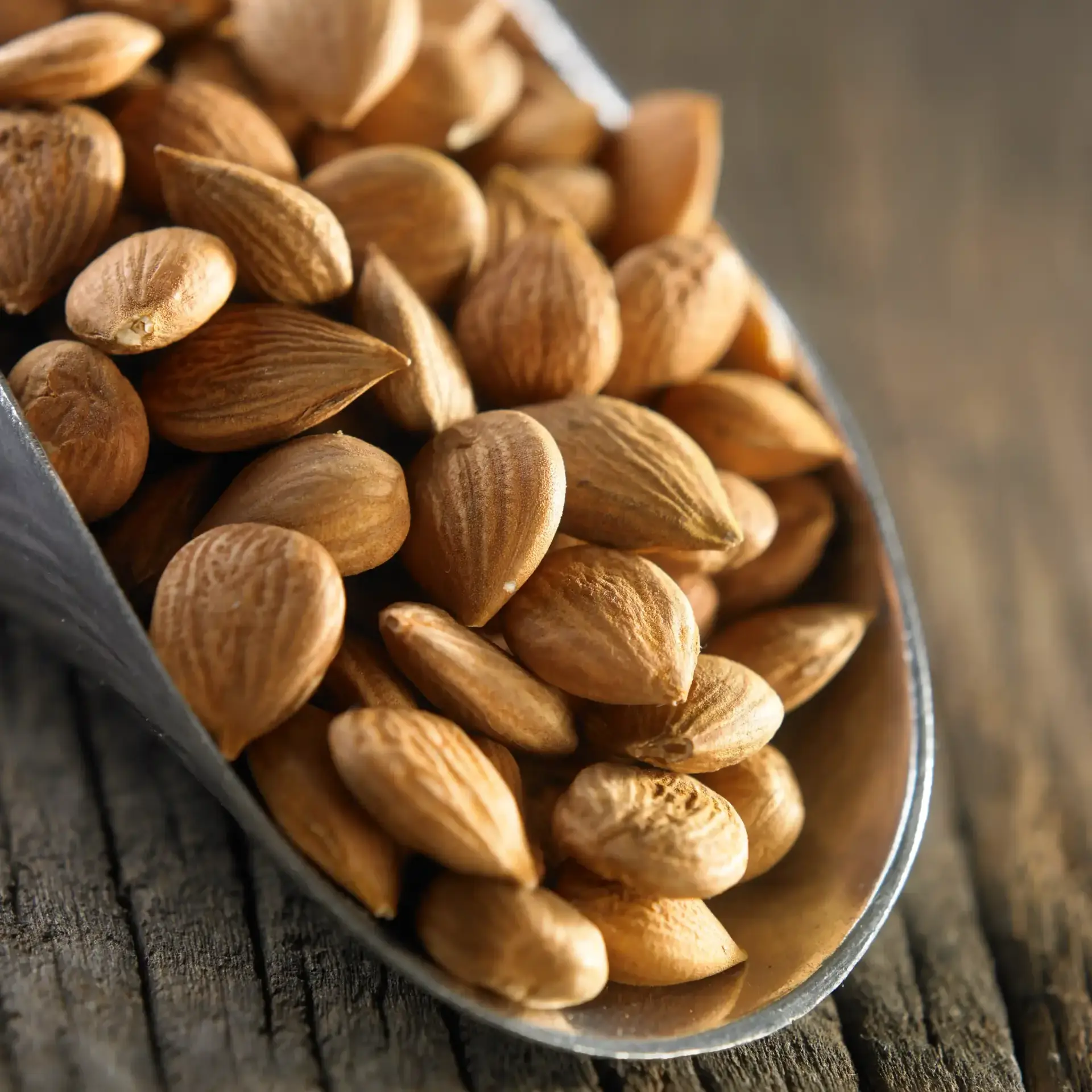
- Nut butter – ground with Californian almonds gives a smooth, buttery texture without sugar
- Baked goods – in cakes and bars they can replace walnuts, giving a milder flavour
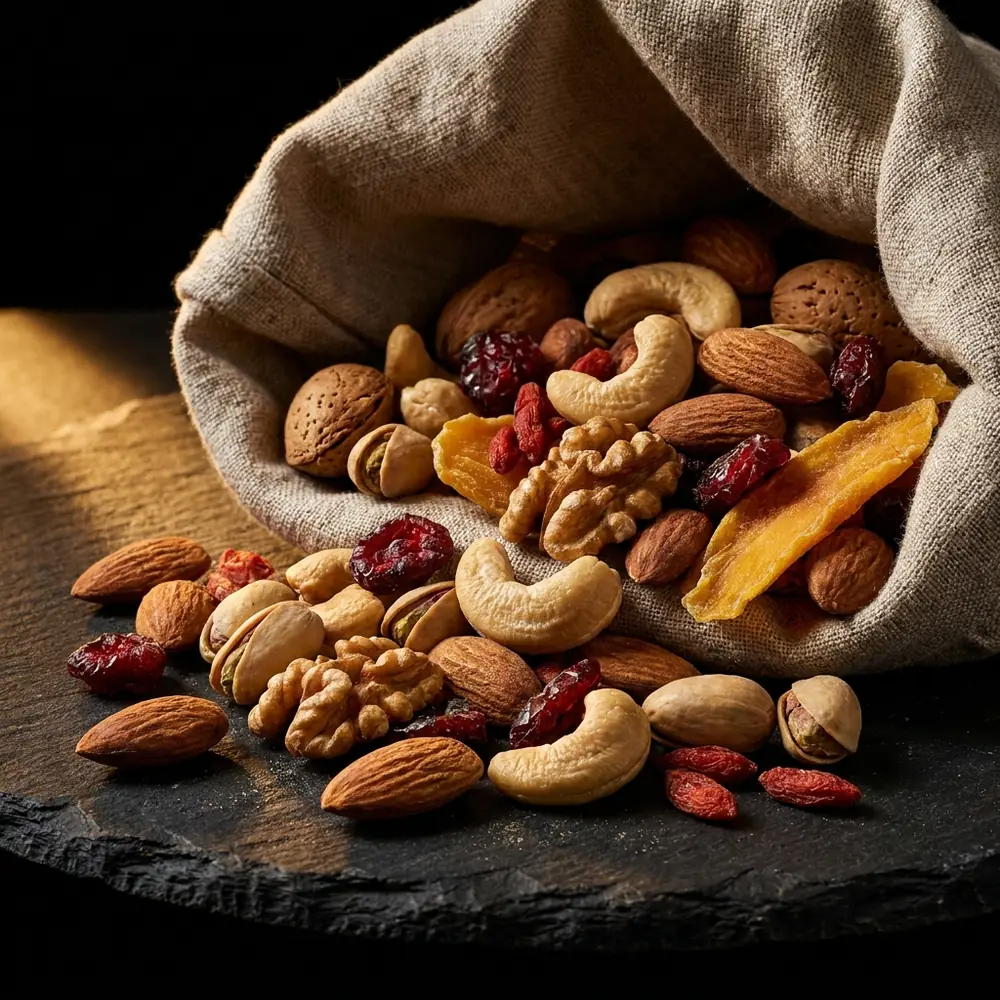
One note about mixes: if you’re making your own for a jar, add Brazil nuts last and in small amounts. Afterwards it’s hard to control how many pieces ended up in the bowl, and this is the one ingredient worth counting.
What do Brazil nuts look like and taste like?
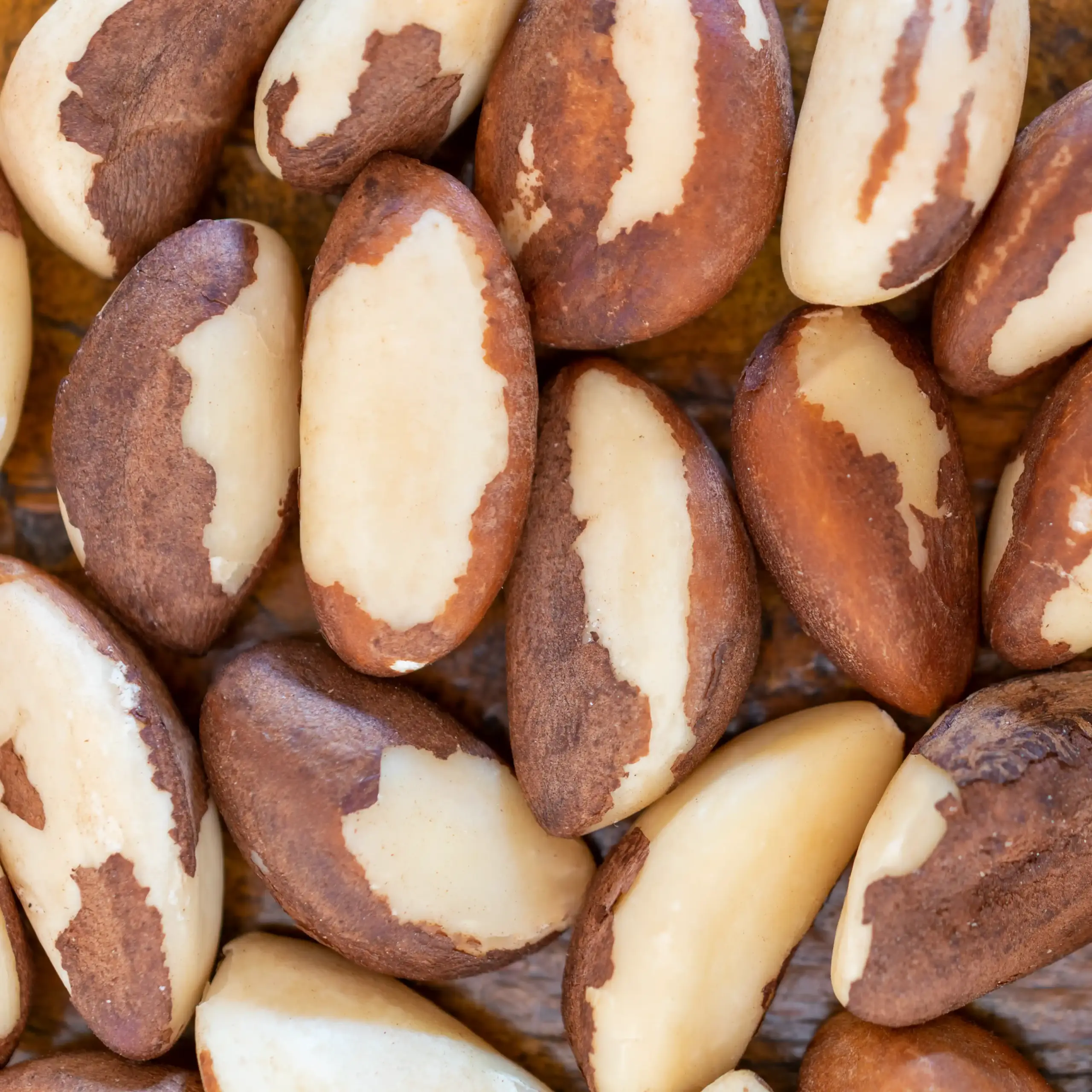
Elongated, slightly triangular in cross-section, 3–4 cm long, noticeably larger than an almond or cashew. Creamy white in colour, with a thin brown skin that is edible and slightly astringent.
The flavour is buttery and milky, with a note some describe as coconut-like. The texture is more creamy than crunchy: a Brazil nut doesn’t snap like a hazelnut, it gives way under the teeth. Fresh ones smell sweet and neutral. A smell reminiscent of oil paint and a sharp bitterness in the taste mean the fat has gone rancid and the pack should be thrown away.
The question about nuts in their shell comes up regularly. In nature they grow in clusters of a dozen or more, tightly packed inside a woody pod the size of a large coconut. They almost always reach shops already shelled, because cracking that pod requires a machete. Our 250 g are whole nuts without the shell, ready to eat.
Where do Brazil nuts come from?
From the Bertholletia excelsa tree, one of the largest in the Amazon rainforest. A curious fact that explains a lot about the price: these trees can practically not be grown on plantations, because pollination requires wild bees that live only in undisturbed forest. So the harvest looks the same as it did a hundred years ago — people gather the fallen pods from the forest floor.
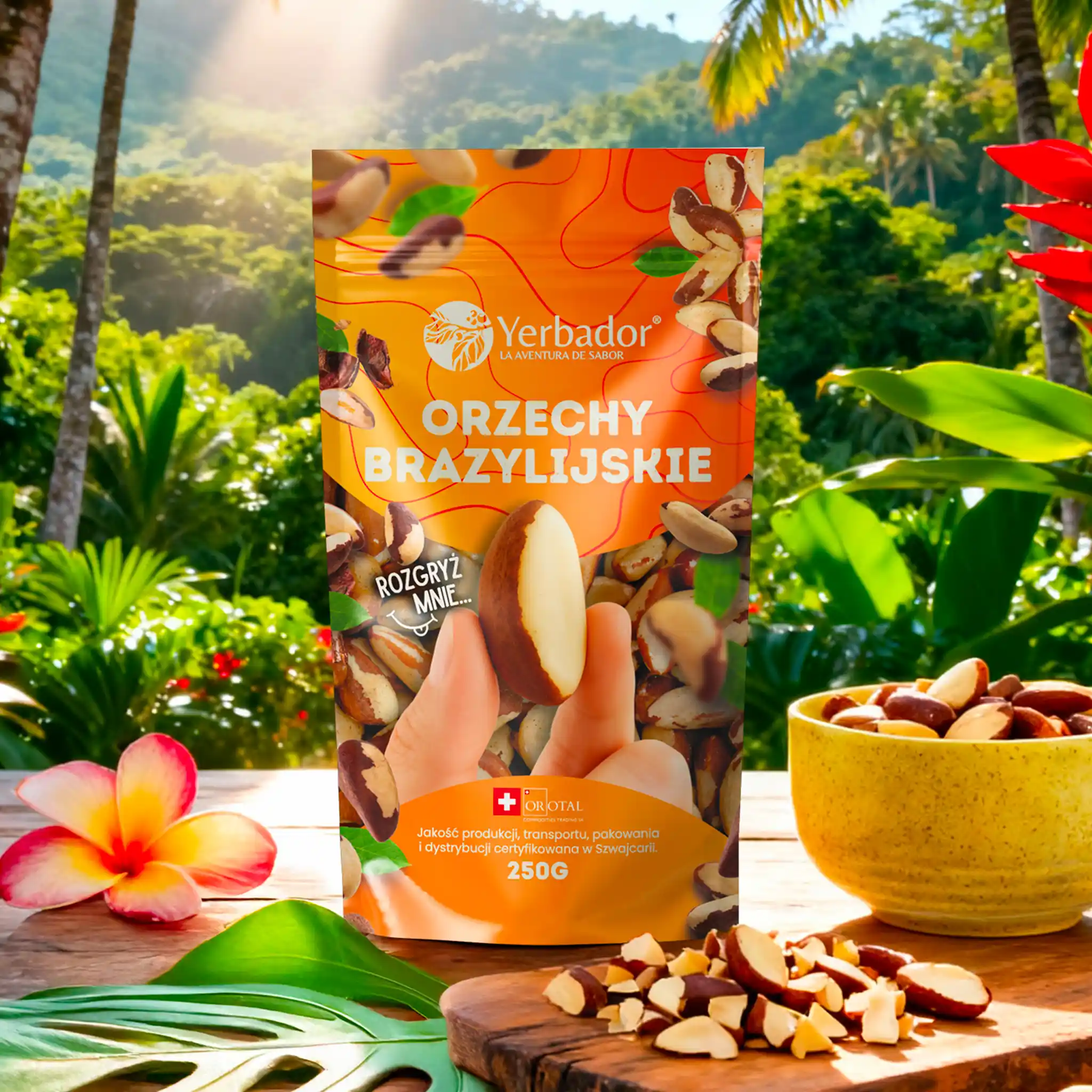
The main suppliers worldwide are Bolivia, Brazil and Peru, and nuts from these three countries are sometimes sold under the same name. On our label the country of origin is Brazil, and the quality of production, transport, packaging and distribution is certified in Switzerland by OROTAL Commodities Trading SA.
How to store them so they don’t go rancid?
Two-thirds of this nut’s mass is fat, mostly unsaturated, meaning it’s sensitive to oxygen, light and heat. The rest of the rules follow from that:
- An airtight package, not an open bowl on the counter
- Cool and dark: a cupboard away from the stove, not the windowsill
- Once the pack is opened, especially in summer, move the contents to the fridge
- A larger stock can handle the freezer and doesn’t lose its texture after thawing
- Before adding to baked goods, give them a sniff—a rancid nut will ruin the whole cake
Where to buy good Brazil nuts?
The choice is huge, but the difference between packs is often bigger than the price suggests. What to look for:
- Selenium content declared on the label. Without it you don’t know how much you’re eating, and for this nut that’s key information
- Country of origin stated directly, not as “various countries”
- Ingredients: 100% nuts, no oil, salt or sugar
- Packaging. A resealable foil pouch protects the fat better than a paper bag from a scale
- Appearance. Whole, light-coloured nuts, no dark spots or dust at the bottom of the pack
Our Brazil nuts in a 250 g pack meet these points: one hundred percent nuts, gluten-free, vegan, with a full nutritional table and declared selenium content. With a serving of two pieces a day, one pack lasts roughly two months.

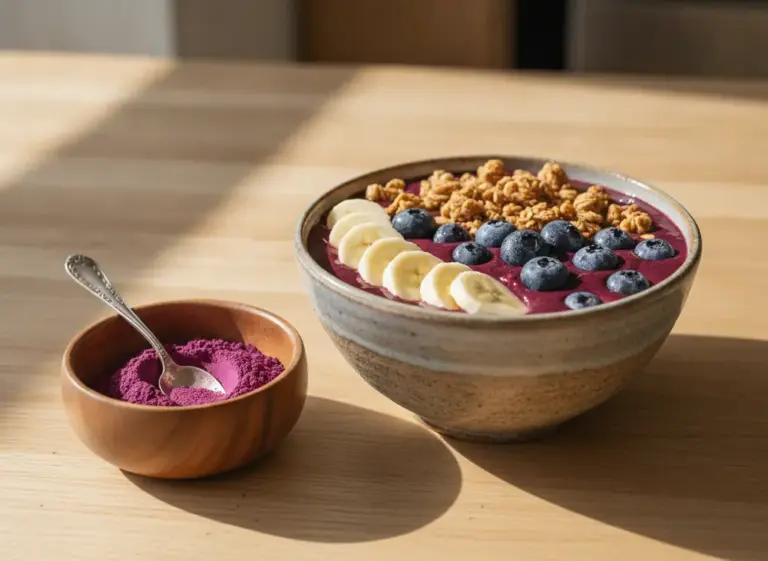
If you’re building a week’s supply of dried fruit and nuts, Brazil nuts should be an addition, not the base. Build the base from almonds or seeds, add acai berries for flavour or a teaspoon of spirulina for a morning smoothie, and treat Brazil nuts like a spice: two pieces and that’s enough.
Frequently asked questions about Brazil nuts
How many Brazil nuts can you eat per day?
Safely 1–2 pieces a day. With a content of 1917 µg selenium per 100 g, two nuts provide about 155–190 µg, which is below the tolerable upper limit of 255 µg per day. Alternatively, 3–4 nuts twice a week.
How much selenium is in one Brazil nut?
About 77–96 µg for a nut weighing 4–5 g and a declared value of 1917 µg/100 g. That’s 140–175% of the reference intake value, which for adults is 55 µg. Values vary between batches and regions because selenium comes from the soil.
Can you eat Brazil nuts every day?
Yes, as long as you stick to one or two nuts and account for selenium from any supplements you may be taking. Eating handfuls every day over a longer period can lead to a selenium excess.
Are Brazil nuts good for the thyroid?
Selenium is needed for proper thyroid function, and this claim is approved in the EU, but the nuts do not treat thyroid diseases or replace medication. If you have Hashimoto’s or another thyroid condition, consult your doctor about the dose.
How to store Brazil nuts after opening?
Tightly sealed, in a cool and dark place — in summer, best kept in the fridge. They contain 66.4 g of fat per 100 g, so in warmth and light they turn rancid. A smell reminiscent of oil paint means the pack is no longer fit to eat.
Discover our TOP products!


Your dream figure




Discover new flavors




Yerba mate with tea




Accessories





Superfoods








Certified raw honeys from Poland






Check the current price
free shipping
Up to 90 days
free returns
24 H
shipping