
Young Green Barley – Properties, Dosage and How to Use It
2026-08-14
Green barley is powdered young shoots of common barley (Hordeum vulgare), cut before the plant heads out. It’s consumed because at this stage the blade is green with chlorophyll, rich in fibre and has a mild, grassy taste — not because it cures anything. It’s a dietary addition, not a medicine.
If you’re looking for a short answer to “what is young green barley good for”: it makes most sense to treat it as a daily portion of greens for someone who doesn’t eat enough vegetables, plus a fibre boost for porridge or smoothies. The standard serving is 3 g of powder (a level teaspoon) per 200 ml of liquid, and the manufacturer states that the beneficial effect appears at 6 g per day. Below I break down the composition, show how much you actually get in one teaspoon, and how to drink it so it doesn’t end up being a one-time thing.
Green barley – what actually is it?
Green barley and barley as a grain are two different things grown in the same field. The grain is harvested at the end of the season, when the plant is already dry and yellow. Young shoots are cut a few weeks after sowing, when the grass is about 20–30 cm tall and at the peak of its green phase. They are then dried at low temperature and ground into powder. Hence the other name you’ll see in shops: barley grass.
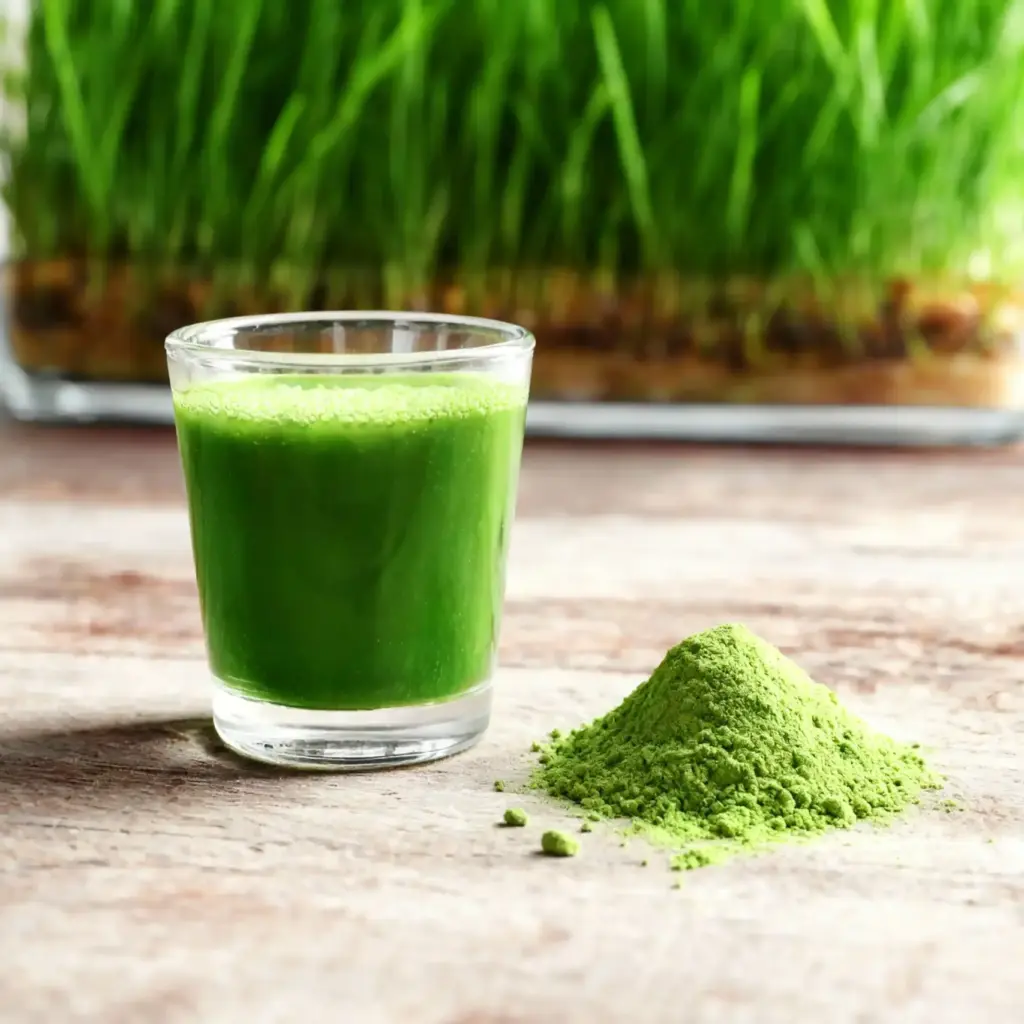
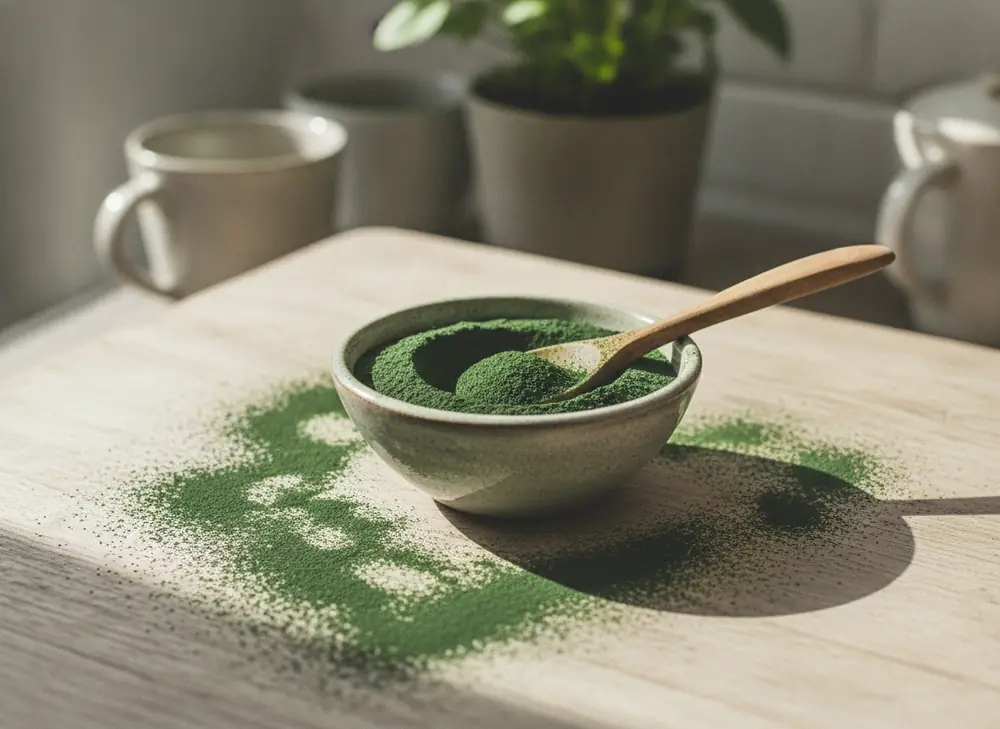
Colour is the best quality indicator you have without a lab. Good powder is intensely green, almost like matcha, and smells of freshly cut grass. A greyish-green, dull shade usually means either too high a drying temperature or a package left open for too long. Ours is 100% powdered young barley, with no fillers, maltodextrin or “natural flavour” — there’s a single item on the ingredient list, and that’s it.
What is young green barley good for? See what the nutrition table says
This is where the part most sites skip begins, because it spoils the narrative. Nutritional values on the label are always given per 100 g of powder, and nobody eats 100 g of grass powder. In our barley, 100 g contains 120 mg of vitamin C, 17 mg of iron, 34 g of fibre, 23 g of protein and 280 kcal. That looks impressive. Now let’s convert it to a teaspoon.
Vitamin C and iron – how much is actually in one serving
A 3 g serving is 3.6 mg of vitamin C, about 4.5% of the daily requirement, and 0.51 mg of iron, less than 4%. Even with a double 6 g daily serving, we’re talking about 7.2 mg of vitamin C and 1 mg of iron. For comparison: one average red pepper has more than ten times as much vitamin C. If someone promises you that a teaspoon of green powder will take care of your immunity — the maths simply doesn’t add up.
That doesn’t mean these numbers are meaningless. It means barley is a dietary addition, not a replacement. Vitamin C does help protect cells from oxidative stress, but for that to matter, you need enough of it in your diet from many sources at once. We had a similar discussion in the article about antioxidants from yerba mate infusion — the mechanism is real, but the scale of the effect is usually more modest than the headlines suggest.
Fibre, or the reason many people drink this in the first place
34 g of fibre per 100 g is really a lot — a third of the powder’s mass. A 3 g serving gives about 1 g of fibre, a 6 g serving about 2 g. Given the recommended daily intake of around 25 g, that’s a concrete, measurable contribution, especially if your day looks like a sandwich, lunch out, and something quick in the evening. Here barley performs better than in the vitamin category, since fibre is something almost everyone actually lacks.
You’ll notice the effect in a down-to-earth way: more regular digestion and less urge to snack an hour after your drink, because the fibre swells up in your stomach. If you haven’t eaten much fibre so far, ease in slowly — start with 3 g a day for the first week, and drink water. A sudden jump can end in bloating, and afterwards people blame the powder, not the pace.
What young barley won’t do
It won’t make you lose weight. It won’t “de-acidify” you or “cleanse your body of toxins” — that’s what your liver and kidneys are for, and chlorophyll isn’t the gut-scrubbing brush from the ads. It won’t replace treatment for anaemia or any other therapy. If you have a chronic illness, take medication, are pregnant or breastfeeding, consult your doctor before introducing a new supplement. What it is, though, is a simple way to add a bit of green and fibre to your day without cooking — and that’s the only promise worth making.
How to dose young barley?
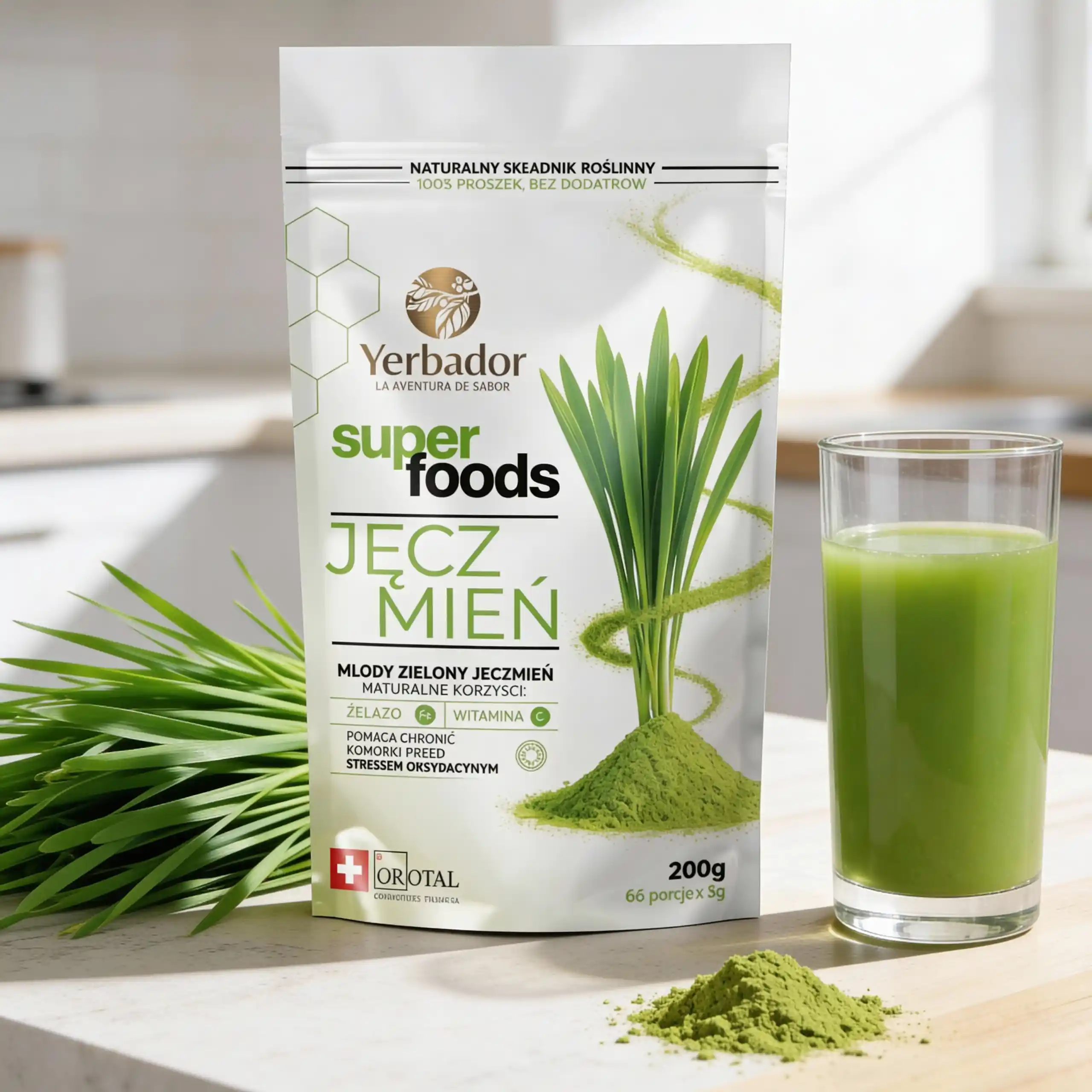
Starting point: 3 g of powder, i.e. a level teaspoon, per 200 ml of water, juice or yoghurt. The manufacturer states 6 g a day as the dose at which the beneficial effect appears — it’s most convenient to split it into two portions, morning and afternoon. A 200 g pack gives you 66 servings of 3 g, so about a month of drinking on the double-dose plan, or over two months if you stick to one teaspoon.
If you have kitchen scales at home, weigh your teaspoon once. Grass powder is light and fluffy, so a “heaped teaspoon” can be twice as heavy as a level one, and with fibre that’s a difference you’ll feel. After a week you’ll be able to eyeball it.
There’s no need for breaks or cycles. This is ordinary food, not a steroid training cycle. The only sensible rhythm is the one you stick to.
How to drink young barley so it doesn’t end up in the cupboard after three days
On its own in water it tastes like diluted hay. For some people that’s a plus — it’s mild, without the fishy aftertaste that puts people off spirulina. For everyone else, it’s a reason to shelve the jar after two days. A few things that actually work:
- Apple or orange juice instead of water. The acidity cuts through the grassiness, and the drink looks like a green bar shot.
- Smoothie with banana and spinach. Banana masks everything, barley adds the fibre.
- Porridge or plain yoghurt — stir in a teaspoon at the end, once cooled, and mix.
- A shaker or a jar with a lid instead of a teaspoon. Grass powder clumps together, and stirring it in a glass is a battle lost from the start.
- Cold or lukewarm water, not boiling. Vitamin C doesn’t like high temperatures, and the taste turns “cooked” after pouring in hot water.
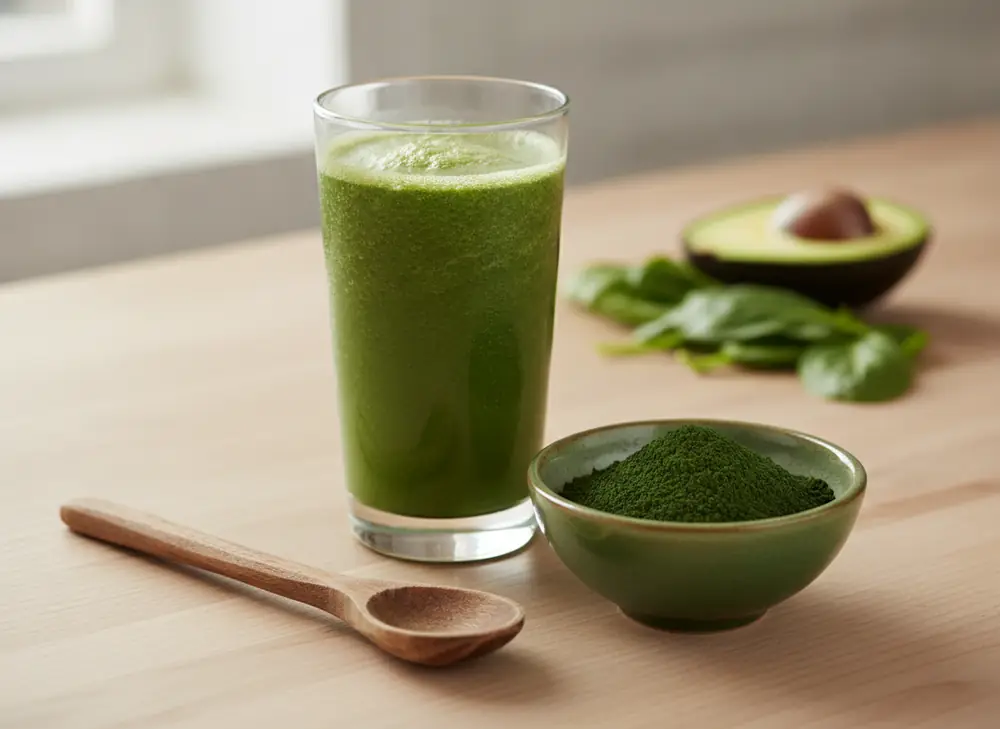
It also works in salad: half a teaspoon mixed into an olive oil and lemon dressing makes a green, slightly grassy sauce, and no one will guess what’s in it. It’s the same trick as with moringa — green powders pair better with fat and acid than with plain water.
Young barley, chlorella or spirulina – where to start?
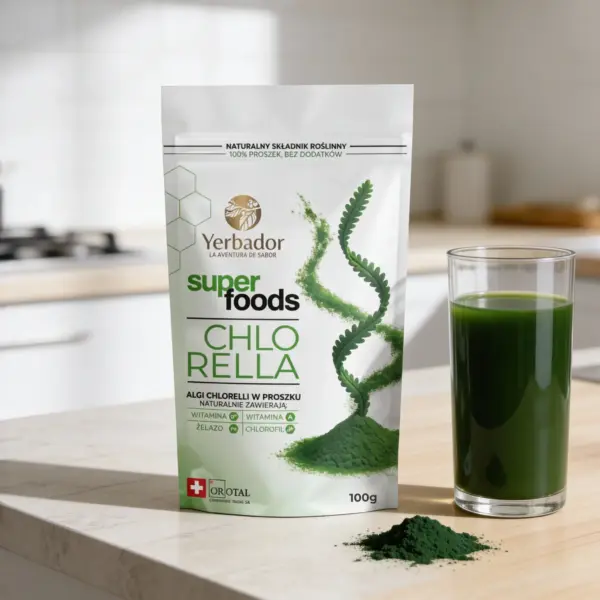
These are three different things lumped together as “green powders”. Barley is a land grass: lots of fibre, mild taste, the least problematic starting point. Chlorella is a freshwater alga with a tough cell wall, darker and more intense in flavour. Spirulina is a cyanobacterium with record-high protein content and the most pronounced, marine aftertaste of the three.
If green powders are new to you, start with barley — it’s the mildest and the easiest to hide in food. If you’d like all three and want to test what suits you, the Green Energy Boost set works out cheaper: three 200 g packs, so the price per 100 g is noticeably lower than buying a single pack. You don’t have to mix them in one glass — for us, barley works best in the morning in juice, chlorella in an afternoon smoothie.
Who should be careful?
Gluten is the first question we get. Young shoots are cut before the grain forms, and gluten is found in the grain, so the barley grass powder itself practically doesn’t contain any. But “practically” isn’t the same as a certificate: if you have coeliac disease or a grain allergy, don’t assume it’s gluten-free without confirmation, and talk to your doctor — this is a food product, not a certified gluten-free supplement.
The second issue is fibre for sensitive guts. Irritable bowel syndrome, recently after antibiotic treatment, after abdominal surgery — in these cases, 6 g a day to start is too much. Start with half a teaspoon. Third: iron and vitamin C affect the absorption of certain medications, so if you take anything regularly, leave a two-hour gap and ask your treating doctor. During pregnancy and breastfeeding, leave the decision about supplements to a specialist.
Where to buy young green barley and how much does it cost?
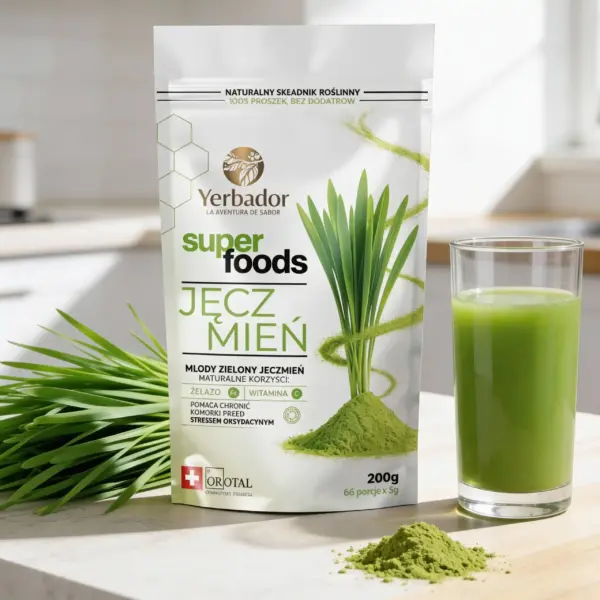
In our shop: Young Green Barley 200 g — check the current price. That’s 66 servings of 3 g, a very low cost per serving and roughly a month of drinking at 6 g a day. Ingredients: 100% powdered young barley, nothing else. Certified by OROTAL Commodities Trading SA of Switzerland, HACCP and KIWA, plus, on the Polish market, a Quality Certificate, National Medicines Institute.
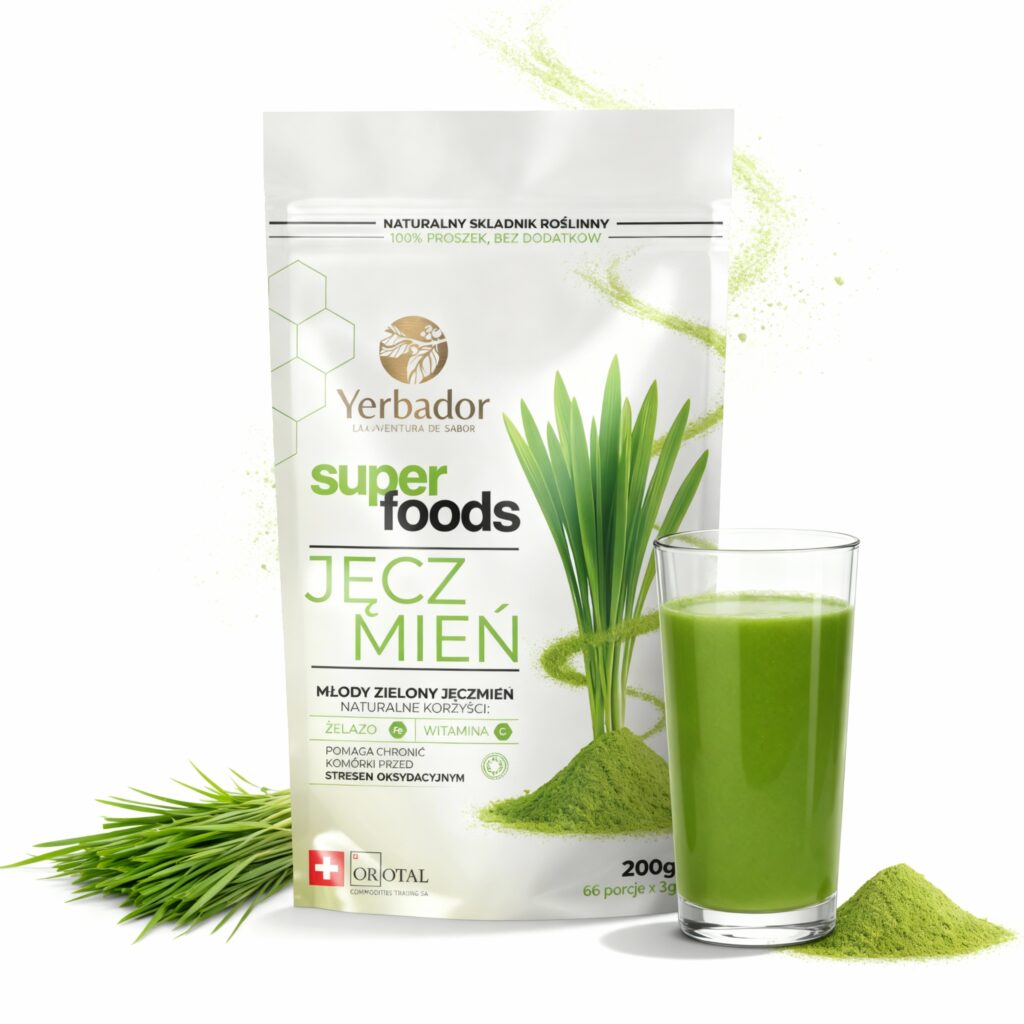
What to look at when comparing offers, including outside our shop: the ingredients (there should be just one), the weight converted to a per-100 g basis, the best-before date and the packaging — grass powder loses its colour in the light, so look for an opaque, resealable bag. A suspiciously low price for a single-ingredient powder should set alarm bells ringing.
There’s also a third route if you don’t want another jar on the worktop: yerba mate IMMUNO has green barley blended into the dried leaves together with sunflower seeds and citrus. Then you drink your barley along with your morning matero, with no extra step. More on that combination in our piece on supporting immunity in autumn and winter. And if you’re interested in the gut and fibre angle more broadly, we have a separate guide on how to support gut health without any strange cures.
Frequently asked questions
What does young green barley help with?
Most concretely: it adds fibre (about 1 g per 3 g serving), some vitamin C, iron and chlorophyll to a diet that usually lacks greens. It doesn’t cure diseases and doesn’t cause weight loss. If you have health issues, consult your treating doctor.
How much young green barley per day?
A standard serving is 3 g, or one level teaspoon per 200 ml of liquid. The manufacturer states 6 g a day as the dose at which a beneficial effect appears — ideally split into two portions. To start, one teaspoon a day for a week is enough.
When to drink barley – morning or evening?
Whenever it’s convenient for you. It doesn’t contain caffeine, so it won’t stimulate you or disrupt your sleep. Many people drink it in the morning on an empty stomach, as that’s when it’s easiest to remember; if the fibre is heavy on your stomach, move the portion to after a meal.
Is young green barley gluten-free?
Young grass cut before the ear forms contains practically no gluten, but our powder doesn’t carry a gluten-free certificate. If you have celiac disease, don’t rely on theory alone — consult your doctor.
How much does young barley cost and how long does a pack last?
Check the current price for the 200 g pack. That’s 66 servings of 3 g: about two months at one teaspoon a day, or a month at 6 g. In the set with chlorella and spirulina (600 g) the price per 100 g is lower still.
Discover our TOP products!
Your dream figure
Discover new flavors
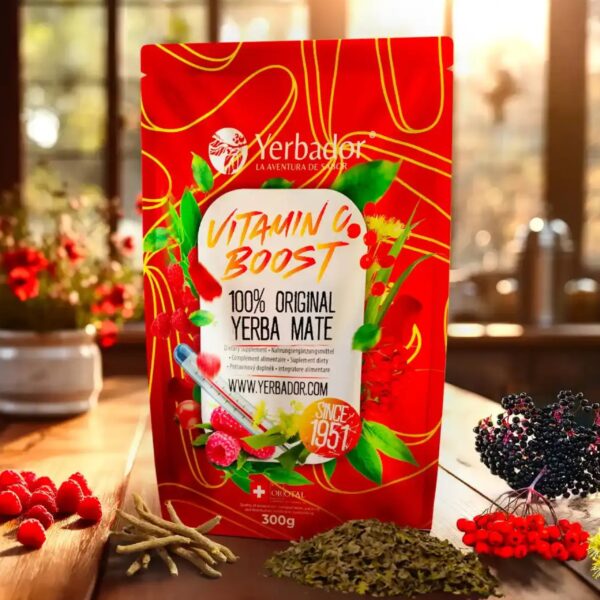
Yerba mate with tea
Accessories

Superfoods
Certified raw honeys from Poland

Check the current price
free shipping
Up to 90 days
free returns
24 H
shipping