
Chlorella Powder – Properties, What It Helps With and How to Use It?
2026-08-03
Chlorella powder looks unassuming: a small bag of intensely green dust with a smell reminiscent of a pond after rain. Yet it’s one of the most popular superfoods of recent years — and it’s easy to see why. In 100 g of this powder there’s 60 g of plant protein, a solid portion of fibre, iron and vitamins A, B12, C and E. In this article we explain what chlorella actually is, what it helps with, how to use it so it doesn’t dominate the taste of your breakfast, and how it differs from spirulina, with which it’s constantly confused.
What is chlorella and where does it come from?
Chlorella (Latin Chlorella vulgaris) is a single-celled freshwater alga. Just one cell, nothing more. No leaves, roots or stems — simply a microscopic green sphere that divides in water at a pace many a garden would envy. Once harvested and dried, the algae are ground into a fine powder — and that’s exactly the powder that ends up in the bag.
Where does that intense green come from? It’s chlorophyll, the same pigment that gives spinach or kale its colour. Chlorella has an exceptional amount of it — so much that the plant’s name comes directly from it. The taste is deep, plant-like and pronounced. Let’s be honest: it’s not a taste for everyone on its own. That’s why chlorella is almost always mixed with something else — more on that shortly.
Chlorella powder – properties. What’s inside the green dust?
Specific numbers make a bigger impression here than adjectives, so we give them straight away — exactly as they appear on the Yerbador Chlorella label (values per 100 g):
- Protein: 60 g — more than half the powder’s mass is plant protein. For comparison: lentils have about 25 g.
- Fibre: 16 g — supports digestive comfort.
- Vitamin B12 — helps reduce tiredness and fatigue and supports energy metabolism.
- Iron — responsible for proper oxygen transport in the body.
- Vitamin A: 5000 µg — supports skin, vision and immunity.
- Vitamin C: 40 mg and vitamin E: 8 mg — a duo known for its antioxidant effect.
- Calcium: 240 mg plus chlorophyll in an amount that colours everything the powder touches.
The total comes to 388 kcal per 100 g — though in practice no one eats chlorella by the hundreds of grams. A standard serving is a few grams, so calorie-wise it’s a rounding error in your day. The composition is single-ingredient: 100% Chlorella vulgaris, with no fillers, flavourings or unnecessary additives.
Chlorella and vitamin B12 – a topic for plant-based eaters
B12 is a vitamin that people on a plant-based diet need to consciously take care of — in a typical diet it comes mainly from animal products. Yerbador Chlorella is a source of vitamin B12, which is why vegans and vegetarians often choose it as a plant-based addition to their daily menu. Honest note: if you’re on a strict plant-based diet, it’s worth discussing how to meet your B12 needs with a doctor or dietitian — chlorella can be part of the puzzle, but it doesn’t replace a well-thought-out plan.
Chlorella vs spirulina – what’s the difference?
Both are green, both are sold as powder, and both end up in the same smoothies. Hence the constant mix-up. But there are differences:
- Biology: chlorella is a single-celled freshwater alga, while spirulina (Arthrospira platensis) is a cyanobacterium with characteristic spiral filaments.
- Taste: chlorella has a deeply plant-like, “green” taste; spirulina has a distinctly marine, intense aroma. In a banana smoothie both disappear, but on their own, spirulina is bolder.
- Fibre: chlorella has 16 g per 100 g, spirulina has 3.6 g — if fibre matters to you, chlorella clearly wins.
- B vitamins: Yerbador spirulina’s label shows as much as 150 µg of vitamin B12 per 100 g plus riboflavin (B2); chlorella also provides B12, along with vitamins A, C and E.
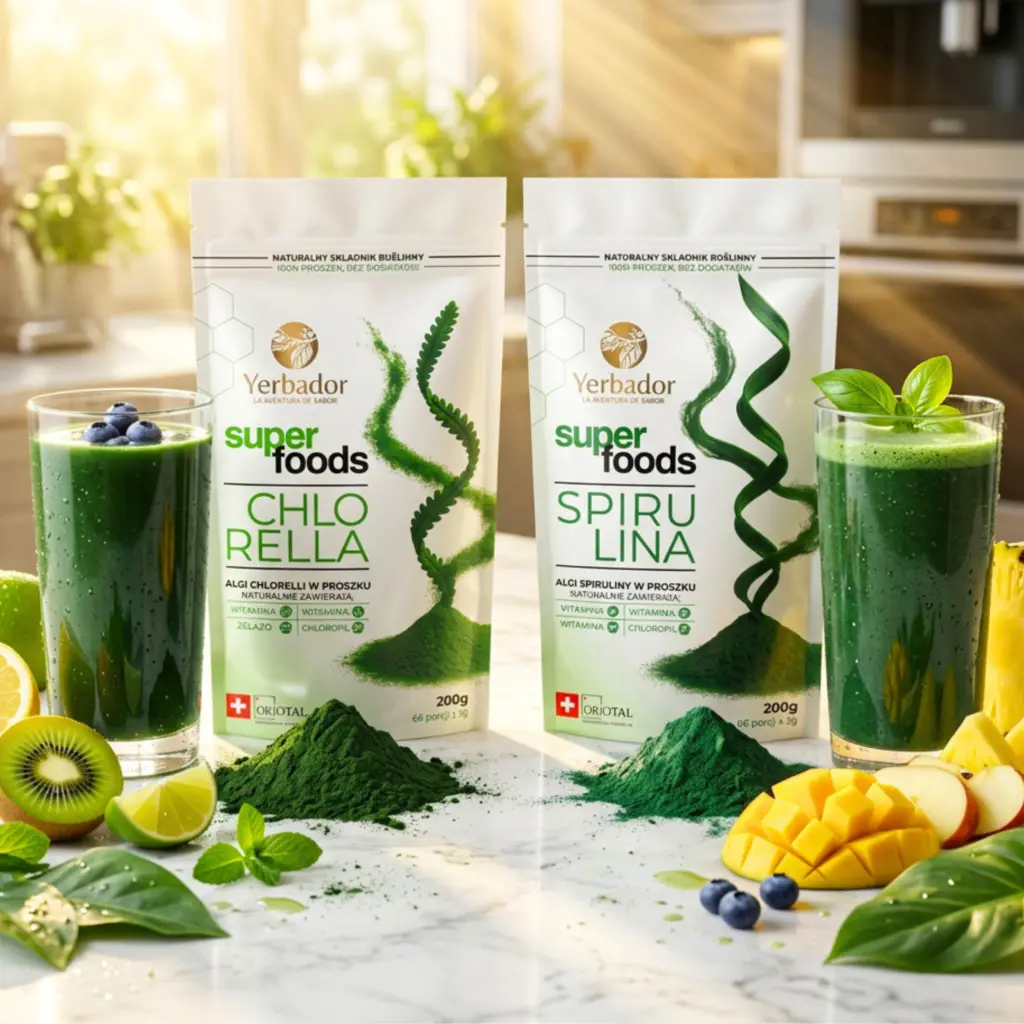
The verdict? It’s not a duel, but a duo. Many people use them alternately: chlorella in porridge, spirulina in a smoothie. If you don’t want to choose, Yerbador’s shop offers a set of both algae — two full 200 g packs, about 132 servings in total.
How to use chlorella every day?
The producer’s suggestion is simple: pour 6 g of powder (roughly a heaped teaspoon) into 200 ml of water, juice or yoghurt and mix thoroughly. That’s it. There’s no need to brew or cook anything — chlorella is added to cold or lukewarm meals. Store the supply in a dry, cool place, tightly sealed.
Three simple ways to get started
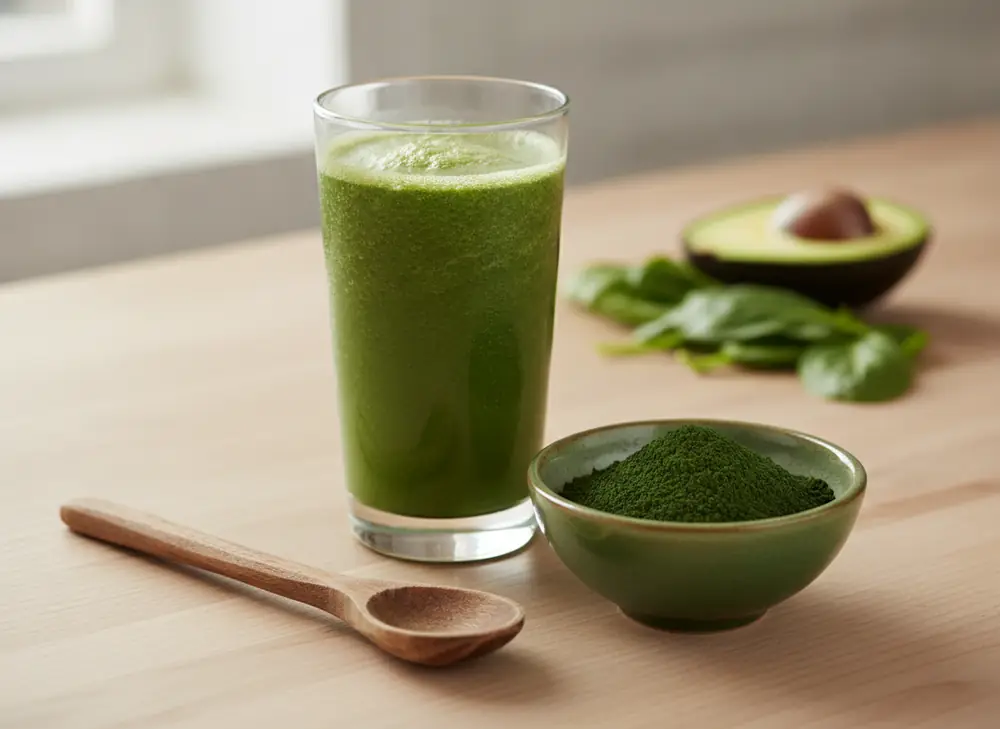
- “Green” smoothie: a banana, a glass of apple juice or plant-based milk, a handful of spinach and a teaspoon of chlorella. The banana does the trick — it softens the plant-like character of the powder almost completely.
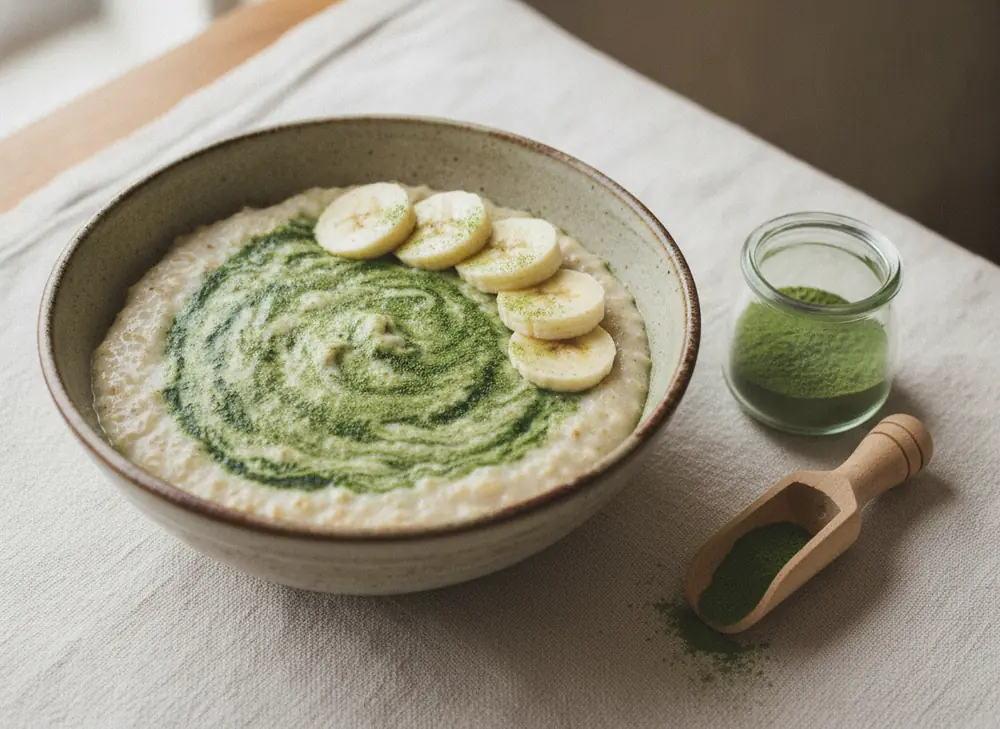
- Porridge with a green swirl: cook your porridge as usual and stir in the chlorella at the end, once the oats have cooled slightly. The colour impresses on Instagram, while the taste stays true to porridge.
- Yoghurt or muesli: half a teaspoon into natural yoghurt with fruit. This is the cautious option — you start with a small dose and see how the taste suits you.
One practical tip: start with half a portion. The taste of chlorella is a matter of getting used to — after a week most people stop noticing it at all, and some even start to enjoy it.
Chlorella and yerba mate – a morning duo
Chlorella contains no caffeine — and that’s an advantage, not a downside. It doesn’t compete with yerba mate, it complements it. A routine many of our customers follow: a matero of yerba in the morning for a boost, and a chlorella smoothie for breakfast as a green dose of protein, fibre and vitamins. Yerba works on your head, chlorella nourishes the rest. If you’re building your own superfoods shelf, check out our articles on moringa and acai berries — and how greens in your diet support lightness and body detox as well as everyday immunity.
Chlorella from Yerbador – where to start
Below are three products from our green shelf. All have a single-ingredient, 100% composition — no fillers or flavourings.
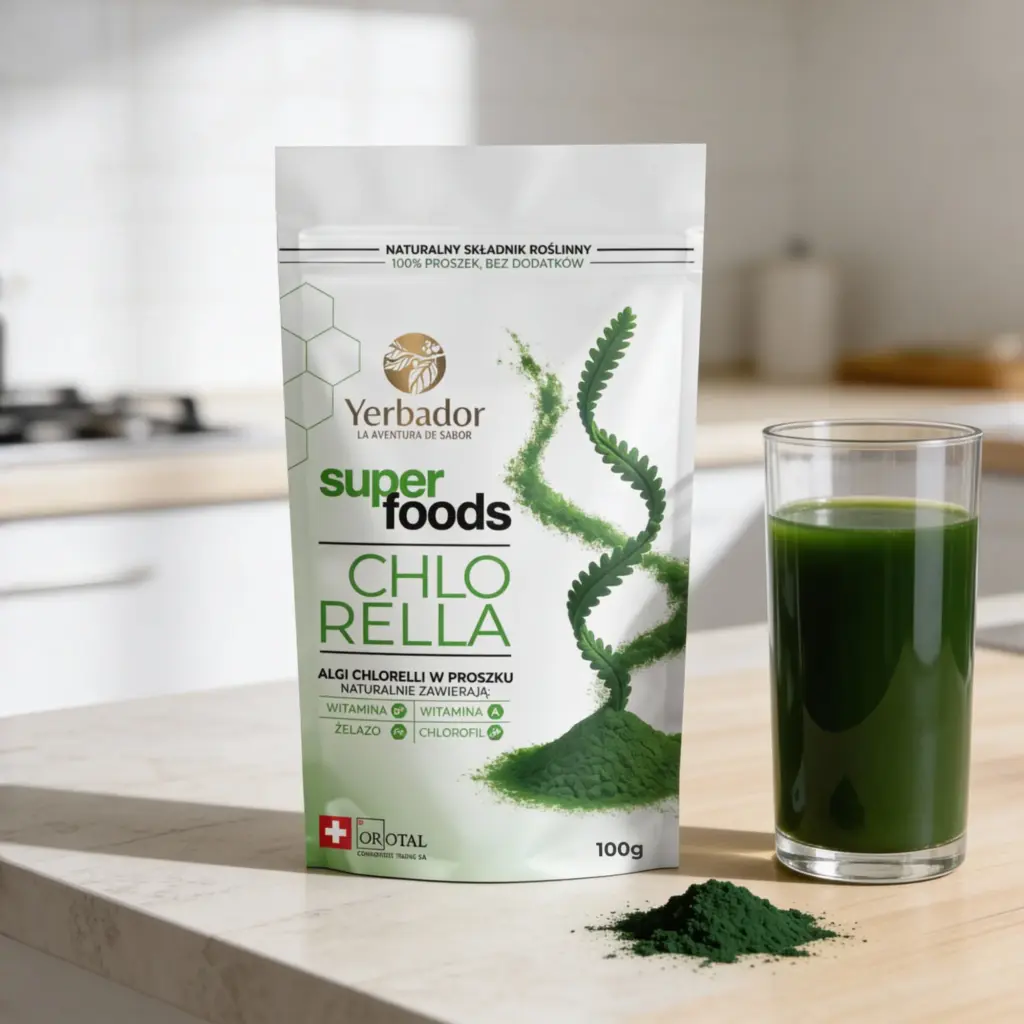
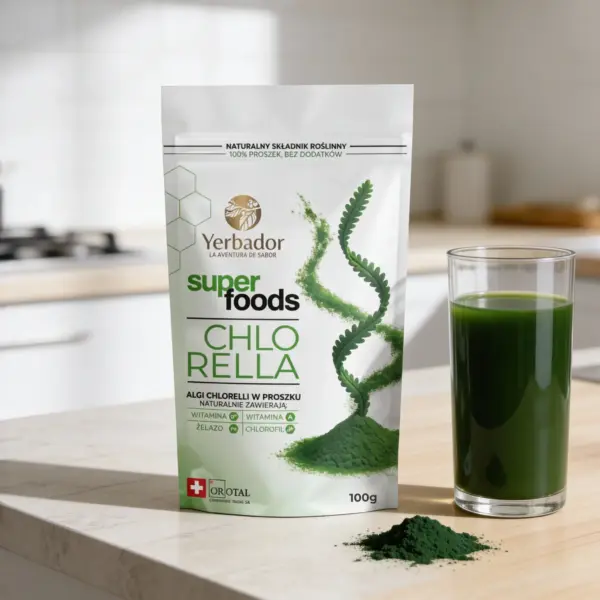
Chlorella Powder – 100 g – Source of Vitamin B12 and Iron
An intensely green powder with a deep, plant-like flavour. 60% protein, 16 g of fibre per 100 g, vitamins A, B12, C and E plus iron. Perfect for smoothies, shakes and breakfasts. Check the current price.
Check out the product: Chlorella Powder – 100 g – Source of Vitamin B12 and Iron
CHLORELLA + SPIRULINA SET (body support)
The green duo in a stock-up version: two full-size 200 g packs — 400 g of powder in total and around 132 servings. Chlorella for your porridge, spirulina for your shake, and your wallet gets a break compared with buying them separately. Check the current price.
Check out the product: CHLORELLA + SPIRULINA SET (body support)
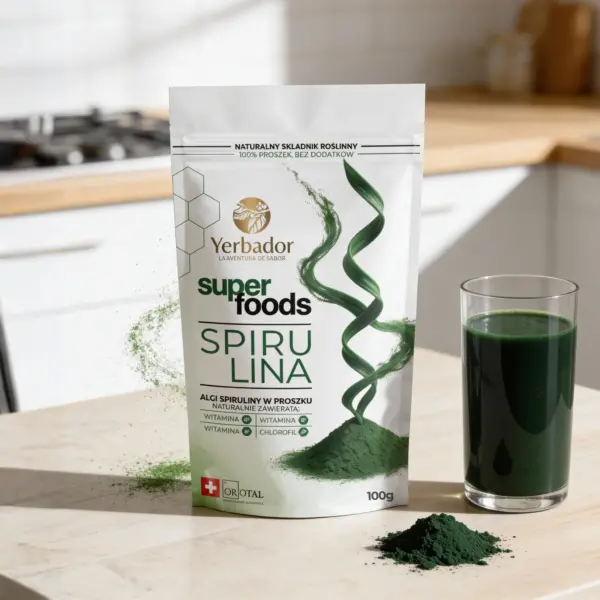
Spirulina – Source of Iron and Vitamin B12
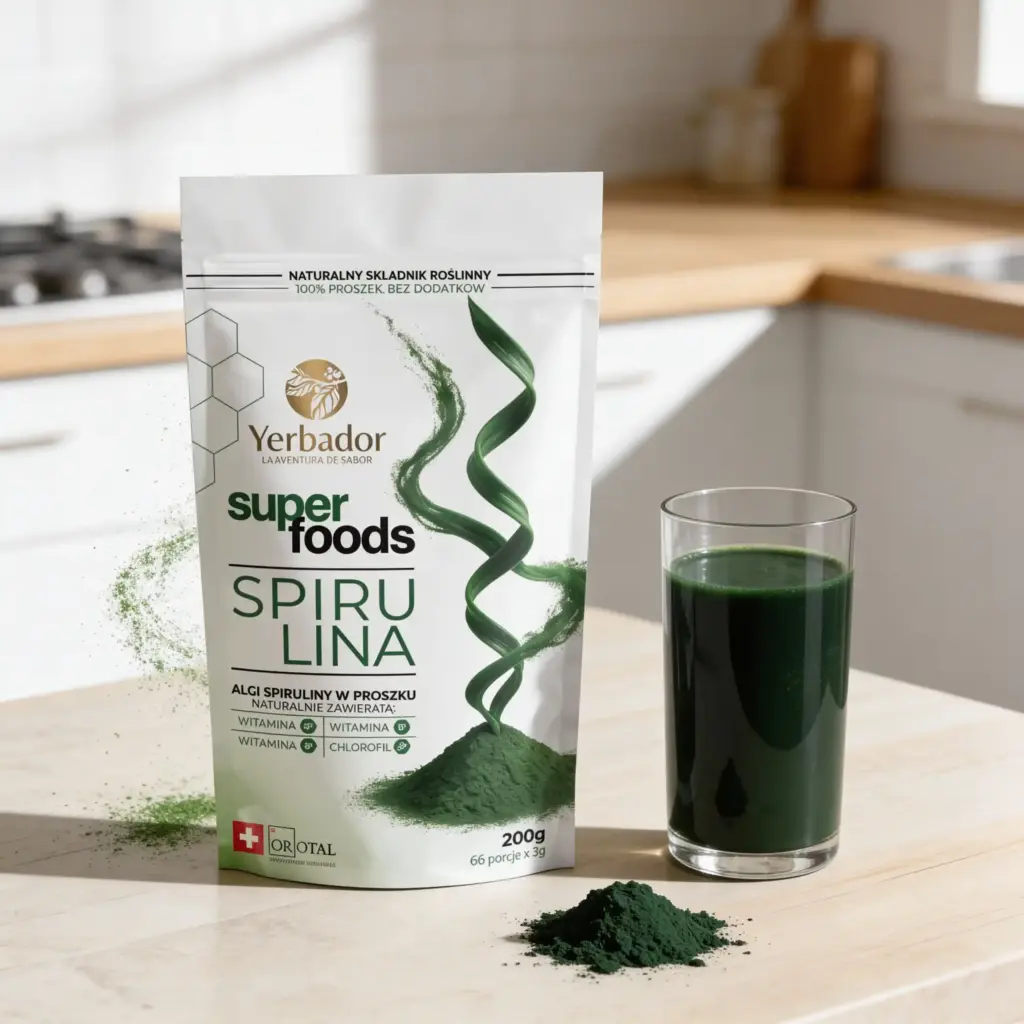
A sister algae with a distinctive, marine aroma. Iron, vitamins B12 and B2, chlorophyll and 57 g of plant protein per 100 g. Great in fruit shakes, which soften its intensity. Check the current price.
Check out the product: Spirulina – Source of Iron and Vitamin B12
Most frequently asked questions about chlorella
Does chlorella contain caffeine?
No. Chlorella is caffeine-free, so you can have it at any time of day — even in the evening. For a morning energy boost, reach for yerba mate or guarana.
What does chlorella taste like and how to mellow its flavour?
Deep, plant-like, a bit like freshly cut grass with a hint of nut. The easiest way to mask it is in a banana smoothie or apple juice — the fruit’s sweetness neutralises the green character almost completely.
How much chlorella can you consume per day?
The manufacturer suggests a 6 g serving (about a heaped teaspoon) per 200 ml of liquid. Start with a smaller amount and see how your body reacts — everyone’s digestive system has its own opinion on new dietary ingredients.
Chlorella or spirulina – which to choose first?
If you care about fibre and a milder flavour profile — go for chlorella. If you’re after maximum B vitamins — spirulina. And if you don’t want to choose, a set of both algae costs less than buying them separately.
Chlorella for businesses – cafés, catering, shops
Green smoothies and “green bowls” have become permanent fixtures on café and bistro menus. If you run a venue or a shop and want to stock Yerbador superfoods — from chlorella and spirulina to wholesale yerba mate — get in touch with us. We’ll advise you on what actually sells, not just what looks nice on the shelf.
Discover our TOP products!
Your dream figure
Discover new flavors
Yerba mate with tea
Accessories
Superfoods
Certified raw honeys from Poland

Check the current price
free shipping
Up to 90 days
free returns
24 H
shipping