
Linden Honey – Properties, Flavour and How to Tell the Real Thing
2026-09-10
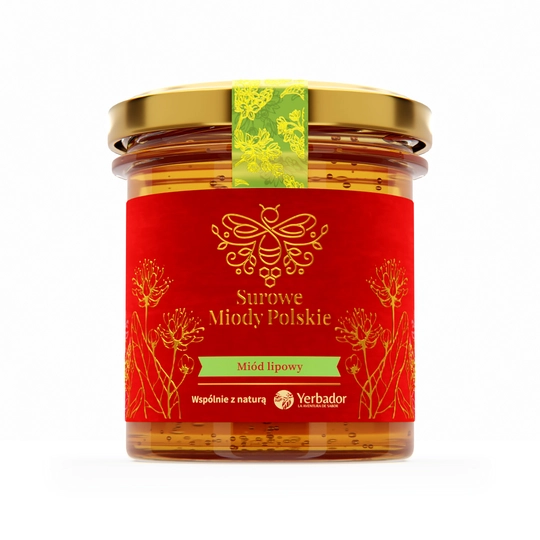
Linden honey differs from acacia honey at first glance – it has a noticeably darker, amber colour, and in flavour, alongside sweetness, there’s a slightly resinous, balsamic note that you won’t find in mild acacia. It’s this distinctive aftertaste that has made linden honey associated with hot tea on cold days in Poland for generations. In this article, we take a closer look at Raw Linden Honey from the Yerbador label: where this flavour comes from, how it really differs from other varieties, and how to use it.
Linden honey – where it comes from
The linden tree is one of the most popular honey-bearing trees in Poland – it grows in forests, parks and along city avenues, so in many Polish cities summer starts smelling of linden blossom long before it smells of anything else. The main honey-bearing species are small-leaved linden (Tilia cordata) and large-leaved linden (Tilia platyphyllos), which bloom later than black locust, usually from late June to mid-July, with small, pale yellow flowers with an intense, sweetish scent. This short window, lasting just over a dozen days, can be very intense – during this time, bees can bring exceptionally large amounts of nectar into the hive in a short period.
Yerbador’s Raw Linden Honey comes from the same apiaries in the West Pomeranian Voivodeship as the other varieties from the Raw Polish Honey line, where besides linden, bees also have access to heather, goldenrod and buckwheat.
What sets linden honey apart from other honeys
Unlike the light, almost transparent acacia honey, linden honey ranges in colour from light amber to dark gold, sometimes with a slightly greenish tint right after extraction. Its flavour is noticeably more complex than acacia – alongside the sweetness, there’s a distinctive, slightly bitter, resinous-minty note in the aftertaste, which beekeepers sometimes call “cooling.” This is the same trait that makes linden honey pair so well with hot drinks – it doesn’t get lost in the heat the way the more delicate acacia honey would.
It also crystallises faster than acacia honey, usually within a few months, forming a fine-grained, pale mass. This is a natural physical process, not a sign of lost quality or added sugar – real honey simply thickens over time.
In cities, you’ll also come across the Crimean linden (Tilia x euchlora), planted along avenues and squares precisely for its abundant blooming and resistance to urban conditions – it’s responsible for that distinctive, scent-heavy July in the centres of Polish cities. However, honey from such urban trees rarely makes it into a jar on a commercial scale, since beekeepers prefer to place hives away from exhaust fumes and traffic – which is why Yerbador’s Raw Linden Honey comes from rural apiaries, not city avenues.
What does “raw” mean in Yerbador Raw Polish Honeys
Raw honey doesn’t undergo pasteurisation or high-temperature heating, so it keeps the bee enzymes as well as the vitamins and minerals naturally present in the nectar. Mass-produced honeys are often heated to stay liquid longer on the store shelf, but this process destroys some of the enzymes and volatile aromatic compounds. Yerbador honeys are undiluted, handmade in small batches, with no added sugar or syrups – which matters especially for linden honey, since it’s exactly that resinous, balsamic aromatic note that disappears fastest under thermal processing.
Who linden honey works particularly well for
Linden honey most often ends up in the basket of people looking for a honey with a bold, recognisable character for tea or herbal infusions, rather than a neutral addition to yoghurt. It’s also a classic choice in autumn and winter, when in many Polish homes a hot tea with linden honey and lemon is as natural a part of the afternoon as a blanket on the sofa. This is a culinary tradition, though, not medical advice – honey remains a dietary supplement, not a medicine, and if you have an actual infection it’s worth consulting a doctor rather than replacing treatment with a spoonful of honey.
Important safety notice: no honey, including linden honey, should be given to children under 1 year of age. Honey may contain spores of the bacterium Clostridium botulinum, which are harmless to older children and adults but can cause infant botulism in babies. This is a standard paediatric recommendation, regardless of the brand or quality of the honey.
How to use linden honey every day
The natural place for linden honey is hot tea, added only once the infusion has cooled below 40 degrees so as not to destroy the bee enzymes, or warm milk before bed. It also works well as an addition to porridge, homemade sourdough bread or yoghurt, where its bold flavour doesn’t get lost in the background of other ingredients the way it might with a milder variety. In savoury cooking it pairs well with mustard marinades or glazing roasted root vegetables, where its slightly resinous note nicely balances the sweetness. A classic duo is linden honey, lemon juice and grated ginger poured over with hot (not boiling) water – a simple homemade infusion for winter evenings, with no sugar and no artificial flavourings.
At Yerbador, honey and yerba mate have been a natural duo for years – a spoonful of linden honey instead of sugar in your yerba mate infusion is a simple way to soften its natural bitterness without artificial sweeteners.
How much does this cost per serving
A 400 g jar of Raw Linden Honey goes a long way. With a typical teaspoon serving of around 7 g, you get about 57 servings out of it, so a single serving costs very little. Per 100 g of product there are 1336 kJ (about 319 kcal), 0 g fat, 78 g carbohydrates (including 68 g sugars) and 0.3 g protein – almost pure nectar, with no additives whatsoever.
Products worth starting with
Two options from our Raw Polish Honeys line, depending on whether you’re looking for a single everyday jar or a gift.
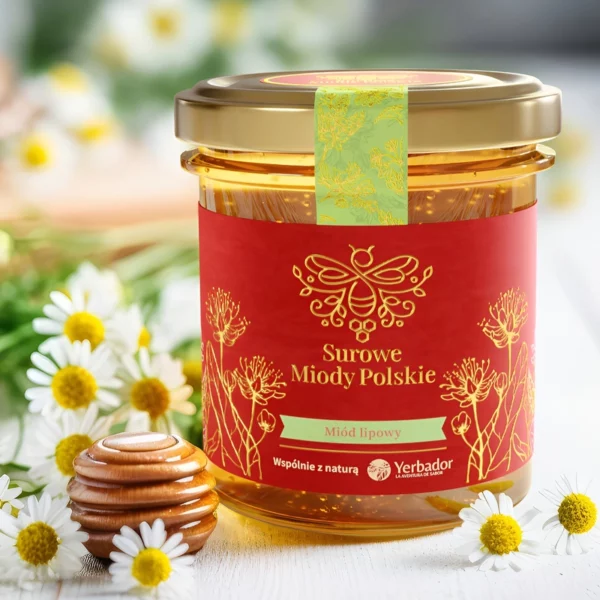
1. Raw Linden Honey – 400 g
The base of this article, an amber honey with a resinous, balsamic aftertaste, with no thermal processing and no added sugar.
Check the product: Raw Linden Honey – 400 g (see the current price)
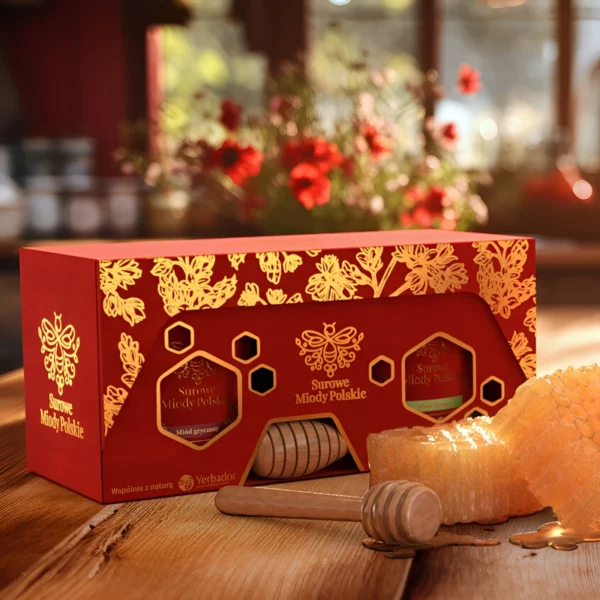
2. Raw Linden Honey Gift Set
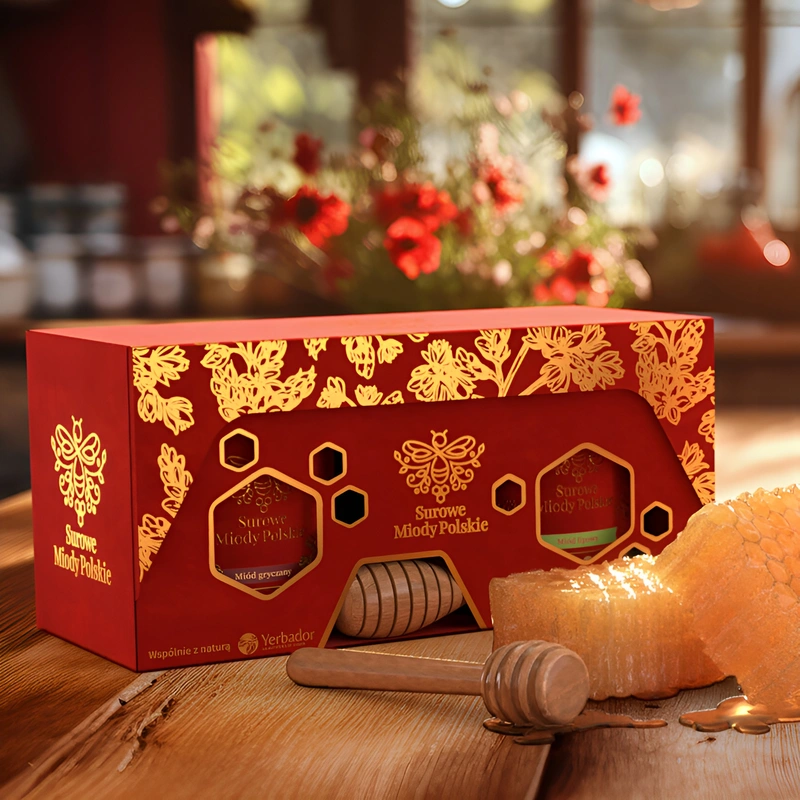
Two jars of linden honey together with a beech honey dipper, a ready-made gift with no extra wrapping needed.
Check the product: Raw Linden Honey Gift Set (see the current price)
Frequently asked questions about linden honey
Can linden honey be given to children?
Only after the first year of life. In infants, honey, regardless of variety, carries a risk of infant botulism due to the possible presence of Clostridium botulinum spores.
Does linden honey crystallise faster than acacia honey?
Yes. Acacia honey can stay liquid for even a dozen or so months, while linden honey usually crystallises after just a few months, forming a fine-grained, light structure. This is a normal process, not a defect.
How to tell real linden honey from a fake?
Real linden honey has an amber colour and a distinct, resinous-balsamic aftertaste behind the sweetness. Honeys diluted with glucose-fructose syrup are usually more uniformly sweet, without this complexity of flavour, and crystallise more slowly or not at all.
Does linden honey help with colds?
It is a dietary supplement, not a medicine. The tradition of adding it to hot tea is deeply rooted and loved in Poland, but in the case of a real infection it does not replace medical consultation or treatment.
How to store linden honey?
At room temperature, in a tightly sealed jar, away from sunlight. A fridge is not necessary, and it even speeds up crystallisation, so it’s better to keep the honey in a regular kitchen cupboard.
Linden honey is a variety for those who look for character in honey, not just sweetness – its resinous-balsamic aftertaste stays in memory for a long time and is hard to confuse with any other honey from a Polish apiary. If acacia honey was too subtle for you, this is probably the variety you’re looking for.
You can find more about the tree itself and its role in beekeeping in the article about the small-leaved lime on Wikipedia.
Discover our TOP products!
Your dream figure
Discover new flavors
Yerba mate with tea
Accessories
Superfoods
Certified raw honeys from Poland

Check the current price
free shipping
Up to 90 days
free returns
24 H
shipping