
Yerba Mate and Potassium – Is It a Good Source of This Mineral?
2026-08-19
Yerba mate and potassium is a question we hear from two different types of people. One is looking for an extra source of minerals in their daily infusion and checking whether a matero really delivers on that. The other has read somewhere that yerba is rich in potassium and wonders whether that’s a problem with kidney disease or blood pressure medication. We answer both questions in detail: how much potassium actually ends up in the cup, where the conflicting numbers online come from, and for whom this topic really matters.
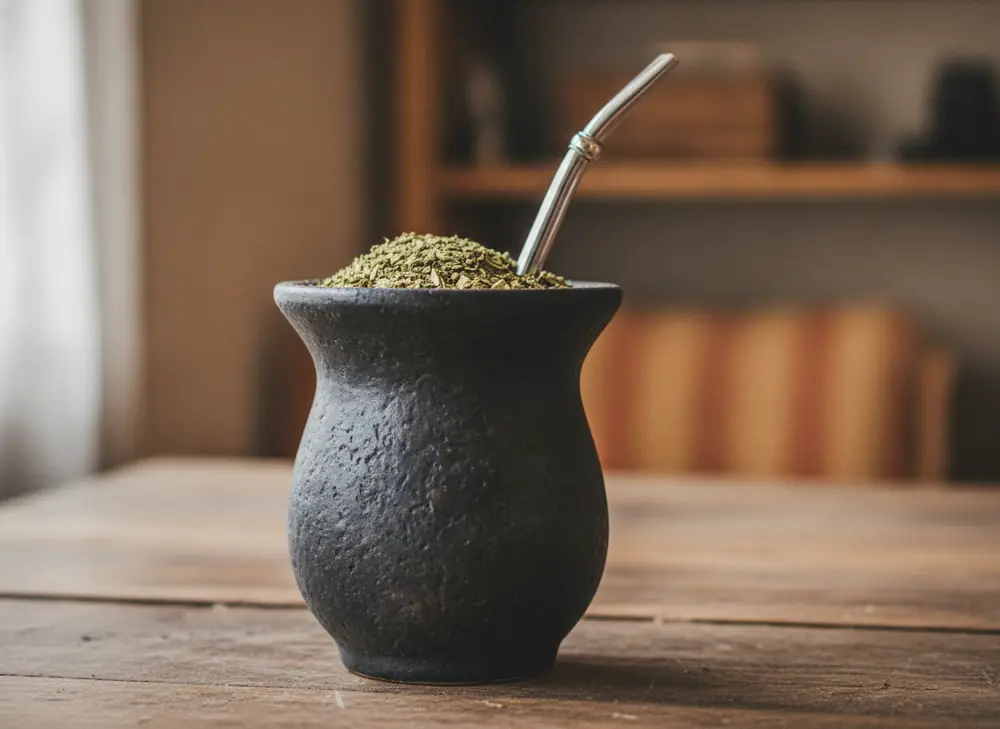
Yerba mate and potassium – how much is really in the infusion
Nutritional value tables published by yerba producers (including analyses of an infusion prepared with water at around 70°C) indicate roughly 148 mg of potassium per 100 ml of ready infusion, alongside about 45 mg of magnesium. This is the value of the liquid itself that you drink – not the raw dried leaves that stay in the matero and that you don’t eat. The reference daily intake of potassium for an adult, set by EFSA (European Food Safety Authority), is 3500 mg. Even several rounds of yerba a day cover only a few percent of that requirement, not more.
For comparison: an average banana has about 400–450 mg of potassium, meaning it alone delivers more than a good chunk of a day’s worth of yerba drinking. A medium-sized baked potato can give as much as 900 mg. Yerba mate won’t replace vegetables and fruit as a source of potassium in your diet – it makes sense as an addition to the rest of your menu, alongside all the other minerals carried by the dried leaves of the yerba mate holly, not as a substitute for them.
Why the composition of dried leaves and the composition of the infusion are two different numbers
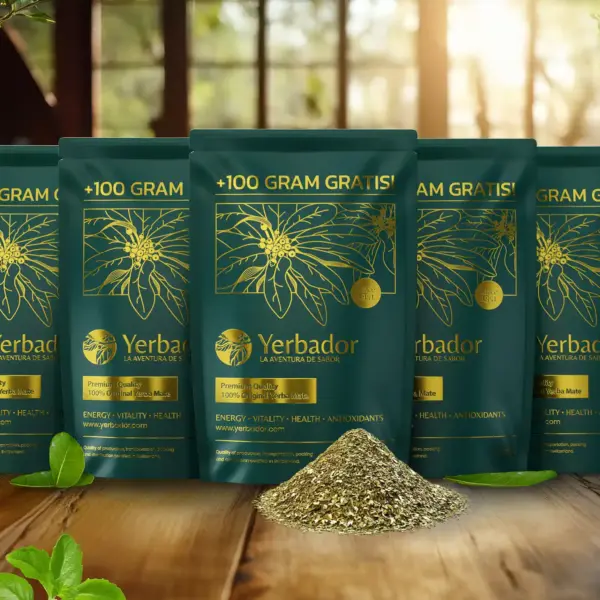
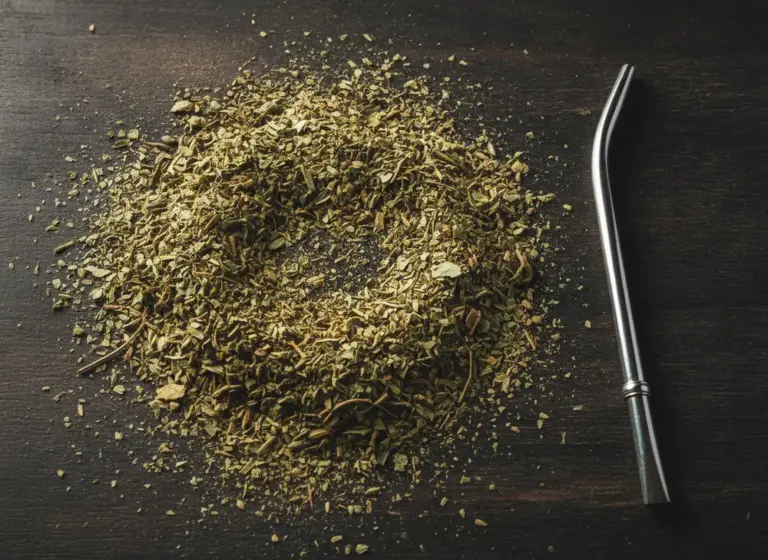
This is where most people get confused. Dried yerba mate holly leaves are indeed rich in minerals – our Yerbador Immuno dried leaves product description explicitly lists magnesium, calcium, silicon, iron, potassium, zinc and phosphorus as part of over 160 compounds found in the leaf. The problem is that when you drink yerba, you don’t eat the leaf. You pour hot water over it, drink the infusion through a bombilla, and the dried leaves stay in the matero, ending up in the bin or compost after a few rounds.
How many minerals actually pass from the leaf into the water depends on the temperature of the water, brewing time, the number of rounds (cebadas) and how finely cut the dried leaves are. That’s why two people drinking „the same” yerba can end up drinking a different amount of potassium – one pours once and discards the leftover leaves, the other keeps the matero going for half a day, topping up water six or seven times. In practice, this means yerba mate is a moderate, not a significant, source of potassium in the diet, regardless of how many times you top up the water.
What the body needs potassium for
Potassium is one of the most important electrolytes in the body, alongside sodium and magnesium. It’s responsible for muscle function, including the heart muscle, for nerve conduction and for water-electrolyte balance in cells. Potassium deficiency (hypokalemia) presents as weakness, muscle cramps, and in extreme cases, heart rhythm disturbances. Excess potassium (hyperkalemia) is rare in a person with healthy kidneys, since the body efficiently removes the surplus through urine – the problem arises only when the kidneys aren’t performing this function properly, which is covered in more detail further on.
It’s worth adding that potassium from yerba is only part of the picture. The same dried leaves also carry magnesium, which supports muscle and nervous system function, along with B vitamins involved in energy metabolism. Drinking yerba is therefore a set of small, complementary doses of minerals, not one „miracle” ingredient.
Potassium, sodium and blood pressure
Potassium and sodium act in the body like counterweights. A diet rich in sodium (lots of salty snacks, fast food, ready-made sauces) and low in potassium tends to raise blood pressure. The opposite ratio – more vegetables, fruits, legumes, less salt – is protective. Yerba mate itself isn’t a concentrated enough source of potassium to really shift this balance, but as a hot, unsweetened drink replacing, say, sweetened fizzy drinks or coffee with lots of sugar, it can be a neutral or slightly beneficial element of a blood-pressure-conscious diet. That’s a side effect of the drink choice, not a medicinal property of yerba itself.
When potassium from yerba matters – kidney disease and dialysis
There is one group of people for whom even a moderate amount of potassium from infusions can matter: patients with chronic kidney disease, especially at an advanced stage, and people on dialysis. Damaged kidneys remove excess potassium from the blood less efficiently, so doctors and renal dietitians often recommend a low-potassium diet and counting every source of this mineral, including herbal infusions and teas. In this situation, drinking yerba – just like eating bananas, potatoes or tomatoes – should be discussed with the attending physician or a clinical dietitian, not decided on your own based on an article found online.
The same applies to people taking potassium-sparing medications (some diuretics, certain ACE-inhibitor blood pressure medications) – interactions are rarely dramatic with moderate yerba drinking, but it’s worth mentioning to your doctor during a routine visit, especially if you drink yerba daily and in large amounts.
How much yerba per day for this to matter
For a healthy person without kidney disease, potassium from yerba practically doesn’t exist as a risk – even several matero cups a day is still a tiny fraction of the daily requirement. The real limiting factor for drinking yerba remains caffeine and xanthines, not potassium: 2–3 servings a day (i.e. a few rounds of matero spread throughout the day) is a range most people tolerate without any problem, as long as they don’t reach for yerba right before bed. If you specifically care about potassium in your diet, a plate of vegetables and fruit will work far more effectively than pouring another round into your matero.
Where our dried leaves come from
The mineral composition of yerba also depends on where the leaf comes from and how it was dried. Our Yerbador dried leaves come with an analysis certificate from the Institute of Natural Fibres and Medicinal Plants (IWNIRZ, chromatography and authenticity confirmation), compliance with the reference standard confirmed by J.S. Hamilton, and testing for heavy metals, pesticides and PAHs carried out by GBA Polska. On top of that, there are ECOCERT and Organic Brasil certificates plus HACCP throughout the production chain. For anyone asking about the actual mineral content, this is more important information than the numbers in a table alone – dried leaves without reliable testing can have a composition far removed from what’s shown on a competitor’s label.
Our products to try
If you want to introduce yerba into your daily diet as a light mineral-energy addition, not just an occasional drink, start with dried leaves offering a full, classic flavour profile and a proven origin.
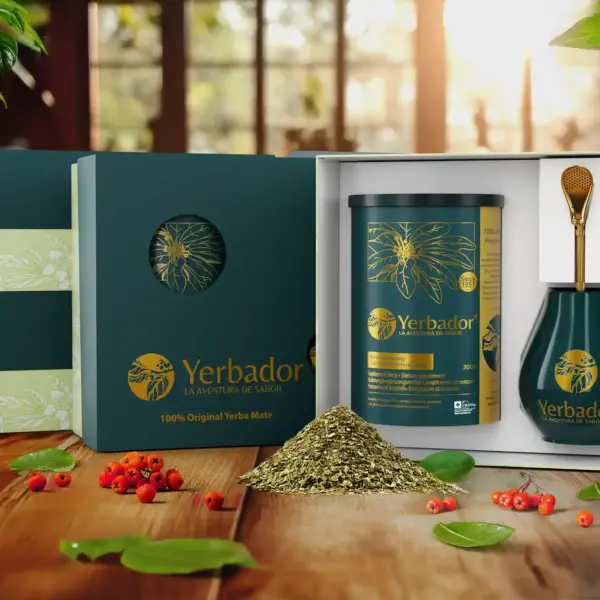
Check out the product: Yerba Mate Immuno + Beech Scoop
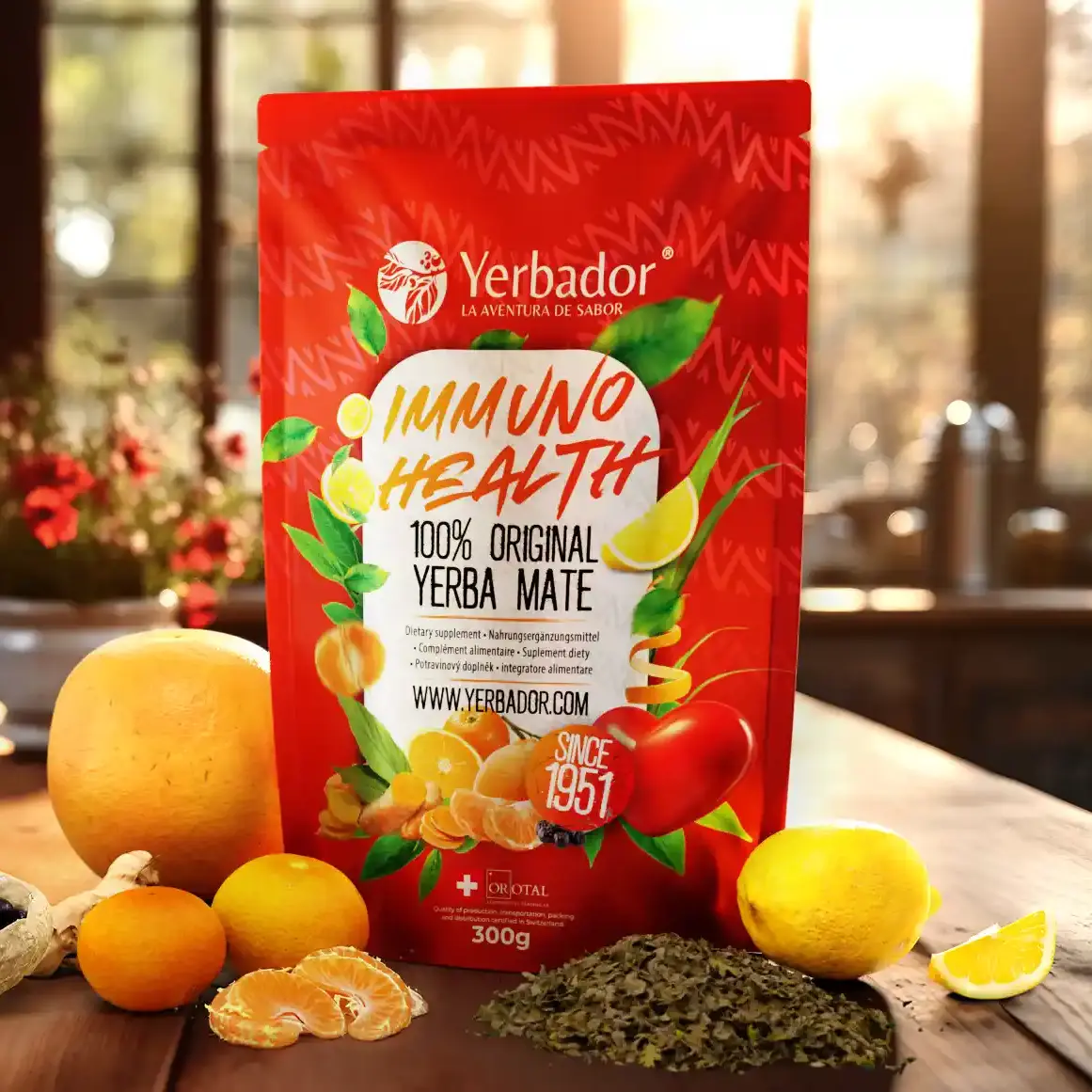
This variant is a great starting point for anyone who thinks of yerba mate primarily as a source of minerals and B vitamins, complete with a beech wood scoop for measuring out portions.
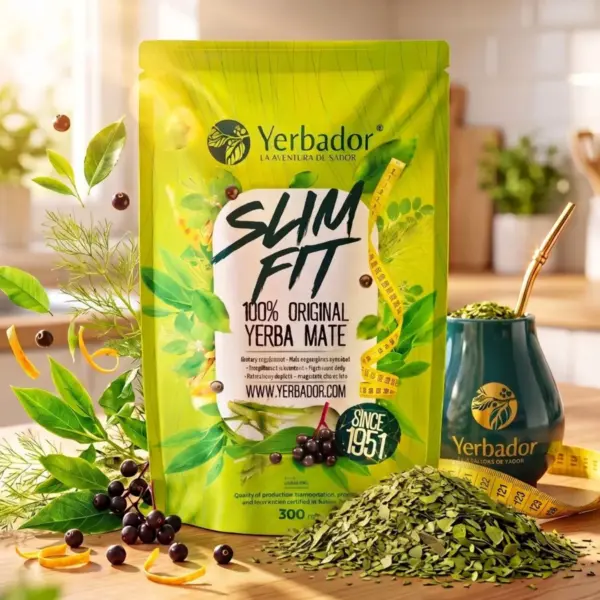
Check out the product: Slim Fit Starter Set – Matero, Bombilla, Scoop and Yerba
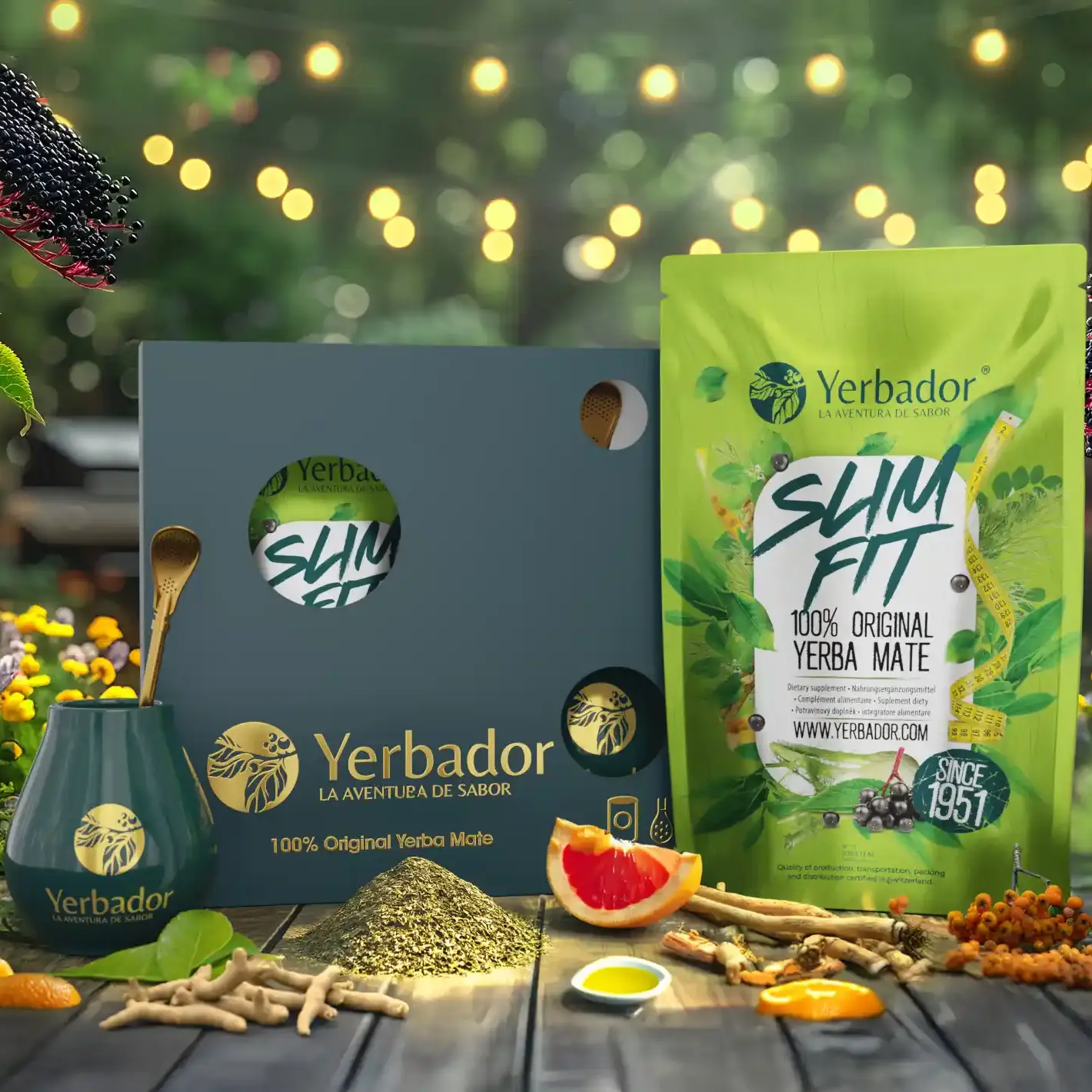
A set for people who are just starting their yerba mate journey and want to have everything needed for brewing in the classic style right away, including a bombilla and matero.
Check out the product: Yerba Mate Starter Set – Rose Gardens + Beech Scoop
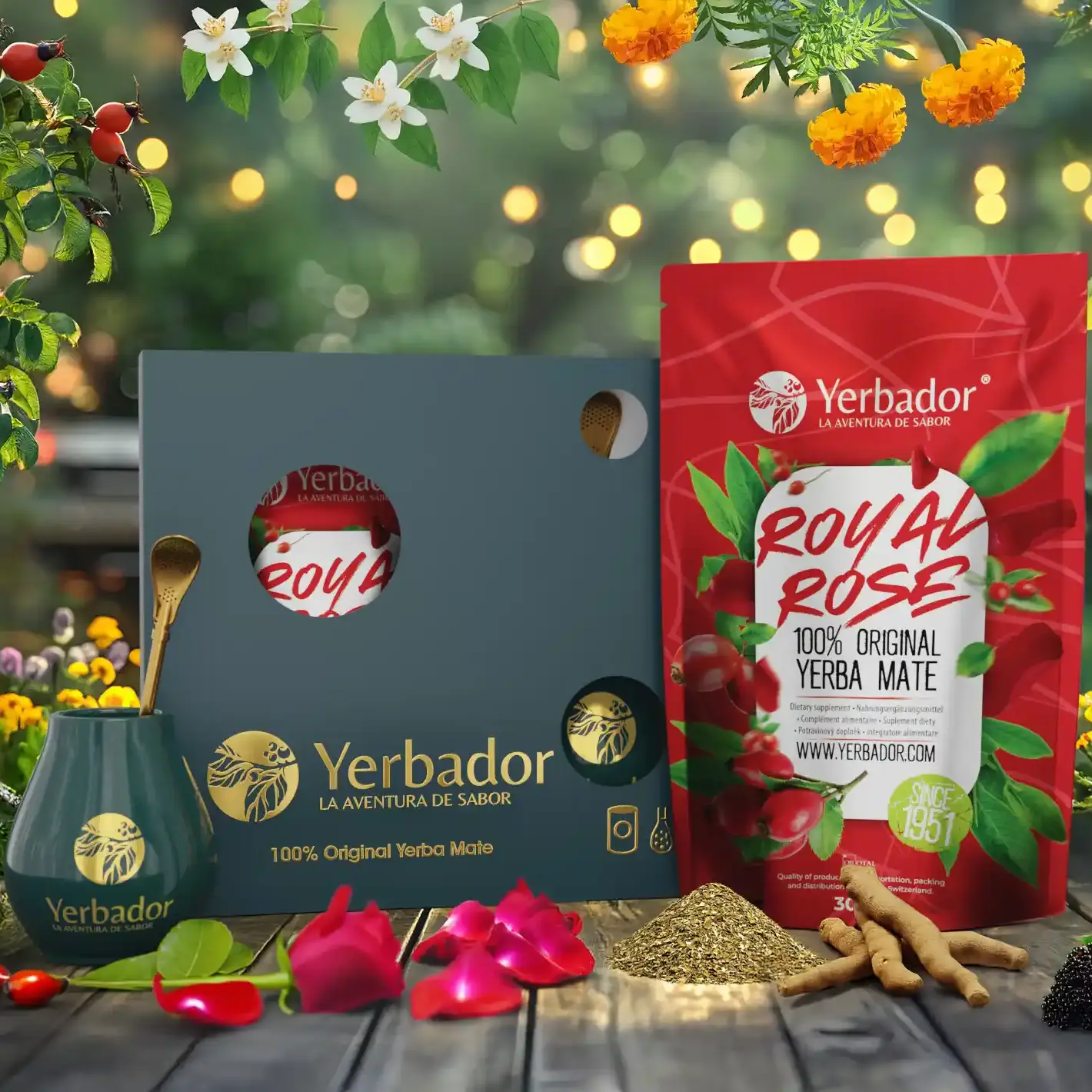
For those who prefer a milder, floral flavour profile, but still want a full set for brewing the traditional way, in rounds, with a bombilla.
Yerba Mate and Potassium – Frequently Asked Questions
Is yerba mate a good source of potassium?
Moderately. The infusion provides a real, but small amount of potassium compared to vegetables and fruits – treat it as a supplement to your diet, not its foundation.
Can people with kidney disease drink yerba mate?
It depends on the stage of the disease and your doctor’s recommendations. On a low-potassium diet, it’s worth consulting a nephrologist or clinical dietitian about drinking yerba mate (and other infusions).
Does drinking more rounds from the matero mean more potassium in the infusion?
Subsequent rounds usually contain less minerals and caffeine than the first, as the leaves gradually get “washed out”. Overall, drinking several rounds still provides a moderate, not high, dose of potassium.
Does potassium from yerba mate affect blood pressure?
The infusion alone isn’t a concentrated enough source of potassium to noticeably lower blood pressure. However, it can be a healthier choice than sweetened drinks or excess coffee in a blood-pressure-conscious diet.
How much potassium does a glass of yerba mate have compared to a banana?
Roughly a few dozen to a few hundred milligrams per serving of infusion versus 400–450 mg in an average banana – the banana wins as a source of potassium, yerba mate wins as a source of energy and a drinking ritual.
Yerba Mate for Your Business or Shop
Do you run a shop, café or office where yerba mate would work better than a vending machine full of energy drinks? We operate wholesale – details are described on our Yerbador B2B wholesale page, and we prepare quotes individually.
Discover our TOP products!

Your dream figure

Discover new flavors

Yerba mate with tea

Accessories

Superfoods

Certified raw honeys from Poland



Check the current price
free shipping
Up to 90 days
free returns
24 H
shipping