
Thompson Raisins – Properties, Composition and How to Eat Them
2026-09-12
Raisins are mainly associated with sweet buns, cheesecake or school trips, where they ended up in a backpack as a filler between sandwiches. They’re rarely seen as a conscious snack choice, which is a shame, because dried grapes have a composition that beats many other sweet snacks hands down.
In this article, the specifics: what grape variety Thompson raisins come from, what properties they have, how to eat them daily and for whom this snack might not be the best idea. No exaggeration – it’s a tasty addition to a diet, not a substitute for fresh fruit or medicine.
What are Thompson raisins and where do they come from
Raisins are simply dried grapes, and Thompson Seedless is one of the most popular varieties used for this purpose in the world. The variety originates from the region of Asia Minor, though it owes its name and worldwide career to California, where it has been grown on a massive scale since the 19th century – today, besides California, the main producers of raisins from this variety are Turkey, Iran and Australia. More about the plant itself and its cultivation can be found on Wikipedia.
A fresh grape is mostly water, so drying – traditionally in the sun, today more often in drying tunnels – evaporates most of it and concentrates the flavor and nutritional value into a much smaller volume. Yerbador Thompson Raisins have a composition limited to 100% dried raisins, with no added oil or preservatives, which some manufacturers use to keep the grains from sticking together in the package.
Properties of Thompson Raisins
- A source of potassium, important for muscle function, including the heart, and for regulating blood pressure.
- They contain copper, an element involved in the production of red blood cells.
- They provide vitamin B6, essential for energy metabolism and the nervous system.
- A practical snack with no need for peeling, cutting or refrigeration.
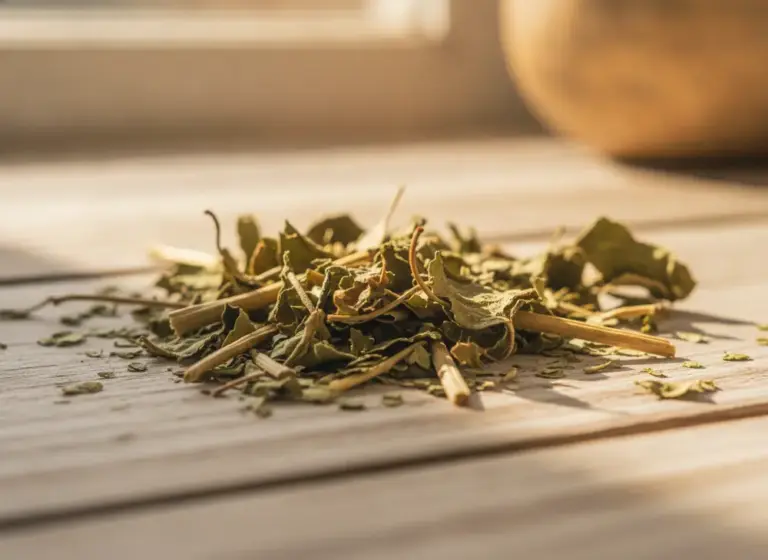
The dark color of Thompson raisins is actually a good sign. Light, golden raisins (also sold as sultanas) usually owe their color to sulfur dioxide, added as a preservative to prevent darkening during drying. Dark, naturally dried raisins don’t need this additive – they darken on their own, as this is a normal effect of sugar oxidation during sun drying, not a sign of lower quality.
What raisins contain and what to watch out for
As with any dried fruit, removing the water also concentrates the natural sugar contained in the grapes. A handful of raisins means more sugar in the same volume than a handful of fresh grapes, so it’s more of a snack to eat in moderation than a product without limits, especially on a carb-counting diet.
The second issue is additives. Some raisins on the market have vegetable oil listed on the label, added to make the grains shiny and prevent sticking, as well as preservatives in lighter varieties. Yerbador Thompson Raisins have a composition limited to just the fruit, so it’s worth checking this with every purchase – a long list of ingredients in such a simple product by design is usually a warning sign.

How to eat raisins every day
The simplest way – by the handful, straight from the bag, as an alternative to gummy candies or sweets. Added to porridge, muesli or natural yogurt, they add natural sweetness without adding sugar, and they also plump up and become juicier.
In savory cooking, raisins have a long tradition – in couscous, rice or potato pancakes in Jewish and Middle Eastern cuisine, they add contrasting sweetness to salty and spicy flavors. They also work well in homemade granola, muffin batter or sourdough bread, where they can partially replace sugar in the recipe. A good idea for a travel snack is a mix of raisins with nuts – the classic “trail mix”, in which the sweetness of the fruit balances the richness and crunch of the nut, together giving satisfying energy for longer than dried fruit alone.
Who might not find raisins the best choice
Raisins are a fruit, not a medicine, and despite their good reputation, they won’t suit everyone without reservation. A few situations where caution is worthwhile:
- Diabetes and diets with controlled sugar intake – raisins have a concentrated sugar content, so it’s worth counting them toward your daily carbohydrate balance, not treating them as a product with no caloric significance.
- Small children – small portions as a snack are usually fine, but the tiny size and sticky texture can be tricky for the youngest kids, so it’s worth keeping an eye on how your child eats them.
- Weight management – raisins are calorie-dense for their volume, so it’s easier to overeat them compared to the same weight of fresh grapes.
- Sensitive digestive system – large portions of dried fruit can be hard to digest and may worsen bloating in people with a sensitive gut.
If none of these situations apply, common sense about portions remains the key – a handful a day as a snack is a sensible amount, not half the pack at once.
Yerbador Thompson Raisins and what to pair them with
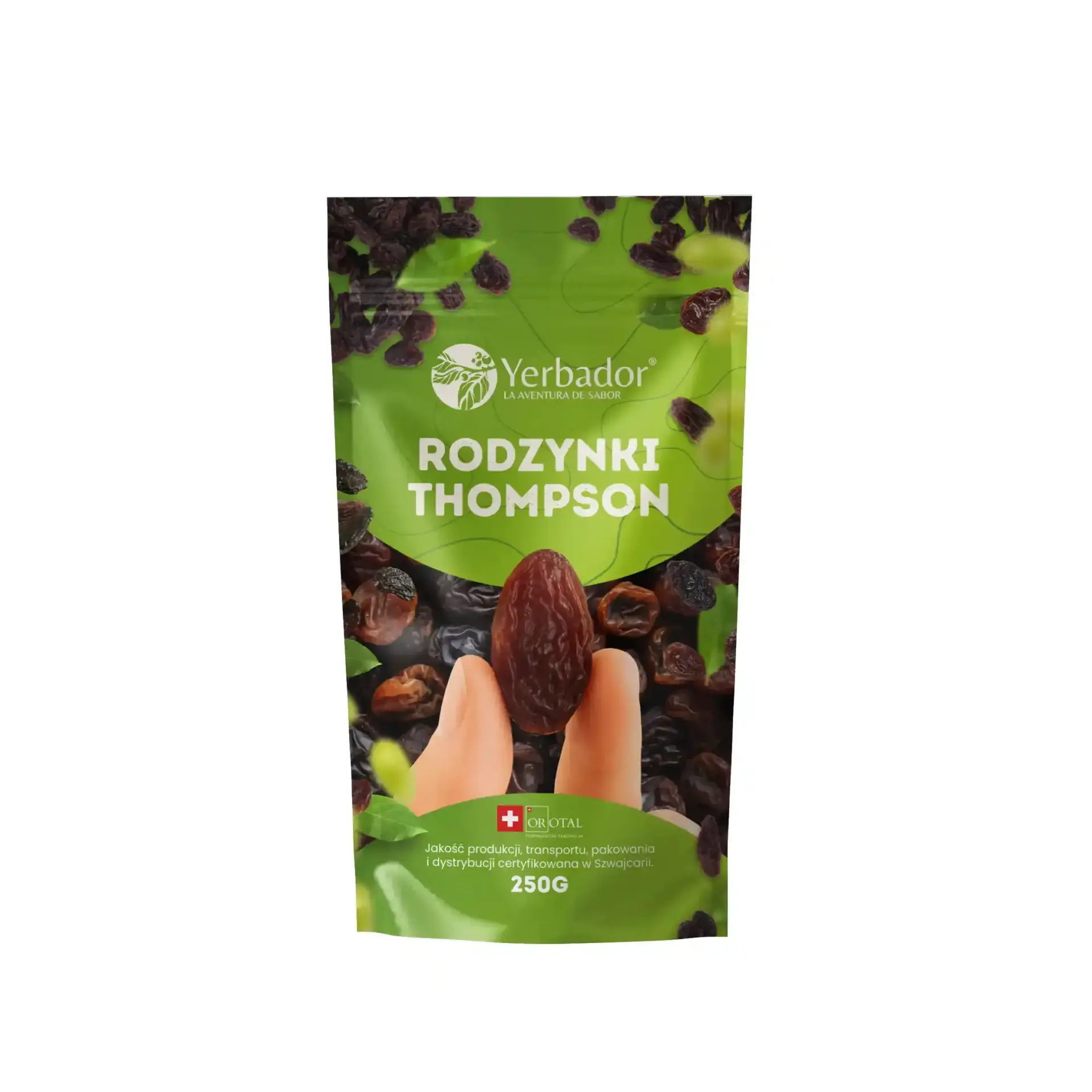
Yerbador offers Thompson Raisins 200 g at a special price (reduced from the regular price) – the ingredients list is limited to 100% dried fruit, with no added oil or preservatives. The quality of production, transport, packaging and distribution is certified in Switzerland.

Thompson Raisins 200 g – see product
It’s worth adding Dried Mango 250 g to your bowl of dried fruit and nuts – the tropical sweetness of mango nicely balances the denser, more wine-like flavour of raisins.
Dried Mango 250 g – see product
The classic “trail mix” is completed by Cashew Nuts 250 g – the buttery taste of the nuts and the sweetness of raisins are a time-tested combination for energy between meals.
Cashew Nuts 250 g – see product
FAQ – frequently asked questions
How many raisins can you eat per day?
There’s no single strict rule, since it’s a snack, not a medicine with a dosage on the label. In practice, a handful, or about 30-40 g, is a reasonable daily portion that gives flavor and benefits without overdoing the concentrated sugar found in dried fruit.
Why are Thompson raisins dark, not golden like sultanas?
Because they contain no added sulphur dioxide, a preservative that prevents darkening and gives sultanas their light colour. Naturally dried raisins without this additive darken over time, which is a normal effect, not a sign of lower quality.
How to store raisins so they don’t harden?
In a tightly sealed container or jar, away from moisture and heat sources. An open package left on the kitchen counter loses moisture and flexibility faster than a sealed one, so it’s worth transferring the leftovers to a jar right after opening the bag.
Are raisins suitable for children?
Yes, as a snack in a reasonable portion, though the small size and sticky texture require supervision, especially with the youngest children, as with other dried fruits.
Raisins won’t replace fresh grapes, but as a snack for work, an addition to porridge or an ingredient in homemade granola, they have a simple composition and a distinct flavour. Check out Yerbador Thompson Raisins and see if they’ll earn a lasting spot in your kitchen cupboard.
Discover our TOP products!


Your dream figure


Discover new flavors



Yerba mate with tea




Accessories





Superfoods



Certified raw honeys from Poland





Check the current price
free shipping
Up to 90 days
free returns
24 H
shipping