
Dried Mango – Properties, Composition and How to Eat It
2026-09-12
Dried mango used to be associated mainly with an expensive health food shop and a price that effectively discouraged buying it more than once in a while. Today, these fleshy, orange slices land in more than one desk drawer as a quick snack between meetings – no need to peel, cut, or refrigerate them.
In this article, the essentials: where the mango that ends up dried on the shop shelf comes from, what properties it has, how to eat it day to day, and for whom this snack might not be the best idea. No exaggeration – it’s a tasty addition to your diet, not a substitute for fresh fruit or medicine.
What dried mango is and where it comes from
Mango (lat. Mangifera indica) is a tree from the cashew family, the same family as cashew nuts and pistachios, cultivated for thousands of years in South Asia. From there it spread to almost all tropical zones of the world – today the main exporters of dried mango are India, Thailand, Mexico, and Central American countries. You can find out more about the plant itself and its cultivation on Wikipedia.
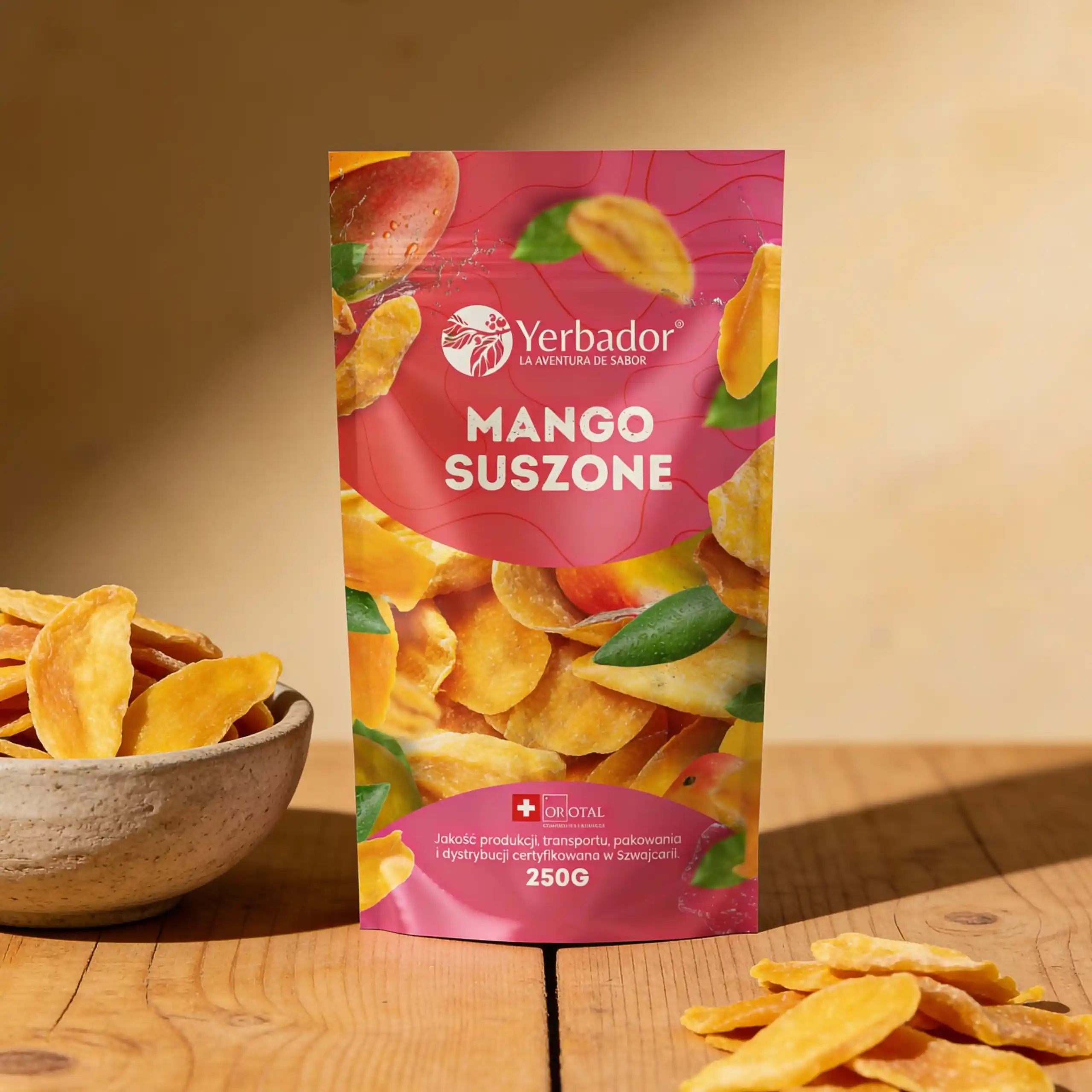
Fresh mango is juicy, ripens quickly and spoils just as fast, which is why a large part of the harvest is dried right after picking. This process removes most of the water, concentrates the flavour and extends the fruit’s shelf life from a few days to many months – that’s exactly what makes dried mango a convenient alternative wherever fresh fruit isn’t practical: in an office drawer, a hiking backpack or a locker at work. Yerbador Dried Mango has a composition limited to 100% dried fruit, with no added sugar, which for this particular fruit is far from the market norm – some producers sweeten the slices with syrup to boost the natural sweetness.
Properties of dried mango
- A source of dietary fibre that supports proper digestion.
- Contains carotenoids, from which the body produces vitamin A, important for eyesight and skin condition.
- Provides potassium, an element essential for muscle and nervous system function.
- A practical snack with no need for peeling or cutting.
The intensely orange colour of mango flesh is due precisely to carotenoids, including beta-carotene, a precursor of vitamin A. Drying doesn’t destroy these compounds to any significant extent, since it’s mainly water that evaporates from the fruit, while the rest of its components remain in a smaller volume – which is why dried fruits are sometimes called a concentrated version of their fresh counterpart.
What dried mango contains and what to watch out for
As with any dried fruit, there’s one thing to keep in mind: removing water also concentrates the natural sugar contained in mango. A handful of dried slices means more sugar in the same volume than a handful of fresh fruit, which is why it’s more of a snack to eat in moderation than an unlimited product, especially on a diet that tracks carbohydrates.
The second issue is additives. Some dried mango on the market has sugar or glucose-fructose syrup listed on the label, added to boost the fruit’s natural sweetness and speed up drying. Yerbador Dried Mango has a composition limited to the fruit alone, so it’s worth checking this with every purchase – a long ingredient list for such an inherently simple product is usually a warning sign.
How to eat dried mango every day
The simplest way – by the handful, straight from the bag, as an alternative to jelly sweets or a chocolate bar. Cut into smaller pieces, it works well in porridge, muesli or plain yoghurt, where it adds natural sweetness without adding sugar.
In the kitchen, dried mango also goes well with savoury dishes – in a salad with chicken, rice and coriander it works much like raisins do in Middle Eastern cuisine, adding a contrasting sweetness to salty and spicy flavours. It also works well as an addition to homemade granola or cakes, where it can replace part of the sugar in a recipe. A great idea for a travel snack is combining mango with cashew nuts – the fruit’s sweetness and the nut’s delicate, buttery flavour complement each other nicely, together giving a filling mix that lasts longer than dried fruit alone.

Who dried mango might not be the best choice for
Dried mango is a fruit, not a medicine, and despite its good reputation, it won’t suit everyone without reservations. A few situations where it’s worth being cautious:
- Diabetes and diets with controlled sugar intake – dried fruits have a concentrated sugar content, so it’s worth counting them toward the daily carbohydrate balance rather than treating them as a product with no caloric significance.
- Allergy to mango or plants from the cashew family – people allergic to cashew nuts or pistachios can sometimes also be sensitive to mango, especially to the fruit’s skin.
- Children – small portions as a snack are usually fine, but the chewy texture and sugar content require keeping an eye on portion size.
- Weight control – dried fruit is calorie-dense for its size, so it’s easier to overeat than the same weight of fresh fruit.
If none of these situations apply, common sense about portions remains the key – a handful a day as a snack is a sensible amount, not half the pack at once.
Yerbador Dried Mango and what to pair it with
Yerbador offers Dried Mango 250 g – check the current price – the ingredients list is limited to 100% dried fruit, with no added sugar. The quality of production, transport, packaging and distribution is certified in Switzerland.

Dried Mango 250 g – see product
It is worth adding Thompson Raisins 200 g – check the current price to your snack set – dark, meaty raisins, a source of potassium, copper and vitamin B6, with a flavour that nicely balances the tropical sweetness of mango in a single bowl of dried fruit mix.
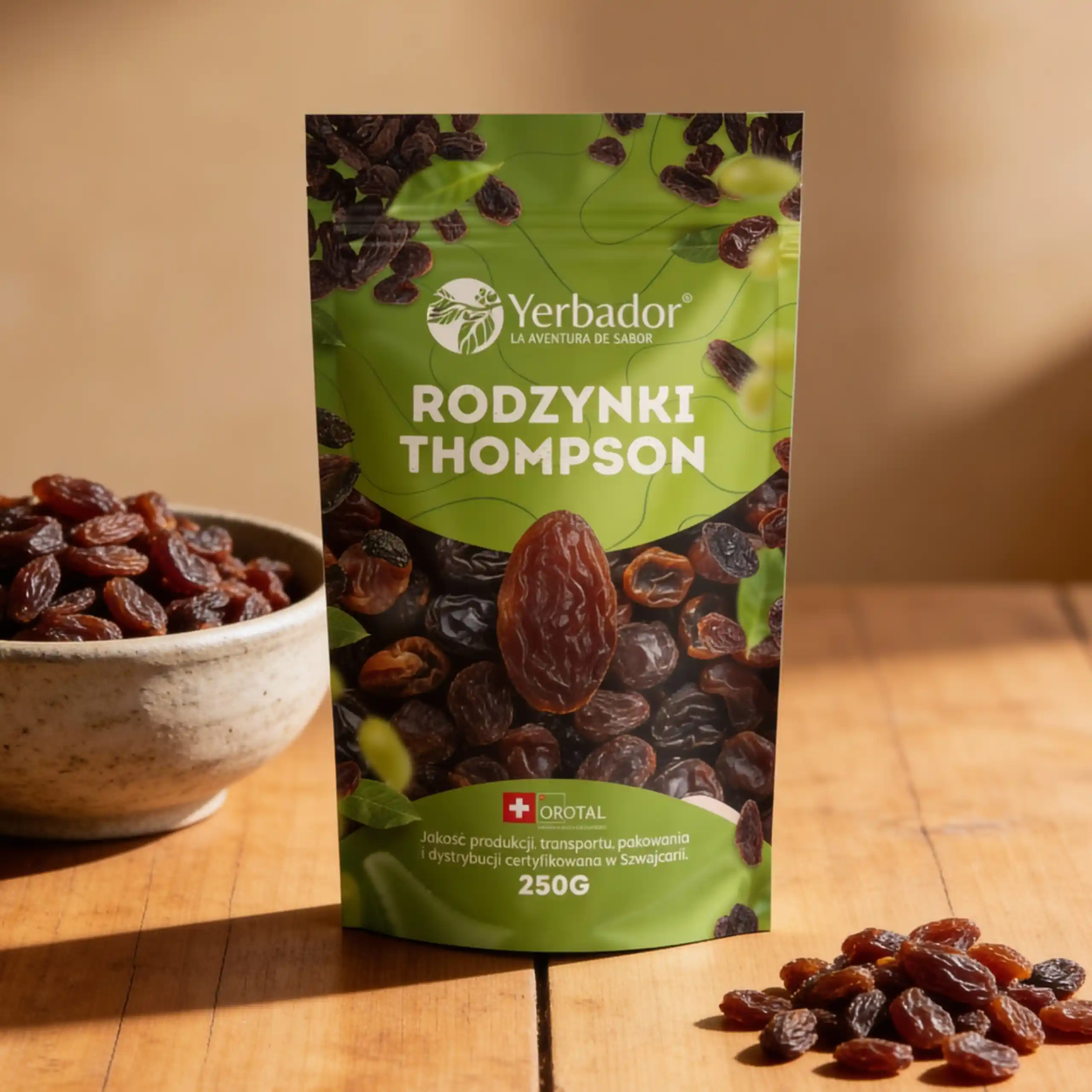
Thompson Raisins 200 g – see product
FAQ – frequently asked questions
How much dried mango can you eat per day?
There’s no single strict rule, since it’s a snack, not a medicine with a dosage on the label. In practice, a handful, or about 30-40 g, is a reasonable daily portion that gives flavor and benefits without overdoing the concentrated sugar found in dried fruit.
Does dried mango have added sugar?
Yerbador Dried Mango has a composition limited to 100% fruit, with no added sugar. However, it’s worth checking the label on other products, as mango sweetened with glucose-fructose syrup is sometimes found on the market.
How to store dried mango so it doesn’t harden?
In a tightly sealed container or jar, away from moisture and heat sources. An open package left on the kitchen counter loses moisture and flexibility faster than a sealed one, so it’s worth transferring the leftovers to a jar right after opening the bag.
Is dried mango suitable for children?
Yes, as a snack in a reasonable portion, although the chewy texture and sugar content require watching the portion size, just as with other dried fruits.
Dried mango won’t replace fresh fruit, but as a snack for work, travel or morning oatmeal, it has a simple composition and a distinct flavor. Check out Yerbador Dried Mango and see if it earns a permanent spot in your kitchen cupboard.
Discover our TOP products!





Your dream figure


Discover new flavors



Yerba mate with tea



Accessories





Superfoods






Certified raw honeys from Poland






Check the current price
free shipping
Up to 90 days
free returns
24 H
shipping