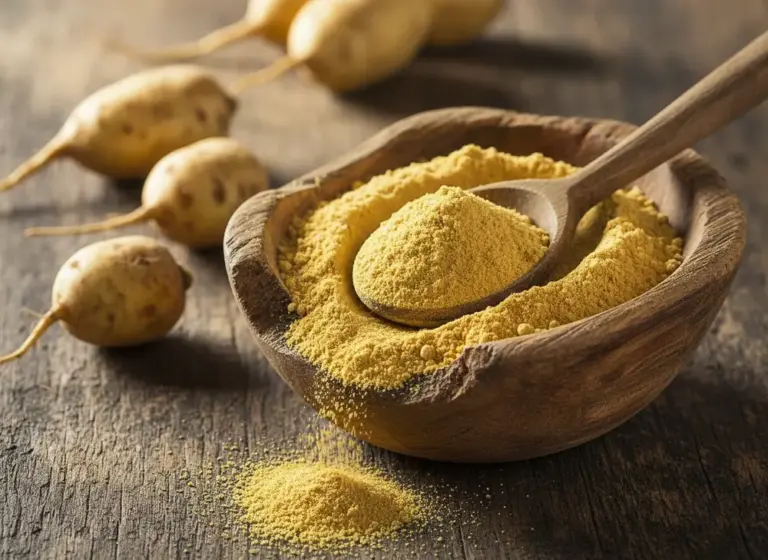

Rapeseed Honey – Properties, Composition and How to Recognise It
2026-09-11
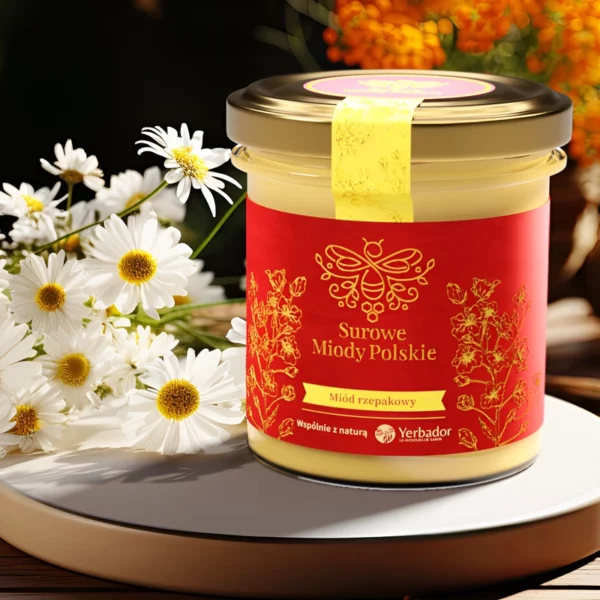
You can recognise rapeseed honey right away by its texture: it’s one of the few honeys that look almost like butter in the jar, thick and creamy, instead of flowing like multifloral or linden honey. The reason is simple, rapeseed crystallises faster than almost any other variety. In this article we take a closer look at Raw Rapeseed Honey from the Yerbador label: where this fast crystallisation comes from, what really sets rapeseed apart from other honeys, and how to use it so you’re not surprised when the jar turns hard after just a week.
Rapeseed honey – where it comes from
Rapeseed, in Latin Brassica napus, blooms in Poland at the turn of April and May, turning entire stretches of fields into intensely yellow carpets visible from afar. It’s one of the most abundant nectar-bearing plants in our climate, as bees can gather far more nectar from a single hectare than from most other crops. Thanks to this, rapeseed honey is one of the most common varieties on the Polish market, even though the rapeseed flower itself isn’t associated with anything special beyond the intense scent hanging over the fields during the blooming season.
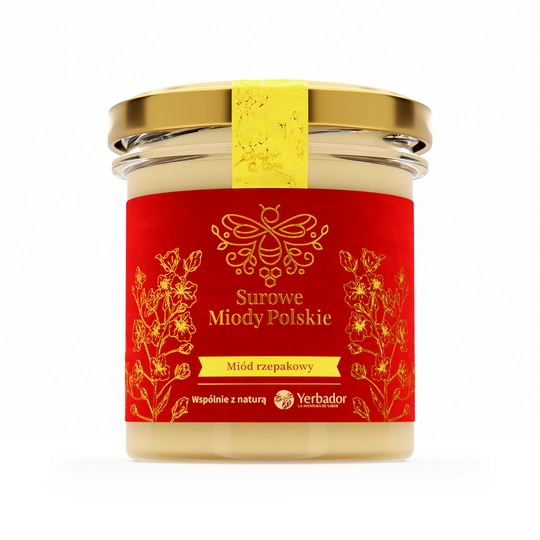
Yerbador Raw Rapeseed Honey comes from the same apiaries as the other varieties in the Raw Polish Honeys line, surrounded by fields and natural vegetation, where bees gather nectar depending on what’s blooming that month. The honey is made without heat treatment and without dilution, in small, artisanal batches.
What sets rapeseed honey apart from other honeys
The most distinctive feature of rapeseed honey is its crystallization rate. It has a high glucose-to-fructose ratio, and it’s glucose that’s responsible for crystal formation. In practice, this means that freshly extracted rapeseed honey can harden within days to a few weeks, much faster than acacia honey, which can stay liquid for months. This isn’t a flaw, just a natural trait of the variety, and for this same reason rapeseed honey is often used as a base for creamed honeys with a smooth, velvety texture.
The colour is light, ranging from almost white to light cream, and the flavour is mild and delicately floral, without the intensity found in buckwheat or honeydew honey. According to the product description, rapeseed honey is a source of folic acid and B vitamins, and also contains minerals such as calcium and magnesium, which support proper bone and muscle function.
What does “raw” mean in Yerbador Raw Polish Honeys
Raw honey is honey that hasn’t undergone pasteurisation or high-temperature heating, so it retains bee enzymes and vitamins that heating partially destroys. Honeys sold in bulk at supermarkets are usually heated to stay liquid longer on the shelf, which is a fairly common practice especially with the rapeseed variety, since its natural, fast crystallization is often mistaken by customers for spoilage. Yerbador honeys are undiluted and hand-produced in limited batches, with no added sugar or syrups, so the rapeseed honey crystallizes as it naturally should, instead of being artificially kept liquid.
Who rapeseed honey is especially suited for
Rapeseed honey most often ends up in the baskets of those looking for a mild, versatile flavour without the bold, spicy notes found in dark honeys. It works well as a first honey for children after their first year of life, precisely because of its gentle taste, and its creamy texture spreads beautifully on bread, without the dripping familiar to anyone who’s tried spreading liquid honey on a sandwich. That said, it’s a dietary supplement, not a medicine, so treat it as support for your everyday diet rather than a cold remedy.
Important safety note: no honey, including rapeseed honey, should be given to children under 1 year of age. Honey may contain spores of the bacterium Clostridium botulinum, which are harmless to older children and adults but can cause infant botulism in babies. This is a standard paediatric recommendation, regardless of the brand or quality of the honey.
How to use rapeseed honey every day
Crystallized rapeseed honey is most conveniently used straight from the jar with a spoon, just like peanut butter, since its thick texture spreads beautifully on bread without dripping. If you prefer it in liquid form, simply place the jar in a bowl of warm — not hot — water, below 40 degrees, so as not to destroy the bee enzymes. Rapeseed honey also works well in natural yoghurt with fruit, in porridge, and as a natural sweetener for tea once it’s cooled slightly, since boiling water also destroys some of its properties. Thanks to its mild flavour, it won’t overpower more delicate dishes, which is why it’s often chosen for baking, for example gingerbread or honey cake, where sweetness matters more than a bold aroma.
How much does this cost per serving
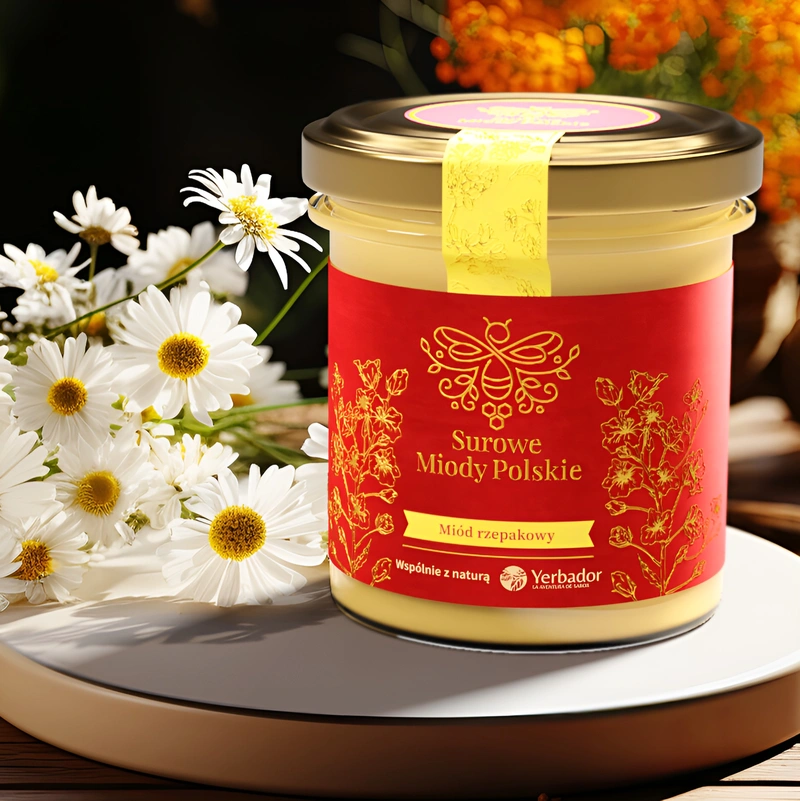
A 400 g jar of Raw Rapeseed Honey goes a long way. With a typical teaspoon serving of around 7 g, you get nearly 57 servings out of it, so a single serving costs very little. Because of its creamy consistency, a teaspoon of rapeseed honey is usually scooped a little fuller than with runny honey, yet the jar still holds noticeably more servings than it seems at first glance.
Products worth starting with
Two options from our Raw Polish Honeys line, depending on whether you’re looking for a single everyday jar or a gift.
1. Raw Rapeseed Honey – 400 g
The base of this article, one type of honey in a full package, without heat treatment and without added sugar.
Check the product: Raw Rapeseed Honey – 400 g (see the current price)
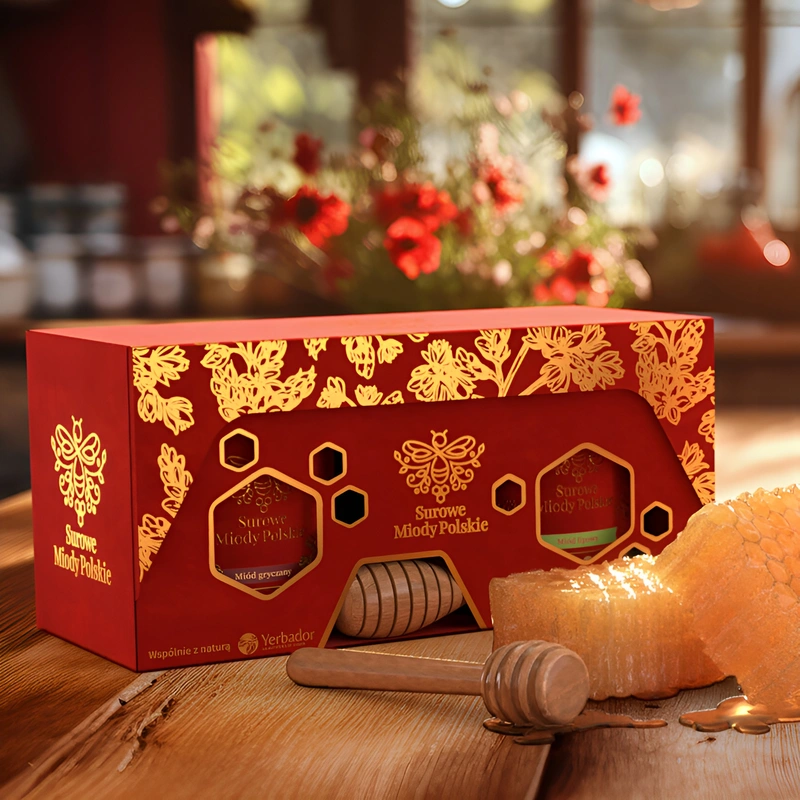
2. Raw Rapeseed Honey Gift Set
Two jars of rapeseed honey together with a beech honey dipper, a ready-made gift with no extra wrapping needed.
Check the product: Raw Rapeseed Honey Gift Set (see the current price)
Frequently asked questions about rapeseed honey
Why does rapeseed honey harden so quickly?
This is a natural process resulting from the high glucose content in rapeseed nectar. Glucose crystallises faster than fructose, which is why honeys with a glucose predominance, including rapeseed honey, harden within days or weeks, unlike acacia honey, which is rich in fructose.
Is hardened rapeseed honey spoiled?
No, this is a normal stage of crystallisation, not a sign of spoilage. Properly stored raw rapeseed honey remains safe to eat for a long time, whether it’s liquid or crystallised.
Can rapeseed honey be given to children?
Only after the age of 1. In infants, honey of any variety carries the risk of infant botulism due to the possible presence of Clostridium botulinum spores.
How do you restore the liquid consistency of rapeseed honey?
Place the jar in a bowl of warm, not hot, water below 40 degrees, and wait for the honey to dissolve. Higher temperatures destroy bee enzymes and some vitamins, so it’s best to be patient rather than heat the honey in a microwave.
How should rapeseed honey be stored?
At room temperature, in a tightly sealed jar, away from sunlight. The fridge isn’t necessary and actually speeds up crystallisation, so it’s better to keep the honey in an ordinary kitchen cupboard.
Rapeseed honey isn’t a variety that impresses with a bold flavour, but its advantage lies precisely in this mildness and creamy texture. It works well where other honeys can be too intense: in a child’s morning coffee, on a sandwich without dripping, or in baking, where sweetness matters more than extra aroma.
You can find more about the plant itself and its cultivation in the article about rapeseed on Wikipedia.
Discover our TOP products!


Your dream figure




Discover new flavors



Yerba mate with tea



Accessories





Superfoods


Certified raw honeys from Poland

Check the current price
free shipping
Up to 90 days
free returns
24 H
shipping