
Multifloral Honey – Properties, Composition and How to Recognise It
2026-09-11
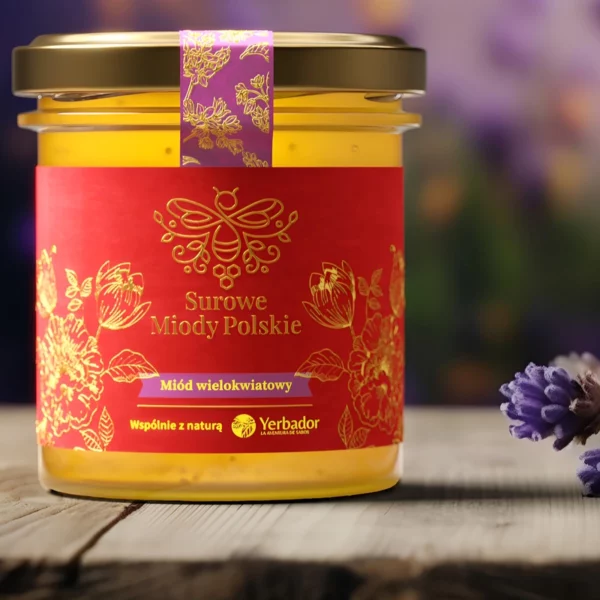
Multiflower honey doesn’t have one dominant flavour, and that is precisely its distinguishing feature. Instead of the pronounced, resinous note of linden or the heavy, spicy character of buckwheat, we get a mild, floral composition made up of nectar from many different plants at once. In this article, we take a closer look at Raw Multiflower Honey from the Yerbador label: where this diversity comes from, how it actually differs from single-variety honeys, and how to use it on a daily basis.
Multiflower honey – where it comes from
Unlike linden or buckwheat honey, where bees collect nectar mainly from a single plant species during a given period, multiflower honey is created when several or a dozen or so species bloom at the same time within the bees’ flight range. A bee doesn’t choose one plant for the whole season, it flies wherever nectar happens to be, so the final result in the jar depends on what was growing around the apiary that particular week.
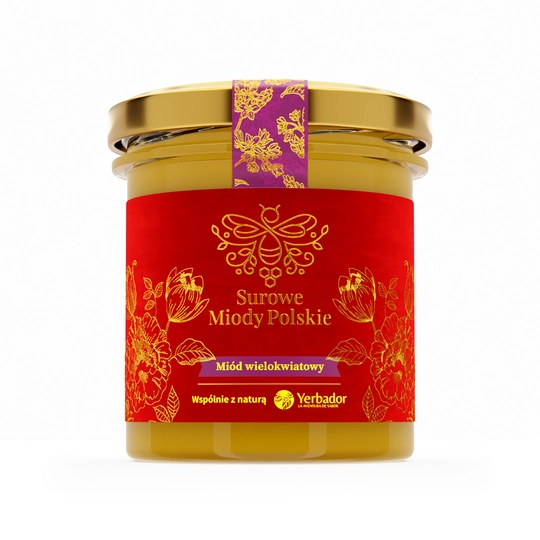
Yerbador Raw Multiflower Honey comes from the same apiaries in the West Pomeranian Voivodeship as the other varieties in the Raw Polish Honeys line. The bees there have access to nectar from heather, goldenrod, buckwheat and linden, depending on the time of season, and each of these plants brings something different to the final blend: buckwheat adds depth, linden a slightly resinous note, heather and goldenrod a delicate sweetness of meadow flowers.
What sets multiflower honey apart from other honeys
The colour of multiflower honey can vary from one jar to another, from light gold to darker amber, because it depends directly on the share of particular flowers in a given harvest. This is normal and doesn’t indicate any quality inconsistency, it simply means each batch is a slightly different composition of what happened to be blooming at the time. The flavour is milder than buckwheat honey, less pronounced than linden honey, yet more complex than single-variety acacia honey, because subtle, shifting floral notes appear behind the sweetness.
Multiflower honeys usually crystallise faster than acacia honey, often within just a few weeks or months of harvest, forming a smooth, creamy texture. This is a natural physical process resulting from the ratio of simple sugars in the nectar, not a sign of lower quality or of anything being added to the honey.
What does “raw” mean in Yerbador Raw Polish Honeys
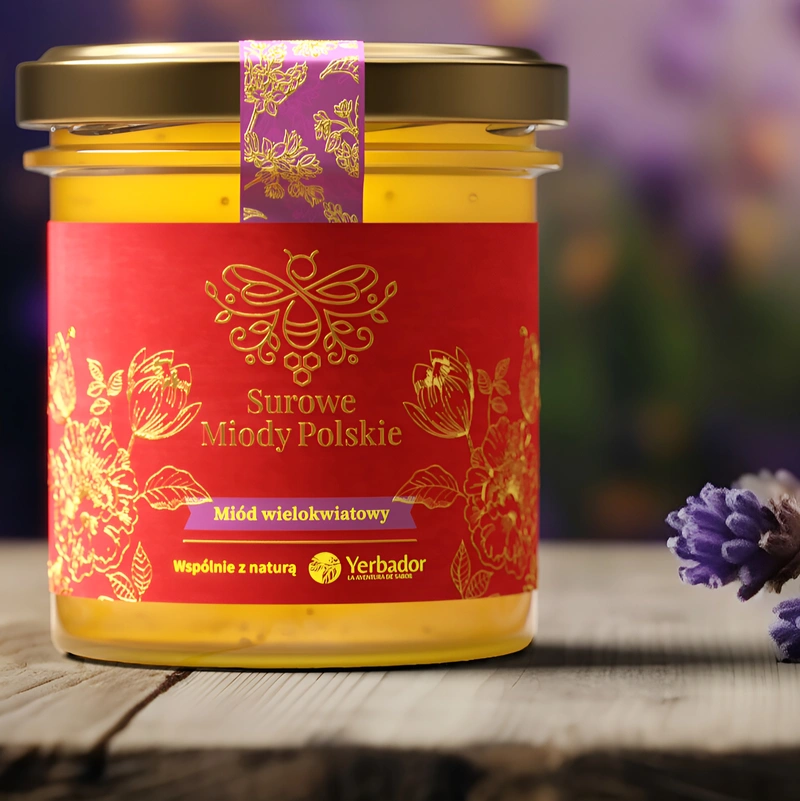
Raw honey is not pasteurised or heated to high temperatures, so it retains the bee enzymes as well as the vitamins and minerals naturally present in the nectar. Once taken from the hive, honey is only filtered to remove impurities, without any further processing. Mass-market honeys are sometimes heated so they stay liquid on the shop shelf for longer, which destroys some of the enzymes and volatile aromatic compounds. Yerbador honeys are undiluted, made by hand in small batches, with no added sugar or glucose-fructose syrups.
Who especially benefits from multiflower honey
This variety is ideal for people who are just starting their adventure with raw varietal honeys and are looking for something universal before reaching for the more distinctive flavours of linden or buckwheat honey. Its mild character means it works well anywhere you want honey to add sweetness without dominating the whole dish or drink. It’s also a good choice for everyday sweetening, since it doesn’t impose a specific flavour the way buckwheat honey does in tea or coffee.
Important safety notice: no honey, including multiflower honey, should be given to children under 1 year of age. Honey may contain spores of the Clostridium botulinum bacterium, which are harmless to older children and adults but can cause infant botulism in babies. This is a standard paediatric recommendation, independent of the brand or quality of the honey.
How to use multiflower honey every day
Thanks to its mild flavour, this is the most versatile variety in the Raw Polish Honeys line. It works well in tea, added only once the infusion has cooled below 40 degrees so as not to destroy the bee enzymes, but it’s equally good in natural yoghurt, porridge or on a slice of buttered bread. In baking, it can replace some of the sugar, giving cakes a gentle moistness without imposing its own strong flavour, which can be harder to balance with linden or buckwheat honey. It also pairs well with seasonal fruit as a topping for curd cheese or pancakes.
At Yerbador, honey and yerba mate have been a natural duo for years. A teaspoon of multiflower honey instead of sugar in a yerba mate infusion softens its natural bitterness without changing the character of the infusion itself the way a more pronounced buckwheat honey would.
How much does this cost per serving
A 400 g jar of Raw Wildflower Honey goes a long way. With a typical teaspoon serving of around 7 g, you get nearly 57 servings out of it, so a single serving costs very little. Per 100 g of product there are 1336 kJ, 0 g fat, 78 g carbohydrates (including 68 g sugars) and 0.3 g protein, with no salt. It is almost pure nectar, with no additives or fillers.
Products worth starting with
Two options from our Raw Polish Honeys line, depending on whether you’re looking for a single everyday jar or a gift.
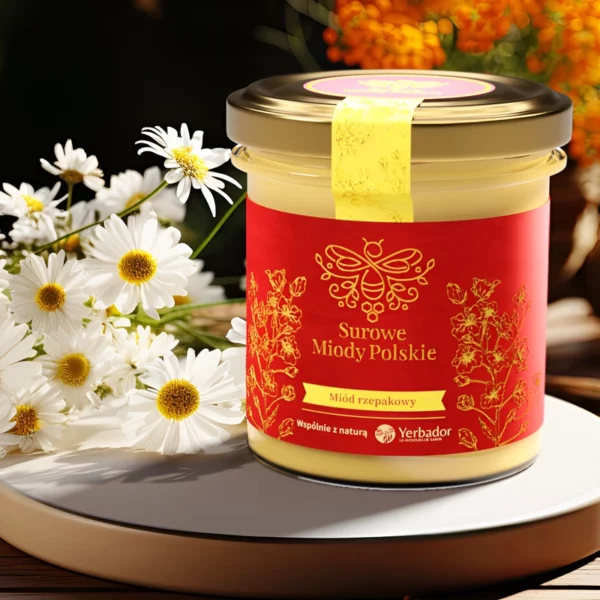
1. Raw Multiflower Honey – 400 g
The base product of this article, a mild honey with a variable, floral flavour composition, with no heat treatment and no added sugar.
Check the product: Raw Wildflower Honey – 400 g (see the current price)
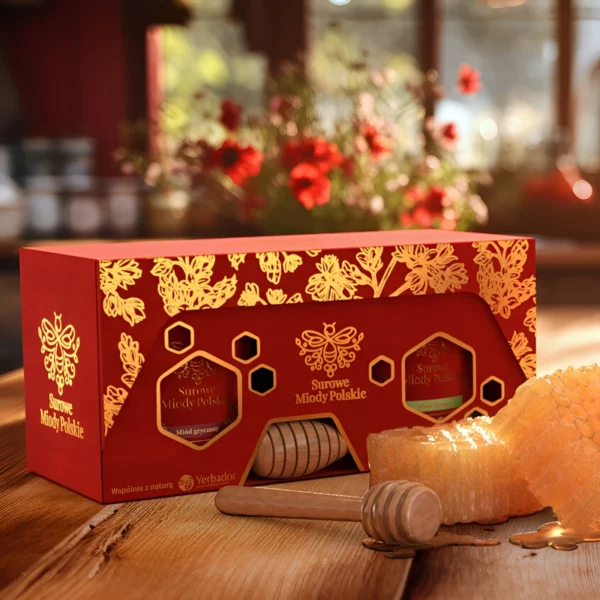
2. Raw Multiflower Honey Gift Set
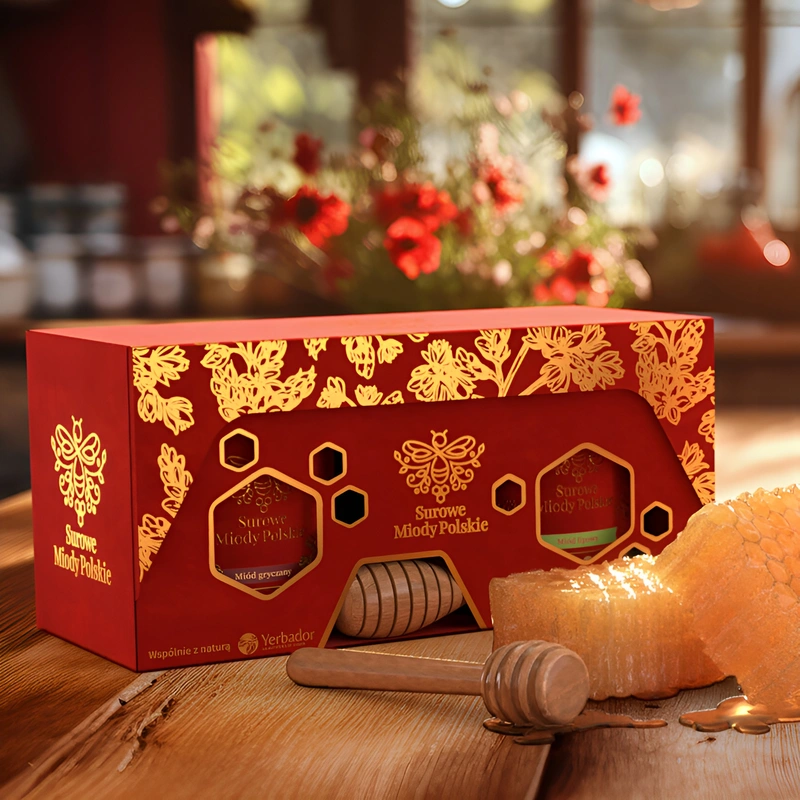
Two jars of multiflower honey together with a beech honey dipper, a ready-made gift with no extra wrapping needed.
Check the product: Raw Wildflower Honey Gift Set (see the current price)
Frequently asked questions about multiflower honey
Can multifloral honey be given to children?
Only after they turn 1 year old. In infants, honey of any variety carries a risk of infant botulism due to the possible presence of Clostridium botulinum spores.
Why does the taste of multifloral honey differ between jars?
Because each batch comes from the nectar of a different set of flowers, depending on what was blooming around the apiary at the time of harvest. This isn’t an inconsistency in quality, but a natural feature of this non-uniform variety.
Does multifloral honey crystallise quickly?
Usually yes, often within a few weeks or months of harvest, forming a smooth, creamy texture. This is a normal physical process, not a defect or a sign of added sugar.
How to tell real raw multifloral honey from a fake?
Real raw honey crystallises over time and has a noticeably varied, floral aroma. Honeys diluted with glucose-fructose syrup are usually more uniformly sweet and stay liquid much longer, sometimes for months.
How to store multifloral honey?
At room temperature, in a tightly sealed jar, away from sunlight. The fridge isn’t necessary, and it even speeds up crystallisation, so it’s better to keep honey in a regular kitchen cupboard.
Multifloral honey is a variety for those who value versatility over one dominant flavor. It won’t surprise you with the intensity of buckwheat or the resinous note of linden, but it works well anywhere you need plain, good sweetness without compromises.
You can find more about the bee product itself and its varieties in the article about honey on Wikipedia.
Discover our TOP products!
Your dream figure
Discover new flavors
Yerba mate with tea
Accessories

Superfoods
Certified raw honeys from Poland

Check the current price
free shipping
Up to 90 days
free returns
24 H
shipping