
Yerba Mate and Vitamin E – Is It a Good Source?
2026-08-30
This email keeps coming back to our customer service inbox, especially from customers looking for support for their skin and hair: “I see vitamin E on your yerba’s packaging, does that mean a cup a day will give it to me?” The “Yerba mate and vitamin X” series exists precisely to answer such questions honestly, not with a slogan from the label. This time we’re checking vitamin E — and, unlike vitamin D, the matter here is not simple at all.
What vitamin E is and where to actually get it from
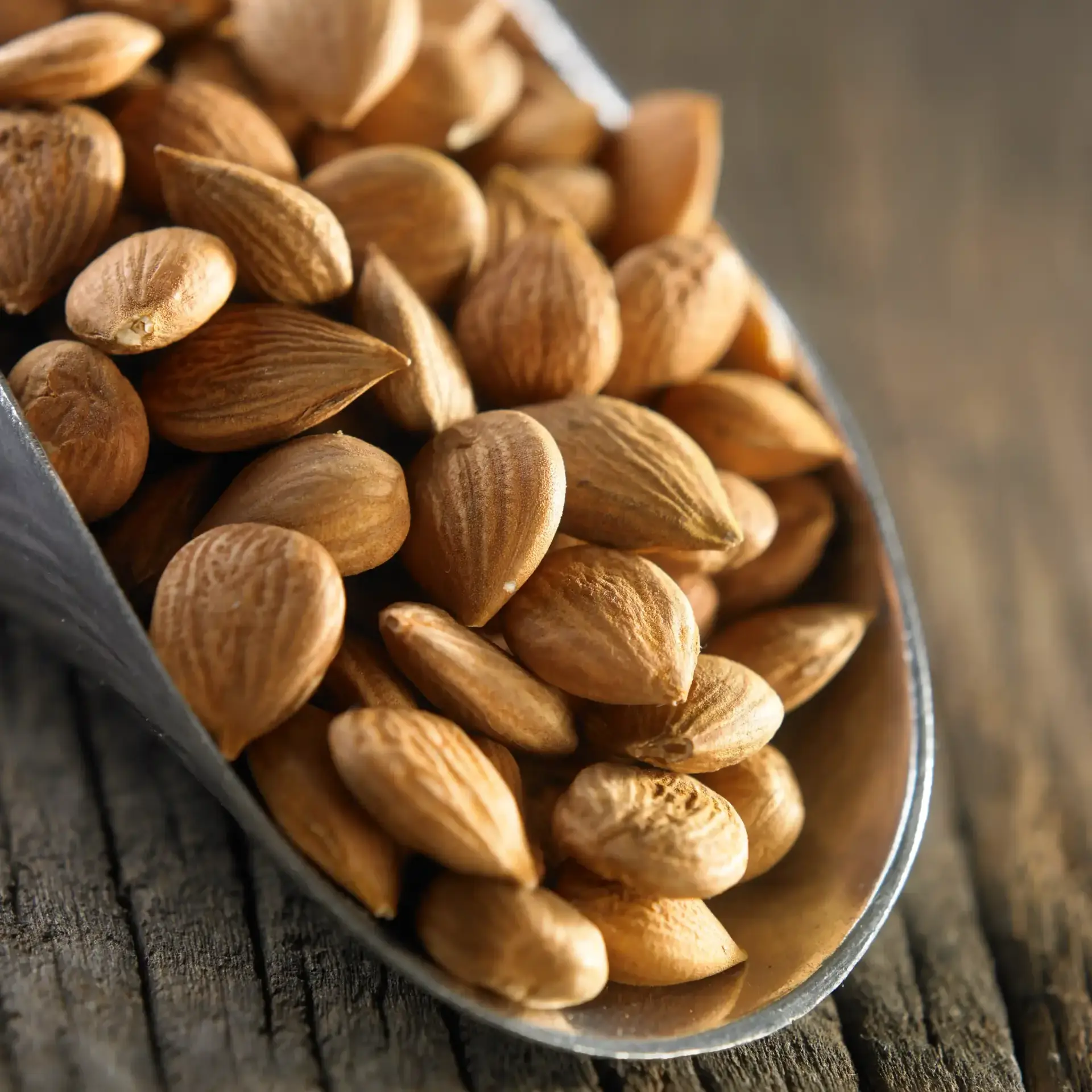
Vitamin E is not a single compound, but a group of eight forms — four tocopherols and four tocotrienols — of which alpha-tocopherol is the most important for humans. It is fat-soluble, not water-soluble, and acts mainly as an antioxidant protecting cell membranes from oxidation. Real, well-documented dietary sources include vegetable oils (sunflower, rapeseed, wheat germ), nuts and seeds — almonds, hazelnuts, sunflower seeds — and, to a lesser extent, green leafy vegetables and avocado. The common denominator: either there’s fat in it, or vitamin E simply has nothing to dissolve in.
What is actually known about vitamin E in yerba mate leaves
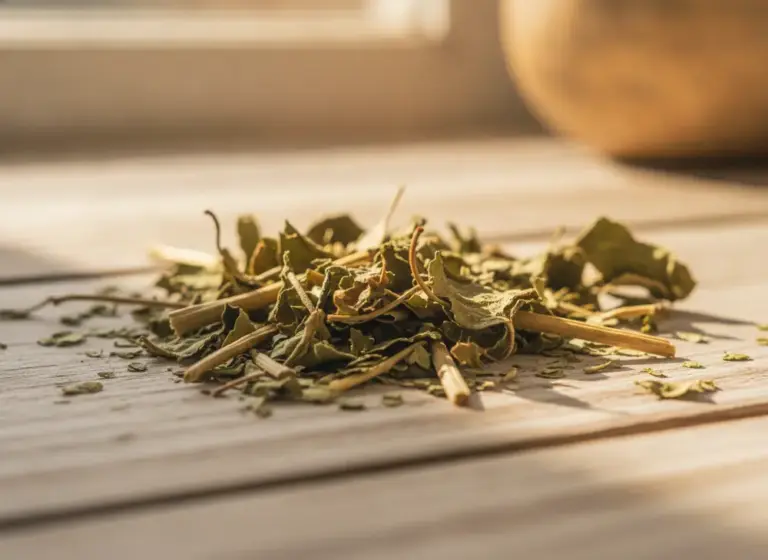
This is where the difference from previous articles in the series begins. With vitamin D, the answer was simple — leafy plants biochemically don’t produce it, end of story. With vitamin E, it’s different: tocopherols do belong to the compounds described in phytochemical analyses of Ilex paraguariensis, alongside phenols, flavonoids and xanthines. Our own description of the dried leaves — the same one we cited regarding vitamin C — lists vitamin E among the leaf’s components, together with the B group and vitamin C. This isn’t something the marketing department made up, just a repetition of what appears in the literature on the plant’s composition.
The problem starts with the question “how much exactly.” We looked for a reliable, measured value in milligrams for the leaf or the yerba infusion and didn’t find one — not in scientific publications, which list tocopherols as a category of compounds without giving a concentration specific to mate, nor in independent laboratory analyses of the dried leaves. One publicly available lab report (Medallion Labs, USA, analysis of 100 g of dried leaves) gives a specific figure for vitamin C — 19.9 mg per 100 g — but vitamin E doesn’t appear in the same table. Since the lab measured and reported a result for C, and found nothing worth reporting for E, the conclusion is simple: the amount is small enough not to qualify as a significant nutritional value. We don’t have our own certificate with a figure for our dried leaves, so we won’t make up mg values we don’t know — the same rule as with selenium and manganese.
Why fat solubility makes the case even worse
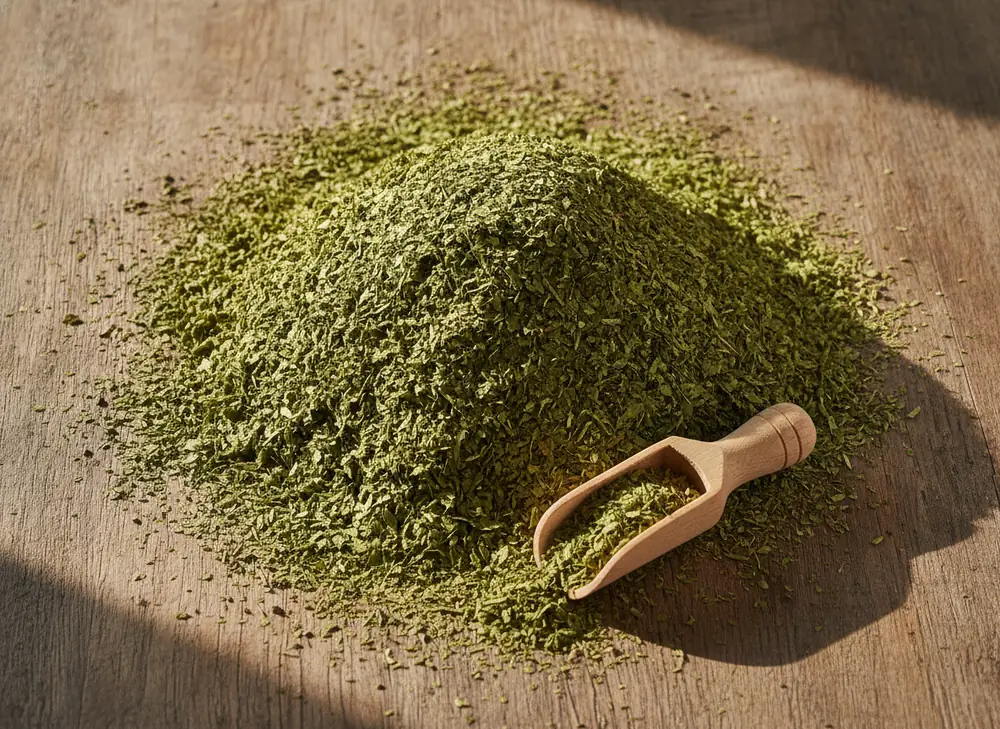
Even if there were some measurable amount of tocopherols in the dried leaves, the brewing mechanism works against them the same way we described with vitamin K. Classic brewing means hot water at 70–80°C poured over the dried leaves in a matero, with no added fat. Vitamin E, being a lipophilic compound, transfers poorly into an aqueous solution — roughly the same way you can’t “brew” rapeseed oil in a kettle. This is a different mechanism than with vitamin C, which is at least theoretically water-soluble, though it still breaks down on contact with heat. With E, the barrier is already the physics of solubility, before we even get to the question of the compound’s thermal stability.
Sometimes herbal dried-leaf marketing mixes up two different things: the antioxidant activity of the infusion (measured by tests like ORAC or DPPH, where the result is sometimes given as a “vitamin E equivalent”) with the actual content of vitamin E itself. Yerba mate has high antioxidant activity, mainly thanks to polyphenols and chlorogenic acid. That doesn’t mean, however, that the vitamin is actually in the cup — these are two different measurements, and confusing them is the most common mistake on this topic.
What’s actually on our yerba’s label
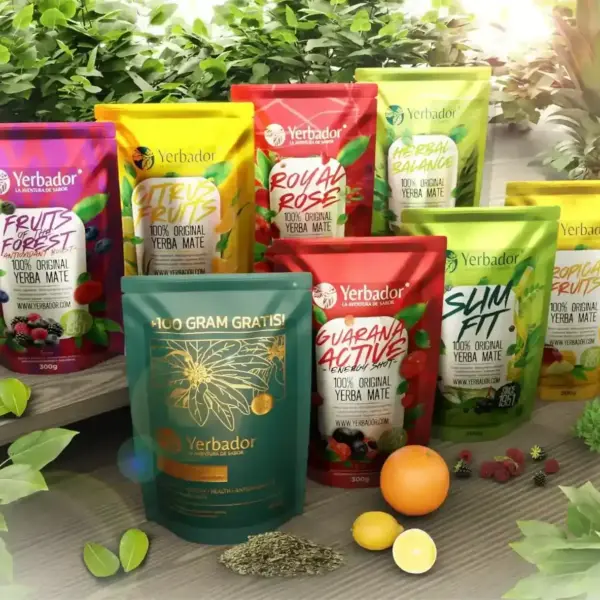
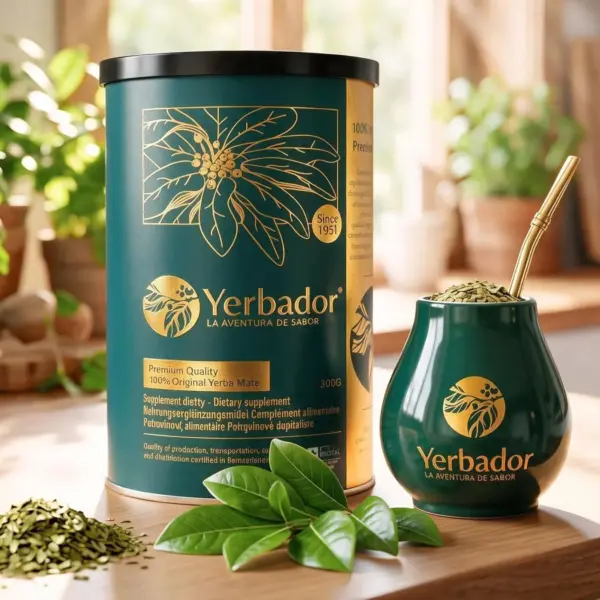
Our classic Yerba Mate claims over 160 different trace elements, minerals, antioxidants and vitamins — magnesium, calcium, silicon, iron, potassium, zinc and phosphorus among the minerals, and from vitamins, a range of B-group entries (B1, B2, B3, B5, B6, B7 and B9) plus vitamins C and E. Vitamin E is on this list, in line with the plant’s general composition — but, as above, this describes the raw material, not a guarantee of an actual dose in your cup. We don’t remove it from the description, because it does occur in the plant, but we also don’t sell yerba as a way to supplement vitamin E in your diet, because we don’t have hard data to support that.
What yerba mate actually offers day to day
The real strength of yerba lies elsewhere. It’s the xanthines — caffeine together with theobromine and theophylline — that give a milder, longer-lasting boost than coffee alone, typically in the range of 60–120 mg of caffeine per brewing session, comfortably within the EFSA daily limit for adults (400 mg). On top of that there’s a genuine content of B vitamins, potassium important for muscle and heart function, and antioxidant polyphenols — a separate, well-documented profile, independent of what’s happening with vitamin E.
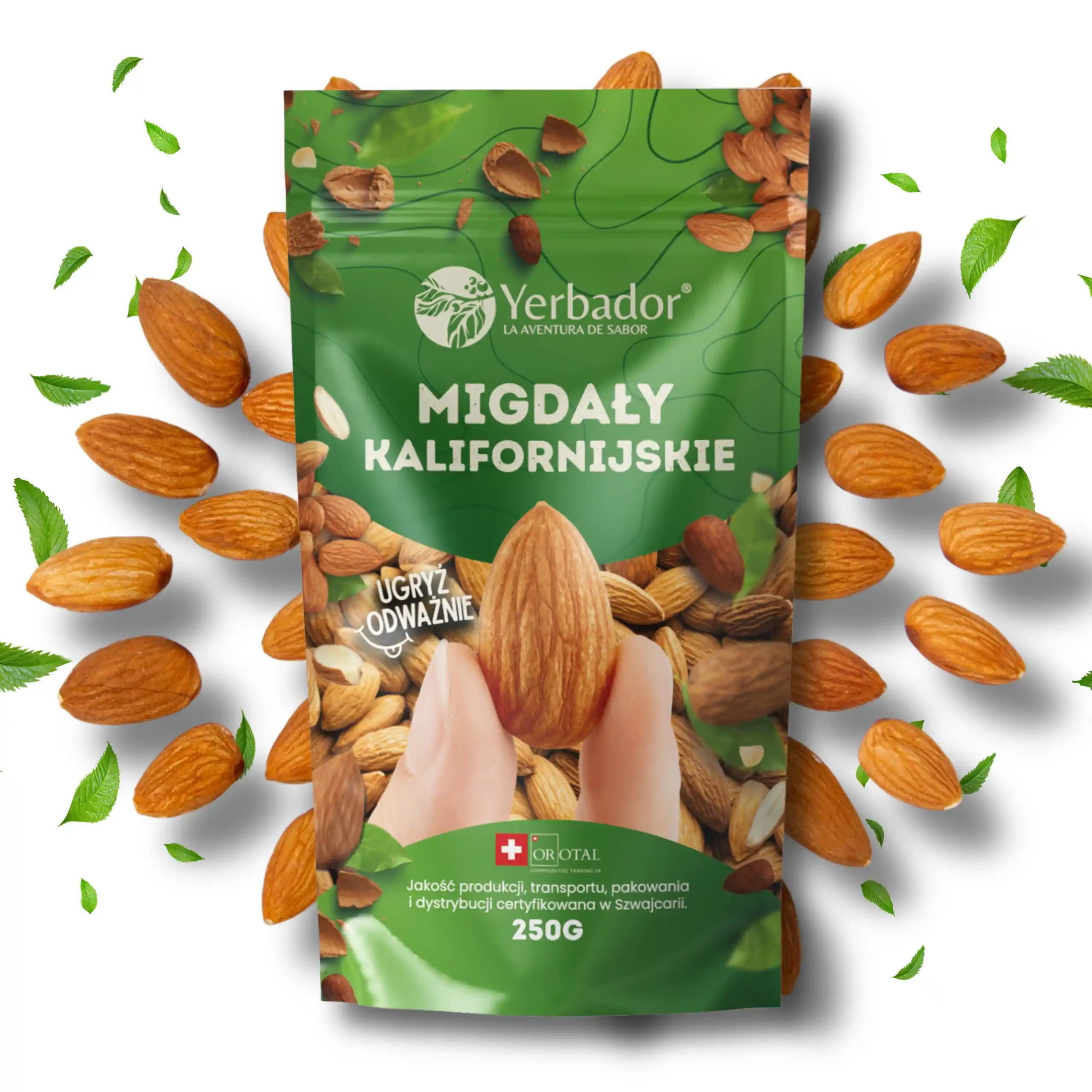
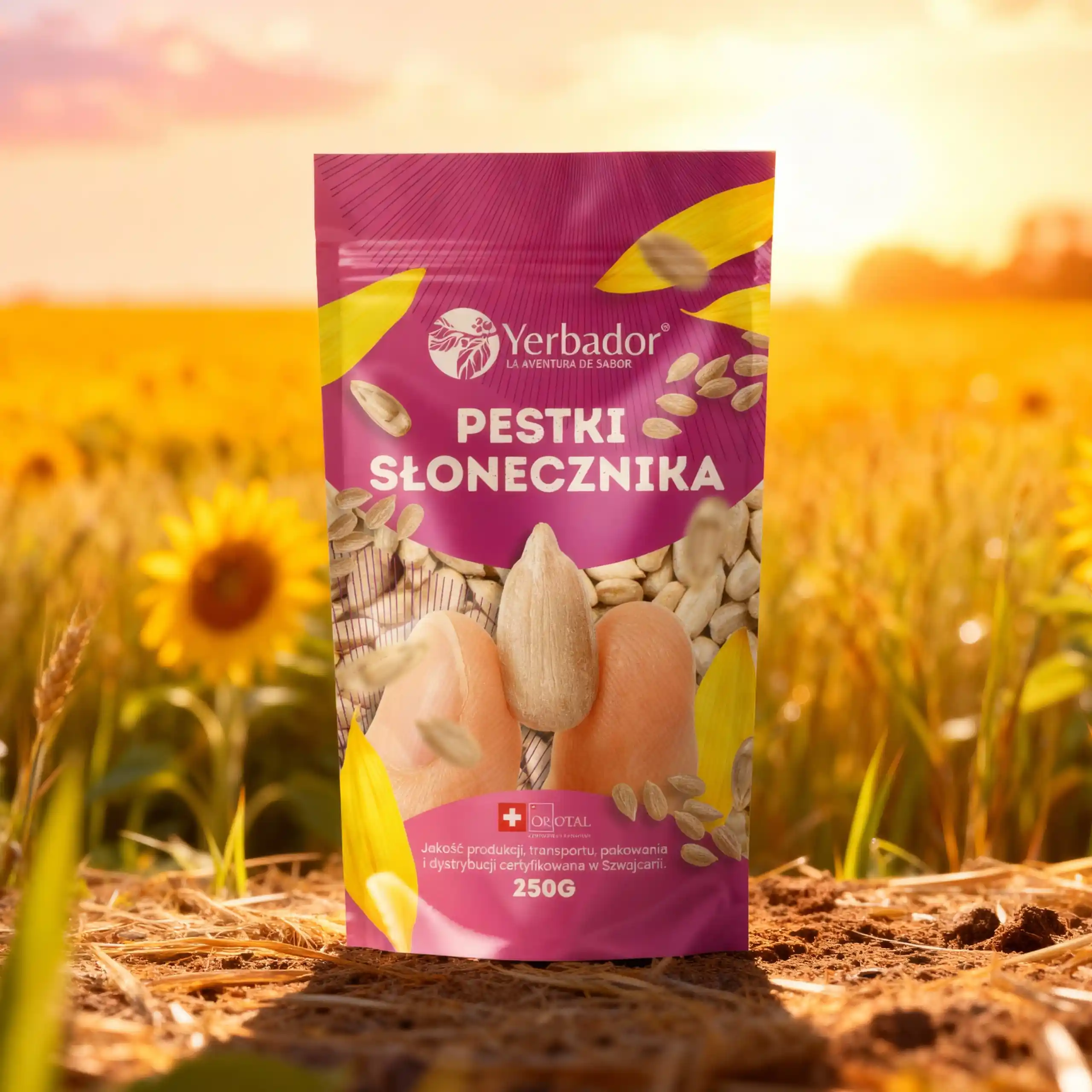
If vitamin E is what you’re actually looking for in your diet, we have two products in our range that genuinely deliver it, without stretching the truth. Blanched Californian Almonds are 100% almonds with no additives — one of the more well-known natural sources of vitamin E, alongside magnesium, calcium and healthy unsaturated fats. Shelled Sunflower Seeds, in turn, are seeds where vitamin E appears in amounts genuinely worth mentioning on the label, together with plant protein, zinc and magnesium — a great snack alongside a bowl of yerba during the day.
Check out the products: Blanched Californian Almonds 250 g · Shelled Sunflower Seeds 250 g
Where to actually get vitamin E, since it’s not from yerba
If you care about a real dose, reach for cold-pressed vegetable oils — sunflower and rapeseed are the leaders here — as well as nuts and seeds: almonds, hazelnuts, sunflower seeds. Wheat germ and some leafy green vegetables, like spinach or broccoli, also contribute their share, though to a lesser extent. This is a group of products where values in milligrams per 100 g have actually been measured and published — not an infusion from a dried leaf, no matter how rich its overall phytochemical composition may be.
Why vitamin E even matters
Vitamin E has a list of approved health claims under EU food law, covering the protection of cells from oxidative stress and the normal functioning of the immune system. That’s why the topic keeps coming up in questions from customers looking for support for their skin, hair or immunity — and why we’d rather say outright that yerba mate isn’t a reliable source here, than build an argument on the mere presence of the compound in the composition that no figure actually confirms.
Yerba mate compared to other vitamins and minerals — what we’ve already checked
This is another article in our series breaking down the composition of yerba mate piece by piece, instead of promising everything at once. We’ve already written about yerba mate and vitamin A, about vitamin C, about vitamin K, and about vitamin D. With vitamin E, the result is similar to C and K — the compound appears in the description of the plant’s composition, but between the leaf and the cup stands a barrier that genuinely limits what’s left of it. The difference is that with E, that barrier is fat solubility itself, not just sensitivity to temperature.
Frequently asked questions
If vitamin E is in the description of yerba’s composition, is it definitely in the infusion?
Presence in the general phytochemical description of the plant is not the same as a measured content in a specific cup. We don’t have reliable numerical data on the latter, so we don’t claim a real dose.
Is high antioxidant activity in yerba mate the same as vitamin E?
No. The antioxidant activity of the infusion is mainly due to polyphenols and chlorogenic acid, measured using tests such as ORAC or DPPH. The result is sometimes compared to a “vitamin E equivalent” as a unit of measurement, but that doesn’t mean the infusion actually contains vitamin E.
Which products actually provide a real dose of vitamin E?
Vegetable oils, almonds, hazelnuts and sunflower seeds have documented, measured values in milligrams per 100 g. These, not dried yerba mate leaves, are the reference point when planning your diet with this in mind.
Will drinking yerba mate cause harm if I take a separate vitamin E supplement?
There are no contraindications at typical doses — these are two independent parts of your day. The supplement dose is still worth discussing with a doctor, especially if you have existing conditions or take blood-thinning medication.
Do other teas contain more vitamin E than yerba mate?
Green and black tea have the same fat-solubility problem. No leaf-based tea is a typical source of vitamin E.
Discover our TOP products!
Your dream figure
Discover new flavors
Yerba mate with tea
Accessories
Superfoods
Certified raw honeys from Poland

Check the current price
free shipping
Up to 90 days
free returns
24 H
shipping