
Yerba Mate and B Vitamins – Is It a Good Source?
2026-08-28
After vitamin C and vitamin K in this series, it’s time for the B group. This is an interesting topic because the mechanism is different than with the previous two. Vitamin C in yerba mate largely breaks down during drying and brewing, vitamin K stays trapped in the leaf because it’s fat-soluble, not water-soluble. B vitamins and yerba mate is a different story — they’re water-soluble, so theoretically they have a better chance of passing into the infusion. Let’s see what this means in practice.
Yerba Mate and B vitamins – what’s actually in the leaf
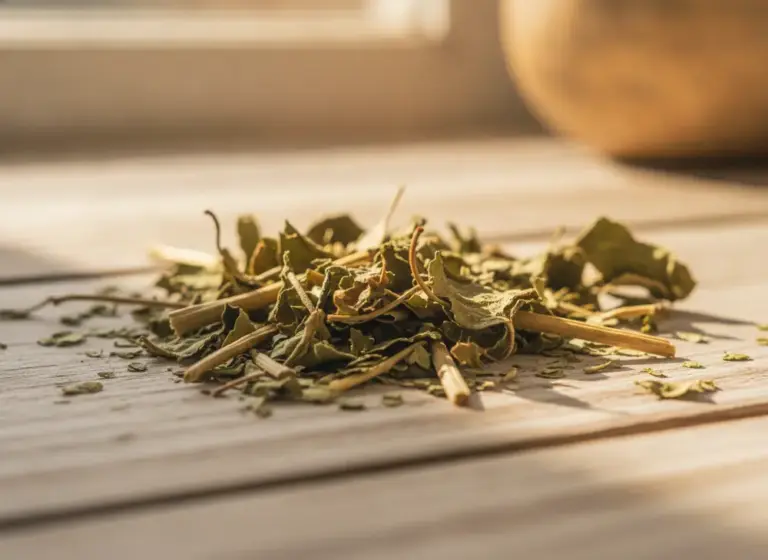
Yerba mate, made from the leaves of the holly tree, like every green plant, contains certain amounts of B vitamins — mainly thiamine (B1) and riboflavin (B2), and to a lesser extent niacin (B3) and pantothenic acid (B5). This isn’t a marketing invention, but a consequence of the fact that leafy plants in general are one of the dietary sources of these vitamins, alongside whole grains, seeds, nuts and meat. The problem is that “contains certain amounts” and “is a good source” are two different statements, and we stick to this distinction throughout this series.
Unlike vitamin C, which oxidizes fairly quickly in dried leaves, B vitamins are chemically more stable against drying and heat. That’s good news for the dried leaves. The bad news is that even a stable vitamin won’t help if there wasn’t much of it in the leaf to begin with — and in leafy plants, unlike, for example, seeds or yeast, there usually isn’t.
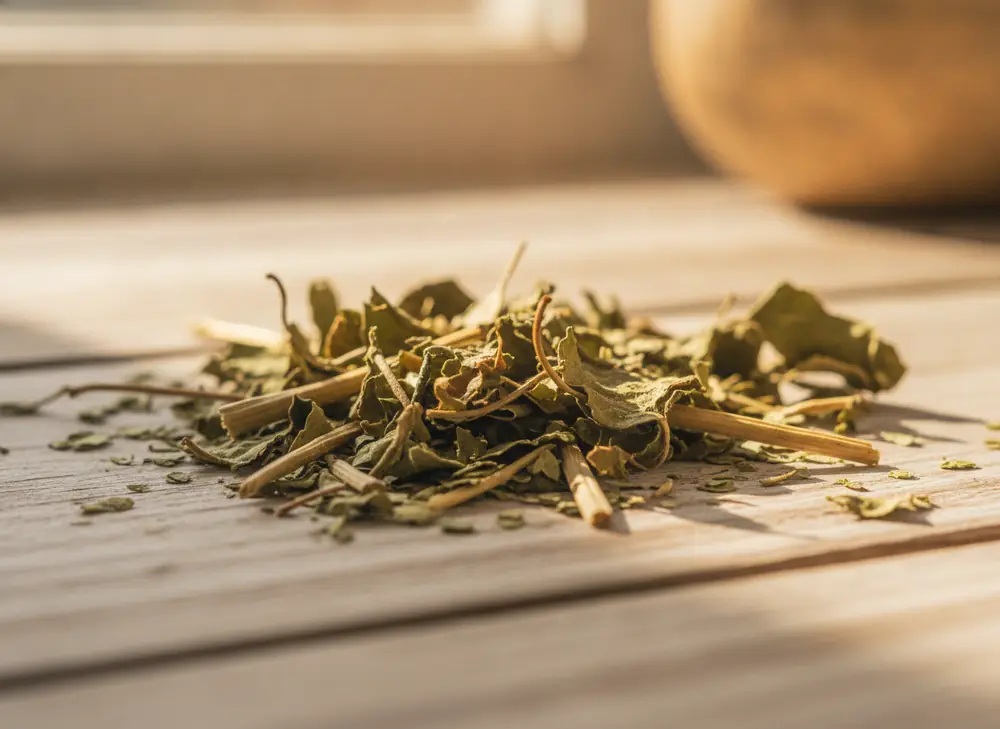
Dried leaves aren’t the same as the infusion – the second barrier we already discussed with vitamin K
Even if there’s some amount of thiamine or riboflavin in the dried leaves, only part of it makes it into your cup. Brewing yerba mate isn’t solvent extraction in a lab – it’s several to a dozen or so rounds of pouring water at 70-80°C, after which most of the dried leaves end up in the bin anyway. Some of the vitamins pass into the water in the first rounds, some remain in the leaf until the end. In practice, this means that even with water-soluble vitamins like those in the B group, an infusion of yerba mate isn’t equivalent to “the amount in 100 g of dried leaves times the number of grams drunk”. This is the same principle we wrote about with vitamin K — there the barrier was impossible to cross (the vitamin stays trapped in the leaf’s fat), here the barrier is partial, but still real.
There’s also the matter of freshness and storage. Dried leaves kept for a long time, in an open package, exposed to light and moisture, lose more than freshly opened, tightly sealed leaves. This actually works more in favor of B vitamins than vitamin C — because C degrades almost immediately, while B vitamins hold up longer — but there’s never zero loss.
Why this is a different story than vitamin C and vitamin D in this series
It’s worth highlighting this, because the “yerba mate and vitamin X” series might suggest the same negative conclusion every time. Not this time. With vitamin C, the infusion loses most of its potential already at the leaf-drying stage. With B vitamins, the degradation mechanism is slower, and water solubility works in favor of transferring them into the infusion. This still doesn’t mean a cup of yerba will replace a B-complex supplement or wholegrain bread — but there isn’t the same “double barrier” here as with fat-soluble vitamins.
To be fair, we should also say what yerba infusion definitely does not do: it does not treat B vitamin deficiencies and does not replace a balanced diet. If someone has a genuine deficiency (typical symptoms include fatigue, concentration problems, irritability), the solution is a consultation with a doctor and a diet or supplementation tailored to test results — not another cup of infusion.
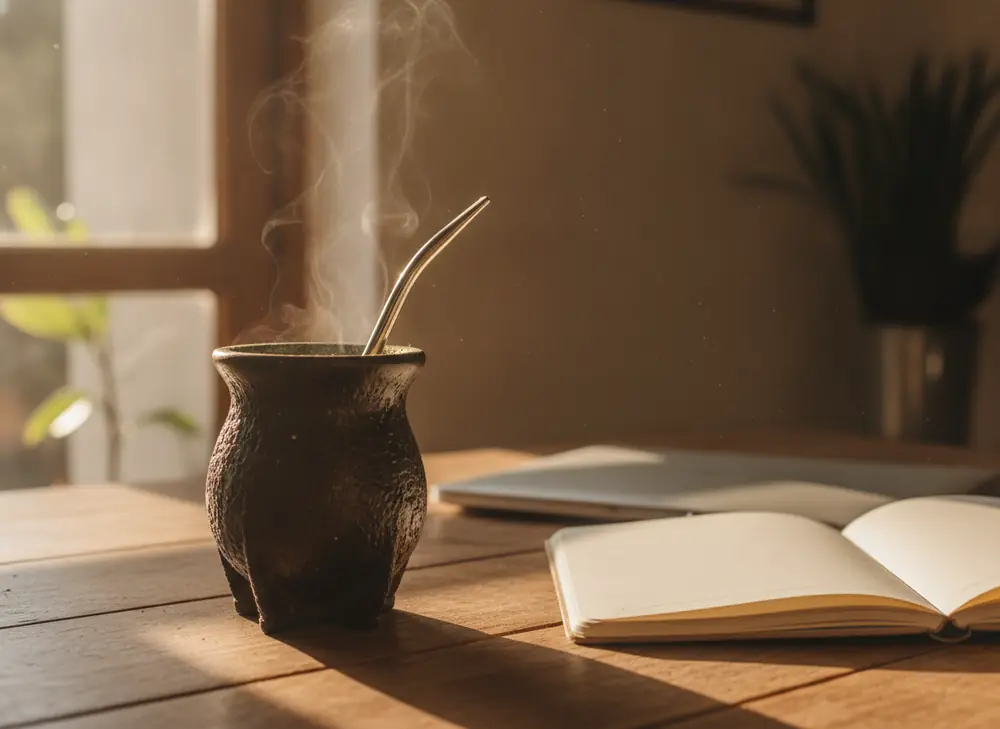
Guarana and pumpkin seeds – real sources of B vitamins that can be paired with yerba
If you want a diet that actually supports your pool of B vitamins, it’s worth reaching for products recognized as good sources of them — seeds, nuts, whole grains. In our range, one such product is Shelled Pumpkin Seeds 250 g — 100% seeds with no additives, with a natural content of magnesium, iron and zinc, which pair well with a cup of yerba as a daytime snack, not a replacement.
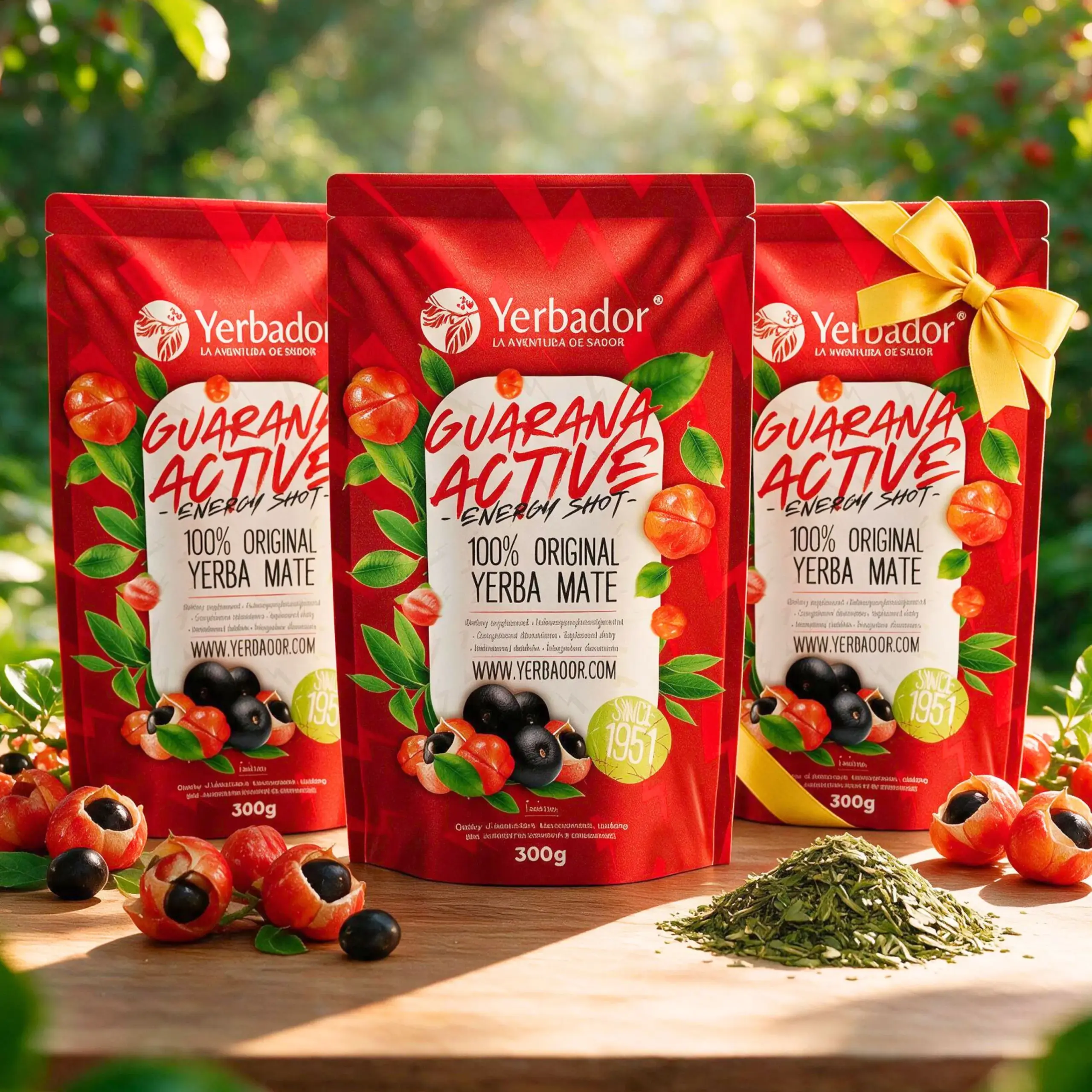
A separate matter is energy — because here yerba mate really does have something to offer, just not thanks to B vitamins, but to xanthines (caffeine, theobromine) and natural polyphenols. Our Yerba Mate Ultra Energy with Guarana combines classic Yerbador dried leaves with guarana, a plant known for its high, naturally slow-release caffeine content. This is a product for stimulation, not for replenishing vitamins — but since the topic of energy keeps coming up in this article, we’ll fairly point out that it’s guarana and caffeine responsible for the noticeable effect, not the B-complex.
Check out the products: Shelled Pumpkin Seeds 250 g · Yerba Mate Ultra Energy with Guarana
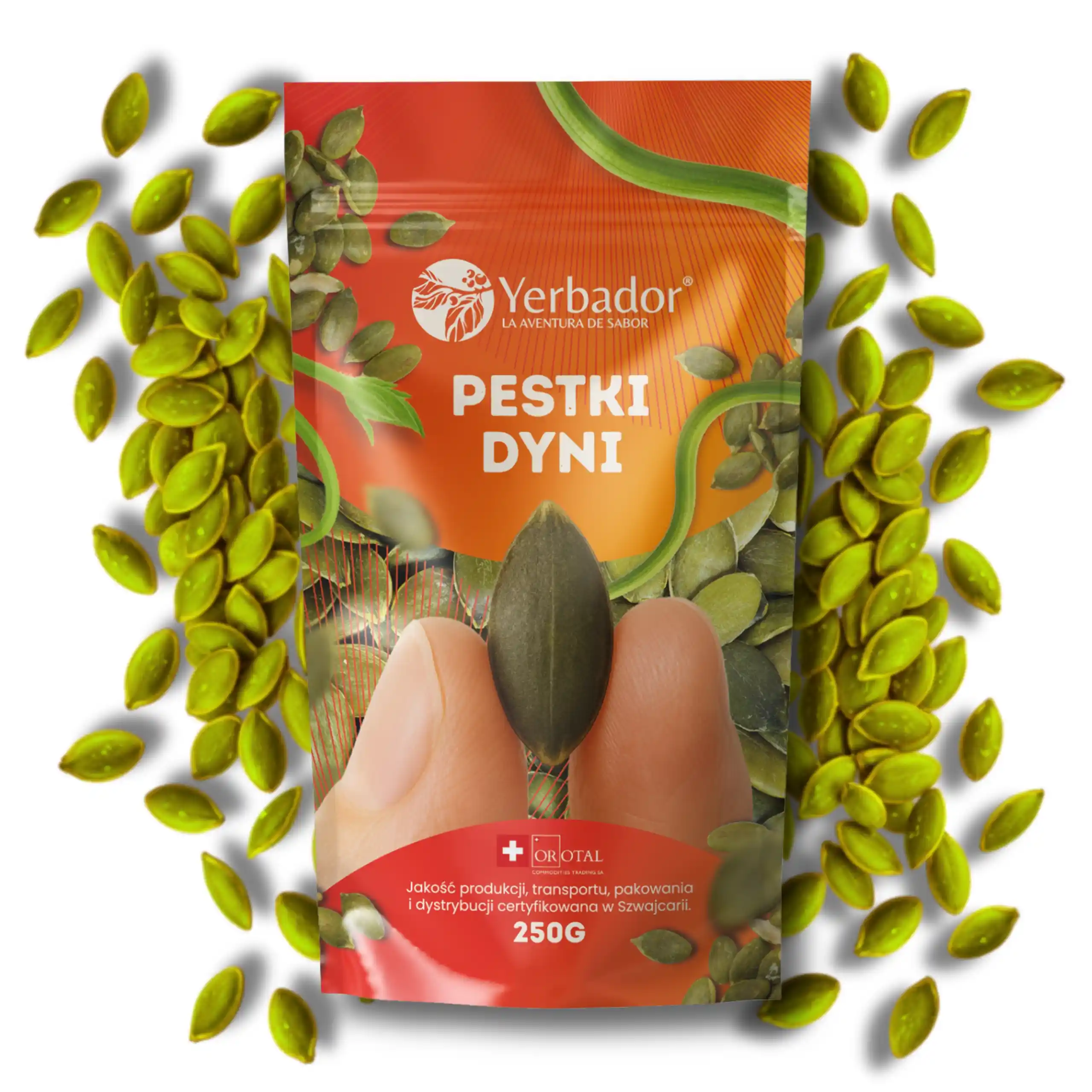
What yerba mate really does for everyday energy
Since we’re already on the topic of energy — it’s worth distinguishing between two different mechanisms that are easy to confuse. The first is B vitamins, which take part in energy transformations at the cellular level (metabolism of carbohydrates, fats and proteins) — but, as mentioned above, yerba mate is not a significant source of them. The second is xanthines, mainly caffeine, which yerba mate genuinely contains in amounts comparable to strong tea, though less than coffee. It’s caffeine and its accompanying compounds (theobromine, trace amounts of theophylline) that are responsible for the typical “I feel stimulated” sensation after drinking the infusion, not vitamins.
So in practice, the most sensible approach looks like this: yerba mate as a source of mild, sustained stimulation (thanks to slower caffeine release than coffee), and B vitamins from separate, proven dietary sources — wholegrain products, seeds, nuts, legumes. One doesn’t replace the other, but they complement each other well.
What are B vitamins actually needed for
The B group isn’t just one vitamin, but eight different compounds, each with its own function. Thiamine (B1) and riboflavin (B2) take part in carbohydrate energy metabolism. Niacin (B3) supports the nervous system and fat metabolism. Pantothenic acid (B5) is needed to synthesise coenzyme A, key to cellular metabolism. Pyridoxine (B6) participates in protein metabolism and neurotransmitter production. Biotin (B7) is mainly associated with the condition of hair and nails. Folic acid (B9) is especially important during pregnancy. Cobalamin (B12) is responsible for red blood cell production and nervous system function — and this is the one, as mentioned in the FAQ, that you won’t find in any plant.
The reference daily intake (RDI) for adults according to EU guidelines is approximately: B1 about 1.1 mg, B2 about 1.4 mg, B3 about 16 mg, B6 about 1.4 mg, B12 about 2.5 µg. We provide these figures as a general reference point — not as values you’ll find in a cup of yerba, because we don’t have a study specifically on this infusion, and we don’t want to make up a number just to make it sound better.
FAQ – frequently asked questions
Does yerba mate contain vitamin B12?
No. Vitamin B12 occurs naturally only in animal products (meat, fish, eggs, dairy) and in fortified foods. No plant, including the Paraguay holly, is a natural source of it.
How much B vitamins are there in a cup of yerba?
We won’t publish a made-up number here, because we don’t have an independent study on this specific infusion in this regard. The honest answer is: trace amounts, insufficient to treat the infusion as a dietary source of these vitamins.
Will drinking yerba help with fatigue related to B vitamin deficiency?
It may give a short-term boost thanks to caffeine, but that’s not the same as making up for a deficiency. With real deficiency symptoms (chronic fatigue, concentration problems), the right step is a blood test and a doctor’s consultation, not another cup of infusion.
Does guarana contain B vitamins?
Guarana is primarily a source of caffeine, not B vitamins. If you’re after a B-complex, seeds, nuts and wholegrain are a better choice.
Does drying destroy B vitamins the same way it destroys vitamin C?
No, to a lesser extent. B vitamins are more heat-stable than vitamin C, but there’s still no full protection during drying.
[email protected]
Discover our TOP products!
Your dream figure
Discover new flavors
Yerba mate with tea
Accessories
Superfoods
Certified raw honeys from Poland

Check the current price
free shipping
Up to 90 days
free returns
24 H
shipping