Yerba Mate During Pregnancy – What You Should Know About Caffeine? Facts and Limits
2023-04-19
Yerba Mate during pregnancy is one of those questions that doesn’t have a simple „yes” or „no” answer. Yerba contains caffeine — and it’s caffeine, from all sources combined, that an expectant mother should count and discuss with her doctor. The European Food Safety Authority (EFSA) indicates that during pregnancy, a daily caffeine intake of up to 200 mg raises no concerns — but that’s the total for coffee, tea, cola, chocolate and yerba combined. In this article, we’re not encouraging you to drink yerba during pregnancy. We’re showing you how to calculate caffeine intake, what to watch out for, and what to ask your gynaecologist — because they know your pregnancy, not the internet.
Yerba Mate during pregnancy — talk to your doctor first, then reach for the matero
Every pregnancy is different. High blood pressure, reflux, anaemia, a high-risk pregnancy, medications being taken — each of these factors changes the answer to the caffeine question. That’s why the only honest advice we can give as a yerba producer is this: before deciding whether to stick with the holly infusion, talk to your doctor. This isn’t just a disclaimer. Your gynaecologist sees your results, knows how your pregnancy is progressing, and can tell you whether 200 mg of caffeine a day is a reasonable limit in your case, or whether you should go lower or cut it out entirely.
This article is for informational purposes only and does not replace medical advice. Treat it as a cheat sheet for your conversation with your doctor — not as a green light.
How much caffeine does yerba mate have and how to calculate it
Let’s start with the facts, because without them any discussion about yerba mate during pregnancy is just guesswork. A traditionally prepared serving of yerba mate (a matero filled one-third or one-quarter with dried leaves, refilled with water multiple times) can provide anywhere from 60 to even 120 mg of caffeine. A cup of weaker infusion made from one flat spoon of dried leaves has noticeably less. For comparison: a cup of black coffee usually has 90–150 mg, espresso 60–90 mg, and a can of energy drink around 80 mg. You’ll find a detailed breakdown in our article how much caffeine coffee, tea, yerba mate and energy drinks contain.
Now here’s a key point that’s easy to forget: the 200 mg limit set by EFSA applies to the whole day and all sources combined. If you drink a coffee in the morning (say, 100 mg) and then eat a few squares of dark chocolate in the afternoon, a good chunk of your daily allowance is already used up — before you even reach for the matero. That’s why counting caffeine during pregnancy is a bit like keeping a budget: it’s not about one expense, but the total at the end of the day.
There’s another reason to be cautious. During pregnancy, caffeine metabolism slows down noticeably — the same cup affects you longer than before pregnancy, and caffeine crosses the placenta. This doesn’t mean every sip is a problem. It means the expectant mother’s body processes caffeine differently than usual, and it’s worth giving it some margin.
If you stick with yerba mate after consulting your doctor — how to keep caffeine in check
Let’s say your doctor sees no contraindications, and you can’t imagine nine months without the taste of yerba mate. A few practical rules can help keep your infusion within reasonable limits:
Less dried leaves, more water. Instead of filling the matero one-quarter full, brew one flat spoon of dried leaves in a cup — like regular loose-leaf tea. A smaller portion of leaves simply means less caffeine.
Make use of multiple refills. The first pour releases the most caffeine, each subsequent one less. Instead of adding fresh leaves three times a day, refill the same portion several times.
Don’t combine without counting. Yerba mate plus coffee plus cola on the same day is an easy way to exceed the limit. Pick one main source of caffeine.
Not on an empty stomach and not in the evening. An infusion on an empty stomach can be irritating, and afternoon caffeine can ruin your night’s sleep — we wrote about this in the article yerba mate and sleep.
Listen to your body. Heart palpitations, anxiety, sleep problems, heartburn — these are signals to stop drinking the infusion and mention them to your doctor at your next visit.
And one more thing: water should remain the foundation of hydration during pregnancy. Yerba mate can be a flavorful addition to your day, not its liquid foundation — more in the article does yerba mate hydrate better than water.
Herbal infusions during pregnancy — what’s generally considered safe
Many expectant mothers limit caffeine during pregnancy and switch to herbal infusions. When it comes to lemon balm or chamomile, experts largely agree — in reasonable amounts, these herbs are considered safe. However, it’s worth remembering that “herbal” doesn’t automatically mean “harmless”: some plants affect hormone balance or interact with medications. The rule is the same as with yerba mate — it’s worth simply showing your doctor a list of what you drink regularly.
Herbs generally considered safe in pregnancy (in moderation): Lemon balm — an infusion with a mildly calming effect, helps you relax before sleep. Nettle — an herb with diuretic properties, valued as a plant-based source of iron. Peppermint — supports digestion and brings relief from a feeling of heaviness. Chamomile — has a soothing and anti-inflammatory effect. Ginger — traditionally used for morning sickness, especially in early pregnancy. Flaxseed — supports bowel function, provides fibre and minerals.
What yerba mate won’t fix during pregnancy — let’s be direct
It’s easy to find online articles that present yerba mate in pregnancy as a way to deal with nausea, fatigue, or “appetite control.” Let’s be clear: pregnancy is not the time for weight loss, and excessive appetite or the pace of weight gain are topics for a conversation with a doctor or midwife — not for experiments with infusions. Yerba mate is also not a remedy for morning sickness; if nausea is disrupting your daily functioning, that too is a matter for a specialist.
There are no studies that give yerba mate any special treatment in pregnancy compared to other sources of caffeine. Treat it exactly like coffee or strong tea: as a caffeinated beverage subject to the same limits. And if you’d like to know how yerba mate affects the body outside of pregnancy — including when it can be irritating and who might want to avoid it — check out our analysis of possible side effects of yerba mate.
Breastfeeding and yerba mate
After giving birth, the question of caffeine doesn’t disappear — it just changes shape. Caffeine passes into breast milk to a small extent, and newborns metabolise it much more slowly than adults, so the same logic applies: moderation, counting all sources, and watching your baby (restless sleep, irritability). We break this topic down in detail in a separate article: drinking yerba mate while breastfeeding.
The purity of the dried leaves matters — especially during pregnancy
Caffeine is one thing. The other question that becomes important during pregnancy is: what else is in the dried leaves? Yerbador’s yerba mate is made from leaves of the Paraguayan holly grown in Brazil and packed in Europe. The dried leaves undergo testing by independent laboratories: the Institute of Natural Fibres and Medicinal Plants (authenticity and composition), J.S. Hamilton and GBA Polska (heavy metals, pesticides, PAHs). Production is covered by the HACCP system and KIWA certification, and quality is confirmed by Swiss OROTAL certification and the Quality Certificate, National Medicines Institute.
To be fair: no certificate changes the recommendations regarding caffeine in pregnancy. The tests answer a different question — whether, apart from caffeine, there’s nothing in the dried leaves that shouldn’t be there. And that’s a question worth asking of every producer whose yerba mate you choose.
If you’re sticking with yerba mate — three options from our shelf
Important note: each of the products below contains yerba mate, meaning caffeine. None of them is “yerba mate for pregnant women” — no such product exists. These are simply suggestions for people who, after talking to their doctor, have decided to stick with the infusion and want to consciously choose the variant and portion.
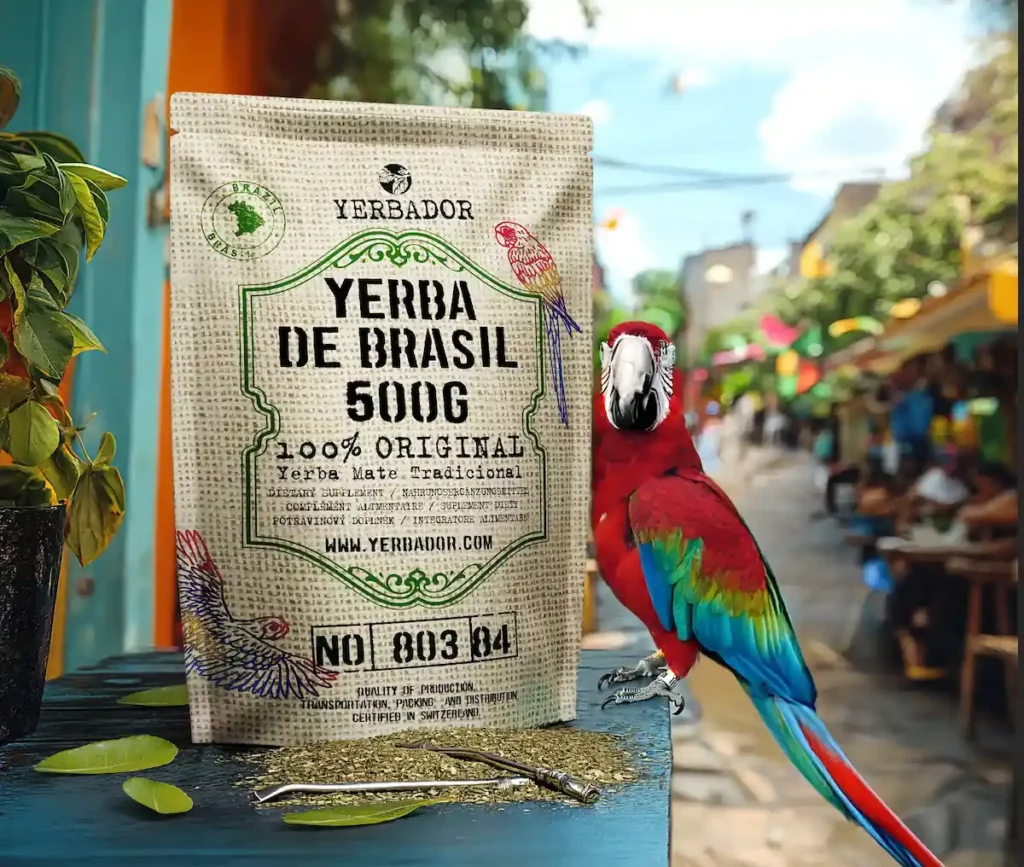
Yerba De Brasil — Doypack 0.5 kg
Pure holly leaf from Brazil’s Rio Grande do Sul, with no additives or flavourings. A smaller pack makes practical sense here: with occasional, lighter brewing the dried leaves won’t go stale, and it’s easier to control your portions.
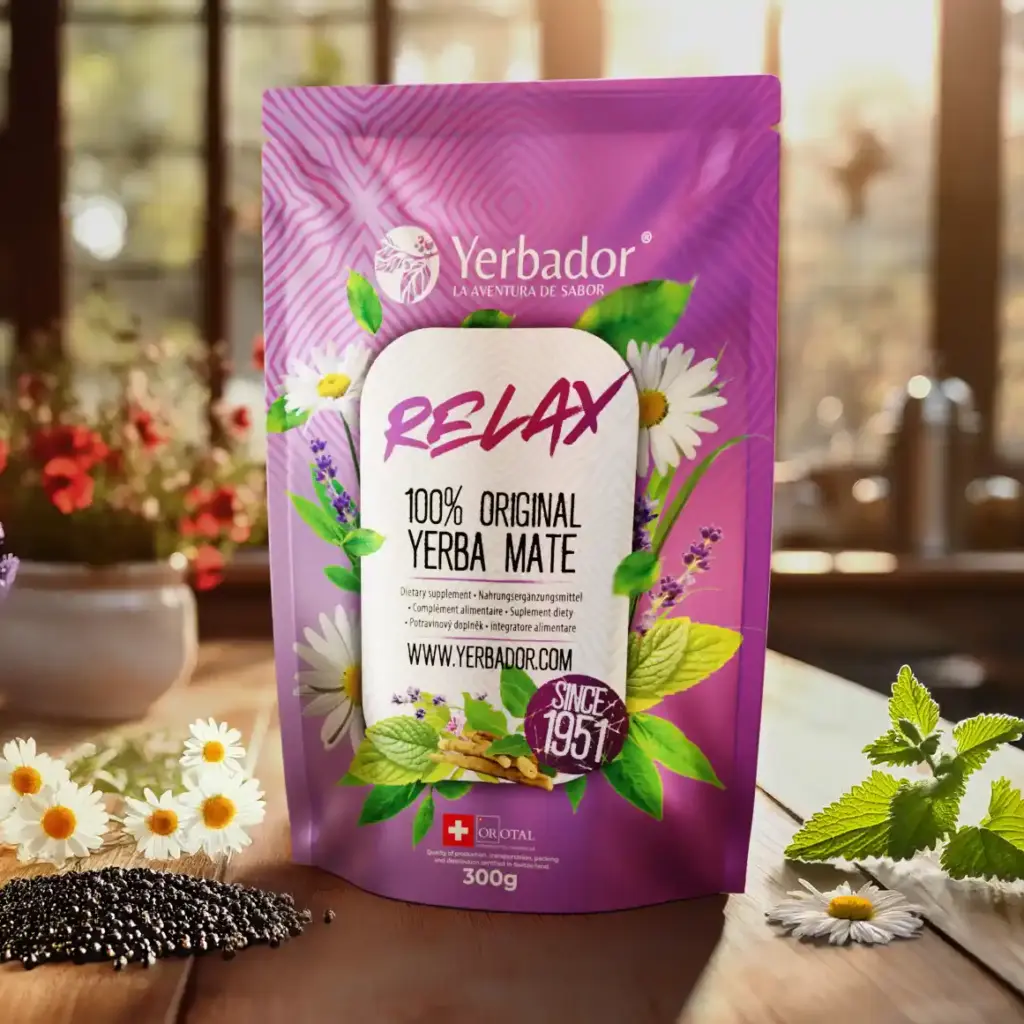
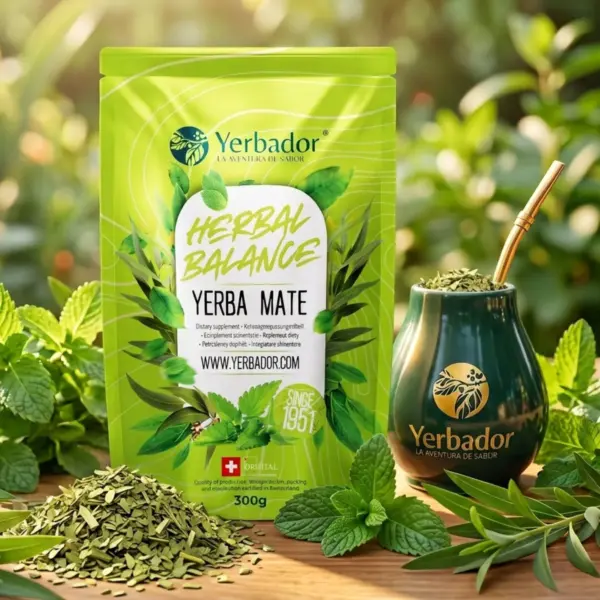
A blend of yerba with lemon balm and chamomile — herbs you already know from the table above as gentle classics. The infusion has a soft, evening profile, but bear in mind: it’s still yerba, so it does contain caffeine and counts towards your daily limit just the same.
Yerba with six herbs: rosemary, peppermint, elderberry, nettle and boldo leaf. A variant for those who look for herbal depth in the taste rather than pure bitterness. The same rule applies here too — caffeine is part of the composition.
Questions about yerba during pregnancy come up at the counter too
Do you run a café, tea shop or yerba store? The question „can I drink this while pregnant?” will come up at your place sooner or later too. It’s worth making sure your team knows the honest answer: yerba contains caffeine, during pregnancy a limit applies to all sources combined, and it’s best to consult the decision with a doctor. If you’re looking for tested dried leaves with full quality documentation for your venue or shop — get in touch with us.
Frequently asked questions: yerba mate during pregnancy
Is yerba mate forbidden during pregnancy?
There is no official ban on drinking yerba during pregnancy. However, EFSA points to a caffeine limit — up to 200 mg per day from all sources combined — along with the common-sense rule to consult your individual decision with your attending physician. Every pregnancy is different, and it’s the doctor, not an article on the internet, who should have the final say.
How much caffeine does yerba mate have compared to coffee?
A traditional serving of yerba usually contains 60–120 mg of caffeine, a cup of black coffee 90–150 mg, and espresso 60–90 mg. A weaker infusion made from one spoonful of dried leaves in a cup has proportionally less. The key factor is the amount of dried leaves and the number of refills — each subsequent refill releases less and less caffeine.
Does yerba mate help with pregnancy nausea or appetite?
Don’t treat yerba as a remedy for pregnancy ailments. Morning sickness, heartburn or excessive appetite are matters for your doctor or midwife. Pregnancy is also not the time to limit body weight, so any „slimming” associations with yerba should be set aside for these nine months.
What about yerba while breastfeeding?
Caffeine passes into breast milk to a small extent, and infants metabolize it slowly — moderation and observing the baby are key. We’ve covered this in detail in our article on drinking yerba mate while breastfeeding.
Sources:
EFSA, Scientific Opinion on the safety of caffeine (2015),
Pitchford P. Healing with Whole Foods,
Kennedy D. A. Safety classification of herbal medicines used in pregnancy in a multinational study,
Bazylko A. Plant-based substances, indications and contraindications for use during pregnancy and preparation for childbirth.
Yerba mate is an infusion whose taste, aroma and properties largely depend on the quality of the dried leaves. Even the best yerba mate will quickly lose its qualities if stored incorrectly – the aroma will fade, and the drink will become flavourless and lacking character. So how do you take care of dried leaves…
Yerba Mate has been valued in South America for centuries – it’s a drink that brings people together, boosts energy and lets you savour the moment. Its distinctive, slightly bitter taste can be captivating, but it can also be a challenge for beginners. That’s why more and more people decide to experiment, adding various extras…
Yerba Mate is a drink that has accompanied the inhabitants of South America for centuries – both in daily rituals and during important celebrations. Although most people associate it with a hot infusion, there is an equally popular and cherished version – tereré, or cold Yerba Mate. It’s a refreshing alternative to the traditional brewing…
How to drink Yerba mate – the healthiest drink in the world? Drinking Yerba mate keeps you going Yerba mate infusion has stimulating properties, improves blood circulation, helps take care of the nervous system, reduces headaches and has many valuable properties that positively affect health. Klaudia Klimczyk knows this well. Mama na Obrotach drinks Yerba…
A customer recently wrote to our support team quite directly: I’ve been drinking yerba mate for two years, two large calabashes a day, and I’ve noticed my teeth are less white than before. Is it definitely because of the matero, or could it be the coffee she also drinks in the morning? The question of…
Yerba Mate accessories, such as the bombilla or matero, are an inseparable part of the ritual of drinking this unique infusion. Proper care of these items affects not only the taste and quality of the drink, but also the durability and hygiene of the equipment. It’s worth knowing the cleaning rules to enjoy your Yerba…