
Maca Powder – Properties, Dosage and How to Use It
2026-08-07
Maca powder is a pale yellow powder with a mild, caramel-like flavour that increasingly finds its way into morning smoothies instead of coffee, or right alongside it. The plant it comes from grows where few other crops manage to survive: at an altitude of 3,500–5,000 metres above sea level in the Peruvian Andes, in thin, cold air where the Incas were already cultivating it more than two thousand years ago. In this article, we take a closer look at what exactly this powder contains, how to dose it, and who might benefit from it – and who perhaps shouldn’t bother.
What is maca and where does it come from?
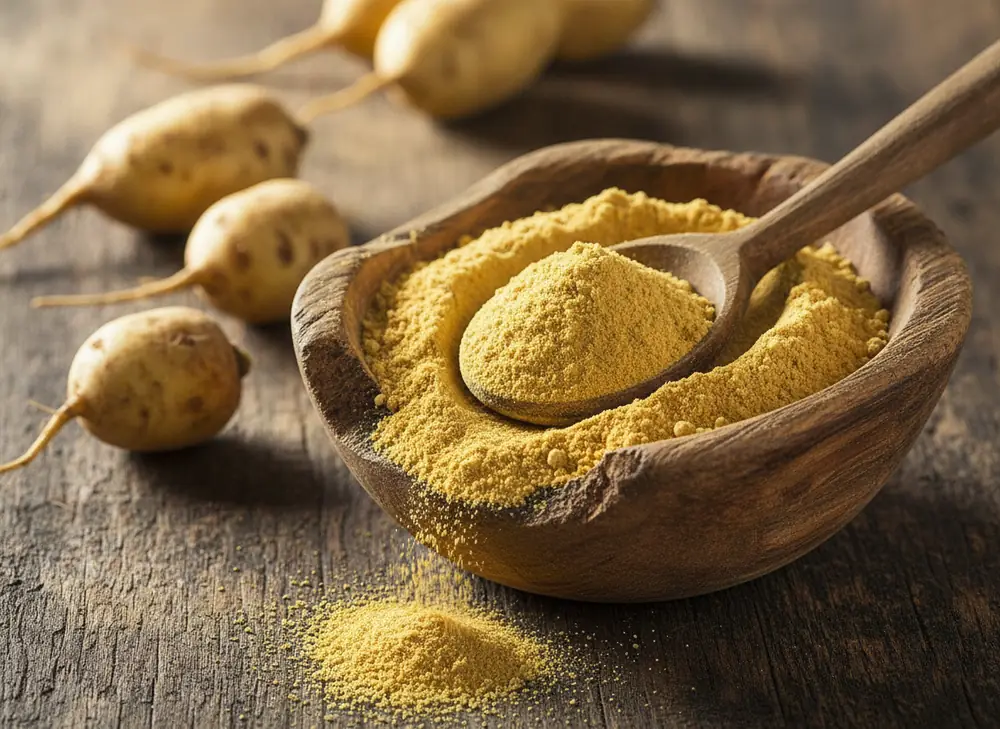
Maca (Lepidium meyenii, also described in some sources as Lepidium peruvianum) is a root vegetable from the cabbage family – the same family that includes broccoli, cauliflower and turnip. The edible part of the plant looks a bit like a radish or a small turnip and grows underground as a thickened root called a hypocotyl. Andean farmers have been growing it for thousands of years on the high-altitude plateaus of the Junín region, where the climate is too harsh for most other edible plants – strong winds, night frosts, a thin layer of soil.
For the peoples living in these regions, maca was more than just an addition to a meal. The dried root was one of the few available sources of food and energy for people doing physical labour at high altitude, where the body struggles to get enough oxygen and warmth. To this day it’s sometimes called Andean ginseng, although botanically it has nothing to do with ginseng – the similarity refers only to its traditional role as a „root for strength and stamina”, not to the plant’s structure. More about the plant itself, its varieties and cultivation history can be found on the English-language Wikipedia – there isn’t yet a Polish entry specifically about maca, as the plant is mainly mentioned there in relation to the cabbage family.
The powder that ends up on the store shelf is simply dried and ground root, with no fillers or added sugar. The colour of the finished raw material depends on the variety – it can be yellow, red, or even almost black. Yerbador sells the light version, with a mild flavour and a distinct caramel note, definitely gentler than, for example, the somewhat bitter ashwagandha root.
Properties of maca – what comes from tradition, and what comes from research
In Andean folk medicine, maca served mainly as a source of energy and stamina – the root was eaten by labourers, soldiers and athletes long before anyone used those words in supplement advertising. Modern studies, mostly on small groups and often funded by extract manufacturers, have looked at, among other things, maca’s effect on energy levels, mood and sexual function. Some point to a possible improvement in libido and sperm parameters in men, but this is still an area of preliminary research – results vary between maca varieties (yellow, red, black), doses and methodology, and large, independent clinical trials are still rare. That’s why, instead of promising a specific effect, we write honestly: this is a topic where science hasn’t yet had the last word, not a ready-made answer.
More solid ground is its nutritional composition. Maca root is a dense source of complex carbohydrates, fibre and plant protein, plus a solid dose of iron and vitamin B6 per 100 g of dry powder – exact figures below. In Andean cuisine it went into soups, stews and the fermented drink chicha de maca; today it most often ends up as a powder added to drinks and meals.
Nutritional values of maca powder (per 100 g)
Data from the Yerbador product label, calculated per 100 g of powder:
- Energy value: 1378 kJ / 327 kcal
- Fat: 1 g, of which saturates: 0.30 g
- Carbohydrates: 60 g, of which sugars: 32 g
- Fibre: 9 g
- Protein: 11 g
- Salt: 0.05 g
- Vitamin B6: 1.50 mg
- Iron: 16 mg
- Calcium: 300 mg
These values are for 100 g of powder, not for a single serving – the standard serving from the label is 5 g, so it actually provides only a fraction of these figures. Treat this table as information about the raw material itself, not as a promise that one teaspoon a day will cover your entire daily iron or vitamin B6 requirement. Maca powder is best stored in a dry, cool place, tightly sealed so it doesn’t absorb moisture from the air.
How to dose and use maca powder
The manufacturer states on the label a serving of 5 g of powder per 200 ml of water, juice or yoghurt, well mixed. In practice that’s a level to slightly heaped teaspoon, depending on how loose the powder happens to be. The taste is mild and slightly sweet, with a caramel note in the background – much friendlier for beginners than, say, the spicy, bitterish taste of ashwagandha or the tangy baobab.
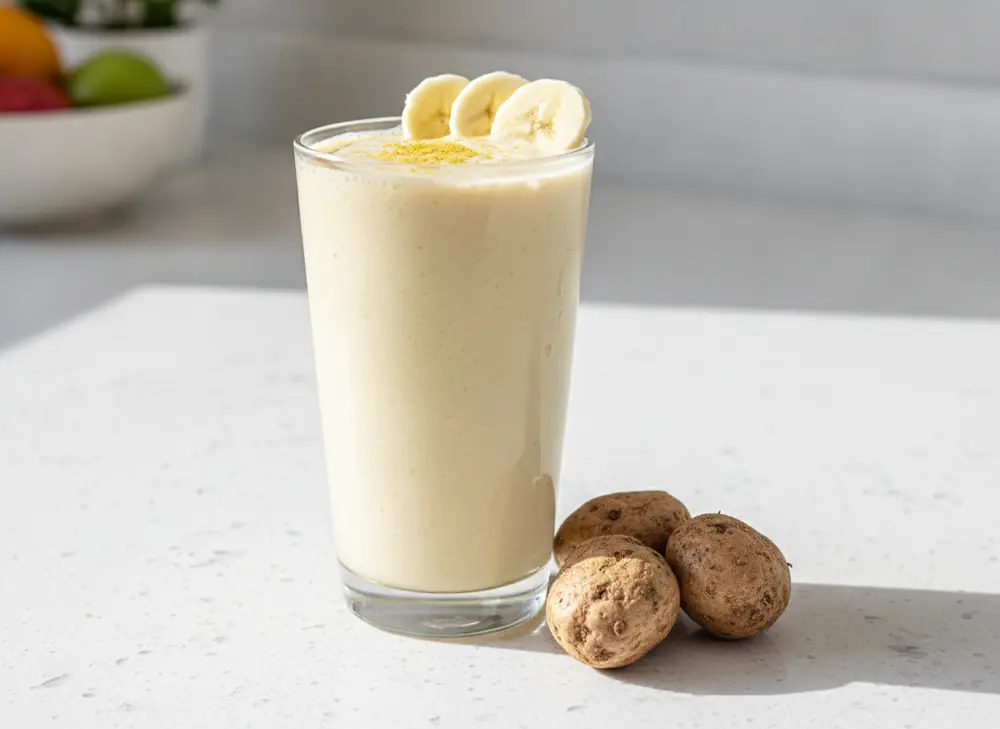
The simplest way is to add a serving to a glass of water, orange juice or natural yoghurt and stir until the powder dissolves. It also works well in a morning smoothie with banana and plant-based milk – maca’s caramel aftertaste pairs naturally with banana, without needing extra sweetening. Besides drinks, the powder works well in porridge, muesli, yoghurt with fruit and homemade desserts – for example as an addition to chocolate cake or homemade energy bars, where it replaces part of the flour and adds a slightly caramel aroma.
One simple recipe to start with: a glass of plant-based milk, a banana, 5 g of maca powder, a spoonful of peanut butter and a handful of ice, all blended until smooth. This is a breakfast smoothie that also works as a midday snack, when energy starts to dip and the next meal is still a while away.
Who maca powder may be suitable for
- For people looking for a plant-based addition to their morning routine – smoothie, porridge, yoghurt.
- For people on a plant-based diet who pay attention to iron sources in their meals (though the powder is not a substitute for a balanced diet or, in case of deficiencies, medical consultation).
- For physically active people looking for a natural addition to their pre/post-workout diet, free from caffeine and stimulants.
- For those who value a mild taste – maca is definitely friendlier on the palate than most root and algae powders.
These are phrases from the world of dietary supplements, not medical promises. Maca Powder supports your everyday diet, but it does not cure anaemia, nor does it replace medication or medical consultation in the case of real deficiencies.
Contraindications and what to watch out for
Maca is a dietary supplement, not medicine, and despite its mild flavour, it’s not suitable for everyone. Here are a few situations where it’s best to check with a doctor before reaching for a spoonful:
- Thyroid conditions – maca belongs to the cabbage family, meaning plants containing natural goitrogenic compounds. In excessive amounts, these can affect thyroid function, which matters especially in cases of hypothyroidism, hyperthyroidism, or ongoing thyroid medication.
- Pregnancy and breastfeeding – there isn’t enough data on the safety of regular supplementation during these periods, so it’s generally not recommended without consulting a doctor first.
- Ongoing medication – especially hormonal and thyroid medicines. It’s always worth consulting a doctor before adding a new dietary ingredient if you’re on long-term treatment.
- Sensitive stomach – larger portions on an empty stomach may cause digestive discomfort in some people, similar to other fibre-rich plant powders.
If none of these situations apply to you, it’s worth starting with a smaller portion than the one on the label, checking how your body reacts over a few days, and only then, if all is well, moving on to the full 5 g daily dose.
Yerbador Maca Powder and products that pair well with it
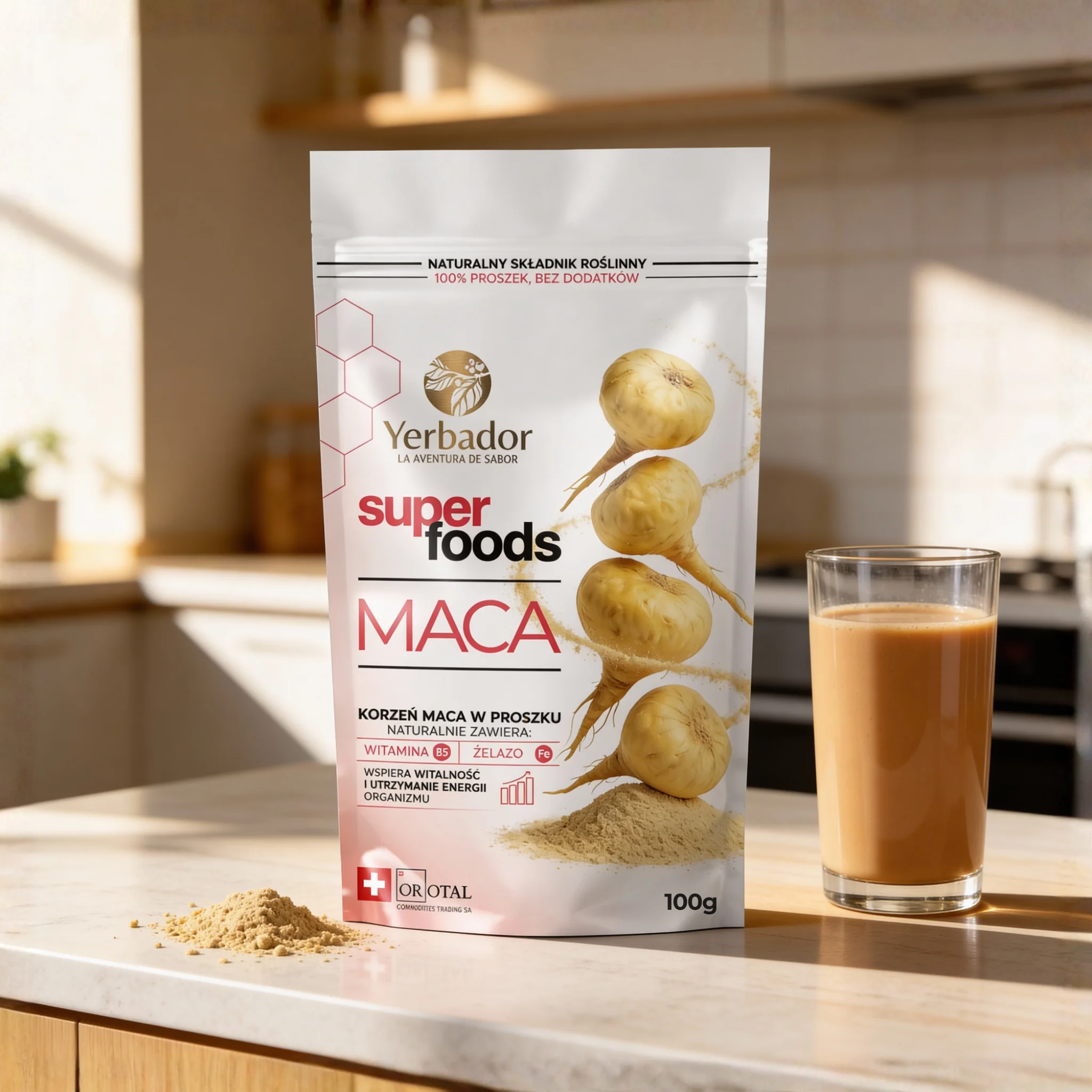
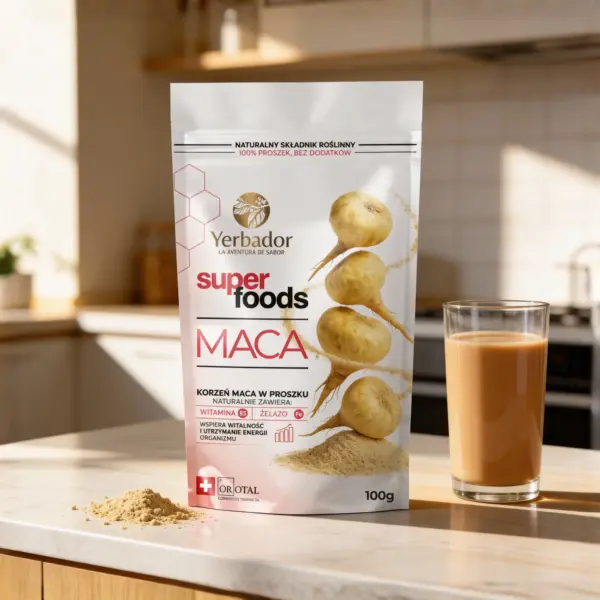
Maca Powder – 100 g – Rich in Vitamin B6 and Iron
The star of this article: 100% powdered maca root from the Andes, a source of vitamin B6 and iron, with a mild, caramel flavour. It works beautifully in smoothies, yoghurt and porridge. Check the current price of the 100 g pack.
Check out the product: Maca Powder – 100 g – Rich in Vitamin B6 and Iron
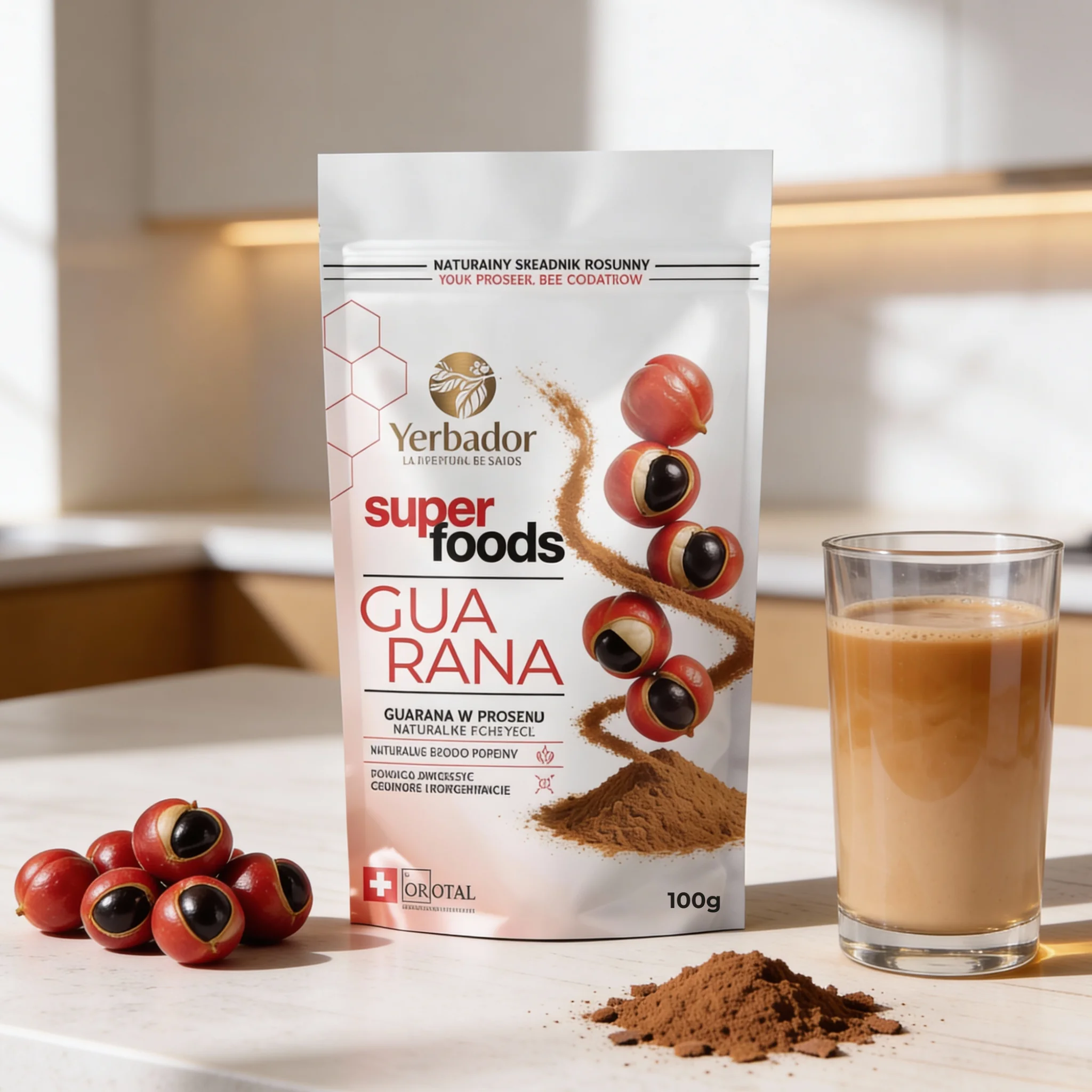
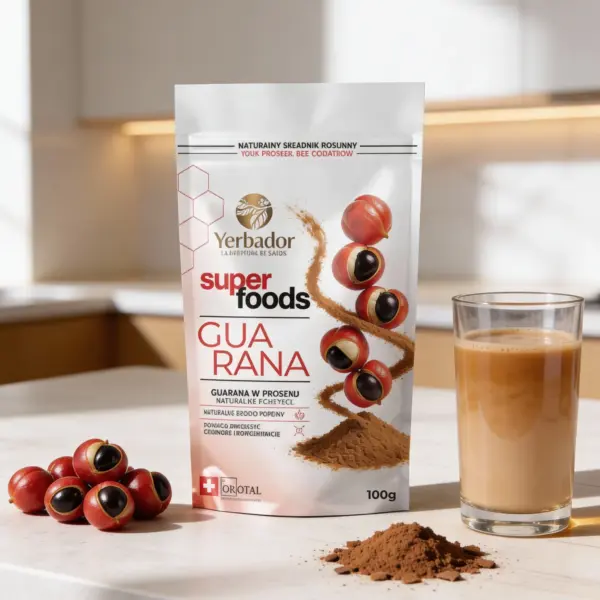
Guarana Powder – 100 g – Natural Source of Caffeine
While maca provides stamina over the long run, guarana adds a quick energy boost thanks to the natural caffeine from the seeds of an Amazonian vine. A great duo for a morning smoothie before an intense day. Check the current price of the 100 g pack.
Check out the product: Guarana Powder – 100 g – Natural Source of Caffeine
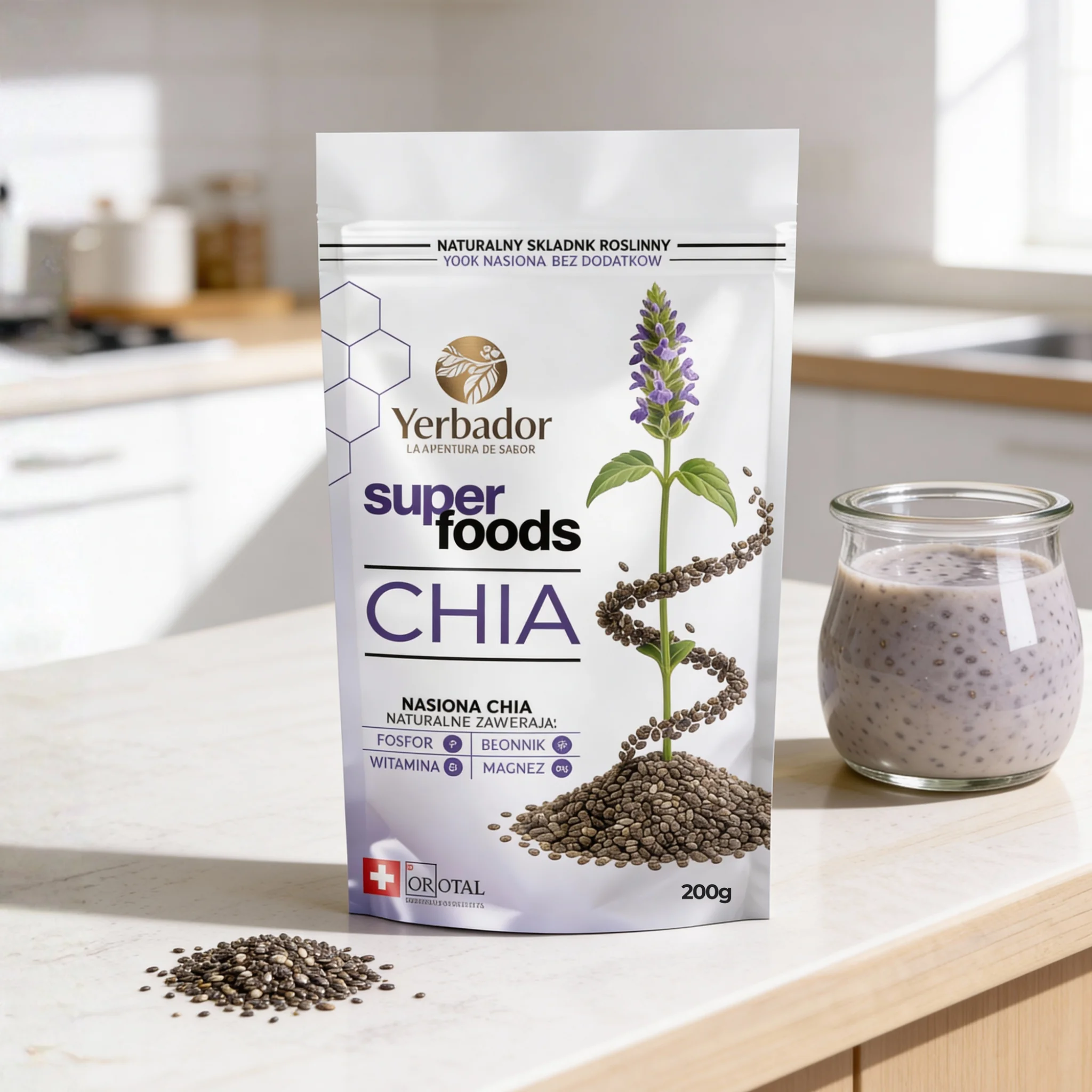
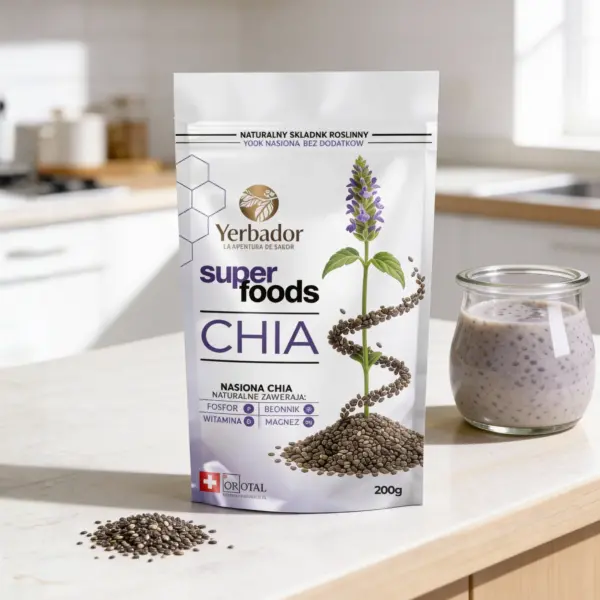
Chia Seeds – 200 g – Natural Source of Fibre and Vitamin B1
Once soaked, chia seeds form a delicate, gel-like texture – perfect for a breakfast pudding or as an addition to a maca smoothie when you want an extra portion of fibre and longer-lasting satiety. Check the current price of the 200 g pack.
Check out the product: Chia Seeds – 200 g – Natural Source of Fibre and Vitamin B1
FAQ – frequently asked questions
How much Maca Powder per day?
The Yerbador product label recommends a 5 g serving per 200 ml of liquid. This is a reference point, not a strict rule – when trying the powder for the first time, it’s better to start with a smaller amount and observe how your body reacts.
When is the best time to drink maca – morning or evening?
Most people reach for maca in the morning, as an addition to a breakfast smoothie or porridge, when they want energy for the whole day. Unlike ashwagandha, it’s not a raw material for evening relaxation, but rather for starting the day.
Does Maca Powder have side effects?
As with any plant-based powder rich in fibre, larger portions on an empty stomach may cause digestive discomfort in some people. People with thyroid conditions, pregnant or breastfeeding women, or those taking medication on a regular basis should consult a doctor before starting regular supplementation.
Does Maca Powder have a taste?
Yes, and a rather pleasant one – mild, slightly sweet, with a hint of caramel. It’s one of the easier plant powders to like, without the pronounced bitterness characteristic of, for example, ashwagandha.
Does maca really increase libido and fertility?
Some preliminary studies suggest a possible effect on libido and sperm parameters in men, but this is still a topic that needs more solid, independent clinical research. Let’s treat it as an interesting scientific direction, not as a guarantee of results after a spoonful of powder.
Maca Powder is one of the simplest ways to introduce a plant-based addition with a tradition spanning thousands of years into your diet, without revolutionizing your menu. A spoonful in your morning smoothie, a moment of stirring, and breakfast gets a new, caramel accent. Check out Yerbador Maca Powder and see if it fits into your morning routine.
Discover our TOP products!
Your dream figure

Discover new flavors
Yerba mate with tea

Accessories
Superfoods
Certified raw honeys from Poland

Check the current price
free shipping
Up to 90 days
free returns
24 H
shipping