
Raw Honey – Why It’s Worth Eating, How to Recognise the Real Thing and Where to Buy It?
2024-10-05
Discover 5 reasons why thousands of people have chosen Yerbador raw honeys.

Fun Fact
It used to be a grandfather, an uncle or a neighbour, but today Yerbador delivers the highest quality natural honey straight from the bees to Polish homes. No heat treatment, no dilution – the full power of nutrients.
More and more people are asking us the same thing: how does raw honey differ from what you find on a supermarket shelf, and where can you buy raw honey that’s truly raw? Below you’ll find 5 reasons why it’s worth having in your kitchen, followed by an extensive guide: how to recognise genuine raw honey, which varieties to choose, and how to pair it with yerba mate.
Why is Yerbador raw honey better? Discover 5 key benefits! 🐝 🍯 🌼

1. A powerful richness of vitamins and minerals in raw honey
Compared to mass-market products available in supermarkets. Raw honey contains numerous bee enzymes and a huge amount of vitamins (e.g. B vitamins, vitamin C), minerals (magnesium, potassium, iron, calcium) and antioxidants. It supports the immune system and can act as a natural strengthening agent.
2. An elixir for beauty
Raw honey is a true wonder of nature for your skin. As a natural humectant, it not only attracts but also locks in moisture, keeping your skin perfectly hydrated, firm and radiant. Regular use of honey in your skincare routine can noticeably improve skin elasticity, restoring its youthful glow. What’s more, raw honey is an invaluable ally in the fight against imperfections – its antibacterial properties effectively cleanse the skin, preventing breakouts and inflammation. It also supports the regeneration and healing of minor wounds and irritations

3. Rebuilding the gut microbiome and supporting the digestive system
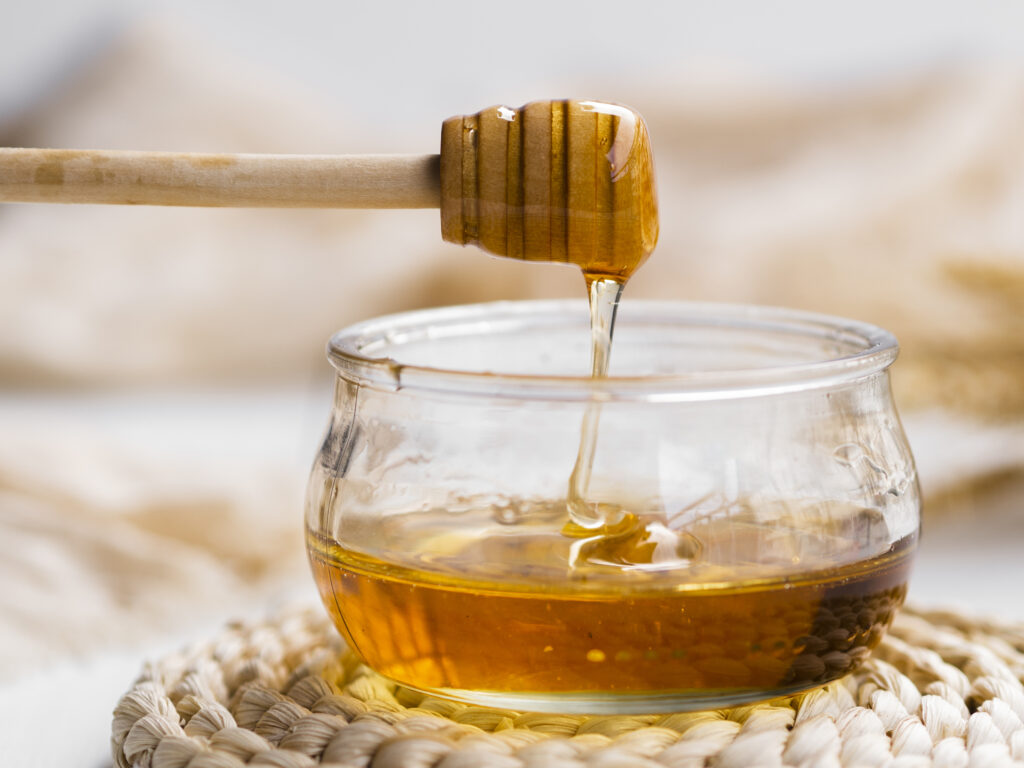
Enzymes in raw honey support digestion and metabolism, help balance the gut microbiome and ease digestive issues such as stomach ulcers. Honey is a source of antioxidants that neutralise free radicals.
4. An explosion of flavour
Yerbador’s raw honeys come from unspoiled meadows and forests, from unique flower pollens. Every drop of this natural product carries intense and authentic flavour that will transport you to the very heart of nature. Its taste means that once you’ve tried it, it will forever change your perception of honey. You’ll never go back to ordinary honey after experiencing this true explosion of flavour that highlights the purity and power of nature captured in a Yerbador jar.
5. Natural energy
Yerbador raw honey is an excellent source of natural simple sugars that provide energy instantly, yet in a balanced way, without sudden spikes in blood sugar levels. Thanks to its unique composition, honey supports your body, providing long-lasting energy that’s perfect for every day. Whether you need an energy boost in the morning or before an intense workout, raw honey offers a healthy, natural alternative to processed sweeteners.
NOTE: Raw honeys are available in limited quantities.

How does raw honey differ from ordinary honey from the shop?
In short: temperature and filtering. Raw honey isn’t heat-treated or diluted — it goes into the jar exactly as the bees delivered it. This matters, because heating honey above about 40°C gradually destroys the bee enzymes responsible for much of its value. Industrial honey is often heated and heavily filtered so it stays liquid and clear on the shelf for a long time. It looks nice. But it pays for that with its content.
Raw honey can be cloudy, thicken and crystallise. And that’s a good thing — it’s not a flaw, it’s the natural behaviour of real honey.
How to recognise real raw honey? A simple checklist
- Crystallisation. Real honey crystallises over time — rapeseed honey can solidify after just a few weeks, while acacia honey stays liquid for months. A jar that still looks like syrup after a year should raise questions.
- Label and origin. Look for specifics: Polish apiary, variety, weight. The label “blend of honeys from EU and non-EU countries” means no one can tell you where that honey really comes from.
- Appearance. Slight cloudiness, tiny specks of pollen or wax are a sign of minimal processing, not dirt.
- Aroma and flavor of the variety. Buckwheat honey smells intense and sharp, linden honey smells of linden blossoms, rapeseed honey is mild and creamy. A honey “without character” is often heavily processed.
- Price. Bees don’t work for free. Very cheap “honey” in a large jar is rarely raw honey from a real apiary.
Where to buy raw honey?
You have three sensible options. First: a local beekeeper or apiary — if you have one nearby, use it, it’s the shortest possible path from hive to jar. Second: regional fairs and markets, though it can be seasonal and hit-or-miss here. Third: a trusted online shop that works directly with beekeepers and is upfront about what it sells.
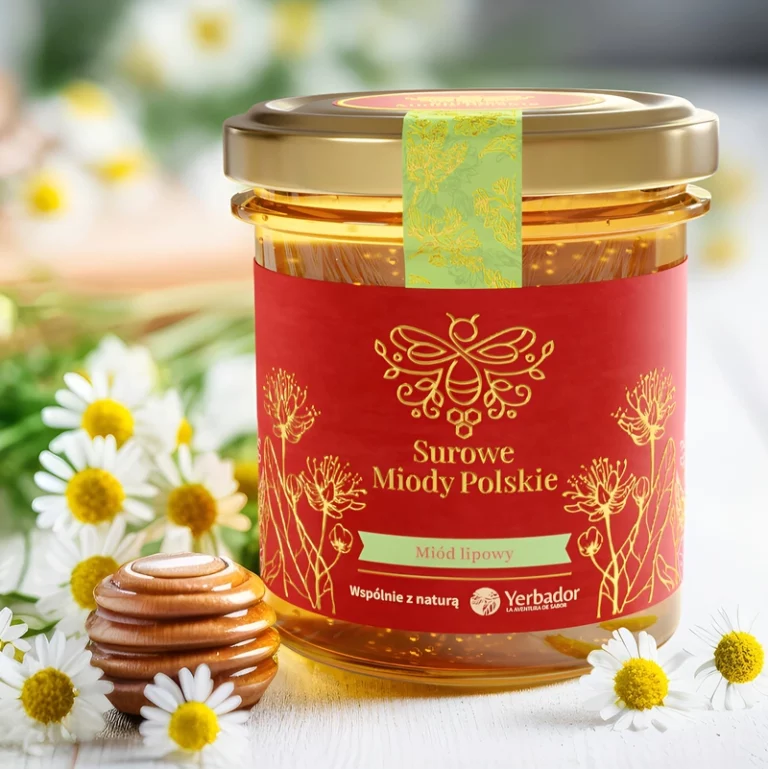
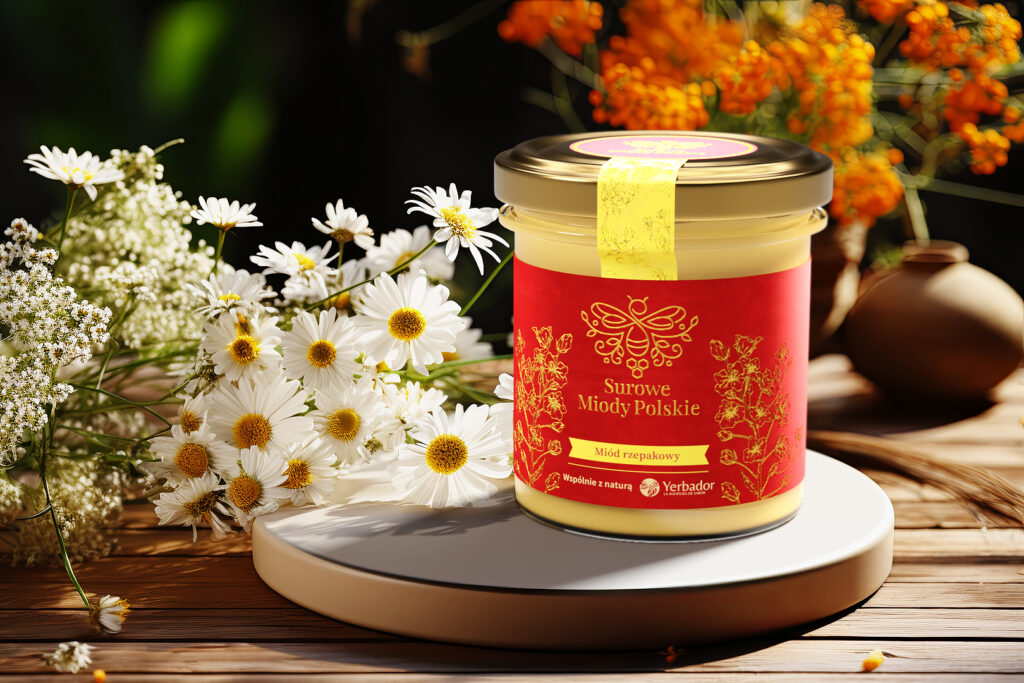
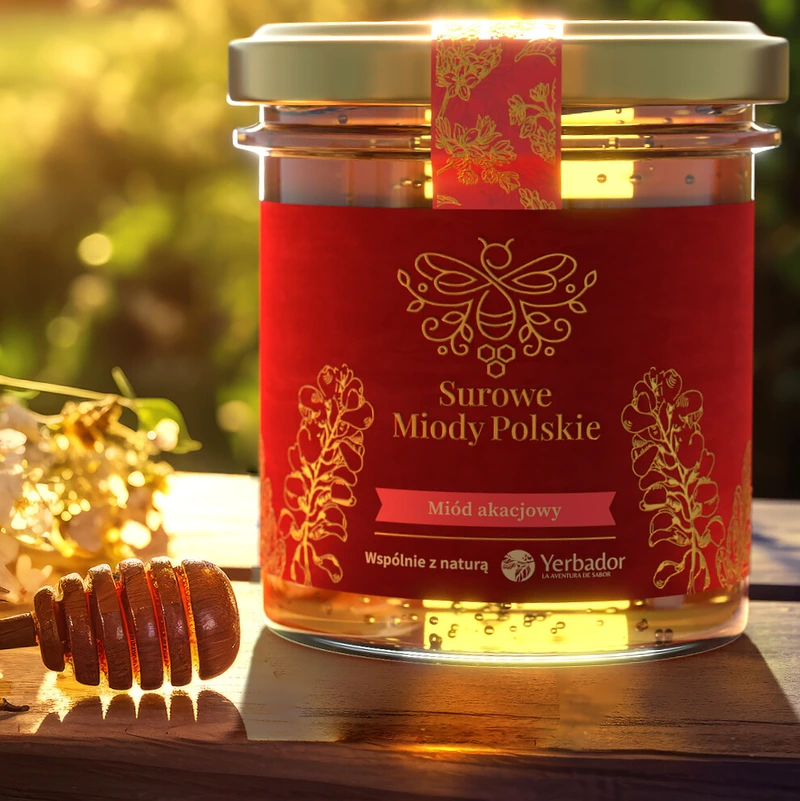
At Yerbador we run the Raw Polish Honeys line — 400 g jars straight from Polish beekeepers, without heat treatment and without dilution. Once, such honey used to be brought from a grandfather or a neighbor’s allotment. Today you order it online with door-to-door delivery, and in the jar you get exactly the same thing. Regardless of where you buy it — from us or anywhere else — always check the source. A good seller won’t have a problem with that.
Types of raw honey — which one to choose for yourself?
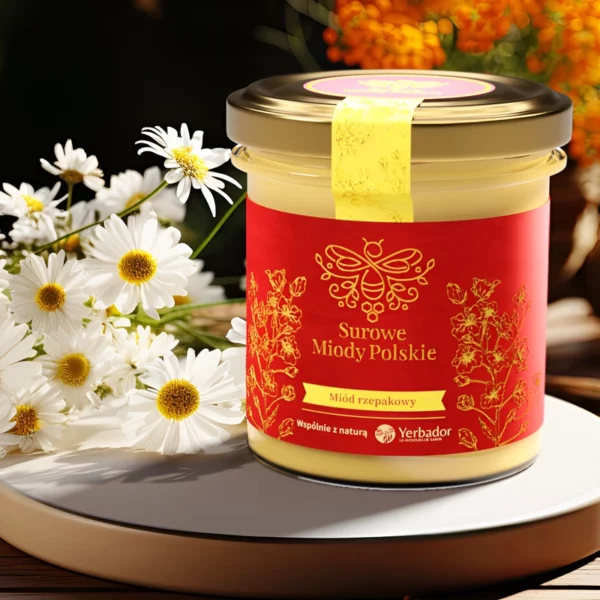
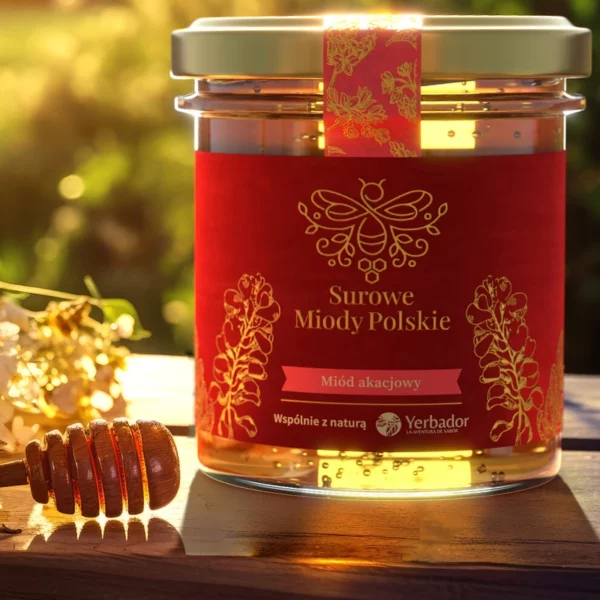
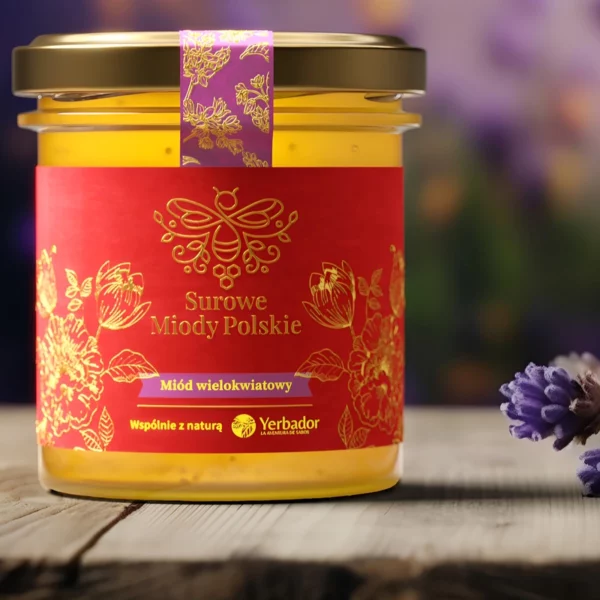
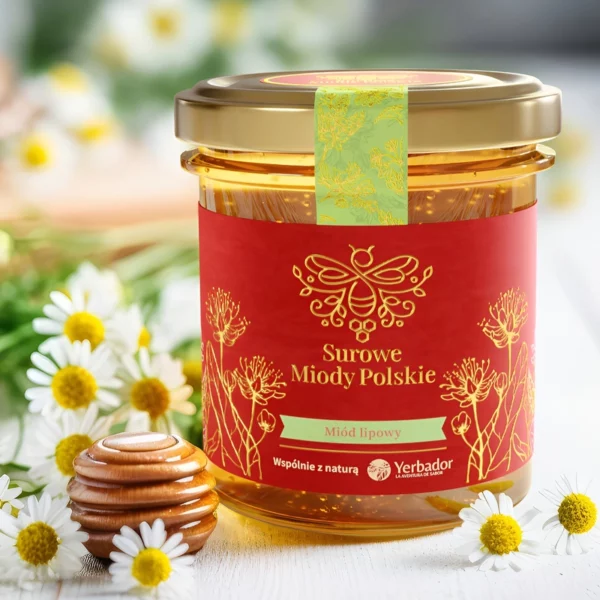
Rapeseed — light, mild, resembles cream after crystallization. Good for beginners, also for children (over 1 year old). Contains, among others, folic acid and B vitamins. Buckwheat — dark, bold, with a strong aroma; buckwheat honeys are among the richest in polyphenols and flavonoids among bee products. This is a honey for those who like a decisive flavor. Linden — smells of summer and blooming linden trees; this is the one Poles traditionally reach for during cold season. Acacia — delicate, sweet, stays liquid for an exceptionally long time. Multiflower — the most versatile, different from every apiary and every season. Honeydew from coniferous honeydew — a league of its own: it doesn’t come from flower nectar, but from honeydew collected from larches, firs, and spruces. Dark, dry, with a resinous note.
Honey and yerba mate — a duo that makes sense
Since you’re already here, you probably also drink yerba. Good news: honey and yerba mate get along very well, under one condition — temperature. We brew yerba with water at 70–80°C anyway, not boiling water (full instructions in our yerba mate brewing guide), so a spoonful of honey added to the infusion doesn’t lose its properties the way it would in hot tea. Honey softens the bitterness of yerba — it’s one of the simplest tricks for beginners.
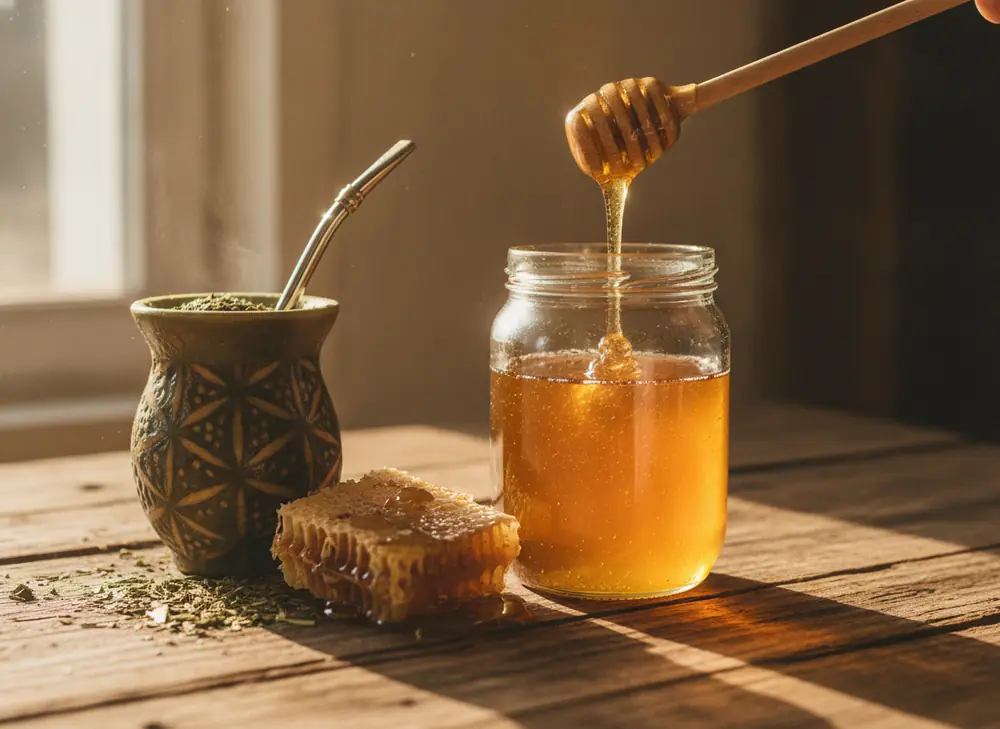
In summer try terere, i.e. cold yerba mate with a spoonful of linden honey and lemon — it works better than many store-bought drinks. In autumn and winter, the honey + yerba duo is a classic for home immunity support. And if you’re watching your figure: honey is still simple sugars, so treat it as a seasoning, not a drink — a teaspoon instead of three spoonfuls of sugar is still a change for the better. You can read more about yerba in this context in the guide on yerba mate and weight loss.
Our raw honeys — from Polish beekeepers
Three varieties our customers most often start with:
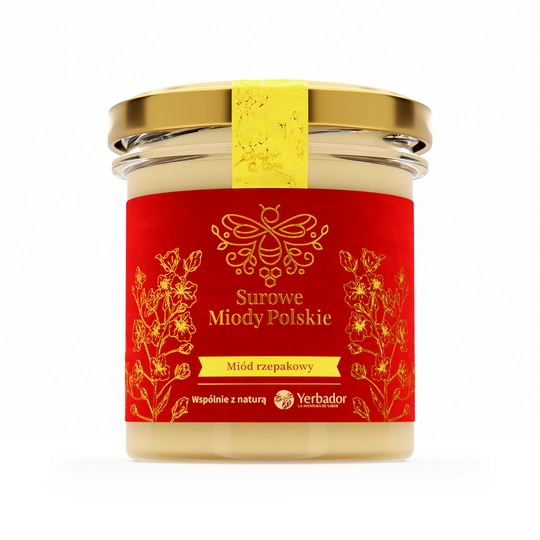
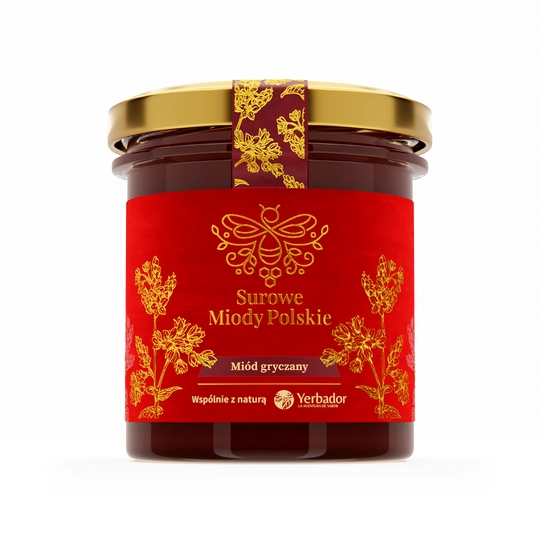
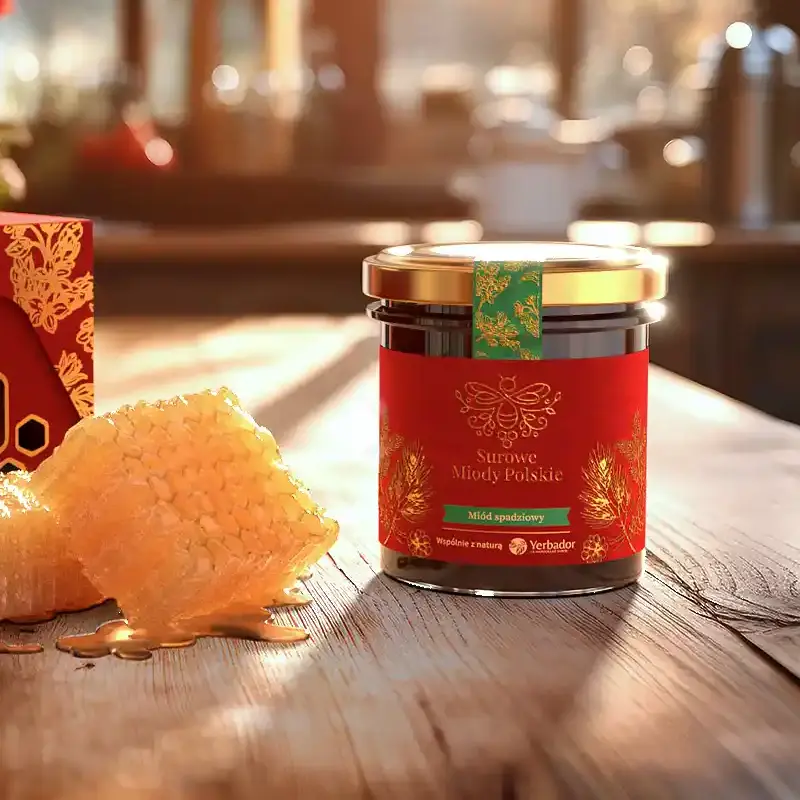
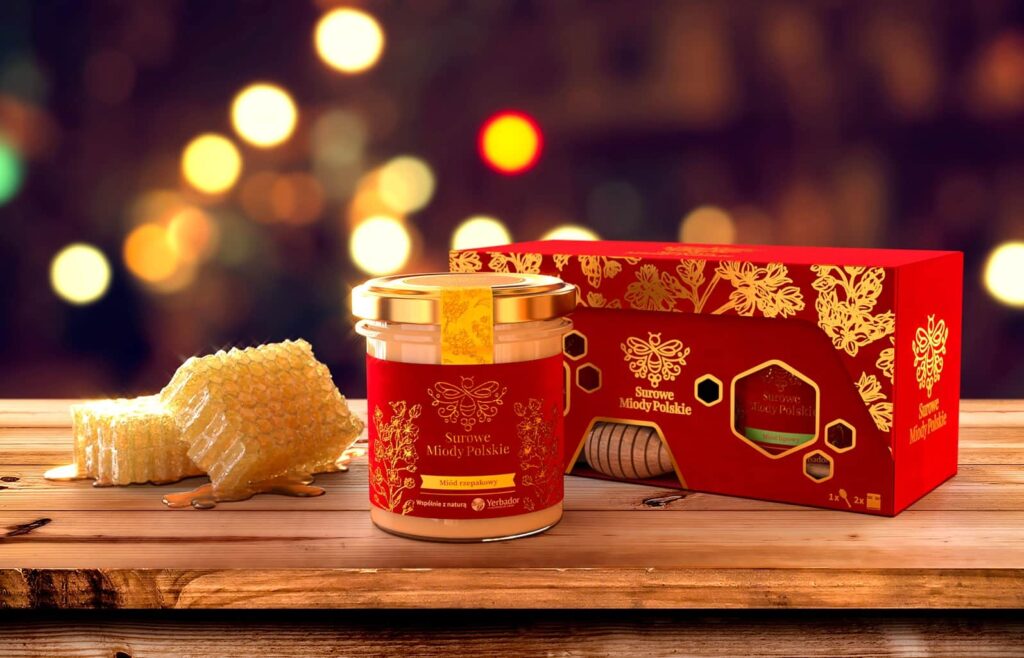
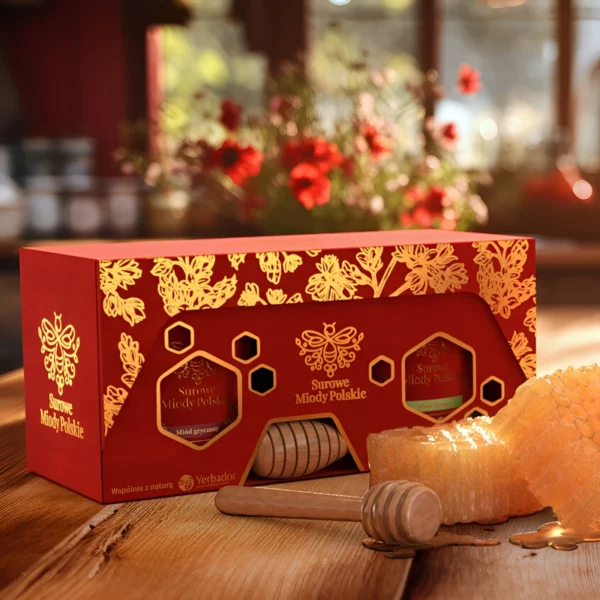
Looking for a gift? Every variety is also available as a gift set, and you’ll find ideas for combined gifts with yerba in our guide to gift sets.
Frequently asked questions about raw honey
Does crystallisation mean the honey has gone bad?
No — quite the opposite. Crystallisation is a natural feature of real honey (more about honey on Wikipedia). The speed depends on the variety: rapeseed honey crystallises quickly, acacia honey very slowly.
How do you dissolve crystallised honey without ruining it?
Gently: place the jar in a warm (not hot) water bath, up to about 40°C, and stir. A microwave or boiling water destroys the enzymes — leaving you with nothing more than a sweet syrup instead of raw honey.
How should raw honey be stored?
In a sealed jar, in a dark place, at room temperature. No need for the fridge — it only speeds up crystallisation. Properly stored honey stays good for years.
Can everyone eat raw honey?
Almost everyone. There’s one important exception: no honey should ever be given to infants under 1 year of age. People with diabetes or allergic to bee products should consult their doctor. For everyone else, a spoonful or two a day is a reasonable addition to the diet — just remember that honey is still a sugar.
Where to buy raw honey when there’s no apiary nearby?
The question “where to buy raw honey” comes up most often from people in big cities, where the nearest apiary is a two-hour drive from their block of flats. In that situation, what matters is whether the shop states clearly which beekeeper the honey comes from and from which region: you’ll find exactly that in the description of every jar of Yerbador Raw Polish Honeys. Buying blind from an anonymous account on Allegro or OLX can be a gamble — sometimes you get an honest beekeeper, sometimes industrial syrup in a nice jar. Ordering online with a stated source is today the simplest way to get raw honey if you don’t have a trusted apiary nearby.
Honey and yerba mate for businesses
Running a shop or a café, or looking for natural gifts for employees and business partners? Raw Polish Honeys and Yerbador yerba mate are available for wholesale orders — with one dedicated contact:
Click here to learn more and place your order!
Discover our TOP products!

Your dream figure



Discover new flavors



Yerba mate with tea



Accessories



Superfoods

Certified raw honeys from Poland

Check the current price
free shipping
Up to 90 days
free returns
24 H
shipping