
How to store matcha so it stays bright green
2026-11-28
Keep matcha in an airtight, opaque tin, in a cool dark cupboard away from the hob and the window, and finish the tin within four to six weeks of opening it. Unopened tins can go in the fridge. That is most of the answer, and the rest of this page is about the details that decide whether your morning bowl comes out bright green or a tired khaki.
Matcha is a powder, and that is the whole problem. Grinding shaded leaf down to particles a few micrometres across multiplies the surface touching air enormously, so everything that dulls a loose leaf tea over a year happens to matcha in weeks. We pack ours in 40 g tins for that reason. A tin that size is about twenty bowls, which most people finish before the powder gets a chance to go flat.
- Four conditions: airtight, opaque, cool, dry. Drop one and the colour goes.
- Open tin: four to six weeks at full quality. A 40 g tin holds about 20 bowls at 2 g.
- Unopened: the fridge is fine and helps. A review of tea storage research points to roughly 4 °C as a suitable temperature for long-term matcha storage.
- The fridge trap: condensation. Let a cold tin stand 30–60 minutes at room temperature before you open the lid.
- Never: above the kettle, next to the hob, on a windowsill, or in a clear glass jar on the worktop.
- Stale matcha is dull, not dangerous: olive colour, hay smell, flat taste, foam that collapses.
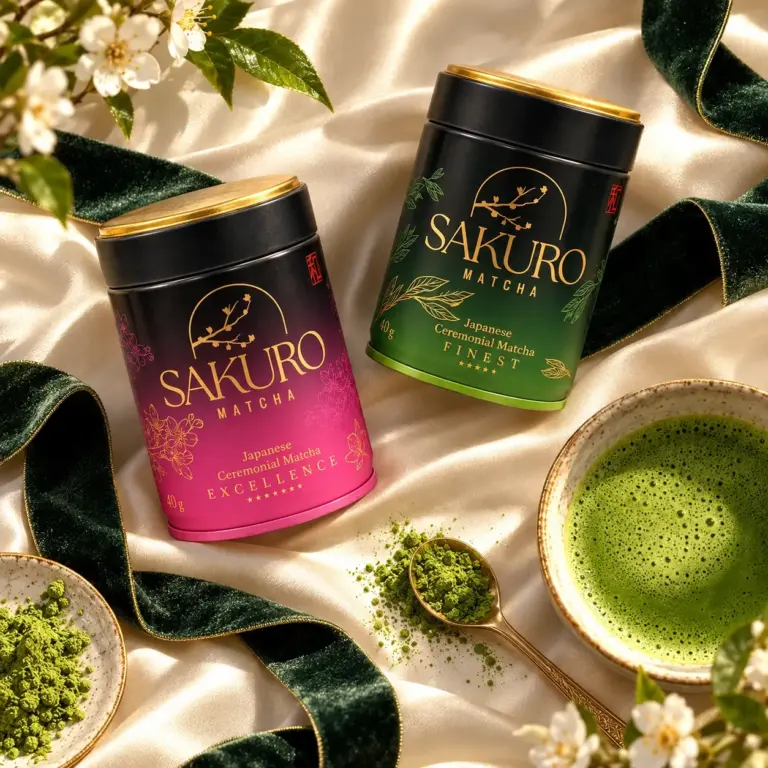
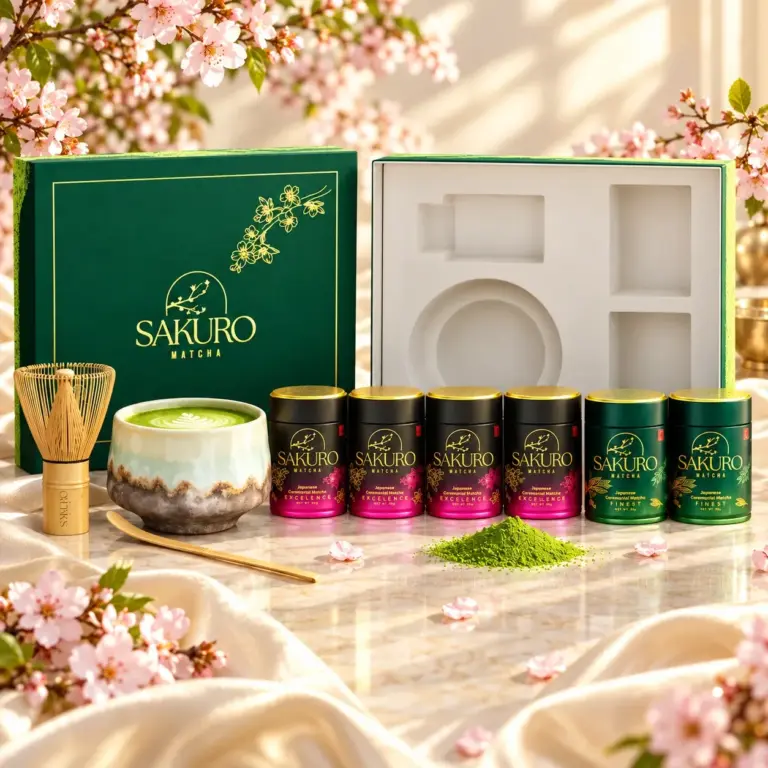
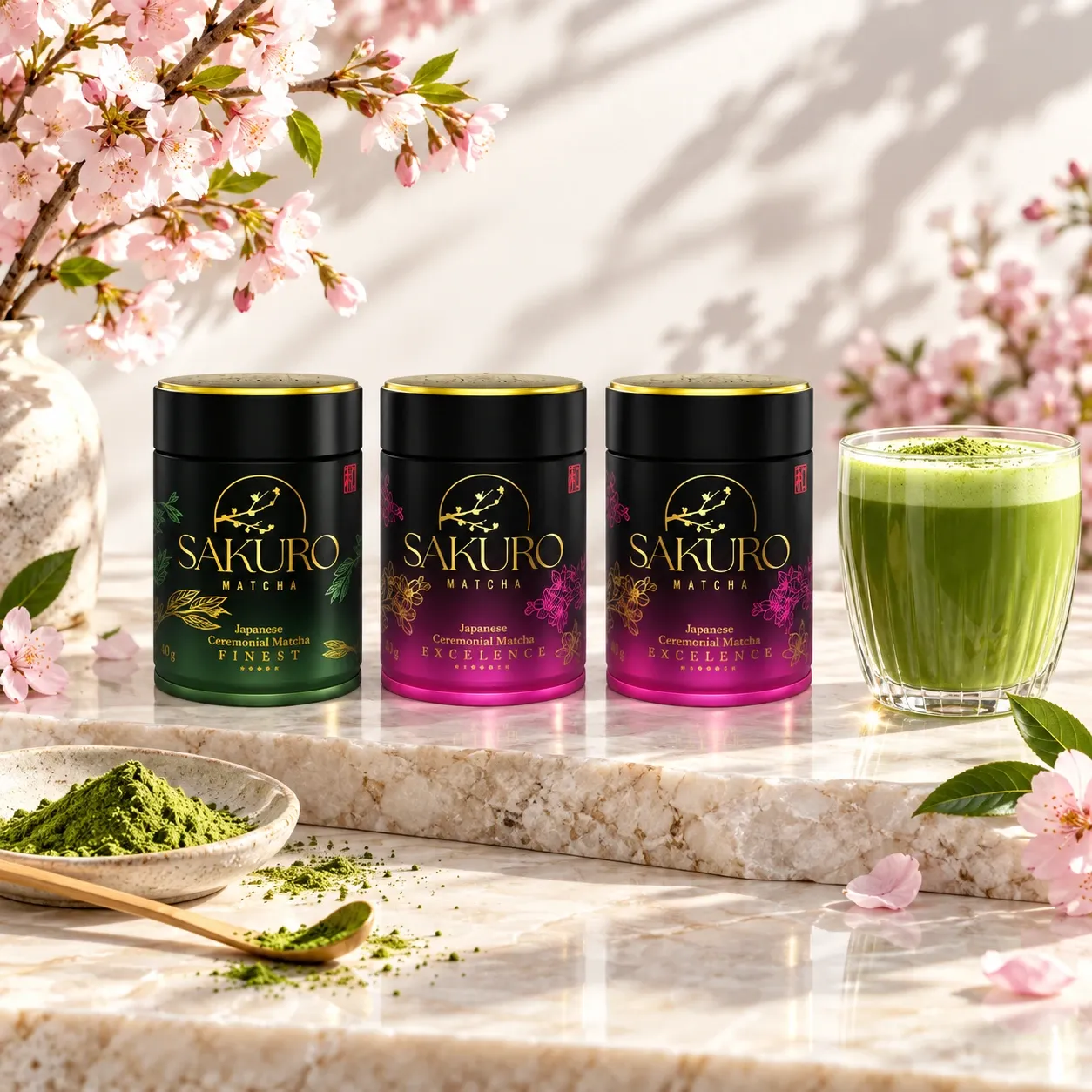
- Sakuro Matcha Finest and Excellence are Japanese ceremonial-grade matcha from Shizuoka, packed in 40 g tins (about 20 bowls) and in 1 kg bags for cafés.
What actually turns matcha from green to khaki
Five things age matcha: oxygen, light, heat, moisture and other smells. Oxygen and light break down chlorophyll, the pigment that makes the powder green, and it converts into brown compounds called pheophytins. Heat speeds all of it up. Moisture makes hard lumps and, past a point, invites mould.
The chlorophyll part is the one you can see. Fresh ceremonial matcha is an almost unreal green, close to fluorescent in daylight. As chlorophyll degrades, that green shifts toward olive and then toward a flat yellow-grey, and the taste follows: the sweetness goes first, the savoury depth after it, and what is left is the bitterness with nothing to balance it.
Light alone does more damage than people expect. A review of postharvest tea storage in the journal Foods notes that ultraviolet and visible wavelengths degrade chlorophyll directly, and that around a month of continuous indoor fluorescent light is enough to strip the green out of tea completely. That is a lamp, not sunshine. A glass jar on an open shelf under a kitchen spotlight is a slow bleaching machine.
Oxygen is why professional packing goes to such lengths. The same review describes hermetic tea packaging holding oxygen below 0.1 % with iron-based oxygen scavengers. Nothing in a domestic kitchen comes close to that, which is the honest argument for buying matcha in small sealed tins rather than decanting a big bag into a jar and hoping.
Moisture is the quiet one. That review puts the safe moisture content for dried tea at about 4–6 %, with problems above 6 % and real microbial risk above 7 %. You will never measure this at home, but you do not need to: keep water, steam and damp spoons away from the powder and you stay inside the range.
| What ages matcha | What it does to the powder | What to do |
|---|---|---|
| Oxygen | Oxidises chlorophyll and catechins; green drifts to olive, aroma flattens | Airtight lid, closed within seconds, small pack you finish quickly |
| Light | UV and visible light break chlorophyll down directly | Opaque tin in a closed cupboard. Never a clear jar on the worktop |
| Heat | Speeds up every reaction above | Cool cupboard for the open tin, around 4 °C for long storage |
| Moisture | Hard lumps, dull aroma, mould risk once water content climbs | Dry spoon, no steam over the tin, let cold tins warm before opening |
| Other smells | Fine powder absorbs onion, cheese, coffee and takes them into the cup | Sealed tin, never an open bag on a fridge shelf |
Where to keep an open tin
An ordinary kitchen cupboard on an inside wall, at around 18–20 °C, with the door shut, is the right place for the tin you use every day. No fridge, no fancy canister, no fridge door. Push it to the back of the shelf where the temperature barely moves and where it is not getting a blast of light every time someone opens the cupboard.
Now the bad spots, because most ruined matcha dies in one of them. The shelf above the kettle gets a plume of steam several times a day and sits five degrees warmer than the rest of the kitchen. The cupboard next to the hob cycles between warm and cool every time you cook. A windowsill is light plus heat, the two worst factors at once, and a glass jar there will visibly fade in a fortnight. The top of the fridge is warm from the compressor. The car is all of it at once.
People also keep matcha in the tea caddy with the other teas, which is fine on temperature and terrible on smell. Earl Grey and chai will hand their aroma straight to the powder. If the caddy is where it has to live, keep the matcha tin sealed and the lid properly pressed down, and keep the inner foil seal rather than throwing it away with the packaging.
Does matcha belong in the fridge?
Unopened tins: yes, the fridge is a good place, and research on tea storage supports it — around 4 °C is a suitable temperature for keeping matcha long term. An opened tin you use daily: no, unless you are willing to handle condensation every time, and almost nobody is.
Here is what goes wrong. A tin at 4 °C is colder than the air in your kitchen. Open it and warm humid air meets cold metal and cold powder, water condenses on both, and you have just fed moisture into the thing you were trying to keep dry. Do that once and you get soft clumps. Do it every morning for a month and the powder sets into lumps that no sieve will fix, and the aroma dies.
If you do want to keep matcha cold, work this way:
- Keep the tin sealed with its original inner seal, and put it inside a zip bag or a second airtight box. Two barriers, not one.
- Take it out and let it stand 30–60 minutes until it is at room temperature. Only then open it.
- Take out what you need for several days into a small working tin that lives in the cupboard, and put the cold one back sealed.
- Keep it away from anything strongly aromatic. A fridge is full of smells and matcha is an excellent sponge.
Honestly, for a 40 g tin you drink in three weeks, the fridge gains you almost nothing and costs you a daily condensation risk. The fridge earns its place when you have bought several tins at once and are storing the spares.
And the freezer?
The freezer is for sealed, unopened matcha you are not going to touch for months. Not for the tin on the counter. Frozen matcha is fine for long storage because every reaction that ages it slows almost to a stop, but the thaw has to be done properly or you undo the benefit in ten minutes.
Thaw the tin unopened, on the worktop, for several hours, ideally overnight. It must be fully at room temperature before the seal comes off, and condensation on the outside of the tin is a sign it is not ready yet. Never refreeze a tin you have opened — each cycle drives another round of moisture into the powder.
In practice, most people do not need the freezer. If you drink matcha regularly, buying two or three 40 g tins and keeping the spares sealed in the fridge covers you for a couple of months without any of the thawing choreography.
How long does matcha keep?
An unopened tin keeps to the best-before date printed on it. An opened tin is at its best for four to six weeks, after which it slowly flattens rather than spoils. Matcha kept dry does not become unsafe to drink; it becomes dull, and the grade you paid for stops showing up in the cup.
| How it is stored | Realistic window | What you notice |
|---|---|---|
| Unopened tin, cool dark cupboard | To the best-before date on the tin | Nothing while the seal is intact |
| Unopened tin, fridge at about 4 °C | The best option for months-long storage | Nothing, if you thaw it properly before opening |
| Open tin, cupboard, lid closed straight away | 4–6 weeks at full quality | Aroma flattens first, usually around week six to eight |
| Open tin kept in the fridge, opened cold | Days before the texture suffers | Soft clumps, then hard lumps, dull colour |
| Decanted into a clear jar on the worktop | One to two weeks | Visible colour shift toward olive |
The best-before date is about the sealed product, not about your tin once it is open. A tin opened three months ago is past its best even if the printed date is next summer. Write the day you opened it on the base of the tin in pencil. It takes two seconds and saves the usual argument with yourself in February about whether this is the tin from before Christmas.
Buy the amount you will actually drink
Storage starts at the checkout. The single most effective thing you can do for freshness is buy a pack you will finish inside six weeks, and buy it more often, rather than buying a big bag because the price per gram looks better.
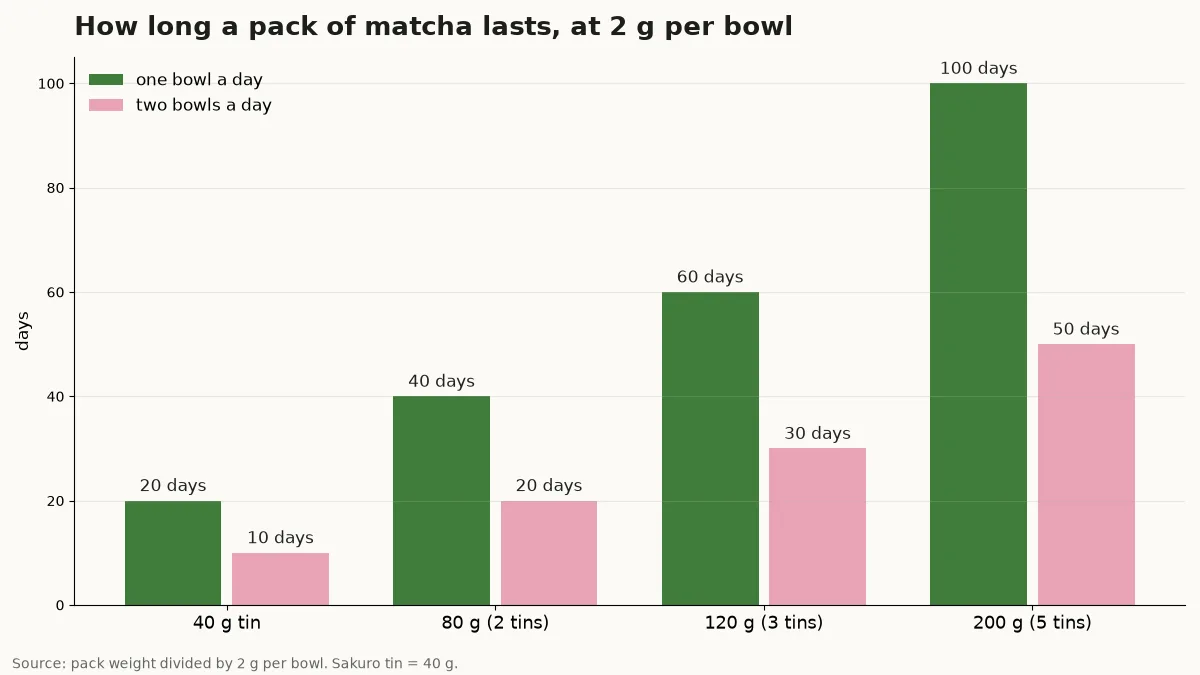
Read it against the four-to-six week window, which is 28 to 42 days. One bowl a day and a single 40 g tin lands comfortably inside it. Two bowls a day and you are through a tin in ten days, so two or three tins makes sense. Five tins at one bowl a day is a hundred days, well past the window — and that is fine, as long as four of them stay sealed in the fridge and you open them one at a time. Multi-tin sets are not a freshness problem. Multi-tin sets all opened at once are.
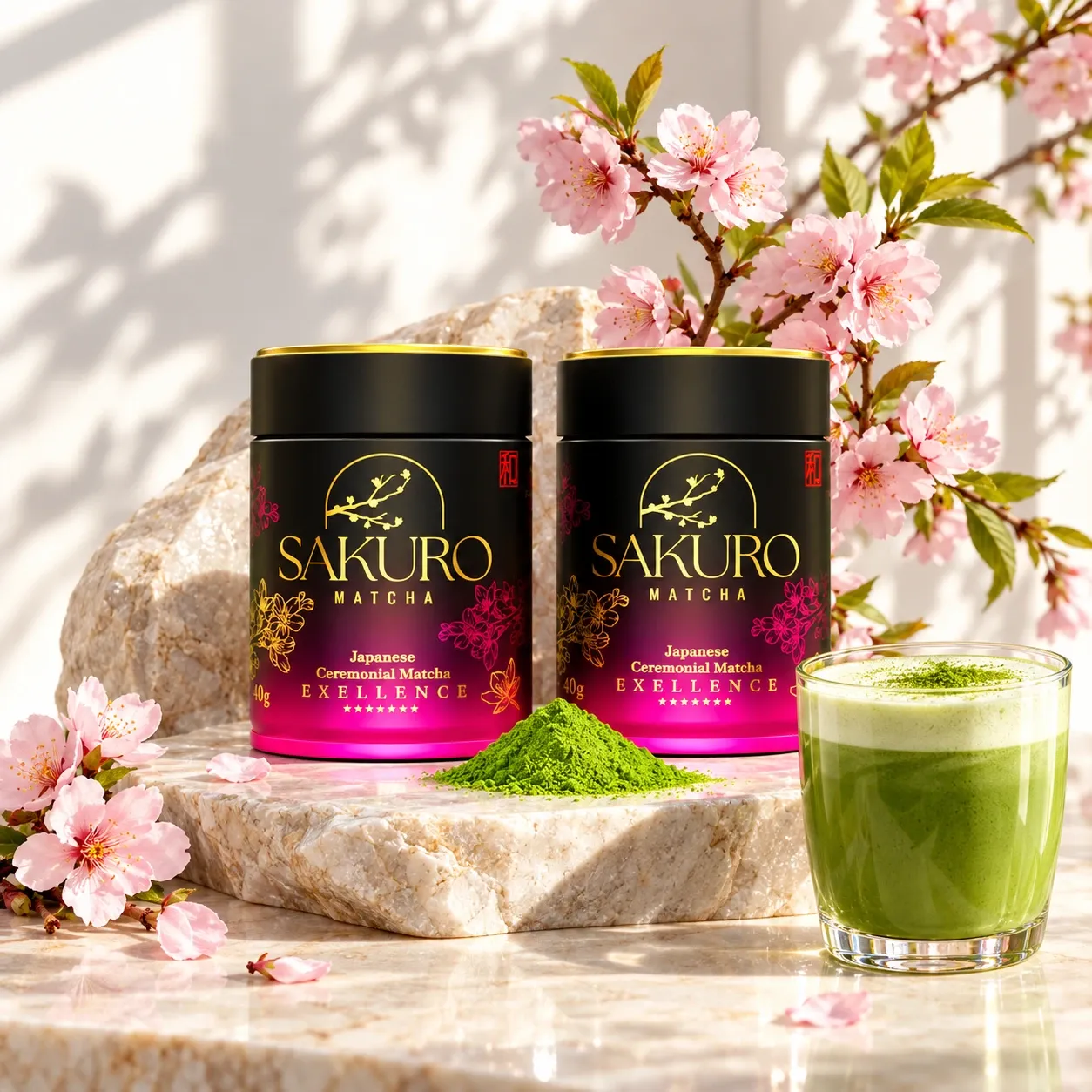
Sakuro Matcha Finest comes in a 40 g tin at about €23.90 and is the everyday one: good enough to whisk plain, forgiving enough for a latte. Sakuro Matcha Excellence, about €26.90 for the same 40 g, is the sweeter, softer grade people keep for the morning bowl. Both are Japanese ceremonial-grade matcha from Shizuoka, and if you are unsure which to start with, the difference between ceremonial and culinary grades is worth five minutes before you buy.
How to tell your matcha has gone past its best
Four checks, in this order: look at the colour, smell the dry powder, whisk a bowl and watch the foam, then taste it. Each one fails a little earlier than the last, so colour warns you before the cup does.
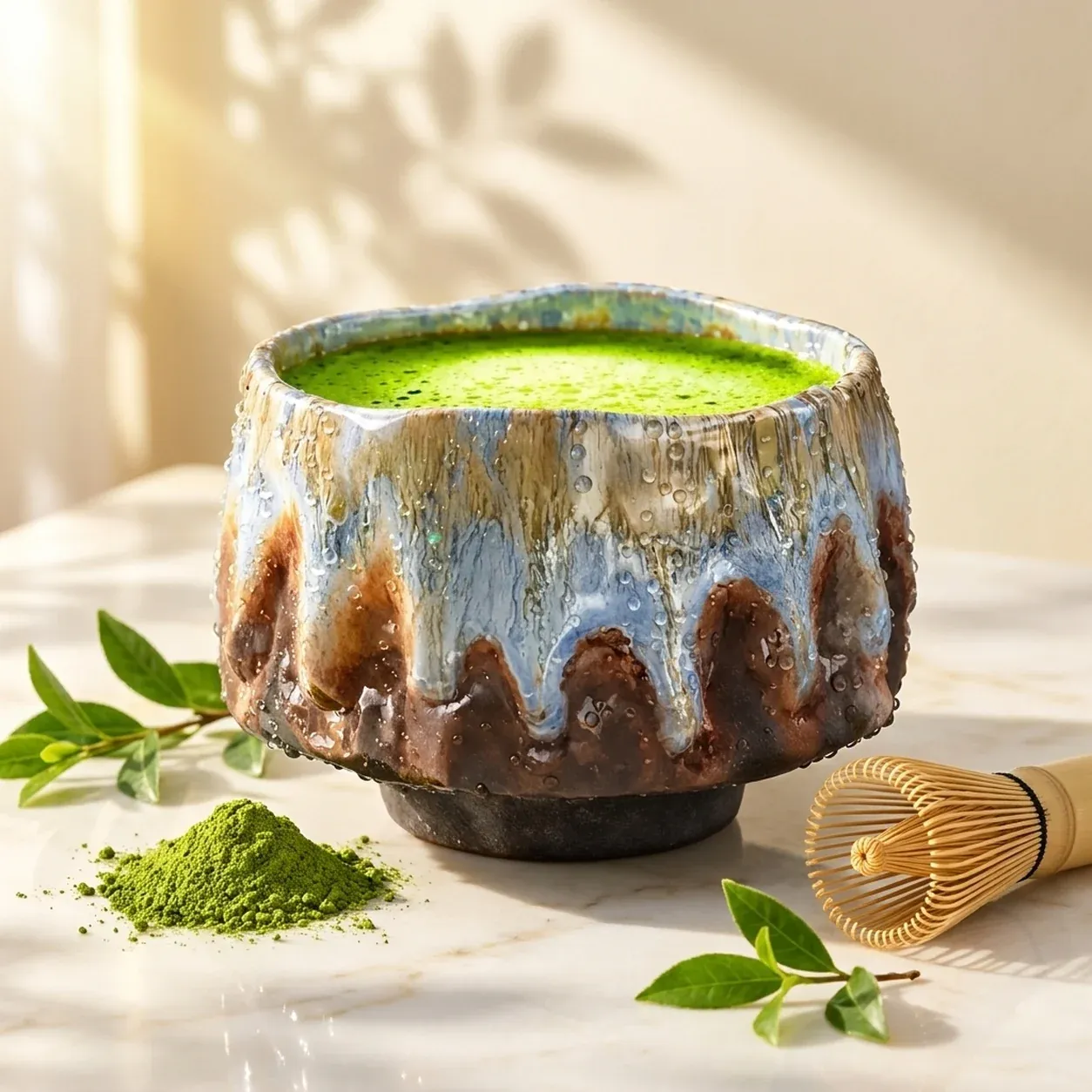
| Check | Fresh | Past its best |
|---|---|---|
| Dry colour | Vivid green, almost fluorescent in daylight | Olive, yellowish or grey-green |
| Smell | Sweet, grassy, a little like fresh nori and cream | Hay, dust, cardboard, or nothing at all |
| Foam | Fine dense crema after about 15 seconds of whisking | Large bubbles that collapse in under a minute |
| Taste | Sweet-savoury, umami, bitterness that fades quickly | Flat, dry, with bitterness that hangs around |
| Texture | Soft, silky, light clumps that break under a sieve | Hard lumps that survive the sieve |
Do the colour check on a white plate in daylight, not under a kitchen lamp, which flatters everything. Hold the powder next to the tin’s own printed green if you want a reference. Most people are surprised how much the colour has moved once they look at it properly.
Hard lumps deserve their own note. Matcha clumps a little by nature — the particles are tiny and static makes them cling, which is why you sieve. Lumps that resist a sieve and feel slightly damp between your fingers are a different thing: that is absorbed moisture, and it does not reverse.
Six habits that cost nothing
- Use a dry spoon, every time. A wet teaspoon carries water into the tin. A bamboo chashaku at about €5.90 is cheap, lives next to the tin and never goes in the washing-up bowl — scrape it clean and leave it dry.
- Close the lid immediately. Not after you have whisked, not after you have poured the milk. Scoop, close, then carry on.
- Never scoop over a steaming kettle or an open pan. The steam goes straight up into the tin.
- Keep the inner seal. If the tin came with a foil membrane or an inner lid, that is a second barrier. Keep it in place and press it back down.
- Sieve what you are using, not the whole tin. Sieving the lot exposes 40 g to the room air for a minute and gives you nothing.
- Do not leave powder sitting in the bowl. Matcha left in a chawan overnight picks up kitchen air and whatever is in it.
What to do with matcha that has lost its edge
Do not bin it. Matcha that has gone flat is still perfectly good tea, it just needs a recipe that does not depend on delicacy. Milk, sugar and temperature cover a lot of sins.
The obvious use is a matcha latte, hot or iced: oat milk in particular rounds off the hard bitterness that older powder develops. Baking is the other good answer, because the oven changes the flavour anyway. Smoothies, overnight oats, a matcha salt for fish or roast vegetables, white chocolate — all of them work with powder you would no longer whisk plain.
What tired matcha is not good for is a straight bowl of usucha or anything thick. If the powder was bought for the morning bowl and it has drifted, move it to the latte jar and open a fresh tin for the bowl. That is not waste, that is sorting your stock.
Storing matcha in a café
A café buys in kilos, which changes the storage problem completely: the enemy is no longer time, it is the number of times the bag is opened. Keep the 1 kg bag closed in a cool dark store cupboard, decant two or three days of powder into a small working tin behind the bar, and refill from the bag once rather than dipping into it forty times a shift.
Label the working tin with the date you filled it, run it first-in-first-out, and never top up a half-empty tin with fresh powder — old and new mix, and you lose the ability to tell which is which. The bar is warm and humid by definition, so the working tin belongs under the counter with the lid on, not next to the steam wand.
For wholesale, Sakuro matcha ships from Poland within the EU in 1 kg bags. As an indicative conversion on the day this was written, Finest works out at about €109 per kg net, which is roughly €0.22 per 2 g serving, and Excellence at about €157 per kg net, roughly €0.31 per 2 g — converted from the Polish trade catalogue at the National Bank of Poland EUR rate of 4.4070, so treat them as orientation rather than a quote. Volume discounts run at 5 % from 3 kg and 10 % from 5 kg. The binding offer comes from Ewelina: [email protected], +48 515 025 329. If you are still working out what a bowl should cost on your menu, we went through the numbers in how to price a matcha drink.
Where to buy
Everything in this guide is written around 40 g tins because that size is the practical answer to storage at home. Sakuro Matcha Finest, 40 g tin — about €23.90, around 20 bowls at 2 g. Sakuro Matcha Excellence, 40 g tin — about €26.90, the softer and sweeter of the two. A bamboo chashaku at about €5.90 and a bamboo chasen at about €14.90 finish the set. Prices on the product pages are always the current ones.
FAQ
Does matcha go bad?
Matcha kept dry does not spoil in the way fresh food does; it fades. The colour drifts toward olive, the aroma flattens and the bitterness becomes more obvious. The exception is moisture: powder that has taken on water forms hard lumps and can grow mould, and that one you throw away.
Should matcha be kept in the fridge?
Unopened tins, yes — around 4 °C suits matcha for long storage. The tin you use every day, no: opening a cold tin in a warm kitchen condenses water onto the powder. If you do keep an open tin cold, let it stand 30–60 minutes at room temperature before you take the lid off.
How long does matcha last once opened?
Four to six weeks at full quality if you keep it airtight, cool and dark. It stays drinkable well beyond that, but the sweetness and the fine foam go first, so a tin opened two months ago is better used for lattes and baking than for a plain bowl.
Why has my matcha turned yellow?
Chlorophyll has broken down into brown pheophytins, driven by light, oxygen and warmth. The usual culprits are a clear jar, a shelf above the kettle or a lid that was not closed properly. The colour change is permanent, and the taste has moved with it.
Can you freeze matcha?
Yes, but only sealed and unopened, and only if you thaw it unopened for several hours until it reaches room temperature. Never refreeze a tin you have already opened. For most households, keeping spare tins sealed in the fridge is simpler and works just as well.
Why is my matcha full of hard lumps?
Moisture. A damp spoon, steam over the tin, or a cold tin opened in a warm kitchen. Soft clumps are normal and break under a sieve — the powder is fine enough that static alone makes it cling. Lumps that resist a sieve mean water got in, and sieving will not bring the texture back.
Can I still drink matcha past the best-before date?
If the tin was sealed and kept dry and cool, it is still tea, and the date is about peak quality rather than safety. Check the colour and the smell before you commit a whole bowl to it. If either has clearly moved, use it in milk drinks or baking instead.
If you only change one thing today, open your tin, tip a little onto a white saucer by the window and look at the colour. If it is green enough to look faked, you are fine — close the lid, move the tin into a dark cupboard and carry on. If it has gone olive, that tin’s future is in a latte, and it is time to open a fresh one.
Discover our TOP products!




Your dream figure




Discover new flavors



Yerba mate with tea




Accessories



Superfoods










Certified raw honeys from Poland

Check the current price
free shipping
Up to 90 days
free returns
24 H
shipping