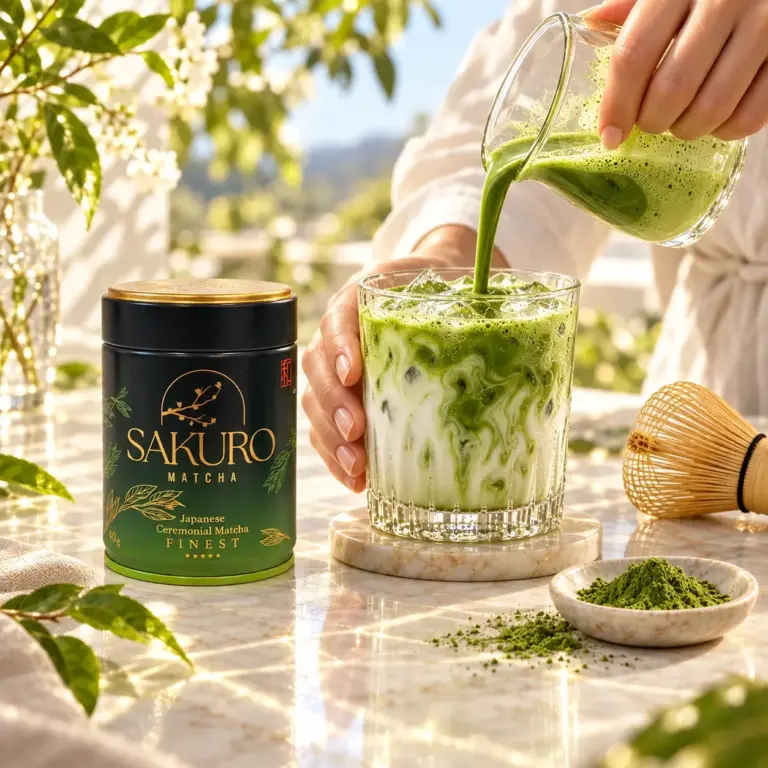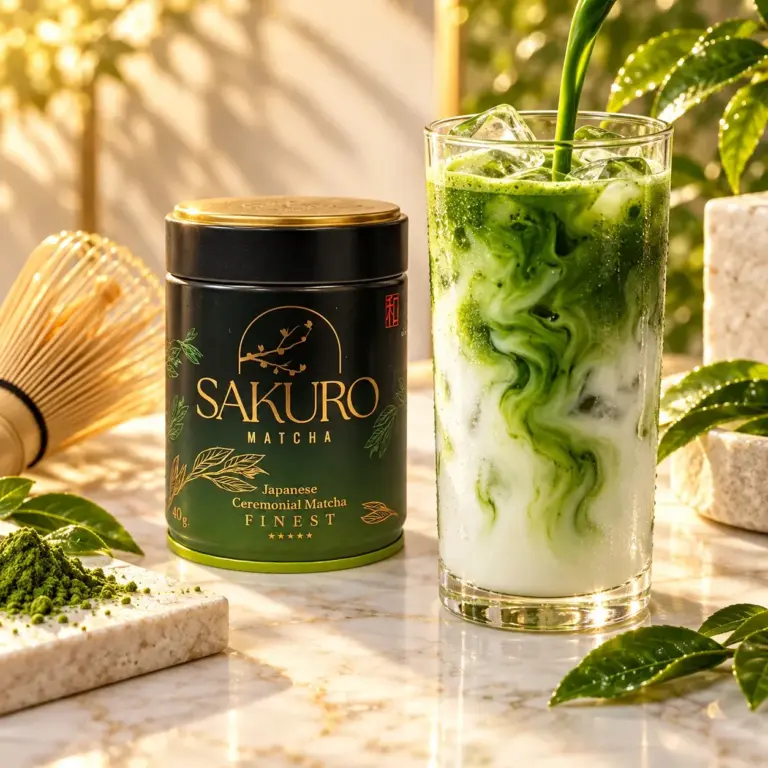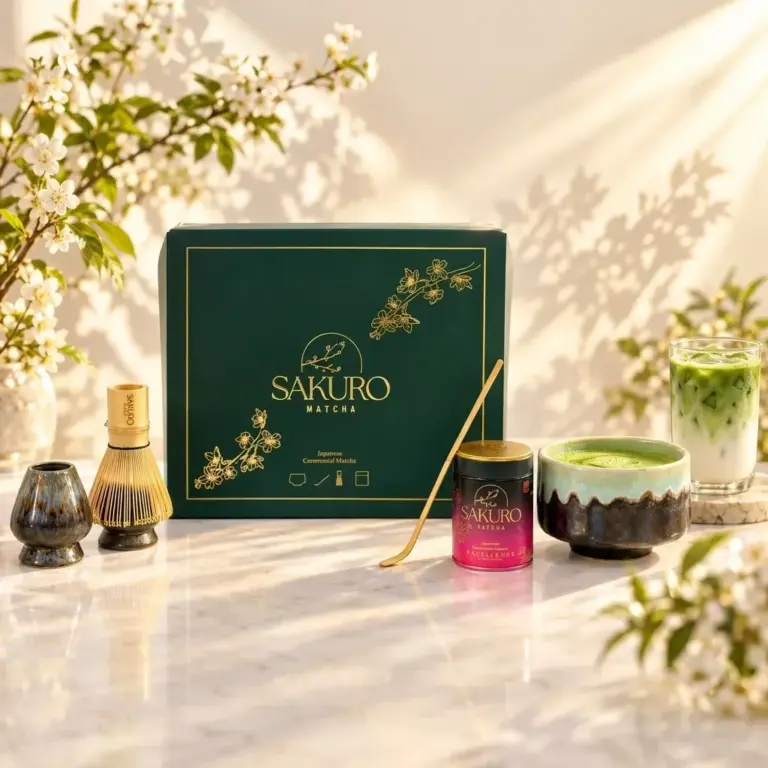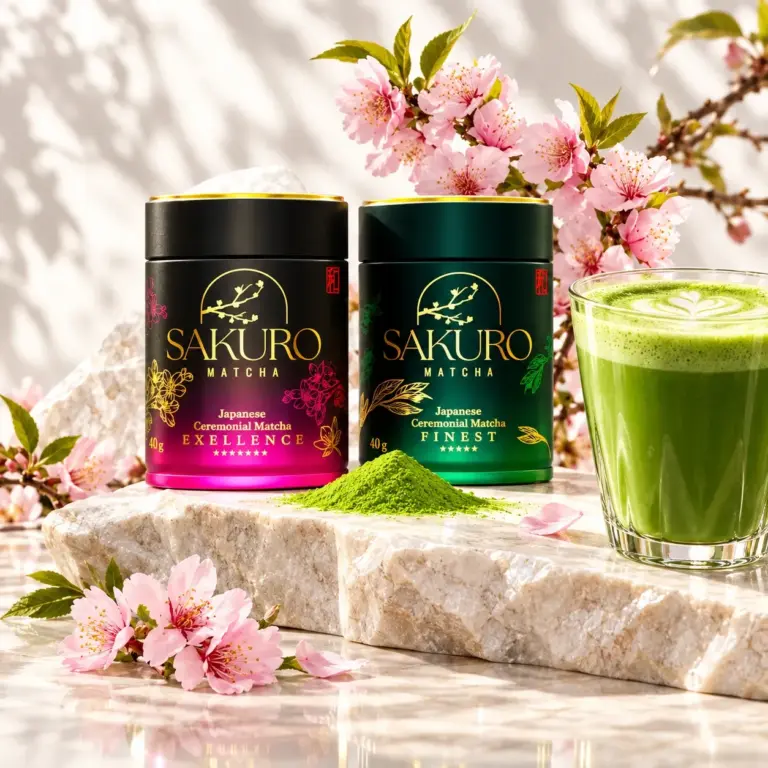

Matcha gift tins on the shop shelf: a Christmas plan that sells
2026-11-25
A matcha gift shelf works in a small shop when it carries three price points: a 40 g tin at €23.90, a tin-and-bowl set at €55.90, and an add-on under €15. That is the whole plan. Everything below is about how many of each to order, where to put them, and what your staff should be able to answer when someone picks a tin up and turns it over.
Matcha sells in December for a reason that has nothing to do with tea. It photographs well, it costs about what people want to spend on a colleague or a sister-in-law, and the person buying it usually does not drink it themselves. They are buying a thing that looks considered. A dark green tin with gold lettering does that job in a way a kilo bag never will, which is why matcha wholesale for shops is mostly a conversation about formats, not about powder.
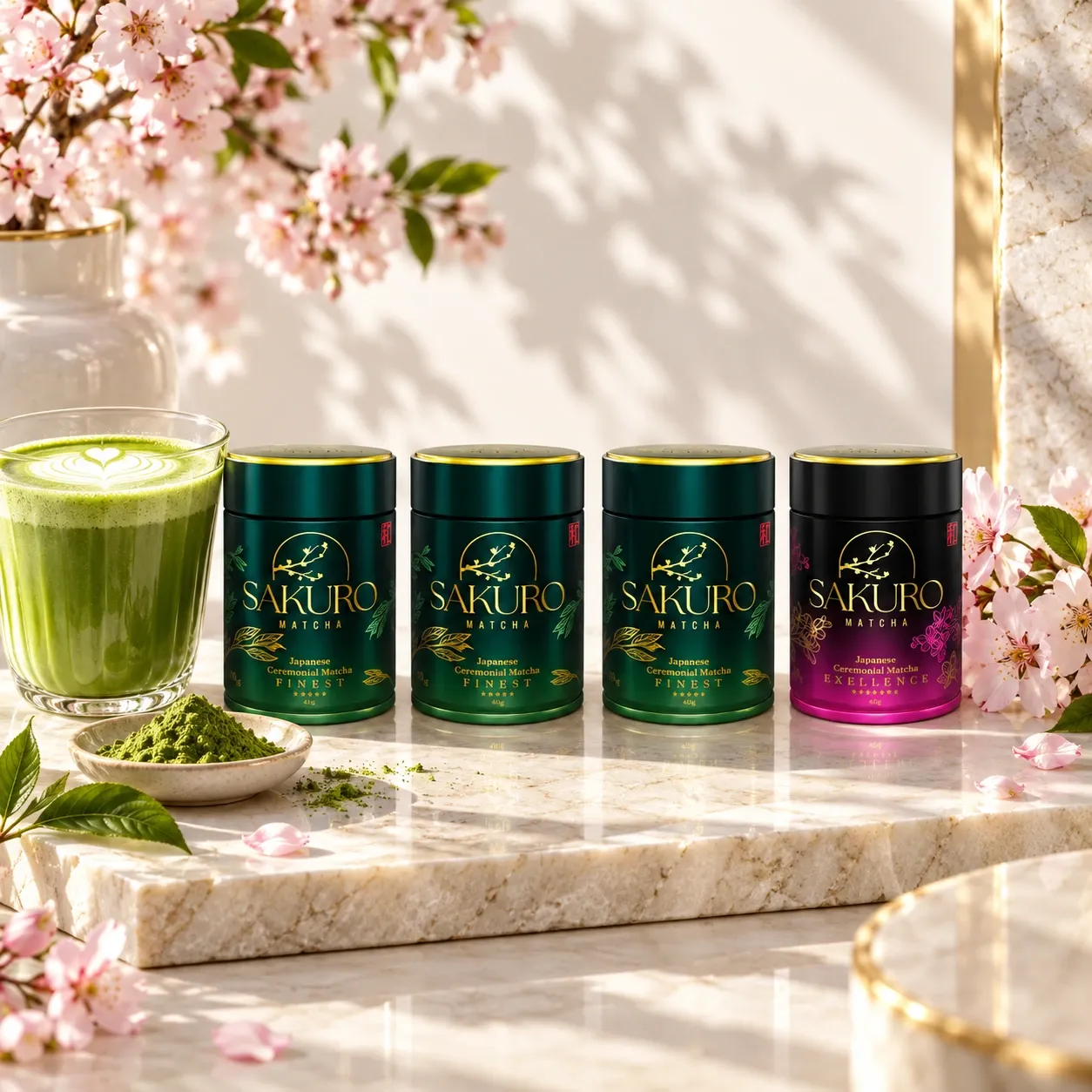
- 40 g tin = 20 servings of 2 g. Retail €23.90 (Finest) or €26.90 (Excellence).
- Three tiers on the shelf: single tin ~€24, two-tin box ~€47, tin with a ceramic bowl ~€56.
- Add-on under €15: a bamboo chasen at €14.90 turns a tin into a present.
- Loose matcha by the kilo: about €109/kg net for Finest, roughly €0.22 per 2 g serving.
- Order window: stock lands in the last week of November, the shelf sells for about five weeks.
- Origin: Japanese ceremonial-grade matcha from Shizuoka, packed in 40 g tins and 1 kg bags, shipped from Poland within the EU.
What a matcha gift buyer is actually looking for
They want a present that costs between €20 and €60, looks like it was chosen rather than grabbed, and does not need explaining. That is the brief. Matcha fits it because the packaging does most of the work and because the recipient almost certainly knows what it is by now, even if they have never made a bowl.
Two kinds of people pick up a tin in a shop. The first already drinks matcha and is buying for themselves while they are in the queue anyway — they will read the grade, look for the origin, and put it back if neither is on the tin. The second has no idea what they are holding and is buying for someone who posts photos of green lattes. That second buyer needs a card, a price that ends in a round-ish number, and a staff member who can say one useful sentence about it.
What kills a matcha display in a shop is the middle ground: one lonely tin on a tea shelf between the chamomile and the rooibos, no card, no bowl beside it. It sells roughly nothing. Three facings of the same tin, a bowl, and a small hand-written card do better than six different products scattered across a metre of shelf.
Three tiers, one shelf: what to stock
Keep the range small enough that the whole thing fits on one shelf or one table and a customer can take it in at a glance. Three price points cover almost everyone: under €25 for the colleague, around €50 for the sister, around €60 for the person who is getting a real present. The table below is the range we see shops land on, with current prices from our own site as a reference point.
| Tier | What it is | Retail price | Who buys it |
|---|---|---|---|
| Entry | Sakuro Matcha Finest, 40 g tin | €23.90 | Secret Santa, office gift, first-time buyer |
| Entry+ | Sakuro Matcha Excellence, 40 g tin | €26.90 | Someone who already drinks matcha |
| Middle | Finest 40 g + Excellence 40 g, two tins | €46.90 | A present that has to look like two things |
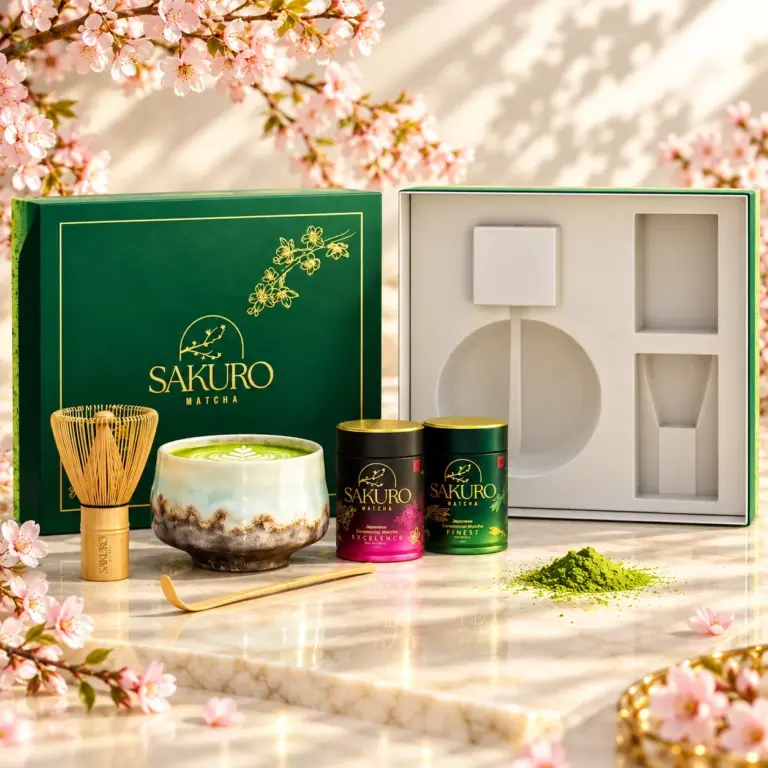
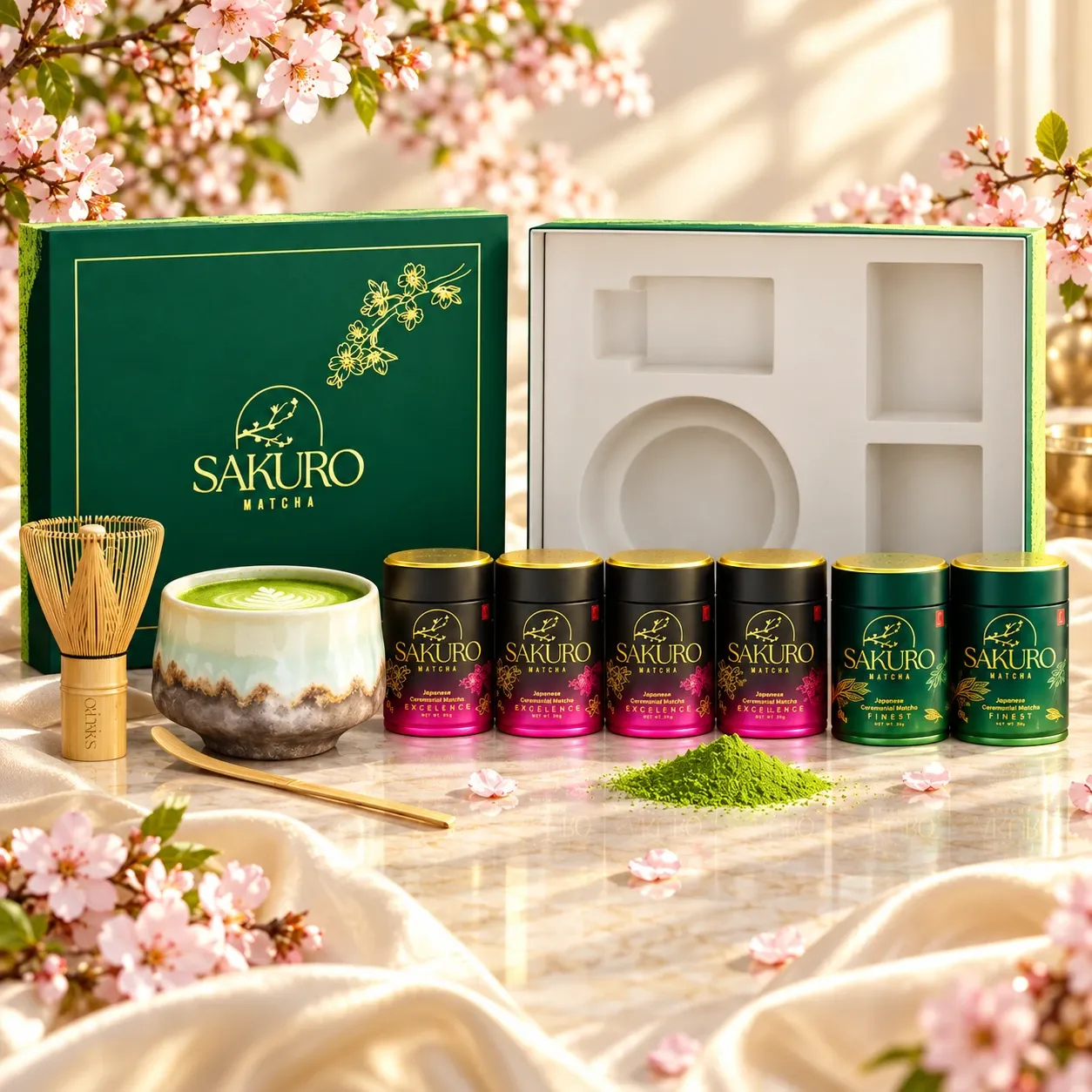
| Top | Finest 40 g with a Fuji ceramic bowl | €55.90 | The main gift, usually for a partner or parent |
| Add-on | Bamboo chasen (whisk) | €14.90 | Impulse buy at the till, pairs with any tin |
The two grades are worth understanding before you order, because customers will ask and because it changes what you push. Finest is the everyday ceremonial-grade powder: bright, grassy, good in a bowl and good in milk. Excellence is the softer, sweeter one with less edge — it is the tin to recommend to someone drinking matcha straight with water, and the one worth putting in the gift set. If you only stock one, stock Finest; it is cheaper, it suits lattes, and most gift recipients will make their first bowl with oat milk. We went through the differences in detail in our guide to ceremonial and culinary grades.
Resist stocking five flavours of anything. Matcha is one product with two grades, and the shelf reads better when it looks like a small curated set rather than a category you are trying to fill.
What 2 g costs you, and what it costs them
A 40 g tin holds twenty servings of 2 g. At €23.90 that is about €1.20 per bowl for the customer, which is the number to use when someone says matcha is expensive — it is a third of what the same person pays for a takeaway latte. For you, the arithmetic depends entirely on whether you are reselling tins or opening a kilo bag.
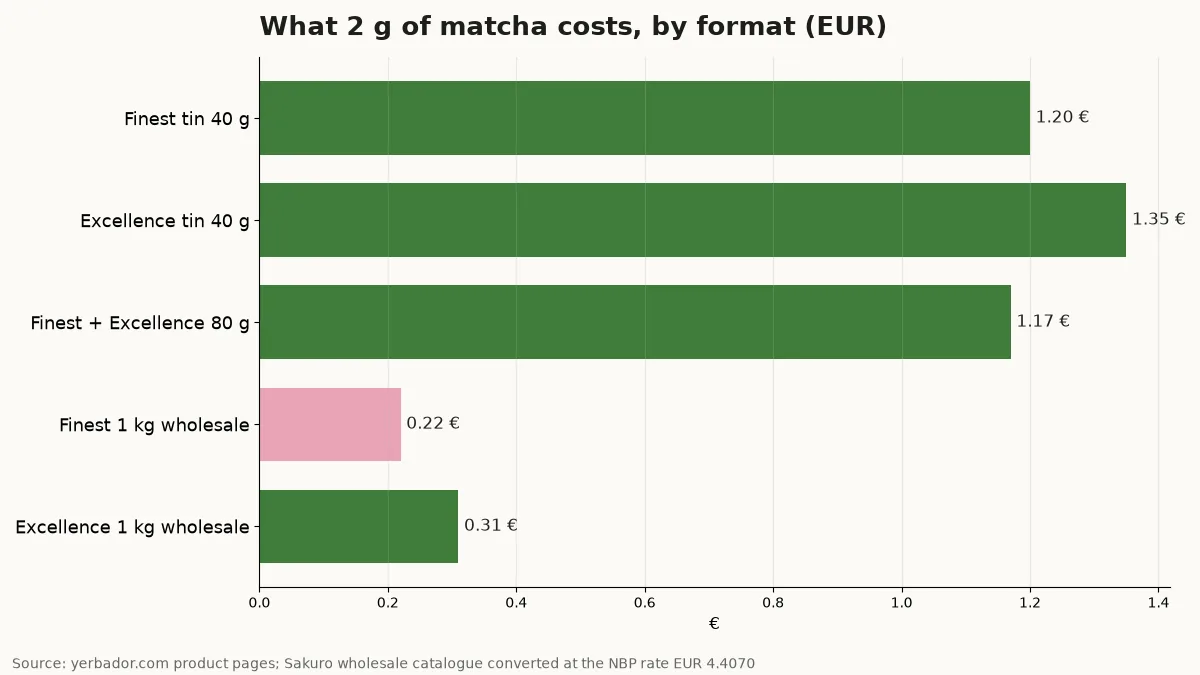
That gap is why cafés buy kilos and shops buy tins. A café turns 2 g into a €4.50 drink, so the €0.22 of powder barely registers. A shop sells the tin itself, so the packaging, the tin’s weight in the hand, and the shelf life are the product. Do not try to do both on the same shelf — loose matcha scooped into a paper bag next to a €56 gift set makes the gift set look overpriced.
One more number worth having ready. A 2 g bowl of matcha carries roughly 60 mg of caffeine, about the same as a single espresso, so a tin is twenty espressos’ worth of caffeine for €23.90. EFSA puts the safe daily intake for adults at 400 mg and 200 mg during pregnancy, which is three to six bowls depending on who is drinking. We laid out the full range in how much caffeine is in matcha, and it is a question your staff will get at least once a week in December.
How many tins to order, and when
Work backwards from the last shopping weekend before Christmas. In most European high streets, matcha-as-a-gift sells in a five-week window: the Black Friday weekend, then four weeks that build steadily until about the 22nd, then nothing. Stock that arrives on the 10th has missed a third of the season.
| When | What to do |
|---|---|
| Early November | Ask for samples and prices, decide on two or three SKUs |
| Mid November | Place the main order; allow a week for delivery inside the EU |
| Last week of November | Stock on the shelf before the Black Friday weekend |
| First week of December | Check what is moving; place the top-up order now, not later |
| Around 10 December | Last realistic reorder date for stock that still has time to sell |
| After Christmas | Move remaining tins to the regular tea shelf; they keep for months sealed |
For quantities, do the sum rather than guessing. Say your shop takes 60 gift-shoppers a day in December and one in forty buys matcha: that is roughly 1.5 tins a day, about 45 over the season, so an opening order of 24 tins plus a top-up is sensible. Change the conversion rate to one in twenty and you need double. The point of writing it down is that you will be wrong in a known direction rather than ordering a number that felt right in October.
Split the order roughly 60 / 25 / 15 across entry tins, two-tin boxes and bowl sets. The top tier sells in smaller numbers but carries the display — people look at the €56 set, decide it is too much, and buy the €23.90 tin. Take the set away and the tin stops looking like a bargain.
The kilo bag: when a shop should buy loose
Some shops want the 1 kg bag, and for a specific set of reasons it makes sense: you run a counter and serve matcha drinks, you bake with it, or you refill your own jars for a bulk section. A kilo is 500 servings of 2 g, which is a lot of December for a small café corner inside a delicatessen.
Our wholesale prices come from the Sakuro catalogue in Polish złoty, so the euro figures here are an orientation rather than an offer: Finest is 480 PLN per kilo net, which converts to about €109 per kilo, or roughly €0.22 per 2 g serving. Excellence is 690 PLN per kilo net, about €157 per kilo, roughly €0.31 per serving. Both use the National Bank of Poland rate of 4.4070 PLN to the euro on the day this was written; the rate moves, so treat the euro numbers as indicative.
| Format | Net price | Per 2 g serving | Servings per unit |
|---|---|---|---|
| Finest, 1 kg bag | ≈ €109 | ≈ €0.22 | 500 |
| Excellence, 1 kg bag | ≈ €157 | ≈ €0.31 | 500 |
| 3 kg or more | −5 % | — | 1 500 |
| 5 kg or more | −10 % | — | 2 500 |
Orders go out from Poland, so delivery inside the EU is a normal courier job with no customs paperwork. For the binding offer — current prices, quantities, delivery and payment terms — write to Ewelina at [email protected] or call +48 515 025 329. She handles every wholesale account and will send samples before you commit to a kilo. If your main business is drinks rather than shelves, our guide to matcha wholesale for cafés and restaurants covers the café side of the same decision.
One thing worth planning around: Japanese matcha supply has been tight. Kyoto’s Ippodo, one of the oldest tea houses in Japan, has put limits on how much matcha one customer can buy and said plainly in its August 2025 notice that demand had outrun supply across the whole Japanese tea trade, with average matcha prices in Kyoto Prefecture at roughly 2.7 times the previous year that May. In practice that means December stock is worth confirming in November rather than hoping it is there on the 12th. We went into the numbers in our piece on the matcha shortage and what it did to prices.
Where the display goes, and what stands next to it
Near the till, at eye level, next to coffee rather than next to herbal tea. Matcha buyers in a shop are usually coffee people, and the gift buyer is standing at the till anyway. A metre of shelf is enough: three facings of each tin, one bowl set standing open so the ceramic is visible, a chasen on a small stand, and a card with three lines on it.
What goes on the card matters more than the shelf talker from a brand kit. Write the grade, the origin, and one instruction: Japanese ceremonial matcha from Shizuoka. 2 g, 60 ml water at 80 °C, whisk fifteen seconds. 20 bowls per tin. That single sentence answers the three questions a gift buyer has and takes ten seconds to read.
Cross-merchandising that works: coffee, good chocolate, honey, ceramics. Cross-merchandising that does not: supplements, anything with a health claim on the box, and the seasonal confectionery gondola where everything is under €10. Matcha next to €7 chocolate bars looks expensive; matcha next to €18 single-origin coffee looks normal.
If you have a counter and a kettle, a brewed sample changes the numbers more than any display does. Make one bowl, let it sit where people can smell it, and offer a thimbleful to anyone who stops. A tin that has been tasted sells itself, and the 2 g you spend on the sample costs you around €0.22 from a kilo bag.
Five questions at the till, and what to answer
Your staff do not need to know anything about tea ceremony. They need five short answers, and they need to give them without reaching for a tablet.
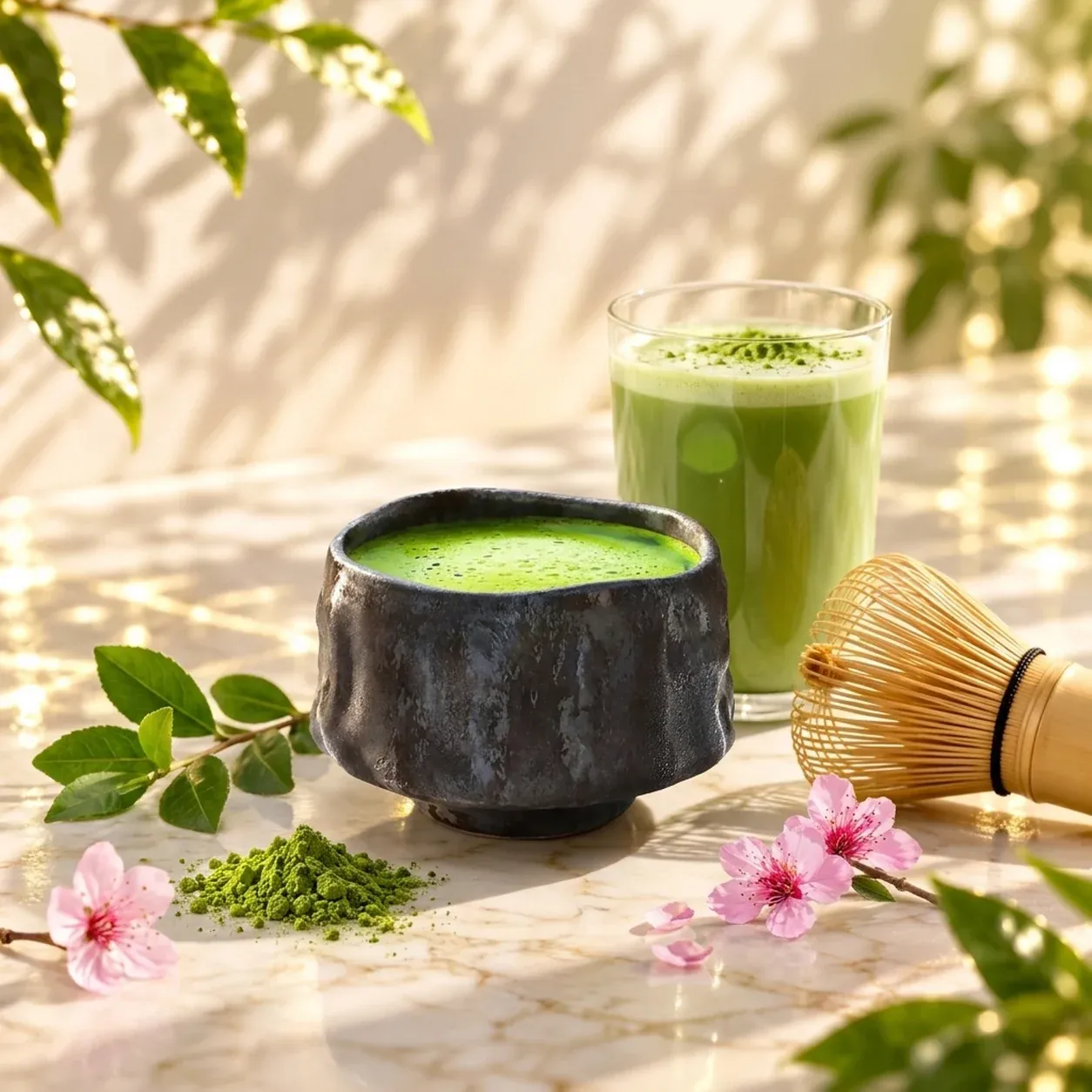
“Is it bitter?” Only if the water is boiling or the dose is wrong. At 80 °C, 2 g in 60 ml, it tastes grassy and slightly sweet. Boiling water is what makes the bitter cup people remember.
“How much caffeine?” Around 60 mg in a 2 g bowl, about an espresso. EFSA’s daily guide for adults is 400 mg, and 200 mg in pregnancy.
“Do I need the whisk?” No, but it is better. A jar with a lid and fifteen seconds of shaking works; a bamboo chasen makes a finer foam. The whisk is €14.90 and it is the easiest add-on you will sell all month.
“How long does it keep?” Sealed, months — the tin has a date on the base. Open, about four to six weeks before the colour and the sweetness start to fade. Keep it closed, cool and away from light.
“What is the difference between the two tins?” Finest is brighter and grassier, good with milk. Excellence is softer and sweeter, better drunk straight. Both are Japanese ceremonial grade from Shizuoka.
Storing stock so it is still green in January
Matcha ages through three things: oxygen, warmth and light. Sealed tins in a cool back room are fine for months. The problems start on the shop floor, and they are the usual ones — a south-facing window, a shelf above a radiator, a display left under a spotlight for six weeks.
Keep the backup stock in the coolest dark corner you have and bring tins out as the facings empty. Do not refrigerate sealed tins you plan to sell; condensation when they come back to room temperature is a real risk and a damp tin is a dead tin. If you open a tin for sampling, write the date on it with a marker and finish it within a month.
Rotate by date, not by what is nearest the front. A tin from the back of the shelf that has been there since last Christmas will still be safe to drink but visibly duller in the bowl, and a customer who buys a yellowish matcha as a gift will not come back for the second one.
Ordering: tins for the shelf, kilos for the back room
For the retail shelf, the four products above cover it: Finest 40 g at €23.90, Excellence 40 g at €26.90, the two-tin box at €46.90 and the Finest set with a Fuji bowl at €55.90. Sakuro Matcha Finest is Japanese ceremonial-grade matcha from Shizuoka, sold in a 40 g tin that makes twenty 2 g bowls.
For wholesale — tins for resale, 1 kg bags, or a mix of both — the person to talk to is Ewelina: [email protected], +48 515 025 329. Tell her the size of the shop, what you already sell alongside it and roughly what you want on the shelf, and she will put together the offer and send samples. Do it in the first half of November and your shelf is full for the Black Friday weekend.
Questions shops ask before the first order
How many matcha tins should a small shop order for Christmas?
Start with 24 tins split roughly 60 % entry, 25 % two-tin boxes and 15 % bowl sets, then reorder in the first week of December based on what actually moved. A shop with heavy footfall in a city centre will need two or three times that; a village delicatessen usually sells through a dozen.
What margin can a shop make on matcha?
That depends on the wholesale terms, which Ewelina sets per account — ask her for the current trade price list rather than working from the retail prices here. The useful number for planning is the retail one: €23.90 for a 40 g tin, €55.90 for a tin with a ceramic bowl.
Is matcha a seasonal product or does it sell all year?
Both. December is the gift spike, January brings the people who decided to drink less coffee, and summer brings iced matcha. The gift sets are seasonal; the plain tins sell steadily, which is why they belong on the tea or coffee shelf in January rather than in the clearance basket.
How long does matcha keep on a shop shelf?
Sealed tins keep for months — check the date printed on the base of each tin. Once opened, matcha stays at its best for about four to six weeks. Store stock cool, dark and sealed, and never in a sunlit window.
Can we buy matcha in bulk and pack it ourselves?
You can buy 1 kg bags, and plenty of shops do for refill sections or in-house baking. Repacking for resale brings food-labelling duties of your own, so talk it through with Ewelina before you order; for a shelf of gifts, sealed tins are simpler and look better.
Where is the matcha from?
Japan — ceremonial grade grown and milled in Shizuoka, packed into 40 g tins and 1 kg bags, and shipped to you from Poland, so an EU delivery involves no customs paperwork.
Discover our TOP products!
Your dream figure
Discover new flavors
Yerba mate with tea
Accessories
Superfoods



Certified raw honeys from Poland

Check the current price
free shipping
Up to 90 days
free returns
24 H
shipping