
Dried Goji Berries – Properties, Nutritional Value and How to Eat Them
2026-09-13
TL;DR: dried goji berries are the fruit of the wolfberry (Lycium barbarum), slightly sweet and chewy in texture, with 13 g of fibre, 14 g of protein, 1600 µg of vitamin A and 120 mg of vitamin C per 100 g. They work well as a snack straight from the pack, an addition to muesli and smoothies, or as an infusion after pouring hot water over them. Below you’ll find the full composition, ways to eat them, storage tips, and what to watch out for with blood-thinning medication.
Dried goji berries – what kind of fruit is this
Goji is the common name for the fruit of the common wolfberry, in Latin Lycium barbarum, a shrub from the nightshade family cultivated for centuries in China, mainly in the Ningxia province in the Yellow River valley. The fresh fruit is soft and juicy, but it almost always reaches transport and sale in dried form, because fresh berries spoil very quickly. You can find out more about the plant itself and its cultivation on Wikipedia.
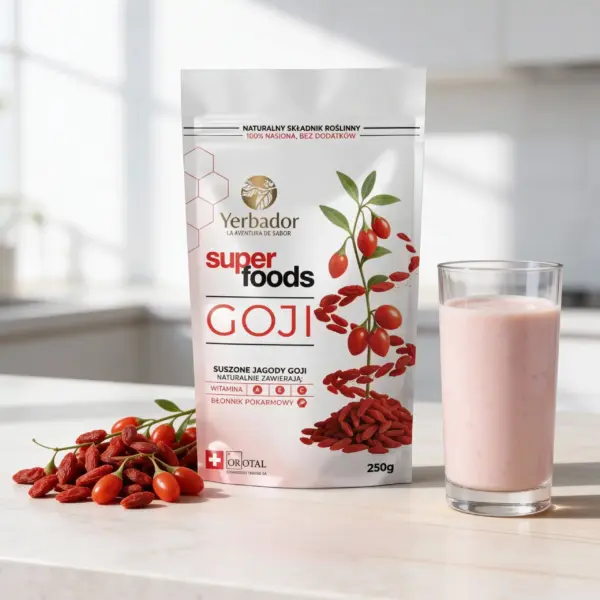
Dried goji berries have an intense red colour, resembling small raisins somewhat, but they are more fibrous and less sticky to the touch. The taste is delicately sweet, slightly tart, with a fruity aroma close to dried cranberries, only milder. Yerbador Goji Berries have a composition limited to a single item: one hundred percent dried fruit, with no added sugar.
In traditional Chinese medicine, goji has a long history as an ingredient in infusions and soups, but this is a practice rooted in centuries-old tradition, not a scientifically proven medicinal effect. We treat it here as a valuable, but ordinary, dried fruit, not a medicine or a substitute for therapy.
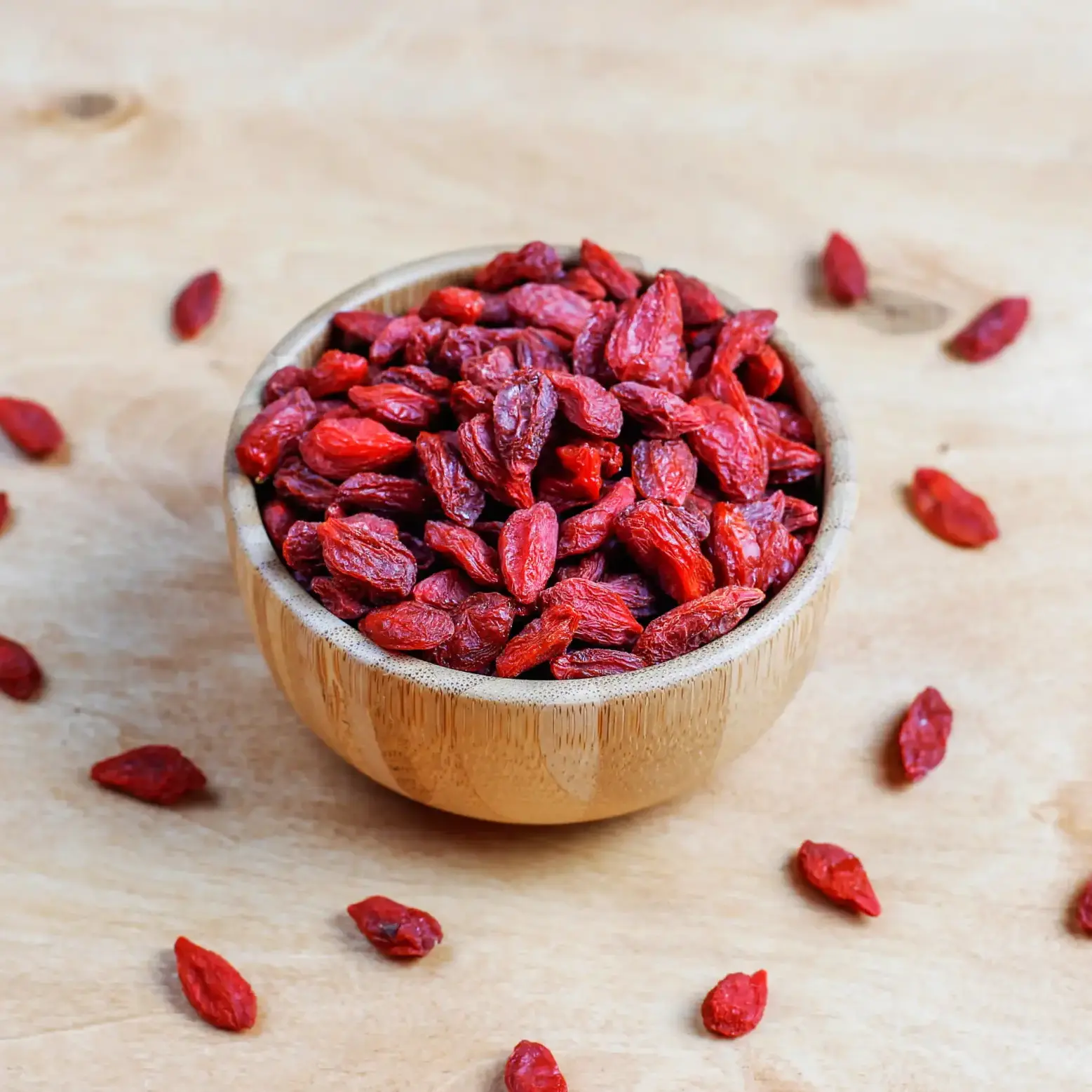
Composition and nutritional value of goji
One hundred grams of Yerbador dried goji berries is 1430 kJ, or 343 kcal. There’s very little fat, 0.40 g per 100 g, of which only 0.10 g is saturated fatty acids, so this is definitely not a fatty product. Carbohydrates amount to 77 g, including 45 g of sugars, which comes from the fruit’s natural sweetness and the fact that after drying, the sugars are simply concentrated in a smaller volume.
Fibre content is 13 g per 100 g, which is quite a lot for a dried fruit, and protein is 14 g, a value higher than in most popular dried fruits like raisins or apricots. Salt is 0.75 g, which for a dried fruit without additives is a naturally occurring result from the raw material, not an effect of added salt.
Things get most interesting with vitamins: 1600 µg of vitamin A, 120 mg of vitamin C and 12 mg of vitamin E per 100 g are values that place goji above most dried fruits available in stores. It’s precisely this set of vitamins that accounts for most of the reasons goji made it onto the list of superfoods.
What dried goji berries can support
Vitamin A from goji supports healthy-looking skin and proper functioning of the immune system, which with a handful a day genuinely contributes to the daily requirement. Vitamins C and E act as antioxidants, meaning they protect cells from oxidative stress, and together they complement each other, as vitamin C helps regenerate vitamin E in the body.
Fibre content of 13 g per 100 g supports proper digestion and prolongs the feeling of fullness, which matters if goji is meant to replace something less valuable in the diet. The fruit’s natural sweetness can also be a practical alternative to processed sweets, though at 45 g of sugar per 100 g it’s not a product without caloric significance. This is dietary support, not treatment, so for specific deficiencies or ailments it’s always worth consulting a doctor.
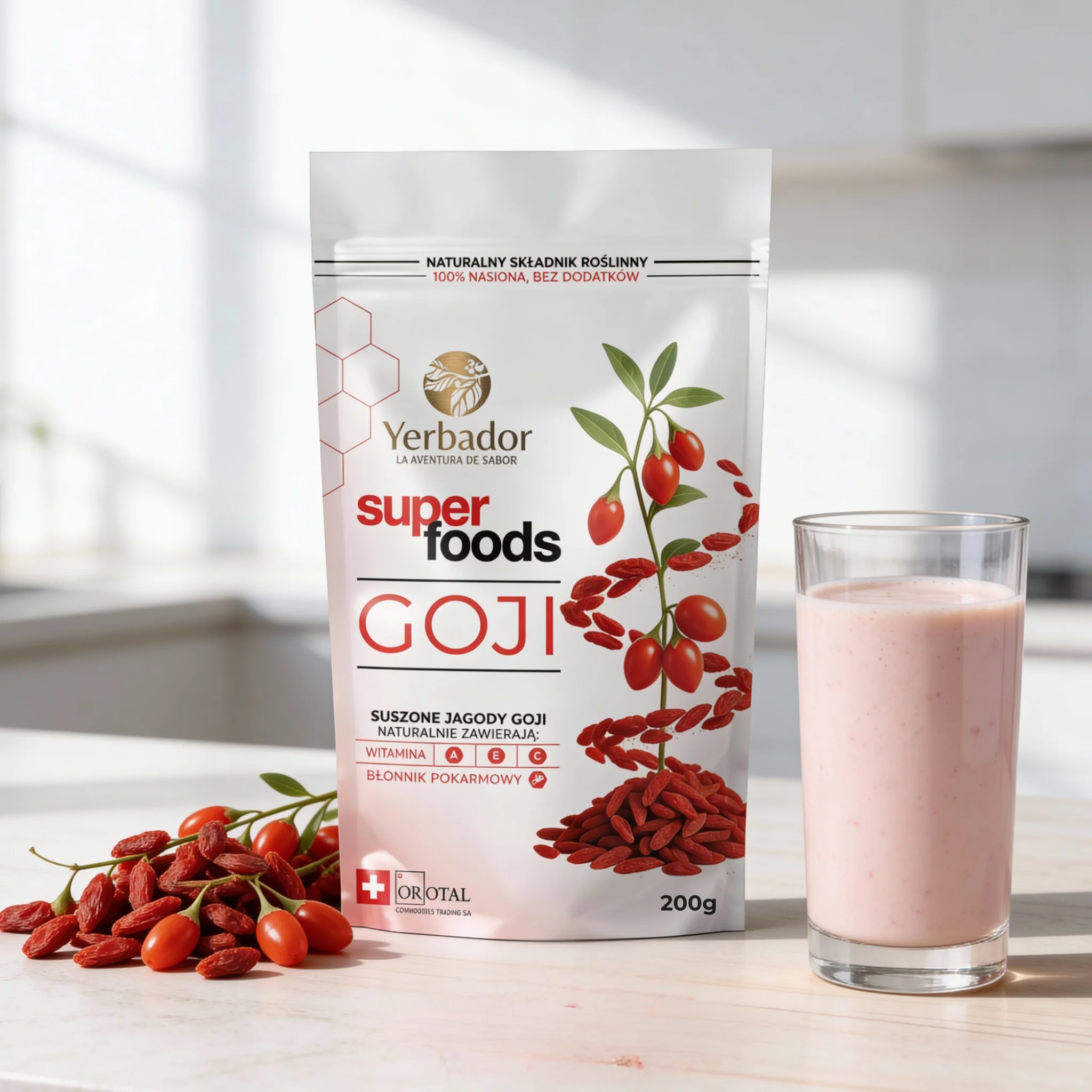
How to eat goji every day
Simplest as a snack, a handful straight from the pack, or an addition to oatmeal, muesli and natural yoghurt, where they add colour and a fruity accent without any preparation. In a smoothie with banana, spinach or plant-based milk, goji adds not only vitamins but also natural sweetness, letting you cut back on other sweeteners.
They also work well in homemade granola and cereal bars together with oat flakes and nuts, playing a role similar to raisins, only with a different vitamin profile. Poured over with hot (but not boiling) water and left for a few minutes, they make a pleasant, slightly tart fruit tea that can be drunk on its own or added to regular black or green tea.
In salads, both fruit salads and those with feta or goat cheese, goji adds a colourful accent and a flavour contrast against salty and sour ingredients.
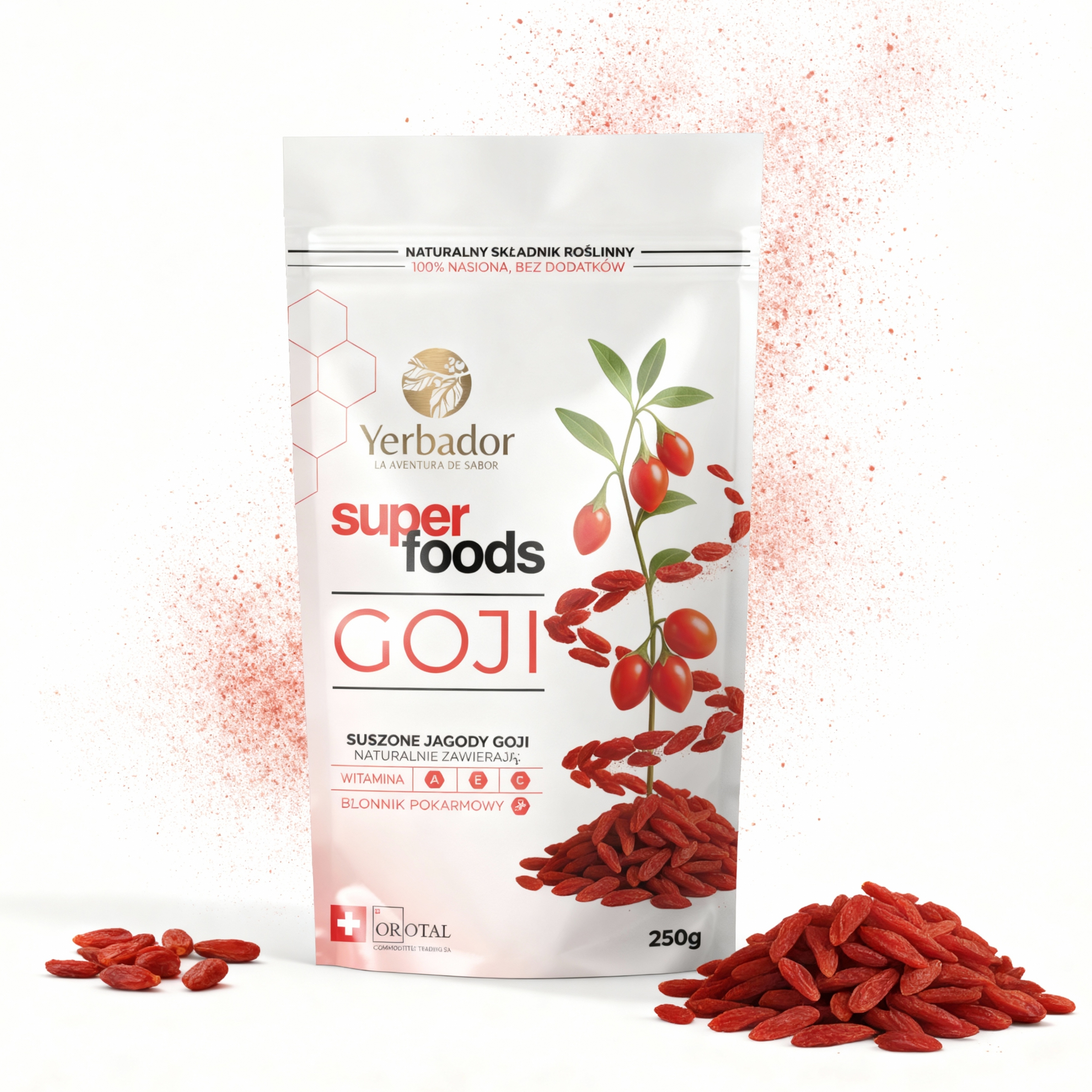
An interesting, though less common combination is goji added to a cup of yerba mate brewed hot. The fruity note softens the herbal bitterness of the infusion, and the drink gains colour and a slightly sweet taste without adding sugar. The same works in the cold version, as an addition to tereré.
How to store dried goji
It’s best to keep them in a tightly sealed pack or jar, in a dry and cool place, away from direct sunlight. Moisture is the main enemy of dried fruits, as it encourages mould growth, especially with fruits that have a higher sugar content, like goji.
An opened pack left on a warm counter loses its firmness faster than the same pack stored in a cupboard. If the fruit starts to harden like little pebbles or a white coating appears on it, that’s a sign it’s better to buy a fresh batch.
For whom goji may not be the best choice
At 45 g of sugar per 100 g, people watching their sugar intake or on a reduction diet should treat goji as an addition in a reasonable portion, not an unlimited snack. A handful, about 20-30 g, provides plenty of vitamin A and C, but also a real portion of simple sugars.
An important note concerns people taking blood-thinning medication, such as warfarin: goji may enhance their effect and interact with anticoagulant drugs, so with such therapies it’s worth consulting a doctor before drinking the infusion or eating goji. People allergic to plants from the nightshade family, which also includes tomato or pepper, should be cautious on first contact with the fruit.
Proven products to pair with goji
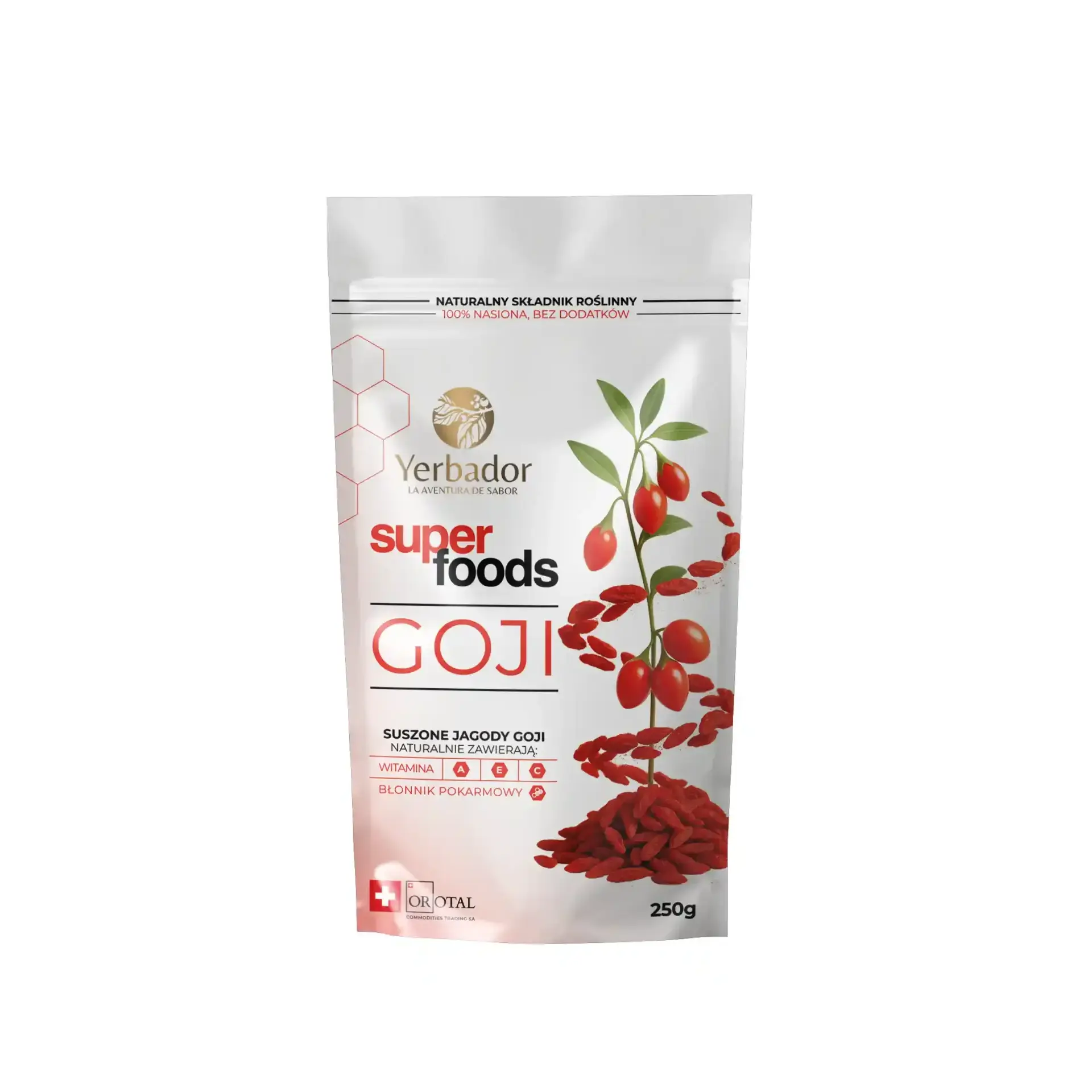
At the Yerbador shop, Goji Berries come in a 200 g pack at an attractive current price, with the ingredients limited to 100 percent dried fruit and no added sugar.
Check out the product: Dried Goji Berries – 200 g – Source of Vitamins A, C and E
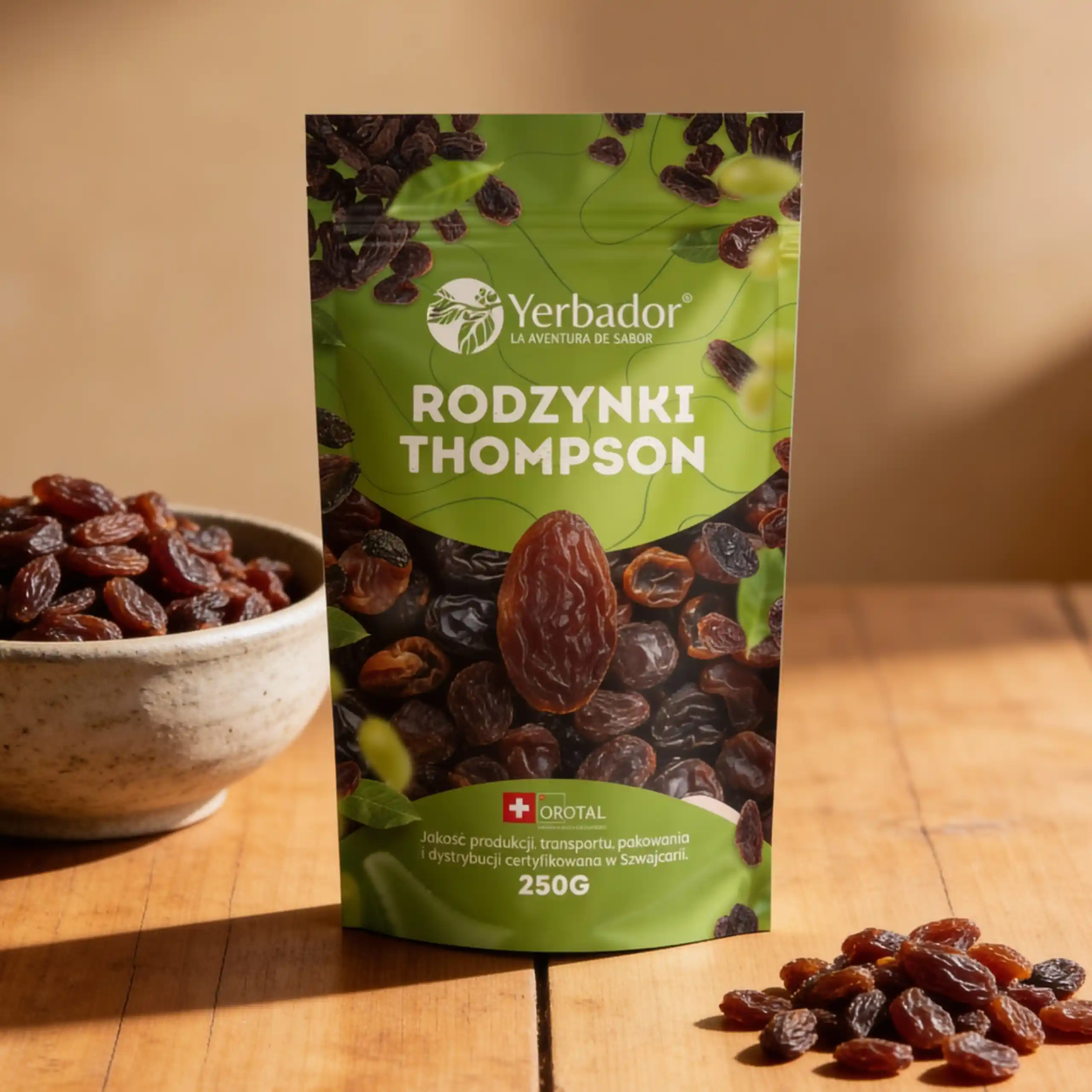
Other dried fruits from the same range also go well with goji in smoothies or homemade granola – for example Thompson raisins in a 200 g pack, sweeter and less tart than goji.
Check out the product: Thompson Raisins – 200 g – Natural Fuel for Brain and Energy
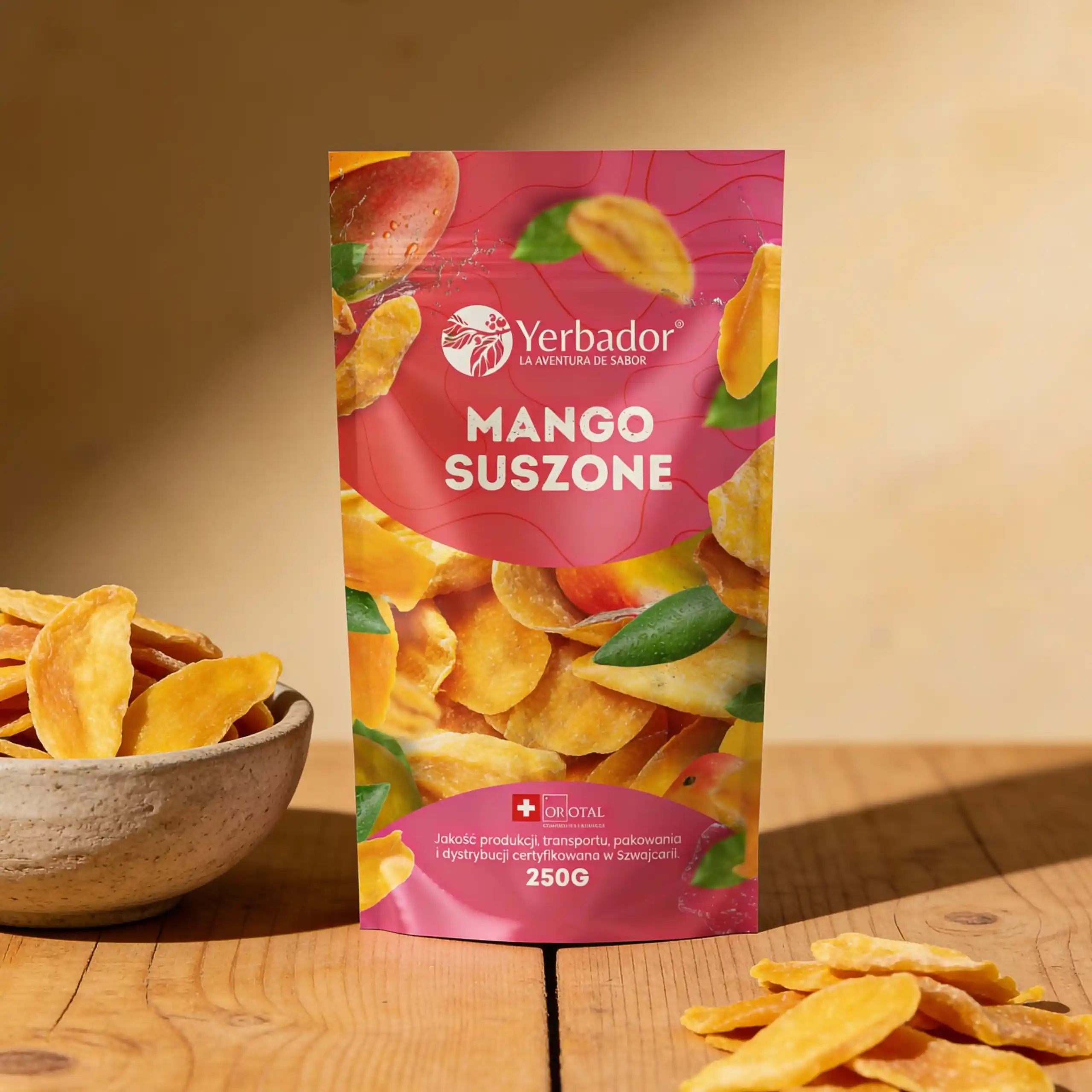
If you are looking for a fruit with a bolder, tropical sweetness, dried mango in a 250 g pack is a great choice, ideal for the same uses as goji.
Check out the product: Dried Mango – 250 g – Natural Sweetness and Energy
Frequently asked questions about goji berries
How many goji berries can you eat per day?
A sensible portion is a handful, around 20-30 g. That’s enough to feel a real contribution of vitamins A and C, without excess sugar, since 100 grams already means 343 kcal and 45 g of sugars.
Do goji berries need to be soaked before eating?
No, dried goji berries, like Yerbador Goji Berries, are ready to eat straight from the pack. Soaking them in warm water for a few minutes softens them and can be more convenient if you prefer a less chewy texture.
Do goji berries interact with medications?
Yes, the best-documented interaction concerns anticoagulant drugs such as warfarin, where goji may enhance their effect. People on such medication should consult their doctor before eating goji.
What’s the difference between goji berries and raisins?
Goji berries have a noticeably higher content of vitamin A, vitamin C and protein, and taste less sweet and more tart than raisins. Raisins, in turn, have more sugar in pure form and a stickier, softer texture.
Can children eat goji berries?
Yes, in reasonable amounts, though it’s worth starting with just a few pieces to check tolerance, especially since goji belong to the same botanical family as tomatoes and peppers, which can cause allergies.
Goji berries are a simple way to add extra vitamin A and C without any processing, but keep in mind they’re still a sweet fruit, not a calorie-free supplement. A handful in porridge, a smoothie, or as a tea in hot water is enough to check whether this fruit will become a lasting part of your diet.
Discover our TOP products!




Your dream figure




Discover new flavors




Yerba mate with tea





Accessories





Superfoods







Certified raw honeys from Poland





Check the current price
free shipping
Up to 90 days
free returns
24 H
shipping