
Yerba Mate and Vitamin D – Is It a Good Source?
2026-08-29
The same email keeps coming back to our customer service every so often, especially in autumn, when the days get shorter and the topic of vitamin D returns to the media: “I drink yerba every day, will it help with my D deficiency?” We answer just as honestly as with every other ingredient in this series — we check the facts, we don’t guess for the sake of a marketing slogan.
What vitamin D actually is and where it comes from
Vitamin D is an exception among vitamins — the body can produce it itself if the skin receives a dose of UVB radiation from the sun. This is the main source for most people in warmer latitudes. The second route is diet, but the circle of real sources is narrow: fatty sea fish (salmon, mackerel, herring), egg yolk, cod liver oil, some UV-irradiated mushrooms, and foods that are deliberately fortified, like some margarines or plant-based milks. That’s it. Vitamin D is not a plant pigment or a product of leaf photosynthesis — it’s formed in the skin of animals (including humans) or in mushrooms exposed to radiation, not in the green leaves of shrubs.
Why yerba mate can’t be a source of it — it’s not a matter of brewing, but of botany
In previous articles of this series, the same mechanism kept coming back: something is present in the leaf, but doesn’t make it into the infusion because it’s fat-soluble, not water-soluble. With vitamin D, the matter is simpler and more fundamental — yerba mate (Ilex paraguariensis), the plant whose leaves are used to make yerba mate, simply doesn’t produce it. This isn’t a matter of poor extraction in the matero or losses during drying. Leafy plants have no biochemical pathway to produce cholecalciferol (D3) or ergocalciferol (D2) in the form the human body can use. There’s no “but maybe in trace amounts” to check here — we have no grounds to make any claims on this topic, so we don’t.

What’s actually on our yerba’s label
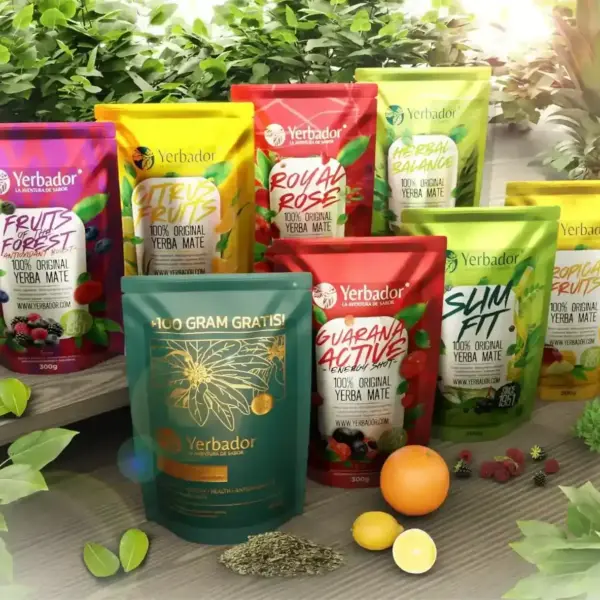
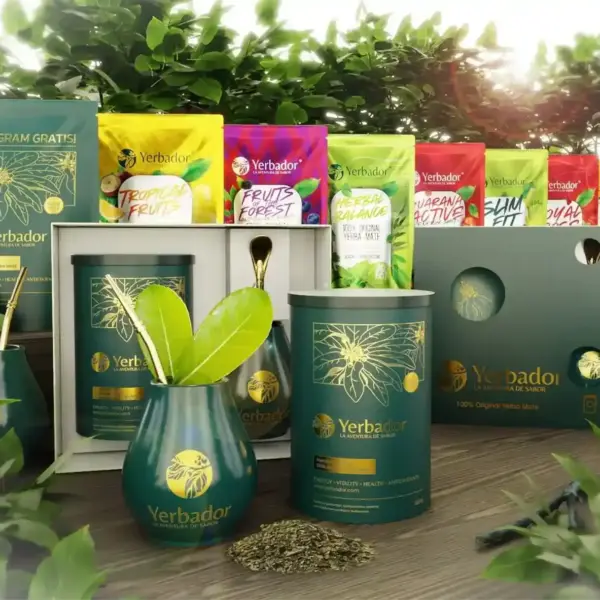
We don’t guess — we check our own description of the raw material. Our Classic Yerba Mate declares over 160 different trace elements, minerals, antioxidants and vitamins — specifically: magnesium, calcium, silicon, iron, potassium, zinc and phosphorus among the minerals, and among the vitamins a range of B-group vitamins (B1, B2, B3, B5, B6, B7 and B9) as well as vitamins C and E. Vitamin D is not on that list, and we don’t tack it on artificially. The composition is what it is — if something isn’t in it, we say so plainly, just as with the earlier articles in this series about vitamins A, C and K.
What yerba mate actually offers day to day
The real strength of yerba mate lies elsewhere entirely from vitamin D. It’s the xanthines — caffeine together with theobromine and theophylline — responsible for a milder, longer-lasting stimulation than coffee alone gives, in a typical serving of around 60–120 mg of caffeine per brewing session, well within the EFSA daily limits for adults (400 mg/day). On top of that, there’s a real content of B-group vitamins supporting energy metabolism, potassium important for muscle and heart function, and antioxidants from the polyphenol group that protect cells from oxidative stress. That’s a separate, well-documented profile — simply different from vitamin D, and we’re not pretending otherwise.
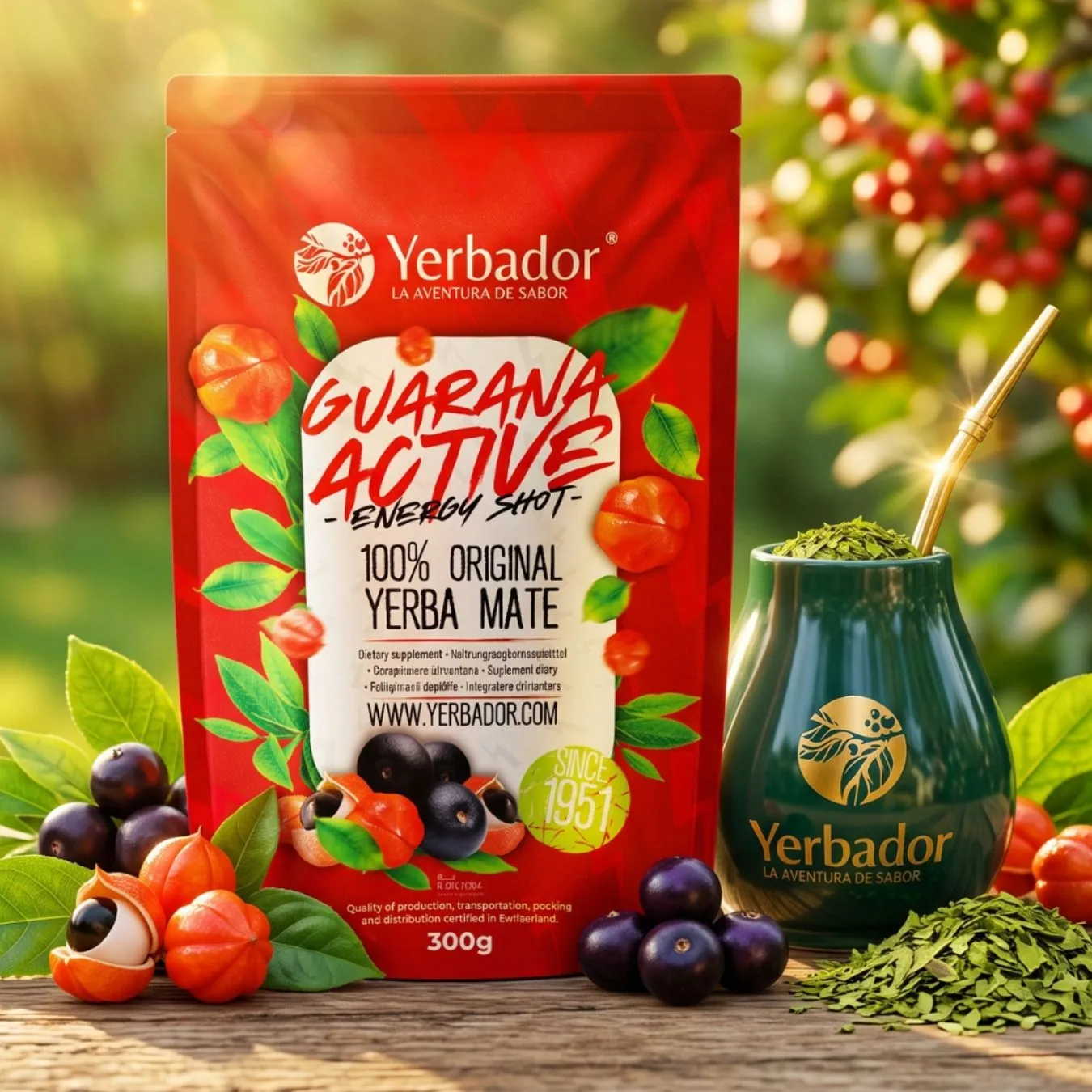
If what you’re after is support for energy and B-group vitamins throughout the day, we have two products in our range that actually target that. Yerba Mate Ultra Energy with Guarana combines classic Yerbador dried leaves with guarana, known for its naturally slow-release caffeine — this is a product for real stimulation, not for supplementing vitamins. Shelled Pumpkin Seeds, on the other hand, are 100% seeds with no additives, a natural source of magnesium, iron and zinc, a good snack to have alongside a matero of yerba during a workday or study session.
Check out the products: Yerba Mate Ultra Energy with Guarana · Shelled Pumpkin Seeds 250 g
Where to actually get vitamin D, since not from yerba mate
In Poland, for most of the year the sun sits too low for the skin to produce a sufficient dose — practically only the months from late spring to early autumn, in the middle of the day, without sunscreen, give a real effect. Outside that window, diet and supplementation make the difference. If you’re looking for dietary sources, think oily sea fish, egg yolk, cod liver oil and fortified foods — not infusions made from leaves, no matter how green and rich in other components they are. The decision on supplement dosage, especially during the autumn-winter season, is a topic to discuss with a doctor based on a blood test result, not something you can deduce from a yerba mate package.
Why vitamin D matters at all
Under EU food law, vitamin D has a list of approved health claims covering the normal function of the immune system, normal absorption of calcium and phosphorus, and the maintenance of healthy bones and muscles. That’s why this topic regularly comes up in customer questions — and why we’d rather honestly say that yerba mate is of no help here than build a sales argument on this association that we have no right to use.
Yerba mate compared to other vitamins and minerals — what we’ve already checked
This is another article in the series where we break down the composition of yerba mate into its basic elements, instead of promising everything at once. We’ve already written about, among others, yerba mate and vitamin A, vitamin C, and vitamin K, where each time the outcome depended on whether the given compound even occurs in the plant and whether it passes into the infusion. With vitamin D, the answer is the simplest in the whole series — leafy plants simply don’t produce it, so there’s nothing to look for either in the leaf or in the cup.
Frequently asked questions
Does any tea or leaf infusion contain vitamin D?
No, for the same reason as yerba mate — leafy plants have no biochemical pathway to produce vitamin D. This applies equally to green tea, black tea, and all herbal infusions.
Will drinking yerba mate in the sun help vitamin D synthesis?
Sun exposure does help, but that’s thanks to UVB radiation acting on the skin, not the yerba itself. A cup in your hand doesn’t change this mechanism in any way.
What symptoms suggest a vitamin D deficiency?
Typically fatigue, muscle weakness, more frequent infections, and a worse mood during the autumn-winter season — but these are non-specific symptoms, so the definitive answer comes from a blood test measuring 25(OH)D levels, not self-assessment.
Is it worth combining yerba mate with a vitamin D supplement?
There are no contraindications at typical doses — these are simply two independent parts of the day. The supplement dose is still best determined with a doctor based on test results, not by guesswork.
Should children drink yerba mate instead of supplementing vitamin D?
No, these are completely separate matters. Vitamin D for children should be determined by a pediatrician independently of diet, and yerba mate, due to its caffeine content, is a topic for older children only and in a limited portion, not a substitute for supplementation.
Discover our TOP products!
Your dream figure
Discover new flavors
Yerba mate with tea
Accessories
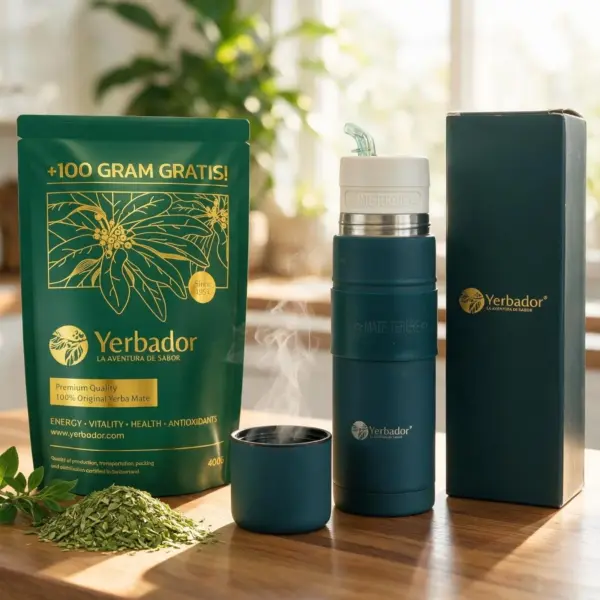
Superfoods
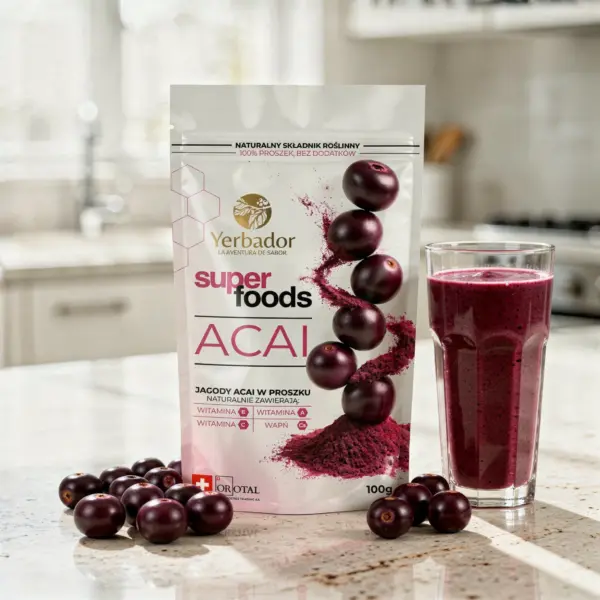
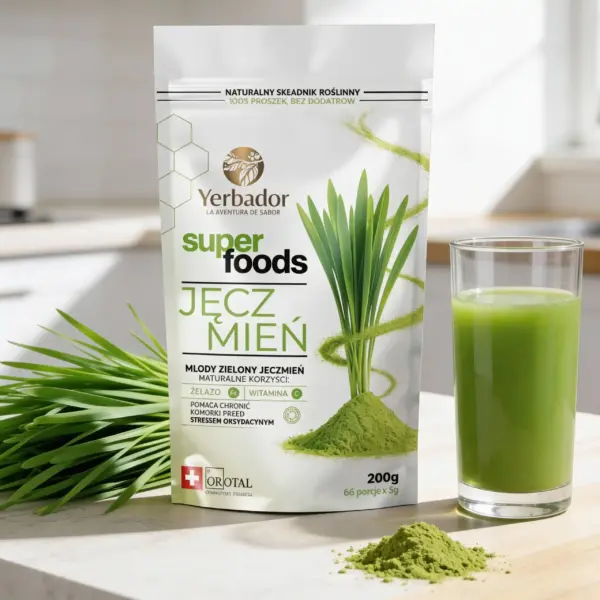
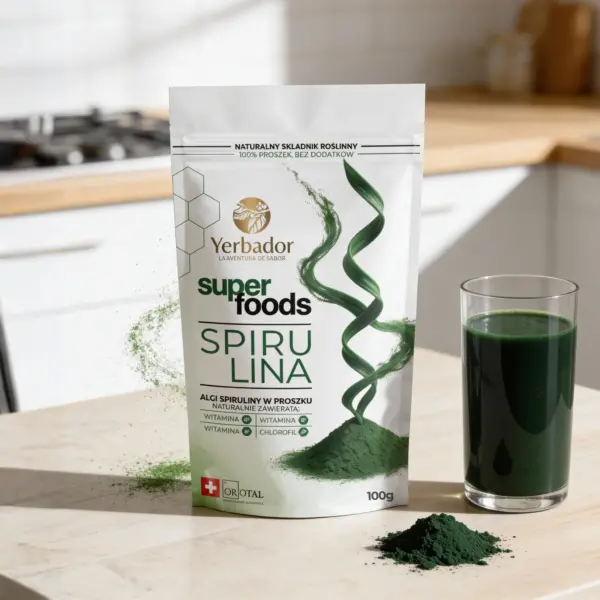
Certified raw honeys from Poland

Check the current price
free shipping
Up to 90 days
free returns
24 H
shipping