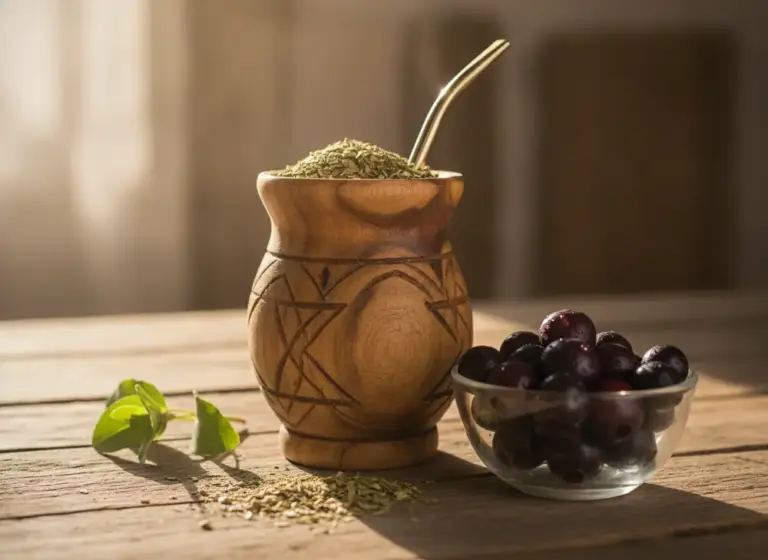

Guarana Powder – Properties, Dosage and How to Use It
2026-08-07
You open the pack and the first thing that hits you is the smell: dark chocolate, a bit of bark, a bitter note in the background. Guarana powder looks a bit like cocoa, but it works completely differently. We already wrote more broadly about what guarana is and where its stimulating effect comes from in a separate article. This time we take a closer look at the powdered form itself: how much to scoop, how to dose it, how it differs from a ready-made blend with yerba, and how to fit it into your day without guessing.
Guarana Powder – what it’s actually made from
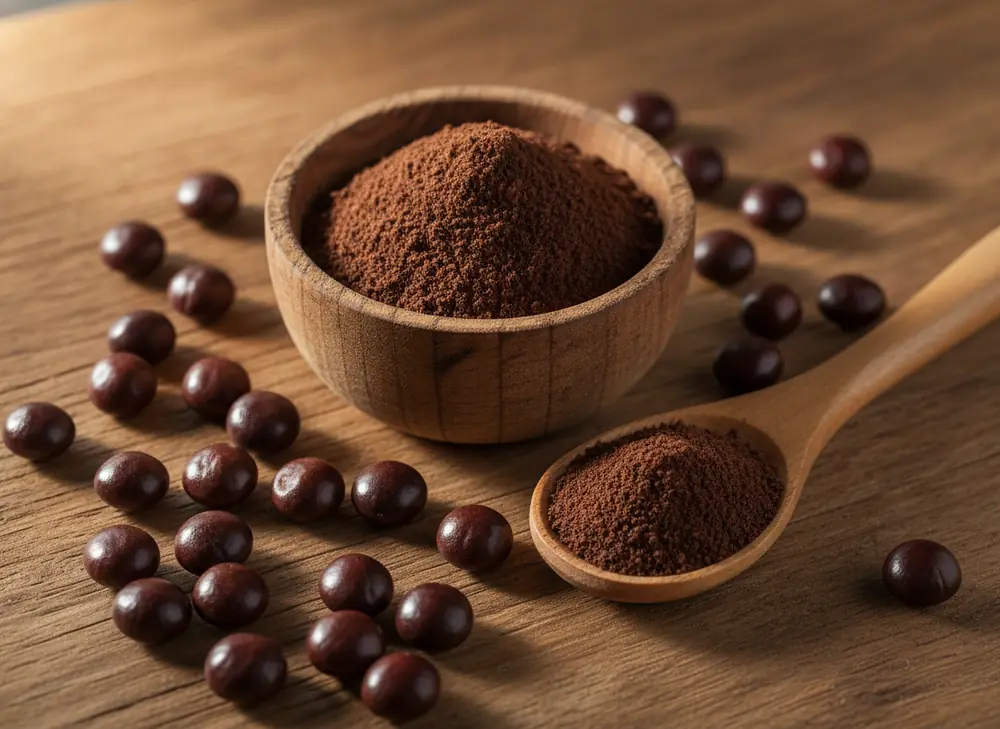
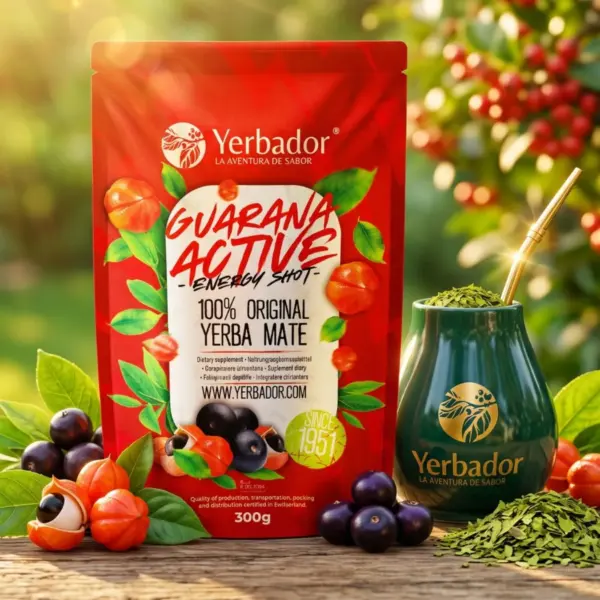
Guarana (Paullinia cupana) is a vine from the rainforests of the Amazon, domesticated in the region of the lower Tapajós and lower Madeira in the Brazilian Amazon. It grows in clusters of red fruit which, when they burst, reveal a black seed in a white coating — from a distance it looks a bit like a small, watchful eye, which is actually the source of some local legends about the plant. These seeds, roasted and ground into a fine powder, become the powder that goes into our doypacks. Dark brown in colour, fine in texture like cocoa, with a bitterish, slightly earthy taste and a note reminiscent of roasted seeds. We covered the full history and botany of guarana in the article linked above — here we stay focused on the powder itself and its practical use.
How much caffeine does guarana powder have? Facts instead of generalities
Guarana seeds contain from 2.5 to 6% caffeine by weight — that’s even several times more than coffee beans. In Yerbador’s powder, one serving, i.e. 3 g, delivers around 135–165 mg of caffeine. For comparison: an average espresso has about 63 mg, a cup of drip coffee about 95 mg, and one matero of classic yerba mate 60–120 mg — we compared exact figures in the article on caffeine content in yerba mate and in the comparison table of coffee, tea, yerba mate and energy drinks.
The difference isn’t just in the amount. Guarana contains tannins, catechins, epicatechins and proanthocyanidins, which slow down the absorption of caffeine in the digestive tract — that’s why the stimulation builds up more slowly than after an espresso drunk on an empty stomach, but lasts longer, without a sudden energy crash after an hour.
Nutritional values per 100 g of powder, straight from the label:
- Energy value: 1290 kJ / 310 kcal
- Fat: 2.6 g, of which saturated fatty acids 0.7 g
- Carbohydrates: 50 g, of which sugars 2 g
- Fibre: 13 g
- Protein: 12 g
- Salt: 0.02 g
One honest note: guarana is a concentrated source of caffeine, not a medicine and not a substitute for a balanced diet. If you’re pregnant, breastfeeding, have high blood pressure, heart rhythm disorders or sleep problems, it’s worth consulting a doctor before trying a new supplement.
Guarana powder, a ready-made blend with yerba, or capsules – which to choose
On the supplement market, guarana can also be bought in capsules or extracts with a standardised caffeine content — convenient for someone who prefers to swallow one tablet and skip the measuring. Yerbador focuses on two other forms, both with a transparent, verifiable composition on the label.
The first is pure powder, the hero of this article: full control over the dose, the ability to add it to any drink or meal, a sensible option for someone who likes to decide how much and when. The second is a ready-made blend — dried yerba leaves combined with guarana in one doypack, namely Ultra Energy. It’s brewed exactly like regular yerba, in a bombilla and matero, without measuring out the powder separately.
In practice, the choice depends on the ritual you already have. Do you drink yerba mate every day and sometimes want a stronger version for a tougher day? Reach for Ultra Energy. Don’t drink yerba mate but want to add an energy kick to your smoothie, yoghurt or afternoon tea? Choose the powder — it’s more versatile, as it doesn’t require a bombilla or a brewing ritual.
How to use guarana powder – dosage step by step
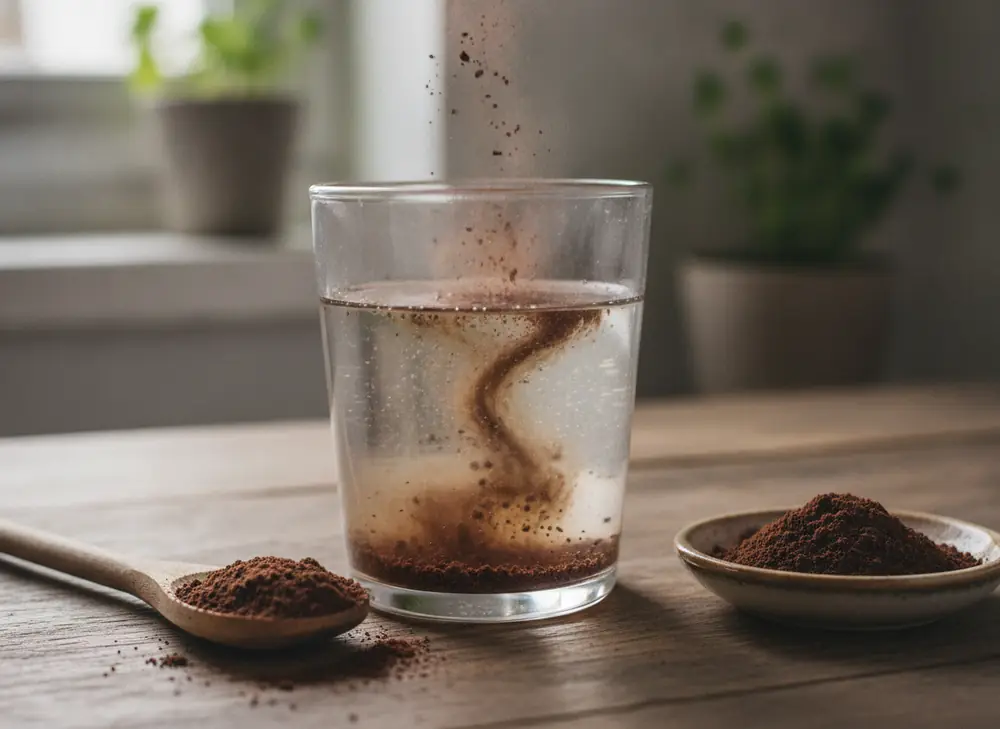
The manufacturer recommends 3 g of powder, roughly a level teaspoon, per 200 ml of water, juice or yoghurt, mixed thoroughly. The powder doesn’t dissolve completely — a fine sediment remains at the bottom, which is normal. Stir before every sip, just like with natural orange juice with pulp.
On the first day, it’s better to start with half a portion, about 1.5 g, and observe your body’s reaction. With such a concentrated source of caffeine, this is more sensible than taking a full dose right away. The best time for guarana is morning or early afternoon. In the evening it’s better to skip it, for the same reasons as with strong yerba mate — we write about this in more detail in the article about yerba mate and sleep. Store the ready-made powder tightly sealed, in a dry and cool place, away from sunlight.
Three ways to start
- Morning shot: 200 ml cold water, 3 g guarana, juice from half a lemon, a teaspoon of honey. Mix and drink in one gulp, ideally before breakfast or before a morning workout.
- Energy-boosting smoothie: banana, a glass of plant-based milk, 3 g guarana, a handful of frozen raspberries. Thirty seconds in a blender and it’s ready — the taste almost completely masks the bitterness of the powder.
- Afternoon boost without another coffee: a glass of sparkling water, 3 g guarana, lime juice, a few mint leaves, plenty of ice. Refreshing like a homemade cola, just without the sugar from syrup.
What is guarana powder good for? Who is it for
Guarana supports alertness and concentration throughout the day, and thanks to the slower release of caffeine, it provides milder and longer-lasting stimulation than coffee drunk on an empty stomach. For many people, it’s simply a cleaner composition than energy drinks full of sugar, glucose-fructose syrup and artificial colourings.
Three groups most often reach for the powder. The first are physically active people who want an energy boost before training without extra calories from a ready-made energy drink. The second are people working under deadline pressure, looking for a way to reduce the number of coffees they drink daily. The third are simply the curious, who want to try something different from yet another cup — we write more about the role of guarana in metabolism and everyday diet in the introductory article about guarana.
Guarana from Yerbador — clean composition
Our guarana is 100% ground Paullinia cupana seeds — no fillers, sugar or colourings. The same quality regime you know from our yerba mate (we describe the tests and certificates on the Tests and Certificates page) covers the entire superfoods line: raw material control, HACCP standards and KIWA quality certification. We pack the powder in Europe, in airtight packaging protecting against moisture and light — without this, guarana quickly loses its flavour intensity and some of its strength.
Guarana and the power of energy from Yerbador — where to start
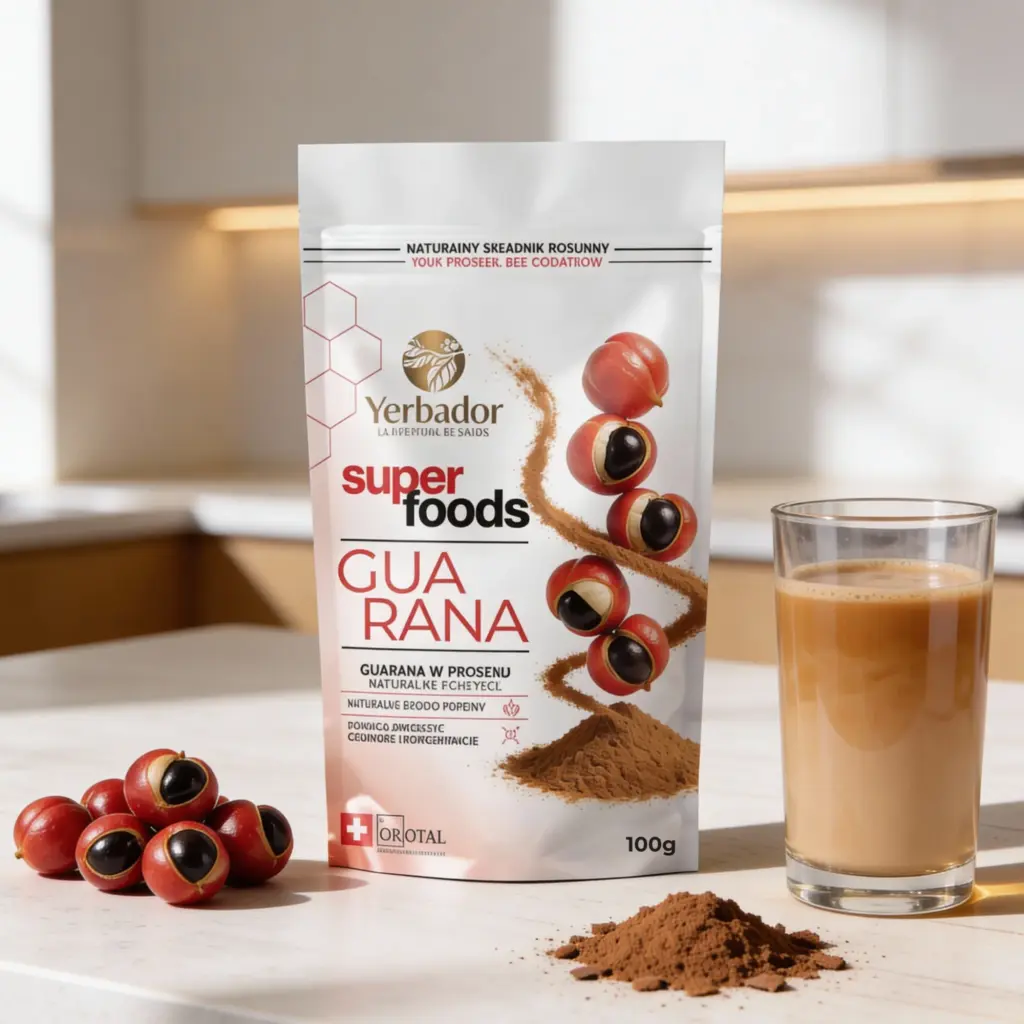
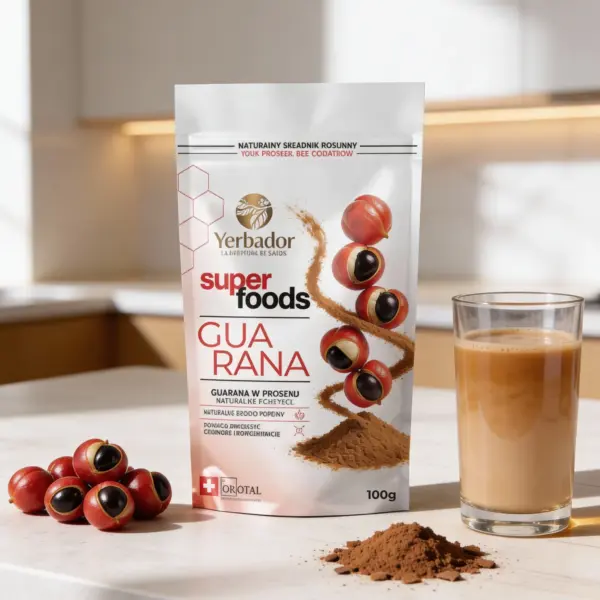
Guarana Powder – 100 g – Natural Source of Caffeine
The hero of this article: 100% ground guarana seeds, with no additives. One serving is 3 g of powder and around 135–165 mg of natural caffeine. Available in 100 g.
Check out the product: Guarana Powder – 100 g
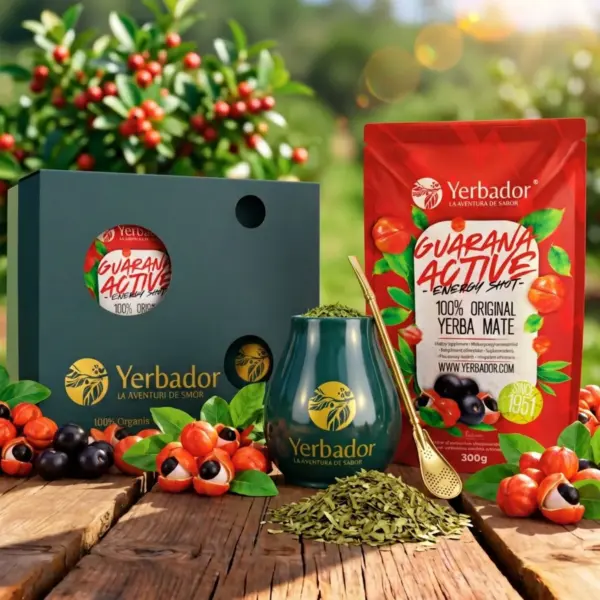
Yerba Mate Ultra Energy – Guarana
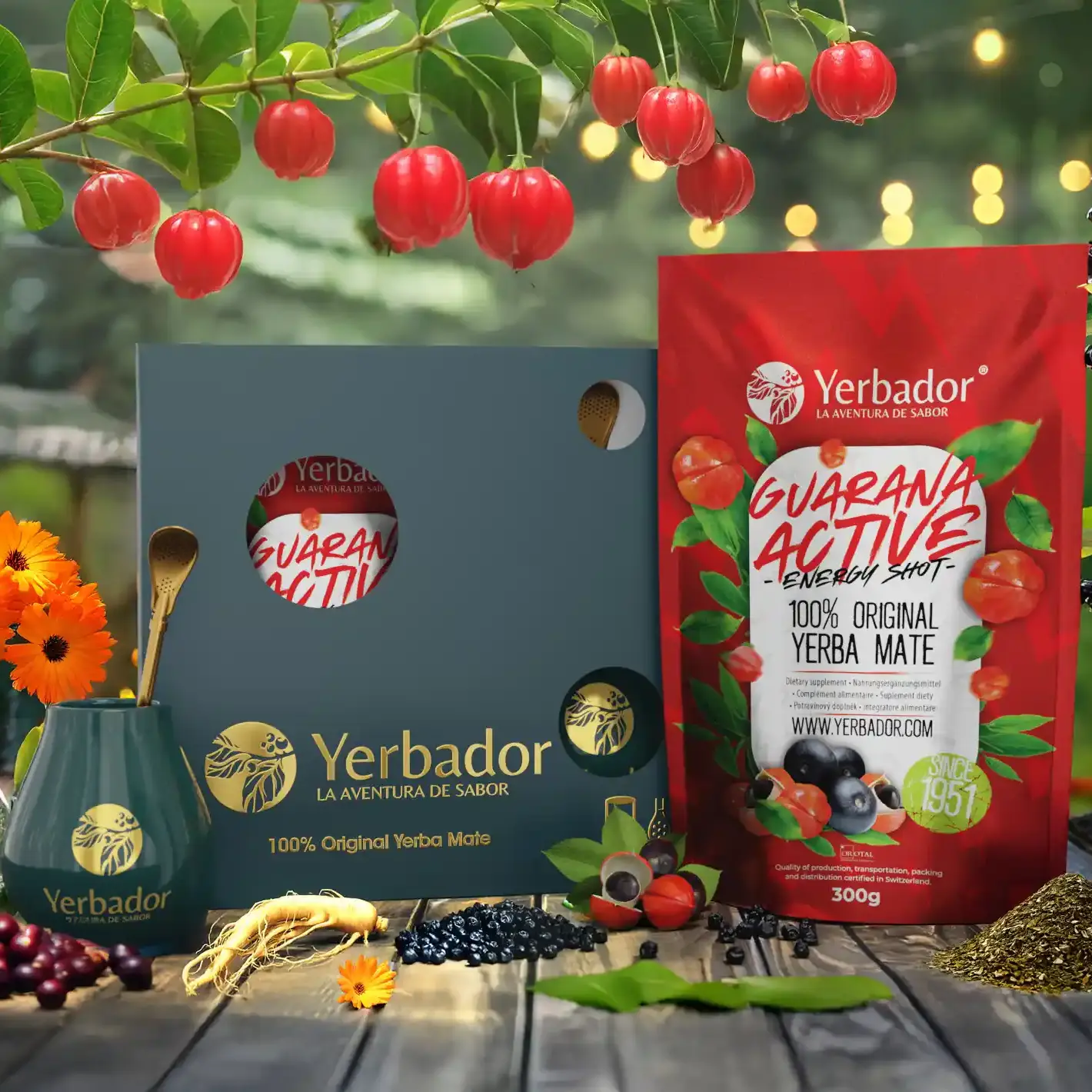
A ready-made blend for those who don’t want to measure anything out: classic yerba combined with guarana in a single doypack, brewed exactly like regular yerba, only with a stronger effect. Currently on sale — check the current price.
Check out the product: Yerba Mate Ultra Energy – Guarana
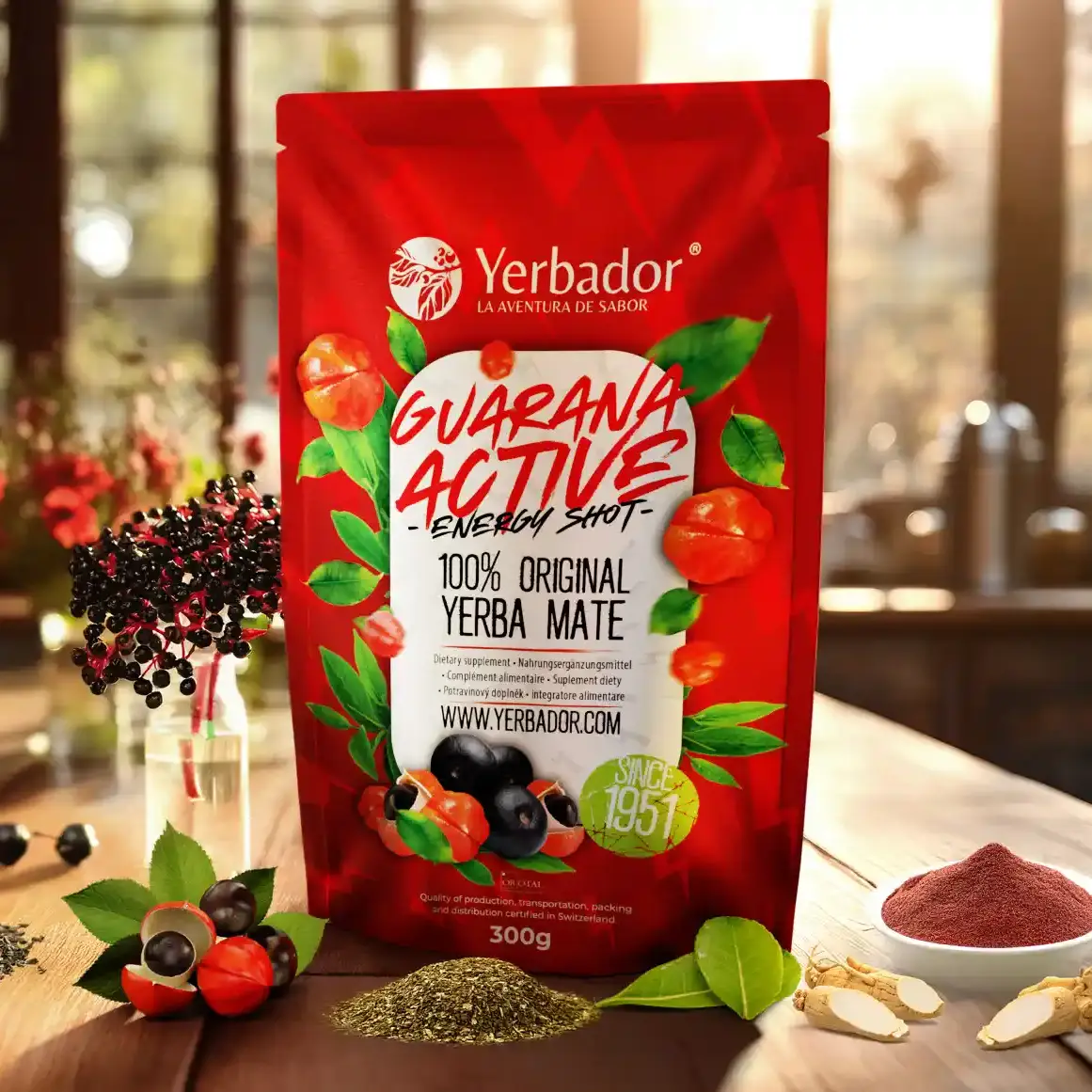
Starter Set: Bombilla + Matero + Ultra Energy + Beech Scoop
For those who want to start the guarana-and-yerba ritual from scratch: a complete set with a gourd, bombilla and wooden scoop, ready to brew from day one. Currently on sale – check the current price on the shop.
Check out the product: Ultra Energy Starter Set
Frequently asked questions about guarana powder
How much guarana powder can you consume per day?
A reasonable standard is 3 g of powder once or twice a day, up to about 6 g maximum. Start with half a portion on the first day and see how your body reacts, especially if you’re not used to high doses of caffeine.
Is guarana powder stronger than coffee?
By weight, yes — guarana seeds contain several times more caffeine than coffee beans. In practice, though, portion size is what matters: 3 g of powder (135–165 mg of caffeine) is roughly equivalent to one and a half to two cups of drip coffee, except the effect is spread out over a longer time.
What does guarana powder taste like?
Slightly bitter and earthy, with a hint reminiscent of roasted seeds or bitter cocoa. On its own in water it has a distinct, raw taste — most people prefer to mask it with juice, honey or fruit in a smoothie.
Does guarana powder dissolve in water?
Not entirely — after mixing, a fine sediment always settles at the bottom of the glass, similar to natural juice with pulp. This is a normal feature of raw powder, not a product flaw. Stir before every sip.
What’s the difference between guarana powder and Ultra Energy?
The powder is pure guarana that you add yourself to any drink or dish, deciding the dose on your own. Ultra Energy is a ready-made blend of dried yerba leaves with guarana, which you brew just like regular yerba, without measuring anything separately.
Guarana powder isn’t a magic supplement that will handle your whole day for you — it’s a concentrated tool. A teaspoon, a bit of water or juice and a solid dose of energy, without pouring yet another coffee into a day that’s already moving fast enough.
Guarana for businesses — cafés, gyms, shops
Guarana powder looks great on the menu of energy shot and smoothie bars, and the cost per serving, counted in pennies, makes menu pricing easy. Do you run a café, gym or health food shop and want to offer guarana and wholesale yerba mate? Get in touch — we’ll prepare a quote tailored to your business.
Discover our TOP products!
Your dream figure
Discover new flavors
Yerba mate with tea
Accessories
Superfoods
Certified raw honeys from Poland

Check the current price
free shipping
Up to 90 days
free returns
24 H
shipping