
Baobab Powder – Properties, Benefits and How to Use It?
2026-08-07
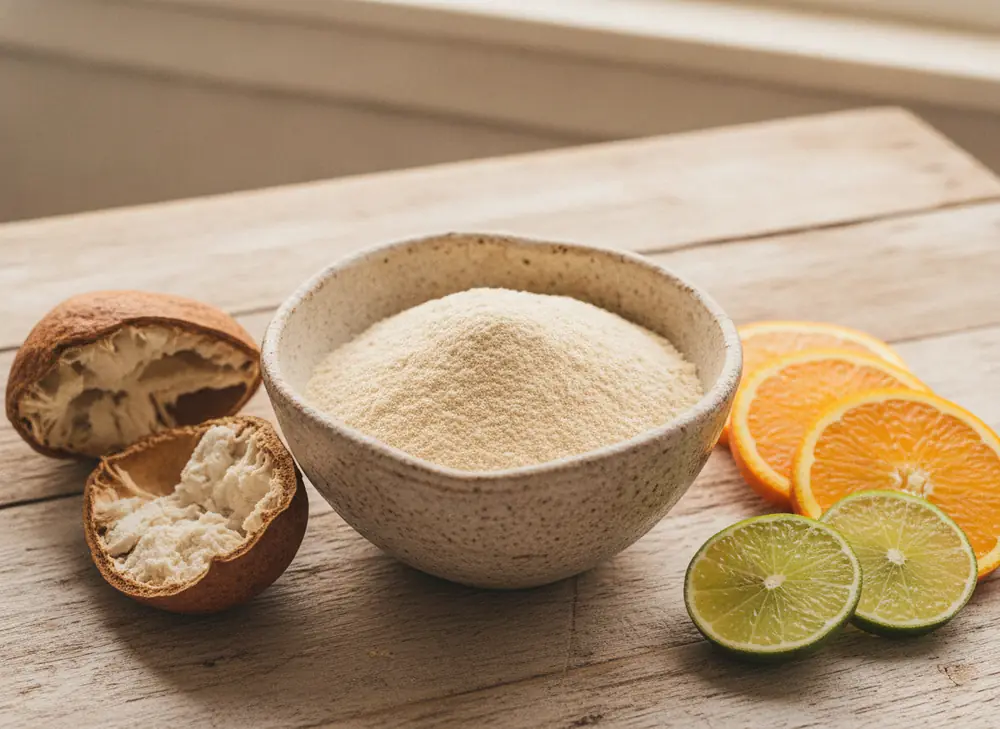
A bowl of powdered baobab smells like freshly squeezed lemon, only without the juice. This light beige powder from the African savannah rounds off our small superfoods range alongside moringa, acai berries and chlorella — and out of all four, it’s probably the easiest to fall for from the very first spoonful. Baobab is the powdered pulp of the fruit of the Adansonia digitata tree: a source of vitamin C, fibre, potassium, magnesium and calcium, with a tangy, crisp taste like sugar-free lemonade. In this guide we check where it comes from, what properties it has, what it helps with and how to use it so it stays in your kitchen for longer than a week.
What is baobab and where does it come from?
African baobab (Adansonia digitata) grows wild in tropical and subtropical Africa, on savannahs where rain is a rare guest. It has a short, barrel-shaped trunk with a diameter reaching up to 9 metres, in which it can store up to 100,000 litres of water — a natural reservoir thanks to which the tree survives droughts that no other species in the area could withstand. It grows slowly, but lives long: on average it survives around 500 years, and the oldest specimens are estimated at even 2–2.5 thousand years. You can read more about the species itself and its history on Wikipedia.
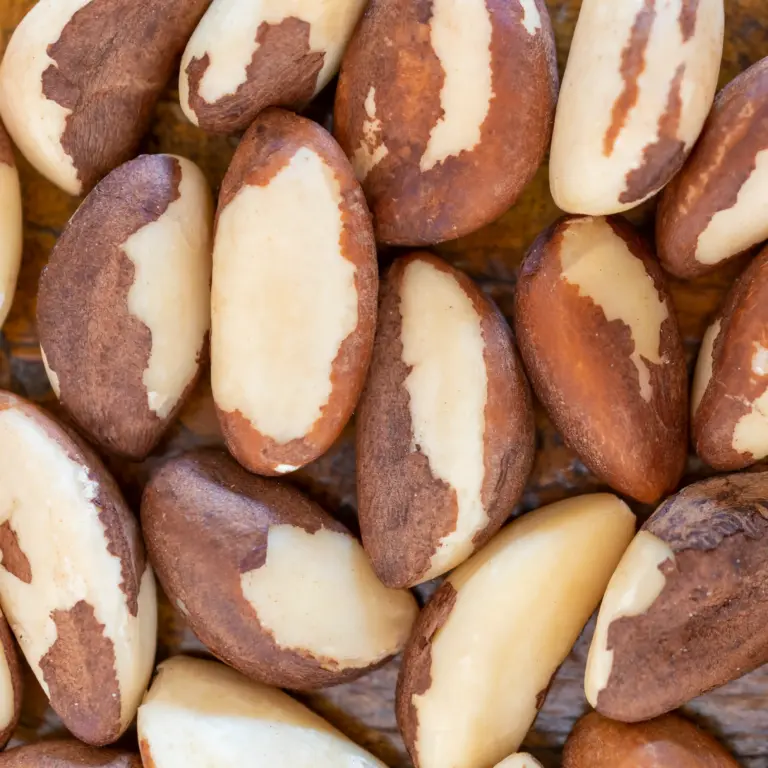
The baobab fruit is an elongated or spherical pod with a hard, woody shell, growing up to 20–45 cm in length and hanging from the branches on a long stalk. Inside, instead of the soft flesh known from tropical fruits, there is a dry, white, tangy pulp — baobab, unlike, for example, acai berries, dries naturally already on the tree. So there’s no race against time: the dry pulp just needs to be separated from the seeds and ground into a fine, light powder.
Baobab powder – properties. What’s hiding in the tangy powder?
Let’s take a look at the nutritional values table, because with baobab, numbers make a bigger impression than adjectives:
- Fibre: as much as 59 g per 100 g of powder. That’s the most of all the superfoods in our range — for comparison, acai berries have 44 g, and chlorella 16 g per 100 g. In practice, even a small portion genuinely supports digestive comfort and the feeling of fullness after a meal.
- Vitamin C — supports immunity and natural energy, so the powder makes particular sense in autumn and winter, when the body more often needs extra support.
- Potassium — helps with the proper functioning of muscles and the nervous system.
- Magnesium — contributes to the reduction of tiredness and fatigue.
- Calcium — a solid foundation for bones, especially useful in a plant-based diet low in dairy.
A fun fact from the label: 19.5 g of sugars per 100 g are the fruit’s own natural sugars, nothing is added, and a 5 g portion of powder is just 12–13 kcal — less than half a sugar cube. One honest note to end this section: baobab is food, not medicine. It doesn’t cure anything and won’t replace a balanced diet, but it consistently adds nutrients that can be hard to get in an everyday menu. If you are pregnant, breastfeeding, or taking medication on a regular basis, it’s worth consulting a doctor before trying a new superfood.
Baobab and yerba mate — the citrusy side of the day
Baobab contains no caffeine. In this duo, only yerba mate is responsible for the boost, with its 60–120 mg of caffeine per vessel — we wrote more about natural energy in our article about guarana. Baobab plays a different role: it doesn’t get you going, it simply supplements your diet with vitamin C and fibre, which are easy to forget about in a fast-paced day.
In practice, these two rituals complement each other perfectly. In the morning, a matero of yerba mate to keep your mind sharp. In the afternoon, when reaching for caffeine no longer makes sense — we wrote about it in the article yerba mate and sleep — a glass of water with baobab and lemon does the refreshing job without the stimulation. If you’re watching your figure, the fibre from baobab also fits into the plan from our guide to yerba mate and weight control — longer fullness after a meal means, in practice, less snacking.
How to use baobab every day?
The manufacturer suggests something simple: pour 5 g of powder, i.e. a flat teaspoon, into 200 ml of water, juice or yogurt and mix thoroughly. A beneficial effect is achieved with a daily dose of 10 g, split into two portions of 5 g. The taste is tangy, citrusy, refreshing — a bit like natural lemonade, so there’s no need to mask it with anything. One rule worth keeping in mind: vitamin C doesn’t like high temperatures, so add baobab to cold or lukewarm dishes, not to boiling water or simmering porridge. Store the powder in a dry, cool place, tightly sealed.
Three simple ways to get started
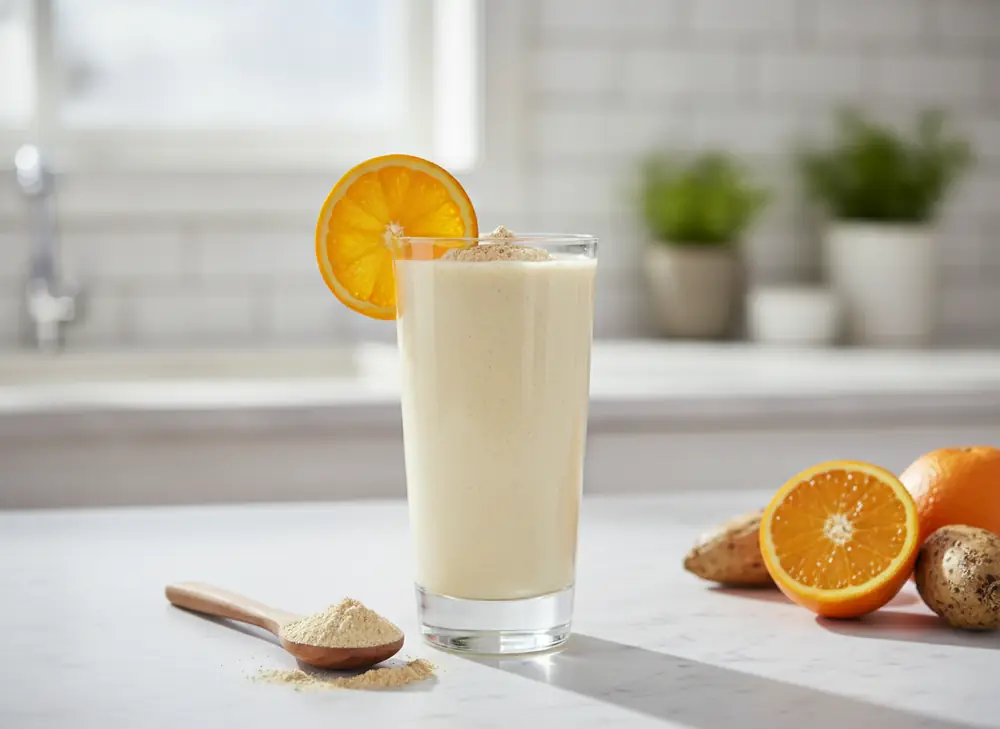
- Citrus smoothie: a banana or mango, a glass of plant-based milk, a teaspoon of baobab, a touch of honey. The blender does the rest, and the taste comes out fresh, almost like sorbet.
- Morning porridge boost: cook the oats, wait two minutes, stir in a teaspoon of baobab and add a handful of seasonal fruit.
- Homemade lemonade: a glass of cold water, a teaspoon of baobab, a slice of lemon, a teaspoon of honey. Stir, add ice — ready in a minute, no bottled preservatives.
What is baobab good for? Who benefits from it the most
Three groups of people usually reach for baobab. The first are those who want to naturally support their immunity in autumn and winter — a portion of vitamin C in a teaspoon of powder is a simple habit, easier to maintain than squeezing lemons every day. The second group is people who lack fibre in their diet — with 59 g per 100 g of powder, even a small portion makes a difference in digestive comfort. The third group is simply people tired of sweetened flavoured drinks, looking for a naturally tangy taste without added sugar.
This topic pairs well with other threads that regularly come up on this blog: supporting immunity in autumn, everyday digestive care and gentle body cleansing. If you’re building your own superfoods shelf, it’s also worth checking out our articles about moringa, acai berries and chlorella — each of these powders does something different, and together they form a sensible daily routine.
Baobab from Yerbador — pure composition and proven quality
Our baobab is 100% powdered Adansonia digitata fruit pulp — with no fillers, sugar or colourings. The same quality regime you know from our yerba mate (research and certificates described on the Research and Certificates page) covers the entire superfoods line: raw material control, HACCP standards and KIWA quality certification. We pack the powder in Europe, in airtight packaging that protects against moisture and light — the two enemies that most quickly rob the powder of its freshness and tangy character.
Superfoods from Yerbador — where to start
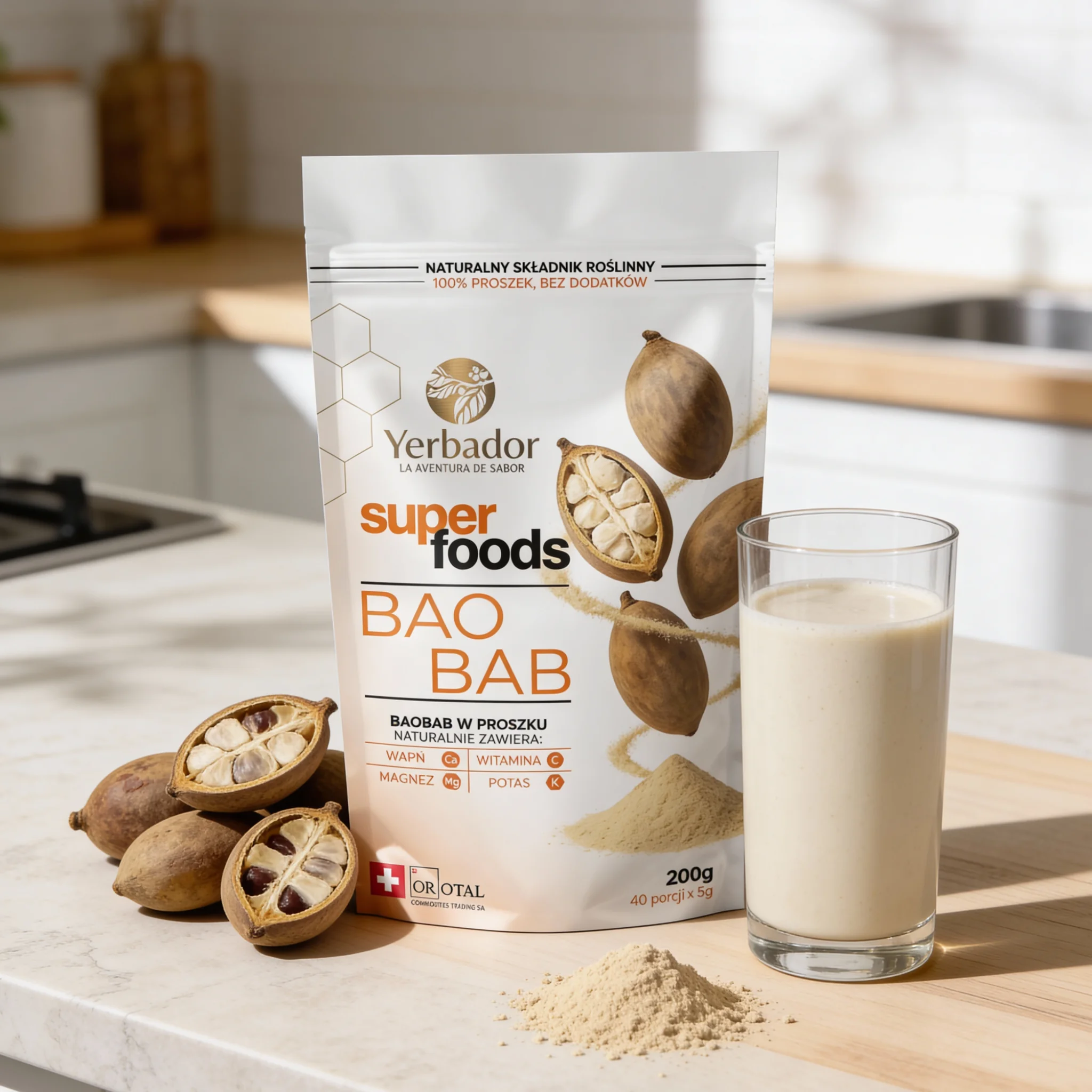
Baobab Powder – 200 g – Source of Vitamin C and Fibre
The hero of this article: 100% powdered baobab fruit pulp, a source of vitamin C, fibre, potassium, magnesium and calcium. A slightly tart, citrusy, refreshing flavour — for smoothies, yoghurt, porridge and muesli. Available in 200 g.
Check out the product: Baobab Powder – 200 g – Source of Vitamin C and Fibre
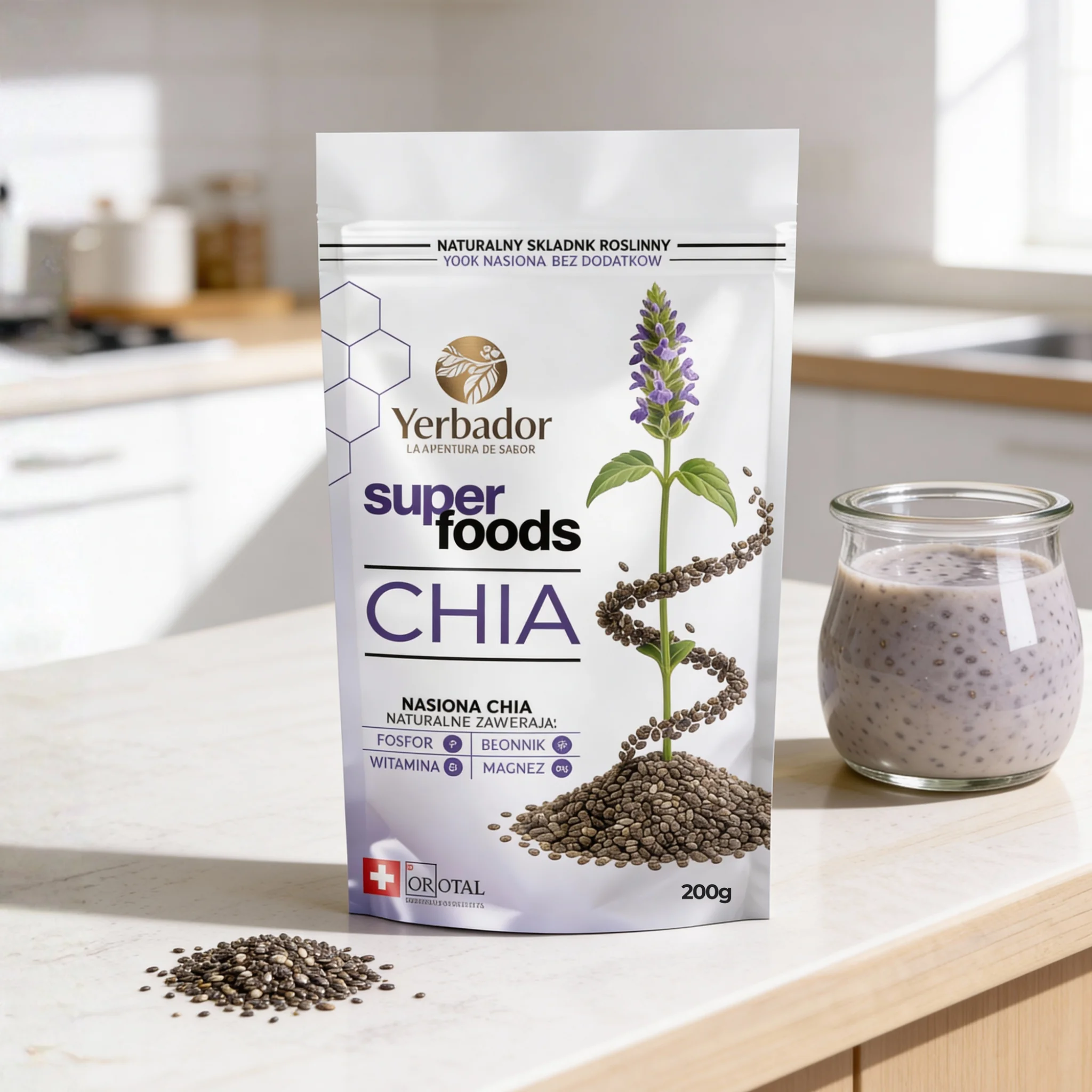
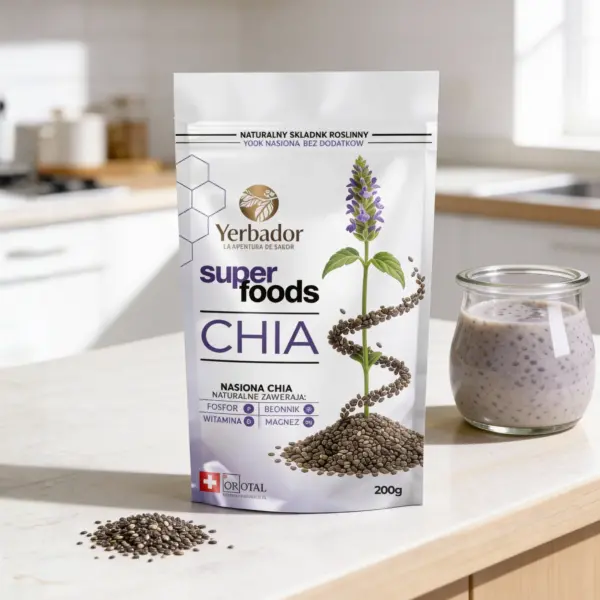
Chia Seeds – 200 g – Natural Source of Fibre and Vitamin B1
Another dose of fibre for your daily routine: once soaked, chia seeds form a delicate, gel-like texture, perfect for pudding or as an addition to porridge with baobab. Available in 200 g.
Check out the product: Chia Seeds – 200 g – Natural Source of Fibre and Vitamin B1
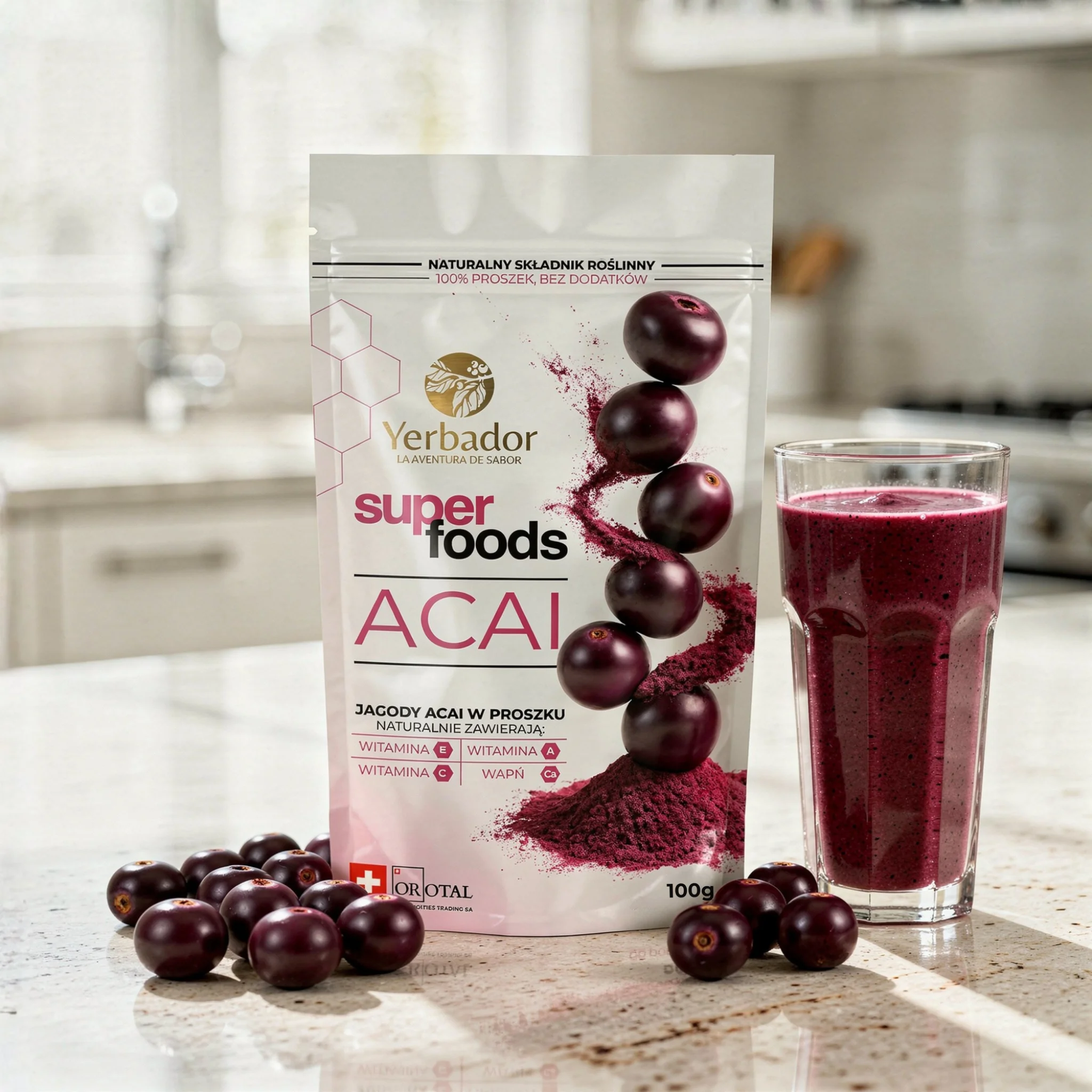
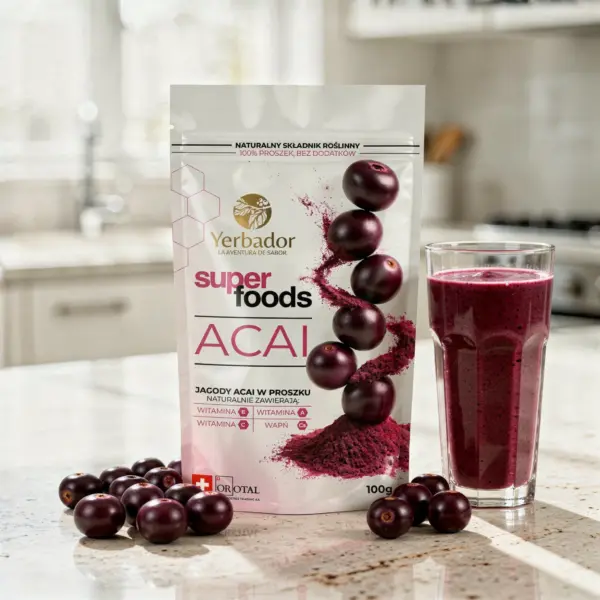
Acai Berry Powder – 100 g – Source of Vitamins A, C and E
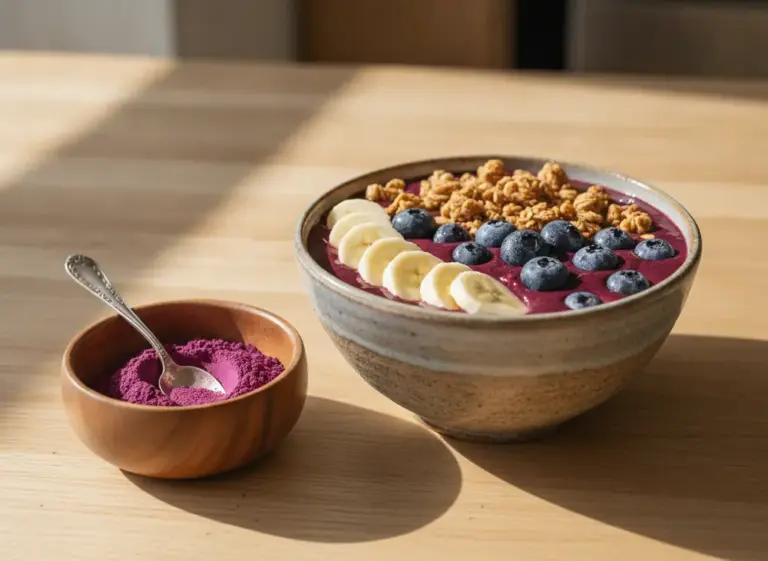
Baobab’s fruity neighbour on the same shelf: powdered acai berries from the Amazon, with a deep berry flavour that, paired with citrusy baobab, gives you a breakfast-bar-style smoothie. Available in 100 g.
Check out the product: Acai Berry Powder – 100 g – Source of Vitamins A, C and E
Frequently asked questions about baobab
Does baobab contain caffeine?
No. Baobab is completely caffeine-free, so you can drink it at any time of day, even in the evening. For a natural energy boost, reach for yerba mate in the morning — it’s the one responsible for energy in this duo.
How much baobab can be consumed daily?
A reasonable standard is 5 g of powder (a flat teaspoon) per 200 ml of liquid, up to two servings a day, i.e. a maximum of 10 g. Start with one serving and observe how your digestive system reacts.
What does baobab taste like?
Tangy and citrusy, a bit like natural lemonade without sugar, with a light note of dried fruit in the background. In water or yoghurt the taste is distinct but pleasant — most people will like it right away, without needing to get used to it.
Can baobab powder be added to hot dishes?
It’s better to avoid that. High temperature destroys some of the vitamin C, so baobab works best in cold or lukewarm dishes — smoothies, yoghurt, cooled porridge, water or juice.
How does baobab differ from other superfoods in Yerbador’s range?
The main difference is taste and role in the diet. Moringa and chlorella are green and plant-based, acai is sweet and fruity, and baobab is the only one of these four with a sour, citrusy taste — which is why it often replaces lemon juice or sweetened flavoured drinks.
Baobab isn’t a miracle supplement that will do everything for you — it’s a simple way to make a glass of water or morning porridge carry a little more than just calories. A teaspoon of powder, a slice of lemon, and the topic of a “natural refreshing drink” is settled without a bottled syrup.
Baobab for businesses — cafés, catering, shops
Citrusy lemonades and smoothies with baobab look great on a summer menu and cost pennies per serving. Do you run a café, breakfast bar or health food shop and want to stock superfoods and wholesale yerba mate? Get in touch — we’ll prepare a quote tailored to your business.
Discover our TOP products!

Your dream figure

Discover new flavors
Yerba mate with tea
Accessories

Superfoods


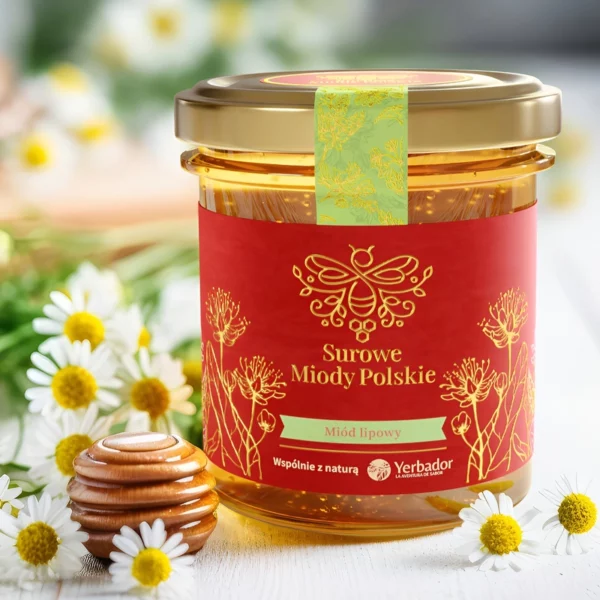
Certified raw honeys from Poland

Check the current price
free shipping
Up to 90 days
free returns
24 H
shipping