
Matcha water temperature: why 80 °C and what boiling water does
2026-11-24
Eighty degrees. If you want one number for matcha water temperature, that is it: 2 g of powder, 60 ml of water at 80 °C, about fifteen seconds of whisking. It is the figure Kyoto’s Ippodo prints on its own basic usucha recipe, and it is where we end up every time we test a new batch on the shop counter.
Boiling water will not destroy your matcha the way half the internet claims. What it does is quieter and more annoying: it pulls the bitter compounds out faster, blows off the sweet top notes, and leaves you with a flat, drying cup made from powder you paid good money for. Below is what actually changes between 70 and 100 °C, how to hit 80 without owning a thermometer, and the three situations where the rule bends.
The short answer, with the numbers attached
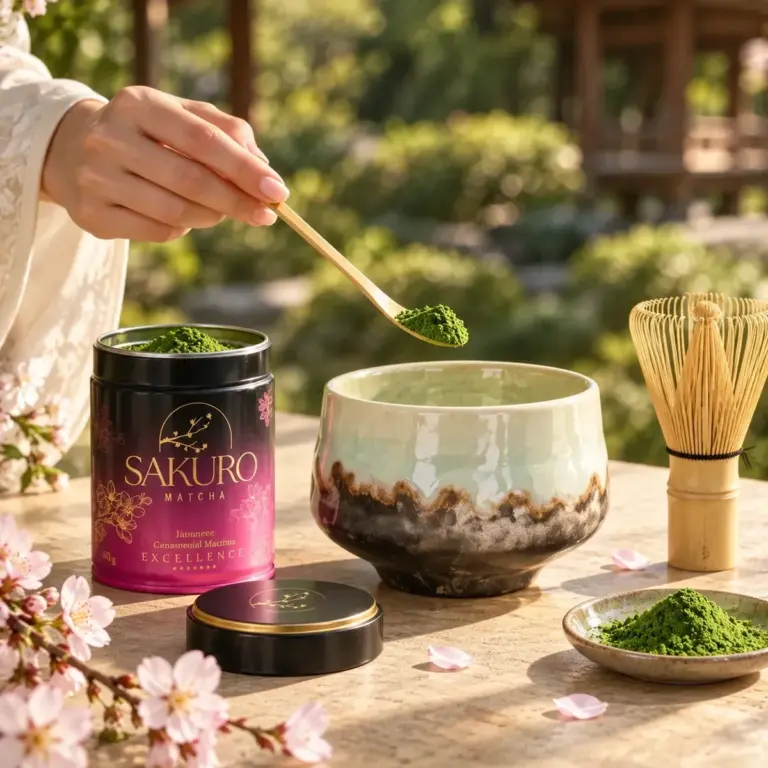
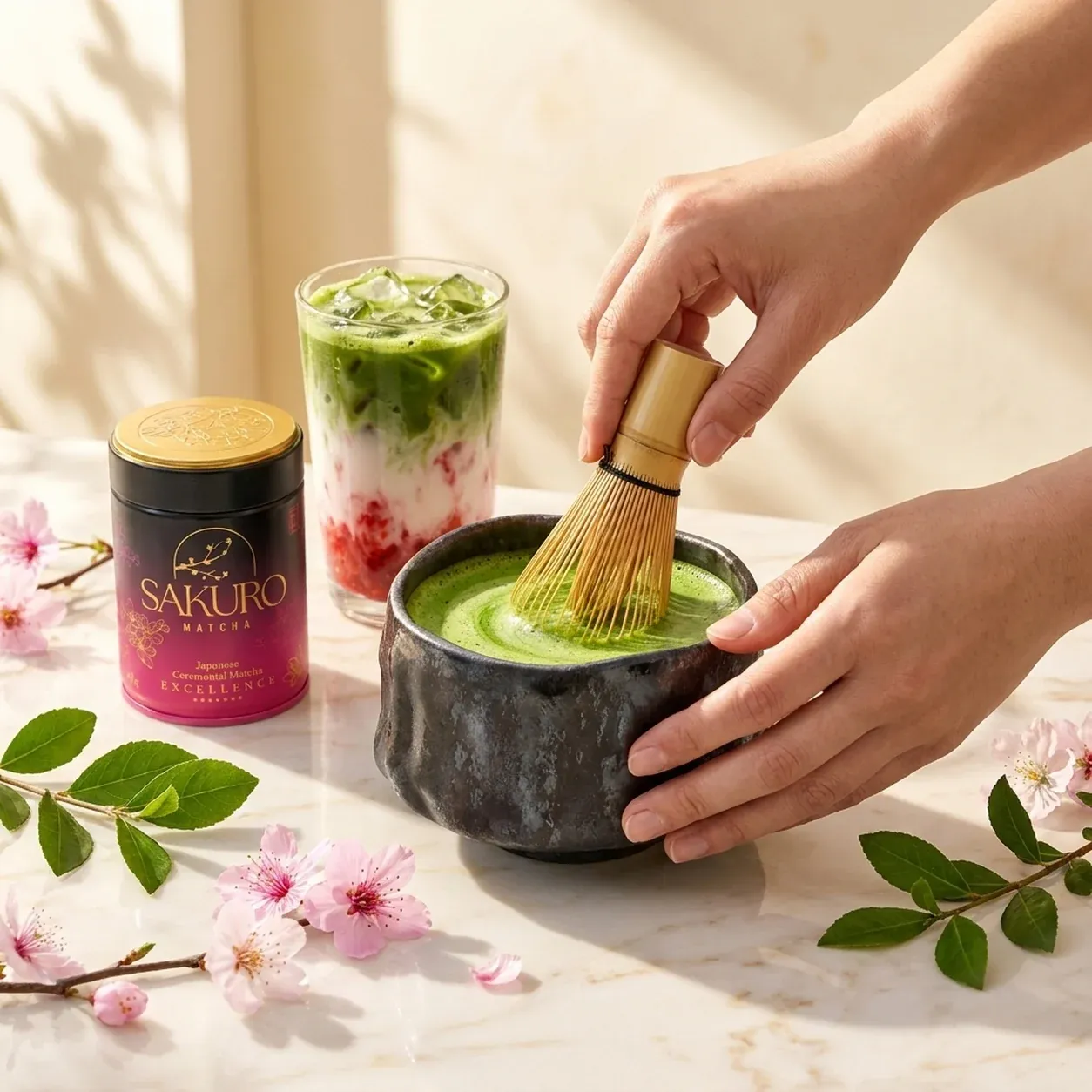
For a bowl of usucha, the thin everyday matcha most people drink: 2 g of powder, 60 ml of water at 80 °C, whisked hard for fifteen seconds until the surface carries a fine, even foam. That is one level teaspoon, or one and a half scoops of a bamboo chashaku, in a bowl you can get a whisk moving in.
Two of those numbers are negotiable and one is not. You can push the water up to 70 ml if you like a lighter cup, and you can go to 2,5 g if your matcha is a later harvest and tastes thin. The temperature is the part that decides whether the result tastes sweet or sharp, and it is the part most people never measure.
If your kettle has no temperature setting, you are not stuck. Boiled water poured into a cold cup and left for two or three minutes lands somewhere in the right region, and the mixing method further down gets you there in seconds. Measure it once with a cheap kitchen thermometer so you know what your own kettle and your own cup do, then you can stop measuring.
What boiling water actually does in the bowl
Matcha is not steeped. You are not pulling flavour out of leaves and then throwing the leaves away; the whole leaf is in your cup as a suspension of powder. That distinction matters, because it rules out the most common claim you read online. Boiling water does not rob you of anything you would otherwise have swallowed. Everything in the tin ends up in the bowl either way.
What heat changes is how fast the soluble parts go into the water, and how the drink reads on your tongue. The bitter, drying compounds in green tea are the catechins, led by EGCG, and they dissolve more readily the hotter the water is. The amino acids, theanine among them, come out easily even in cold water. A review by Manami Monobe in the Japan Agricultural Research Quarterly (2018) sets out that split for leaf tea: hot water brings EGCG and caffeine, which carry the astringency and bitterness, while cold water mainly gives up EGC and theanine, which taste mild and sweet.
In a bowl of matcha, that research translates into something simpler: the hotter the water, the faster the harsh end of the flavour arrives, and the more of the cup it takes over. On top of that, your own tongue reads bitterness as stronger when a drink is very hot, and the delicate top notes of a good first-harvest matcha are volatile. Pour water straight off the boil and you smell them leaving the bowl instead of tasting them.
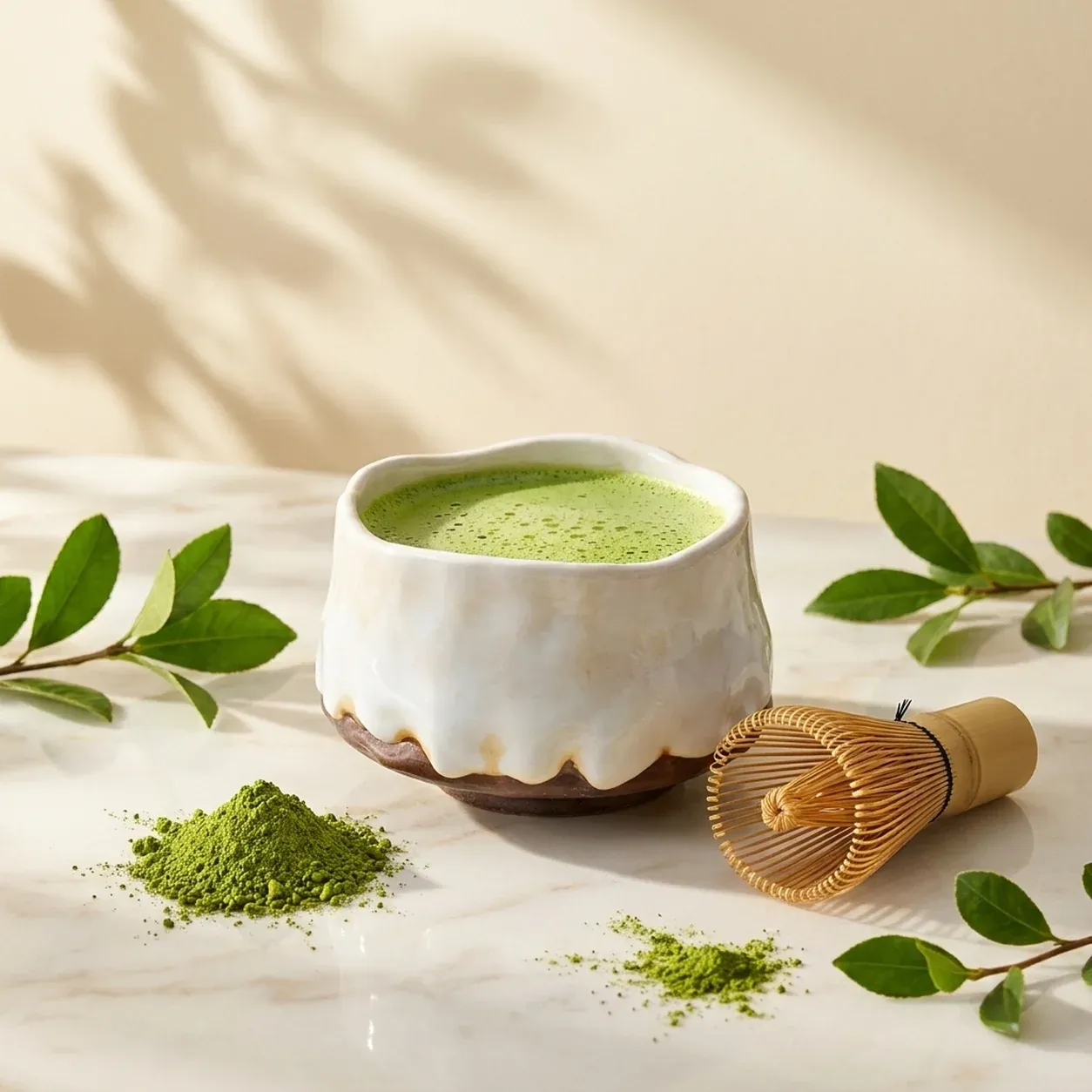
There is also a mechanical side. Water near boiling makes big, coarse bubbles that break within a minute, so the foam looks impressive for ten seconds and then dies. Water at 80 °C holds a fine, tight crema. And bamboo lives longer in water that is not boiling, which is worth a thought if your chasen cost more than the tin it serves.
70, 80, 90, 100 °C: what you taste at each step
We have run the same matcha at different temperatures more times than is sensible, usually because a customer asked. The pattern is consistent enough to put in a table.
| Water | Foam | Aroma and taste | When to use it |
|---|---|---|---|
| 60–65 °C | Soft, slow to build | Sweet and mild, umami forward, almost no bite. Thin if the powder is a late harvest | Top-grade matcha you want to taste at its gentlest; hot summer mornings |
| 70–75 °C | Fine, builds in about 10 seconds | Sweetness still leads, a light green edge behind it | A safe setting for anyone who finds matcha bitter |
| 80 °C | Fine and stable, holds for minutes | Balanced: sweetness, umami and a clean bitter finish that lifts the cup | The default for usucha and for koicha |
| 90 °C | Large bubbles, collapses quickly | Astringency moves to the front, aroma thins out | Only for culinary-grade powder in a strong milk drink |
| 100 °C | Foam dies within a minute | Dry, flat and sharp; sweetness mostly gone | Nothing we would recommend |
One honest note about that table: the difference between 75 and 85 °C is clear to anyone, and the difference between 78 and 82 is not. You are aiming at a band, not a target. If you land between 75 and 85 °C you have done the job.
How to hit 80 °C without a thermometer
Four methods, from the most precise to the most practical.
1. A kettle with a temperature setting
If you drink matcha daily, this is the one purchase that improves every cup. Set it to 80 °C and forget the problem exists. Anything sold for pour-over coffee works.
2. Mix boiled water with cold water
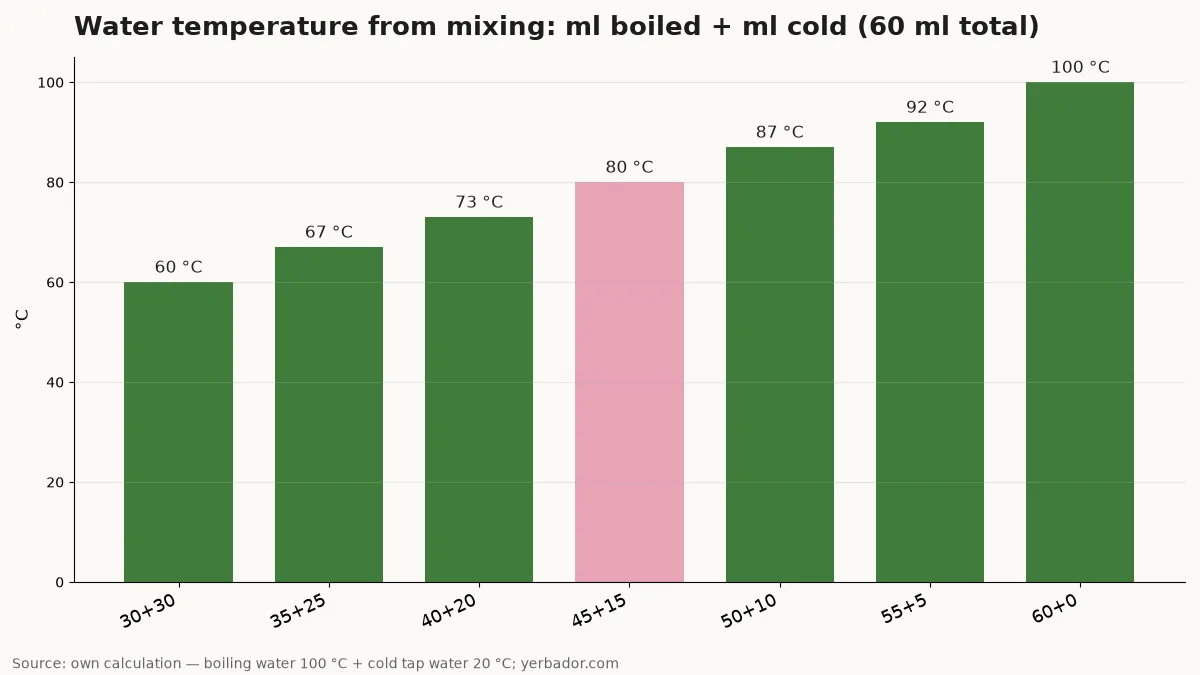
This is the method we use when a customer wants to taste something and the kettle has just boiled. It is simple arithmetic, it takes five seconds, and it is accurate to a degree or two.
| Boiled water (100 °C) | Cold tap water (about 20 °C) | Temperature in the bowl |
|---|---|---|
| 30 ml | 30 ml | 60 °C |
| 35 ml | 25 ml | 67 °C |
| 40 ml | 20 ml | 73 °C |
| 45 ml | 15 ml | 80 °C |
| 50 ml | 10 ml | 87 °C |
| 60 ml | 0 ml | 100 °C |
So for a standard bowl: 45 ml from the kettle, 15 ml from the cold tap, 60 ml in total. If your cold water comes out of the fridge at around 8 °C rather than 20, shift the ratio to roughly 47 ml boiled and 13 ml cold. Pour the cold water in first and the hot water on top, and it mixes itself.
3. Pour it between two cups
The traditional Japanese answer, and the reason a cooling bowl called a yuzamashi exists. Every time hot water moves into a cool, empty vessel it drops a noticeable amount of heat, and the ceramic takes a share too. Two transfers from a fresh boil usually puts you in the right band. Check it once against a thermometer, because the drop depends on how thick your cups are.
4. Just wait
Boiled water in an open cup cools fastest in the first minutes. In a normal kitchen, two to three minutes in a ceramic cup brings 100 °C down into the eighties. It is the least precise method on this list and still better than pouring straight off the boil. The one thing to avoid is waiting with the lid closed on an insulated kettle, where water can sit above 90 °C for a quarter of an hour.
Matcha is not the only tea with a number on it
If 80 °C feels fussy, look at how the rest of the Japanese tea shelf is brewed. These are the parameters Ippodo publishes for its own teas, and they explain the logic better than any general rule.
| Tea | Water | Leaf or powder | Time |
|---|---|---|---|
| Gyokuro | 60 °C | 10 g / 80 ml | 90 seconds |
| Sencha | 80 °C | 10 g / 210 ml | 60 seconds |
| Usucha (thin matcha) | 80 °C | 2 g / 60 ml | whisk 15 seconds |
| Koicha (thick matcha) | 80 °C | 4 g / 30 ml | mix 15 seconds |
| Bancha, hojicha, genmaicha | 100 °C | 10 g / 240 ml | 30 seconds |
Source: Ippodo Tea, published brewing recipes, checked 13 November 2026.
The pattern is easy to read. Teas grown in the shade, where the leaf builds up amino acids and little harshness, get the coolest water: gyokuro at 60 °C, matcha at 80 °C. Roasted and coarse-leaf teas get water straight off the boil, because the aroma you want from hojicha only comes out at 100 °C and there is almost nothing bitter left in the leaf to worry about. Matcha sits with sencha, not with the roasted teas, and that is the whole argument in one line.
Latte, iced matcha and the rules that change
Milk and ice move the goalposts, so treat them separately.
For a hot latte, make a paste first: 2 g of matcha with 30 ml of water at 80 °C, whisked or shaken until there is not a speck of dry powder left. Then add 150–180 ml of milk heated to 60–65 °C. Milk pushed much past 70 °C starts to taste cooked and loses the sweetness that makes an oat milk latte work, so the milk is the ingredient to watch, not the matcha. Our full matcha latte recipe has the proportions for hot, iced and oat milk versions.
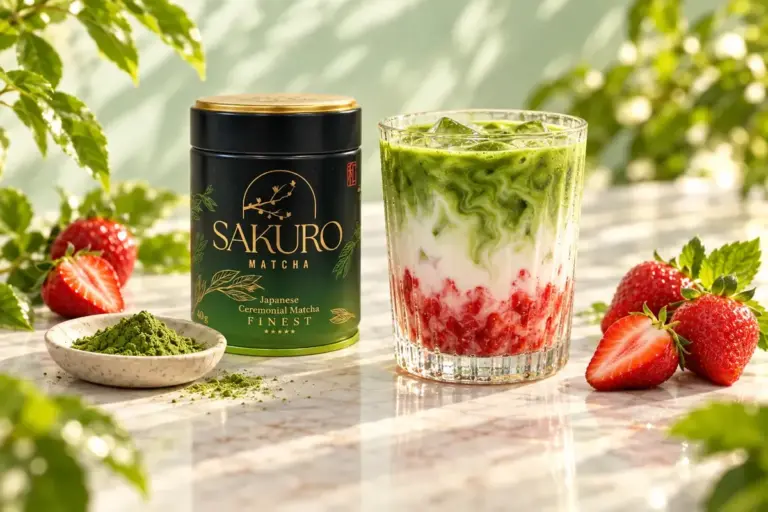
For iced matcha, you have two choices. Dissolve 2 g in 30 ml of water at 80 °C, then pour it over a full glass of ice and top with cold water or milk; the small amount of hot water does the dissolving and the ice chills it instantly. Or shake it cold in a jar with 150 ml of cold water for twenty seconds, which gives a cleaner, sweeter, less bitter drink but needs a well-milled powder or you get lumps. Cold water extracts less of the bitter end, which is exactly why cold-shaken matcha tastes so smooth.
For koicha, the thick ceremonial preparation, keep the water at 80 °C and cut the volume hard: 4 g into 30 ml, worked slowly into something the consistency of single cream. There is no foam, and at that concentration a cheap matcha has nowhere to hide.
The grade decides how much the temperature forgives
A first-harvest ceremonial matcha has enough sweetness and umami to survive a clumsy pour. Push it to 90 °C and it goes sharper, but it is still a decent cup. A late-harvest culinary powder has almost no sweetness to lose, so at 90 °C it collapses into plain bitterness.
In practice: if you are buying matcha to drink with water only, buy the better grade and respect the temperature. If you are buying it for milk drinks and baking, the sugar and fat cover a multitude of sins and the exact degree matters less. Our guide to ceremonial and culinary grades goes through what the labels mean and what each one is worth paying for.
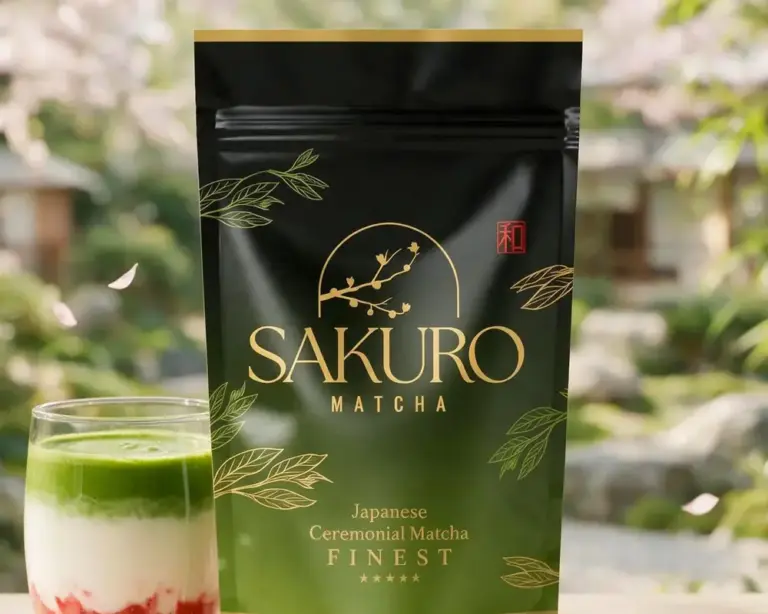
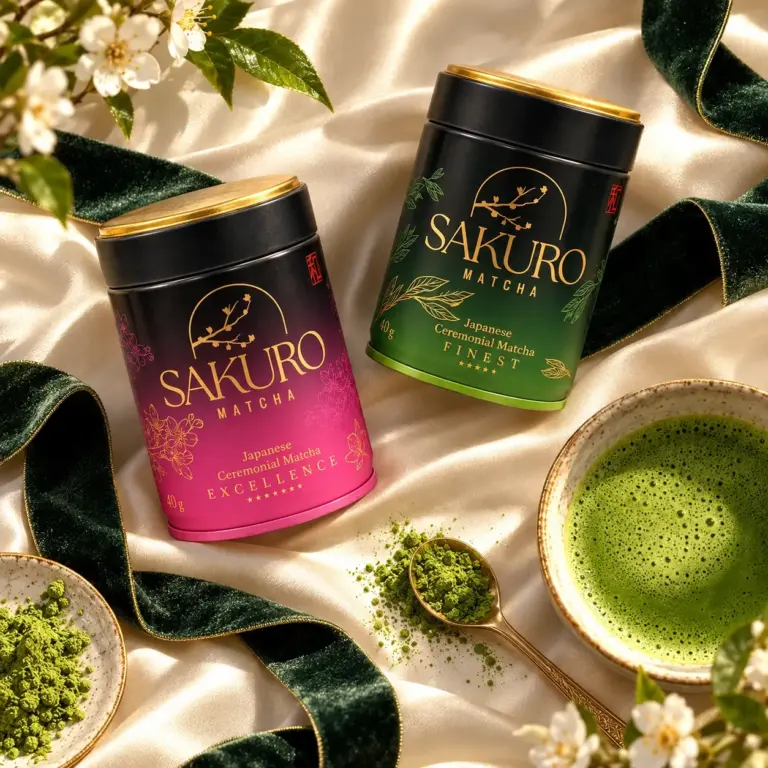
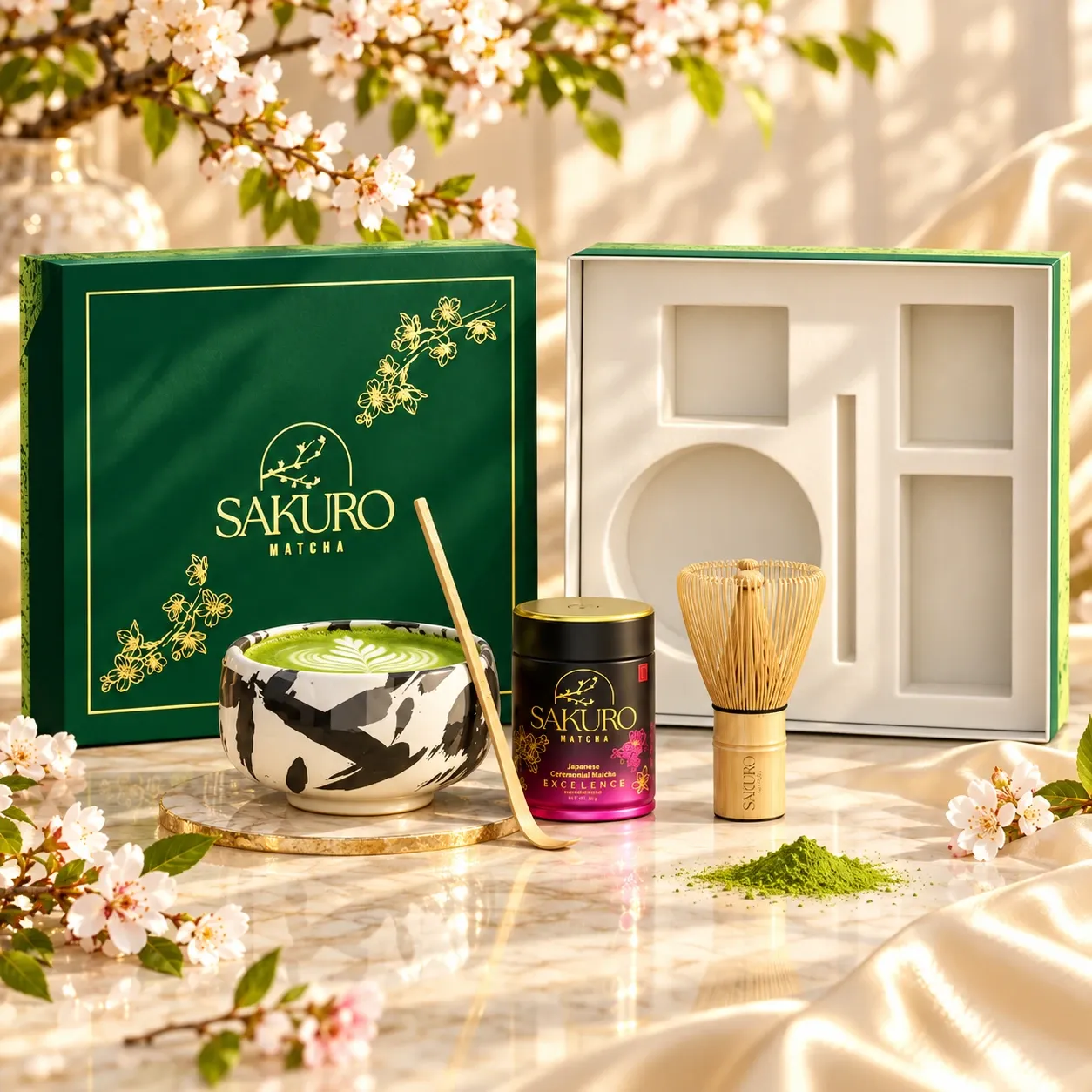
Both Sakuro grades are Japanese ceremonial matcha from Shizuoka. Sakuro Matcha Excellence 40 g at 26,90 € is the one we reach for when the water is the only other ingredient: it takes 80 °C and gives back sweetness and a long finish. Sakuro Matcha Finest 40 g at 23,90 € is the everyday tin, excellent in milk and in baking, and perfectly good in a bowl if you keep the water on the cooler side of the band. If you want to run the comparison yourself, the Finest and Excellence pair is 46,90 € for both tins.
Five mistakes we see most often
None of these are exotic. They are the five things people tell us about when they say their matcha tastes wrong.
Pouring boiling water straight onto dry powder. The worst version of the problem, because the powder is hit at its most concentrated and clumps at the same time. If you do nothing else differently, add 15 ml of cold water to the bowl first.
Not sifting. Matcha clumps in the tin because the particles are a few microns across and static. A small sieve, ten seconds, and the whisk suddenly works. Lumps that survive whisking release their bitterness when you bite them, which people then blame on the water.
Too little water for the dose. Two grams in 30 ml is koicha concentration and tastes brutal if you drink it like usucha. If your matcha is harsh, add water before you change anything else.
A cold bowl in a cold kitchen. Ceramic at 16 °C pulls real heat out of 60 ml of water. In winter, rinse the bowl with hot water, pour it out, dry it, then make your tea. It also warms the chasen, which makes the bamboo more flexible.
Blaming the temperature for old powder. Matcha fades from the day the tin is opened. After two or three months open in a warm kitchen it turns duller, flatter and more bitter no matter how carefully you pour. Keep the tin closed, cool and away from light, and use it within a couple of months.
What you need for a proper bowl
You can make good matcha with a jar and a sieve. If you want the full set, this is what it costs today in our shop: Excellence 40 g at 26,90 €, a bamboo chasen at 14,90 €, a chashaku scoop at 5,90 € and a Hisui matcha bowl at 26,90 €. A wide bowl with thick walls is not decoration: the width lets the whisk move and the thick ceramic holds the temperature you just set.
Cafés, restaurants and offices buying by the kilogram: wholesale runs through Ewelina, [email protected], +48 515 025 329. For reference, at the public Sakuro 2026 catalogue prices of 480 PLN per kg net for Finest and 690 PLN per kg net for Excellence, and the National Bank of Poland rate of 4,4070 PLN per euro on 13 November 2026, that works out at roughly 109 € per kg, about 0,22 € per 2 g serving, for Finest and roughly 157 € per kg, about 0,31 € per serving, for Excellence. Treat those as an indicative conversion; Ewelina sends the binding offer. Matcha ships in 1 kg bags from Poland within the EU, with 5 % off from 3 kg and 10 % off from 5 kg.
Questions people ask about matcha and water
What temperature should matcha water be?
80 °C, give or take five degrees. That is 2 g of matcha to 60 ml of water, whisked for about fifteen seconds. Below 70 °C the cup is mild but thin; above 85 °C the bitterness takes over.
Can I use boiling water for matcha?
You can, and nothing bad happens to you, but the drink is worse: dry, sharp and short on aroma, with foam that collapses in under a minute. If boiling water is all you have, add a splash of cold water to the bowl before the hot water goes in.
Does water temperature change how much caffeine is in matcha?
Essentially no, and this is where matcha differs from leaf tea. You drink the whole powder, so a 2 g serving delivers roughly 60 mg of caffeine whether you used 70 °C or 100 °C. EFSA considers up to 400 mg of caffeine a day safe for most adults and 200 mg in pregnancy; our caffeine comparison has the figures per dose.
How do I get 80 °C without a thermometer?
Mix 45 ml of boiled water with 15 ml of cold tap water, or pour boiled water between two cups twice, or let it stand in an open cup for two to three minutes. Check your own method against a thermometer once and you will never need it again.
Is cold water fine for matcha?
Yes, for iced drinks. Cold water pulls out less of the bitter catechins, so cold-shaken matcha tastes smoother and sweeter than the hot version. It needs more shaking and a finely milled powder, otherwise you are drinking lumps.
My matcha is still bitter at 80 °C. What now?
Work through it in this order: sift the powder, add 10 ml more water, check how long the tin has been open, then check the grade. Water temperature is the first thing people change and rarely the only thing that is wrong.
Does the bowl really matter?
For temperature, yes. A thin cup straight out of a cold cupboard can take several degrees off 60 ml of water before you have finished whisking. A thick ceramic bowl, rinsed with hot water first, holds what you poured.
Discover our TOP products!





Your dream figure




Discover new flavors





Yerba mate with tea




Accessories



Superfoods











Certified raw honeys from Poland

Check the current price
free shipping
Up to 90 days
free returns
24 H
shipping