
Matcha for offices and corporate gifts: what to order and what it costs
2026-11-20
Matcha works in an office because it needs no machine. Two grams of powder, 60 ml of water at 80 °C, fifteen seconds with a bamboo whisk or a battery frother, and the cup is done. No beans, no grinder, no descaling, no queue at the coffee machine at ten past nine.
That is also why matcha has become a sensible corporate gift. It is small, it travels well, it has a shelf life measured in months rather than days, and the person who gets it either drinks it every morning or gives it to someone who will. Below you will find what a tea corner costs for a team of ten, what a gift costs per head, and how to order larger quantities for a company.
- One cup = 2 g of matcha. A 40 g tin makes 20 cups, a 1 kg bag makes 500.
- Caffeine: roughly 38–89 mg in a 2 g serving, calculated from the 18.9–44.4 mg per gram range published for matcha. EFSA puts a 200 ml cup of filter coffee at 90 mg.
- Cost per cup: about €1.20 from a 40 g retail tin, about €0.22 if the company buys by the kilo.
- Gift budgets: €14.90 for a chasen, €23.90 for a Finest tin, €46.90 for the Finest + Excellence pair, €52.90 for a tin with a ceramic bowl.
- Kit for a tea corner: kettle, whisk or frother, a bowl or a wide mug, a small sieve, scales or a bamboo spoon. Nothing that needs a power socket of its own.
- Wholesale: 1 kg bags, 5 % off from 3 kg, 10 % off from 5 kg, shipped from Poland inside the EU. Binding offer from Ewelina, [email protected], +48 515 025 329.
Why matcha turns up in office kitchens
Matcha fits an office because it removes the equipment problem. A coffee machine in a 20-person office is a maintenance contract, a water filter and somebody’s unpaid job. A tin of matcha is a tin, a kettle and a whisk, and anyone can make a decent cup on their third try. That is the whole reason it spreads from one desk to the rest of the floor.
The caffeine is the second reason. Published figures for matcha fall between 18.9 and 44.4 mg of caffeine per gram, from the 2021 review by Kochman and colleagues in Molecules, so a 2 g cup carries somewhere between 38 and 89 mg. For comparison, EFSA’s guideline figures put an espresso at 80 mg, a 200 ml cup of filter coffee at 90 mg and a cup of black tea at 50 mg. EFSA considers up to 400 mg a day safe for healthy adults, and 200 mg a day during pregnancy or breastfeeding. A couple of matchas sit comfortably inside that; four matchas plus three coffees do not.
Matcha also carries L-theanine, an amino acid specific to tea, at up to about 45 mg per gram in the same review. We will not tell you what that does to your afternoon, because the honest answer is that the evidence is thinner than the marketing. What we can say is what we hear from the offices that order from us: people who switch their second coffee for matcha say they stop at one tea rather than at the fourth espresso.
Two practical points before anyone orders a kilo. First, matcha is green tea leaf ground to powder, so you drink the leaf rather than an infusion of it, and the powder is perishable in the way a spice is not. Second, grade matters here more than in baking, because there is nothing to hide behind. A harsh powder tastes harsh in water and nobody in the office will touch the tin twice.
What an office tea corner actually needs
An office matcha corner needs five things: a kettle, something to whisk with, a wide vessel, a small sieve and a way to measure 2 g. Total outlay for a team of ten is under €70 for the hardware, and the tea on top of that. There is no machine, no cartridge and no subscription in that list.
| What | What it does | For a team of 10 | Price on yerbador.com |
|---|---|---|---|
| Sakuro Matcha Finest 40 g | The everyday tin. Ceremonial grade, Japanese, from Shizuoka | 3–4 tins a month at two cups per person per week | €23.90 |
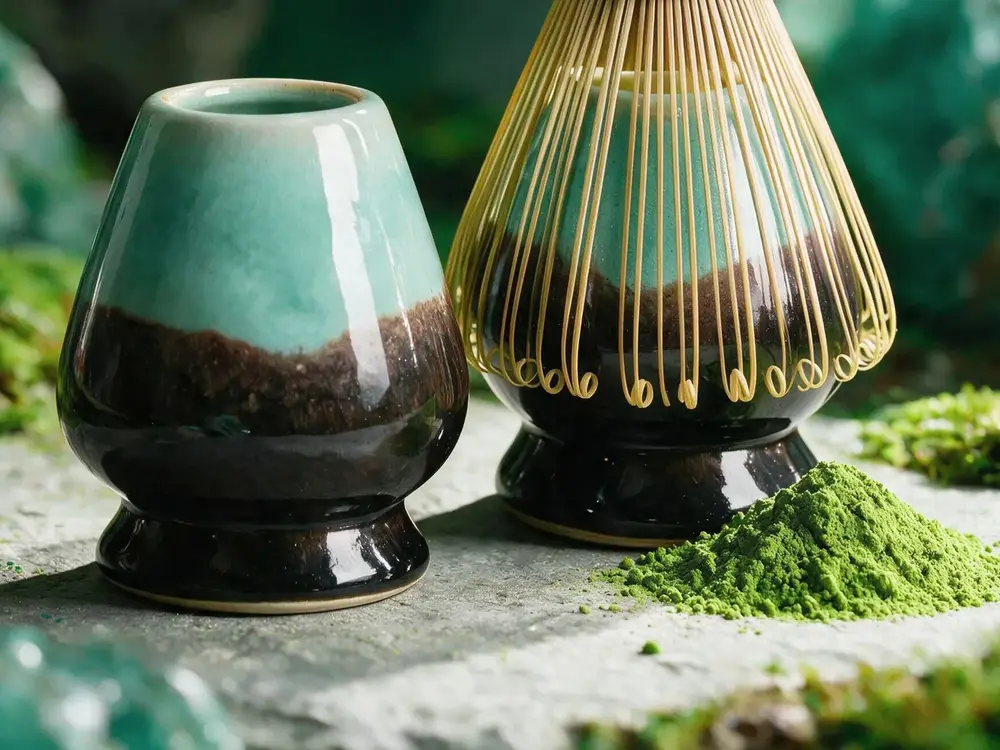
| Chasen, bamboo whisk | Breaks up the powder and builds the foam in 15 seconds | One per corner, two if the corner is busy | €14.90 |
| Chashaku, bamboo spoon | Portioning: two level scoops is roughly 2 g | One | €5.90 |
| Matcha bowl, e.g. Biwa | Wide base, room for the whisk to move | One or two; mugs work for the rest | €23.90 |
| Fine sieve | Removes lumps before the water goes in | One, any tea shop or kitchen drawer | not sold by us |
| Kettle with temperature setting | 80 °C instead of boiling | Most offices already have one | not sold by us |
If the office already owns an electric milk frother, use it. The foam is coarser than a chasen’s and the bamboo gives a smoother cup, but a frother survives twelve people a day and a chasen used carelessly does not. A reasonable compromise: a frother on the counter for the rush, a chasen in the drawer for whoever cares. Our guide to making matcha the traditional way explains what the whisk is actually doing to the powder.
One detail worth getting right: where the tin lives. Not on the windowsill, not next to the kettle, not open on the counter. Heat, light, air and moisture all take the green out of matcha, and an open tin in a warm kitchen tastes flat within weeks. Closed tin, cupboard away from the kettle, and in a fridge only if it stays sealed, because a cold tin opened in a warm room collects condensation.
The cost per person, in real numbers
At retail prices a cup of matcha costs about €1.20; bought by the kilo it costs about €0.22. The arithmetic is simple: a 40 g tin at €23.90 holds twenty 2 g servings, and a 1 kg bag holds five hundred. Everything else in this section follows from those two numbers.
Take a team of ten where each person drinks two matchas a week. That is 20 cups a week, about 80 a month, around 160 g of powder. In tins, that is four tins a month, roughly €96. In kilos, the same tea costs about €17 a month and the bag lasts about six months. The gap is the whole argument for ordering wholesale once the habit sticks, and it is why offices usually start with tins and switch after the second month.
| Format | Price | Servings of 2 g | Cost per cup |
|---|---|---|---|
| Finest 40 g tin | €23.90 | 20 | €1.20 |
| Excellence 40 g tin | €26.90 | 20 | €1.35 |
| Set of 4 × Finest 40 g | €80.90 | 80 | €1.01 |
| Finest, 1 kg wholesale | about €108 net | 500 | about €0.22 |
| Finest, 5 kg wholesale | about €97 net per kg | 500 per kg | about €0.19 |
| Excellence, 1 kg wholesale | about €155 net | 500 | about €0.31 |
The wholesale figures come from the public Sakuro 2026 price list: Finest at 480 zł per kilo net and Excellence at 690 zł per kilo net, converted at the National Bank of Poland rate of 20 November 2026, €1 = 4.4559 zł. Treat them as an indication. Rates move, and the binding offer is the one Ewelina sends you.
Put next to what an office spends on coffee beans and machine servicing, €17 a month for the tea half of the kitchen is not the line item anyone argues about. The number that does get questioned is the first one, the €96 month of tins, which is why it pays to explain the per-kilo price in the same email.
Corporate gifts: which set for which budget
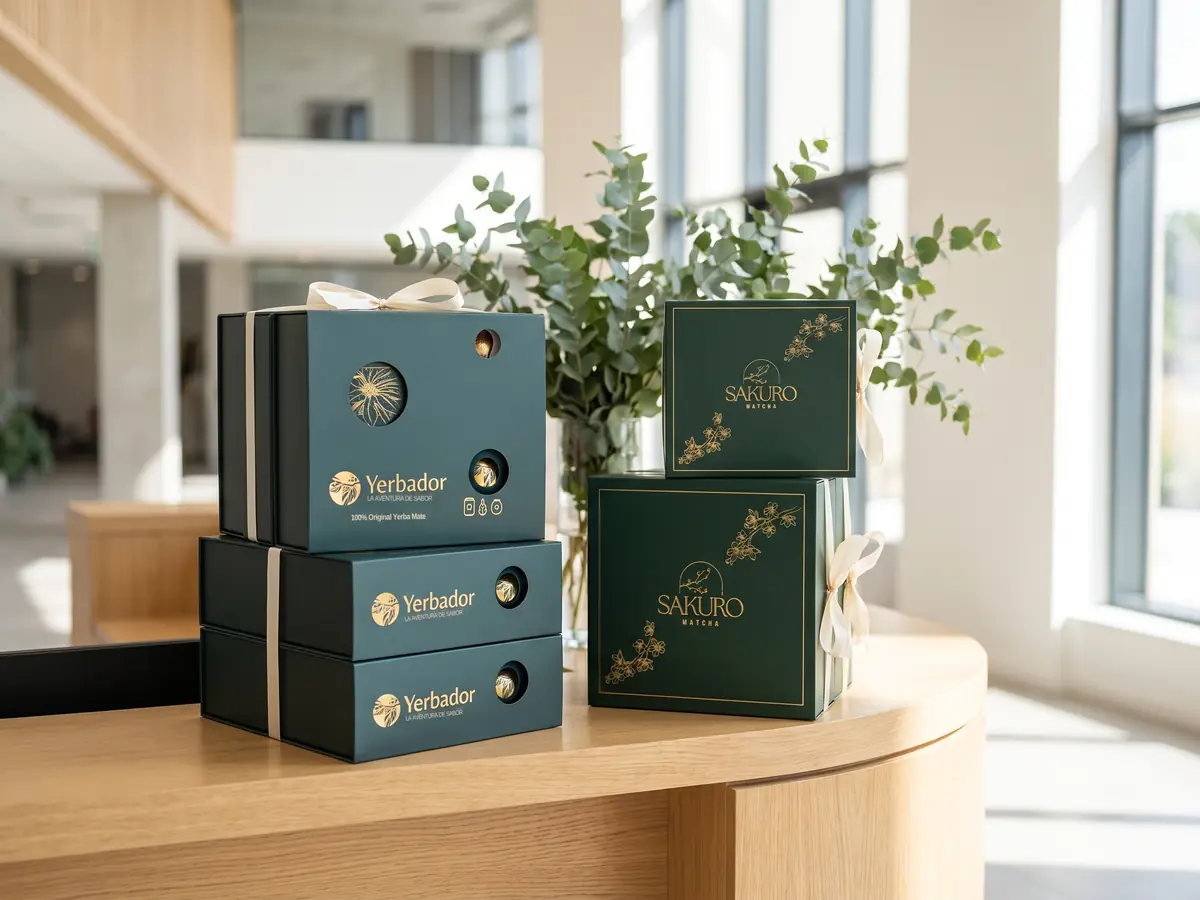
For a corporate gift, budget per head decides the format: €14.90 buys a bamboo whisk, €23.90 a 40 g tin of ceremonial matcha, €46.90 the Finest and Excellence pair, €52.90 a tin with a ceramic bowl. Below €15 you are giving an accessory without the tea, which lands badly unless the recipient already drinks matcha.
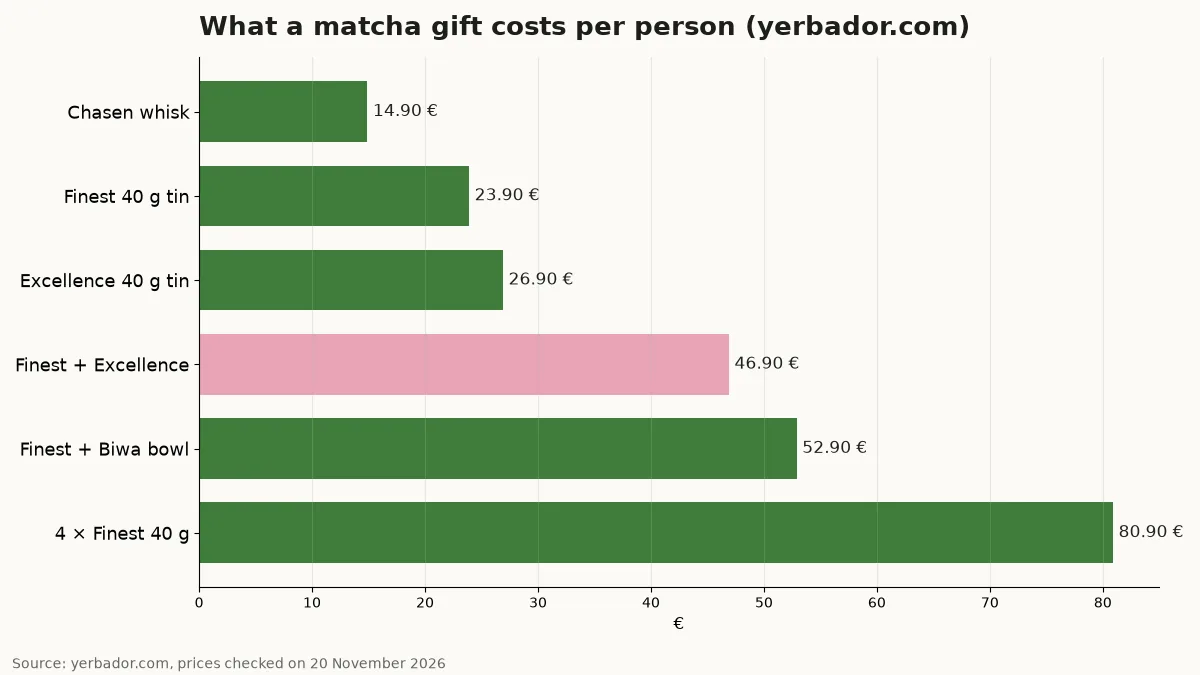
| Budget per head | What to send | Price | Who it suits |
|---|---|---|---|
| Up to €15 | Chasen, bamboo whisk | €14.90 | Someone who already has the tea and whisks with a fork |
| €20–30 | Finest 40 g tin, or Excellence 40 g | €23.90 / €26.90 | The standard staff gift: 20 cups, nothing to assemble |
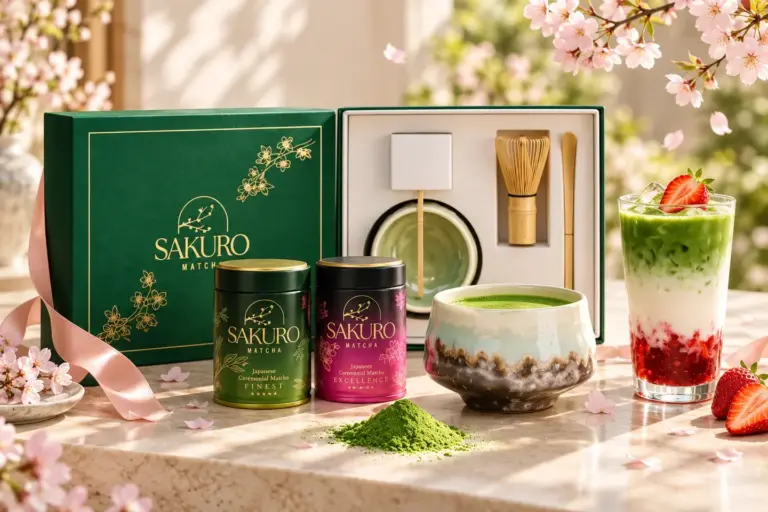
| €40–50 | Finest + Excellence pair | €46.90 | Clients and partners. Two grades side by side, which makes it a tasting rather than a tin |
| €50–60 | Finest 40 g with a ceramic Biwa bowl | €52.90 | The gift for someone starting from zero: tea and vessel in one box |
| €80 and up | Set of four Finest 40 g tins | €80.90 | A team gift for a whole department kitchen, not for one person |
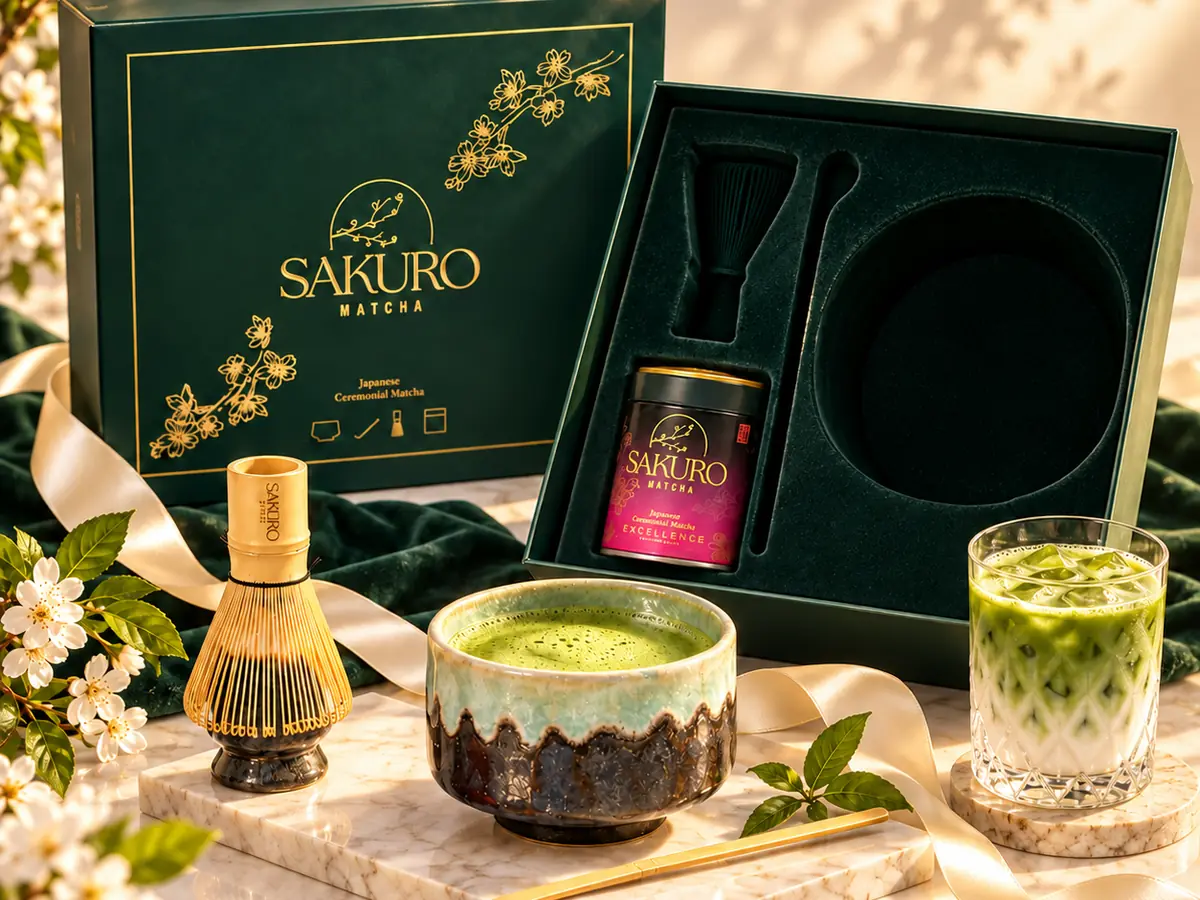
Our own order of preference, after sending a good many of these out: the Finest + Excellence pair at €46.90 is the best corporate gift in the range, because two tins invite a comparison and a comparison turns into a conversation. The single Finest 40 g tin at €23.90 is the right call for a staff gift at scale, where twenty-five identical parcels have to leave on the same day. The four-tin set at €80.90 belongs on a department’s kitchen shelf rather than in one person’s hands.
Two things we would not do. We would not send culinary-grade powder as a gift, because a gift is drunk rather than baked and the difference is obvious in the cup; the split between the grades is laid out in our piece on ceremonial and culinary matcha. And we would not send a whisk on its own to someone who has never made matcha, because a chasen without tea is a souvenir.
If you are ordering for a mixed list of recipients, split it by what you know. People who already drink matcha get the pair or a single Excellence tin. People who have never made it get the tin-and-bowl set, where everything needed is in the box. Nobody needs two whisks.
Ordering for a company: quantities, discounts, who to ask
Company orders go through Ewelina. E-mail [email protected] or call +48 515 025 329, and say in the first line how many people you are buying for and whether this is a one-off gift run or a standing supply for a kitchen. Those two facts decide everything else.
For a tea corner, the unit is the kilo. Matcha for kitchens and cafés ships in 1 kg bags, with 5 % off from three kilos and 10 % off from five. Shipping is from Poland inside the EU. One kilo is 500 cups, so for most offices it is a half-year of tea rather than a month of it, and it makes sense to start with one bag and reorder when the habit is real.
For gifts, the unit is the parcel, and the useful question is how many identical ones you need and by when. We would rather be asked early about a hundred parcels than late about ten, and we will not promise a delivery date here that depends on the week you order in. Ask Ewelina, who will tell you what is in stock and what the realistic date is.
Three practical details that come up every time. The matcha is Japanese, ceremonial grade, from Shizuoka, sold in 40 g tins, 100 g pouches and 1 kg bags. Invoicing for a company order is standard, VAT and all. And if you want to mix the order, part tins for gifts and part bulk for the kitchen, say so in the same email rather than placing two orders.
Cafés and restaurants buying for a menu rather than a staff room have a different calculation to make, including cost per drink and menu pricing. That is covered in our guide to matcha wholesale for cafés and restaurants.
The 60-second office matcha
Here is the version that works on a kitchen counter with no scales and no ceremony. Total time is about a minute once the kettle has been on.
Hot matcha, one cup
- 2 g matcha (two level chashaku scoops, or a rounded half teaspoon)
- 60 ml water at 80 °C
- Optional: 150 ml hot milk or oat drink for a latte
- Sift the 2 g into a dry bowl or a wide mug. Ten seconds, and it is the step that decides whether you get lumps.
- Boil the kettle, then wait. A minute off the boil in a cold cup lands close enough to 80 °C. Boiling water makes matcha bitter and there is no way to undo it.
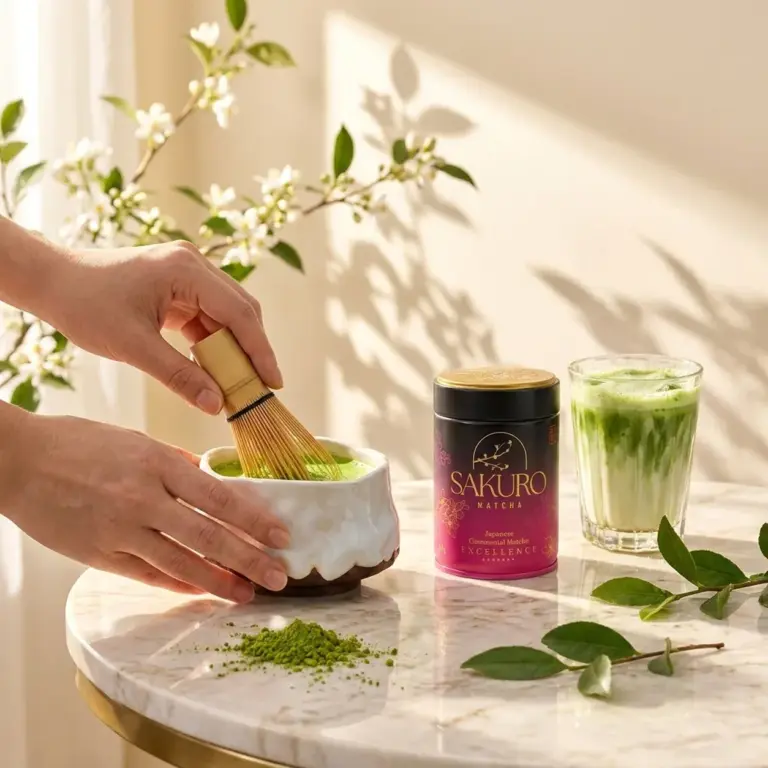
- Add 60 ml of water. Whisk in a W motion for 15 seconds, wrist only, not the whole arm. You want a fine foam covering the surface.
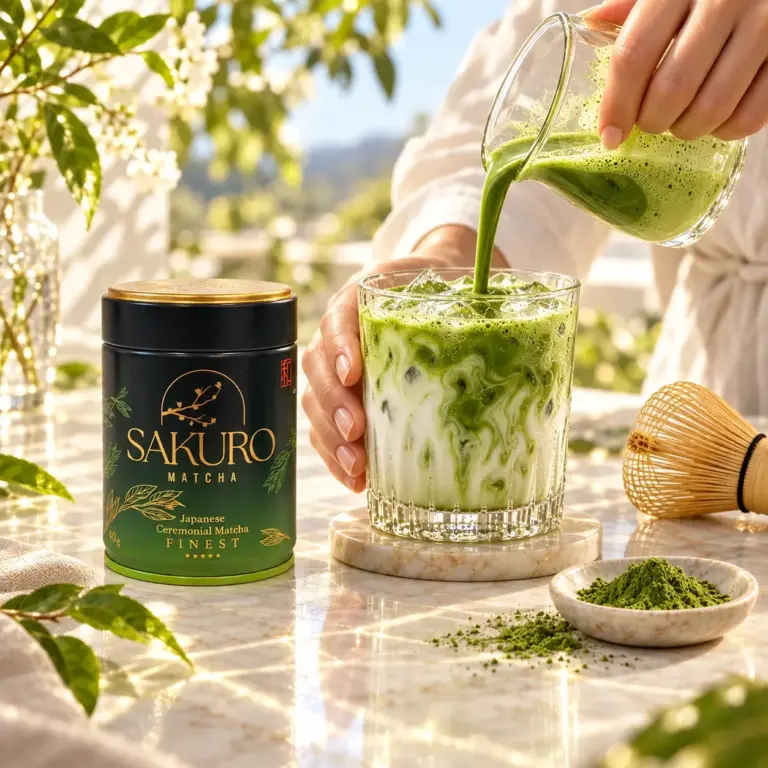
- Drink it as it is, or pour 150 ml of hot milk down the side of the cup for a latte. For the cold version, pour the whisked matcha over ice and top with cold milk.
The bottle version, for the 9 a.m. meeting: 2 g of matcha, 100 ml of cold water, a 500 ml bottle with a tight lid. Shake for 20 seconds, top with water or cold milk, keep it on the desk. It stays drinkable for a couple of hours and separates if left standing, so shake again. This is the method that gets matcha past people who will not stand at a counter whisking anything.
Milk choice matters more than people expect. Oat drink is the one that behaves: enough fat and protein to carry the tea, enough sweetness that nobody reaches for sugar. Almond is thin and lets the astringency through. Dairy works and mutes the green slightly. We go into the ratios and the temperatures in the full matcha latte recipe.
Five mistakes we see in office kitchens
Boiling water straight from the kettle. The single most common one. At 100 °C matcha turns bitter and the foam collapses. Pour the water into a cold mug first, count to sixty, then use it.
A heaped teaspoon instead of 2 g. A heaped teaspoon can be 4 g, which doubles the caffeine and makes the cup harsh enough that someone decides they dislike matcha. Two level bamboo scoops, or weigh it once to see what 2 g looks like in your spoon.
Leaving the tin open on the counter. Air and light pull the colour and the sweetness out of the powder. An open tin by a warm kettle is a tin that tastes dull in a month.
Buying culinary grade to save money and then drinking it. Culinary grade exists for batters, where sugar and butter cover the edges. In water it is astringent and in a staff kitchen it ends the experiment.
No sieve. Matcha clumps in the tin, those clumps survive the whisk, and the last mouthful is a green paste. A small sieve costs almost nothing and removes the problem completely.
Where to buy
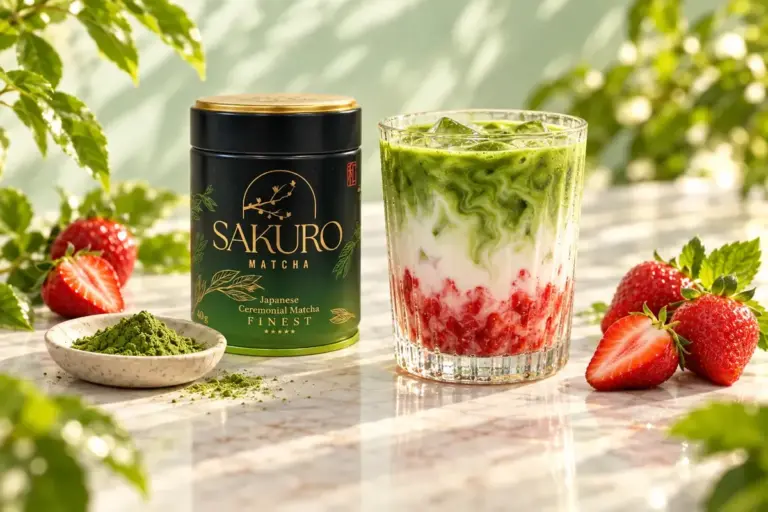
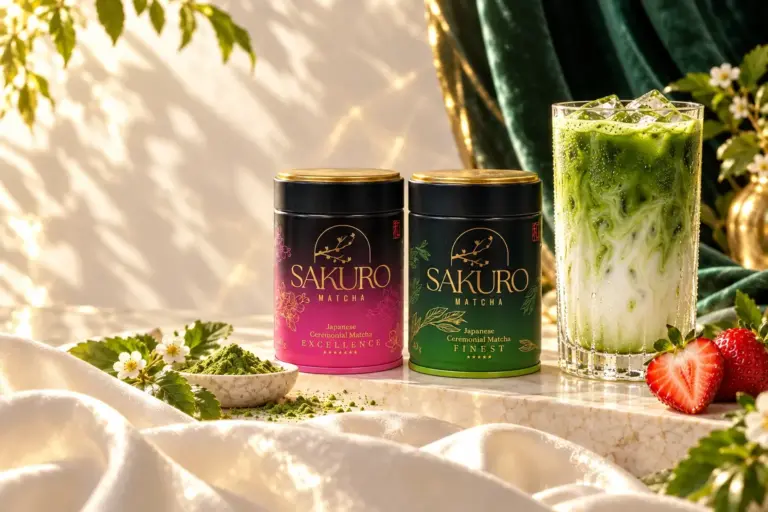
Sakuro Matcha Finest 40 g at €23.90 is our everyday ceremonial matcha from Shizuoka, about 20 cups per tin, and the one most offices end up on. Sakuro Matcha Excellence 40 g at €26.90 is the smoother, sweeter of the two and the better gift when the recipient is fussy about tea. The Finest + Excellence pair at €46.90 is the one we send to clients, and the set of four Finest tins at €80.90 covers a department kitchen for a while.
For the hardware: a bamboo chasen at €14.90, a chashaku at €5.90 for portioning, and a Biwa matcha bowl at €23.90 if the corner deserves a proper vessel. The ready-made Finest tin with a Biwa bowl at €52.90 saves you assembling it yourself, and the rest sit in the Sakuro matcha sets category. Prices checked on yerbador.com on 20 November 2026.
Buying for twenty people or more, or stocking a kitchen by the kilo? That part goes through Ewelina at [email protected] or +48 515 025 329, with 1 kg bags, 5 % off from 3 kg and 10 % off from 5 kg, shipped from Poland inside the EU.
FAQ
Is matcha a good corporate gift?
It works for the same reasons a good olive oil does: small, usable, nothing to install, and the recipient either enjoys it or passes it to someone who will. A 40 g tin at €23.90 gives twenty cups, which is a month of mornings rather than one afternoon. The gift lands badly only in one case, when you send equipment without tea.
How much matcha does an office of 10 people need?
At two cups per person per week, about 160 g a month, so four 40 g tins or one kilo every six months. At one cup per person per day, around 400 g a month, and at that point only the kilo bag makes financial sense.
How much caffeine is in office matcha compared with coffee?
A 2 g cup of matcha carries roughly 38–89 mg of caffeine, based on published values of 18.9–44.4 mg per gram. EFSA’s reference figures are 80 mg for an espresso and 90 mg for a 200 ml cup of filter coffee, with 400 mg a day as the limit it considers safe for healthy adults. More detail in our article on how much caffeine is in matcha.
Do you need a special whisk, or will a frother do?
A battery frother makes a perfectly drinkable cup and survives office use better than bamboo. A chasen makes a finer, more stable foam and a rounder-tasting cup. For a shared kitchen we would buy both: the frother for the morning rush, the chasen for the people who care.
How long does an open tin of matcha last in an office kitchen?
Weeks rather than months once it is open, and faster in a warm kitchen. Keep the tin closed, away from the kettle and out of the light. If a tin has been open since last quarter, use it for baking and open a fresh one for drinking.
Can you order matcha for a company with an invoice?
Yes. Company orders, invoicing and larger quantities go through Ewelina at [email protected] or +48 515 025 329. Wholesale runs in 1 kg bags with 5 % off from three kilos and 10 % off from five, shipped from Poland inside the EU.
Which matcha should a first-time office buyer order?
One Finest 40 g tin, one chasen and a sieve, total about €40 plus a sieve from the supermarket. That is twenty cups, which is enough to find out whether the floor drinks it. If the tin is empty in three weeks, go to the kilo.
Discover our TOP products!


Your dream figure

Discover new flavors
Yerba mate with tea

Accessories
Superfoods






Certified raw honeys from Poland

Check the current price
free shipping
Up to 90 days
free returns
24 H
shipping