
Matcha Finest Set in a 40g tin with a Biwa bowl / dietary supplement
Thousands of happy customers
Matcha Finest Set in a 40g tin with a Biwa bowl / dietary supplement
Original price was: 73,90 €.52,90 €Current price is: 52,90 €.
Lowest price in the 30 days before the discount:
73.9
€
Choose your variant
The same ceremonial matcha — only the cultivar and pack size differ.
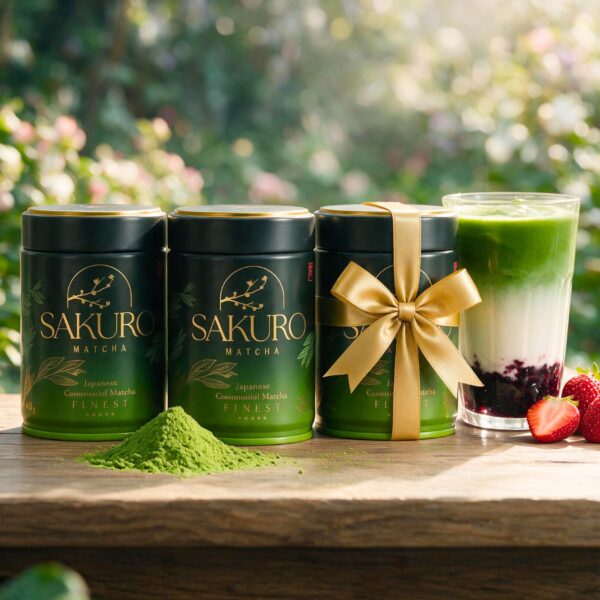
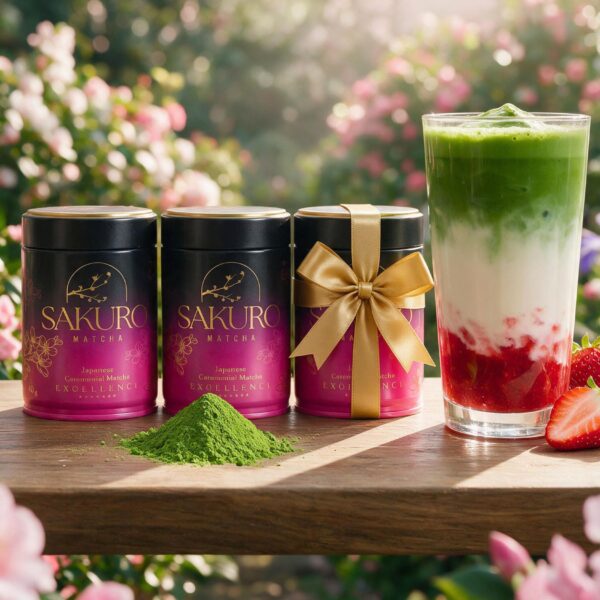
Discover their stories
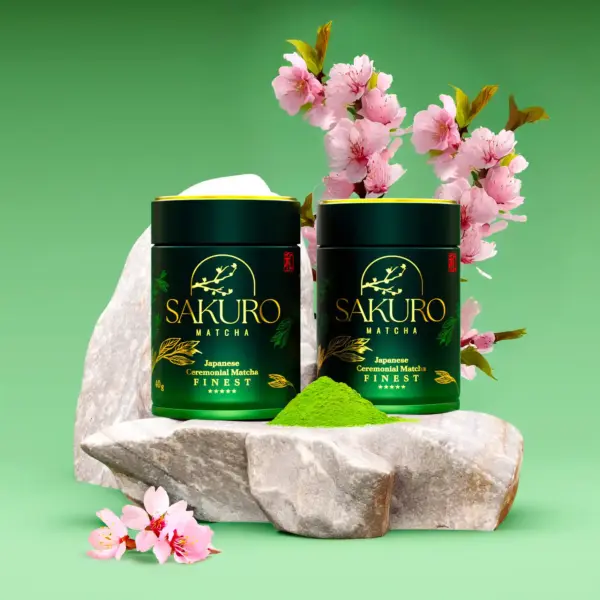
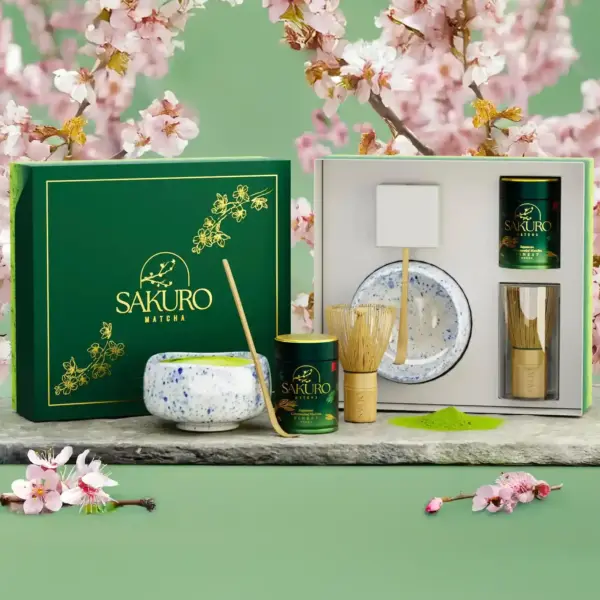
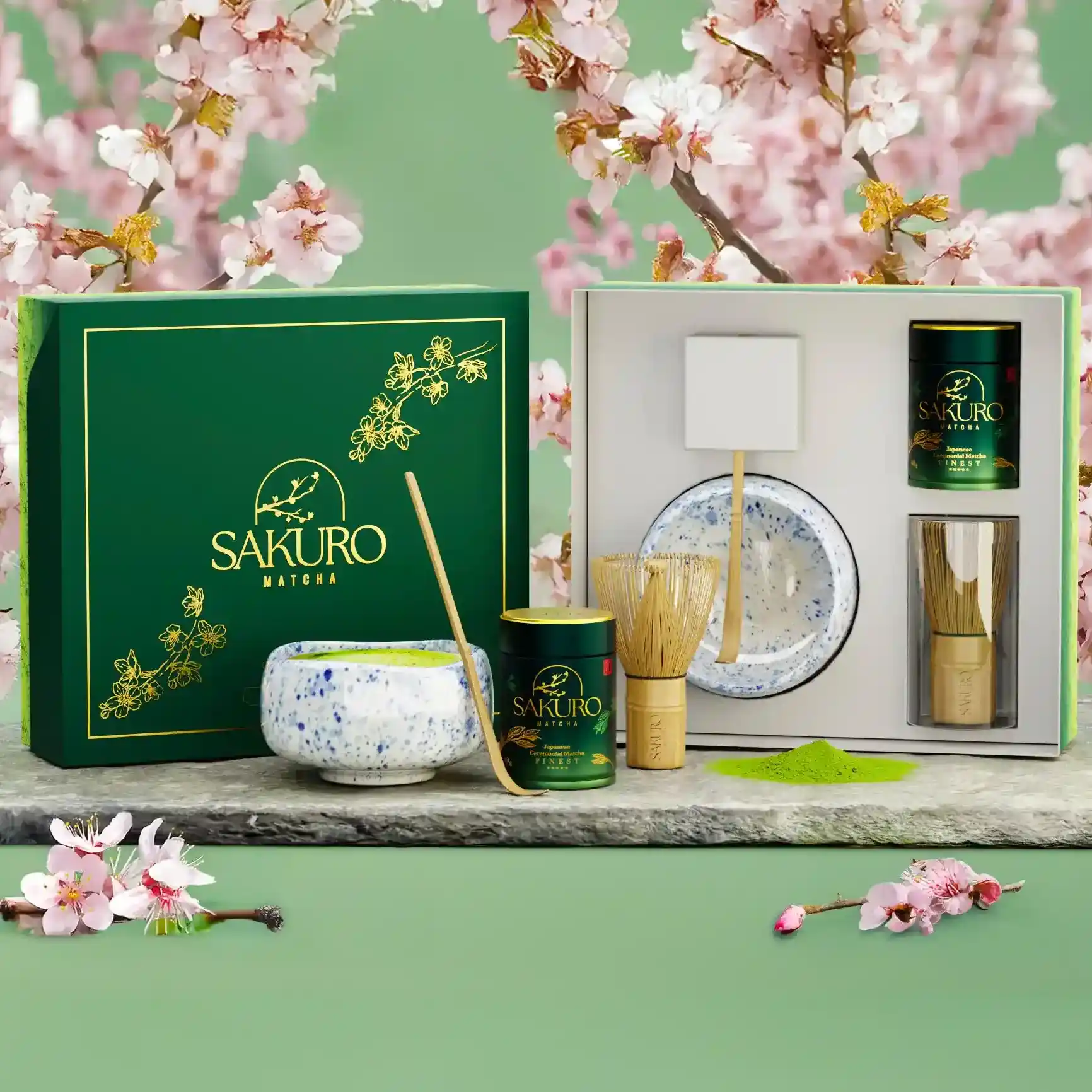
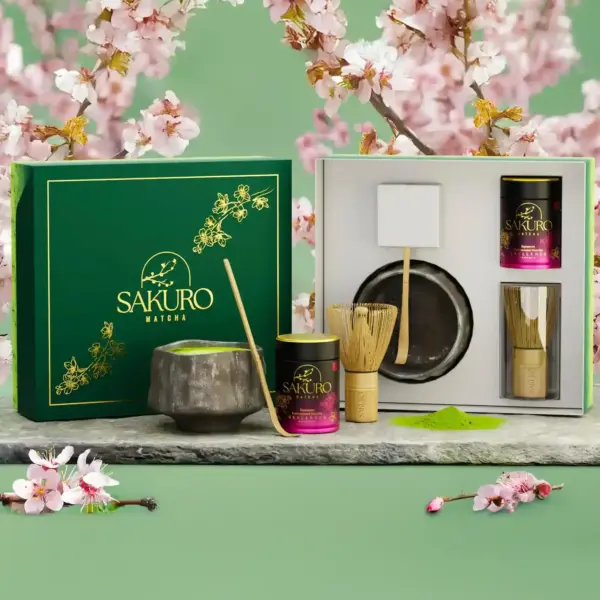
A complete matcha set: Sakuro Finest matcha 40 g in a tin, a hand-decorated Biwa bowl 500 ml, a bamboo chasen and chashaku – in a gift box. There’s nothing else you need to buy.
Discover Sakuro. The highest quality matcha, where taste meets the greenest of greens.
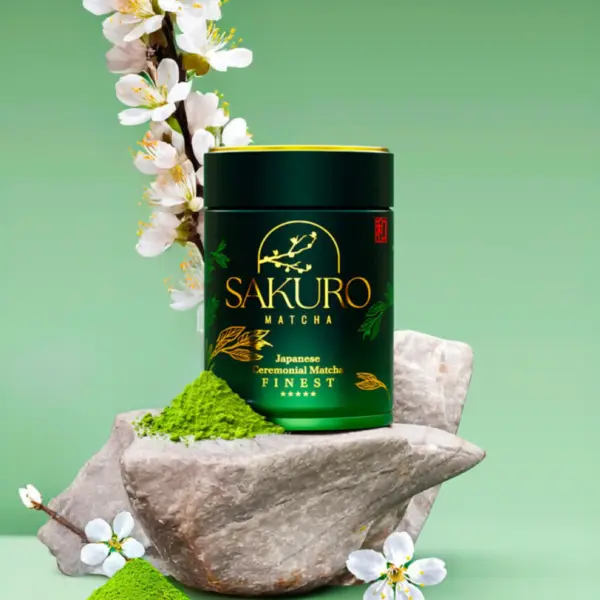
Sakuro Finest is bold and dynamic – deep umami combines with a light tannic note, creating a flavour full of passion and power. Every sip is like a dance of fire and wind – vivid, inspiring and full of strength. This is matcha at its most characterful. It is the harmony of nature captured in emerald dust. The matcha drinking ceremony accompanies Japanese culture – where average life expectancy is among the highest in the world.
Ingredients: Matcha – powdered green tea leaf (Camellia sinensis (L.) Kuntze
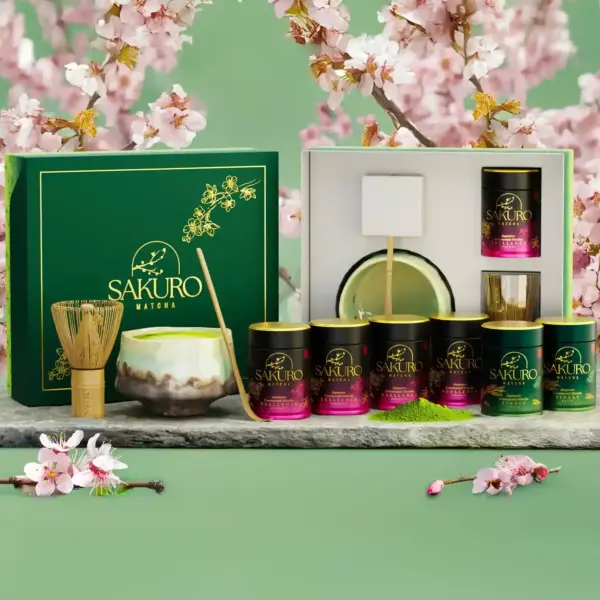
Inside you will find:
- Sakuro bowl (chawan) / 500 ml
- Bamboo whisk (chasen)
- Spoon (chashaku)
- Sakuro Matcha
- Exclusive Sakuro gift packaging
Check the current price per 100g
Fast shipping
Secure payments





- Why Sakuro
- Values
- Additional information
- Effects
- How to prepare
- Frequently asked questions
- Technology, quality and guarantee — Sakuro bowls
Sakuro is a matcha that simply cannot be compared to any other. Its strength lies in the highest concentration of L-theanine – this is what gives you long-lasting energy and deep focus without a hint of nervousness, instead of a short-lived buzz. Sakuro is also one of the few matchas enriched with B vitamins and aloe vera, a combination that supports the body from within and enhances the natural beauty of your skin. And its subtle, sweetish umami flavour and extraordinary aroma create an experience no other tea in the world can offer. Sakuro isn’t just matcha – it’s a new standard of quality.
✧ Antioxidants – A shield against ageing
A wealth of catechins and EGCG (epigallocatechin) neutralises free radicals, supports cell regeneration and slows down the ageing process. That’s your everyday protection against oxidative stress.
✧ B vitamins – Brain, metabolism, immunity
- Vitamin B6 and folic acid support red blood cell production and psychological functions.
- Riboflavin and biotin care for the skin, hair and mucous membranes.
- They help maintain a normal energy metabolism and reduce fatigue.
✧ L-theanine + theine – Energy without spikes
The combination of natural caffeine with the amino acid L-theanine delivers clean, focused energy without the jitters, tension or sudden crashes. Focus that flows evenly — for many hours.
✧ Mineral profile – Nourishment for the body
Sakuro Matcha provides natural trace elements and chlorophyll that support the body’s cleansing, digestion and cell oxygenation. It’s your daily green reset.
✧ Natural weight loss support
The catechins in matcha speed up metabolism, support fat burning and curb appetite. That’s why Sakuro is so often chosen by people on a healthy lifestyle path.
Ingredient – amount in NRV:
- Matcha – 1830 mg
- L-theanine – 20 mg
- Liquorice extract – 100 mg
- Dried aloe vera juice – 48.15 mg
- Riboflavin – 0.77 mg (50%)
- Biotin – 0.027 mg (50%)
- Folic acid – 0.11 mg (50%)
- Vitamin B6 – 0.7 mg (50%)
Store the Sakuro Matcha dietary supplement in a cool, dry place.
NOTES: Do not exceed the recommended daily serving. Dietary supplements must not be used as a substitute for a varied diet. A balanced diet and a healthy lifestyle are important for the functioning of the body.
The products sold are not intended to diagnose, treat or prevent any disease.
Address of the entity placing the product on the market: Naturé Suisse & Co. Sp. z o.o., ul. Łucka 20, 00-845 Warsaw Certificates: HACCP, EU Organic, Kiwa, Certificate of origin, OROTAL Geneve, Switzerland
Energy that soothes. Power that heals. Flavour that cleanses.
Sakuro Matcha is a dietary supplement supporting body and spirit:
- Antioxidants – a shield against ageing and stress.
- B vitamins – for the nervous system and immunity.
- L-theanine + theine – energy without the jitters, focus without tension.
- Biotin + riboflavin – for skin, hair and mucous membranes.
- Folic acid – for blood, mental health and metabolism.
It’s a cup that heals more than tiredness. It’s an elixir of daily renewal.
Create your own health ceremony in a few simple steps:
- Add 2 scoops of Sakuro Matcha (approx. 2g) using the bamboo Chashaku spoon.
- Pour in 50 ml of water at 70–80°C. Never boiling water — water that is too hot destroys the delicacy.
- Whisk with the bamboo Chasen until you get a creamy froth.
- Top up with up to 200 ml of water or plant-based drink.
- Pause. Breathe. Savour.
This isn’t ordinary tea brewing. This is your private ZEN.
What do you need to start your matcha adventure?
To fully enjoy the ritual of preparing matcha, it’s worth reaching for the Sakuro Matcha set, which contains everything you need to get started. You receive high-quality ceremonial matcha, a ceramic matcha bowl, a bamboo chasen for frothing the drink and a traditional scoop (chashaku) for measuring out the powder. This means you don’t have to gather the accessories separately – you get a ready-made set that lets you feel the spirit of Japanese tradition straight away and prepare matcha in the most authentic way.
What does the growing and grinding process look like?
Tea bushes intended for matcha are specially shaded for several weeks before harvest, which increases the content of chlorophyll, caffeine and L-theanine. After harvesting, the leaves are steamed, dried and de-stemmed, then ground into a fine powder in stone mills. This traditional process preserves the full nutritional value and the characteristic flavor of matcha.
Does Sakuro Matcha contain gluten?
No, it is naturally gluten-free, vegan and lactose-free. It is a powder made from green tea leaves, so it can be drunk by people on gluten-free or plant-based diets.
How many calories does matcha have?
Matcha is a virtually calorie-free drink. One serving (approx. 2 g of powder) contains on average just 3 calories, which makes it a great choice even on a weight-loss diet. Importantly, these few calories come mainly from protein and the natural nutrients found in tea leaves, not from sugars or fats.
How much matcha can you drink a day?
Most often 1–2 servings a day are recommended, which provides the right amount of caffeine and nutrients. For most people that is enough to enjoy energy and concentration all day long. If you are sensitive to caffeine, it’s worth starting with one serving and observing how your body reacts.
Does matcha contain caffeine?
Yes, matcha contains caffeine; one serving (approx. 2 g of powder) has on average 60–80 mg of caffeine, roughly the same as a cup of coffee, although this depends on the type of matcha. The difference lies in the effect – thanks to the presence of L-theanine, the caffeine in matcha is released more slowly and gives a longer, gentler boost without sudden energy crashes.
Can children or pregnant women drink it?
Because matcha contains caffeine, children and pregnant women should drink it with caution or avoid it. In such cases it is best to consult a doctor. If someone is particularly sensitive to caffeine, it’s worth having a smaller serving or drinking it less often.
How long does order processing take?
We ship parcels within 24 hours, and delivery in Poland usually takes 1–3 business days.
What payment methods are available?
We accept card payments, BLIK, online transfers, PayPal, PayU, Apple Pay and Google Pay.
Can I return a product?
Yes, you have 90 days to return an unopened package, and return shipping is free.
Can I order matcha on subscription?
Yes, we offer a convenient subscription so that your favourite matcha is always within reach. You can choose deliveries every 2 weeks, once a month or every 2 months – depending on your needs. What’s more, depending on the frequency and size of your order, we’ve prepared attractive discounts, so a subscription means not only convenience but also real savings.
Every Sakuro bowl is the result of Japanese aesthetics combined with European ceramic precision. It is made in renowned European manufactories, where every stage — from shaping, through glazing, to firing at over 1200°C — is subject to rigorous quality control.
We use only certified, safe materials:
- No cadmium, no lead, no heavy metals
- Compliance with European Union standards for food contact tableware
- Top-class non-toxic glazes
This is ceramic created with your health and your daily ritual in mind. Thanks to the perfectly profiled interior, every bowl lets you whisk matcha to perfection with a bamboo chasen — without spilling and while keeping a fluffy, creamy foam.
What’s more, our bowls are fully dishwasher safe, which makes them not only beautiful but also practical. They are also suitable for professional use in hospitality – in tea houses, restaurants and boutique cafés.
Quality guarantee – 25 years of durabilityEvery bowl comes with an exclusive Sakuro 25-year material durability guarantee.
This is not a one-season vessel. It’s a companion to your ritual for decades – resistant to heat, time and everyday use.
Because a ritual deserves a form that lasts.
A complete matcha set consists of four elements: the matcha itself, a wide bowl (chawan), a bamboo whisk (chasen) and a measuring spoon (chashaku). This box contains all four — a tin of Sakuro Matcha Finest 40 g, a hand-decorated Biwa bowl with a capacity of 500 ml, a bamboo chasen and chashaku, all in Sakuro gift packaging. You don’t need to buy anything else to make your first bowl on the very day the parcel arrives. Check the current promotional price.
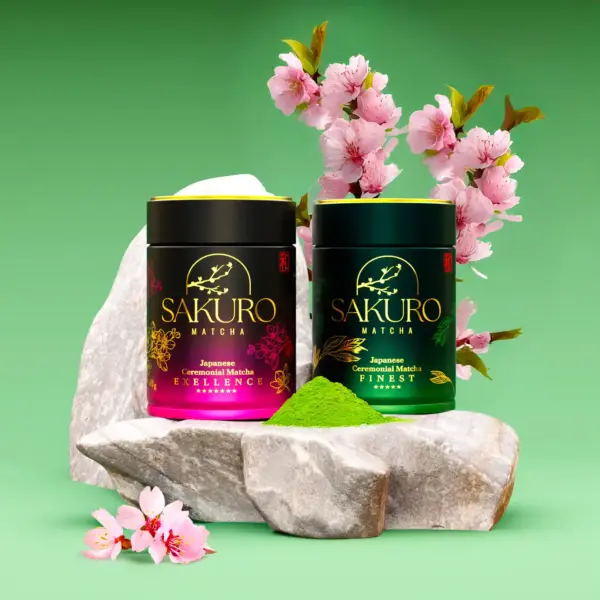
If you came here from a search engine and are still comparing sets, here’s a second thing worth knowing: our sets really only differ in two things — the matcha grade (Finest or Excellence) and the bowl design. We have twelve sets with ceramics in eight designs, plus a few sets of matcha alone, without accessories. They’re all listed together in the Sakuro Matcha Sets category. This particular one comes with the Biwa bowl, meaning “lake” — light ceramic dotted with blue and navy speckles, like a water surface stirred by the wind. The design takes its name from Japan’s largest lake.
How much does a matcha set cost, and would it be cheaper to buy everything separately?
This is the question we get asked more than any other, so here are the actual numbers from our own price list. Every element of this set is also available individually with us, so you can check the math in two minutes:
| Sakuro Matcha Finest 40 g | Check the current price |
| Matcha bowl Biwa – Lake | Check the current price |
| Chasen – bamboo whisk | Check the current price |
| Chashaku – bamboo spoon | Check the current price |
| Total, if bought separately | Check the current price |
| Set price | Check the current price |
The difference amounts to roughly a quarter of the basket value (you can check the prices of individual items yourself by clicking the names in the table). On top of that comes the gift packaging, which you simply don’t get when buying piece by piece, plus the freebies added to your order — their current list can be seen in the product photos. If you’re looking for a matcha set as a gift, this argument is often more important than the price itself — four separately wrapped parcels look like a shop delivery, while one box looks like a present.
The second version of the same set, with a milder matcha, is the Matcha Excellence Set with a Fuji bowl. Sets with Finest cost slightly less than those with Excellence, and the difference in price comes from the grade of the matcha and from the fact that some bowls are more expensive to produce.
Finest or Excellence — which matcha should you choose for your first set?
Both grades are ceremonial matcha and both share the same intensely green, almost emerald colour. What sets them apart is the character of the infusion, and that’s a difference you can feel from the very first sip.
Finest, the one in this set, is bold and dynamic. Deep umami with a light tannic edge, distinctly grassy, with a long finish. It’s the choice for someone who wants to feel they’re drinking something completely different from bagged green tea. It also works better in matcha lattes, since it doesn’t get lost under the milk.
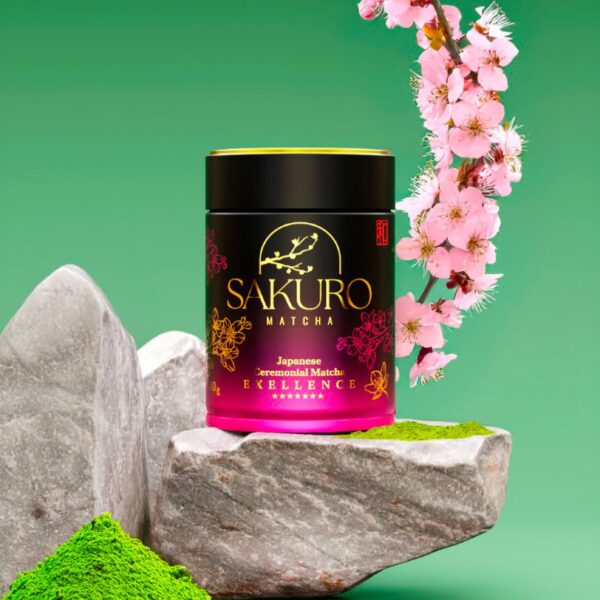
Excellence comes from the first harvest and is milder, creamier, with floral notes and citrus freshness instead of pronounced bitterness. If you’ve never had matcha before and are worried about a flavour shock on your first bowl, start with this one. There’s also a third option many of our customers go for: the Finest 40 g + Excellence 40 g duo in a single box. Two tins, two characters, one order, and a decision made on your own tongue rather than someone else’s description.
We’ve laid out this comparison in more detail, with a table and specific use cases, in the article Matcha Set — How to Choose the Right One. If you’re torn between the grades, take a look there before buying.
When is it better to get a starter set with several tins instead of just one?
The set with a bowl comes with a single 40 g tin. At one bowl a day, that lasts three to six weeks, depending on whether you measure one gram or two. If you know you drink matcha daily, or there are two matcha drinkers at home, it’s cheaper to order a bigger stock right away — for example, the Starter Set 3× Excellence 40 g + 1× Finest 40 g. The price per gram is lower there, and matcha in a sealed tin will happily wait its turn.
The logic is simple: you buy accessories once, but you buy matcha continuously. That’s why it’s best to make your first purchase in the version with a bowl and chasen, and every following one in a multi-pack version, without the ceramics. Once you already have a bowl from your first set, your next order pays only for the tea.
How to prepare matcha from this set, step by step
The whole process takes two minutes, and after three or four tries it becomes automatic.
- Measure out 1–2 g of powder with a chashaku (one heaped scoop is about a gram) and pour it into the bowl. If the matcha has been sitting in the tin for a while, sift it through a small sieve — that’s mainly where clumps come from.
- Boil water and let it cool for a moment until it drops to 70–80°C. Boiling water scorches the powder and draws out a bitterness you won’t be able to mask afterwards.
- Pour in 50 ml first, no more. In this small amount of water, work the powder into a smooth paste with the chasen.
- Whisk briskly in a W or M shape, not in circles. Circles just stir, while the W shape aerates — and that’s what creates a thick, creamy foam.
- Top up with water or a plant-based drink to about 200 ml. Drink right away, as matcha settles after a few minutes and loses its foam.
Three mistakes that make the first bowl bitter: boiling water instead of 70–80°C, too much powder (three scoops isn’t “stronger”, it’s bitter) and stirring in circles instead of whisking air in. More about measuring, even without a kitchen scale, is written here: how much matcha per bowl.
Biwa bowl — why an ordinary cup just won’t do
Chasen needs space. In a tall coffee mug you can’t hold the whisk at the right angle, so instead of whisking air in, it knocks against the walls and quickly loses a few bamboo tines. The bowl is wide and relatively low, with a rounded bottom that the chasen glides smoothly across. Biwa holds 500 ml, so you have plenty of room and nothing splashes during vigorous whisking.
The ceramic is made in European manufactures, fired at temperatures above 1200°C and made with glazes free of cadmium and lead, in line with EU standards for food-contact tableware. It’s dishwasher safe, which matters more than it seems on first purchase when it comes to a daily ritual. If you like a different design, all the bowls and accessories are in the Matcha Accessories category — you can get a second one and have two different bowls on the table.
Chasen and chashaku — why bamboo, when there’s a whisk in the drawer
Because a metal whisk has a dozen or so thick wires, while a chasen has several dozen thin, springy tines cut from a single piece of bamboo. These are what introduce tiny air bubbles into the infusion and build the dense foam that marks a well-made matcha. An electric frother will make foam faster, but it’s thinner and soapier, and metal can also leave a metallic note in the taste.
The chasen requires two habits. After each use, rinse it with warm water, without soap and without any cleaning agents, then let it dry completely and only then set it down with the tines facing downwards. Never put it in the dishwasher, never leave it soaking in water and never put it back into the plastic packaging it came in — inside sealed plastic, damp bamboo goes mouldy. With daily drinking, the whisk is replaced roughly every two or three months and you buy a new one. The chashaku is practically indestructible, you just need to wipe it dry.
Does a matcha set make a good gift?
It’s one of our most frequently bought gifts, and the reason is simple: the set looks expensive, yet doesn’t require the recipient to have any knowledge or buy anything extra. They open the box, find everything inside and are drinking within two minutes. The box is minimalist, in Sakuro colours, so it’s ready to hand over without extra wrapping.
The choice of bowl design matters here, because it’s the one that stays on the shelf for years. Biwa with blue speckles is understated and suits almost any kitchen. If the recipient likes colour, the set with the Bonsai bowl will be a better fit — pink-green-gold highlights on white ceramic, each piece slightly different. You can see all eight designs in one place in Sakuro Matcha Sets.
Frequently asked questions about the matcha set
Does the set include everything needed to make matcha right away?
Yes. Matcha, bowl, chasen and chashaku — four elements that are enough for your first bowl. The only things not included in the box are hot water and, optionally, a sifter for the powder and a chasen stand, if you want to extend its life.
How much caffeine is in one bowl of matcha?
A 2 g serving of matcha contains about 50–70 mg of caffeine, roughly the same as an espresso. The difference is that matcha also contains L-theanine, an amino acid that slows down caffeine absorption — which is why many people describe a steadier boost of energy without the jitters. We compared it with coffee, tea and yerba in our article on caffeine content in beverages.
Can matcha be drunk in the evening?
Yes, but it’s still caffeine like any other, so for sensitive people a bowl drunk after 5 pm may delay falling asleep. A safe rule of thumb: your last matcha at least six hours before bedtime. We covered this in more detail in the article matcha and sleep.
How many servings does a 40 g tin provide?
At 1 g per bowl that’s about 40 servings, at 2 g — about 20. After opening, keep the tin closed, in a cool, dark place, away from odours. Matcha very quickly loses its vibrant colour and aroma when exposed to light and heat.
Can the bowl be washed in a dishwasher?
The bowl, yes — it can withstand it. The chasen and chashaku — no. Bamboo cracks and splits in a dishwasher; just rinse with warm water and air dry.
Sakuro Matcha is a dietary supplement. It is not a substitute for a varied diet or a healthy lifestyle. If you are pregnant, breastfeeding, taking medication, or have any concerns about caffeine, consult your doctor. Due to its caffeine content, the product is not intended for children.
One more thing, if you’re torn between matcha and yerba mate: they’re not competitors, just two different tools. Yerba is for the whole morning, to be sipped for hours. Matcha is two minutes and a focused moment in the middle of the day. We explained the differences in the article yerba mate or matcha. And if you already know you want to start with matcha — this set is the shortest path, since it has everything you need right out of the box.
Related products
-
Sale!

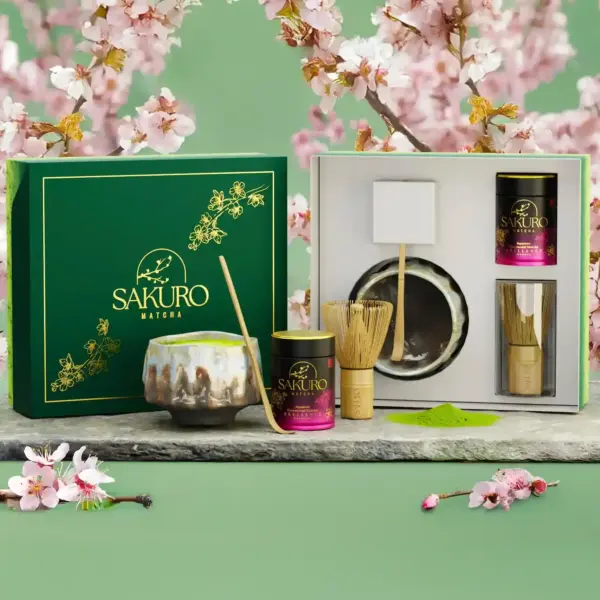
Starter Set 4× Matcha Excellence 40g 2× Matcha Finest 40g / dietary supplement
Original price was: 209,90 €.128,90 €Current price is: 128,90 €.Save: 39%
-
Sale!
Premium Set 3× Matcha Excellence 40g + 2× Matcha Finest 40g / dietary supplement
Original price was: 280,90 €.184,90 €Current price is: 184,90 €.Save: 34%
-
Sale!
Matcha Excellence Set in a 40g tin with a Fuji bowl
Original price was: 79,90 €.58,90 €Current price is: 58,90 €.Save: 26%
-
Sale!
Matcha Excellence Set in a 40g tin with a Shizuku bowl / Dietary supplement
Original price was: 79,90 €.58,90 €Current price is: 58,90 €.Save: 26%
Customers also viewed
-
Flying off the shelves
Sale!
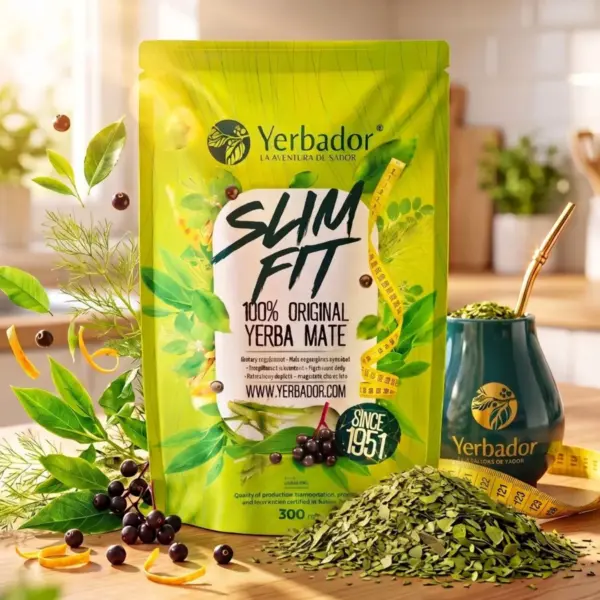
YERBA MATE – WEIGHT CONTROL SUPPORT – SLIM FIT
Original price was: 42,90 €.26,90 €Current price is: 26,90 €.Save: 37%
-
Sale!
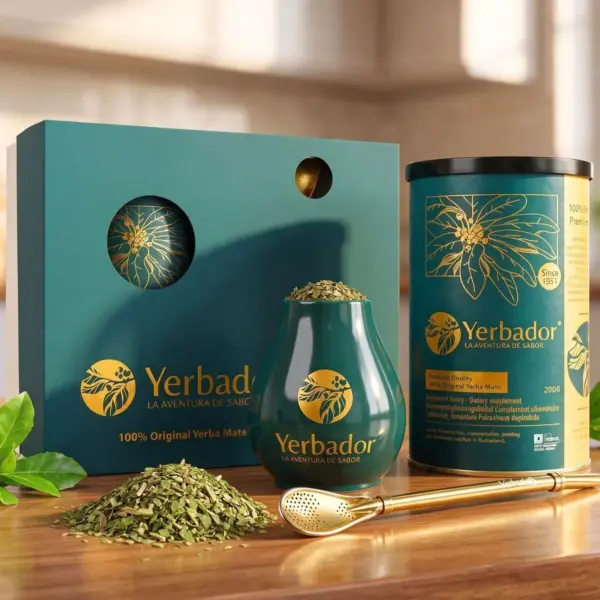
YERBA MATE GIFT SET – Tube + Matero + Bombilla
Original price was: 72,90 €.52,90 €Current price is: 52,90 €.Save: 27%
-
Flying off the shelves
Sale!
STARTER SET – BOMBILLA + MATERO + YERBA WEIGHT LOSS SUPPORT – SLIM FIT
Original price was: 72,90 €.52,90 €Current price is: 52,90 €.Save: 27%
-
Sale!
TRADITIONAL BOMBILLA (STRAW) – GOLD
Original price was: 11,90 €.8,90 €Current price is: 8,90 €.Save: 25%

You may also like
-
Flying off the shelves
Sale!
YERBA MATE – WEIGHT CONTROL SUPPORT – SLIM FIT
Original price was: 42,90 €.26,90 €Current price is: 26,90 €.Save: 37%
-
Sale!
YERBA MATE GIFT SET – Tube + Matero + Bombilla
Original price was: 72,90 €.52,90 €Current price is: 52,90 €.Save: 27%
-
Flying off the shelves
Sale!
STARTER SET – BOMBILLA + MATERO + YERBA WEIGHT LOSS SUPPORT – SLIM FIT
Original price was: 72,90 €.52,90 €Current price is: 52,90 €.Save: 27%
-
Sale!
TRADITIONAL BOMBILLA (STRAW) – GOLD
Original price was: 11,90 €.8,90 €Current price is: 8,90 €.Save: 25%
-
Flying off the shelves
Sale!
YERBA MATE – ULTRA ENERGY – GUARANA
Original price was: 46,90 €.26,90 €Current price is: 26,90 €.Save: 43%
-
Sale!
AIRTIGHT YERBA MATE TUBE – DIETARY SUPPLEMENT
Original price was: 46,90 €.25,90 €Current price is: 25,90 €.Save: 45%
-
Sale!
CERAMIC MATERO YERBADOR PRO 2 – EMERALD GREEN
Original price was: 26,90 €.17,90 €Current price is: 17,90 €.Save: 33%
-
Flying off the shelves
Sale!