
Turmeric Powder – Properties, Dosage and How to Use It
2026-08-08
Turmeric powder looks innocent: yellow dust in a jar, a slightly earthy smell. But it carries thousands of years of culinary history and a hefty pile of scientific research behind it. In India, it ends up in almost every curry; in Poland, it’s increasingly found in a morning smoothie or a cup of golden milk instead of an afternoon coffee. To actually benefit from it, though, you need to know how much to take and what to combine it with, because curcumin itself, the main active ingredient, is absorbed very poorly from the digestive tract.
What Is Turmeric and Where Does Curcumin Come From
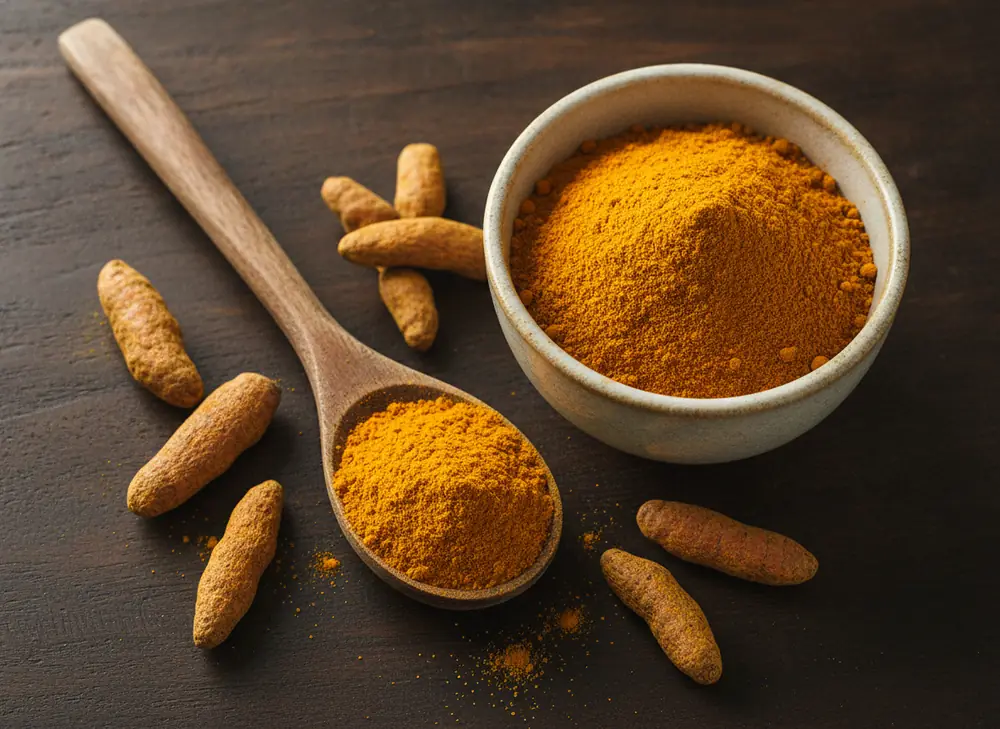
Turmeric (Curcuma longa) is a plant from the ginger family, the same family as common ginger. It grows mainly in India, which accounts for most of the world’s production, though it’s also cultivated in Indonesia, China and Sri Lanka. The raw material is the rhizome, an underground stem that is dried and ground into a powder with an intense yellow-orange colour. In Ayurveda, turmeric has accompanied people for thousands of years, no proper Indian curry can be made without it, and in the food industry it appears on labels as the colourant E100.
The colour and most of the effects come from curcumin, one of the compounds from the curcuminoid group, alongside demethoxycurcumin and bisdemethoxycurcumin. Curcumin is the compound scientists have devoted the most attention to: its antioxidant and anti-inflammatory effects are studied, along with its connection to joint function, digestion and immunity. The problem is that raw turmeric contains very little curcumin, usually just a few percent of the dry mass, and even less of that actually reaches the bloodstream. More on that in the bioavailability section, because it’s a key issue if you want turmeric to actually give you anything.
Nutritional values of turmeric powder (per 100 g)
Data from our turmeric’s label, worth knowing before you start counting doses:
| Ingredient | Amount per 100 g |
|---|---|
| Energy value | 1490 kJ / 354 kcal |
| Fat | 10 g, of which saturates 3.10 g |
| Carbohydrates | 65 g, of which sugars 3.20 g |
| Fibre | 21 g |
| Protein | 8 g |
| Salt | 0,10 g |
| Iron | 41 mg |
| Manganese | 7.80 mg |
These numbers are impressive, but they’re values per 100 grams of powder, while a single serving is usually 3 grams. From such a dose you actually get around 1.2 mg of iron and 0.23 mg of manganese, which is not much compared to your daily requirement. We don’t treat turmeric as a main source of these micronutrients, but rather as an addition that brings something more: curcumin and the whole complex of curcuminoids, which you won’t see in the nutritional value table because they’re not mandatory ingredients to declare on the label.
How to Dose and Use Turmeric Powder
The manufacturer recommends 3 grams of powder, a level teaspoon, dissolved in 200 ml of water, juice or tea. This is a good starting point, especially if you haven’t used turmeric in this form before. The taste is earthy, slightly bitter and can sting the throat if you overdo the amount, so it’s worth starting with a smaller portion in the first few days and watching how your stomach reacts.
Culinarily, turmeric works well beyond just drinks. You can add it to:
- curries and vegetable stews, the classic dish where it all began,
- fruit and vegetable smoothies, banana, mango and a pinch of turmeric make a difference in colour and flavour,
- cream soups, especially pumpkin and carrot ones,
- sauces and marinades for meat or tofu,
- golden milk, a warm drink based on plant-based milk, known as golden milk.
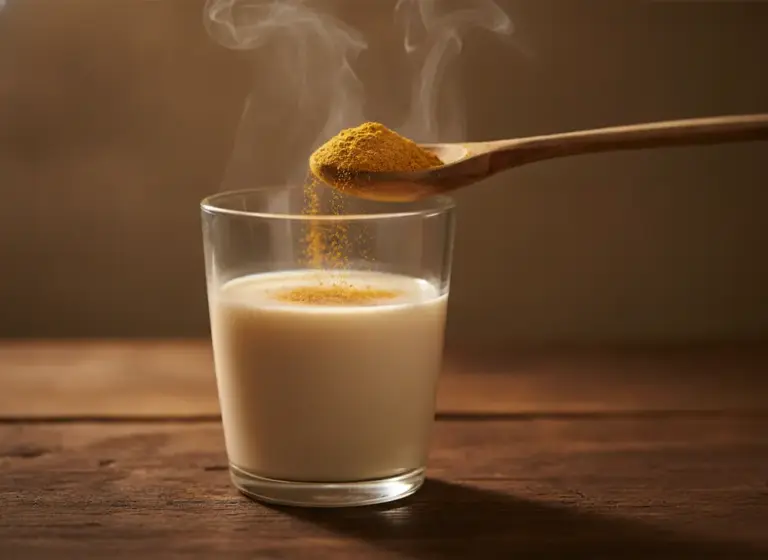
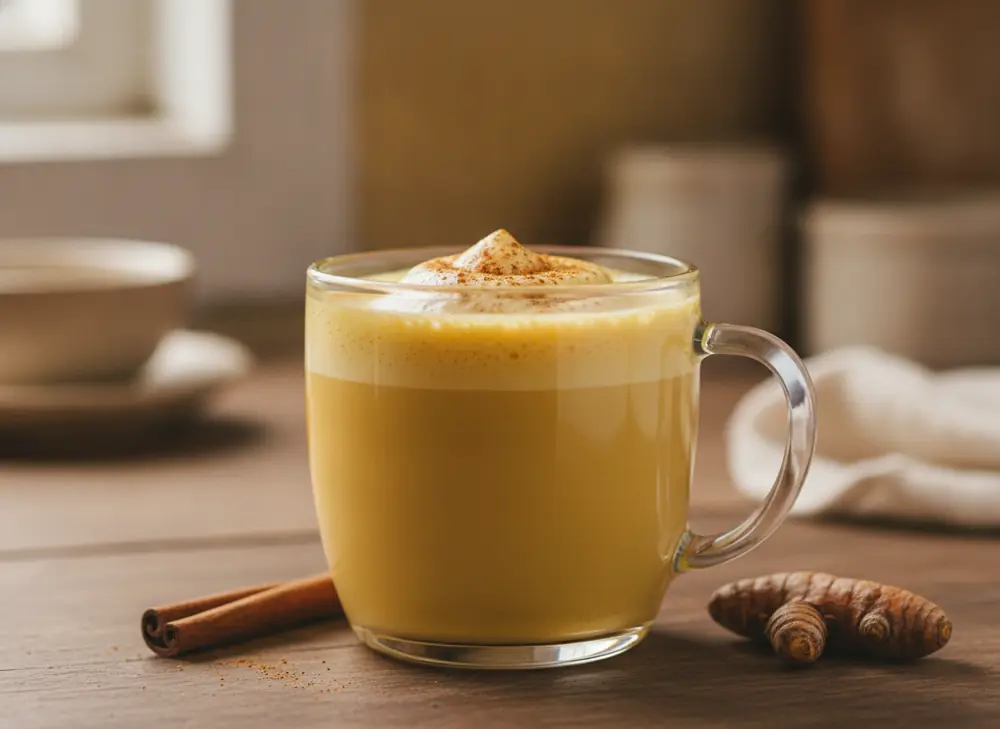
The best golden milk recipe: a glass of coconut milk, 3 g of turmeric, a pinch of black pepper, a teaspoon of honey and a touch of cinnamon. Heat it up, don’t boil it, stir and drink warm, ideally in the evening. The pepper in this recipe isn’t a coincidence. We explain why in the next paragraph.
Curcumin bioavailability: why pepper and fat matter
Curcumin on its own is poorly absorbed from the intestines – researchers estimate that sometimes less than 1% of the consumed dose reaches the bloodstream. Three things are to blame: poor water solubility, rapid breakdown in the liver and intestines, and the fact that the body efficiently eliminates it before it has a chance to act.
This is where piperine comes in, the compound responsible for the sharp taste of black pepper. A classic 1998 study by Shoba and colleagues showed that 20 mg of piperine given together with 2 grams of curcumin to healthy volunteers increased its bioavailability by 2000%. Piperine inhibits liver enzymes responsible for breaking down curcumin, allowing the compound to circulate longer in the blood before being eliminated. Newer studies temper these enthusiastic figures somewhat and suggest the effect may be smaller than in the original study, but the direction remains the same: a pinch of pepper really does help.
The second factor is fat. Curcumin dissolves in fats, not in water, so a glass of turmeric mixed in plain water is a worse choice than the same dose in coconut milk, olive oil or ghee. That’s why golden milk, curry cooked in fat, or a smoothie with a bit of nuts or avocado work better than turmeric mixed with plain water on an empty stomach. If you care about the best possible absorption, combine turmeric with fat and a pinch of pepper at the same time. It’s a simple rule that really makes a difference.
When to be cautious with turmeric
Turmeric in reasonable, culinary amounts is safe for most people, but supplementation with larger doses is a different matter, and here a few rules apply.
- Gallstones and biliary tract disease: turmeric has a choleretic effect, and with blocked bile ducts it may worsen symptoms. Without consulting a doctor, it’s better to skip it.
- Anticoagulant and antiplatelet medications, for example warfarin or acenocoumarol: curcumin may enhance their effect and increase the risk of bleeding. If you’re on such medications, ask your doctor first.
- Pregnancy: in large, supplemental doses, turmeric is sometimes described as stimulating the uterus, so during pregnancy it’s better to stick to culinary amounts and avoid high doses of powder taken as a supplement.
- Planned surgery: due to its effect on blood clotting, it’s worth discontinuing larger doses of curcumin 1-2 weeks before surgery, after consulting with your doctor.
This is support for the body, not a medicine and not a substitute for treatment. If you have a chronic illness or take medications regularly, consulting a doctor or pharmacist before regular supplementation isn’t excessive – it’s just plain caution.
Turmeric powder: frequently asked questions
Can turmeric be drunk every day?
Yes, in moderate doses, meaning around 3 g per day, turmeric is suitable for daily use. It’s worth taking breaks every few weeks and observing how the body reacts, especially the stomach.
How long does it take to see results?
It depends on the body and the goal, but with regular use combined with pepper and fat, the first subjective effects, for example regarding digestion, usually appear after a few weeks. Turmeric doesn’t work like medicine right away – it’s long-term support.
Does turmeric stain teeth or blood vessels?
Yes, the intense yellow pigment can leave a mark on plastic containers, wooden spoons or light-coloured mugs. It usually doesn’t leave lasting stains on teeth, but it’s a good idea to rinse your mouth with water after drinking.
Can turmeric be combined with yerba mate?
Yes, more and more people mix a pinch of turmeric with brewed yerba mate or drink both throughout the day: mate in the morning for energy, turmeric in the evening in a warmer, calmer form, like golden milk. It’s a good complement to the ritual, not a competitor.
What’s the difference between turmeric powder and curcumin capsules?
Turmeric powder is the whole raw material, with fibre, trace elements and a small amount of curcumin. Curcumin extract capsules are a concentrated, isolated active substance, usually in a higher dose. The powder works better in the kitchen and as a daily ritual, the extract as targeted supplementation.
Turmeric powder from Yerbador: what our version looks like
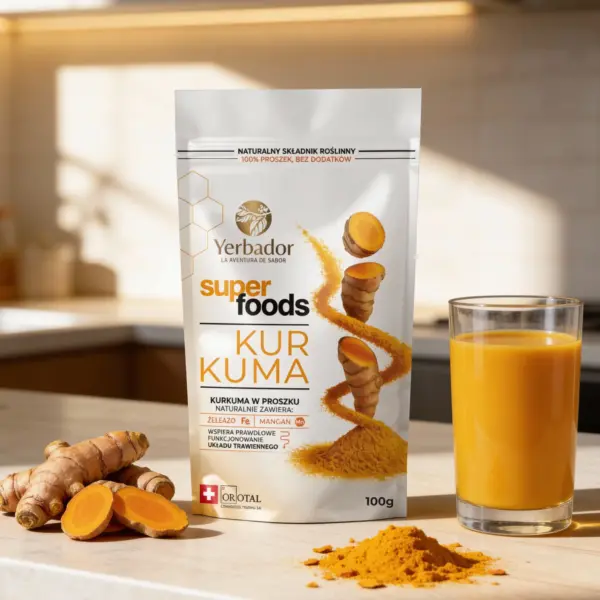
Our Turmeric Powder 100 g is exactly the same turmeric whose nutritional data we gave in the table above: 41 mg of iron and 7.80 mg of manganese per 100 g, plus fibre and minimal processing. A loose powder, with no additives – one teaspoon, i.e. 3 g, per glass of water, juice or tea, or added to any hot dish. Check the current price on the product page.
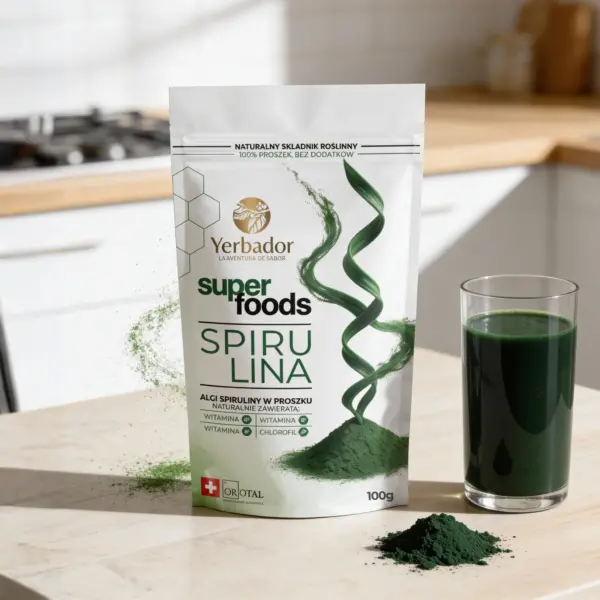
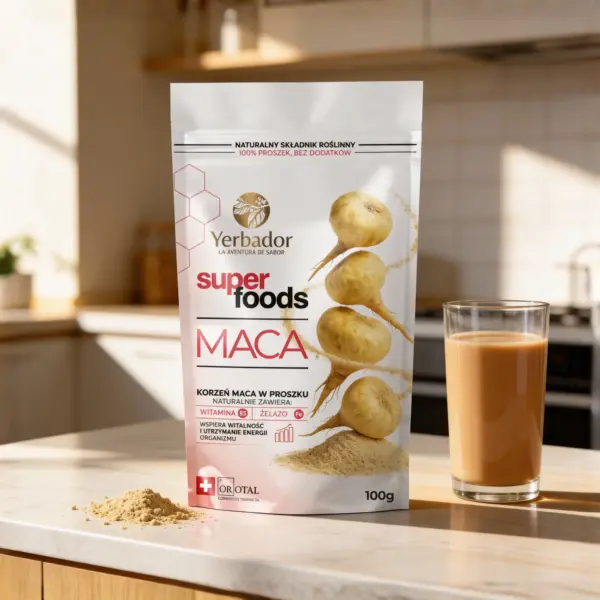
If you’re building yourself a broader superfood line-up, it’s worth taking a look at other items in our range too. Maca powder (100 g) is a root known from Andean tradition and blends nicely into a morning smoothie together with turmeric. Spirulina powder (100 g), in turn, is an alga rich in iron and vitamin B12, which in a daily shake complements what turmeric lacks. Three powders, three different roles, one smoothie cup.
Turmeric won’t work miracles in a week, but as a regular part of your diet, a curry spice, a smoothie addition or an evening golden milk ritual, it makes sense and has solid scientific grounds behind it. Start with 3 grams a day, add a pinch of pepper and a bit of fat, and give it a few weeks before you judge the results.
Discover our TOP products!
Your dream figure
Discover new flavors
Yerba mate with tea

Accessories

Superfoods
Certified raw honeys from Poland

Check the current price
free shipping
Up to 90 days
free returns
24 H
shipping