
Matcha chocolate bark: an edible gift you can make in 20 minutes
2026-11-23
Matcha chocolate bark is white chocolate, melted and stirred with sifted matcha, poured 4–5 mm thick onto a lined tray, scattered with nuts and dried fruit, then broken into shards once it has set. One tray takes 200 g of chocolate, 4 g of matcha, about twenty minutes of work and an hour of waiting. It is the easiest edible gift in the December repertoire, and the green makes it look like you tried much harder than you did.
Two numbers carry the whole recipe. Keep the chocolate at 28–29 °C when the matcha goes in, and keep the matcha at 2 g per 100 g of chocolate. Push the dose higher and it turns chalky and bitter; drop it lower and the colour drifts to pale mint. Everything after that — pistachios, cranberries, a pinch of flaky salt — is yours to decide.
- One tray: 200 g white chocolate + 4 g sifted matcha + 60 g toppings, spread over roughly 20 × 25 cm, about 12 shards.
- Temperatures: melt to 45 °C, cool to 27 °C, work at 28–29 °C, the standard curve for white chocolate.
- Matcha goes in as a paste with a spoonful of the melted chocolate, never dusted straight into the bowl.
- Setting: 40–60 minutes at about 18 °C. Not the fridge.
- Caffeine: roughly 10 mg per shard, so three shards sit near a third of a strong cup of coffee.
- Yield from one tin: a 40 g tin of matcha covers 10 trays, which is around 20 gift bags.
What you need for one tray
For a 200 g batch, enough for two gift bags of about 130 g each, you need white chocolate with real cocoa butter, ceremonial-grade matcha, and toppings that are dry. Anything with moisture in it, including fresh fruit, will turn the chocolate grainy within minutes.
Ingredients
- 200 g white chocolate, chopped or in callets (look for cocoa butter in the first three ingredients, not vegetable fat)
- 4 g matcha, sifted: about two level chashaku scoops, or a heaped teaspoon
- 40 g shelled pistachios, roughly chopped
- 10 g freeze-dried raspberries, crushed between your fingers
- 10 g toasted flaked almonds or white sesame
- a pinch of flaky sea salt, optional but it does good things to white chocolate
Equipment
- A tray or baking sheet around 20 × 25 cm, lined with baking paper
- A heatproof bowl that sits inside a saucepan without touching the water
- A fine sieve (a tea strainer is fine)
- A kitchen thermometer, or a digital probe. You can work without one, but you will waste a batch learning
- An offset spatula or the back of a dessert spoon
Which white chocolate actually works
Buy white chocolate, not a white coating. Under EU rules (Directive 2000/36/EC, Annex I) anything sold as white chocolate contains at least 20 % cocoa butter and at least 14 % dry milk solids. Bars that swap the cocoa butter for palm or coconut fat are sold as coating or confectionery, they will not temper, and matcha chocolate bark made from them sets waxy and tastes of very little.
Callets and buttons melt more evenly than a bar, because every piece is the same size. With bars, chop them to roughly 5 mm first. Big chunks sit unmelted in the middle of the bowl while the thin edges overheat, and overheated white chocolate goes sandy and will not come back.
One more thing on the label: the plainer the chocolate, the better. A bar loaded with vanilla flavouring fights the tea, and after you have paid for ceremonial matcha it seems a shame to bury it under vanillin.
How to make matcha chocolate bark, step by step
Read the steps once before you start. Chocolate work is unforgiving about timing and completely relaxed about everything else.
- Prep first, melt second. Line the tray. Chop the pistachios, crush the raspberries, put every topping in a small bowl within arm’s reach. Once the chocolate is at working temperature you have about three minutes, and that is not the moment to go looking for the sieve.
- Melt 160 g of the chocolate. Bowl over a pan of water that is hot but not boiling, bowl not touching the water. Stir until it reaches 45 °C and everything has gone liquid. White chocolate carries milk solids and sugar, which catch and go sandy above roughly 50 °C, so watch the thermometer rather than the clock.
- Seed it with the remaining 40 g. Take the bowl off the pan, dry the base, and stir in the reserved chopped chocolate a little at a time. Keep stirring until the thermometer reads 27 °C. This is the quickest way to temper at home: the unmelted pieces carry the crystal structure you want.
- Bring it back to 28–29 °C. Five seconds over the warm pan, stir, check. Callebaut gives 45 °C / 27 °C / 28–29 °C as the working curve for white chocolate, and it holds for supermarket bars too.
- Make the matcha paste. Sift 4 g of matcha into a small bowl, add two tablespoons of the tempered chocolate, and work it with a spoon until it is smooth and glossy. Thirty seconds. Then scrape the paste back into the main bowl and fold it through until the colour is even, with no darker streaks.
- Pour and spread. Tip it onto the lined tray and spread to 4–5 mm with an offset spatula. Lift the tray two centimetres and drop it on the worktop twice to level the surface and knock out air bubbles.
- Scatter the toppings within two minutes. Heavier pieces first, pressing them in lightly with a fingertip, then the raspberries and salt on top so they stay visible. After two or three minutes the surface sets enough that nothing will stick.
- Leave it at room temperature. Forty to sixty minutes at around 18 °C. When the underside has lost its shine and the sheet lifts cleanly off the paper, snap it into shards by hand. Hands give better edges than a knife.
Total hands-on time is about twenty minutes. If your kitchen runs warm, a cool hallway or an unheated room sets it faster than the worktop next to the oven.
Why the matcha goes in last, at 28 °C
Matcha loses its green when it sits in heat. Stir it into chocolate at 45 °C and the colour starts sliding towards olive within a minute or two; stir it in at 28–29 °C and the tray stays bright for weeks. That is the entire reason the paste step exists, and it is the single thing that separates a tray people photograph from a tray that looks like pistachio ice cream gone wrong.
Bitterness follows the same logic. Hot fat pulls harder on the catechins in the powder, and in a sweet medium like white chocolate that edge is very noticeable. At working temperature you get the grassy, slightly sweet note instead.
There is a practical reason too. Dry powder dropped into melted chocolate clumps instantly, and no amount of stirring will break those clumps, and you end up biting into a pocket of raw matcha. Rubbing it into two tablespoons of chocolate first is the same trick you use to make a lump-free sauce.
Which matcha for chocolate, and what it costs
Use a ceremonial grade for bark. The colour is the whole point of the recipe, and the difference between grades shows up more in fat than it does in water: a dull culinary powder turns khaki the moment it meets white chocolate, while a bright ceremonial powder stays green. Grade also decides how much bitterness you are adding, which matters when the other ingredient is pure sugar and cocoa butter.
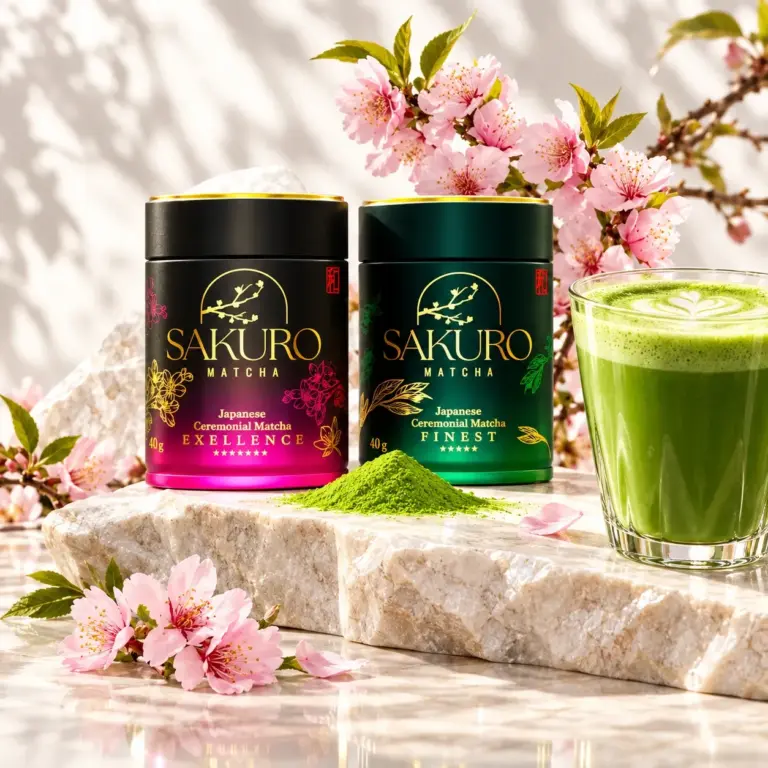
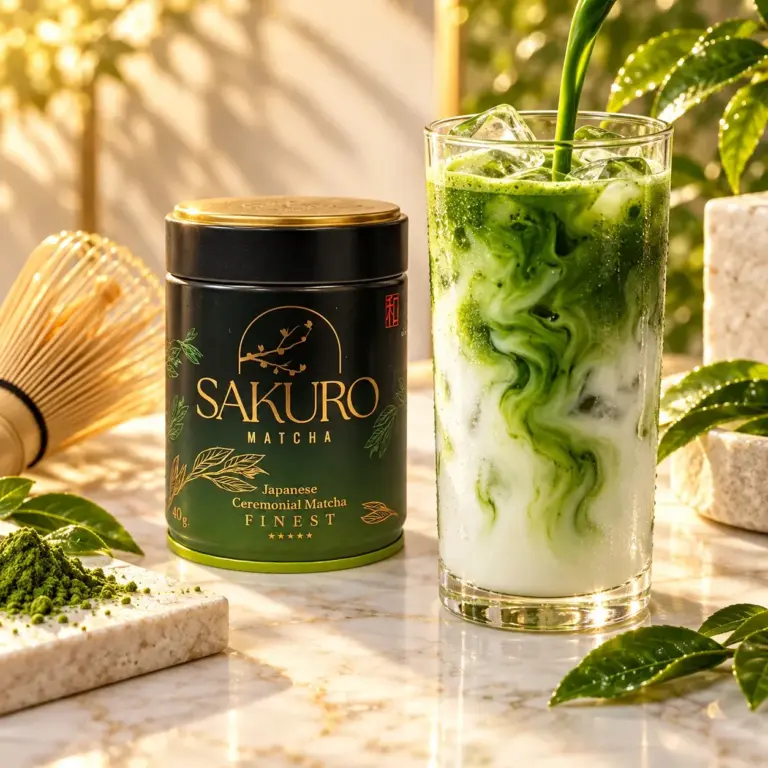
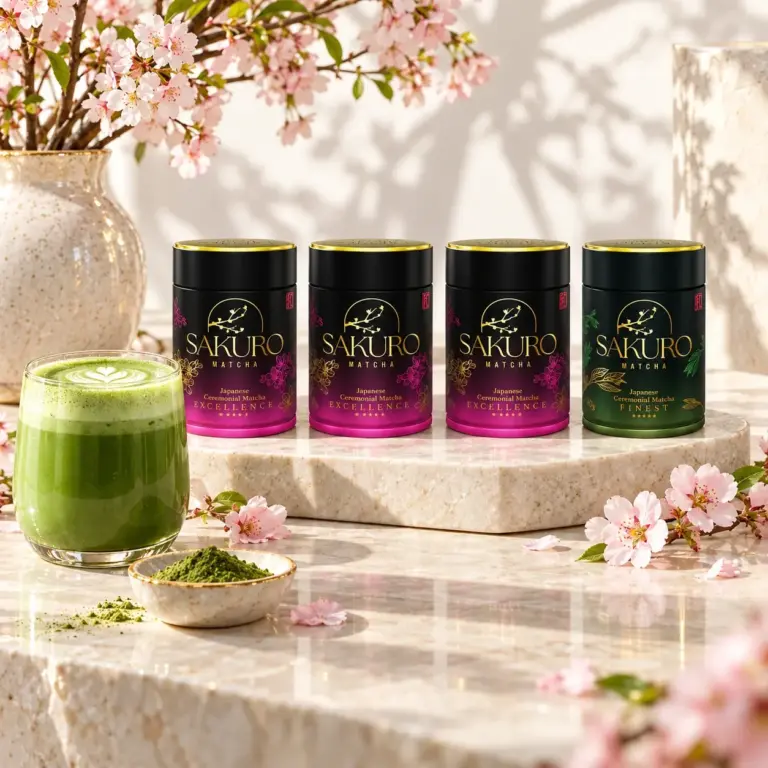
Between our two, Sakuro Matcha Finest is the one to melt. It is Japanese ceremonial matcha from Shizuoka in a 40 g tin, it holds its colour in chocolate, and it costs less per gram than the one we keep for drinking. Save Sakuro Matcha Excellence for the bowl — its sweetness and umami are wasted under 200 g of white chocolate. The chart shows what the powder actually adds to a batch.
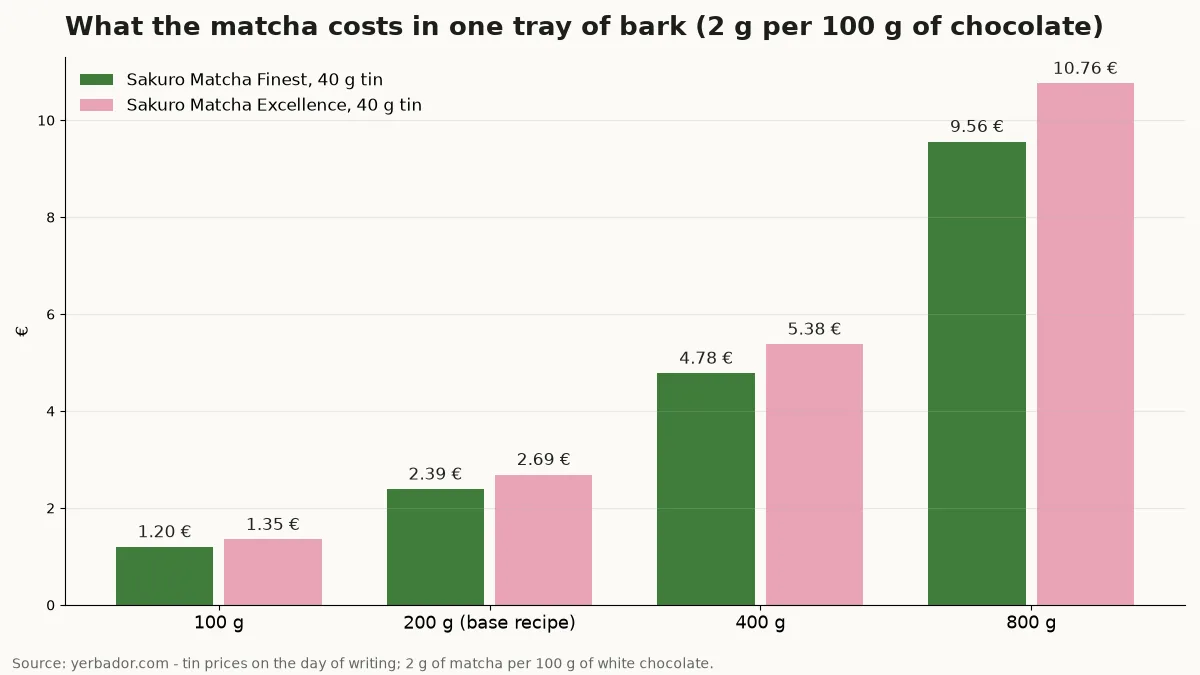
Here is the same thing as a scaling table, so you can size a batch to the number of people on your list.
| White chocolate | Matcha (2 g / 100 g) | Tray | Toppings | Shards (~20 g) | Gift bags (130 g) | Matcha cost, Finest |
|---|---|---|---|---|---|---|
| 100 g | 2 g | 15 × 20 cm | 30 g | 6 | 1 | about €1.20 |
| 200 g (base recipe) | 4 g | 20 × 25 cm | 60 g | 12 | 2 | about €2.39 |
| 400 g | 8 g | 30 × 40 cm baking sheet | 120 g | 25 | 4 | about €4.78 |
| 800 g | 16 g | two baking sheets | 240 g | 50 | 8 | about €9.56 |
One 40 g tin covers ten trays. If you are making gifts for a whole office or a class, that single tin is the part of the shopping list you will worry about least.
Five ways to top the tray
Toppings have to be dry, and they have to be small enough to break with the chocolate. Pieces larger than about a centimetre make the shards crack around them instead of through them. Quantities below are per 200 g tray.
| Version | Toppings | When to add | Notes |
|---|---|---|---|
| Pistachio and raspberry | 40 g chopped pistachios, 10 g freeze-dried raspberries | Pistachios straight away, raspberries after a minute | The green and pink version. Freeze-dried, not fresh — fresh fruit ruins the set |
| Cranberry and almond | 35 g dried cranberries, 25 g toasted flaked almonds | Both within two minutes | Halve the cranberries so they sit flat and do not drag the chocolate apart |
| Sesame and ginger | 15 g toasted white sesame, 30 g candied ginger in 3–4 mm dice | Ginger first, sesame last | Closest to a Japanese sweet. The ginger heat works against the sugar |
| Orange and dark drizzle | 15 g candied orange peel, 30 g dark chocolate melted to 31 °C | Peel first, drizzle once the surface is matt | Pipe the dark chocolate in thin lines from a paper cone or a spoon |
| Gingerbread crumb | 50 g crumbled gingerbread or speculoos biscuits | Immediately, while fully liquid | Biscuits soften after a week, so this one is for eating within days |
A pinch of flaky salt works on all five. Add it last, on top, so the crystals stay crunchy.
Dark and milk chocolate: what changes
White chocolate is the right base for matcha because it is the only one that shows the colour. You can still use the other two, but the matcha becomes a flavour rather than a look, and the temperatures change.
| Chocolate | Melt to | Cool to | Work at | Matcha in this base |
|---|---|---|---|---|
| Dark | 45–50 °C | 27 °C | 31–32 °C | Invisible. Better used as a drizzle over a matcha-white base |
| Milk | 45 °C | 27 °C | 29–30 °C | Muddy green-brown. Flavour works, the look does not |
| White | 45 °C | 27 °C | 28–29 °C | Bright green, and the sweetness balances the bitterness |
Figures from Callebaut’s tempering guide. A good compromise if you dislike very sweet things: make the tray white, then drizzle 30 g of dark chocolate across the top before the toppings go on.
Packing it as a gift
Matcha chocolate bark looks best broken into irregular pieces of three to five centimetres and stacked upright in a cellophane bag, so the green and the pistachios are visible through the front. A 130 g bag takes about six shards and sits comfortably in a stocking, a Secret Santa box or a jute bag with a jar of something else.
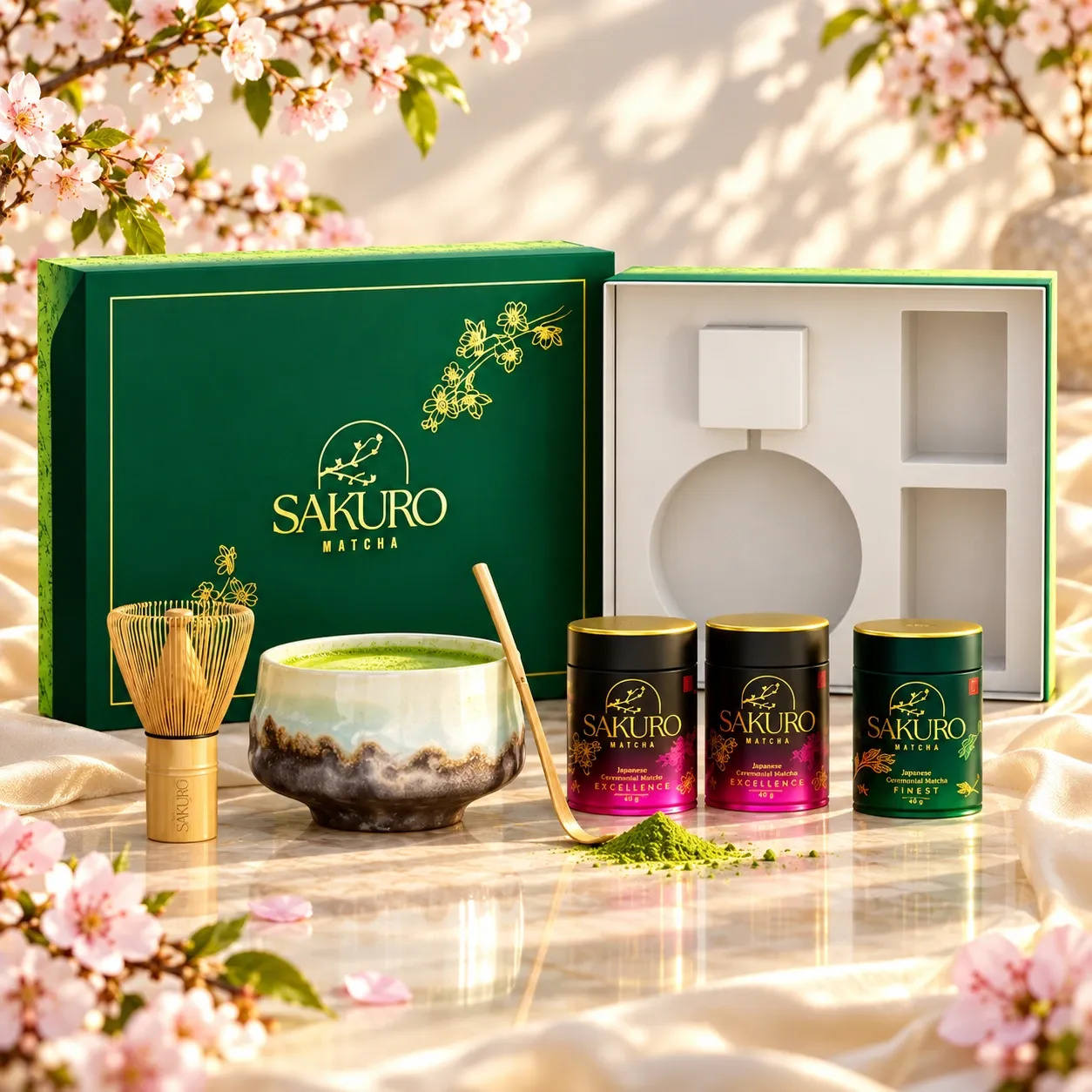
Four things worth doing:
- Line a kraft box with greaseproof paper rather than tissue. Tissue sticks to cocoa butter.
- Write the date and “keep below 18 °C” on the label. People put homemade chocolate on a radiator shelf and then wonder.
- If you are posting it, send it early in the week and wrap the bag in bubble wrap. Shards travel badly in a soft envelope.
- Pair it with something to drink. A 40 g tin and a ceramic bowl turn a bag of chocolate into a proper present, and the person gets to make the next tray themselves.
For teachers, neighbours and office exchanges, make one big tray and split it across four or five bags. It costs less per person than almost anything you can buy, and it does not look like it.
How long it keeps and where to store it
| Where | Temperature | Keeps | What goes wrong |
|---|---|---|---|
| Cool cupboard or pantry | 16–18 °C | 3–4 weeks | Nothing, as long as it is dry and away from strong smells |
| Kitchen worktop | 22–25 °C | A few days | Softens, then grey fat bloom on the surface |
| Fridge | 4–6 °C | 4 weeks, in theory | Condensation when it comes out, sugar bloom, dulled colour |
| Freezer | −18 °C | 3 months | Only safe if you thaw it sealed, overnight, in the fridge first |
Colour is the clock here, not safety. The green is at its best for the first ten days and slowly fades after that, which is why we make bark close to the date it will be given rather than in a batch at the end of November.
Six mistakes we see most often
- Matcha dusted straight into the melted chocolate. Clumps that never dissolve. Make the paste.
- Chocolate too hot when the powder goes in. Olive-grey instead of green, and a bitter finish. Wait for 28–29 °C.
- A drop of water in the bowl. Steam from the pan, a wet spoon, a damp spatula: any of them will seize the chocolate into a stiff paste. Dry everything twice.
- Setting it in the fridge. Faster, yes, and then it sweats on the counter and the surface goes white and sticky.
- Too much matcha. Six grams per 200 g sounds greener. It tastes like chalk. Stay at 2 g per 100 g.
- Soft or damp toppings. Fresh berries, juicy dried mango, anything oily in large pieces. Dry and small, every time.
Where to buy the matcha
Sakuro Matcha Finest (yerbador.com) is Japanese ceremonial matcha from Shizuoka in a 40 g tin, around €23.90, which is ten trays of bark or roughly twenty bowls of usucha. Sakuro Matcha Finest 40 g is the one we reach for when matcha goes into food.
Sakuro Matcha Excellence (yerbador.com) is the higher grade from the same region, 40 g for around €26.90, sweeter and softer, made for whisking rather than melting: Sakuro Matcha Excellence 40 g.
If the bark is going to someone who has never made matcha, the Finest set with a Biwa ceramic bowl (around €52.90) covers the present on its own, and a bamboo chasen whisk at about €14.90 finishes it. Prices and stock are on the product pages; everything ships from the EU.
Running a café, a deli or a bakery and thinking about selling bark over the counter? Matcha goes out in 1 kg bags, with discounts at 3 kg and 5 kg. Ewelina handles wholesale: [email protected], +48 515 025 329.
Questions people ask about matcha chocolate bark
How much matcha do I use per 100 g of chocolate?
Two grams of sifted matcha per 100 g of white chocolate. That gives a clear green colour and a tea flavour you can taste without it turning bitter. Three grams is the upper limit for people who like it strong; above that the texture goes chalky.
Do I have to temper the chocolate?
For bark you are giving away, yes. Untempered chocolate sets soft, melts on fingers and develops grey streaks within days. The seeding method in step three takes five extra minutes and is the difference between a shard that snaps and one that bends.
Can I use culinary matcha instead of ceremonial?
You can, and the result will be duller and more bitter. Culinary grades are milled from later harvests and turn khaki in fat. For baked goods it matters less because the colour is lost anyway; in white chocolate it is the first thing anyone notices. Our guide to ceremonial and culinary grades goes through the differences.
How much caffeine is in one piece?
A 20 g shard from the base recipe contains roughly 10 mg of caffeine, because it holds about a third of a gram of matcha. Three shards come to around 30 mg, well under a cup of coffee. EFSA considers up to 400 mg a day safe for most adults and 200 mg in pregnancy, and the full caffeine comparison has the figures per serving.
Why did my bark turn brown?
The chocolate was too hot when the matcha went in, or the tray sat in direct sunlight afterwards. Matcha dulls with heat and light. Check the temperature before you add the powder and store the finished shards in a dark cupboard.
How far in advance can I make it?
Up to three weeks before, kept at 16–18 °C in a sealed box. For the best colour, make it within ten days of handing it over. Trays with biscuit crumb are the exception — those are best within a week, before the crumb softens.
What else can I do with the leftover matcha?
Whisk it with water at 80 °C for a bowl of usucha, or build it into a latte. If you still have chocolate left too, our matcha Christmas cookies with white chocolate use the same two ingredients in the opposite proportion.
Discover our TOP products!
Your dream figure
Discover new flavors
Yerba mate with tea
Accessories
Superfoods



Certified raw honeys from Poland

Check the current price
free shipping
Up to 90 days
free returns
24 H
shipping