
Easy matcha recipes with few ingredients: 10 ranked
2026-11-26
The shortest matcha recipes need two things: matcha and a liquid. Below are ten of them, ranked from two ingredients up to four, with the hands-on time, the kit involved and the exact dose of powder, so you can pick one by what is already on your shelf rather than by what you would have to shop for.
Nothing here takes more than fifteen minutes, and nine of the ten are under six. The order is simple: fewest ingredients first, and where two recipes tie, the faster one wins. Water counts as an ingredient. Ice does not, because ice is water.
- Four of the ten recipes use two ingredients: matcha with hot water, matcha with cold water, matcha with milk, matcha with salt.
- Standard dose: 2 g of matcha per cup, which is two level chashaku scoops or a rounded half teaspoon.
- Water temperature: 80 °C, never boiling. In a 1 litre kettle that is roughly three minutes off the boil.
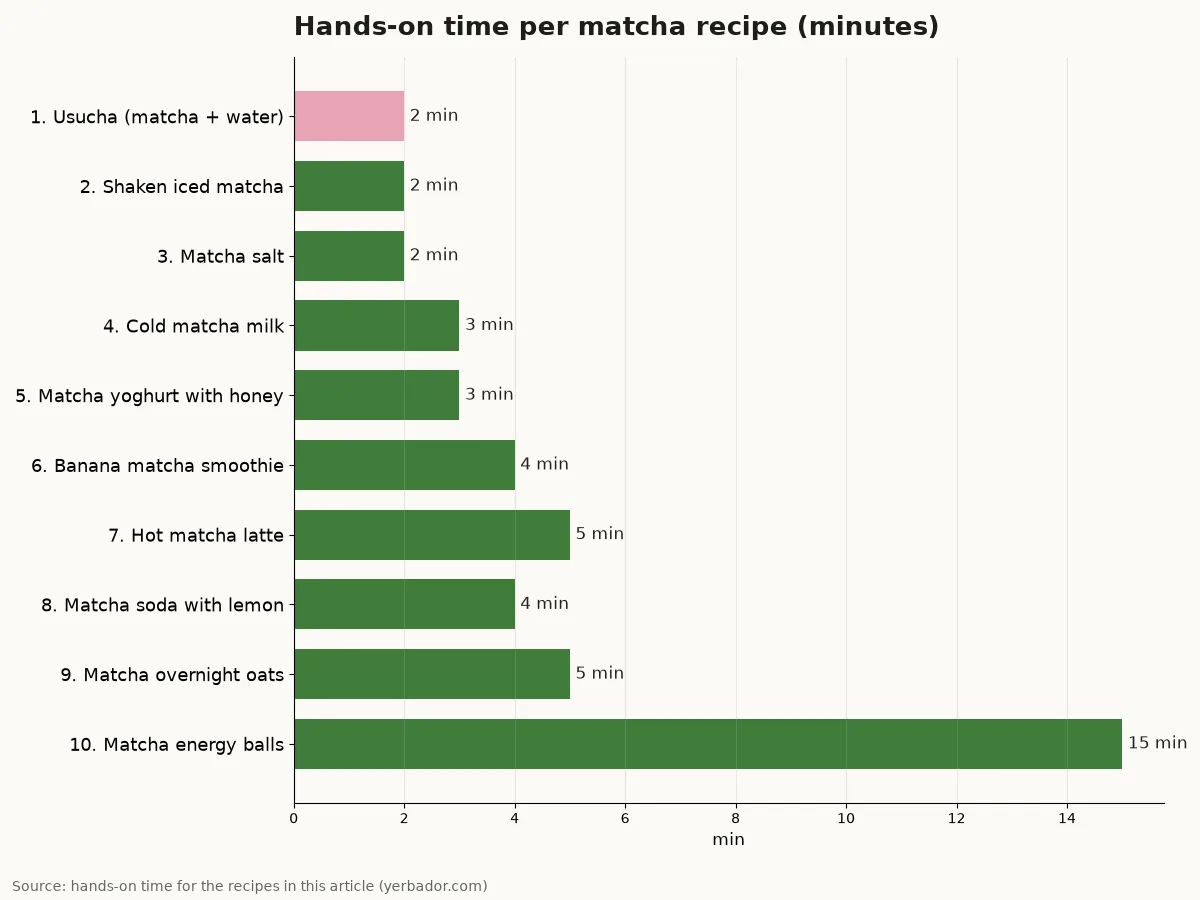
- Fastest: usucha in a bowl, about 2 minutes. Slowest: energy balls, 15 minutes for 16 pieces.
- Caffeine: a 2 g serving carries roughly 60 mg, similar to a small coffee. EFSA puts the safe adult intake at 400 mg a day, 200 mg in pregnancy.
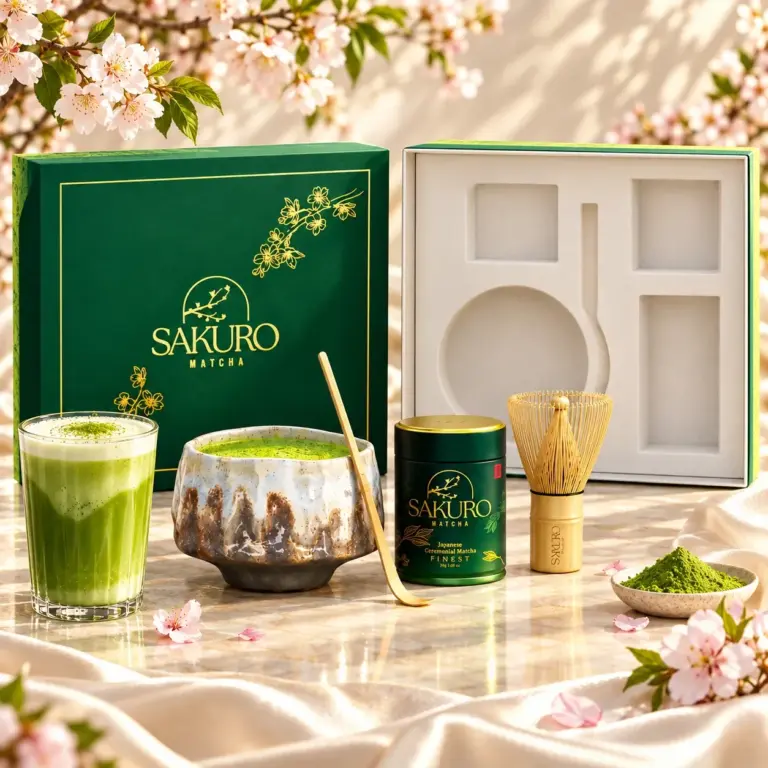
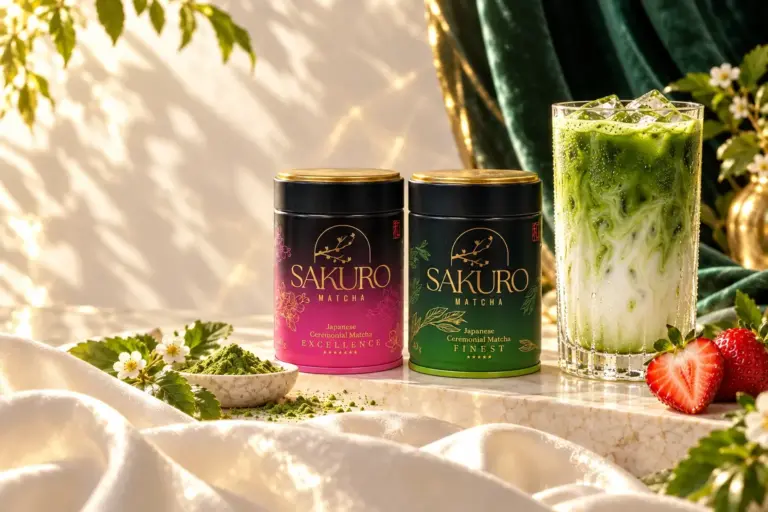
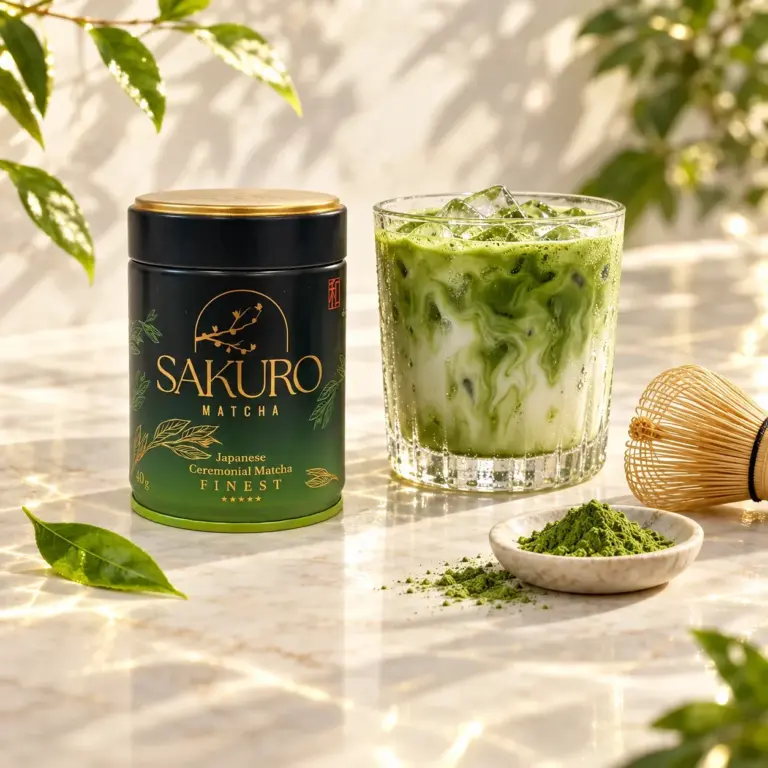
- Matcha used throughout: Sakuro Matcha Excellence 40 g for anything served in water, Sakuro Matcha Finest 40 g for milk, ice and baking.
How this ranking was put together
Three things decide the position: how many ingredients a recipe needs, how many minutes of actual work it takes, and how much equipment has to come out of the cupboard. A recipe that needs a blender sits lower than one you can shake in a jam jar, even when the ingredient count is the same.
Salt, honey and maple syrup count as ingredients. So does water. We left out anything that needs an oven, a thermometer or a shopping trip, which is why there is no cake and no mochi on the list. Those are good recipes, just not short ones.
The doses come from how we actually make these drinks at the shop counter: 2 g for a cup, 4 g for a thick koicha, 1.5 g per portion when matcha is folded into something else like yoghurt or oats. If you own a 0.1 g scale, use it for a week and your eye will calibrate itself.
The ranking at a glance
| # | Recipe | Ingredients | Matcha | Hands-on | Kit |
|---|---|---|---|---|---|
| 1 | Usucha (matcha in a bowl) | 2 | 2 g | 2 min | Bowl, sieve, chasen |
| 2 | Shaken iced matcha | 2 | 2 g | 2 min | Jar with a lid |
| 3 | Matcha salt | 2 | 4 g per jar | 2 min | Small jar, spoon |
| 4 | Cold matcha milk | 2 | 2 g | 3 min | Jar or frother |
| 5 | Matcha yoghurt with honey | 3 | 1.5 g per bowl | 3 min | Sieve, spoon |
| 6 | Banana matcha smoothie | 3 | 2 g | 4 min | Blender |
| 7 | Hot matcha latte | 3 | 2 g | 5 min | Bowl, chasen, frother |
| 8 | Matcha soda with lemon | 4 | 2 g | 4 min | Jar, tall glass |
| 9 | Matcha overnight oats | 4 | 1.5 g per jar | 5 min + 8 h | Two jars |
| 10 | Matcha energy balls | 4 | 0.4 g per ball | 15 min | Food processor |
Two ingredients: the four recipes that are hard to get wrong
A two-ingredient matcha recipe is matcha plus one liquid, or matcha plus one dry thing. There is no balance to get right and nothing to measure except the powder, which is why these four are the ones worth learning properly before anything else.
1. Usucha, matcha whisked in water
Ingredients: 2 g matcha, 70 ml water at 80 °C. Time: 2 minutes.
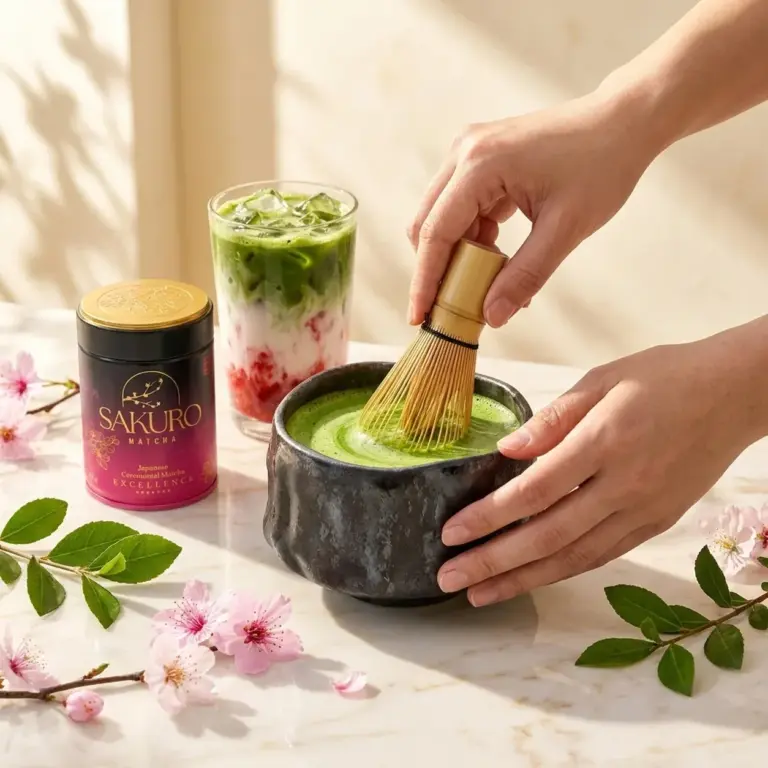
Sift the 2 g into a dry bowl. Pour in about 20 ml of the water and work it into a smooth paste against the side of the bowl with the chasen, maybe five seconds. Add the rest of the water and whisk briskly in a W motion for 15 to 20 seconds, from the wrist, not the elbow. Stop when the foam goes from big bubbles to a fine, even cream. Drink it within a minute or two, while it is still suspended.
The bowl matters less than people expect, but a dry bowl matters a lot. One drop of water left from rinsing turns part of the powder into a stubborn lump that no amount of whisking will break. Use Sakuro Matcha Excellence here if you have it, since there is no milk to hide behind.
2. Shaken iced matcha
Ingredients: 2 g matcha, 250 ml cold water. Time: 2 minutes.
Put the matcha in a screw-top jar with 50 ml of the cold water. Lid on, shake for ten seconds. This small amount of liquid is what breaks the powder up; start with the full 250 ml and you will be drinking green specks. Add the remaining water and a handful of ice, shake for another ten seconds, pour.
Cold water pulls less bitterness out of the leaf than hot, so iced matcha tastes sweeter and rounder than the same tea in a bowl. If you find usucha too astringent in the morning, start here instead and work backwards later.
3. Matcha salt
Ingredients: 4 g matcha, 20 g flaky sea salt. Time: 2 minutes.
Stir the two together in a small jar until the colour is even. That is the whole recipe, and it gives you about 24 g of seasoning that keeps three weeks in a dark cupboard. One pinch, around 0.3 g, is enough for a portion.
It goes on cucumber, avocado on toast, grilled white fish, edamame, boiled new potatoes, popcorn, and on a square of white chocolate if you want to see people argue about it. Add it at the end, off the heat, because matcha browns when it sits in a hot pan.
4. Cold matcha milk
Ingredients: 2 g matcha, 250 ml cold milk. Time: 3 minutes.
Same jar method: 2 g matcha with 40 ml of the milk first, shake fifteen seconds, then the rest of the milk and ice. No water at any stage, which makes it rounder and slightly sweeter than an iced latte.
Barista-style oat milk works best of the plant options because the added fat and the slightly higher protein give the matcha something to hold on to. Almond milk is the weakest match: thin body, and the almond takes over. Here you want Sakuro Matcha Finest, which has the backbone to come through 250 ml of milk.
Three ingredients: breakfast territory
Adding a third ingredient buys you a meal instead of a drink. All three recipes below land on the table in under six minutes, and two of them are things you can make while the kettle is doing something else.
5. Matcha yoghurt with honey
Ingredients: 300 g thick yoghurt, 3 g matcha, 15 g honey. Makes 2 bowls. Time: 3 minutes.
Sift the matcha onto the honey in a small bowl and stir it into a dark green paste first. Then fold the paste into the yoghurt in two goes, half at a time, so you are not chasing dry powder around a kilo of dairy. Greek-style yoghurt at around 10 % fat holds the colour best; a runny natural yoghurt turns the whole thing pale.
Eat it the same morning. Yoghurt is acidic, and acid turns bright green towards olive over a few hours. It is still perfectly good, it just stops looking like the photo.
6. Banana matcha smoothie
Ingredients: 1 ripe banana (about 110 g, frozen in pieces), 250 ml milk, 2 g matcha. Time: 4 minutes.
Blend everything for 30 seconds. Freezing the banana the night before does two jobs at once: it replaces ice, so nothing gets watered down, and it gives the smoothie the thickness people usually add yoghurt or oats to achieve.
Bananas are sweet enough that nothing else is needed. If the matcha reads as bitter here, the blender is probably running too long and warming the mix; 30 seconds is plenty.
7. Hot matcha latte
Ingredients: 2 g matcha, 50 ml water at 80 °C, 180 ml milk. Time: 5 minutes.
Whisk the matcha with the 50 ml of water into a smooth, slightly foamy shot, exactly as you would for usucha. Heat the milk to 60–65 °C, hot enough to steam but not to scald, froth it, then pour it over the matcha. Milk any hotter flattens the aroma and brings out a cooked note.
Never tip matcha powder straight into hot milk. Fat coats the particles, they clump instantly, and no whisk will save it. That single step is the difference between a café latte and a disappointing one at home. There is a fuller version of this recipe, hot and iced, in our matcha latte guide.
Four ingredients: still short, still simple
The last three need one more item, usually something sweet or something dry, and they are the ones that make sense to prepare for two days at once.
8. Matcha soda with lemon
Ingredients: 2 g matcha, 60 ml cold water, 200 ml sparkling water, juice of half a lemon. Time: 4 minutes.
Shake the matcha with the 60 ml of still water in a jar until smooth. Fill a tall glass with ice, pour the matcha over it, top up slowly with sparkling water so the bubbles survive, and add the lemon juice last. Stir once and drink.
Add the lemon at the end and drink it fresh, because citric acid shifts the colour towards khaki within the hour and takes some of the aroma with it. Unsweetened it is sharp and clean; 5 g of honey in the jar at the start makes it a different, friendlier drink, and a five-ingredient one.
9. Matcha overnight oats
Ingredients: 80 g rolled oats, 250 ml milk, 3 g matcha, 20 g maple syrup. Makes 2 jars. Time: 5 minutes plus 8 hours in the fridge.
Shake the matcha with 50 ml of the milk until there are no lumps, then stir it through the oats with the rest of the milk and the syrup. Divide between two jars, lid on, fridge overnight. In the morning they are thick enough to eat with a spoon straight from the jar.
Rolled oats, not instant: instant oats turn to paste by about hour three. Frozen raspberries stirred in before the fridge thaw overnight and give you a fourth texture for no extra work, though strictly that makes five ingredients.
10. Matcha energy balls
Ingredients: 150 g soft pitted dates, 100 g almonds, 6 g matcha, 30 g desiccated coconut. Makes 16. Time: 15 minutes.
Blitz the almonds for 20 seconds until they look like coarse sand. Add the dates and run the processor for another 30 seconds, until the mass balls up around the blade. Add the matcha, pulse five times, no longer, then roll 20 g pieces between your palms and turn each one in the coconut.
If the dates are dry, soak them in warm water for ten minutes and pat them dry, otherwise the mix will not hold. The balls keep a week in a sealed box in the fridge, and each one carries roughly 0.4 g of matcha, so two with coffee is a sensible stopping point.
What the times actually tell you
The chart shows that ingredient count and effort are not the same thing. Matcha salt has two ingredients and takes two minutes. Energy balls have four and take fifteen, and almost all of that is rolling, not cooking. The real divider is the equipment: everything that can be shaken in a jar lands at two to four minutes, everything that needs a machine jumps to double figures.
That is useful on a weekday. If you have five minutes, you have eight of these ten recipes available. The other two are Sunday jobs that give you breakfast for the week.
What the matcha costs per serving
A 40 g tin gives 20 servings at 2 g. At the current shop price that puts Sakuro Matcha Finest 40 g (about 23,90 €) at roughly 0,60 € per gram, and Sakuro Matcha Excellence 40 g (about 26,90 €) at about 0,67 € per gram.
| Recipe | Matcha per serving | With Finest | With Excellence |
|---|---|---|---|
| Usucha, iced matcha, matcha milk, latte, smoothie, soda | 2 g | approx. 1,20 € | approx. 1,35 € |
| Yoghurt bowl, overnight oats | 1.5 g | approx. 0,90 € | approx. 1,01 € |
| One energy ball | 0.4 g | approx. 0,24 € | approx. 0,27 € |
| Matcha salt, whole jar (24 g) | 4 g | approx. 2,40 € | approx. 2,69 € |
Prices are from our own shop and change, so treat the figures as a guide and check the product page. What does not change is the ratio: in a home latte the matcha is the expensive part, and the milk is the cheap part, which is the reverse of how a coffee works.
Five mistakes that ruin a two-ingredient recipe
Short recipes have nowhere to hide. When a two-ingredient matcha tastes wrong, it is almost always one of these.
- Boiling water. At 100 °C the catechins come out hard and the cup turns bitter in seconds. Let the kettle stand three minutes, or pour a splash of cold water into the bowl first.
- Not sifting. Matcha compacts in the tin and arrives in small flakes. A tea strainer and the back of a spoon, ten seconds, and the lumps are gone before they ever reach the liquid.
- Powder into hot milk. Always make the paste with water first. This is the single most common fault we hear about.
- One tin for everything. A delicate first-harvest matcha disappears behind 250 ml of oat milk, and a bolder one can be too tannic in a bowl. Our guide to ceremonial and culinary grades goes through which does what.
- Storing it badly. Light, warmth and air take the colour and the aroma. Keep the tin closed, out of the window, away from the hob; in the fridge if you drink it slowly, and let it come back to room temperature before you open it so condensation does not get in.
Where to buy and what you actually need
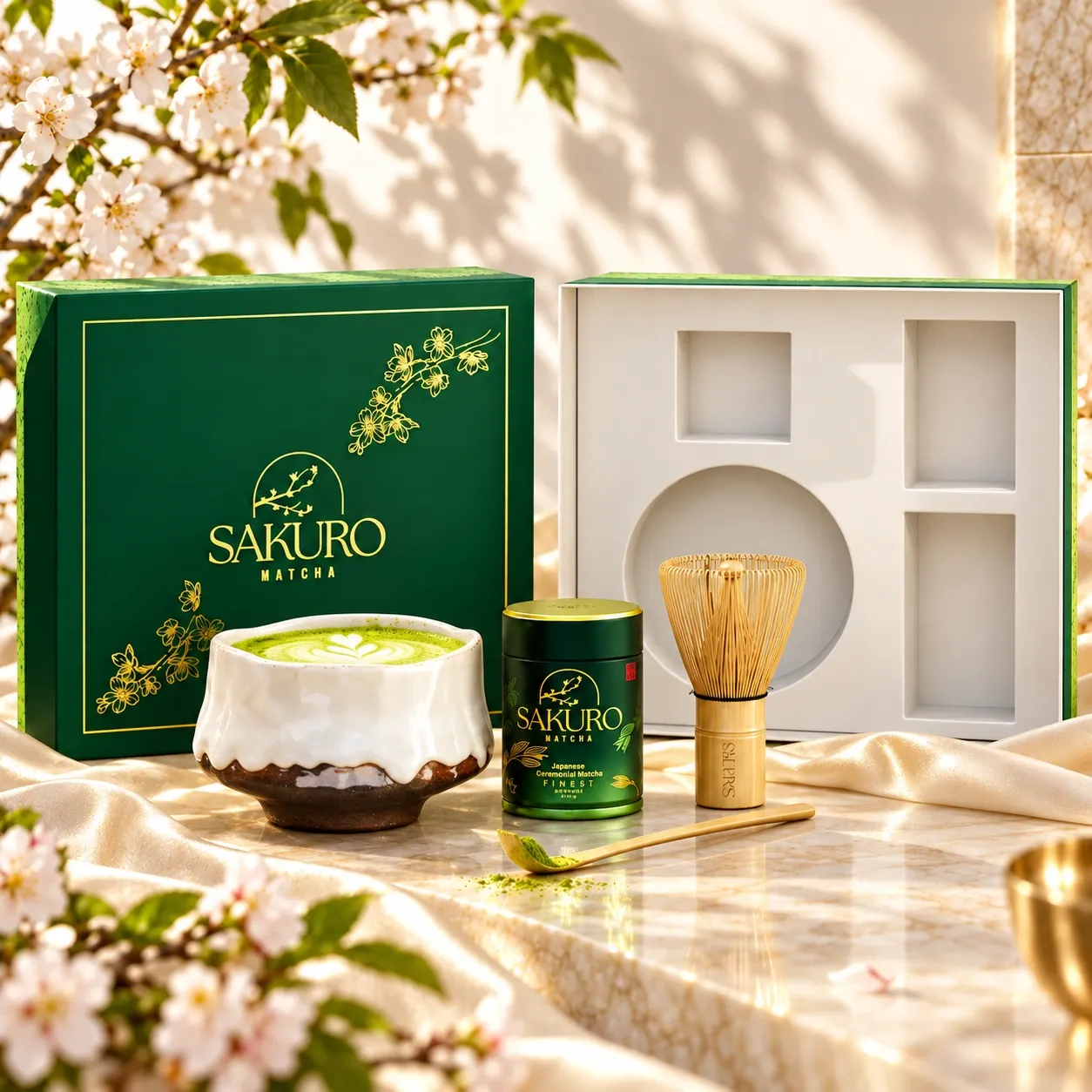
Sakuro Matcha Excellence (40 g tin, about 26,90 €) is first-harvest Japanese matcha from Shizuoka: floral, velvety, with a long finish. It is the one for recipes 1, 2 and 3, where nothing stands between you and the tea.
Sakuro Matcha Finest (40 g tin, about 23,90 €) is bolder, with a light tannic edge that survives milk, ice and a blender. Use it for recipes 4 to 10. Both tins are ceremonial-grade Japanese matcha; we do not sell a separate culinary line, which is why the baking doses on this page are lower than you may be used to.
For tools, a bamboo chasen (about 14,90 €) and a chashaku scoop (about 5,90 €) are the only two worth buying at the start. An electric milk frother will do the job of the chasen for lattes and iced drinks, although it never gets the foam quite as fine on a bowl of usucha.
Running a café, a bakery or an office kitchen and going through more than a tin a week? Matcha is sold by the kilogram as well, and for a quote, samples or a mixed order of Finest and Excellence, write to Ewelina at [email protected] or call +48 515 025 329. Shipping is from Poland, within the EU.
Frequently asked questions
What is the easiest matcha recipe?
Usucha: 2 g of matcha sifted into a dry bowl, 70 ml of water at 80 °C, whisked for 15 to 20 seconds. Two ingredients, two minutes, no sweetener. It is also the recipe that tells you most about the quality of the powder, because there is nothing else in the cup.
Can you make matcha without a bamboo whisk?
Yes. A screw-top jar works for anything cold: 2 g of matcha with a splash of liquid, shake ten seconds, then top up and shake again. An electric milk frother handles hot drinks. The chasen earns its place on a bowl of usucha, where it produces a finer, more stable foam than either.
How much matcha should I use per cup?
2 g for a standard cup or bowl, which is two level chashaku scoops. Use 1 g if you are sensitive to caffeine or new to the taste, 4 g with 30 ml of water for a thick koicha. When matcha is folded into food, 1.5 g per portion is usually enough.
How much caffeine do these recipes contain?
Roughly 60 mg in a 2 g serving, which puts it near a small coffee, and about 0.4 g of matcha in each energy ball means around 12 mg a piece. EFSA considers up to 400 mg of caffeine a day safe for most adults and 200 mg during pregnancy. Our article on caffeine in matcha has the full comparison with coffee and other teas.
Can I add matcha straight to hot milk?
No, not without lumps. Fat in the milk coats the powder on contact. Make a paste with 40 to 50 ml of water at 80 °C first, then add the hot milk. For cold milk the jar method works, since the shaking does what the whisk would.
Which Sakuro matcha suits which recipe?
Excellence for anything served in water, where its floral, velvety character is the point. Finest for milk, ice, smoothies, yoghurt and baking, where you need a matcha that still reads as matcha through 250 ml of oat milk.
How long does matcha keep once the tin is open?
Plan on four to six weeks for peak colour and aroma if the tin is kept closed, cool and dark. It does not spoil after that, it fades: the green dulls and the sweetness drops before the bitterness does. A 40 g tin is 20 cups, so a daily drinker finishes one inside a month anyway.
Start with number one tonight. If it comes out bitter, drop the water to 75 °C and the dose to 1.5 g before you blame the tea, and try again in the morning with cold water instead.
Discover our TOP products!





Your dream figure




Discover new flavors



Yerba mate with tea




Accessories



Superfoods







Certified raw honeys from Poland

Check the current price
free shipping
Up to 90 days
free returns
24 H
shipping