
Cooking with matcha: salt, dressings and noodles
2026-11-20
Savoury matcha works the moment you stop treating it as a sweet ingredient and start treating it as a bitter green seasoning, closer to a herb or a peppery olive oil than to vanilla. Sieve it, keep it off direct heat, and give it salt, fat and acid to lean on. Three recipes cover almost everything you will want to do: matcha salt, a matcha vinaigrette, and matcha worked into noodle dough.
Cooking with matcha has a bad reputation because most people meet it first in a cupcake. Then they stir a spoonful into a soup, it turns khaki, it tastes like a wet lawn, and the experiment ends there. The problem is not the recipe. It is that matcha is whole ground leaf with nothing strained out, so every bit of grass, tannin and bitterness that would normally stay behind in a teabag goes straight into the food.
Once you know that, the savoury side opens up fast. Below are the doses we actually weigh when cooking with matcha, the order ingredients go in, what to serve each thing with, and what a portion costs at today’s prices.
Why matcha belongs in savoury food at all
Think about what else sits in the bitter-and-green corner of a kitchen: rocket, radicchio, nori, green olives, good extra virgin oil, grated lemon zest. All of them need the same three partners to stop being hard work. Matcha is no different.
Salt flattens the bitterness. This is not folklore, it is how our taste works at the counter: a pinch of salt on a bitter ingredient makes it read as savoury rather than harsh. It is also the reason matcha salt is the oldest savoury use of the powder and still the best one to start with.
Fat carries the aroma. Matcha whisked into water tastes thin and tannic to a lot of people. The same matcha in butter, egg yolk, tahini or olive oil tastes round, nutty, almost like toasted nori. Tea aromatics are largely fat-soluble, which is why a matcha butter on grilled fish is a completely different experience from matcha in a broth.
Acid holds the colour and lifts the smell. Lemon juice, rice vinegar, yuzu. Mix matcha into the acid first and it dissolves properly, keeps a clearer green, and smells of fresh leaf instead of hay.
And then the trap. Nearly every savoury failure we hear about involves heat: matcha stirred into a simmering sauce, baked into a long bake, boiled in a broth. Prolonged heat is what pushes a bright green into olive-brown and sharpens the tannin. Add matcha at the end, off the heat, or into something cold. That single habit fixes most dishes.
Which matcha, and how much of it
Here is where people expect us to say that cooking with matcha only calls for cheap culinary grade. We do not say it, and the reason is simple: in savoury food the matcha is the seasoning, so its flaws have nowhere to hide. A dull, hay-ish commodity powder tastes dull and hay-ish on your asparagus. There is no sugar and no cocoa to cover it.
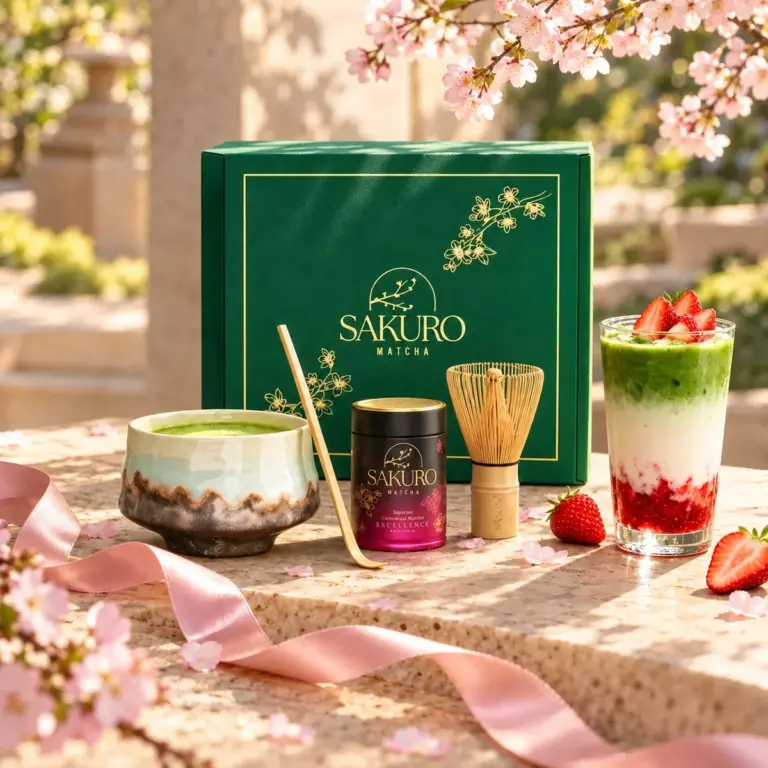
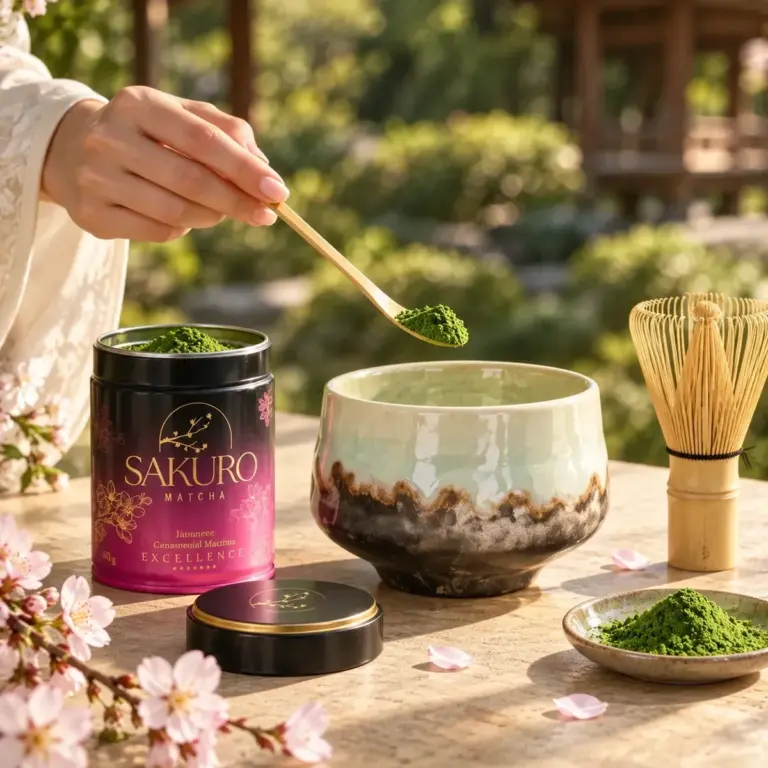
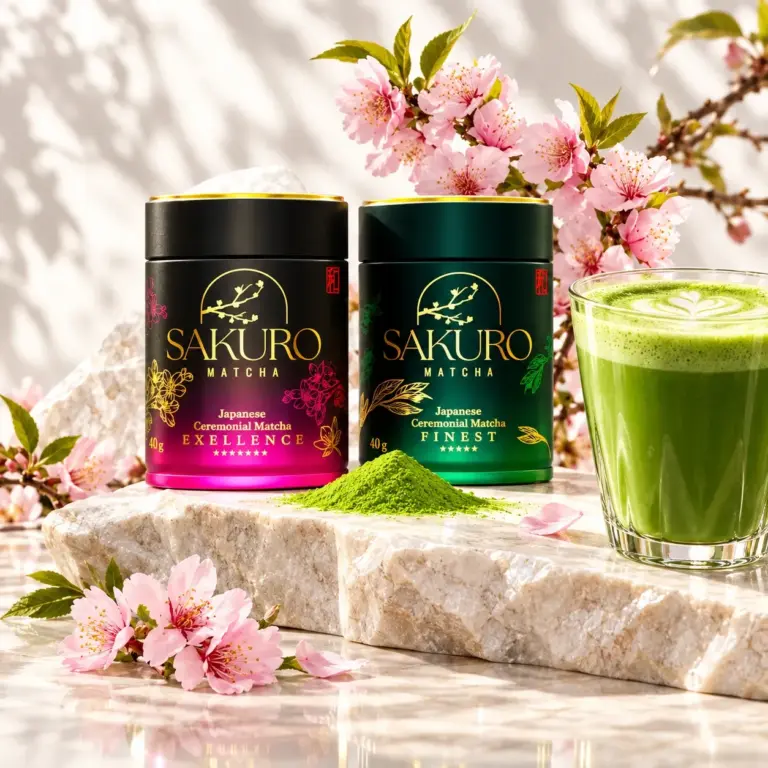
What does change is which of our two Japanese matchas we reach for. Sakuro Finest (40 g, €23.90) is the workhorse: bold, deep umami with a tannic edge, which is exactly the backbone you want against salt, fat and frying oil. Sakuro Excellence (40 g, €26.90) is first-harvest and more delicate, with floral and citrus notes and a long, velvety finish. Those notes are beautiful in a cold dressing or sprinkled raw over burrata, and largely wasted once something is fried at 170 °C. Both are ceremonial-grade Japanese matcha from Shizuoka, so the difference is character, not quality.
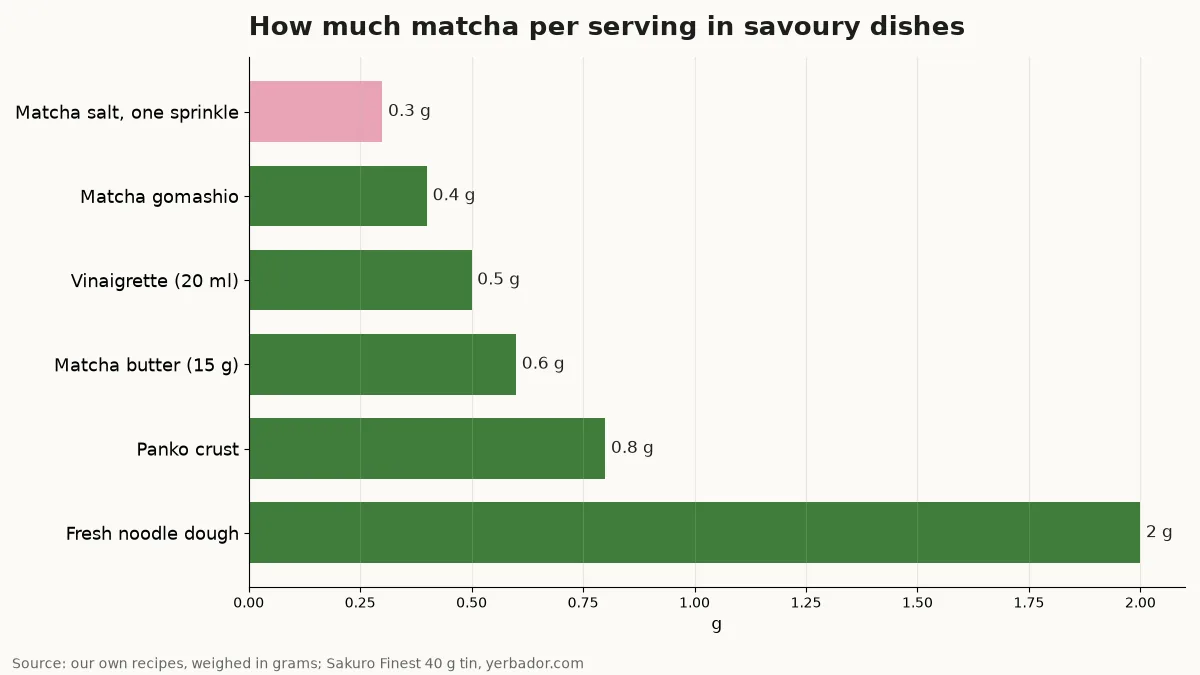
Doses are small, and this surprises people. You are seasoning, not colouring.
| Use | Matcha per serving | When it goes in | What it does |
|---|---|---|---|
| Matcha salt | 0.3 g | At the table, raw | Cuts fried food, adds green aroma |
| Gomashio (sesame salt) | 0.4 g | Raw, over the finished plate | Nutty and grassy at once |
| Vinaigrette | 0.5 g per 20 ml | Into the acid, before the oil | Bitterness and body, no cream needed |
| Compound butter | 0.6 g per 15 g butter | Into soft butter, cold | Melts over hot fish or corn |
| Panko crust | 0.8 g per portion | Mixed into the crumbs | Green crust, bitter edge against the oil |
| Fresh noodle dough | 2 g per 100 g flour | Sieved into dry flour | Colour and flavour through the noodle |
Everything in that table gets sieved first. Matcha clumps the way cocoa clumps, and an unsieved lump in a dressing is a nasty mouthful of pure tannin. A cheap tea strainer and the back of a spoon is all it takes. If you want to go deeper on the grade question, we wrote a separate piece on ceremonial versus culinary matcha.
Matcha salt: five minutes, and the best place to start
Matcha salt, matcha-jio or matcha-shio, is a Japanese condiment of green tea powder blended with salt, most famously served alongside tempura instead of a dipping sauce. The traditional blend runs roughly one part matcha to one part salt, and it is also eaten with karaage, sashimi and tofu.
We make it weaker. One-to-one with a bright ceremonial matcha is intense, and at €0.60 a gram it is an expensive way to season chips. One part matcha to four parts salt gives you plenty of green aroma and costs a fraction.
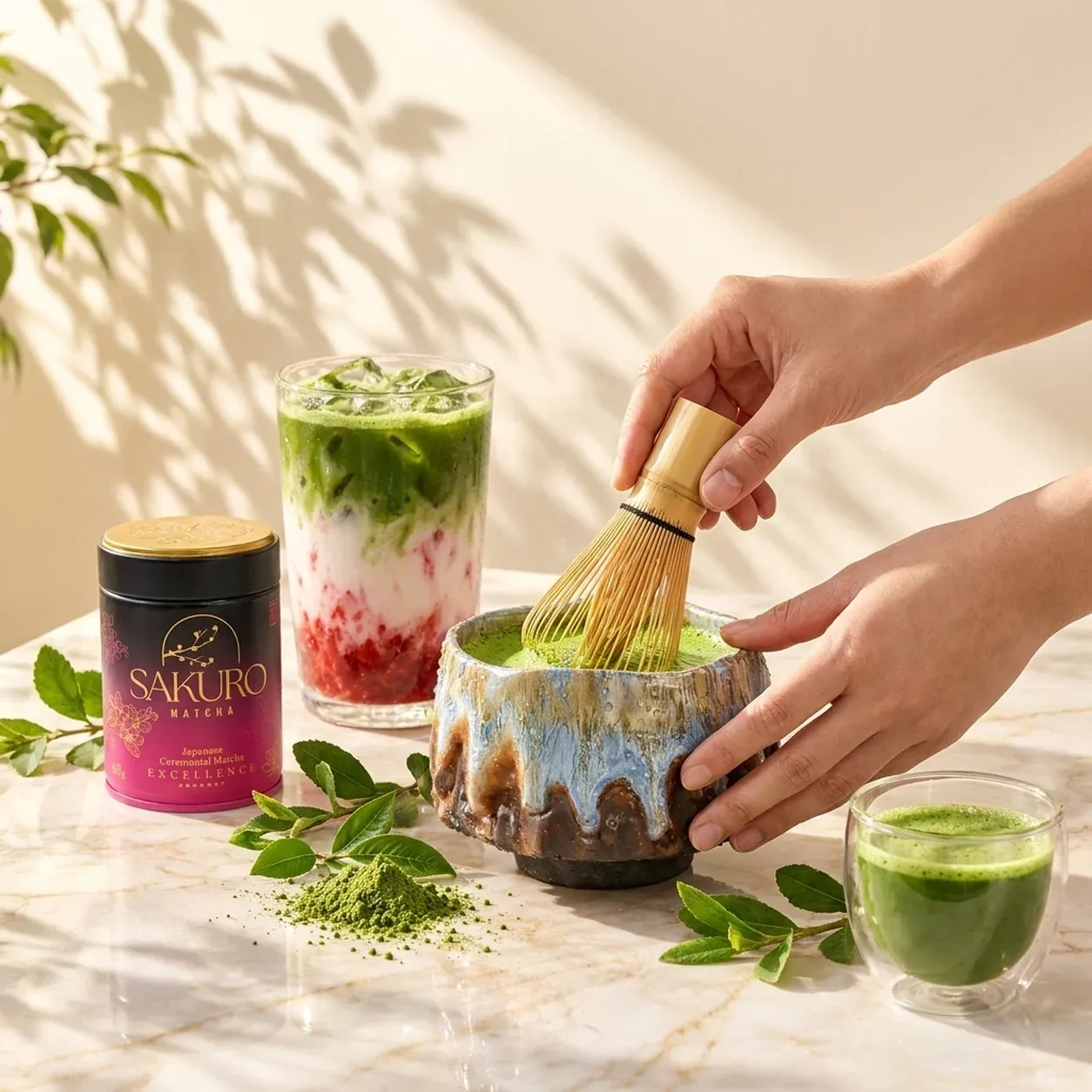
Matcha salt — makes about 10 g, roughly 30 pinches
- 2 g matcha, sieved
- 8 g flaky sea salt, or fine sea salt if you want it to cling to small pieces
Crush the flakes lightly in a mortar until they are no bigger than coarse sand, add the matcha, and stir with a dry spoon for about 30 seconds until the colour is completely even with no darker specks. Do not grind hard after the matcha goes in; you will bruise it and the smell goes flat. Keep it in a small airtight jar, away from light. Total time: five minutes. Total cost: about €1.20 of matcha plus the salt.
What to put it on, in the order we would try them:
- Anything deep-fried. Tempura vegetables, karaage, calamari, chips straight from the pan. The bitterness does the job lemon normally does.
- A fried egg with a crisp edge. Sounds odd, works immediately.
- Roast potatoes, tossed in the salt once they are out of the oven.
- Grilled asparagus, green beans, charred spring onions.
- Burrata or fresh mozzarella with good oil. This is where Excellence earns its price.
- Avocado on toast, instead of chilli flakes.
- Edamame, still hot and wet from the pan so the salt sticks.
It keeps its colour and smell for about four to six weeks in a sealed jar. After that it is still perfectly edible, just duller and greyer. Make 10 g at a time rather than a big batch, and you will always be using it at its best.
Matcha vinaigrette, and a sesame dressing to go with it
A dressing is the easiest savoury win after the salt, because the acid does the dispersing for you. The order matters more than the ingredients: matcha into the acid, then the oil. Whisk matcha into oil first and it will sit there in little islands no matter how long you work at it.
Matcha and lemon vinaigrette — 4 servings, about 90 ml
- 2 g matcha, sieved
- 15 ml lemon juice
- 10 ml rice vinegar
- 60 ml mild olive oil or rapeseed oil
- 5 g honey
- 2 g fine salt, black pepper
Put the matcha in a small bowl, add the lemon juice and vinegar, and work it to a smooth paste with a small whisk or a fork, about 20 seconds. It will look like loose green ink. Add the honey and salt, then pour the oil in a thin stream while whisking. It emulsifies in another 20 seconds and stays together for a couple of hours; if it splits, a few drops of water and another whisk brings it back. Grind pepper over it at the end.
This goes on cucumber, fennel, radish, blanched green beans, cold soba, poached chicken, steamed white fish, roasted carrots. It does not go on anything already sweet: it fights beetroot and loses to sweet tomatoes.
Sesame, miso and matcha dressing — 4 servings
- 2 g matcha, sieved
- 20 g white miso
- 20 g tahini or Japanese sesame paste
- 20 ml rice vinegar
- 10 ml toasted sesame oil
- 30–40 ml cold water, added last
Mix the matcha into the vinegar first, same as before, then beat in the miso and tahini. It will seize and go stiff; that is normal. Add the water a splash at a time until it pours like double cream. The sesame rounds the tannin off completely, and the miso brings enough salt that you probably will not need any more. This is the dressing to use if someone in the house finds matcha too sharp.
Noodles: cha-soba, and a dough you can make on a Tuesday
Green tea noodles are not a new fusion idea. Cha-soba is a long-established Japanese noodle, strongly associated with Uji near Kyoto, made with buckwheat, wheat flour and green tea powder, and usually served cold with a dipping sauce in summer or in hot broth when it is cold out. Most of the packets you can buy are more wheat than buckwheat, which is why they are green and smooth rather than crumbly.
Making it yourself is straightforward if you keep the matcha in the dry flour, where it distributes evenly and never gets the chance to clump.
Matcha noodles — 2 servings
- 100 g buckwheat flour and 100 g plain wheat flour (or 200 g plain flour for an easier, more forgiving dough)
- 4 g matcha, sieved with the flours
- 3 g salt
- 95–105 ml water, cold
Whisk the flours, matcha and salt together until the colour is uniform. Add most of the water, bring it together with your hands, then add the rest a teaspoon at a time until there is no dry flour left and the dough is firm, not sticky. Knead for five minutes, wrap it, rest it for 30 minutes. Roll to about 1.5–2 mm, dust well, fold and cut into 2 mm strips. Cook in plenty of unsalted boiling water for 90 to 120 seconds, then straight into iced water and drain hard. The ice bath is not optional; it is what gives soba its snap.
Serve cold with a dipping sauce of 100 ml cold dashi or water, 25 ml soy sauce and 25 ml mirin, with matcha salt and sliced spring onion on the side. Note the caffeine here, because this is the one savoury use with a real dose: 2 g of matcha per serving carries roughly 38–89 mg of caffeine, based on the 19–44 mg per gram range reported by Kochman et al., Molecules 2021;26(1):85. That is about one espresso in a bowl of noodles. Fine at lunch, less clever at nine in the evening. The EFSA reference for healthy adults is 400 mg a day, and 200 mg in pregnancy.
If you do not want to make dough, the shortcut is good: cook dried soba or udon, drain, and toss off the heat with matcha butter or matcha sesame oil from the next section. You get most of the flavour for none of the work.
Four more things that work
Matcha butter. Beat 100 g of soft butter with 4 g of sieved matcha, 2 g of salt and the zest of half a lemon. Roll it in baking paper into a log, chill for an hour, slice 15 g rounds. Put one on grilled mackerel, chicken thighs, corn on the cob, green beans or a baked potato. It keeps two weeks in the fridge and three months in the freezer, and it is the single best way to introduce matcha to someone who thinks they do not like it.
Finishing oil. Stir 2 g of matcha into 50 ml of mild olive or rapeseed oil warmed to about hand temperature, no hotter, and leave it an hour. Shake before use. Drizzle over white fish, scallops, new potatoes, pea soup, or a bowl of rice with a soft egg. Keep it in the fridge and use it within a week, before the green turns.
Panko crust. Mix 3 g of matcha and 2 g of salt into 60 g of panko, enough for four pieces of fish, chicken or firm tofu. Add the matcha to the crumbs, never to the flour dredge, where it sticks and burns. Fry at 170 °C for the short time the crumb needs; the crust comes out green-flecked and the bitterness cuts the oil the way a squeeze of lemon would.
Matcha gomashio. Toast 40 g of white sesame seeds in a dry pan until they start to pop, cool them completely, then pulse with 8 g of salt and 3 g of matcha for two or three seconds only. You want most seeds broken, not a paste. On plain rice, soft-boiled eggs, steamed greens, avocado or a rice bowl, this is the thing we reach for most often.
Five mistakes we see most often when cooking with matcha
Boiling it. Matcha stirred into a simmering sauce, or baked for 40 minutes, comes out olive-brown and sharp. Off the heat, at the end, or cold.
Skipping the sieve. Every clump is a concentrated bitter bomb for whoever finds it. Thirty seconds with a tea strainer.
Using it as a colouring. Someone always tries 5 g in a sauce to get a stronger green. It is inedible. Green comes from the dose being right and the heat being low, not from more powder.
Cooking with a tin that has been open since spring. Matcha fades fast once air gets to it. After a couple of months open it smells of hay, and that is exactly what it will taste like on your fish. Buy the 40 g tin rather than a big bag, keep it sealed, cool and dark, and finish it within six to eight weeks of opening.
Leaving out salt, fat or acid. Matcha on its own in a dish tastes like a lawn. With at least two of the three, it tastes like seasoning.
What a portion actually costs
Prices below are our shop prices on the day of writing, worked down to the gram. Finest in a single 40 g tin is €23.90, which is €0.60 per gram; the 2+1 pack of three tins is €46.90 for 120 g, which brings it to €0.39 per gram.
| Use | Matcha per serving | Single tin (€0.60/g) | 2+1 pack (€0.39/g) |
|---|---|---|---|
| Matcha salt, one pinch | 0.3 g | €0.18 | €0.12 |
| Gomashio | 0.4 g | €0.24 | €0.16 |
| Vinaigrette | 0.5 g | €0.30 | €0.20 |
| Matcha butter | 0.6 g | €0.36 | €0.23 |
| Panko crust | 0.8 g | €0.48 | €0.31 |
| Fresh noodles | 2 g | €1.20 | €0.78 |
Eighteen cents to make chips taste like something from a Kyoto counter is a good trade. A euro twenty for a bowl of hand-cut green soba is still cheaper than the packet version in most European delis.
If you are doing this on a menu rather than at home, the maths changes completely. Our wholesale list price for Finest is 480 PLN per kilo net, which at today’s National Bank of Poland rate of 4.4070 PLN to the euro is roughly €108.92 per kilo, or about €0.22 for a 2 g serving. Excellence is 690 PLN per kilo net, roughly €156.57, about €0.31 per 2 g. Those are indicative conversions, not a quote. Matcha ships in 1 kg bags from Poland within the EU, with 5% off from 3 kg and 10% off from 5 kg. For a binding offer, write to Ewelina at [email protected] or call +48 515 025 329.
What to buy if you are starting today
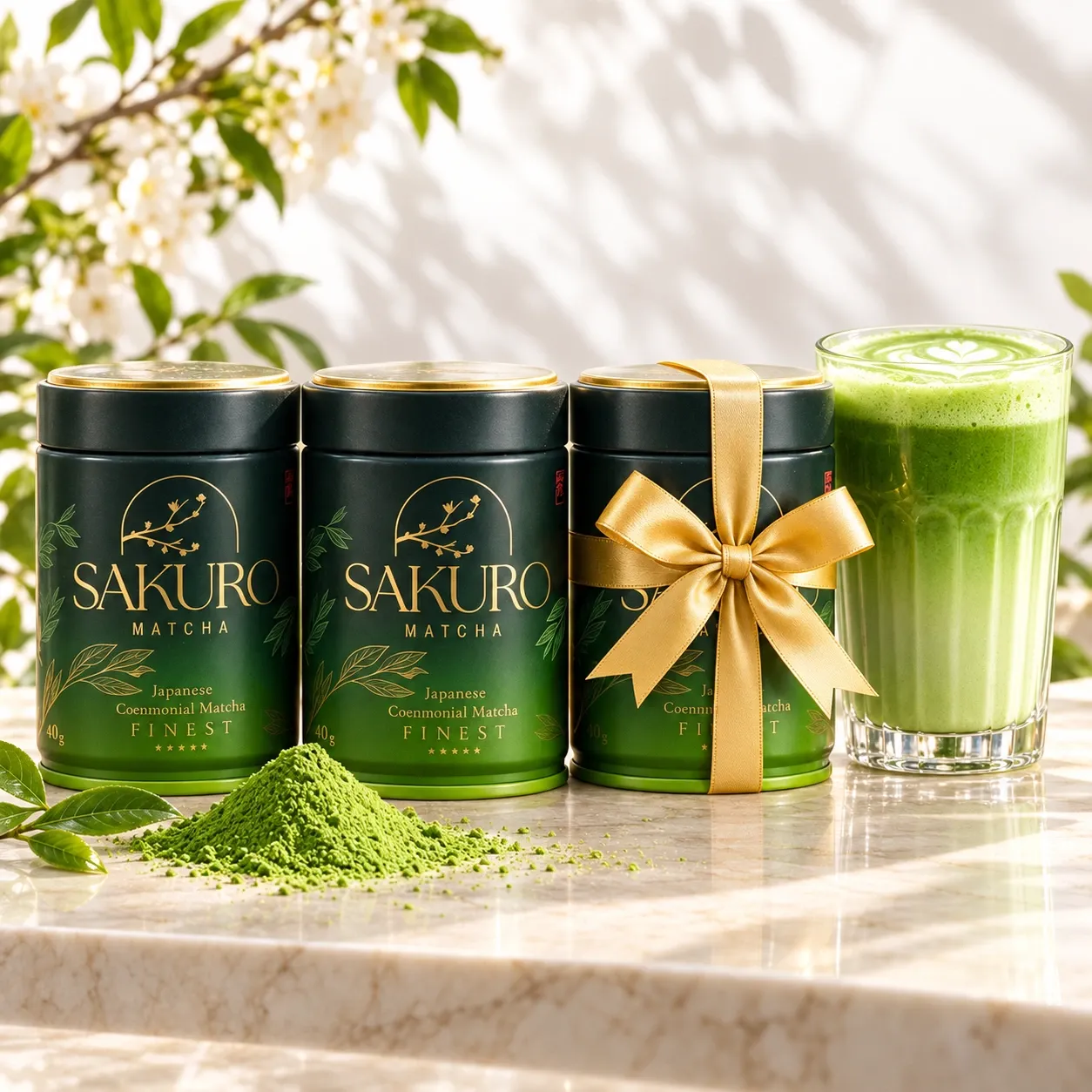
For cooking with matcha, one tin of Finest (€23.90) is the honest answer. It gives you 40 g, which is about 130 pinches of matcha salt or twenty portions of noodles, and its tannic backbone is what savoury cooking wants. Add Excellence (€26.90) when you want the delicate version for raw finishing, or take both tins together for €46.90 and compare them side by side on the same plate of asparagus. If matcha is going to be a regular habit in the kitchen, the 2+1 pack at €46.90 for three tins is the cheaper way in.
You do not need tea equipment for any of this, though a bamboo chasen (€14.90) is quicker than a fork for dressings, and a chashaku scoop (€5.90) is a tidy way to measure roughly a gram at a time. A kitchen scale that reads to 0.1 g matters more than either.
Questions people ask before they try it
Can you cook with ceremonial matcha, or is it a waste?
You can, and for savoury food you should. The matcha is the seasoning, so there is no sugar or chocolate to hide a flat powder behind. Where it genuinely is a waste is in a long bake at 180 °C, where the delicate notes burn off and any decent powder would do.
Does matcha turn bitter when you heat it?
It turns more tannic and loses its green with sustained heat. Short, hot contact is fine, which is why a panko crust fried for two minutes works and a sauce simmered for twenty does not. Add it at the end, off the heat, whenever you can.
How much caffeine is in savoury matcha?
Very little in most of it. A pinch of matcha salt is 0.3 g, which works out at roughly 6 to 13 mg of caffeine, less than a square of dark chocolate. Fresh noodles at 2 g a serving are the exception, at around 38 to 89 mg. There is more detail in our piece on how much caffeine matcha actually contains.
Can I use supermarket culinary matcha for matcha salt?
You can, and with a one-to-one blend the salt carries a lot of it. But salt amplifies whatever aroma is there, so a dusty powder gives you dusty salt. This is the one recipe where the quality of the matcha is most exposed.
What does matcha actually taste like in savoury food?
Bitter-green and vegetal at first, like strong rocket or the skin of a broad bean, then savoury and faintly marine, closer to nori than to tea. With fat it reads as nutty. With acid it reads as fresh and almost herbal.
How long does matcha salt keep?
Four to six weeks in a sealed jar before the green dulls and the aroma flattens. It stays safe to eat far longer, but it stops being interesting. Make it in 10 g batches.
Start tonight, with the cheapest version of all of this: 2 g of matcha, 8 g of sea salt, five minutes and a spoon. Fry something, sprinkle, and you will know within one mouthful whether the rest of this list is for you. If you would rather drink it than cook with it, our matcha latte recipe is the other place to begin.
Discover our TOP products!

Your dream figure



Discover new flavors



Yerba mate with tea




Accessories



Superfoods




Certified raw honeys from Poland

Check the current price
free shipping
Up to 90 days
free returns
24 H
shipping