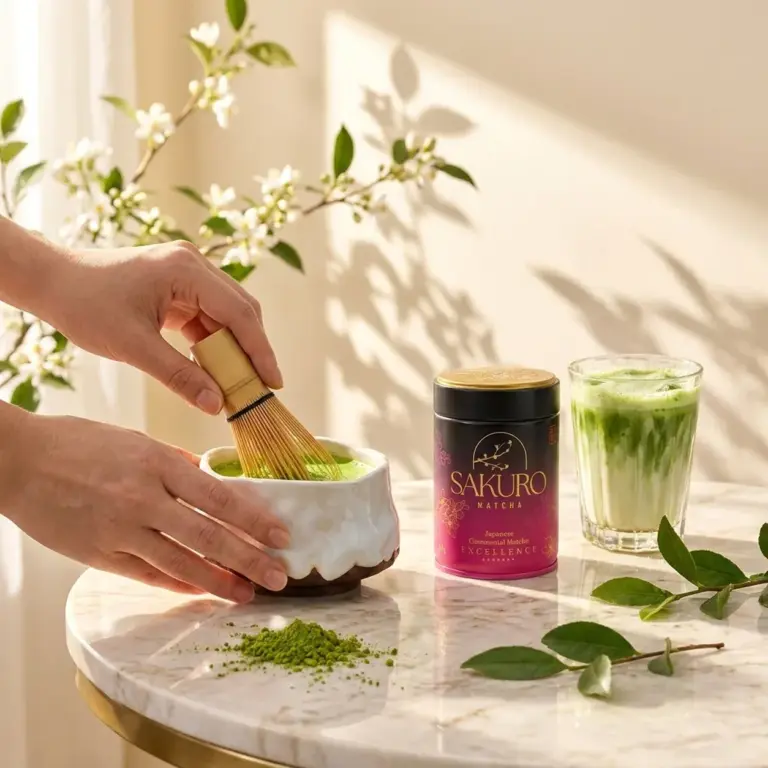

Batch cold matcha: 5 litres ready for a busy service
2026-11-25
A five-litre batch of cold matcha concentrate takes about twelve minutes to make, holds for one shift in the fridge and covers fifty iced drinks. That is the short answer, and most of the work in getting there is arithmetic rather than skill: 25 g of matcha per litre of water, 100 ml of that concentrate per cup, milk and ice added to order.
This is written for the person who has to get eighty iced matchas out between eleven and three without a second grinder, a second fridge or a second pair of hands. The numbers below are the ones we use when a café asks us how to scale from six drinks a day to sixty, and they assume Japanese ceremonial matcha, not a sweetened latte powder.
Two different things people call “batching”
Before any recipe, settle which of these you are making, because they keep for different lengths of time and they go into different drinks.
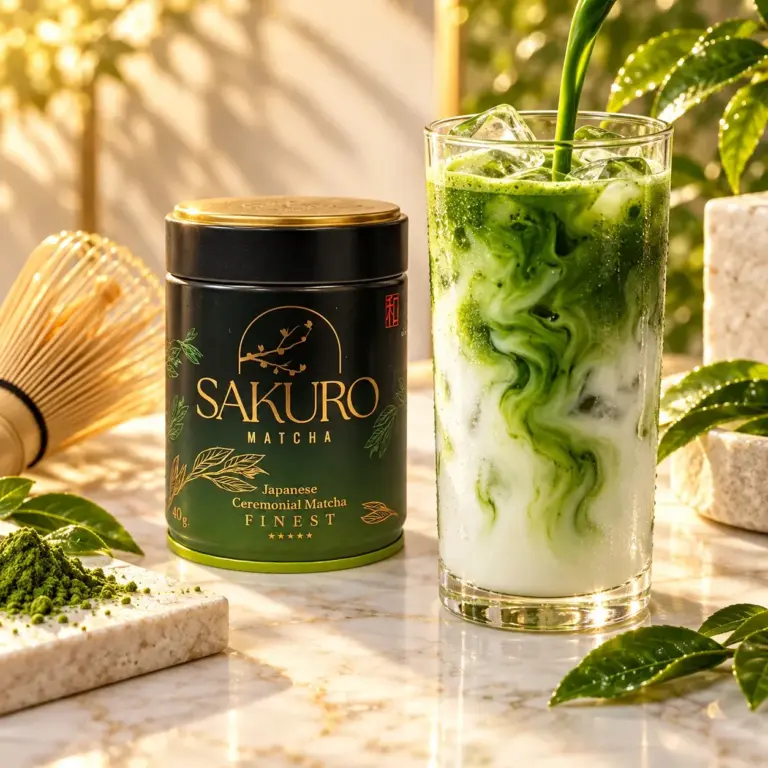
A concentrate is matcha and water only, mixed strong: 25 g per litre. You pour 100 ml per drink and build the rest of the cup to order with ice, milk, tonic or syrup. This is the version that suits a café bar, because one bottle serves a latte, a lemonade and a tonic without changing anything.
Ready-to-pour cold matcha is the finished strength, around 9 g per litre, bottled and served straight over ice with nothing added. It is the right choice for a self-service fridge, a market stall, a conference table or a hotel breakfast, where nobody is standing behind a bar to finish the drink.
There is a third thing people try, and it is the one mistake worth naming early: batching matcha with milk. A milk-based batch has a much shorter safe life, it separates in the bottle, and when it turns you lose the milk as well as the tea. Keep the batch water-based and let the milk meet it in the cup.
The five-litre concentrate, in numbers
One kilogram of matcha makes eight of these batches. That is the number to hold on to when you order, because it turns an abstract kilo into four hundred drinks you can count on a rota.
| Batch | Matcha | Water | Servings of 100 ml | Matcha per drink |
|---|---|---|---|---|
| 1 litre | 25 g | 1 l | 10 | 2.5 g |
| 2 litres | 50 g | 2 l | 20 | 2.5 g |
| 5 litres | 125 g | 5 l | 50 | 2.5 g |
| 10 litres | 250 g | 10 l | 100 | 2.5 g |
Why 2.5 g per drink and not the 2 g you would whisk into a bowl? Because an iced drink is diluted twice, once by the ice you build it on and again by the ice that melts while the customer walks back to the office. A 2 g base tastes thin by the bottom third of the cup. We have tried both on the same menu and 2.5 g is the point where the matcha still reads as matcha at the last mouthful.
If your cups are 500 ml rather than 400 ml, do not stretch the same 100 ml pour across the bigger glass. Scale the pour, not the recipe.
How to get 125 g of matcha into five litres without lumps
Matcha does not dissolve. It suspends, and the difference matters: every lump you leave in the jug is a gritty mouthful later, and every gram stuck to the side of the sieve is money you already paid for. The sequence below takes about twelve minutes once you have done it twice.
- Weigh 125 g on a bar scale. A scale that reads to 1 g is accurate enough at this size; the 0.1 g scale is for single bowls.
- Sift it through a fine mesh into a 2-litre jug. Matcha compacts in the bag and sifting breaks the clumps before water ever touches them.
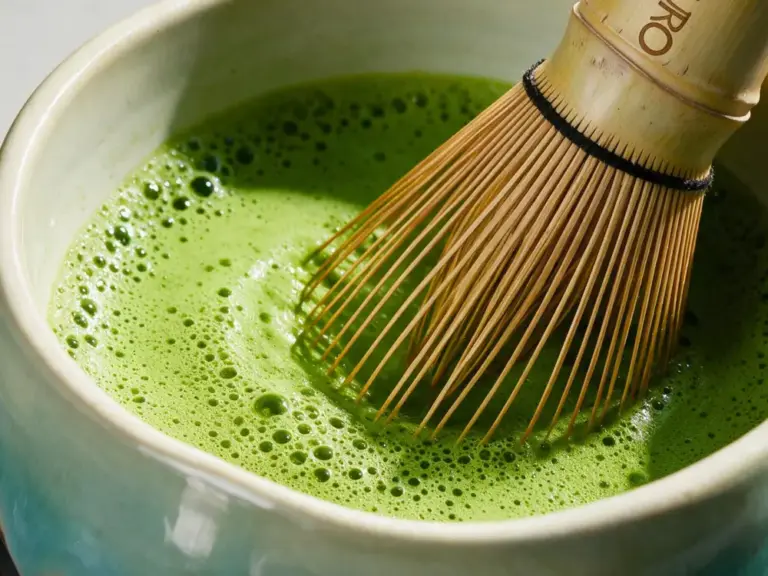
- Make a paste first. Add 500 ml of water at 70–80 °C and work it with a whisk or a stick blender for about 20 seconds, until there is no dry powder on the surface and nothing pale at the bottom.
- Thin it down. Add 1.5 litres of cold water, blend 15 seconds more. The colour should be even and slightly foamy.
- Top up to 5 litres with cold filtered water and stir through.
- Strain into bottles through the same mesh. The last grit stays in the sieve instead of in somebody’s straw.
- Label every bottle with the time it was made and the grade inside it, then chill to 4 °C or colder before the first pour.
Two details decide whether this tastes good. The first is water: filtered and soft. Hard tap water flattens the aroma and pushes the colour towards grey, and in a batch that sits for hours it shows more than in a single cup. The second is temperature at the start. The brief warm paste is what breaks the powder open; going straight in with cold water leaves you blending for a minute and still finding specks.
Chill it properly before service. A batch that goes into the ice well at 20 °C melts your ice, waters down the first ten drinks and spends an hour in the temperature range you least want it in. Either make it the evening before, or sink the bottles in an ice bath for ten minutes.
Ice and dilution: the batch has to be stronger than the drink
Here is the part most recipes skip. A 400 ml cup built with 150 g of ice does not stay at 400 ml. In a warm room, expect something like 40–50 ml of melt in the first quarter of an hour, which is roughly a tenth of the drink turning into water while the customer drinks it. Your base has to carry that.
| Cup | Ice | Concentrate | Milk or water | Matcha in the cup |
|---|---|---|---|---|
| 300 ml | 100 g | 80 ml | 100 ml | 2.0 g |
| 400 ml | 150 g | 100 ml | 150 ml | 2.5 g |
| 500 ml | 180 g | 140 ml | 180 ml | 3.5 g |
Ice shape matters more than people expect. Small machine nuggets look generous and melt fast; a 400 ml cup filled with nuggets can lose a fifth of its strength before it leaves the counter. Larger cubes, or a tall glass packed properly so there is less water circulating between the pieces, hold the drink together much longer.
For the no-milk version, skip the concentrate maths entirely: 9 g per litre, bottled, 350 ml poured over 120 g of ice. That is a 3.1 g drink before melt and a comfortable one after.
How long a batch actually holds
Matcha starts changing the moment it meets water. Oxygen dulls the colour, the suspended powder settles, and what tasted sweet and grassy at ten in the morning reads as flat and astringent by five in the afternoon. None of that is dangerous, it is just worse, and your regulars will notice before you do.
| Time in the fridge (4 °C, sealed) | What you get |
|---|---|
| 0–2 hours | Brightest green, full aroma, a light foam when you shake the bottle. |
| 2–6 hours | Still a good drink. Powder has settled, so shake each bottle before every pour. |
| 6–12 hours | Colour noticeably duller, more astringency. Fine under milk and syrup, weaker served neat over ice. |
| Next morning | Khaki tint, flat smell, thin taste. Do not serve it. Use it for baking or pour it away. |
The practical rule: make what the shift will sell, not what the day might sell. Two litres at open, two more at noon if the first ones went, is better than five litres at seven in the morning and a decision at four about whether the last bottle is still good enough.
Keep bottles closed and cold the whole time. A bottle left standing on the bar through a lunch rush is both a quality problem and a food-safety one, and an open jug in the fridge will take on the smell of whatever is sitting next to it.
Dispenser, bottles or a jug?
We get asked about the glass dispensers with a tap more than anything else here, because they look good on a counter. They are the weakest option for matcha and the reason is physics: the powder settles, the tap draws from the bottom, and your first glass and your tenth are different drinks. If you use one, stir it every twenty minutes and strip the tap down every day, or you will find green sludge inside the spout by Thursday.
What works on a busy bar is a row of one-litre swing-top bottles. One bottle is roughly an hour of service, they shake in one hand, they stack in the fridge door, and a strip of tape carries the time and the grade. When a bottle empties you take the next cold one instead of pouring warm concentrate into a cold bottle and losing track of when any of it was made.
Write the grade on the label too. The moment two different matchas are in play behind the bar, somebody tops one bottle up with the other, and then nobody knows why the cost per cup moved.
Four drinks out of one concentrate
The argument for a concentrate rather than a finished tea is that one bottle covers the whole cold section of the menu. These four build in under fifteen seconds each once the bottle is open.
- Iced matcha latte. 150 g ice, 100 ml concentrate, 150 ml oat milk. Oat foams best and brings enough sweetness that most people do not ask for syrup.
- Matcha tonic. 120 g ice, 150 ml tonic water, 80 ml concentrate poured last, a wedge of lime. Pour in that order and it layers by itself.
- Matcha lemonade. 120 g ice, 120 ml sparkling water, 20 ml lemon syrup, 80 ml concentrate. Sharp, and it sells in the afternoon when people have had their coffee.
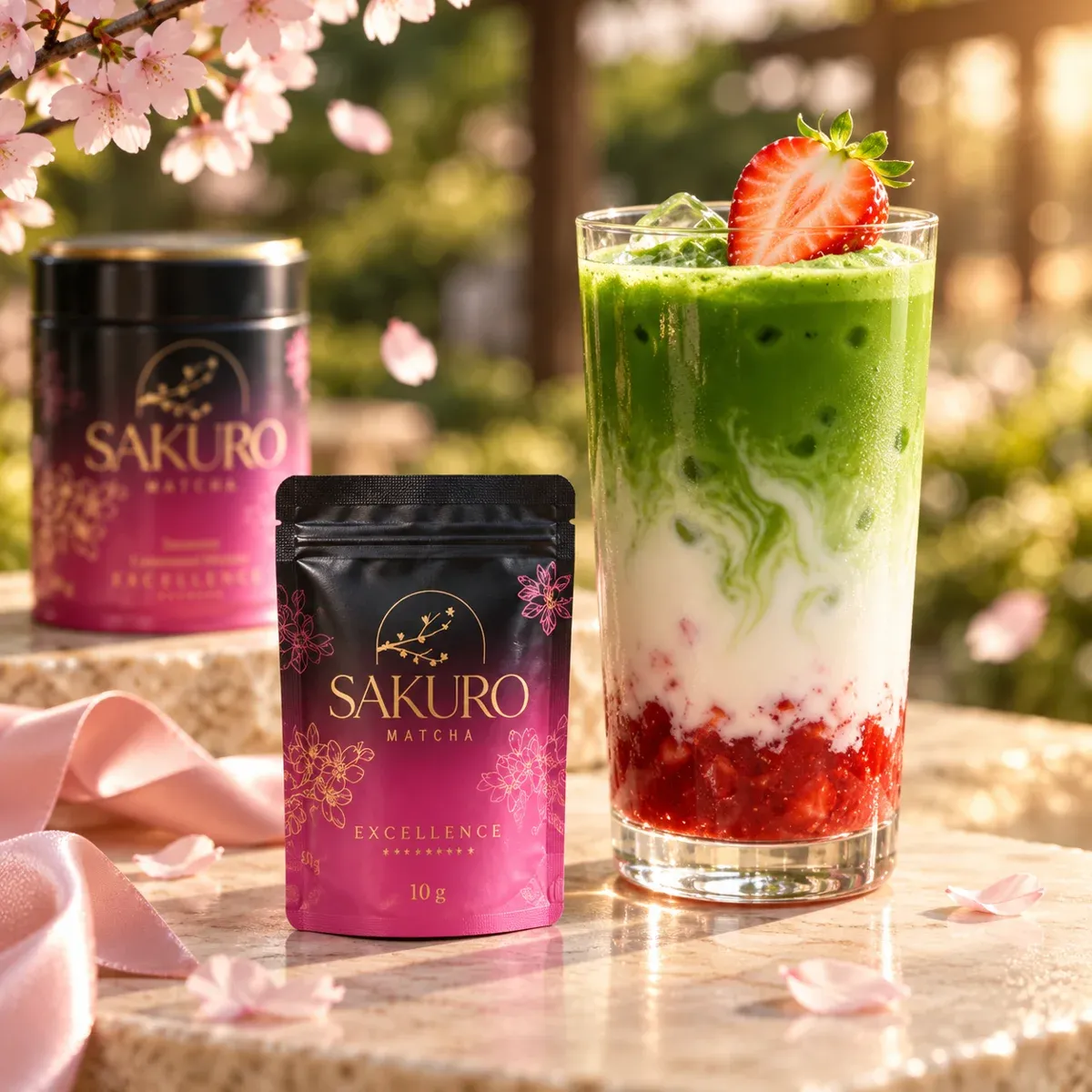
- Fruit matcha. 40 g of fruit purée at the bottom of the glass, 150 g ice, 150 ml milk, then 100 ml concentrate on top. Strawberry is the one that photographs; our full iced strawberry matcha latte recipe has the proportions for the home-sized version.
If you are serving the matcha neat over ice, with no milk and no mixer, use the better grade. Everything that would be hidden by oat milk is on show.
What a batched cup costs you
Batching does not make matcha cheaper, it makes service faster. The cost per cup is set by what you pay for the powder and how many grams you put in the glass.
| Sakuro 2026 trade list | Finest | Excellence |
|---|---|---|
| 1 kg bag, net | 480 zł ≈ €108.92 | 690 zł ≈ €156.57 |
| per 2 g | 0.96 zł ≈ €0.22 | 1.38 zł ≈ €0.31 |
| per 2.5 g batched drink | ≈ €0.27 | ≈ €0.39 |
| Drinks per kilo at 2.5 g | 400 | 400 |
| At 5 kg (−10 %), per kg | ≈ €98.03 | ≈ €140.91 |
Converted at the National Bank of Poland rate for 13 November 2026 (1 € = 4.4070 zł). Treat the euro figures as indicative: the binding offer comes from us in writing.
Add the rest of the cup and an iced matcha latte sits near €0.60–0.70 of goods at our own test numbers: matcha €0.27, 150 ml of oat milk around €0.18, cup, lid and straw €0.15. Your milk contract and your packaging will move that, so put your own figures in before you price anything. Against a menu price of €4.50–6.50 the margin is wide, which is exactly why the queue matters more than the recipe. We worked the full calculation through in the guide to pricing a matcha drink in your café.
Waste is the one line batching can hurt. A litre of concentrate poured away at close is about €2.70 of Finest in the sink, plus ten drinks you did not sell. Two smaller batches beat one hopeful big one.
When batching is the wrong answer
We would rather tell you this now than after you have bought the bottles.
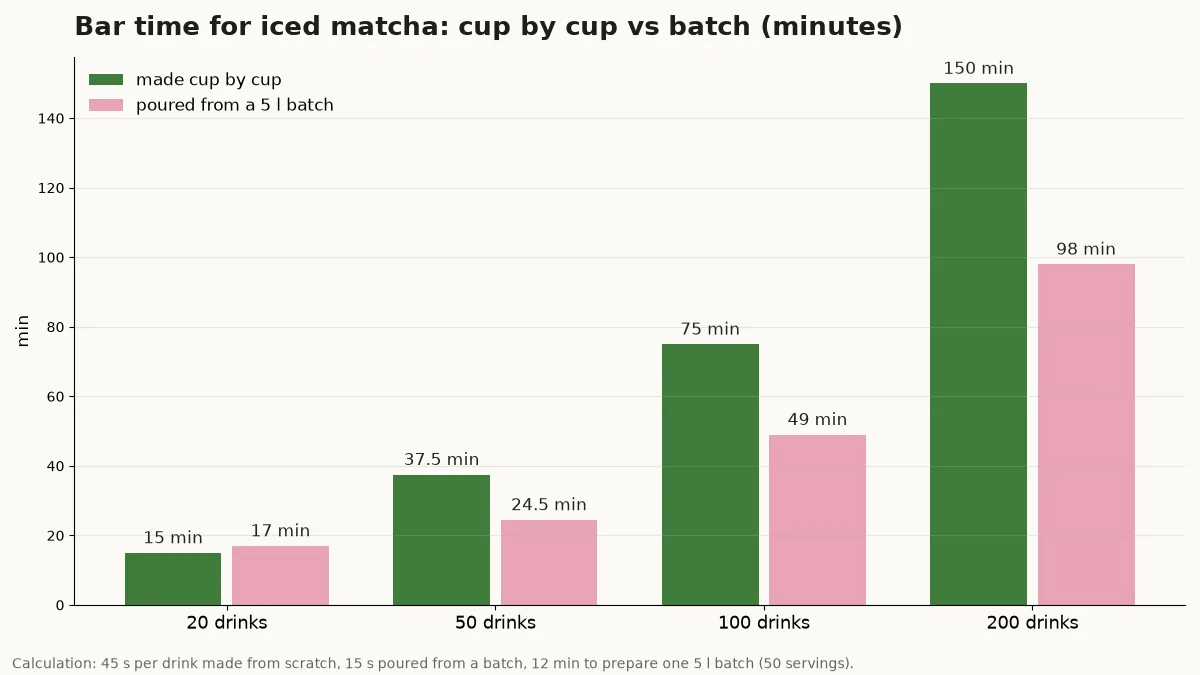
Under about thirty cold drinks a day. Look at the chart again: at twenty drinks the batch is slower than making each cup to order, because you pay the twelve-minute preparation whether you sell ten or fifty. At that volume you also bin half the bottle.
Hot matcha. Never from a cold batch. Reheated matcha tastes like boiled spinach. Hot drinks get whisked per cup, which takes 40 seconds and is part of what people are paying for.
Usucha in a bowl. If a bowl of whisked matcha is on your menu, it gets made in front of the guest with a chasen. That drink is the preparation; a pour from a bottle is a different product and customers can tell.
A slow fridge. If your under-counter unit sits at 8 °C in August because the door opens two hundred times a day, do not store a day’s matcha in it. Make smaller batches more often.
Ordering the powder in kilos
One kilogram is eight five-litre batches and four hundred drinks at 2.5 g, so a café selling forty iced matchas a day works through a kilo in about ten days. That is the calculation to do before the first order: daily drinks × grams × opening days, plus a bag in reserve.
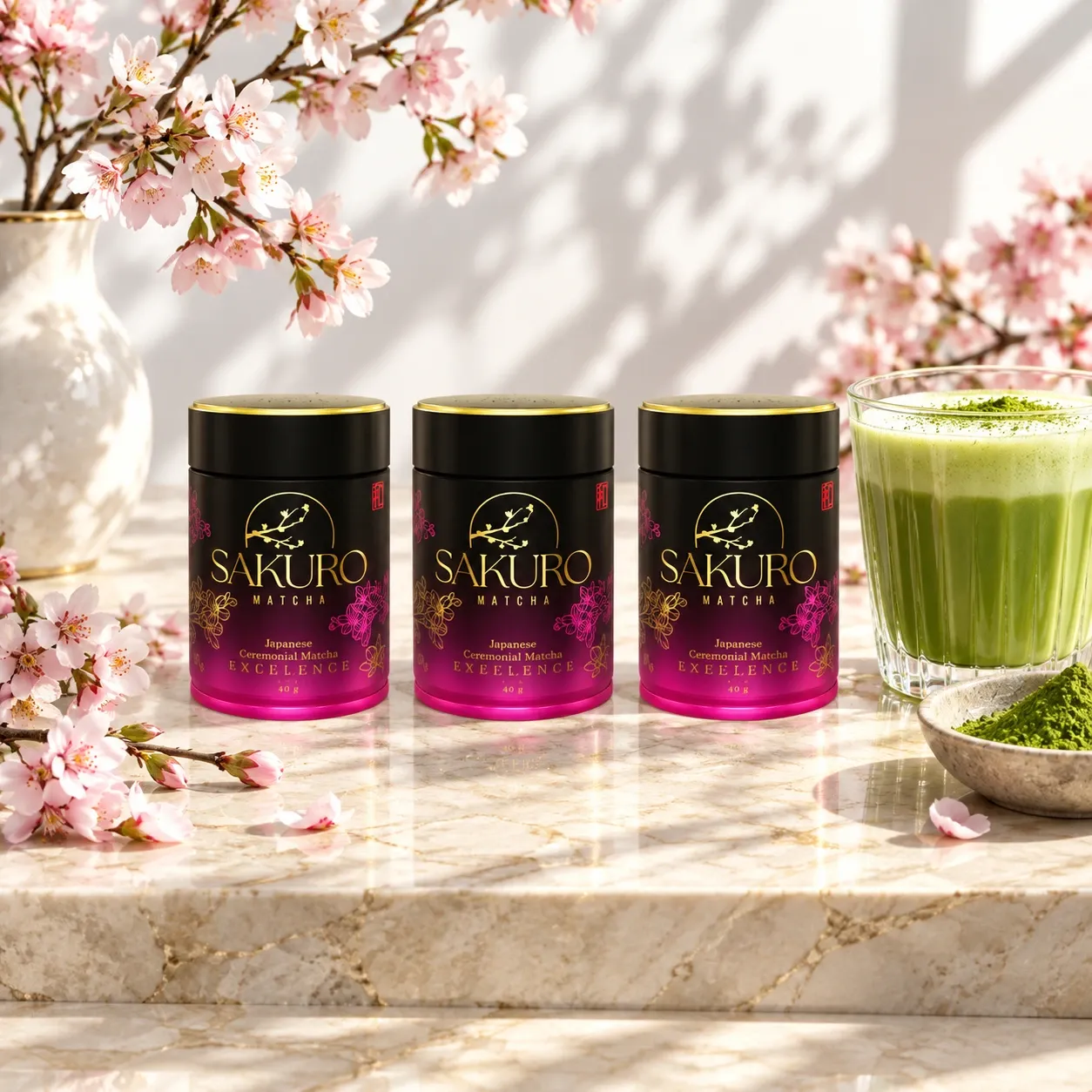
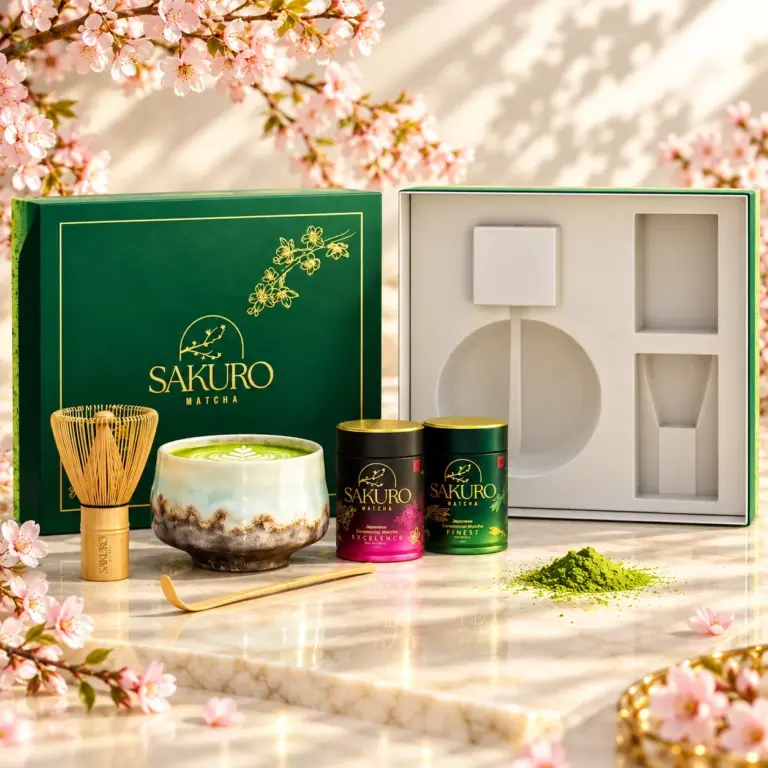
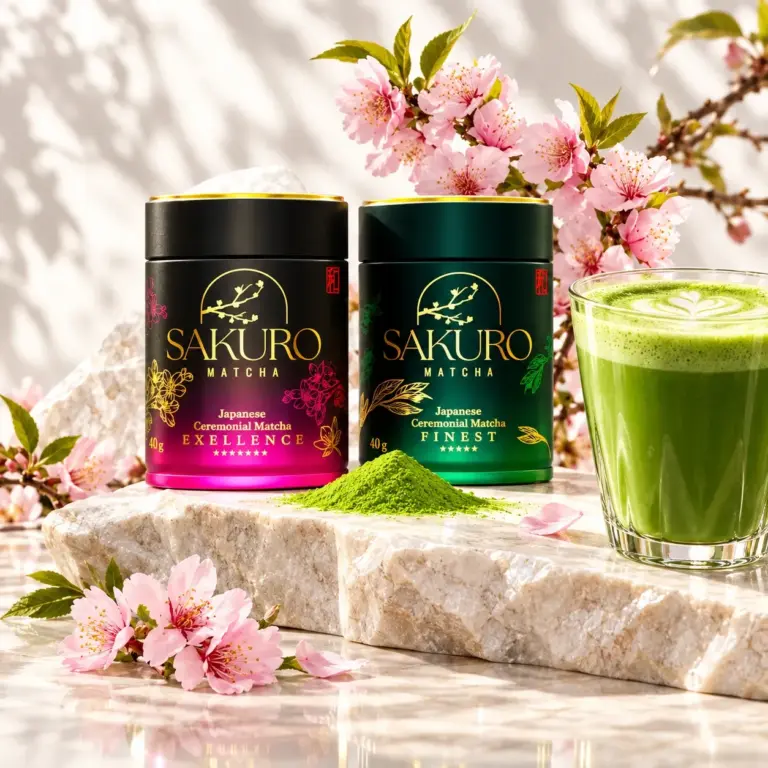
Test before you commit. Buy one retail tin of each grade, make a 1-litre batch of both, and taste them side by side at 9 a.m. and again at 4 p.m. with your water, your milk and your ice. From our shop that is Sakuro Matcha Finest 40 g at €23.90 and Sakuro Matcha Excellence 40 g at €26.90, or the Finest and Excellence pair at €46.90 in one parcel. If you want enough for a full trial week, the 2+1 pack of three Finest tins at €46.90 gives you 120 g. A bamboo chasen at €14.90 stays useful for the bowls you still make to order.
Both grades are Japanese ceremonial matcha from Shizuoka. Finest is the one for milk drinks and batching; Excellence is for matcha whisked with water and drunk on its own, where you taste everything. There is more on that split in our comparison of ceremonial and culinary grades, and the wider trade picture is in the matcha wholesale guide for cafés and restaurants.
Wholesale goes through one person, so nothing gets lost between inboxes. Ewelina handles trade orders: [email protected], +48 515 025 329. Matcha ships in 1 kg bags from Poland, inside the EU, with 5 % off from 3 kg and 10 % off from 5 kg. Tell her your monthly volume and which grade you tested and she will send a binding offer.
Questions we get asked
How long does batched matcha last in the fridge?
Treat one service as the limit. Sealed and at 4 °C it is at its best for the first two hours, acceptable for six, and still usable under milk for up to twelve. The next morning it is dull and flat, and not something to put in front of a paying customer.
Can I batch matcha with milk?
No. Keep the batch water-based. Milk shortens the safe window, separates in the bottle and costs you more when the batch goes over. Milk belongs in the cup, poured to order.
Do I need hot water to mix a cold batch?
A small amount at the start, yes. Making the paste with 500 ml at 70–80 °C opens the powder up and saves you a minute of blending. The remaining four and a half litres go in cold, so the batch chills quickly.
How much caffeine is in a batched iced matcha?
At 2.5 g per drink, roughly 80 mg, so a little above a single espresso. EFSA considers up to 400 mg of caffeine a day from all sources unproblematic for most healthy adults, and 200 mg a day during pregnancy. Two of these plus the coffees people drink anyway is worth a line on the menu. We put the full comparison in how much caffeine is in matcha.
Which grade should go in the batch?
Finest for anything with milk, fruit or syrup. Excellence when the matcha is served over ice with nothing else, or whisked to order in a bowl, because at that point the powder has nowhere to hide.
Why does my batch taste bitter in the afternoon?
Three usual causes: it was made too strong and the ice melt was supposed to fix it, it sat above 4 °C, or it is simply too old. Make it at 25 g per litre, keep it cold and closed, and write the time on the bottle so the answer is never a guess.
If you want a number to start from tomorrow: make two litres, 50 g of matcha, before you open. Pour 100 ml per cup, keep the bottle in the ice well, and count what is left at close. That single figure tells you your batch size for the rest of the month better than any calculation on this page.
Discover our TOP products!


Your dream figure


Discover new flavors


Yerba mate with tea

Accessories

Superfoods








Certified raw honeys from Poland

Check the current price
free shipping
Up to 90 days
free returns
24 H
shipping