
Sugar-Free Dried Fruits – Apricots, White Mulberry, Raisins, Mango and Goji Under the Microscope
2026-08-14
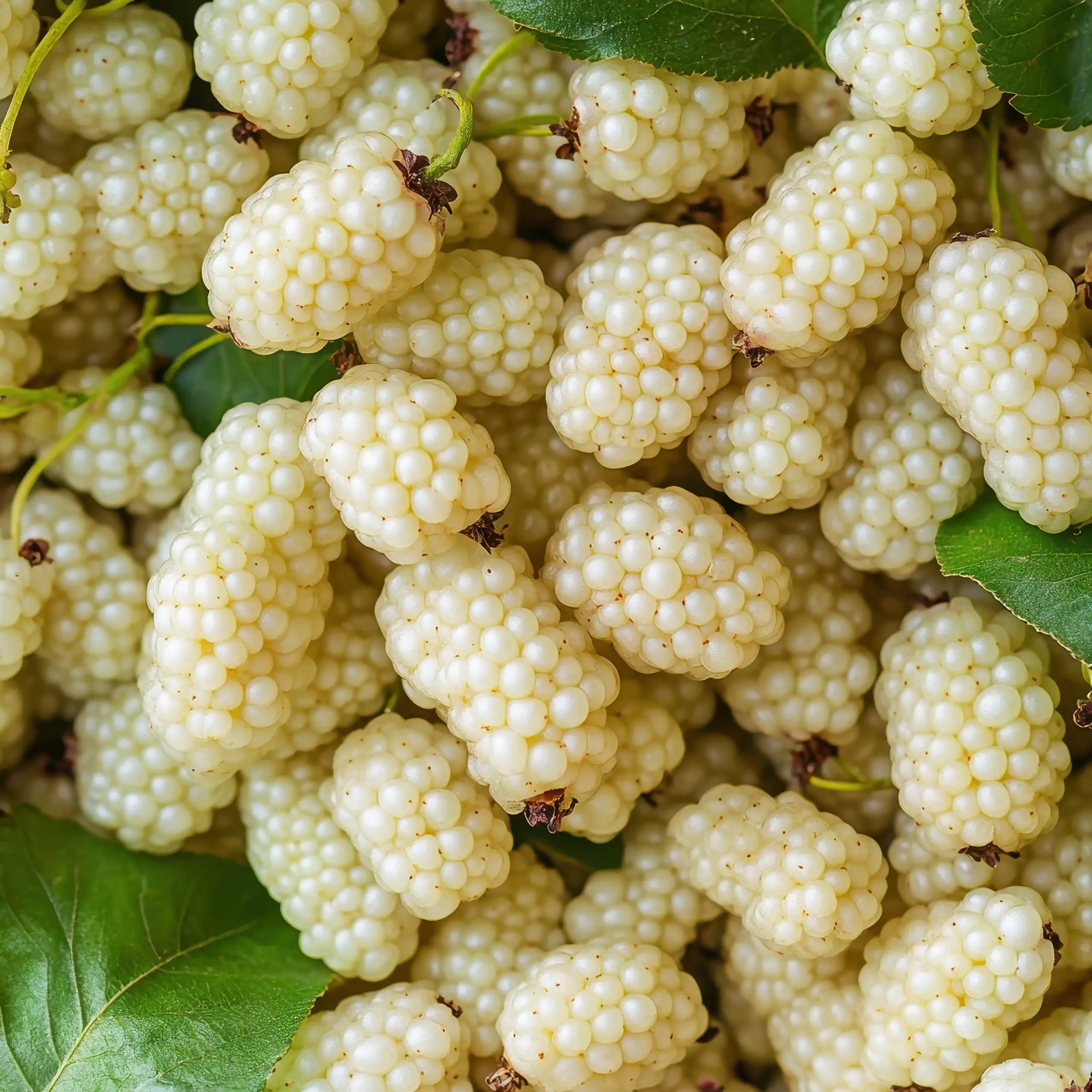
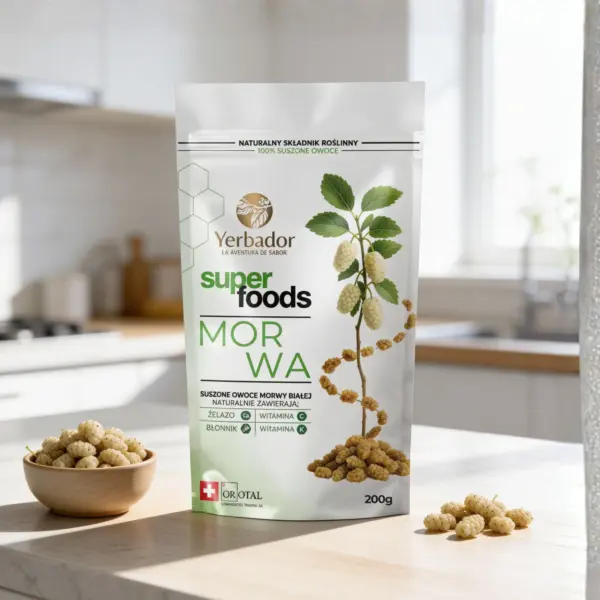
White mulberry is the dried fruit of the mulberry tree (Morus alba), small, creamy-white, with a taste reminiscent of honey with a hint of caramel — and unlike most dried fruits, it doesn’t need any added sugar, because it’s naturally sweet on its own. It’s the most searched-for item on our entire dried fruit shelf, and usually the first choice for people looking for something sweet without added sugar.
The rest of this set — apricots, Thompson raisins, mango and goji berries — share one trait with mulberry: they’re fruit with the water evaporated out, and nothing else. There is sugar in them, but it’s their own, natural fruit sugar. The differences start with the mineral profile, with sulphuring, and with how much you can realistically eat without ending up with 400 kcal from a single handful. Below I break down each of these fruits one by one, with numbers and no sugarcoating.
What is white mulberry and what vitamins does it have?
White mulberry comes from Asia, where it has been grown for centuries mainly for its leaves — the ones silkworms feed on. The fruit was long a by-product, and it was only the health food market that turned it into a dried fruit snack. The dried fruits are the size of an elongated raspberry, colour ranging from creamy to light beige, with a texture somewhere between a raisin and something crunchy.
As for the vitamins in mulberry: fresh fruit is a decent source of vitamin C (tens of mg per 100 g), but let’s be honest — drying strips out much of that vitamin, since it’s sensitive to heat and oxygen. What remains genuinely strong after drying is fibre: depending on the batch and degree of dehydration, we’re talking roughly 10–14 g per 100 g. Hence the name of our product, White Mulberry 200 g – Rich in Fibre and Vitamin C. On top of that come polyphenols, including resveratrol — the same compound often talked about in connection with red grapes.
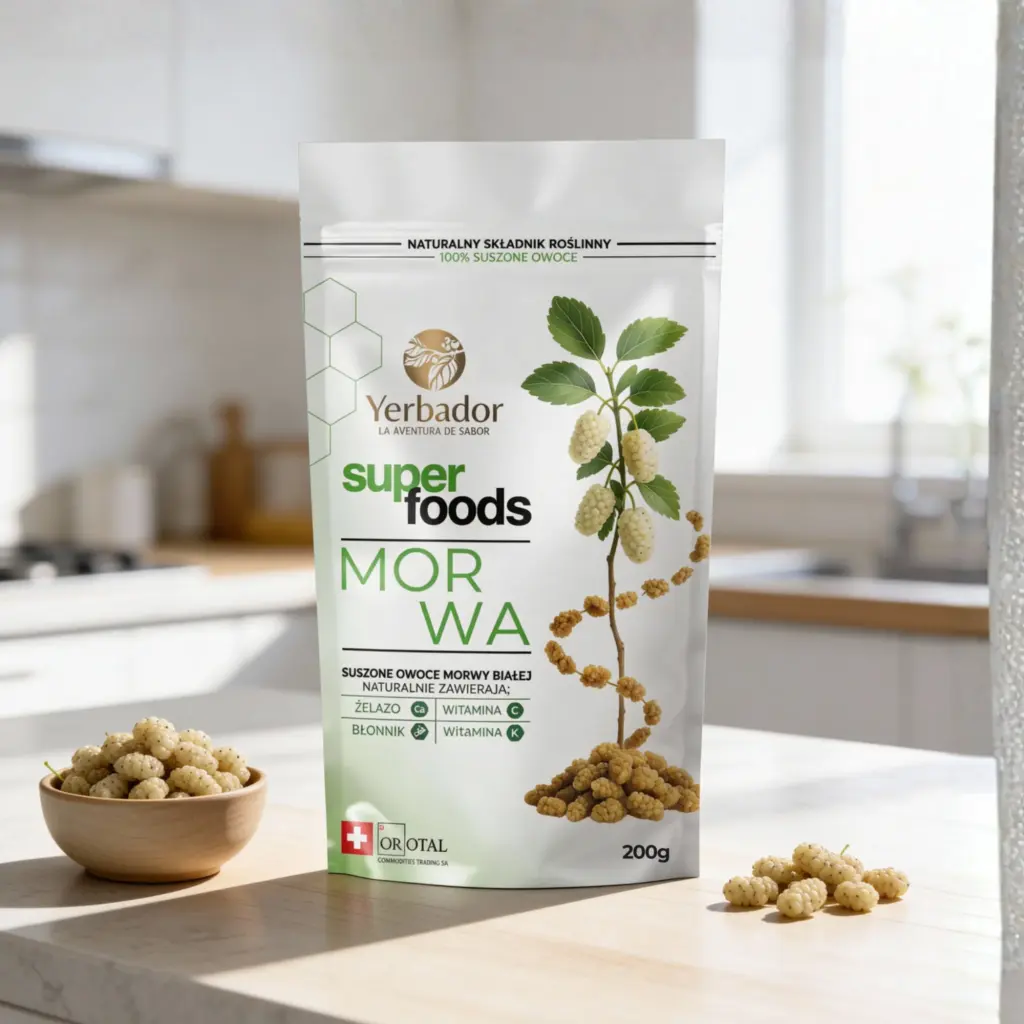
In practice: mulberry is the mildest in flavour of all five. It lacks the acidity of apricots or the intensity of goji, so it goes down well with children and people who dislike “healthy” aftertastes. A handful into porridge, into yoghurt, or straight from the bag at your desk.
How much potassium do dried apricots have?
A lot — and that’s the number most people come for. Food composition tables list roughly 1150–1200 mg of potassium per 100 g for dried apricots, and sulphured versions can have even more. For comparison: a banana, the symbol of potassium in Polish cuisine, has about 360 mg per 100 g. Three times less.
The thing is, 100 g of dried apricots isn’t a portion — it’s half a bag. A realistic handful, around 30–40 g, gives roughly 350–450 mg of potassium — about the same as a large banana, but in a form that doesn’t take up space in your backpack and doesn’t get squashed on the way. That’s the sensible way to look at these fruits: not as a supplement, but as a concentrated fruit.
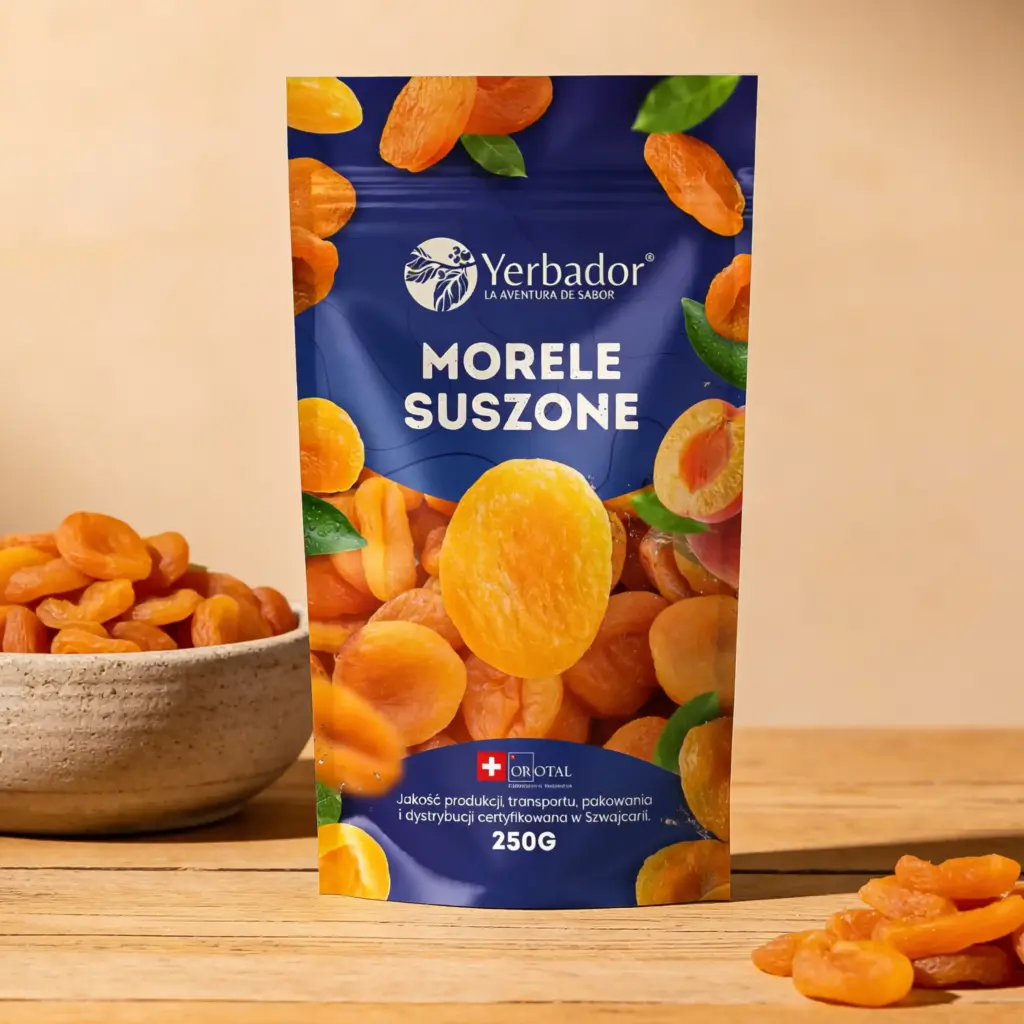
Dried apricots and iron — how much is really in there?
About 2.7 mg per 100 g, so roughly 1 mg in a handful. This is non-haem, plant-based iron, which is absorbed less efficiently than the iron from meat. You can help it along: vitamin C eaten in the same meal noticeably improves absorption, so apricots eaten with kiwi, peppers, or washed down with orange juice work better than on their own. The opposite effect comes from tannins in strong tea and coffee drunk at the same time.
The product name Dried Apricots 250 g – The Power of Potassium and Iron is therefore not a marketing invention, but a description of what’s actually in the nutrition table. However, this is not a treatment for anaemia and won’t replace proper diagnostics — if you suspect you have an iron deficiency, get a blood count and ferritin test done, and discuss the results with your doctor.
A separate note for people with kidney disease or those taking medications that affect potassium balance (some blood pressure and heart failure medications). With this much potassium per serving, this isn’t a “snack freely” kind of food — it’s worth checking the right amount with your doctor.
Sulphured or unsulphured? Why our apricots are brown
This is the question we get asked about most often out of everything. Dried apricots in stores can come in two completely different colours: bright, almost neon orange, or dark, matte brown. The difference isn’t about the quality of the fruit, but about sulphur dioxide.
Sulphuring is a preservation treatment. The fruit is fumigated with sulphur dioxide (E220), which blocks the enzymes responsible for browning and protects against mould. The effect: the apricot stays orange for a year and looks appetising on the shelf. The cost: sulphites in the ingredients, intolerance reactions in some people, and a risk of respiratory irritation for asthmatics. That’s why sulphites are a mandatory allergen on labels in the EU.
Unsulphured dried fruit browns because that’s how natural oxidation of sugars and polyphenols works. It looks less appealing, tastes more intense, and has a shorter shelf life. We choose the second path and say so openly, because otherwise we’d get complaints like “the apricots arrived dark”. Dark means good.
Thompson Raisins — how are they different from regular raisins?
Thompson Seedless is a specific grape variety, seedless, bred in California in the late 19th century, and today the most popular raisin variety in the world. It’s sun-dried, which darkens it to a mahogany colour — and again, that dark colour is a sign the fruit wasn’t sulphured. Sultanas, which you know as light golden, are usually the same type of grape, just treated with sulphur dioxide and a solution to speed up drying.
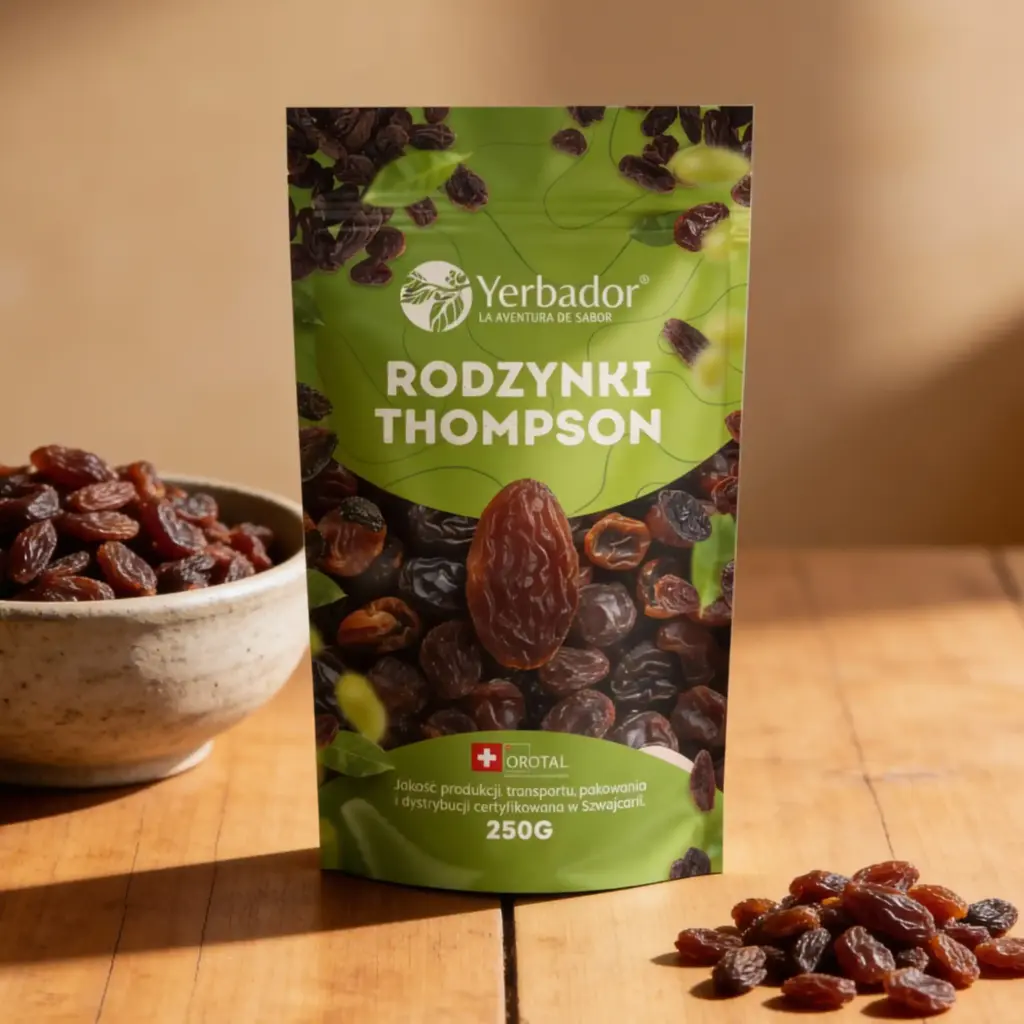
Mineral content: about 750 mg of potassium and nearly 2 mg of iron per 100 g, plus boron and a bit of magnesium. There’s plenty of sugar, around 59–65 g per 100 g, mainly glucose and fructose in roughly equal proportions. This makes raisins the fastest fuel of the whole group — hence their spot in a runner’s pocket and on a cyclist’s table. Our Thompson Raisins 200 g are mostly bought for baking and porridge, but a handful before training is their most sensible use.
Dried mango — how do you tell it isn’t sweetened?
By three things. Colour: real dried mango is matte amber, not neon orange. Texture: leathery and chewy, not soft and jelly-like like a gummy sweet. Ingredients: a single item, “dried mango”, with no sugar, glucose-fructose syrup, or E220.
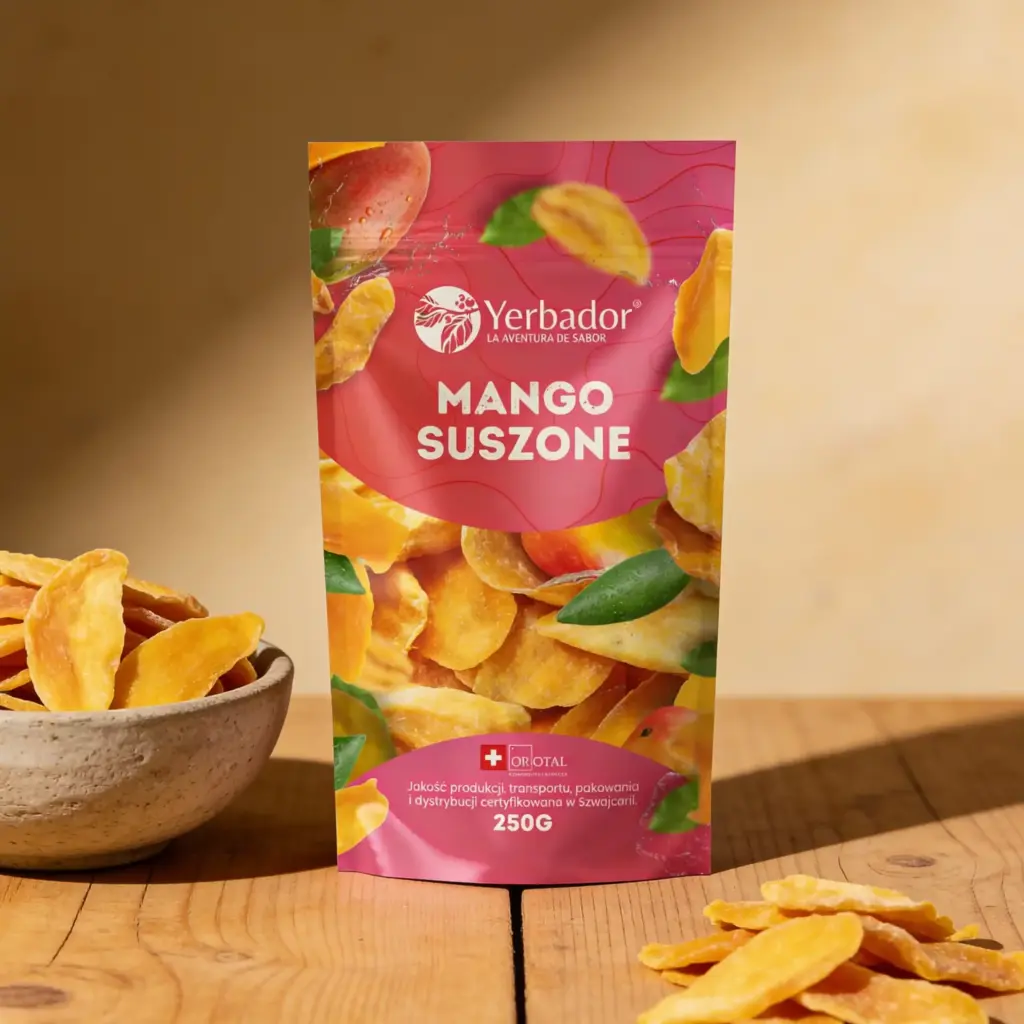
Mango has the most beta-carotene, a precursor of vitamin A, in this set, and it’s what gives it that orange flesh. On top of that, decent fiber and a whole range of compounds that give it that dense, resinous aroma. Dried Mango 250 g is the sweetest of all five to us, even though we don’t add anything to it — that’s thanks to the variety itself and the fact that the fruit goes into the dryer ripe, not picked green for transport.
Dried goji berries — what are they good for?
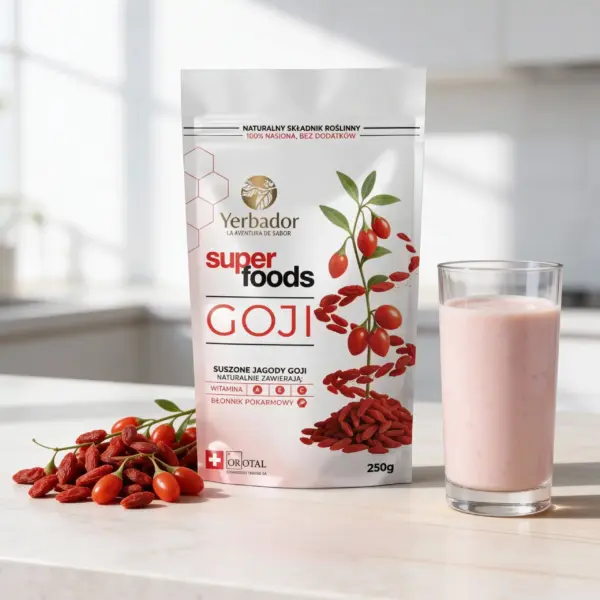
Goji (the fruit of the common wolfberry, Lycium barbarum) is eaten mainly for its carotenoids — above all zeaxanthin, of which goji has an exceptionally high amount for a fruit. This is a pigment that accumulates in the macula of the human eye. On top of that, vitamin C, vitamin E and polyphenols. Our Dried Goji Berries 200 g carry the name “Source of Vitamin A, C and E” for exactly this reason.
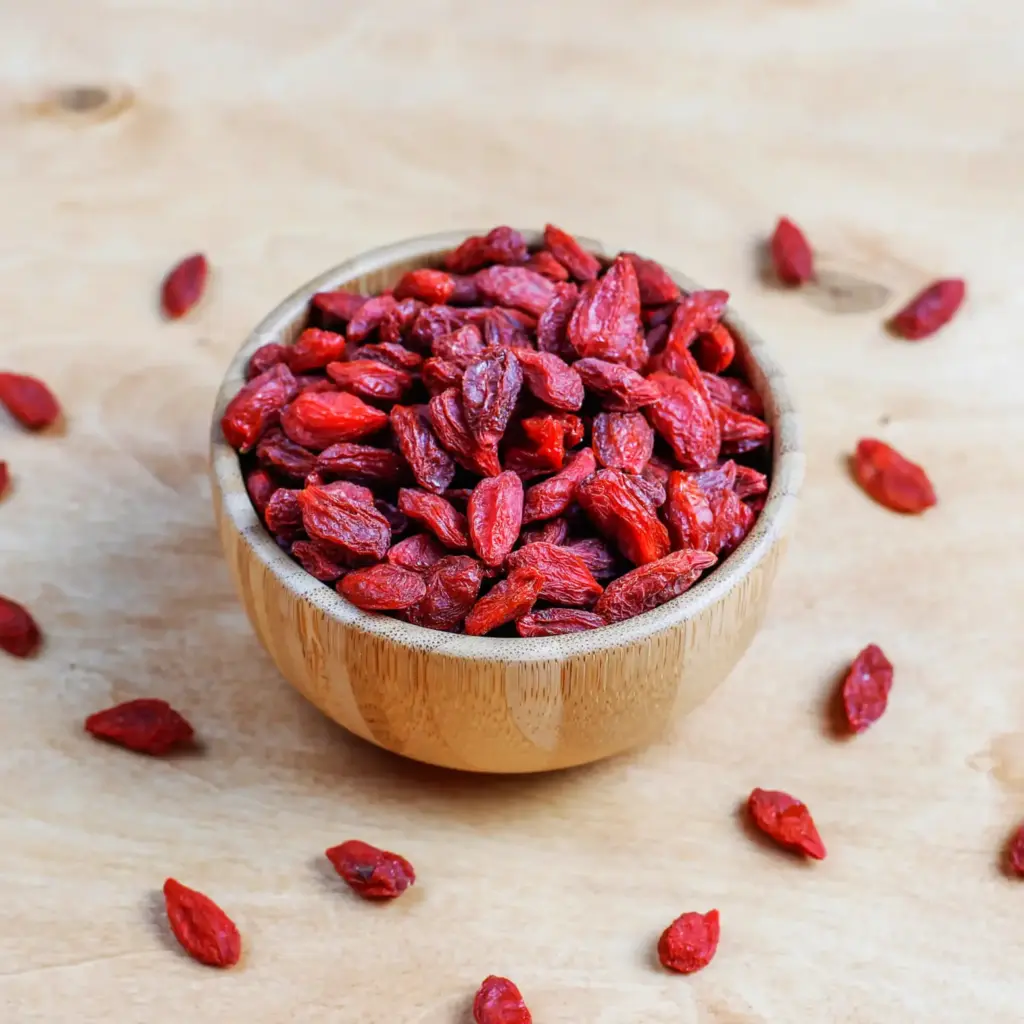
Taste divides people. Goji is slightly sour, with a distinct herbal, almost tomato-like note at the end — it’s not a sweet dried fruit like raisins. It’s best after soaking: five minutes in warm water and the fruit softens, becomes juicy. Then it goes into porridge or tea.
Important note: goji interacts with warfarin and other anticoagulant medications. If you take them, consult your doctor before introducing goji into your daily diet. Otherwise, if you’re looking for a similar antioxidant profile in another form, we’ve written more about acai berries and what they really help with.
How many dried fruits a day is a reasonable portion?
Thirty, maybe forty grams. That’s a handful — not the kind of “handful” you grab from a bowl in front of the TV, but a measured one. Drying removes 70–80% of the water from the fruit, so everything that’s left is denser: minerals, fiber and sugar in the same proportion. A hundred grams of dried apricots is about 240 kcal, a hundred grams of raisins about 300 kcal, mango similarly.
This leads to a simple rule. Dried fruits are great as a substitute for a chocolate bar and poor as something you just “snack on”. If you’re watching your calorie balance, treat them as a planned snack, not as something neutral. We developed this thread in our article about what to drink for weight loss and what really works — it’s exactly the same with food: what matters is what you’re trading it for.
The second argument for measuring is fiber. At 10 g per 100 g of mulberry, an overdone portion has digestive consequences that nobody planned for. Introduce it gradually and drink more water.
How to store dried fruit so it doesn’t turn into a solid brick?
Unsulfured dried fruit is more demanding than the preserved kind. Once opened, pour it into a jar or clip the bag shut, because the fruit absorbs moisture from the air and clumps together. Keep it cool and shaded, in summer preferably in the fridge.
A white coating on raisins or mulberries is usually crystallized fruit sugar, not mold. Mold is fuzzy, gray-green and smells musty — that kind of batch isn’t worth saving. And if the fruit has simply hardened, put it in hot water for a few minutes or straight into your baking dough.
Powdered dried products follow different rules than fruit with residual water — we covered this in our articles on moringa and its properties and on baobab powder.
Which of these five should you pick to start?
If you’re just starting out and don’t know what to try — white mulberry. It’s the mildest, least controversial in taste and won’t put anyone off. If you’re after a specific mineral, apricots are the one for potassium and iron. For energy before exercise, Thompson raisins. For cooking and experimenting — mango. For antioxidants and adding to drinks — goji.
All five products meet the same standard: fruit, nothing else in the ingredients, no sulphuring and no added sugar, in KIWA-certified packaging. It’s no accident that each of these bags has a single ingredient on the front — it’s easier to keep it that way when you don’t have to mask anything.
Frequently asked questions
Do sugar-free dried fruits really have no sugar?
They do — their own, natural fruit sugar, at a concentration of around 50–65 g per 100 g. “No added sugar” on the label means nothing extra was added during processing. That’s an important distinction, but it doesn’t mean the serving is calorie-neutral.
How much potassium do dried apricots have in one serving?
A 30–40 g handful provides roughly 350–450 mg of potassium, with about 1150–1200 mg per 100 g. That’s comparable to a large banana.
Why are your apricots dark, while the ones in shops are orange?
Because they’re not sulphured. Sulphur dioxide prevents browning and keeps the bright colour, but it remains in the ingredients as an allergen. A brown apricot is simply an apricot without that additive.
Is white mulberry suitable for children?
Yes, in a sensible portion and provided the child can already safely eat small, firmer pieces. Mulberry is mild in taste and usually wins over other dried fruits with younger kids. In case of allergies or elimination diets, consult your paediatrician.
Can you soak dried fruit before eating it?
You can, and with goji it’s actually worth it — five minutes in warm water changes the texture and softens the tartness. Apricots and mango also regain some softness, but lose a bit of flavour intensity.
Discover our TOP products!
Your dream figure
Discover new flavors
Yerba mate with tea

Accessories




Superfoods

Certified raw honeys from Poland


Check the current price
free shipping
Up to 90 days
free returns
24 H
shipping