
Spirulina Powder – Properties, Dosage and How to Use It
2026-08-08
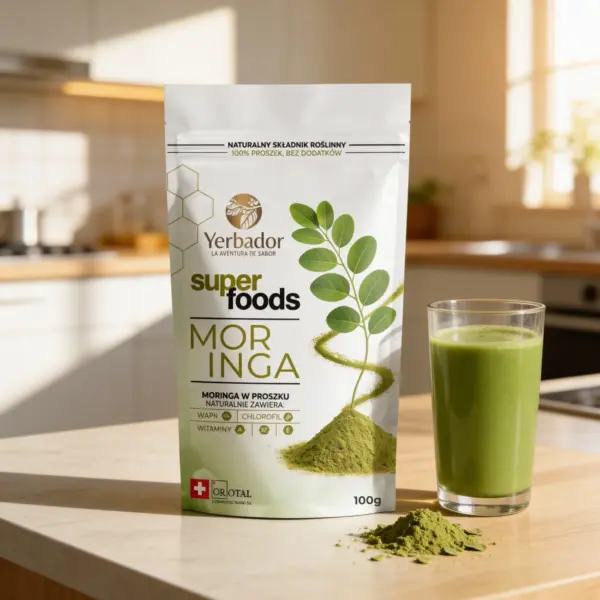
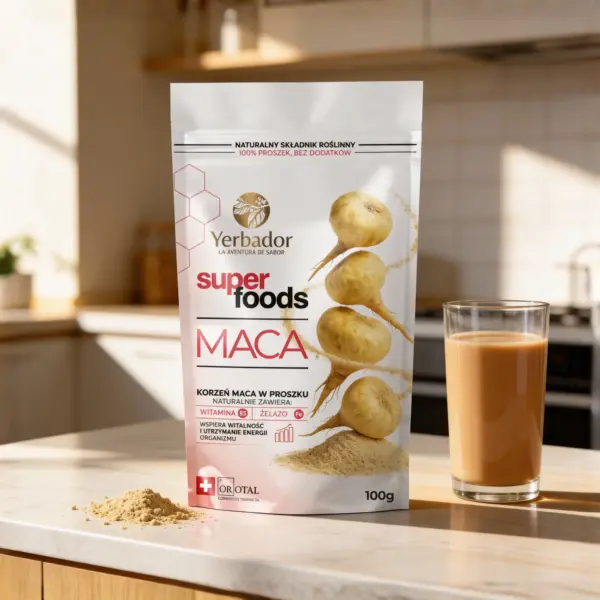
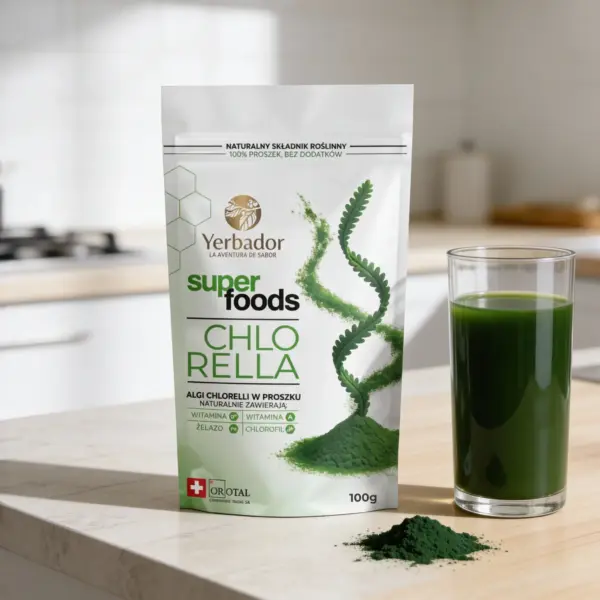
Spirulina Powder is an intensely green, almost emerald powder with a distinct, sea-like taste, which is increasingly finding its way into shopping carts alongside other algae and superfoods. This is the eighth article in our superfood series – we’ve previously written about moringa, acai, chlorella, baobab, guarana, ashwagandha and maca. This time we’re checking what spirulina actually is, where it comes from, what its composition is, and how to dose it so as not to overdose on good intentions.
What is spirulina and where does it come from?
Spirulina (Arthrospira platensis) is a microscopic cyanobacterium, meaning an organism from the group of bacteria capable of photosynthesis – not a single-celled alga, as one might think looking at the neighbouring chlorella on the store shelf. This is a small but concrete biological difference: chlorella is a true alga with a cell nucleus, while spirulina, as a cyanobacterium, has no cell nucleus – its genetic material floats freely within the cell. For someone reaching for a spoonful of green powder in the morning smoothie, this has no practical significance, but it’s an interesting fact that explains why both powders, despite their similar colour, differ in taste, texture and nutritional profile.
Spirulina grows in warm, alkaline lakes and reservoirs – it occurs naturally in, among other places, Africa, Mexico and Asia, and its history as a food dates back to ancient civilizations: the Aztecs harvested it from Lake Texcoco, and residents near Lake Chad in Africa still dry and eat it today under the name dihé. Modern production takes place mainly in controlled, open or closed farms, where water parameters, temperature and sunlight are monitored so that the algae grows quickly and cleanly. After harvesting, the biomass is dried and ground into a fine powder – and it’s this powder that ends up in the jar on the shelf.
Spirulina vs chlorella – what’s the difference?
Since both powders are green and often sit side by side in the same store category, it’s natural to wonder how they differ. In short: spirulina is a cyanobacterium with a more marine, distinctive taste, while chlorella is an algae with a more plant-like, earthy taste and a tough cell wall, which is why some manufacturers subject it to additional processing (the so-called cracked cell wall) to make the nutrients more bioavailable. Spirulina, in turn, stands out for its exceptionally high protein and vitamin B12 content per 100 g of powder – exact figures below.
We’ve already covered a full, detailed comparison of both algae – explaining when one works better than the other – in the article about Chlorella Powder, in the section „Chlorella or spirulina – what’s the difference”. Here we won’t repeat that analysis, but instead focus on spirulina itself: its composition, dosage and practical use.
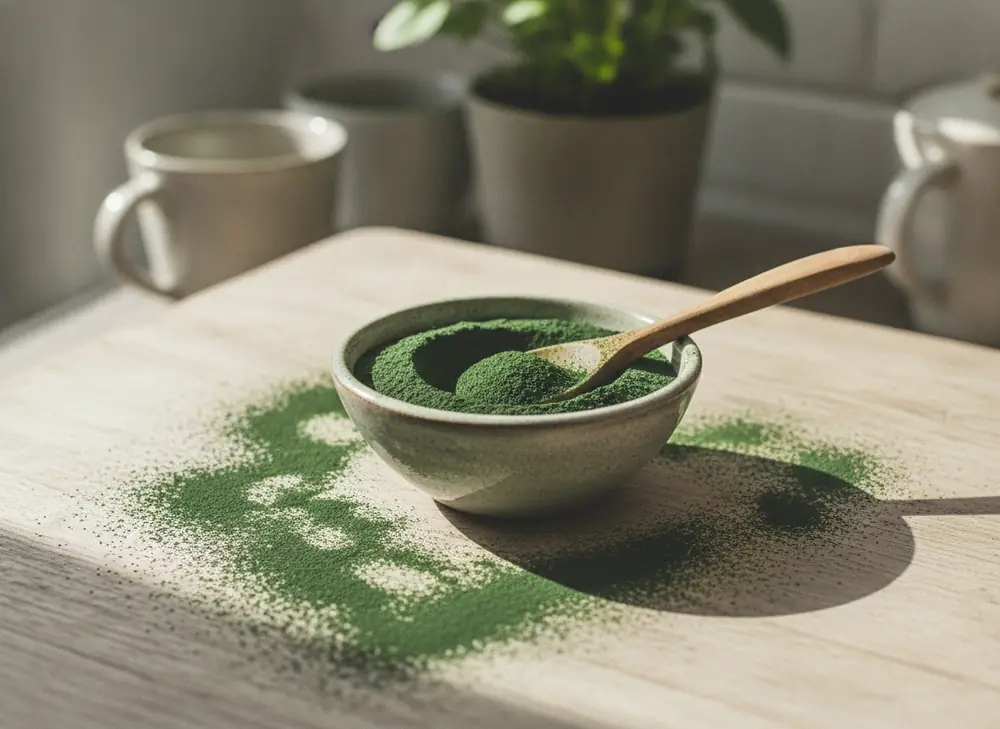
Nutritional composition of Spirulina Powder (per 100 g)
Data from the Yerbador product label, calculated per 100 g of powder:
- Energy value: 1590 kJ / 380 kcal
- Fat: 8 g, of which saturates: 2.60 g
- Carbohydrate: 24 g, of which sugars: 3 g
- Fibre: 3.60 g
- Protein: 57 g
- Salt: 2 g
- Vitamin B12: 150 µg
- Vitamin B1 (thiamine): 2.40 mg
- Vitamin B2 (riboflavin): 3.70 mg
- Iron: 28.50 mg
- Chlorophyll: 1000 mg
What stands out the most is the protein content – 57 g per 100 g of powder is a result you’d struggle to find in most plant-based products. Of course, this figure applies to the dry raw material, not to a single serving – a standard serving from the label is 3 g, so in reality it provides a fraction of these values, roughly 1.7 g of protein. Even so, spirulina remains one of the densest sources of plant protein available in powder form, alongside a solid dose of iron, vitamin B12 and chlorophyll, which gives it its intense green colour. The product is made of 100% powdered spirulina algae, with no fillers, flavourings or additives.
Dosage and usage
The manufacturer recommends 3 g of powder per 200 ml of water, juice or yoghurt, well mixed. A beneficial effect is described at an intake of 6 g per day, i.e. two such servings – for example one in the morning, one during the day. This is an indicative starting point, not a strict rule: when trying spirulina for the first time, it’s worth starting with a smaller amount, checking how it tastes and how your body reacts, and only then, if everything’s fine, moving on to the full serving from the label.
Spirulina’s taste is intense and distinctly marine – different from the milder, more “plant-like” chlorella. For some people this is a matter of getting used to it, which is why it works well paired with other, stronger flavours: in a smoothie with banana and citrus fruits, in a shake with orange or pineapple juice, in porridge with honey, or in muesli. The powder also pairs well with natural yoghurt and salads, where its marine aftertaste doesn’t dominate the whole dish but instead adds a distinctive, green accent.
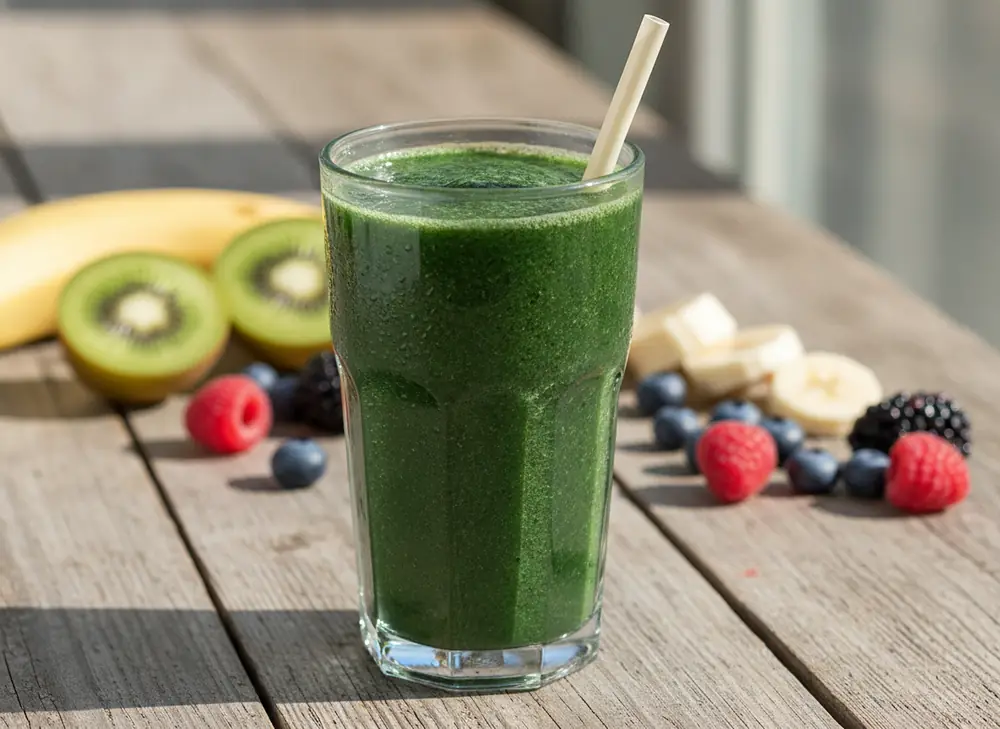
A simple recipe to start with: a glass of coconut water or orange juice, 3 g of spirulina, half a banana and a handful of frozen fruit, all blended until smooth. The smoothie’s intense green colour can be surprising the first time, but after a moment of blending with the fruit, the taste becomes much milder than spirulina dissolved in plain water alone.
Who might spirulina be a good choice for
- For people on a plant-based diet who are looking for a dense source of protein and iron in powder form, as a supplement to a balanced diet.
- For those paying attention to vitamin B12 in their diet – spirulina is one of the few plant-based sources of this vitamin, although its bioavailability from algae is sometimes debated in studies, so it shouldn’t be treated as the sole source of B12 on a vegan diet.
- For people looking for a natural addition to their morning smoothie or shake, who don’t mind a distinctive, sea-like flavour.
- For those curious about algae as a category of superfoods, who already know chlorella and want to compare how its „shelf neighbour” tastes and how it’s used.
These are terms from the world of dietary supplements, not medical promises. Spirulina powder supports a daily diet thanks to specific nutrients – protein, iron, B vitamins – but it doesn’t treat anaemia, and doesn’t replace medication or medical consultation in case of real deficiencies.
Contraindications and what to watch out for
Spirulina is a popular and well-researched supplement, but there are a few situations worth knowing about before making it a permanent part of your routine:
- Phenylketonuria (PKU) – spirulina contains phenylalanine, an amino acid that people with phenylketonuria cannot properly metabolise. For this group, spirulina is not recommended regardless of dosage. More about the protein and amino acids in spirulina can be found in studies available on NCBI Bookshelf (National Library of Medicine, NIH).
- Autoimmune diseases – spirulina may stimulate the immune system, which is sometimes pointed out as a potential concern in diseases such as lupus, rheumatoid arthritis or multiple sclerosis. This is a precaution based on the mechanism of action, not hard evidence of specific harm, but with an autoimmune disease it’s wiser to ask a doctor first rather than guess.
- Product quality and origin – algae, including spirulina, have the ability to absorb heavy metals from their surroundings if grown in polluted water. This is a real risk with products from uncontrolled, cheap sources, which is why it’s worth choosing powder from producers who control the quality of cultivation and raw material, not just the price. The topic of quality control and contamination in spirulina supplements is covered, among others, in analyses published on PMC (NIH).
- Pregnancy and breastfeeding – there is not enough clear data on the safety of regular supplementation during these periods, so consulting a doctor before introducing a new supplement is standard advice.
If none of these situations apply to you, it’s good practice to start with a smaller portion than the one on the label, observe your body for a few days, and only then move on to the full 3–6 g per day.
Yerbador Spirulina Powder and products worth checking out
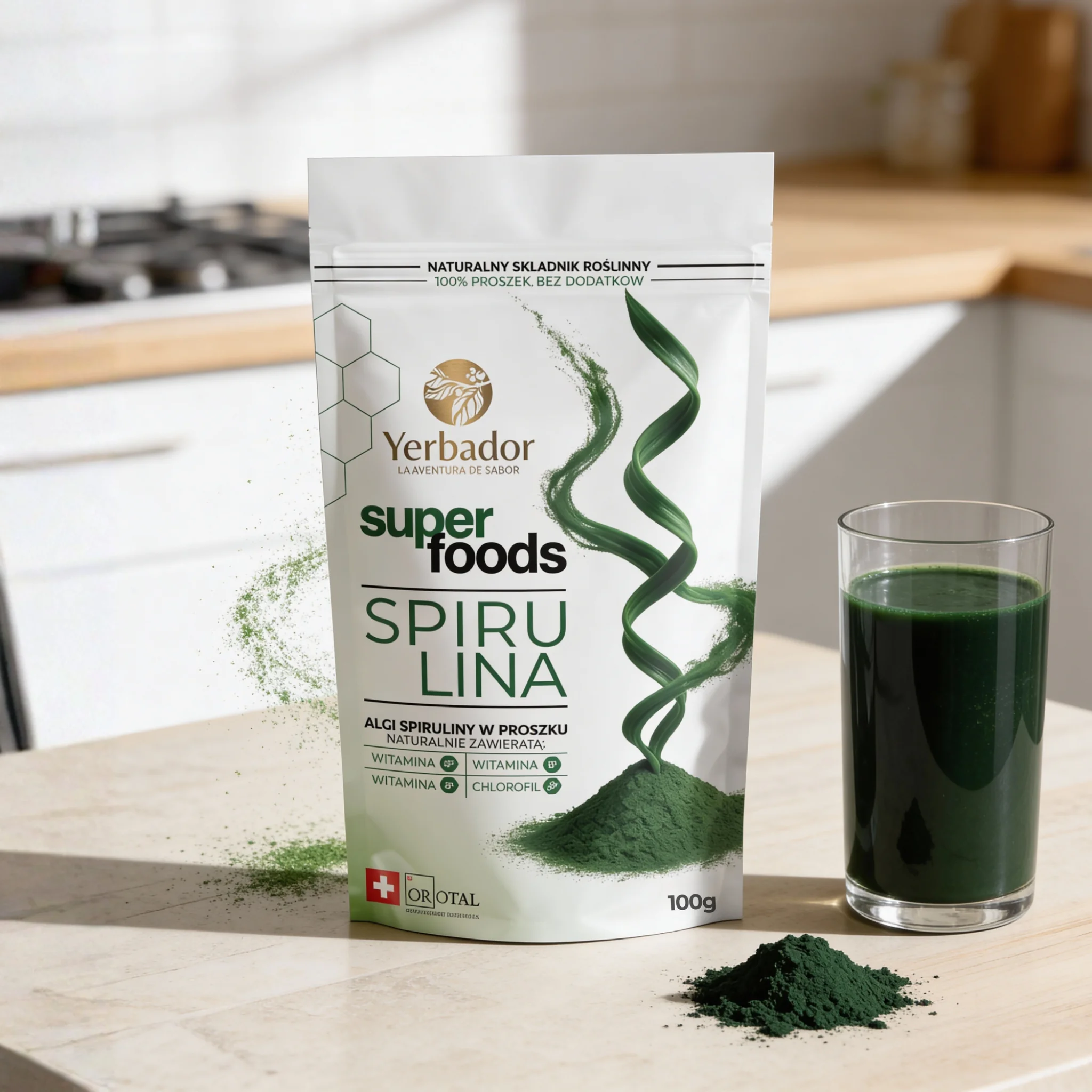
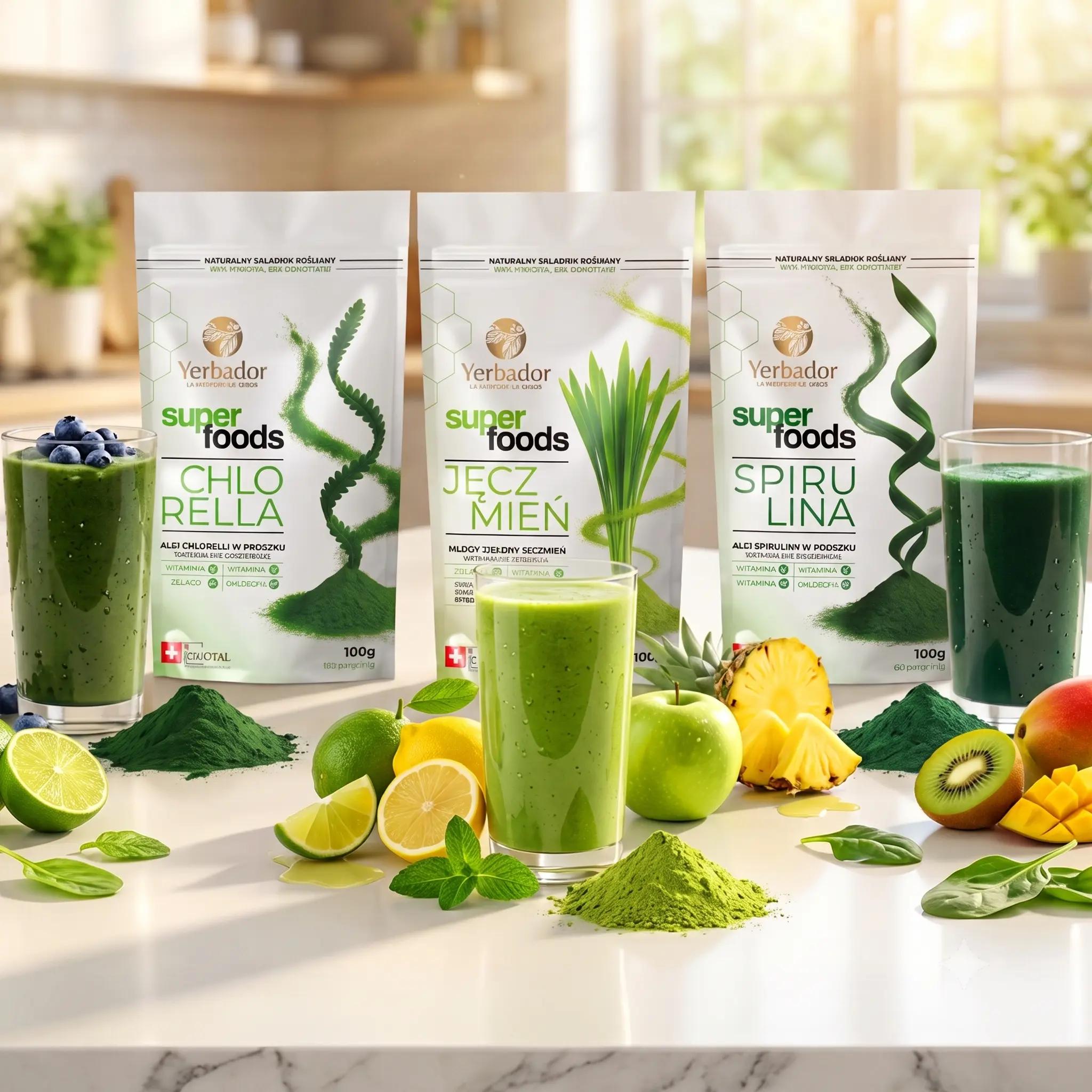
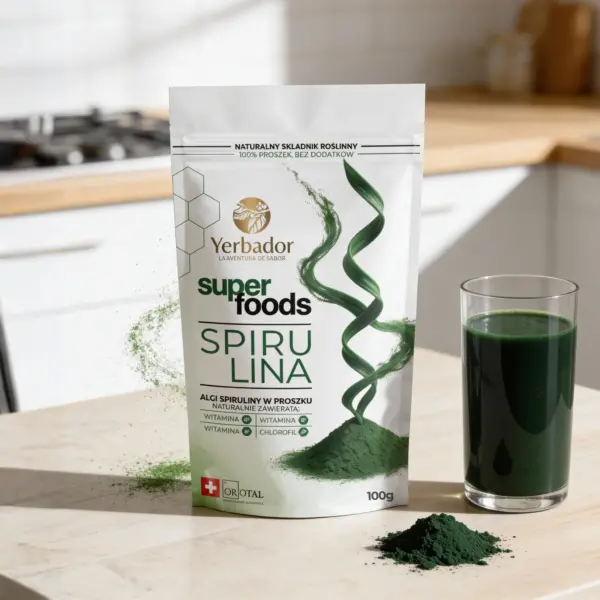
Spirulina – 100 g – Source of Iron and Vitamin B12
The star of this article: 100% powdered spirulina algae, with no fillers or additives, a source of iron, vitamin B12 and complete plant protein. It works well in smoothies, shakes and porridge. Check the current price of the 100 g pack.
Check out the product: Spirulina – 100 g – Source of Iron and Vitamin B12
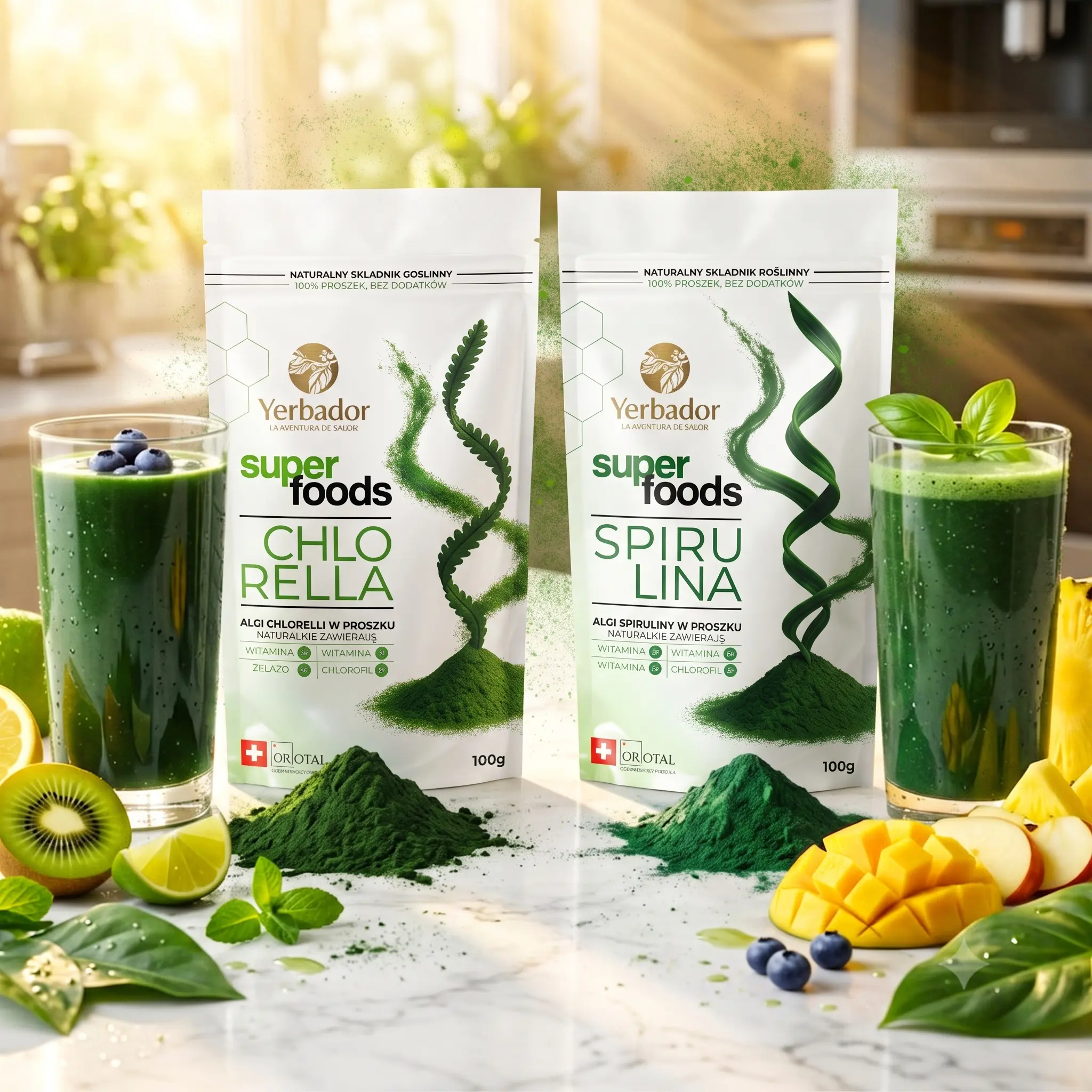
Chlorella + Spirulina Set (body support) – 400 g
For anyone who doesn’t want to choose between the two green algae and would rather have both powders at once – a set of chlorella and spirulina in one package, to be used alternately or combined, depending on the day and the flavour you happen to fancy. Check the current price of the 400 g set.
Check out the product: Chlorella + Spirulina Set (body support) – 400 g
Chlorella + Spirulina + Barley Set (Green Energy Boost) – 600 g
An option for the more advanced – young barley juice joins the algae duo, creating a set of three green powders in one package. A good choice for people who have already got used to the taste of chlorella and spirulina and want to expand their green routine. Check the current price of the 600 g set.
Check out the product: Chlorella + Spirulina + Barley Set (Green Energy Boost) – 600 g
FAQ – frequently asked questions
How much spirulina can you take per day?
The Yerbador product label indicates a serving of 3 g per 200 ml of liquid, with a beneficial effect at 6 g daily in two servings. This is a reference point, not a rigid rule – when trying the powder for the first time, it’s better to start with a smaller amount.
What’s the difference between spirulina and chlorella?
Spirulina is a cyanobacterium with a more sea-like, distinct flavor, while chlorella is an algae with a milder, more plant-like taste. Spirulina stands out with a higher protein and vitamin B12 content per 100 g. You’ll find a full comparison in the article about chlorella.
What does spirulina taste like and how can you mask its flavor?
The taste is intense and sea-like, more pronounced than chlorella’s. The easiest way is to combine the powder with banana, citrus fruits, or fruit juice in a smoothie – stronger flavors nicely balance the characteristic algae note.
Does spirulina have any contraindications?
Yes – people with phenylketonuria should avoid it due to its phenylalanine content, while people with autoimmune diseases, pregnant women, or breastfeeding mothers should first consult a doctor about supplementation. It’s also worth choosing powder from manufacturers who control the quality of cultivation, given the algae’s ability to absorb heavy metals from a contaminated environment.
Does spirulina help with weight loss?
Spirulina is sometimes classified among products supporting weight control, mainly due to its high protein content, but it is not a weight-loss agent or a substitute for a calorie deficit. The real, confirmed data concern its nutritional value – protein, iron, B vitamins – not direct fat burning.
Spirulina powder is one of the more concentrated plant powders you can introduce into your diet – just a teaspoon in a smoothie or shake adds a portion of protein, iron, and B vitamins. If you’re also looking for a milder alternative, check out chlorella powder or maca powder from the same line. Check out Yerbador spirulina powder and see if it fits into your diet.
Discover our TOP products!
Your dream figure
Discover new flavors
Yerba mate with tea

Accessories
Superfoods
Certified raw honeys from Poland

Check the current price
free shipping
Up to 90 days
free returns
24 H
shipping