
The History of Yerba Mate – From the Guaraní to Your Matero
2026-08-03
The history of yerba mate is a story that has it all: a sacred drink of a forest people, monks guarding a botanical secret, a commodity more valuable than coins, and a thermos carried under the arm like a piece of clothing. Before the green dried leaves reached your cup, they traveled several hundred years through jungles, missions, the pampas and oceans. It’s worth getting to know — if only so that next time you brew it, you know you’re repeating a gesture older than any state in South America. Brew yourself a matero and sit back comfortably. We’re telling the story from the beginning.
Caá, a gift of the forest — the history of yerba mate begins with the Guaraní
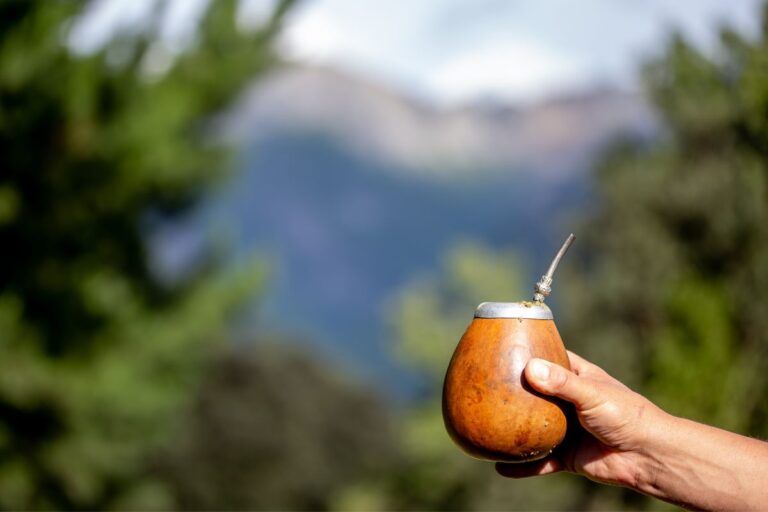
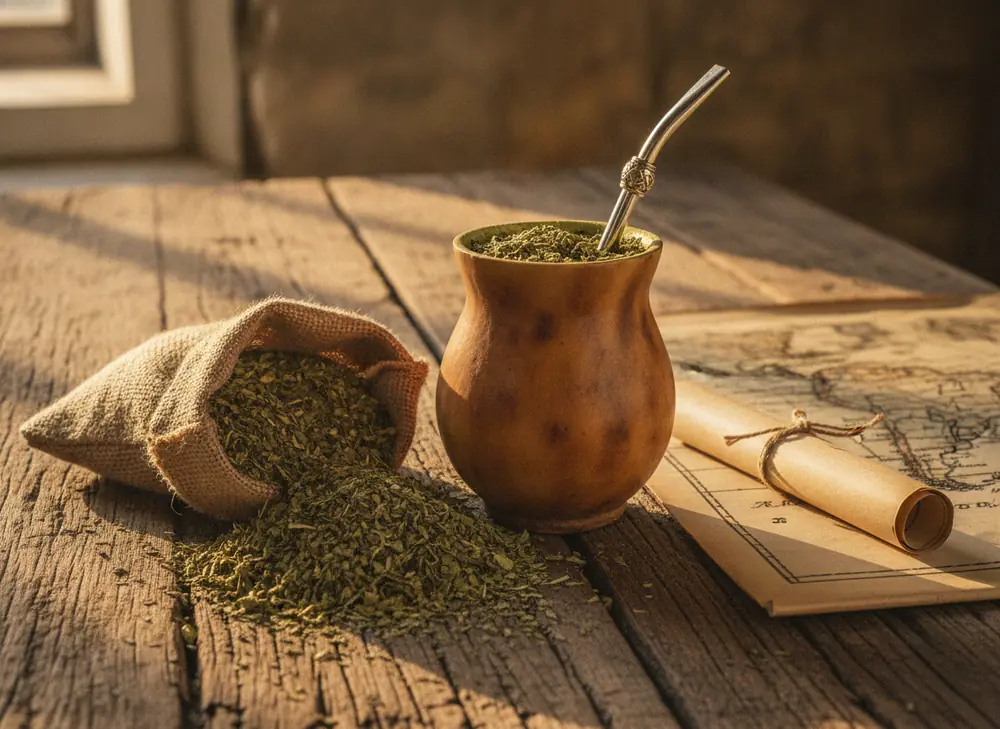
The Paraguayan holly (Ilex paraguariensis) grows wild in the Paraná basin — in the territories of today’s Paraguay, northern Argentina and southern Brazil. Long before the Europeans arrived, the leaves of this tree were gathered by the Guaraní. They called the plant caá and treated it with the respect given to a gift, not a commodity. They chewed the leaves during long journeys, and drank the infusion from a hollowed-out gourd, through reed tubes — the forerunner of today’s bombilla.
A Guaraní legend says that yerba was a gift from the moon goddess to an old man who hosted her during her wanderings on earth. Legend aside, one thing about it is true: for the Guaraní, caá was no ordinary drink. It was a currency of exchange, an element of rituals, and everyday fuel in a climate that shows no mercy.
The very name “mate” came from a completely different language. The Spanish borrowed the word mati from Quechua — it simply meant a gourd vessel. So the drink was named after the cup, not the plant. If you want to brush up on the basics, we have a separate post about it: what is yerba mate and how is it grown.
“Green gold” — the Jesuits build a yerba empire
Spanish colonists picked up the habit of drinking yerba quickly. Too quickly, according to some of the clergy at the time — there were cases where the infusion was denounced from the pulpit as a suspicious pagan herb. It made no difference. By the 17th century, yerba was already, in colonial Paraguay, what salt or silver was elsewhere: people paid for goods and services with it, and everyone understood its value.
It was the Jesuits, however, who made the true revolution. In their famous reductions — mission settlements established among the Guaraní — they were the first to solve a problem that had stumped everyone: in the wild, holly seeds only germinate after passing through the digestive tract of birds. The monks learned how to bypass this process and established the first plantations. They kept the secret to themselves for a short while, and Europe came to know the infusion under the telling name of “Jesuit tea”.
When the Jesuits were expelled from the Spanish colonies in 1767, the plantations went wild within a single generation. Knowledge of germination was scattered for decades, and harvesting returned to wild trees deep in the forest. Yerba survived this blow — people kept drinking it, it just became harder to obtain.
The matero circles on — gauchos, chimarrão and tereré
The nineteenth century belonged to the gauchos. Shepherds of the pampas turned yerba into more than just a drink: a ritual of community. Around the campfire, a single matero would circulate, refilled in turn for everyone by the cebador — the person who “led” the drinking that evening. Handing someone the matero was a gesture of trust; refusing it was a statement. This social dimension of yerba has survived to this day, and we described it in more detail in our post on the social roots of the infusion.
Every country in the region added its own chapter. In Uruguay, yerba has practically become the national costume — nowhere else in the world is it drunk more per person, and a thermos under the arm is as common a sight on the streets of Montevideo as a phone in hand. Southern Brazil fell in love with chimarrão: finely ground, intensely green yerba brewed in a large gourd. Paraguay went the opposite way on the thermometer and drinks tereré — cold yerba, with ice-cold water and herbs. In 2020, the tereré tradition was added to UNESCO’s Intangible Cultural Heritage list. If you don’t know this version yet, summer is the perfect time to start: what is tereré.
From the pampas to the world
Yerba set off on its return journey across the ocean in an unusual way — in the luggage of emigrants. At the turn of the 19th and 20th centuries, thousands of people from Syria and Lebanon arrived in Argentina. Some of them returned home years later with a new habit they had no intention of giving up. The effect is visible to this day: the Middle East is one of the largest importers of yerba in the world, and in Syrian homes the matero is passed around just as it is in Corrientes.
Yerba owes its second wave of popularity to football. Argentine and Uruguayan players have for years been carrying thermoses onto plane cabins and into the locker rooms of European clubs — giving yerba an unintentional advertising campaign that no amount of money could buy. In Poland, this fell on especially fertile ground. We’re looking for energy that doesn’t crash after an hour, and that’s probably why the Polish yerba market is now one of the most interesting in Europe.
Yerba mate holly — what it looks like and where this plant actually grows
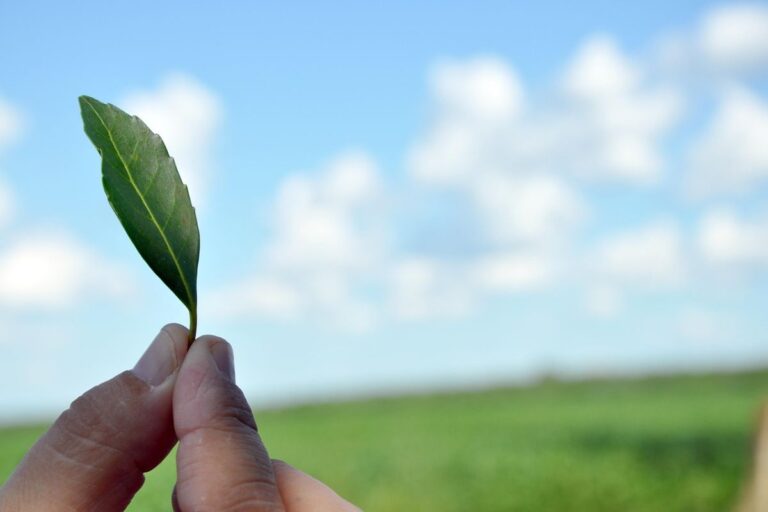
The name sounds like it’s straight out of a botany textbook, because in fact it is. Yerba mate holly (Ilex paraguariensis) belongs to the holly family and in the wild can grow up to 15 metres tall — although what you see in photos from plantations looks completely different. There, the plant is pruned low so that pickers can reach the leaves without a ladder.
The leaves are evergreen (they don’t fall in winter), glossy, obovate, with finely serrated edges, usually longer than 5 centimetres. In spring the tree is covered with small, whitish flowers gathered in small clusters, and in autumn dark red or purple berries appear.
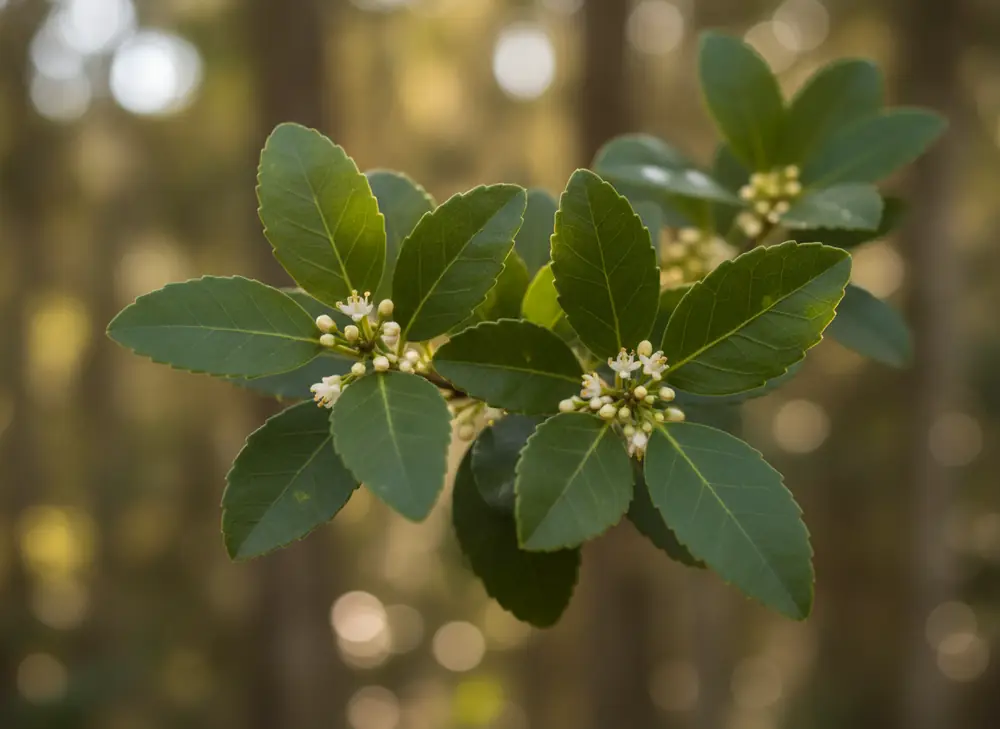
This is an important distinction: only the leaves and young twigs are used for brewing. The berries of the yerba mate holly never end up in the package — they are not a raw material for anything we drink.
In the wild, yerba mate holly grows naturally in the Paraná River basin — at the meeting point of what is now Brazil, Paraguay, northern Argentina and Uruguay. There, red, iron-rich soil and a humid, subtropical climate give it exactly what it needs. It usually takes 3–4 years from planting to the first, still modest harvest, and a plantation reaches full commercial yield only after 6–7 years — one of the reasons why good yerba mate is never a “fast” product.
Yerba mate holly vs. ornamental holly — why you should NOT confuse them
The genus Ilex is truly a crowd — it includes over 600 species of holly scattered around the world, from South America to Southeast Asia. Most are purely ornamental plants or grow wild in forests, and only a few have been used for infusions for generations. Yerba mate holly is one of those rare exceptions.
A completely different role is played by its distant relative, common holly (Ilex aquifolium) — this is the prickly shrub with glossy leaves and red berries that lands in wreaths and Christmas decorations every year. It has striking berries and a dreadful reputation for the stomach: they’re poisonous, so they’re used strictly for decoration, never for consumption. Only the leaves of Ilex paraguariensis are used to brew yerba mate — never the berries, and never any other species from the genus Ilex.
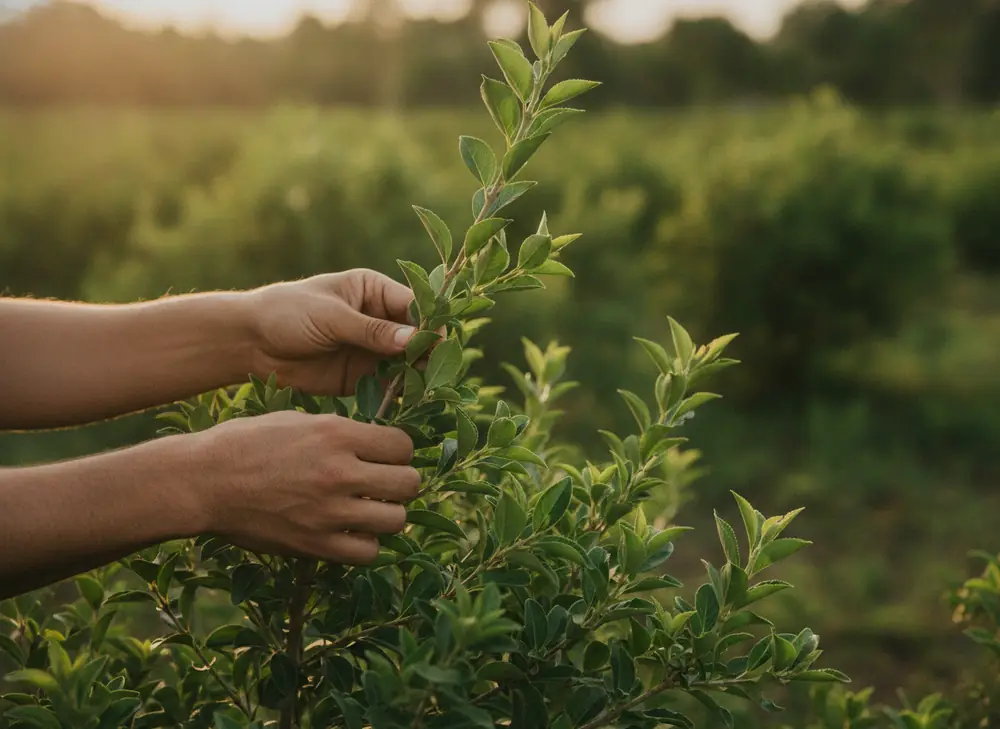
More similar misconceptions — yerba mate isn’t a tea, and “mate” originally meant the vessel, not the plant — we break it all down in our article on myths and facts about yerba mate.
From a Brazilian plantation to your cup — this is where Yerbador comes in
Our part of this story begins where the original one did: in Brazil. That’s where the leaf that ends up in Yerbador packs comes from — packaged in Europe to shorten the journey to your cup. Between the plantation and the shelf, the dried leaves go through testing the gauchos never dreamed of: authenticity and purity are verified by IWNiRZ (the Institute of Natural Fibres and Medicinal Plants), compliance with the standard by the J.S. Hamilton laboratory, and heavy metals, pesticides and PAHs by GBA Polska. On top of that: HACCP, KIWA certification, Swiss OROTAL certification, and the Quality Certificate of the National Medicines Institute. Tradition is tradition, but the 21st century has its own requirements.
And the ritual itself? It’s changed less than you’d think. You still pour the dried leaves into a matero — up to about 1/4 of the vessel, or if you’re just starting out, even 2 tablespoons will do for a milder brew. You still pour water at 70–80°C, never boiling. And it still tastes best without rushing. You’ll find the whole process, step by step, in our yerba mate brewing guide.
The history of yerba mate in a nutshell — a timeline
For the record, here are the key points of this story in one place:
- before 1500 — the Guaraní gather wild caá leaves in the Paraná river basin, chew them, and drink the infusion from a gourd;
- 16th century — Spanish colonists adopt the custom; the drink gets the name “mate” from the Quechua word for vessel;
- 17th century — the Jesuits work out how to germinate the seeds and set up the first plantations; in Europe the infusion circulates as “Jesuit tea”, and in Paraguay yerba is used as currency;
- 1767 — expulsion of the Jesuits; the plantations run wild, and harvesting reverts to wild trees;
- 19th century — the gauchos turn the matero into a communal ritual; Uruguay, Brazil and Paraguay develop their own drinking styles;
- turn of the 19th and 20th centuries — emigrants take yerba to the Middle East; its second, global career begins;
- 2020 — Paraguayan tereré is added to the UNESCO list of intangible heritage;
- today — Brazilian Yerbador leaf undergoes lab testing the Jesuits never dreamed of, and ends up in materos all across Poland.
Three ways to start your own story with yerba mate
Several hundred years of tradition can be continued in a few ways — depending on whether you’re just trying it out or drinking it every day.
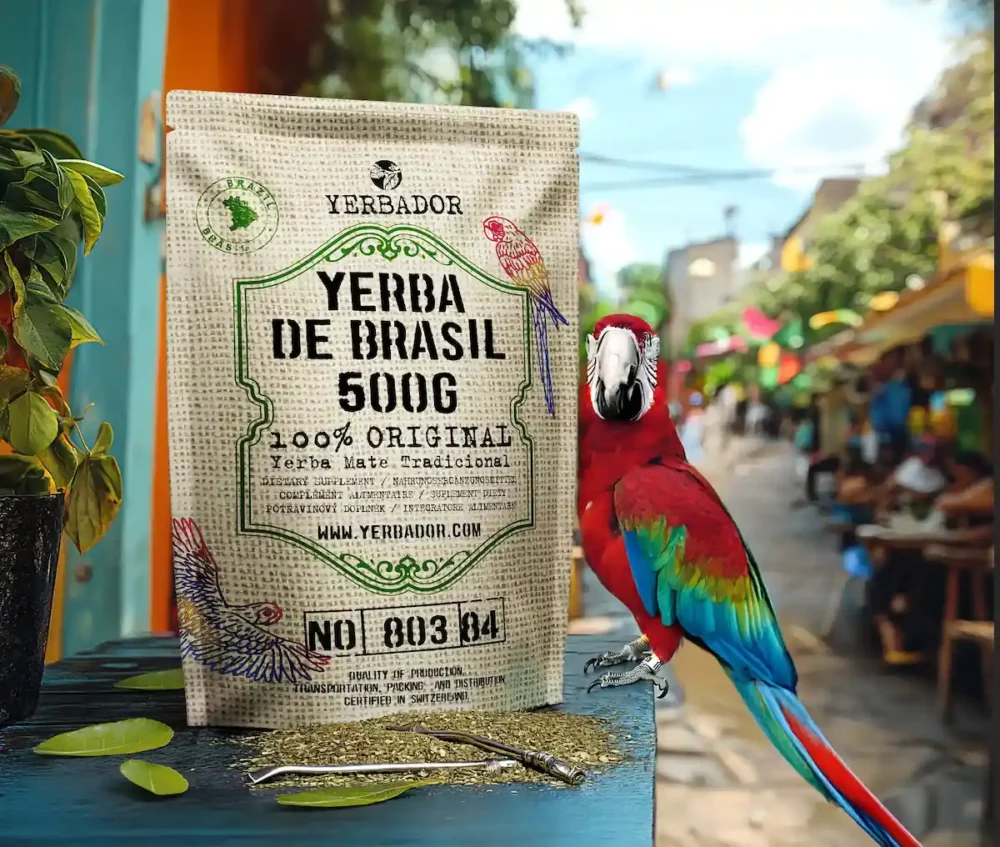
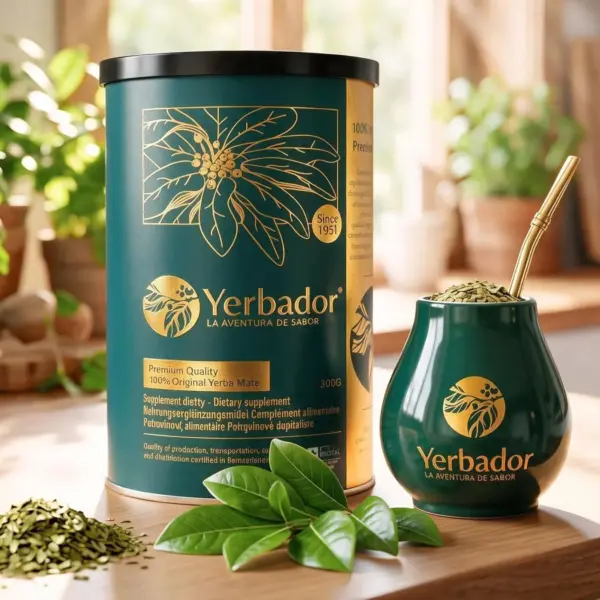
Yerba De Brasil — Doypack 0.5 kg
A classic start: real Brazilian yerba in a handy 0.5 kg doypack. Exactly the flavour profile this whole story began with — green, bold and full of character.
Check out the product: Yerba De Brasil – Doypack 0.5 kg
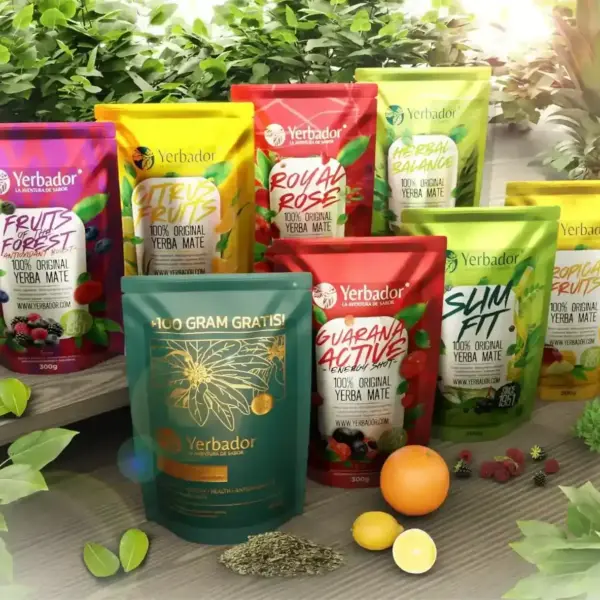
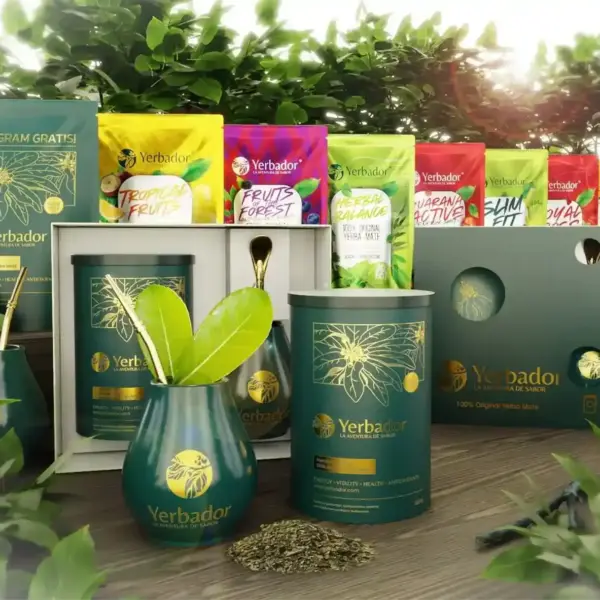
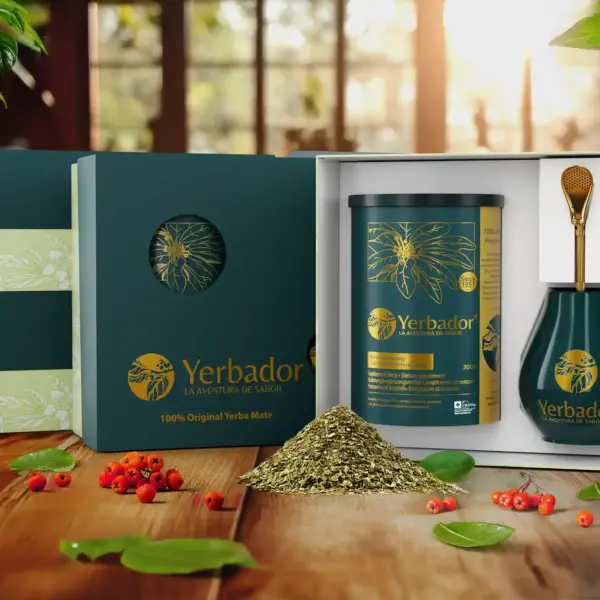
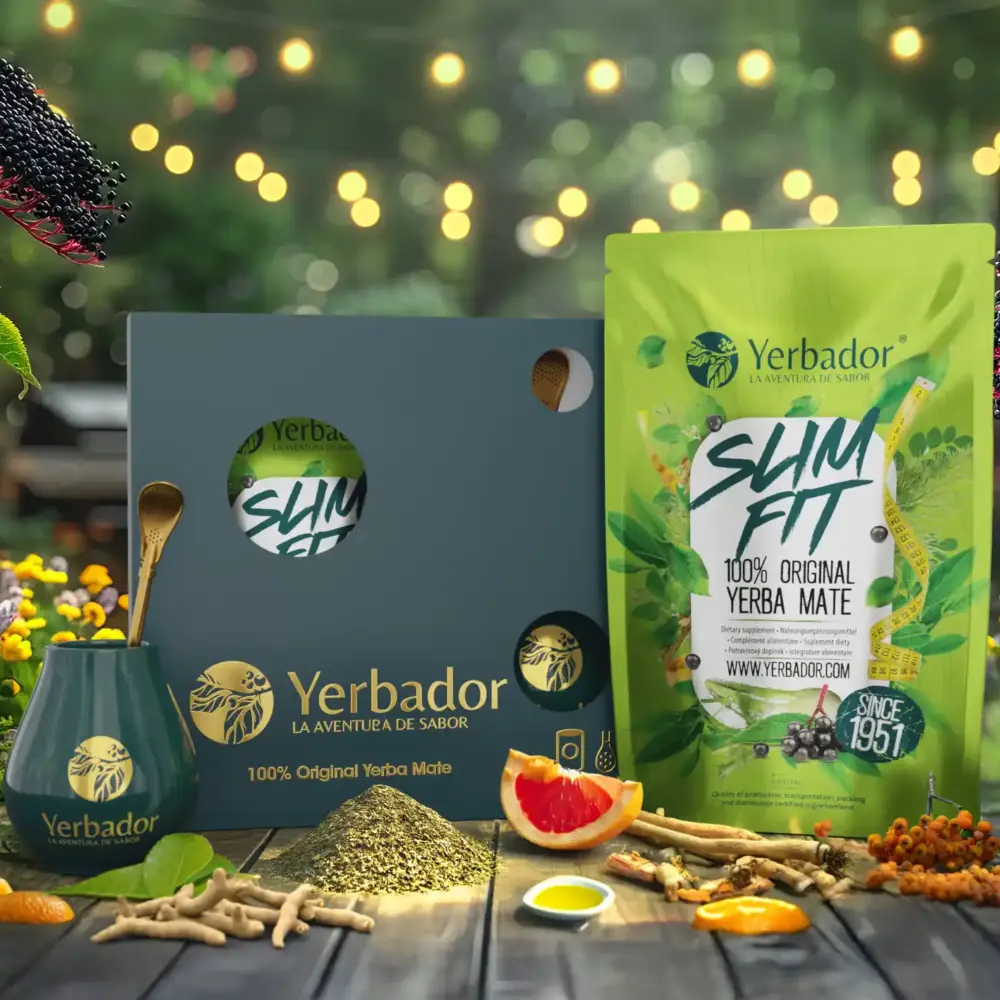
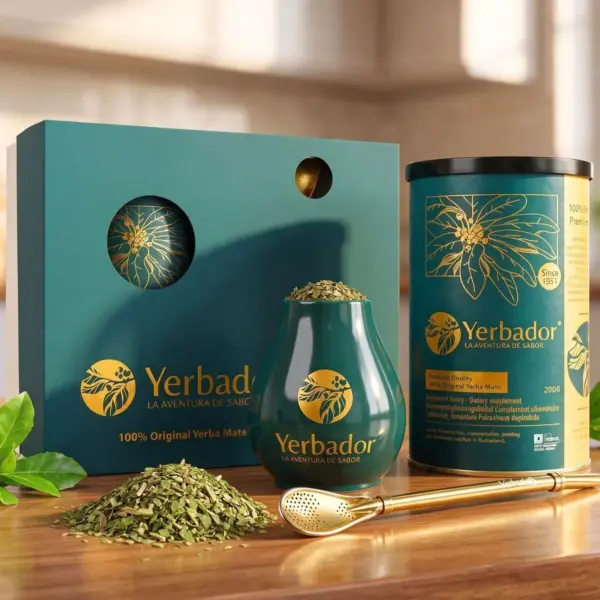
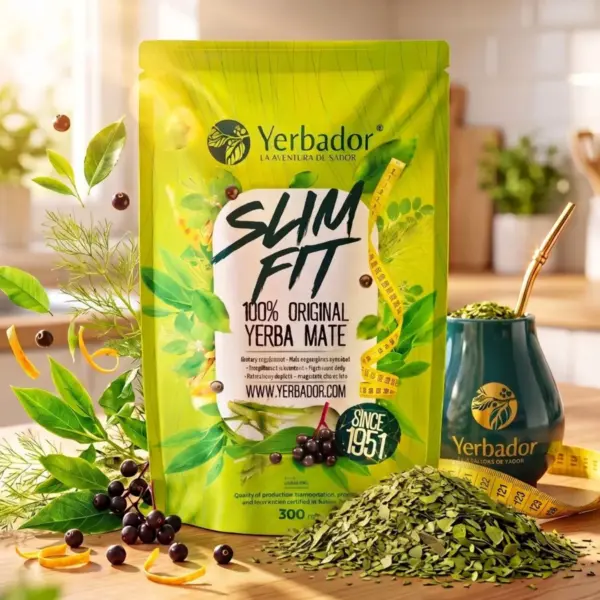
Starter set — matero, bombilla, beech scoop and Slim Fit yerba
If you want to step into the ritual the way it has been done for centuries — with your own matero and bombilla — this set gives you everything at once: the vessel, the bombilla, a beech wood scoop and Slim Fit yerba to get started. No hunting around different shops.
Check out the product: Starter set with matero and bombilla
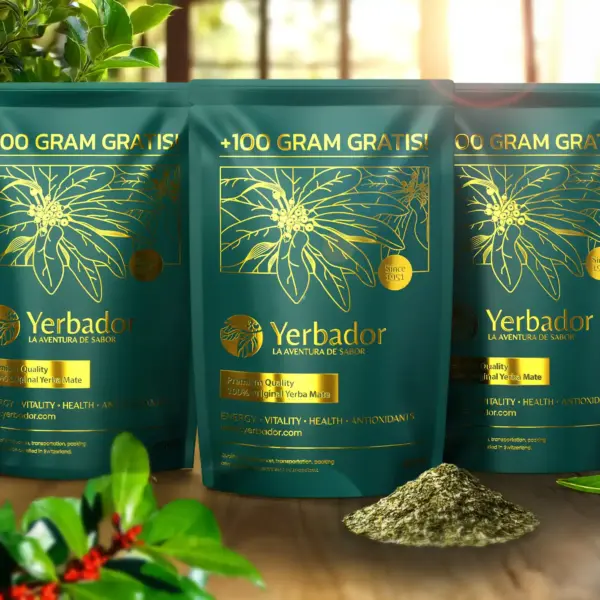
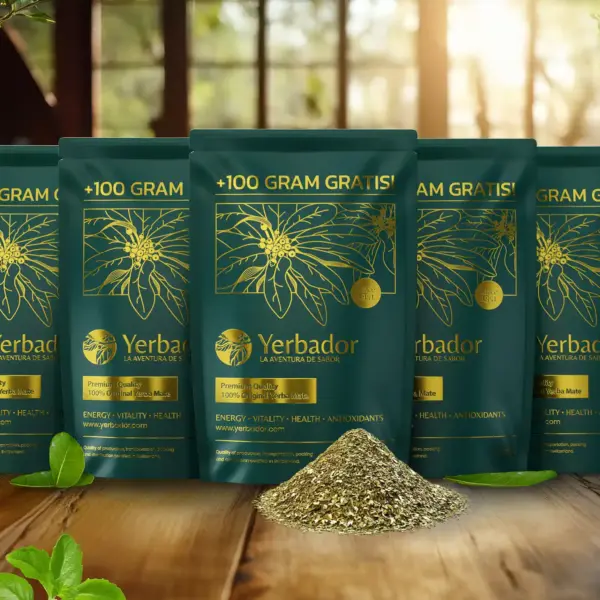
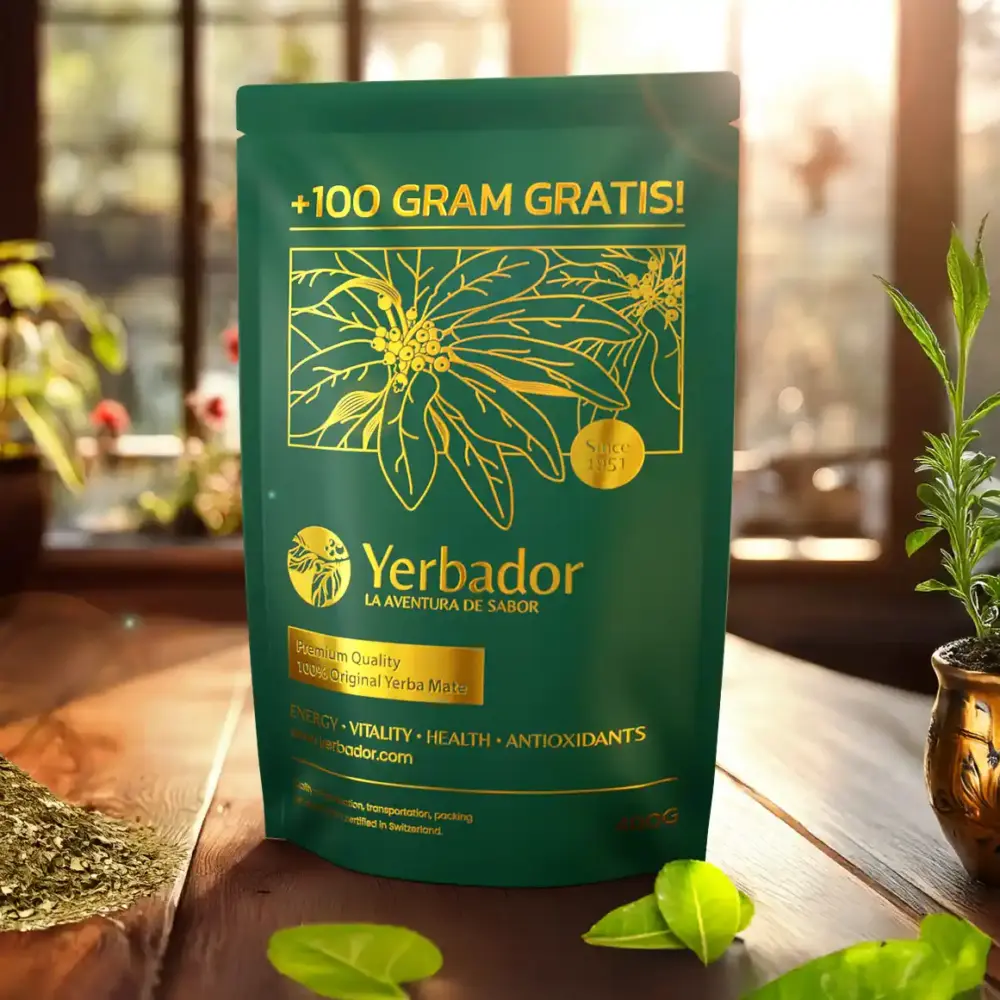
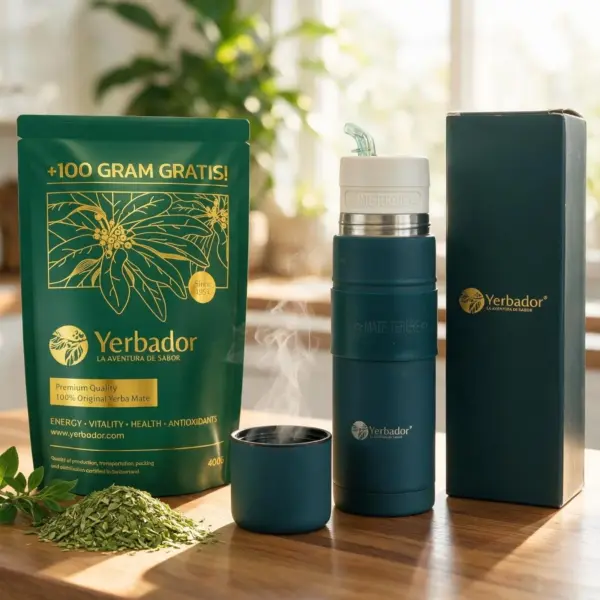
Airtight Doypack + 100 g free
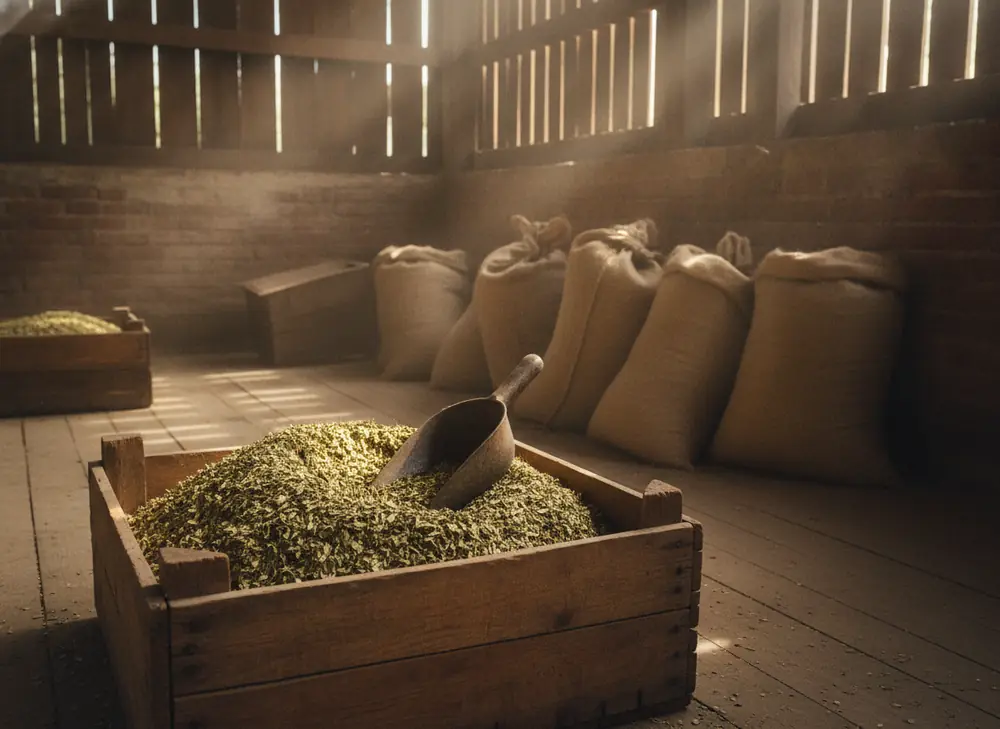
Yerba used to be shipped in jute sacks and wooden crates — losing aroma with every week of the journey. Today that problem is solved by the airtight doypack (with 100 g free inside), which keeps the dried leaves fresh like no sack in history ever could.
Check out the product: Airtight Doypack Yerba Mate + 100 g free
History of yerba mate — most frequently asked questions
Where does the name “mate” come from?
From Quechua, in which mati meant a gourd vessel. The Spanish named the drink after the cup it was drunk from — not after the plant itself. The Guaraní called it caá.
Since when have Europeans known yerba mate?
Since the 16th–17th century, from accounts by colonists and missionaries. It became more widely known thanks to the Jesuits, who established the first plantations in the 17th century — hence the old European name “Jesuit tea”.
Is yerba mate a type of tea?
No. Tea comes from the tea shrub, while yerba mate comes from the Paraguayan holly — completely different plants from different continents. We debunk more similar misconceptions in our post about myths and facts about yerba mate.
Was yerba drunk the same way in the past as it is today?
Surprisingly similarly. The gourd and the straw with a filter have accompanied yerba since the time of the Guaraní — the materials have changed (today a matero can be ceramic, and a bombilla is made of steel), but the gesture has remained the same for several hundred years.
Is Paraguayan holly poisonous?
The leaves and young twigs from which yerba mate is made are not poisonous — the entire industry has been based on them for hundreds of years. However, the berries of the common holly, the Christmas one, are poisonous, as are the fruits of most species in the genus Ilex. That’s why the berries of any holly are never eaten in any form — but that has nothing to do with the leaves that end up in your package.
Is Paraguayan holly the same plant as the festive holly from a wreath?
No. These are two different species from the same genus Ilex — just as the apple tree and hawthorn belong to the same rose family, but no one confuses their fruits. Paraguayan holly grows in South America and provides leaves for brewing, while common holly grows in Europe and is used purely for decoration.
Does Paraguayan holly grow in Poland?
Not in natural conditions — it’s a subtropical plant that wouldn’t survive a Polish winter outdoors. All the dried leaves that end up in Yerbador packages come from real Brazilian plantations, not from potted or greenhouse cultivation.
Yerba mate in your venue or shop
The history of yerba is also a history of trade — from Jesuit warehouses to today’s cafés and shops that add it to their offer. If you run a venue or shop and want to join this story, check out our guide for businesses: yerba mate wholesale for food service and shops — or write to us right away:
Discover our TOP products!
Your dream figure

Discover new flavors
Yerba mate with tea
Accessories
Superfoods



Certified raw honeys from Poland

Check the current price
free shipping
Up to 90 days
free returns
24 H
shipping