
Matcha tiramisu: the recipe with eggs and without
2026-11-20
Matcha tiramisu is a classic tiramisu with one swap: the espresso the biscuits soak in becomes cold, strong matcha, and a little matcha goes into the mascarpone cream as well. Nothing else changes. You still need savoiardi, cold mascarpone, six hours in the fridge and a steady hand when you dip.
Below are both versions people ask us for: the one with eggs, where the yolks are cooked into a thick cream, and the one without eggs at all, built on whipped cream. Same soak, same layers, different texture and different shelf life. We make both, and we will say plainly which one we reach for.
- Serves 6, dish about 20 × 20 cm or six 200 ml glasses.
- The soak: 6 g matcha + 300 ml water at 80 °C, whisked smooth, then cooled to room temperature before a single biscuit touches it.
- Matcha in total: about 11–12 g per dish, so roughly 2 g per portion.
- Caffeine: roughly 38–89 mg in one portion — our calculation from the 18.9–44.4 mg per gram range published for matcha.
- Chilling: 6 hours minimum, overnight is better. Egg version keeps 2 days, egg-free keeps 3.
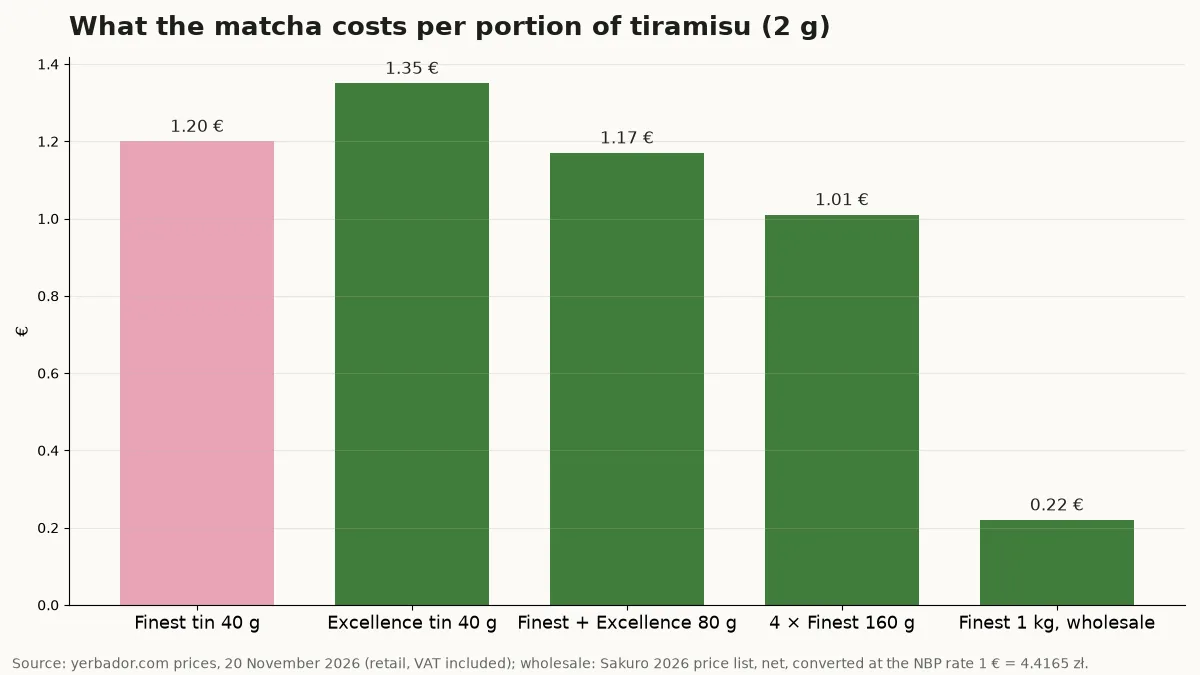
- Cost of the matcha: about €1.20 per portion at retail, about €0.22 per portion if you buy by the kilo.
What changes when matcha replaces the espresso
Matcha replaces espresso one-to-one in volume but not in behaviour. Espresso is a brewed liquid: the coffee solids stay in the puck. Matcha is the whole leaf, ground and suspended in water, so whatever you whisk into the soak ends up inside the biscuit. That is why a matcha soak tastes stronger than it looks and why it keeps working on the dessert overnight.
Three practical consequences. First, the soak must be cold. Warm matcha turns savoiardi to mush in about two seconds and dulls the colour on the way. Second, matcha is astringent rather than bitter-roasted, so the sugar balance shifts: a classic tiramisu leans on the coffee’s bitterness, a matcha one leans on the cream’s sweetness to carry the green. Third, the colour is the whole point and the colour is fragile. Heat, time and moisture all push it from bright green to olive.
Flavour-wise the two desserts are not close relatives. Coffee tiramisu is roasted, dark and slightly burnt at the edges. Matcha tiramisu is grassy, a bit salty-sweet, closer to a good green tea ice cream with a biscuit underneath. If you have only ever had the coffee version, make a half batch the first time.
Which matcha for which layer
Use ceremonial-grade Japanese matcha for the soak and the cream, and keep the smoothest tin you own for the dusting on top. Grade matters more here than in a latte, because there is no milk fat and no roasted coffee to hide behind — just mascarpone, sugar and tea.
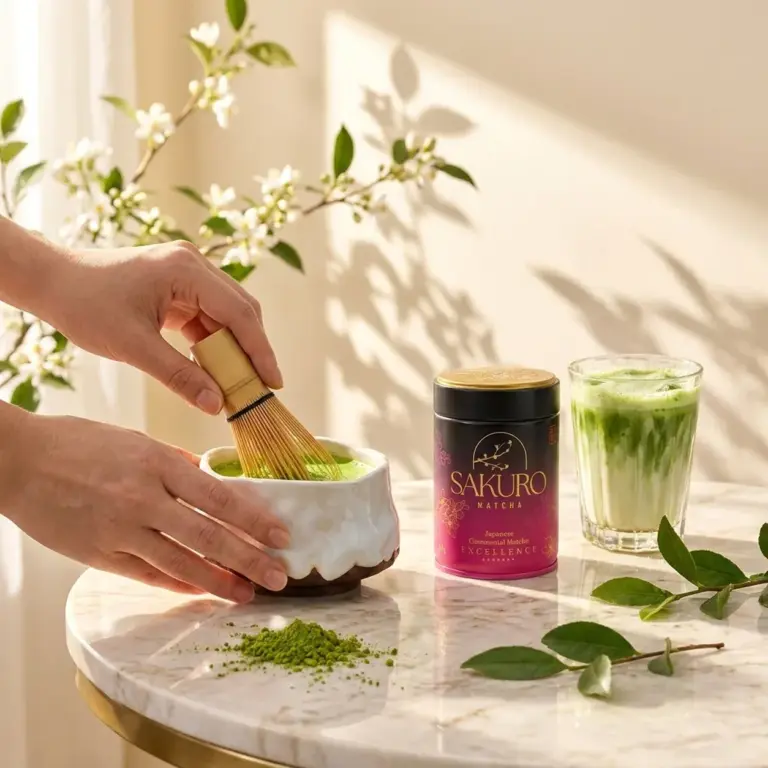
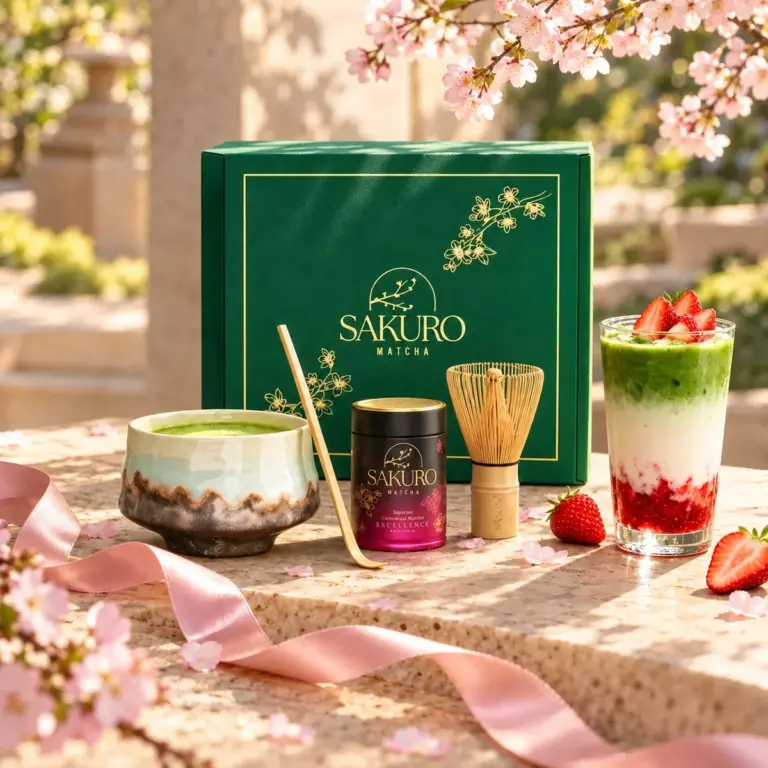
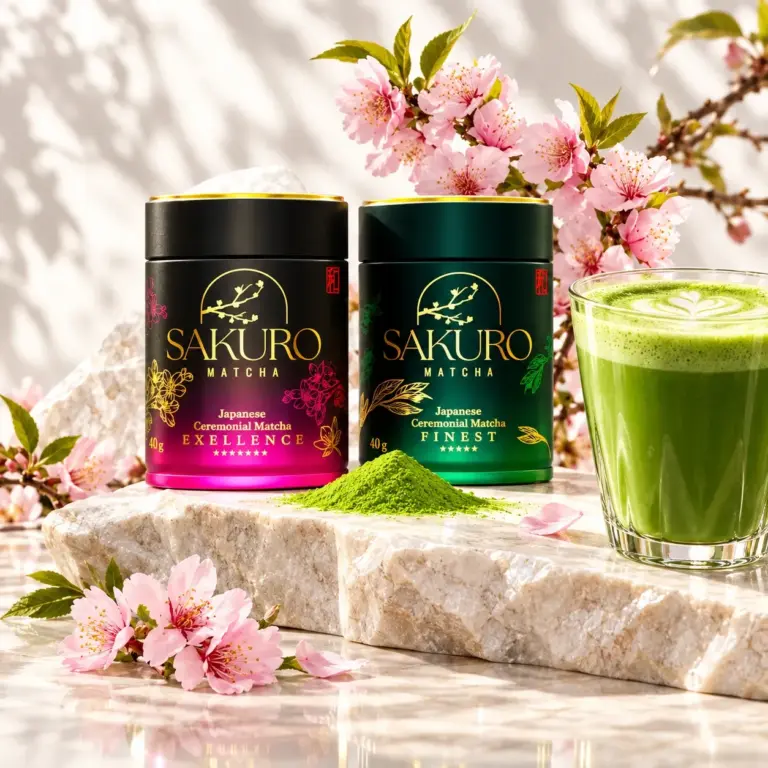
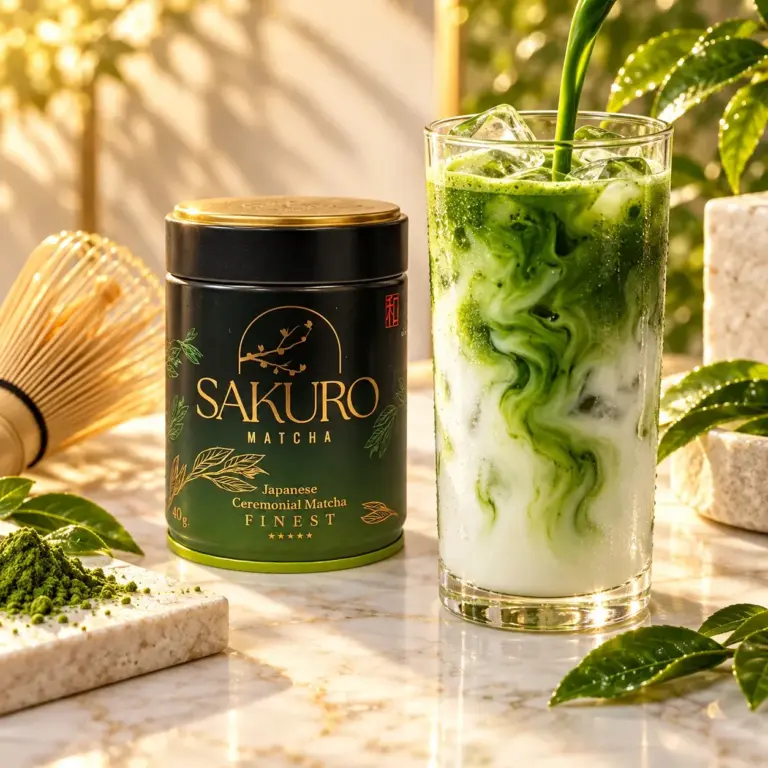
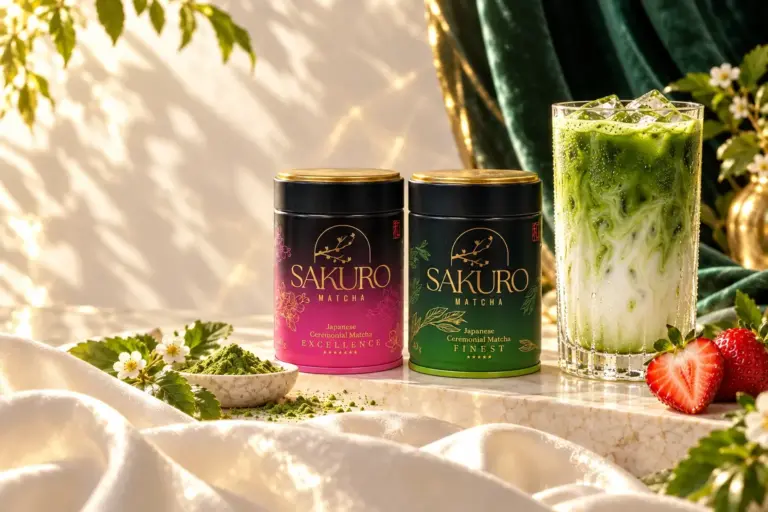
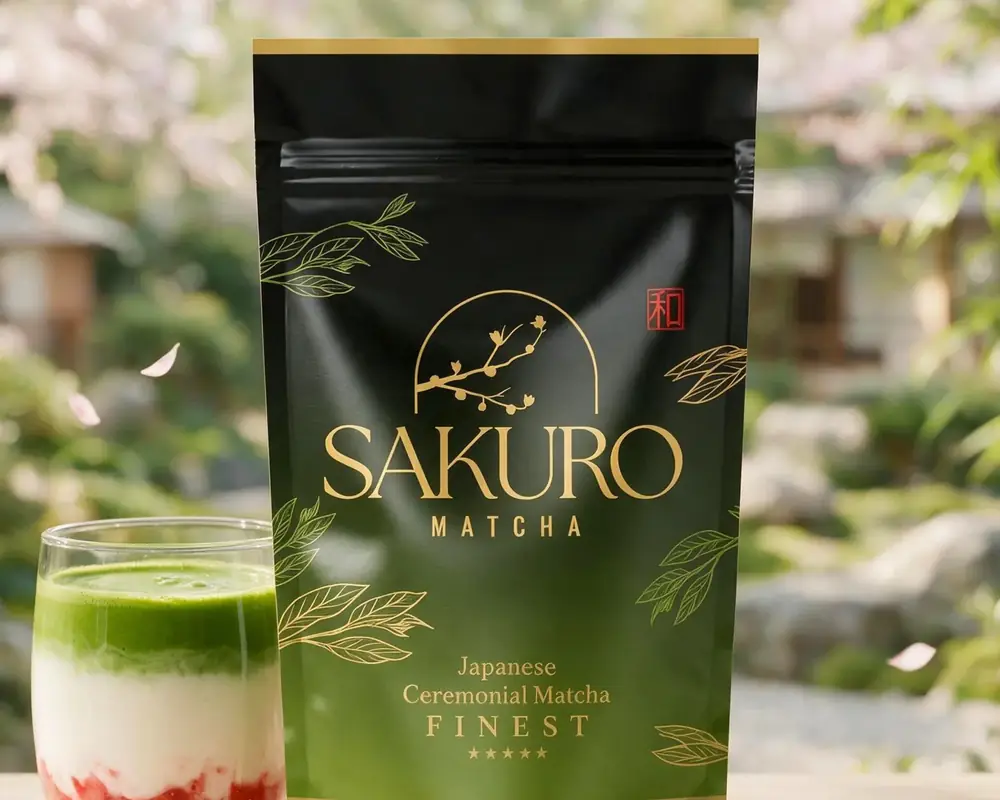
Our two Japanese matchas both come from Shizuoka. Sakuro Matcha Finest is the one that goes into the soak and the cream: it has enough body to come through 500 g of mascarpone without disappearing. Sakuro Matcha Excellence is sweeter and rounder, which is wasted inside cream but perfect dusted over the top, where you taste it neat. If you want the long argument about grades, we wrote it out in ceremonial versus culinary matcha.
| Matcha | Pack | Price | Job in this dessert |
|---|---|---|---|
| Sakuro Matcha Finest | 40 g tin | €23.90 | The soak (6 g) and the cream (2–3 g) |
| Sakuro Matcha Excellence | 40 g tin | €26.90 | The dusting, and the bowl you drink alongside |
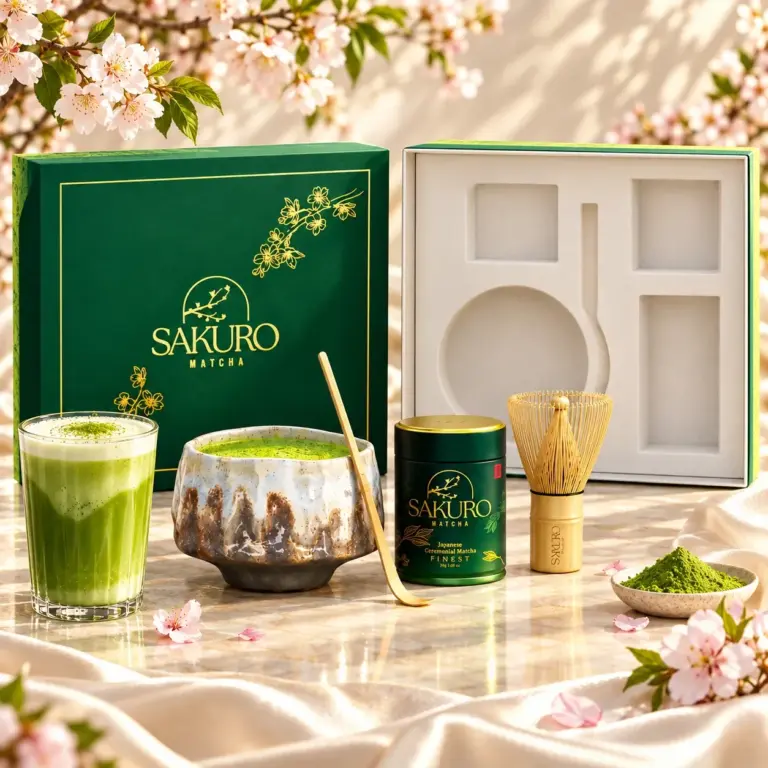
| Finest + Excellence set | 2 × 40 g | €46.90 | Both jobs covered, cheaper per gram |
| 4 × Finest set | 4 × 40 g | €80.90 | If you bake this more than twice a month |
One dish of tiramisu eats 11–12 g of matcha, so a 40 g tin makes three of them with a little left for a drink. That works out at about €1.20 of matcha per portion, which is less than the espresso in a café and about the same as the mascarpone.
The soak: 6 g, 300 ml, and it has to be cold
Whisk 6 g of sifted matcha with 100 ml of water at 80 °C until there is not a single lump, then top up with 200 ml of cool water and chill the lot for 20 minutes. That is the entire soak. Sugar is optional; 10 g rounds off the astringency if your matcha is on the sharp side.
The order matters. Matcha does not dissolve, it disperses, and it only disperses properly in a small amount of liquid where the whisk can actually work the powder against the side of the bowl. Pour 300 ml over 6 g in one go and you will be fishing green pellets out of the dish for ten minutes. A bamboo chasen (€14.90) does this in 15 seconds; a small milk frother does it in 10; a fork does it badly.
Sift first. Always. Matcha compacts in the tin and the lumps that come out of a fresh tin are small enough to look harmless and large enough to show up as dark specks in a pale cream. A tea strainer over the bowl takes five seconds. If you want the full method for whisking, temperature and the difference between thin and thick matcha, it is in how to make matcha the traditional way.
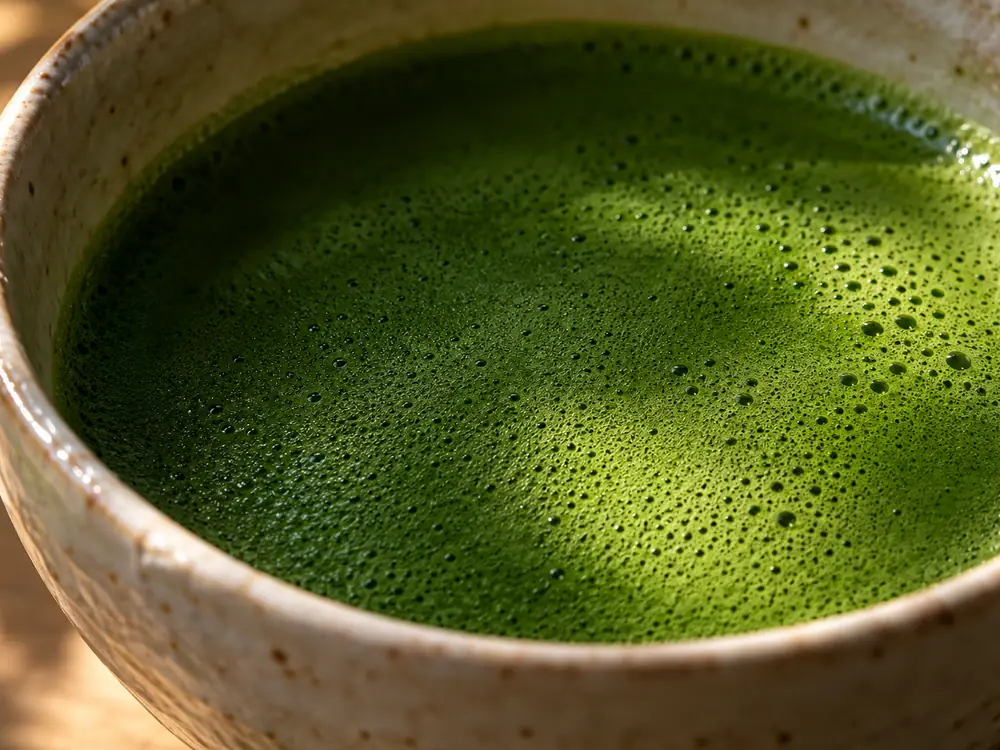
Water temperature: 80 °C, not boiling. Boiling water scalds matcha, which is where most of the harshness in homemade matcha desserts comes from. If you have no thermometer, boil the kettle and leave it uncovered for three minutes.
Version one: matcha tiramisu with eggs
This is the richer of the two. The yolks are cooked over a water bath into a thick, pale cream before they meet the mascarpone, which gives a softer set and a custard note under the tea.
Ingredients, 6 portions
- 4 egg yolks (about 70 g)
- 70 g caster sugar
- 30 ml water
- 500 g mascarpone, straight from the fridge
- 2 g matcha for the cream, sifted
- about 200 g savoiardi (24 biscuits)
- the soak above: 6 g matcha, 300 ml water, cooled
- 3 g matcha for dusting
Method
- Put the yolks, sugar and water in a heatproof bowl over a pan of barely simmering water — the bowl must not touch the water. Whisk for 8–10 minutes, constantly, until the mixture thickens and falls off the whisk in a ribbon that sits on the surface for a second or two.
- Take the bowl off the heat and keep whisking for two more minutes as it cools. Then sit it in cold water until it is no warmer than your hand.
- Loosen the cold mascarpone with a spatula — stir it, do not beat it. Add the yolk cream in three goes, folding each one in before the next.
- Sift 2 g of matcha over the surface and fold through. Fold until the colour is even and then stop.
- Dip each savoiardo in the cold soak for one second a side. One second. Lay them in the dish in a single layer, sugary side up.
- Spread half the cream, add a second layer of dipped biscuits, then the rest of the cream. Level it with the back of a spoon.
- Cover and refrigerate for at least 6 hours, ideally overnight. Dust with 3 g of sifted matcha immediately before serving.
Working time is about 25 minutes. The set is soft: this version spoons beautifully out of glasses but will not give you a sharp-edged slice.
Version two: matcha tiramisu without eggs
No eggs, no water bath, no food-safety questions. Whipped cream does the lifting instead of the yolks, and the result sets firmer, slices cleanly and keeps a day longer.
Ingredients, 6 portions
- 500 g mascarpone, cold
- 250 ml whipping cream, 30–36 % fat, cold
- 70 g icing sugar
- 3 g matcha for the cream, sifted
- about 200 g savoiardi (24 biscuits)
- the soak above: 6 g matcha, 300 ml water, cooled
- 3 g matcha for dusting
Method
- Whip the cream with the icing sugar to soft peaks only — the whisk should leave a trail that slowly closes up. Overwhipped cream makes the finished dessert grainy.
- In a second bowl, stir two tablespoons of the mascarpone with the sifted 3 g of matcha until it is a smooth green paste. This is the trick that keeps specks out of the cream.
- Stir the green paste back into the rest of the mascarpone, then fold in the whipped cream in three additions, by hand, with a spatula.
- Dip, layer and level exactly as in version one.
- Refrigerate 6 hours minimum. Dust just before it goes to the table.
Honest comparison: version two is the one we make more often. It is quicker, it travels, and in a glass with a spoon almost nobody misses the yolks. Version one wins on richness if you are serving it at the table the same evening.
| With eggs | Without eggs | |
|---|---|---|
| Extra ingredients | 4 yolks, 70 g sugar | 250 ml cream, 70 g icing sugar |
| Working time | about 25 min | about 15 min |
| Texture | soft, custard-like | firmer, slices |
| Keeps in the fridge | 2 days | 3 days |
| Suitable for a buffet or a counter | no | yes |
| Matcha used | 11 g per dish | 12 g per dish |
Raw eggs: who should take version two
Tiramisu appears by name on food-safety lists of high-risk dishes because the classic recipe uses raw egg. The Food Safety Authority of Ireland lists tiramisu among dishes “not cooked thoroughly” and tells caterers to use the safest eggs available or pasteurised liquid egg. The same factsheet is blunt about who should never get a raw-egg dessert: the frail elderly, the sick, infants, small children and pregnant women.
Context from EFSA: salmonellosis is the second most reported zoonotic disease in the EU, with more than 91,000 human cases a year, and eggs are among the foods where Salmonella is most frequently found. The risk from one carton of supermarket eggs is small. It is not zero, and it is not evenly distributed across your guests.
So: cook the yolks as described in version one, or use pasteurised egg, or make version two. Two more rules from the same factsheet that matter at home as much as in a kitchen — do not prepare raw egg mixtures in advance and leave them sitting, and never let a raw-egg dessert stand at room temperature on a table for hours.
How much caffeine is in a portion
One portion of this matcha tiramisu contains roughly 38 to 89 mg of caffeine. That is our arithmetic, not a measurement: a portion carries about 2 g of matcha, and published analyses put matcha at 18.9–44.4 mg of caffeine per gram (Kochman et al., Molecules 2021). The spread is wide because cultivar, shading and harvest all move the number.
| Portion / cup | Caffeine | Source |
|---|---|---|
| Matcha tiramisu, 1 portion (about 2 g matcha) | about 38–89 mg | our calculation, 18.9–44.4 mg/g |
| Classic tiramisu, 1 portion (about 40 ml espresso) | about 53 mg | our calculation from the EFSA figure below |
| Espresso, 60 ml | 80 mg | EFSA |
| Filter coffee, 200 ml | 90 mg | EFSA |
| Black tea, 220 ml | 50 mg | EFSA |
| Green tea, 200 ml | 30 mg | BfR |
EFSA considers 400 mg a day unproblematic for healthy adults, 200 mg in a single dose, and 200 mg a day during pregnancy and breastfeeding. For children and adolescents the figure is 3 mg per kilo of body weight a day. Run that for a 30 kg child and you get 90 mg — one portion of this dessert can be the whole day’s allowance. Serve children a small spoonful, or halve the matcha in the soak and accept a paler colour.
Two more things worth knowing before you plate it at 9 pm: this is a dessert that keeps people awake, and it is not a drink you can walk away from half-finished. Nobody leaves half a tiramisu.
Five mistakes we see most often
Hot soak. The single most common one. Hot matcha goes bitter, goes olive, and turns the biscuits into porridge. Cool it properly, even if it costs you twenty minutes.
No sieve. Unsifted matcha leaves dark freckles in the cream that no amount of folding removes. Sift into the bowl, not over the dish.
Dipping too long. Savoiardi absorb matcha faster than espresso because there is no crema, no oil and no sugar syrup slowing it down. One second a side, then straight into the dish. If the biscuit bends in your fingers, it was already too late.
Beating the mascarpone. Mascarpone is around 40 % fat and behaves like cream: whip it hard and it churns. The texture goes from silk to grainy and does not come back. Fold, do not whisk.
Dusting too early. The powder on top draws moisture out of the cream and darkens within an hour or two. Cocoa does the same thing, but matcha shows it far more because it starts bright green. Dust at the table.
How far ahead can you make it
Assemble it the day before, dust it the moment it is served. The egg version is at its best on day one and still good on day two. The egg-free version holds three days in the fridge, covered. Do not freeze either: mascarpone cream weeps on thawing and the biscuit layer goes to paste.
Variations that actually work
In glasses. Break the savoiardi to fit 200 ml tumblers and build two layers. Sets faster, travels better, and it is the format we would use for a party.
Matcha and white chocolate. Melt 60 g of white chocolate, let it cool to lukewarm, and fold it into the mascarpone before the matcha. It sweetens the cream and the green stands out more against it.
Half and half. If you cannot choose, dip one layer of biscuits in cold espresso and one in matcha. The two flavours sit next to each other rather than blending — which is better than it sounds.
Berries. A thin layer of crushed raspberries between biscuit and cream cuts the fat. Keep it thin or the juice bleeds into the matcha and turns it grey-brown.
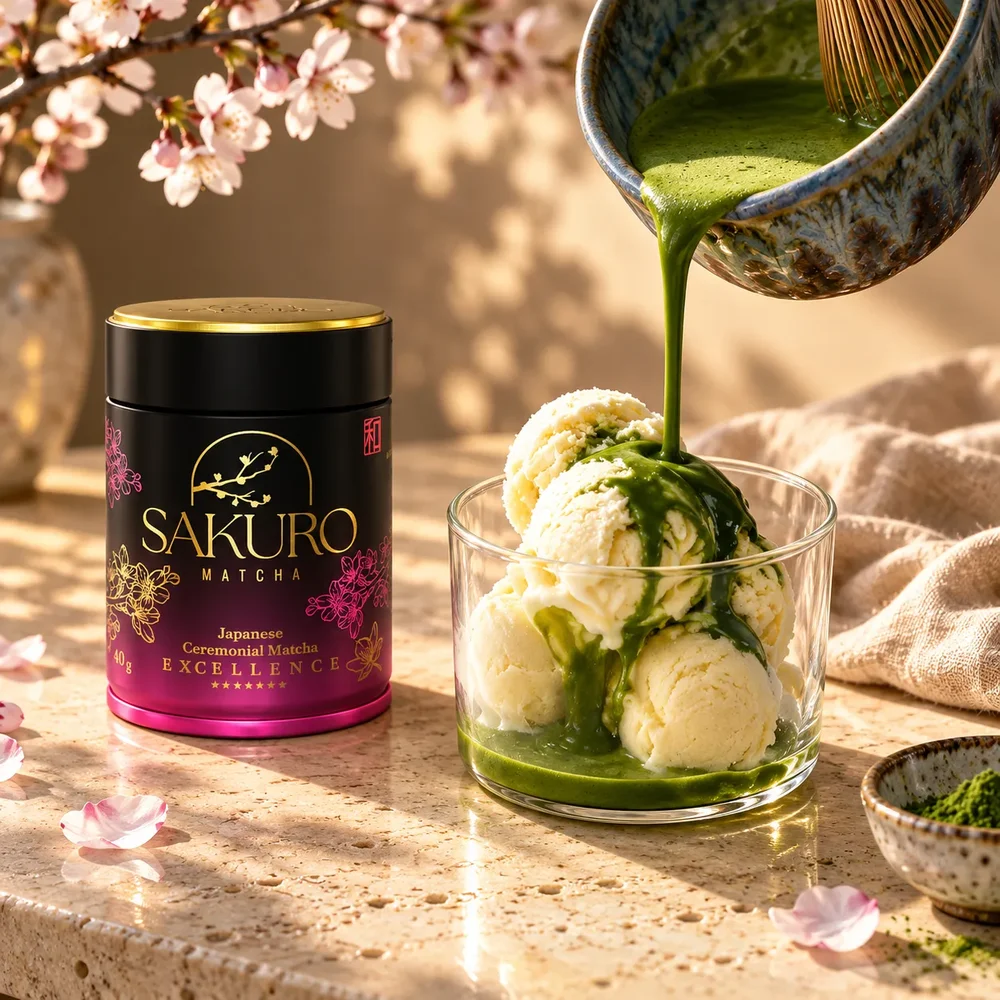
If you want the same flavour in a format that slices properly, our no-bake matcha cheesecake uses the same mascarpone-and-matcha logic on a biscuit base.
For cafés: the numbers per portion
At wholesale prices the matcha in one portion costs about €0.22. Sakuro Matcha Finest is roughly €109 per kilo net and Excellence roughly €156 per kilo net — indicative conversions from the Sakuro 2026 wholesale list at the NBP rate of 19 November 2026, 1 € = 4.4165 zł. Three kilos take 5 % off, five kilos 10 %. Everything ships from Poland inside the EU. The binding offer comes from Ewelina at [email protected] or +48 515 025 329.
Two pieces of counter advice. Build it in glasses, not trays: portion control is exact, nothing collapses in the display, and you can dust to order. And use the egg-free version behind a counter — the Irish factsheet quoted above is written for caterers precisely because raw-egg desserts held at service temperature are where outbreaks start.
Where to buy the matcha
Sakuro Matcha Finest 40 g at €23.90 is the tin that does the work in this recipe — Japanese ceremonial matcha from Shizuoka, about 20 servings of 2 g. Sakuro Matcha Excellence 40 g at €26.90 is the smoother one for dusting and for drinking. The Finest + Excellence set at €46.90 covers both and costs less per gram, and a bamboo chasen at €14.90 is what makes the soak smooth in fifteen seconds. Prices checked on yerbador.com on 20 November 2026.
FAQ
Can I use culinary grade matcha for tiramisu?
You can, but you will taste it. Culinary grade is made for batters where sugar, butter and baking cover the bitterness. In tiramisu there is nothing between the tea and your tongue except mascarpone, so a harsh powder stays harsh. Ceremonial grade is the right call here.
How much matcha do I need for one tiramisu?
About 11–12 g for six portions: 6 g in the soak, 2–3 g in the cream, 3 g for dusting. A 40 g tin makes three desserts.
Can children eat matcha tiramisu?
One full portion carries roughly 38–89 mg of caffeine, and EFSA’s guidance for children and adolescents is 3 mg per kilo of body weight a day — about 90 mg for a 30 kg child. A small spoonful is fine; a full portion before bed is not a good idea. If you are making it for a children’s party, halve the matcha in the soak.
Can I make matcha tiramisu without eggs?
Yes, and it is the version we recommend for most situations. Replace the yolks with 250 ml of whipping cream whipped to soft peaks with 70 g of icing sugar, then fold it into the mascarpone. It sets firmer and keeps three days.
Why did my matcha tiramisu turn brown on top?
Because it was dusted too early. Matcha powder sitting on a moist cream absorbs water and oxidises, and the green goes olive then brown within a couple of hours. Dust through a fine sieve at the table, not in the morning.
Can I use coffee as well as matcha?
Yes. The cleanest way is one layer of biscuits dipped in cold espresso and one in matcha, rather than mixing the two liquids. Mixed, they fight; layered, they work.
How long does matcha tiramisu need in the fridge?
Six hours is the minimum for the biscuits to soften all the way through and the cream to set. Overnight is better. Before six hours it will taste right and fall apart on the spoon.
Discover our TOP products!

Your dream figure


Discover new flavors


Yerba mate with tea


Accessories



Superfoods



Certified raw honeys from Poland

Check the current price
free shipping
Up to 90 days
free returns
24 H
shipping