
How to Make Matcha Without a Whisk: 5 Methods That Work
2026-11-21
You can make a good bowl of matcha without a bamboo whisk. A clean jar with a screw lid does it in about thirty seconds, and in a latte nobody will tell the difference. The chasen is a lovely tool and it does one job better than anything else, but it is not the thing standing between you and a smooth green drink this morning.
We sell both the matcha and the whisks, so we have no reason to pretend otherwise: most people who write to us have the tin already, the whisk is still in the basket, and they want to drink something today. Below are the five methods that actually work in a home kitchen, with grams, millilitres and timings, plus the two or three that get recommended online and leave you with a gritty cup.
Start here: the jar method, thirty seconds
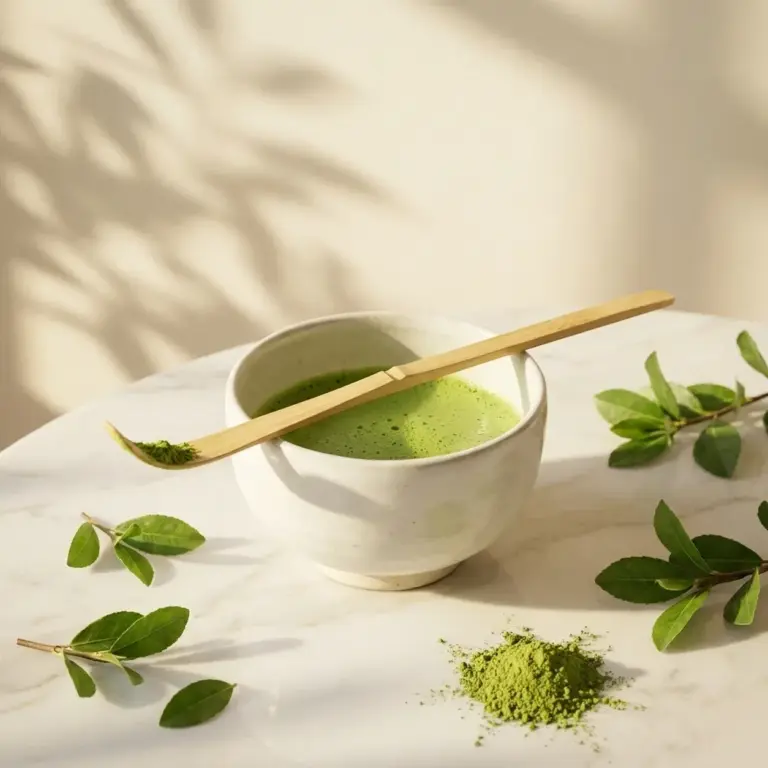
This is the one to try first. It needs nothing you do not already own, and it is the only no-whisk method that reliably gives you foam on a hot bowl of matcha.
You need:
- 2 g matcha, a rounded half teaspoon, or two scoops of a bamboo chashaku
- 60 ml water at about 80 °C (plus 120 ml later if you want a longer drink)
- a jar of 250–400 ml with a lid that screws on properly: a jam jar, a coffee jar, a small Kilner
- optional but useful: a tea strainer
How to do it:
- Sift the matcha straight into the jar through a tea strainer. Ten seconds of work, and it removes the lumps that no amount of shaking will break up.
- Add about 15 ml of the hot water first and swirl the jar so the powder turns into a smooth paste on the bottom. This step matters more than the shaking.
- Pour in the rest of the 60 ml, screw the lid on tight, and hold the jar with a tea towel — it will be hot.
- Shake hard for 20–30 seconds. Not a polite wrist shake; a proper up-and-down shake, the way you would mix a cocktail.
- Open the lid away from you, pour into your cup, and drink it in the next few minutes. The foam collapses after about five minutes, as it does with a chasen.
A word on pressure: hot water in a sealed jar builds up a little, and the first time you crack the lid it will hiss. Loosen it slowly, over the sink, with the opening pointed away. If that makes you nervous, use 70 °C water instead of 80 °C: slightly less sweet in the cup, perfectly safe in the hand.
Jar choice makes more difference than you would expect. Straight sides beat curved ones, because the water has somewhere to slam into. A lid with a rubber or plastic seal beats a bare metal one, which will drip. And glass beats plastic: you can see whether any powder is still hiding in the corner, which is the whole reason the first bowl from a new tin goes wrong for people.
For a latte, shake the 2 g with 40 ml of water, pour it into a glass, and top with 200 ml of milk. Oat milk is the one most of our customers reach for; the barista versions foam better because of the added fat. There is a full breakdown of hot and iced versions in our matcha latte recipe.
Why matcha clumps, and the step that fixes it
Matcha is ground to something like 5–10 micrometres. At that size the particles behave less like sugar and more like cocoa or flour: they carry a static charge, they stick to each other, and when they hit water they form a skin on the outside of the clump while staying dry inside. That dry core is what you feel at the bottom of the cup.
Two habits solve it for good, whatever tool you use.
Sift. A fine tea strainer, a small sieve, the strainer that came with your teapot — anything with a mesh fine enough that a grain of rice will not pass. Press the powder through with the back of a spoon. It takes ten seconds and it is the single biggest difference between a home cup and a café cup.
Make a paste before you make a drink. Two teaspoons of water, stir or swirl until the matcha looks like wet poster paint, then add the rest. Every method below works better with this step and some of them barely work without it.
One more thing: if the tin has been open for a few months and sat somewhere warm, the powder compacts and clumps more. That is a storage problem, not a mixing problem. Keep the tin closed, cool and away from the hob, and buy sizes you will finish. A 40 g tin is twenty bowls at 2 g, which is about three weeks for a daily drinker.
Four more ways to mix matcha without a chasen
Electric milk frother: the closest thing to a whisk
The cheap handheld frother with a coiled wire head is the best substitute there is, and it is the one we use in the office when nobody feels like washing a chasen. Sift 2 g into a mug, add 15 ml of water, work it into a paste with the frother off, then add 60 ml more and run the frother for 15–20 seconds. Keep the head just below the surface and move it in small circles.
The foam you get is bubblier than a chasen’s: bigger bubbles, a bit shinier, gone a little faster. For a latte, nobody can tell. For a quiet bowl of usucha, a chasen is still nicer, and we will say why further down.
Frothers hate thick liquid, so never try to froth matcha into cold milk directly. Mix with water first, milk second.
A fork, in a mug with straight sides
This works, with two conditions: the mug must have a flat bottom and fairly straight sides, and you must start with the paste. Sift 2 g into the mug, add two teaspoons of water, and press the fork against the bottom in small fast circles until the paste is glossy with no dry specks. Then add 60 ml of hot water and whisk with the fork, tines flat against the surface, for 40–60 seconds.
You will get a thin layer of foam, not a cap. The drink underneath is smooth, which is the part that counts. A small sauce whisk, the kind sold for salad dressings, does the same job in half the time.
French press: two bowls at once
A cafetière is a foaming machine that most kitchens already own. Sift 4 g of matcha into the glass, add 120 ml of 80 °C water, drop the plunger in and pump it up and down about twenty times — fast, with the mesh staying under the surface. You get a dense, almost whipped foam and enough for two bowls.
Two catches. Matcha stains the mesh, so rinse it straight away under hot water. And if the press still smells of yesterday’s coffee, your matcha will too; that is not a theory, it is the first thing you notice.
Blender or stick blender: for a jug, not a cup
For one cup this is overkill and you lose half of it on the blades. For four people on a Saturday it is the fastest route there is: 8 g of matcha, 200 ml of water at 80 °C, blitz for 10 seconds, then pour over ice and milk. A stick blender in a tall jug does the same. The foam is enormous and settles into something creamy rather than delicate.
What does not work
Stirring with a teaspoon. You can stir for two minutes and still find a green sludge at the bottom — the spoon moves the water, not the powder. Shaking in a mug covered with your hand or cling film: hot water, bad grip, and you will wear it. Mixing matcha straight into hot milk: the proteins and fat get in the way, and the clumps set. Water first, always.
Which method for which drink
| Method | What you need | Time | Foam | Best for |
|---|---|---|---|---|
| Jar with a screw lid | Jar 250–400 ml, tea strainer | 30 s | Fine, even layer | Hot bowl, lattes, travel |
| Electric milk frother | Handheld frother | 15–20 s | Plenty, bubbly | Daily cup at home or in the office |
| Fork or sauce whisk | Straight-sided mug | 40–60 s | Thin layer | One cup with zero equipment |
| French press | Cafetière, clean mesh | 20 plunges | Dense, whipped | Two bowls at once |
| Blender or stick blender | Blender, tall jug | 10 s | Very high | Iced matcha for three or four |
| Bamboo chasen | Chasen 14.90 €, wide bowl | 20–30 s | Finest, longest-lasting | Usucha, koicha, the taste you came for |
Water temperature, without a thermometer
Boiling water is the second reason home matcha tastes harsh, right after skipping the sieve. At 100 °C you pull out more of the bitter compounds and flatten the sweetness that good ceremonial matcha has. Aim for 70–80 °C.
Three ways to hit it without buying anything:
- Boil the kettle, then wait. In a 1.7 litre kettle with the lid open, three minutes gets you to roughly 80 °C in a normal kitchen.
- Mix it. Two parts boiling water to one part cold tap water lands close to 75 °C.
- Pour it through a cold cup. Water poured into a cold ceramic cup and then into the jar drops 5–10 °C on the way.
If you take your matcha with milk, the temperature matters less — the milk brings the whole drink down anyway. If you drink it plain, it matters a lot, and it is worth the three minutes.
Iced matcha in a bottle: the one case where no whisk wins
Cold matcha is the place where the jar method is not a compromise but the better tool. A chasen struggles in cold water; a sealed bottle does not care.
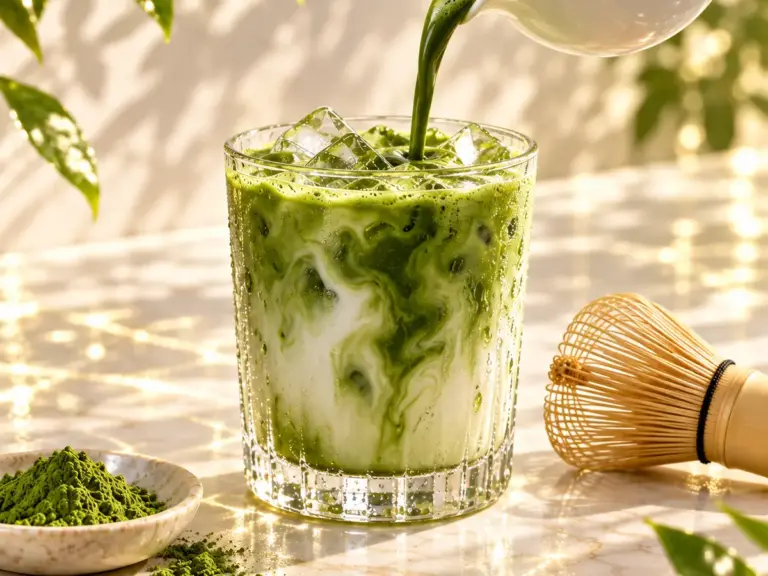
Sift 2–3 g into a 500 ml bottle, add 100 ml of cold water, close it and shake for 20 seconds. Then fill with ice, top with 200 ml of cold milk, and shake once more for five seconds, or pour it over the ice if you want the layered look. On a hot day this is thirty seconds from tin to glass, and you can make it in an office kitchen that has no kettle at all.
Cold water pulls out less bitterness, so a 3 g iced drink does not taste as strong as a 3 g hot one. If you like the green note to come through the milk, go to 3 g.
What a cup costs, and when a chasen starts to make sense
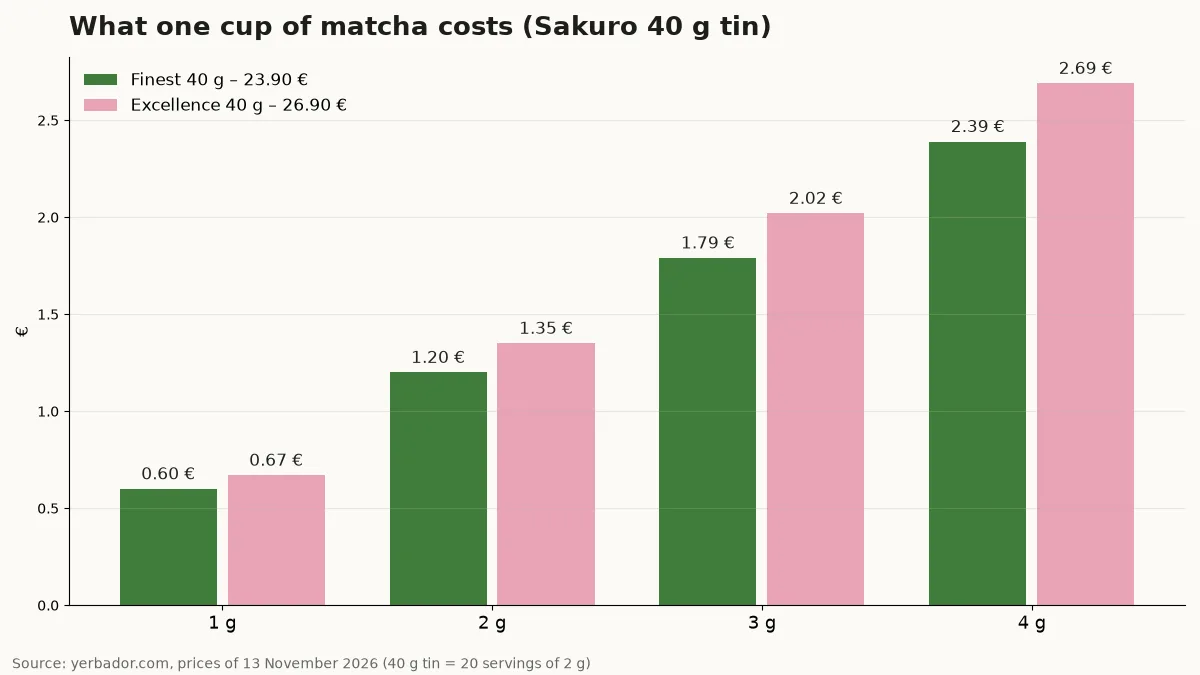
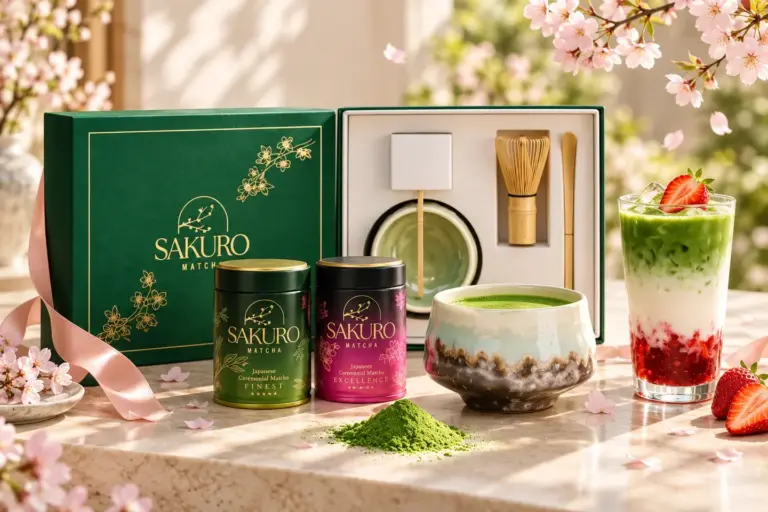
Here is the arithmetic that settles the whisk question. A 40 g tin of Sakuro Matcha Finest costs 23.90 €, which is 1.20 € for a standard 2 g bowl. Sakuro Matcha Excellence at 26.90 € works out at 1.35 €. A bamboo chasen is 14.90 €, about twelve bowls of matcha, paid once, and it lasts months.
So the honest answer: if you drink matcha two or three times a week with milk, the jar or the frother is enough and you are not missing much. If you have started drinking it plain, in a bowl, and you are beginning to notice the difference between harvests, buy the whisk. The chasen’s hundred-odd prongs move water in a way a wire coil cannot, and the foam it builds is finer and sits for longer, which changes how the first mouthful tastes. That is the whole argument for it: not tradition, texture.
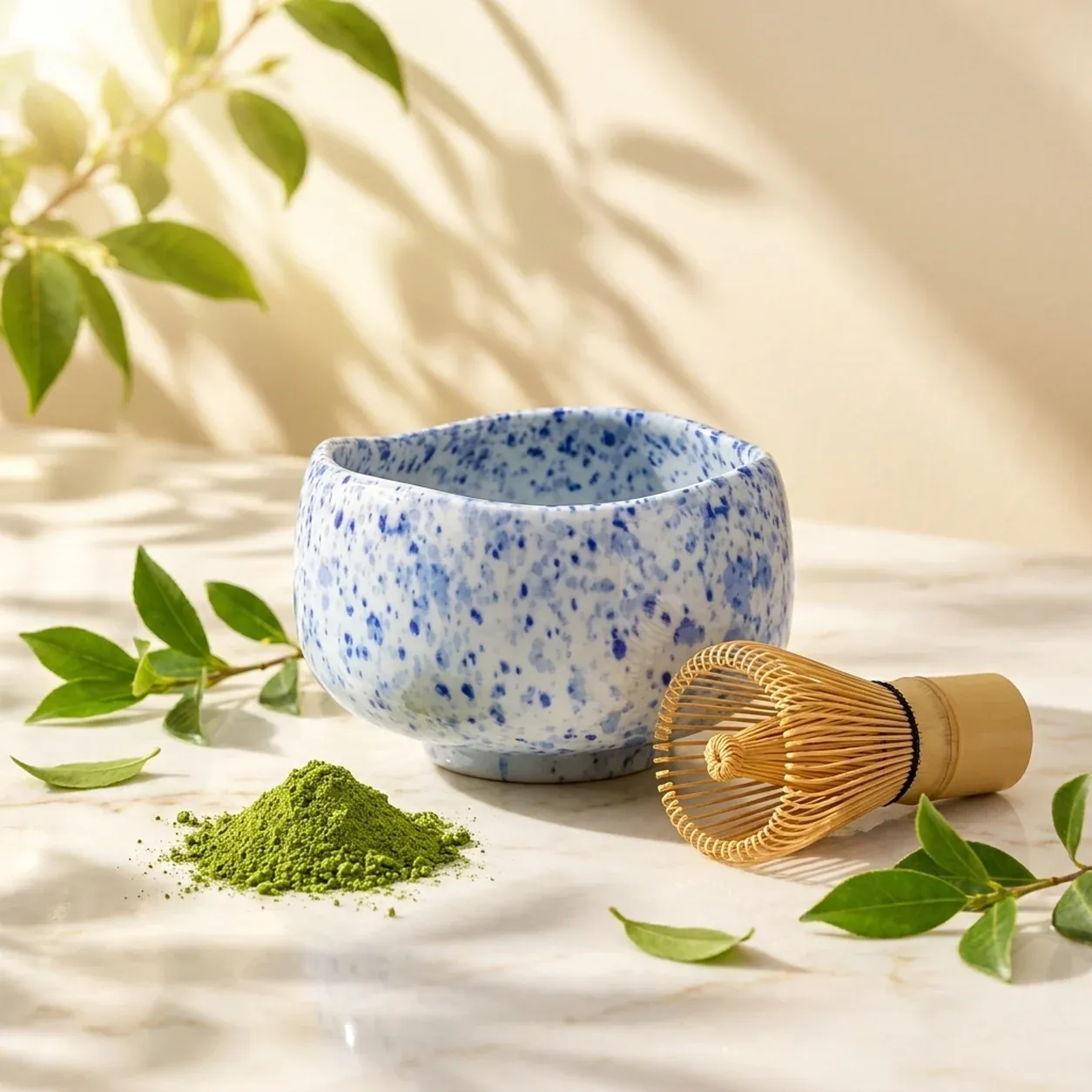
If you do buy one, add a wide matcha bowl (26.90 €) before you add anything else. A chasen in a tall mug cannot reach the corners, and half the point is lost.
Which matcha to pick when you are mixing without a whisk
Grade matters more here than with a chasen, because every one of these methods is slightly rougher than the real thing. A cheap culinary powder mixed with a fork will taste exactly as rough as it sounds.
| Drink | Matcha | Water | Milk | Best method |
|---|---|---|---|---|
| Usucha, plain bowl | 2 g | 60–70 ml at 80 °C | — | Jar or frother |
| Hot matcha latte | 2 g | 40 ml at 80 °C | 200 ml | Jar |
| Iced matcha latte | 2–3 g | 100 ml cold | 200 ml | Bottle, shaken |
| Matcha for two | 4 g | 120 ml at 80 °C | optional | French press |
| Jug for four | 8 g | 200 ml at 80 °C | 600 ml | Blender |
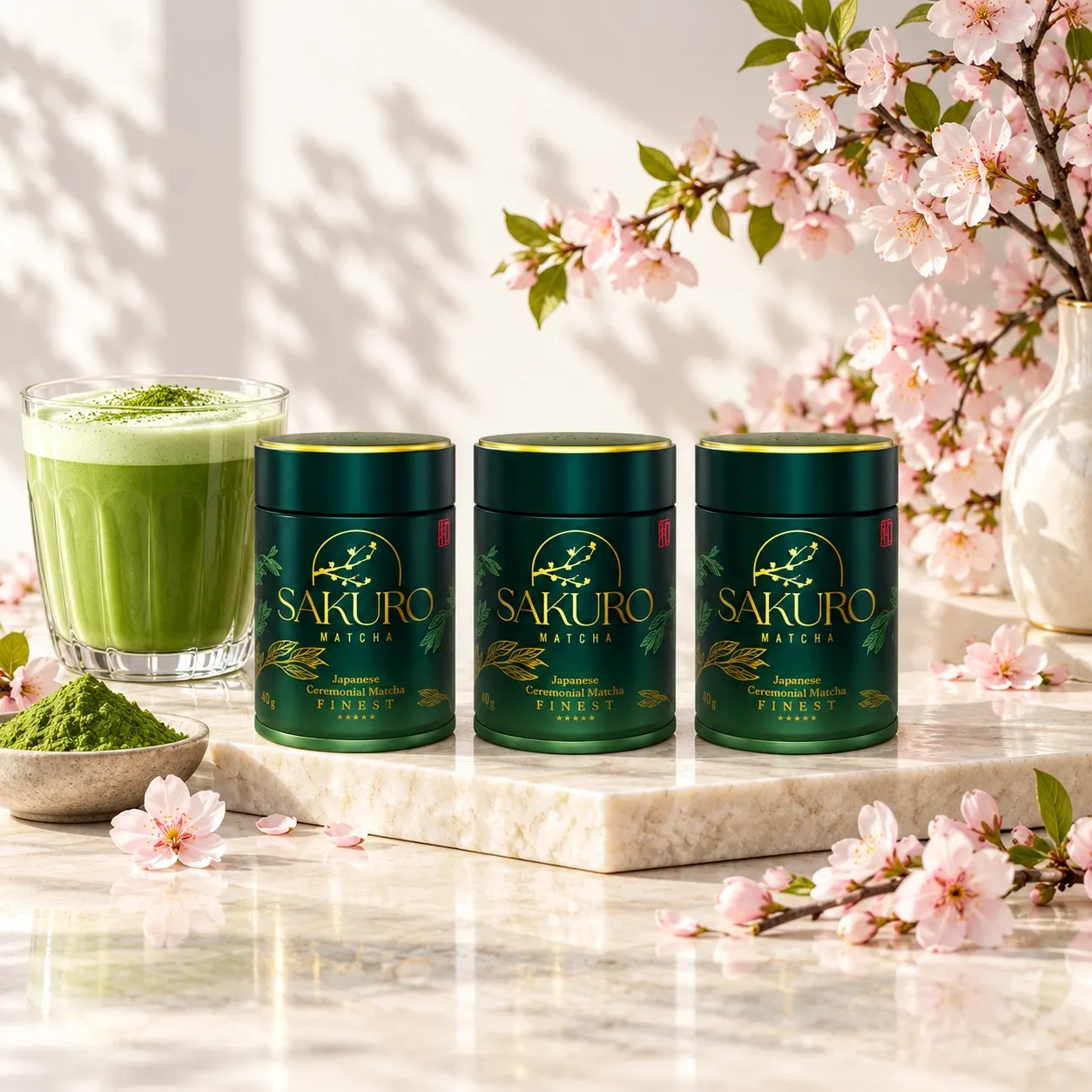
Both of our matchas are Japanese ceremonial grade from Shizuoka. Finest is the everyday tin and the one that takes milk well. Excellence is smoother and sweeter, with more of that fresh-cut-grass note, and it is the one to drink plain. If you are not sure which is which, we went through the whole grade question in ceremonial vs culinary matcha.
Both tins ship from our EU warehouse in Poland, in euros, with no customs paperwork inside the EU. If you run a café, a bakery or an office and you are thinking in kilos rather than tins, we sell 1 kg bags: around 108.90 € per kg for Finest and around 156.60 € per kg for Excellence, which is roughly 0.22 € and 0.31 € per 2 g serving net. Those are indicative conversions from our 2026 Sakuro wholesale list at the NBP rate of 13 November 2026 (1 € = 4.4070 PLN); the binding offer comes from Ewelina — [email protected], +48 515 025 329. Discounts start at 3 kg (−5 %) and 5 kg (−10 %).
Matcha at your desk, in a hotel room, on a train
Half the people who ask us about mixing without a whisk are not standing in their own kitchen. They are at an office with a water boiler and a cupboard of mugs, or in a hotel room with a tiny kettle, or travelling with hand luggage only.
For the office, pack a small screw-top jar, the tin, and a teaspoon. The water boiler usually runs at 95 °C or so, which is too hot, so draw the water, let it stand while you walk back to your desk, and add a splash of cold from the tap. Two minutes and a short walk take the edge off it nicely. If the office has a handheld frother in the drawer, even better.
For a hotel, the in-room kettle and the glass from the bathroom shelf are enough for the paste-and-stir method, though the result is honest rather than beautiful. If you travel with matcha often, a 500 ml bottle solves everything: cold water, a hard shake, done, and it doubles as the thing you carry the drink in.
For hand luggage, keep the matcha in its original tin with the label on. It is a food powder and it travels without drama, but a sealed, labelled tin saves questions at security far better than a bag of green powder does.
One small habit that helps anywhere: measure the dose at home. Two grams is a rounded half teaspoon; weigh it once on a kitchen scale and look at the spoon carefully, and after that you can eyeball it in any kitchen in the world.
The mistakes we see most often
- Too much powder. People reach for a heaped teaspoon, which is nearer 4 g than 2 g. Twice the matcha is twice the bitterness and twice the cost.
- Water straight off the boil. Three minutes of patience, or a splash of cold water, changes the taste more than any gadget.
- Skipping the sieve on the first bowl of a new tin. That is exactly when the powder is most compacted from shipping.
- Shaking a half-full jar. You need air in there. A 60 ml drink wants a 250 ml jar, not a 150 ml one.
- Leaving the jar to stand. Matcha separates in two or three minutes. Shake it, pour it, drink it.
- Storing the tin next to the kettle. Steam and heat are what turn a bright green powder into a dull yellow-green one.
FAQ
Can I use a milk frother to make matcha?
Yes, and it is the best no-whisk tool for a hot cup. Mix 2 g with a splash of water into a paste first, then add 60 ml and run the frother for 15–20 seconds just under the surface. Do not froth matcha directly into milk.
Can I make matcha with just a spoon?
Not well. A spoon pushes water around without breaking the clumps, so you end up with grit at the bottom. If a spoon is genuinely all you have, make a thick paste with a few drops of water first, work it against the side of the cup for a minute, then add the rest of the water slowly.
Do I have to sift matcha every time?
With a jar, a frother or a blender you can skip it on most days, as long as you make the paste first. With a fork or a spoon, sift every time. And always sift the first bowl from a newly opened tin.
Does matcha made without a whisk taste weaker?
The flavour is the same: same powder, same dose, same water. What changes is texture. A chasen gives a finer, longer-lasting foam, and that foam softens the first mouthful. Blind, in a latte, almost nobody picks the difference.
How much matcha can I drink in a day?
A 2 g serving lands somewhere in the region of 40–90 mg of caffeine depending on the harvest, so it sits between a strong green tea and an espresso. EFSA considers up to 400 mg of caffeine a day safe for healthy adults, and 200 mg during pregnancy. Two or three bowls fit comfortably; we broke the numbers down in how much caffeine is in matcha.
Can I shake matcha in a protein shaker?
Yes, and the wire ball helps. Use it for cold matcha, not hot. Most shaker bottles are not made for 80 °C water, and the lids leak when the contents are hot.
Tonight, do this: sift 2 g into a jam jar, splash in 15 ml of hot water, swirl it to a paste, add 45 ml more, and shake for half a minute. If that becomes a habit, the whisk can wait until you want it rather than because an article told you to buy one.
Discover our TOP products!





Your dream figure




Discover new flavors





Yerba mate with tea




Accessories



Superfoods










Certified raw honeys from Poland

Check the current price
free shipping
Up to 90 days
free returns
24 H
shipping