
Matcha in a Black Friday sale: what to check before you click
2026-11-17
Every November the same green tins appear in sale banners with a red percentage in the corner, and every December somebody opens a jar of dull khaki powder that tastes like boiled spinach. The discount was real. The matcha was not worth buying at any price.
Matcha is easy to oversell: you cannot see what is in the tin, and almost nobody checks the two numbers that decide value — how many grams you get, and what they cost per serving. Here is what to look at before the card details go in, from people who weigh the powder every day.
A percentage off tells you nothing. Price per 100 g does
“50% off” is a statement about a shop’s old price tag, not about the tea. Two tins can carry the same discount and differ by a factor of three in what a bowl actually costs you.
So convert everything to one number first: euros per 100 g. Price divided by grams, times one hundred. It exposes the 30 g tin that looked cheap next to the 100 g pouch that was the better deal all along.
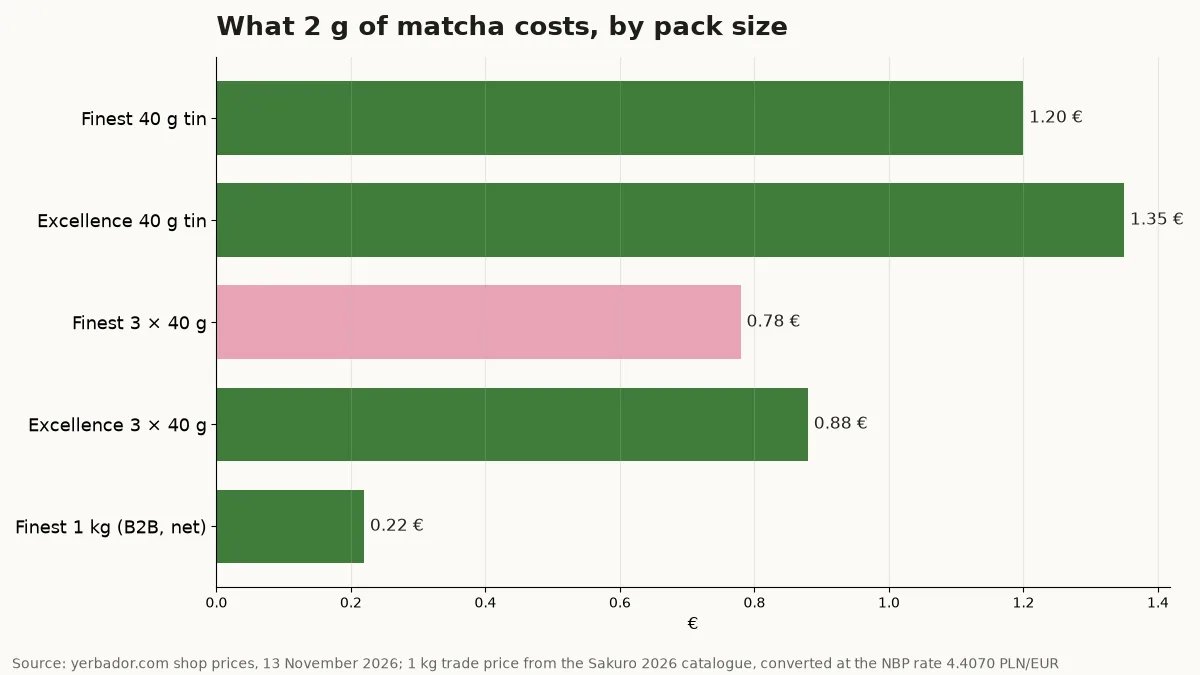
Then convert once more, into the number you will live with: a standard bowl or latte uses 2 g of powder. Divide the price per 100 g by fifty and you have the cost of one cup. Below are our own tins run through that arithmetic, prices checked in the shop on 13 November 2026.
| Pack | Net weight | Price | Per 100 g | Per 2 g serving | Servings |
|---|---|---|---|---|---|
| Sakuro Finest, single tin | 40 g | 23.90 € | 59.75 € | 1.20 € | 20 |
| Sakuro Excellence, single tin | 40 g | 26.90 € | 67.25 € | 1.35 € | 20 |
| Finest, three-tin bundle (2+1) | 120 g | 46.90 € | 39.08 € | 0.78 € | 60 |
| Excellence, three-tin bundle (2+1) | 120 g | 52.90 € | 44.08 € | 0.88 € | 60 |
| Finest, trade bag (wholesale, net) | 1000 g | approx. 109 € | 10.89 € | 0.22 € | 500 |
The pattern holds for any brand worth buying: the jump from one small tin to a multi-pack moves the price per cup far more than the headline percentage does.
Weight is the number sellers hide first
Thirty grams is the oldest trick in the tea aisle. A 30 g tin beside a 40 g tin looks identical in a product photo, costs a couple of euros less and quietly gives you five fewer bowls. If the weight appears only in the specification tab, assume the smallest plausible number until you read it.
Sachets are the second thing to watch. A box of twelve 1.5 g sticks sounds generous; it is 18 g of matcha, usually at a price per 100 g that would buy two tins. Useful in a desk drawer or a suitcase — just never compare them to a tin on the shelf price alone.
One more: 2 g per serving is the standard dose for a bowl and the figure every honest label prints. If a tin claims eighty servings from 40 g, the seller is assuming 0.5 g per cup — a thin, pale drink nobody orders twice.
What the label has to tell you
A good matcha label is boring and specific: country, usually the prefecture, grade, dose, and a date. A bad one leans on adjectives.
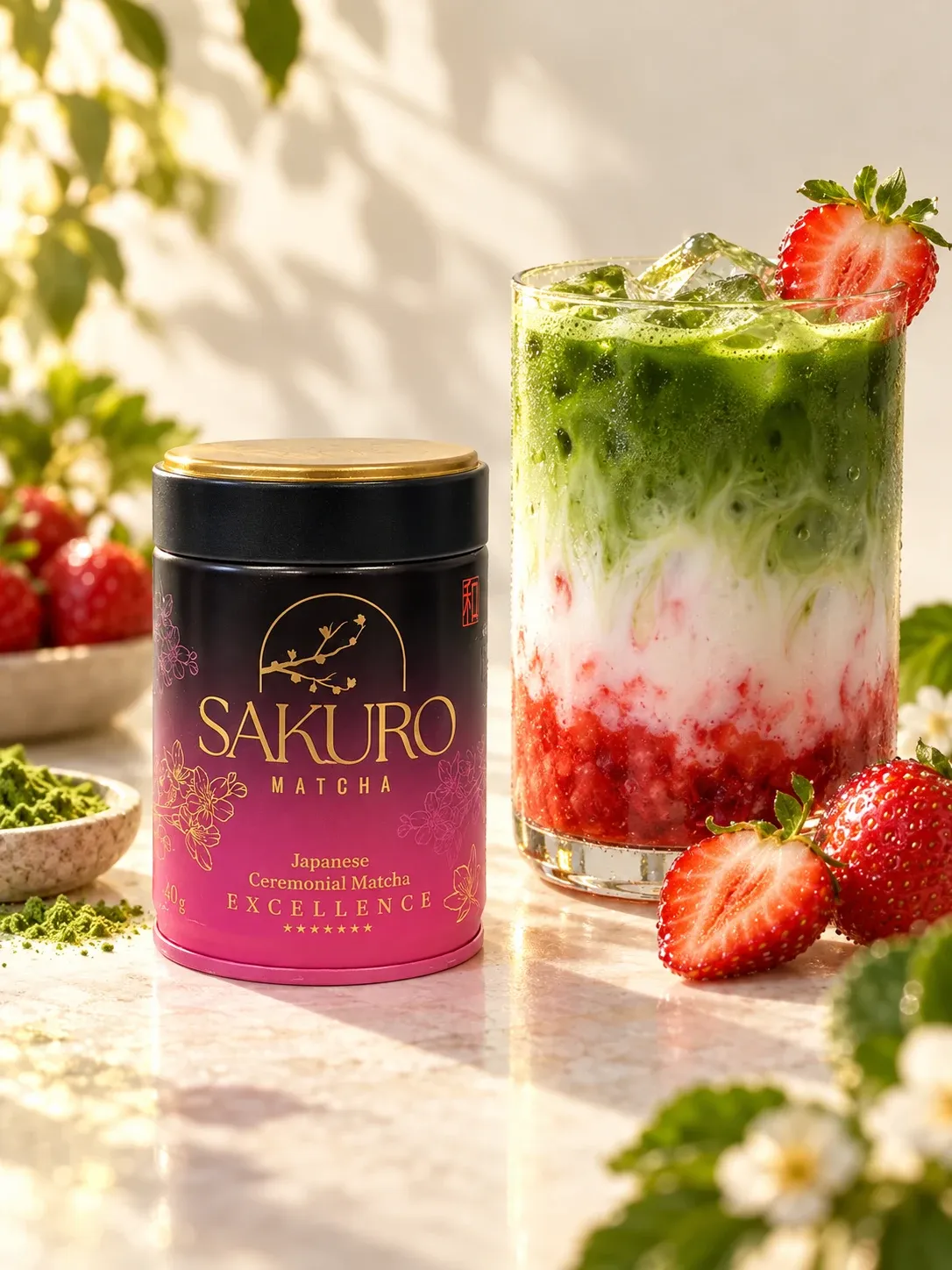
Origin matters more than it did five years ago. China produced around 12,000 tonnes of matcha in 2025, roughly 70% of global output, against Japan’s approximately 4,000 tonnes, according to the Tea & Coffee Trade Journal (17 June 2026). Plenty of that powder is decent and sensibly priced. But if a tin is sold on Japanese imagery and the small print says only “produced in Asia”, you are paying a Japanese price for something else. Ours is Japanese, from Shizuoka, and says so.
| On the label | Good sign | Walk away |
|---|---|---|
| Origin | Country and region named, e.g. Japan, Shizuoka | “Asian origin”, flags but no country |
| Grade and use | Ceremonial or culinary stated, with a suggested dose | “Premium superior quality”, no dose |
| Net weight | Grams on the front of the pack | Weight only in a specification tab |
| Date | Harvest year or best-before, plus advice on using it up after opening | No date printed anywhere |
| Packaging | Opaque airtight tin or resealable foil pouch | Clear glass jar, paper bag, loose scoop |
The grade line is worth a second of thought, because it decides what the powder is for rather than how good it is. Ceremonial grades are made to be drunk with water; culinary grades are blended to hold their flavour against sugar, milk and heat. Paying ceremonial money for brownie powder is as wasteful as baking with the good stuff. We go through the difference properly in our guide to ceremonial and culinary grades.
Tin, pouch or sachet: packaging is not decoration
Matcha fades. Oxygen, light, heat and damp all pull the colour towards olive and the taste towards hay, and ground tea has an enormous surface area for its weight, so it happens in weeks rather than years. That is why the packaging belongs on your checklist next to the price.
An opaque tin with a tight inner lid is the standard, and the reason our 40 g tins are shaped the way they are. A resealable foil pouch is fine. A clear glass jar on a sale page looks beautiful and is a bad buy; so is anything shipped in a paper bag with a fold-over top.
Size interacts with this. Buying 500 g because the price per 100 g is unbeatable only works if you drink it fast. Opened, keep a tin cool, dark and closed, and finish it in about four to six weeks — after that it is still fine in a latte, just less vivid. Two or three 40 g tins stay sealed while you work through the first, which is why multi-packs suit a household and a 1 kg bag does not.
Five checks before you click
In order. A minute, all in.
1. Work out the price per 100 g and write it next to each candidate. Compare those, never the percentages.
2. Find the net weight on the pack itself, not in the description. No weight on the photo is a reason to close the tab.
3. Read the origin and the grade. Country, region, ceremonial or culinary, suggested dose in grams.
4. Check what arrives. Tin or foil pouch, shipped from where, and whether the price you see includes VAT and delivery to your country. A deal from outside the EU can collect duty on the doorstep.
5. Decide how much you will actually drink. One tin a month is a normal habit. Buying six because they were cheap is how people end up baking with ceremonial matcha in March.
One more thing if you are stocking up for someone else: prices moved across the whole market in 2025 and 2026, and a suspiciously cheap “ceremonial” tin is usually a grade below what the banner claims — the numbers are in our piece on the matcha shortage and prices.
What to put in the basket
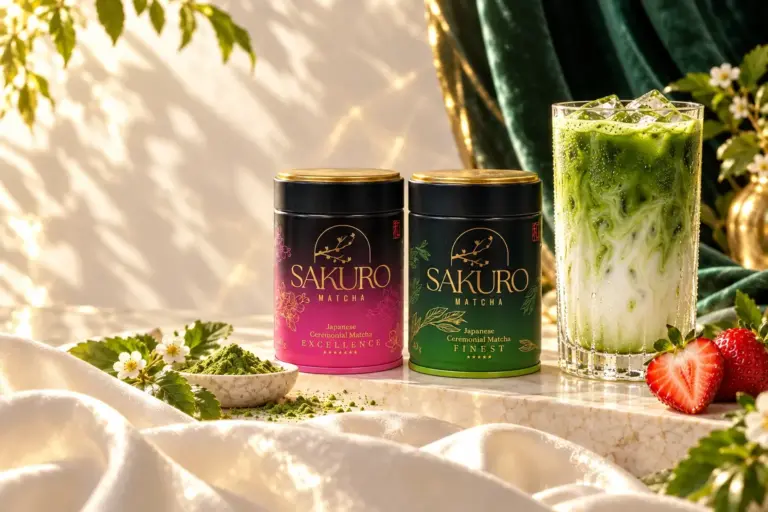
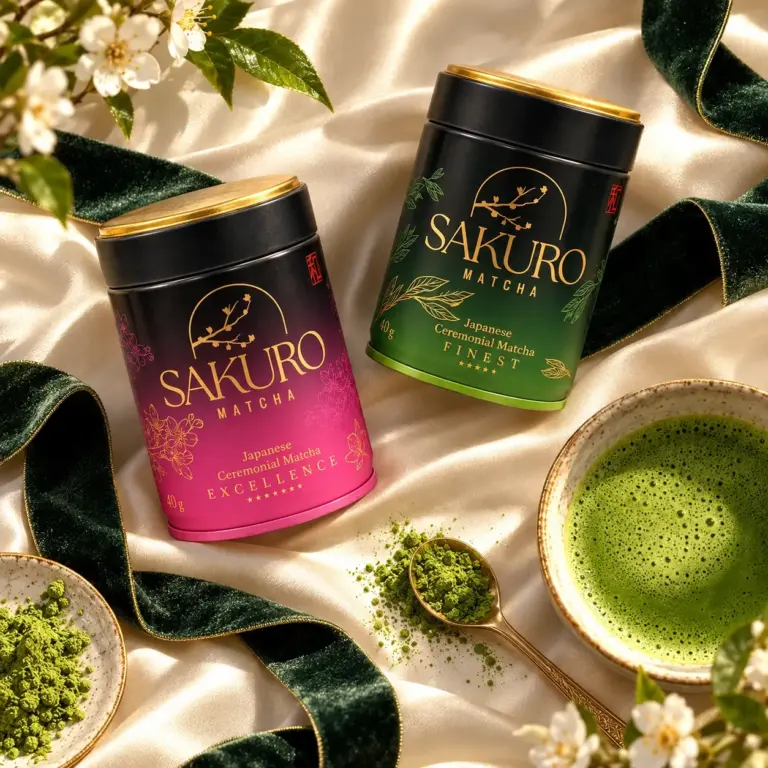
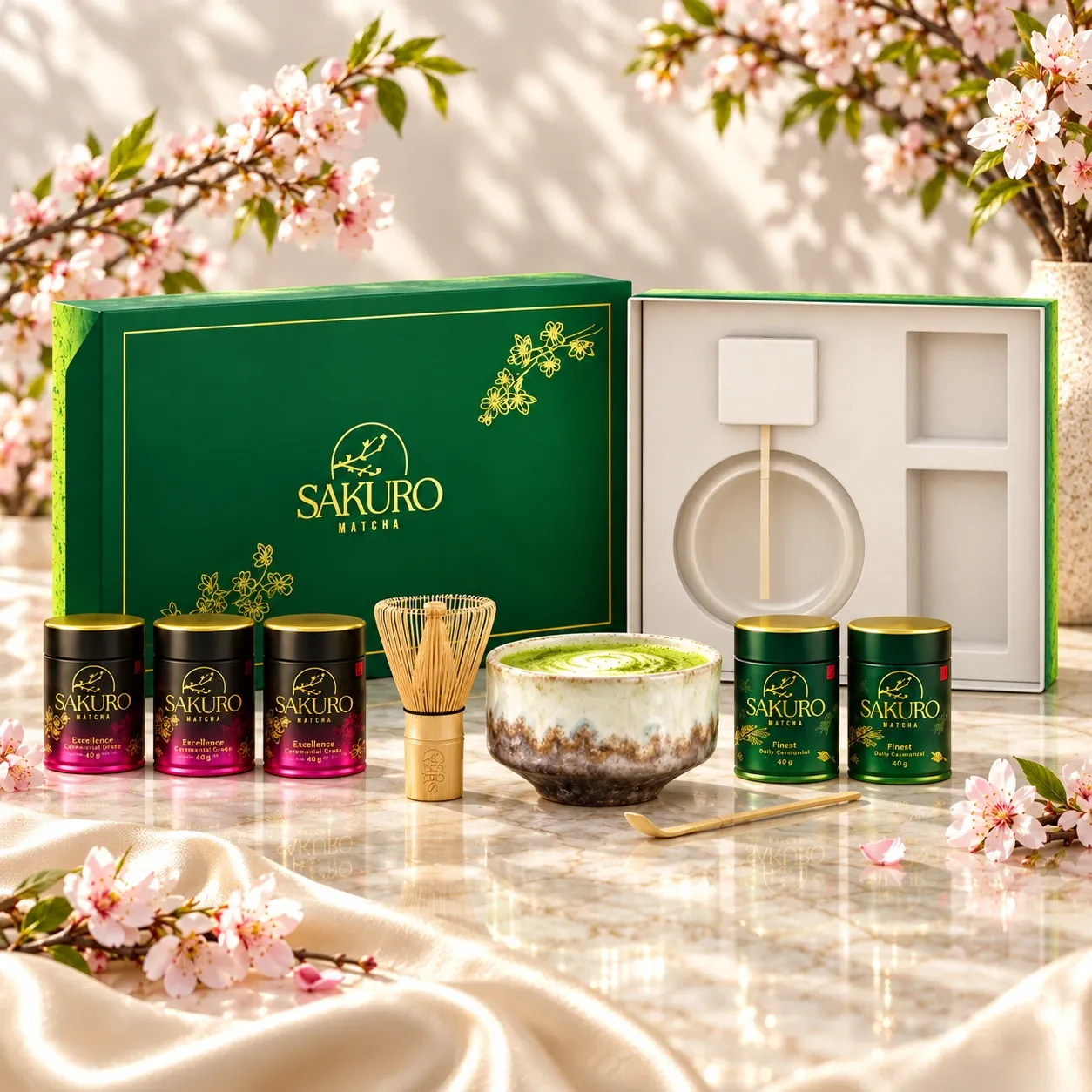
If you are buying for yourself and drink matcha most mornings, the sensible unit is the three-tin bundle. Sakuro Matcha 2+1, three Finest tins is 46.90 € for 120 g — sixty bowls at 0.78 € each. The same bundle in Excellence is 52.90 €.
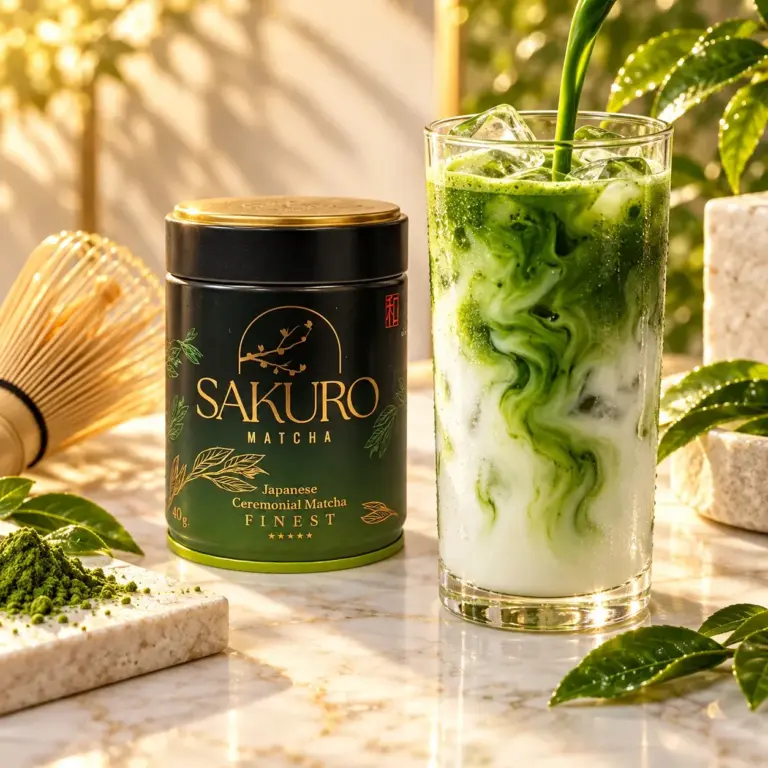
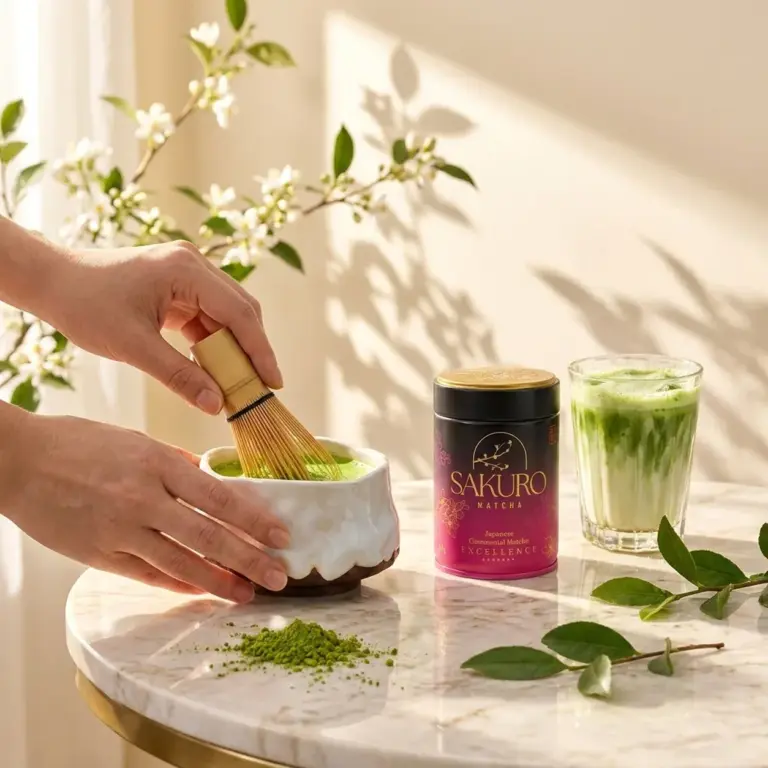
If you are trying matcha for the first time, buy one tin and a whisk instead. Sakuro Matcha Finest 40 g costs 23.90 €, a ceremonial-grade Japanese matcha from Shizuoka that is forgiving in milk — start there, with our matcha latte recipe. Excellence 40 g, at 26.90 €, is the one to drink with water alone. A bamboo chasen is 14.90 € and does more for the drink than any upgrade in grade; a Niwa bowl is 23.90 €. All prices were checked on 13 November 2026 — worth a glance at the shop page, since they do change.
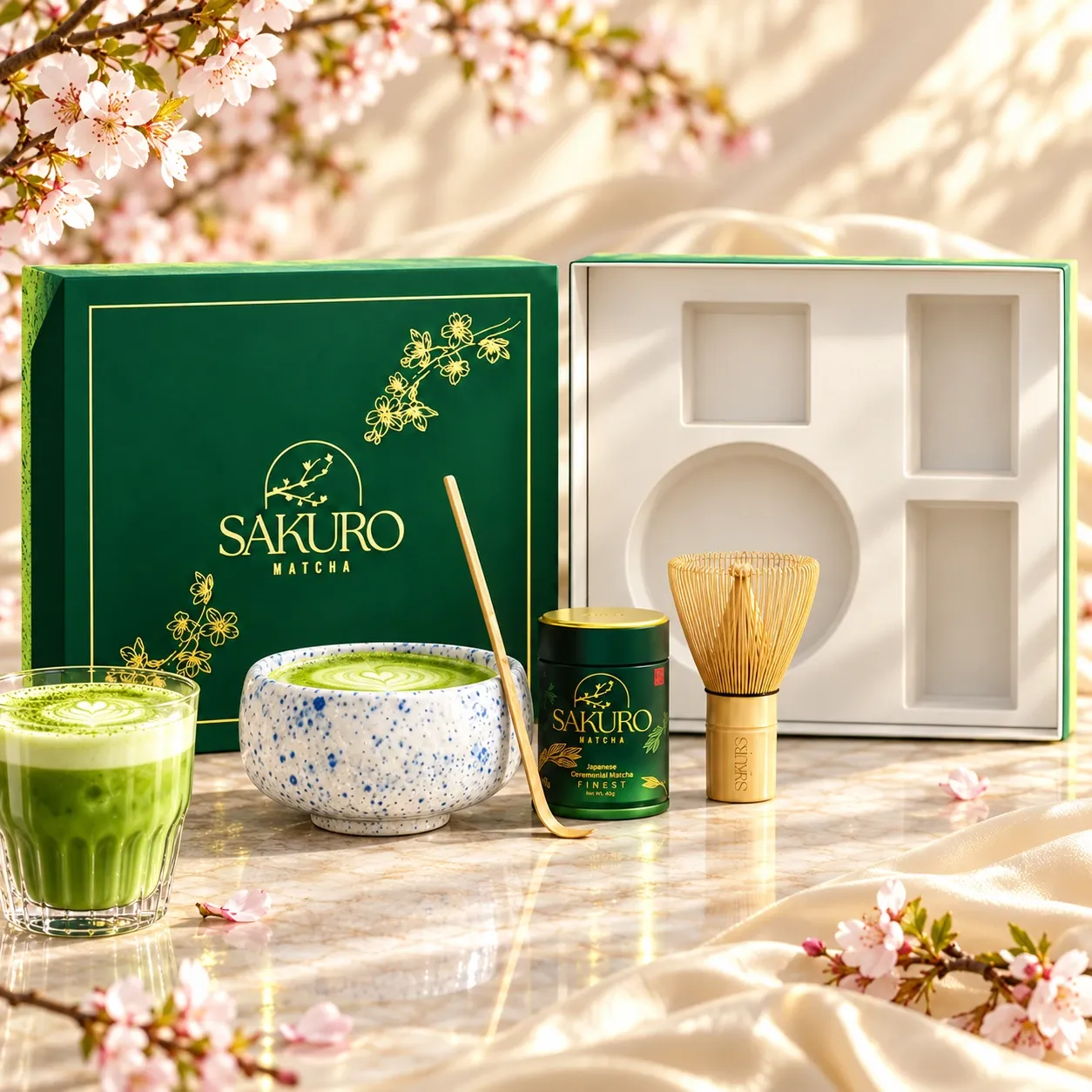
Buying for a café, a shop or an office rather than a kitchen? Matcha in 1 kg bags works out at roughly 109 € per kg for Finest (about 0.22 € per 2 g serving) and roughly 157 € per kg for Excellence (about 0.31 €), net, converted from our Sakuro 2026 trade catalogue at the NBP rate of 4.4070 PLN/EUR on 13 November 2026 — an indicative conversion; the binding offer comes from Ewelina at [email protected] or +48 515 025 329. Orders go in kilograms, 3 kg takes 5% off and 5 kg takes 10%, shipped from Poland within the EU. If you want to price drinks off that figure, we did the maths in how to price a matcha drink.
FAQ
Is cheap matcha always bad matcha?
No — but cheap ceremonial matcha usually is. Culinary grades are legitimately less expensive because the leaf is picked later and blended for cooking, and a good culinary powder at 25 € per 100 g is a sound buy for baking and lattes. What should make you suspicious is a tin sold as ceremonial at culinary money.
How can I tell good matcha before I taste it?
Colour and texture do most of the work. Good matcha is vivid, almost electric green, and fine enough to clump slightly under a spoon — it feels like eyeshadow, not sand. Dull, yellow-green or straw-coloured powder was stored badly or was never top grade. The smell should be sweet and grassy, never dusty.
Does matcha go off?
It does not become unsafe, but it loses what you paid for. Unopened, cool and dark, a tin holds its quality for months. Opened, aim to finish 40 g in four to six weeks; after that it is still good in a latte or a cake.
How much caffeine is in a bowl?
A 2 g serving carries roughly 63 mg of caffeine, about the same as a single espresso. EFSA considers up to 400 mg a day safe for most healthy adults and 200 mg during pregnancy, counting every source. The detail is in our article on caffeine in matcha.
Is a starter set better value than buying pieces separately?
Usually yes, if you would have bought the whisk anyway. A set that pairs a 40 g tin with a bowl removes the awkward first purchase, and bamboo whisks last a year or more. If you already own a bowl, buy the tin and the chasen.
Discover our TOP products!
Your dream figure
Discover new flavors
Yerba mate with tea
Accessories
Superfoods


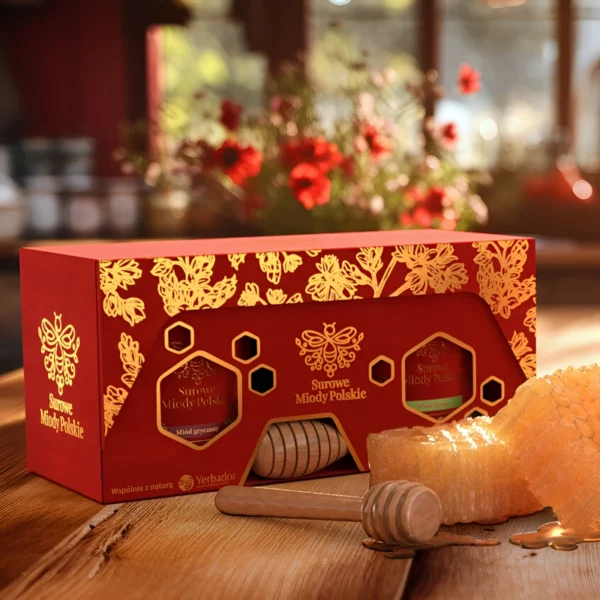
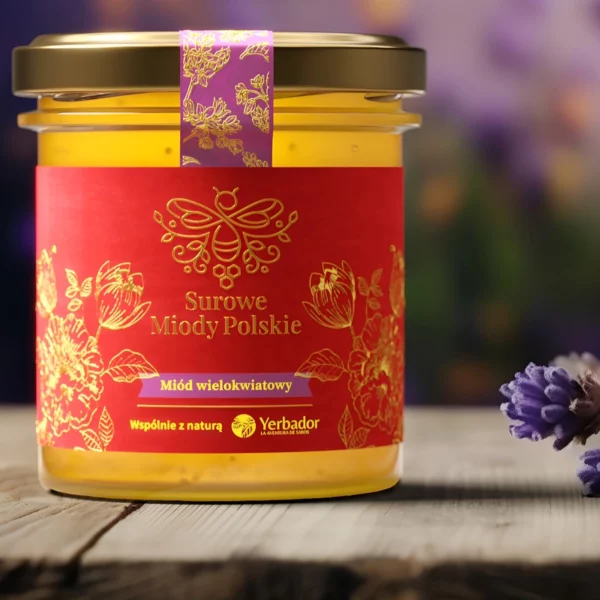
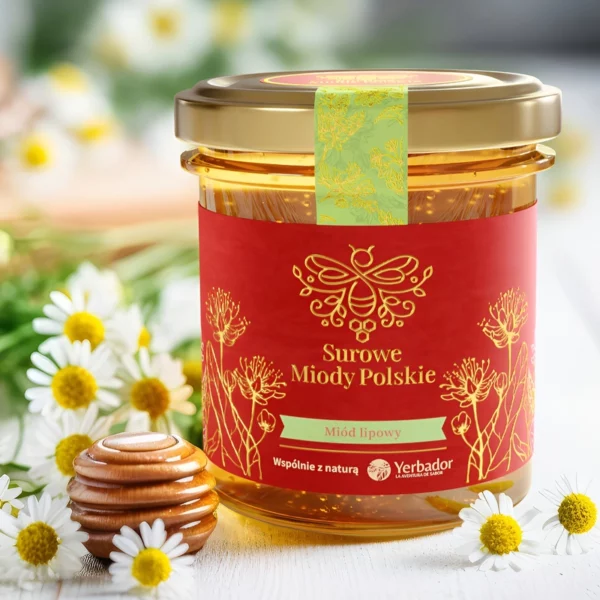
Certified raw honeys from Poland

Check the current price
free shipping
Up to 90 days
free returns
24 H
shipping