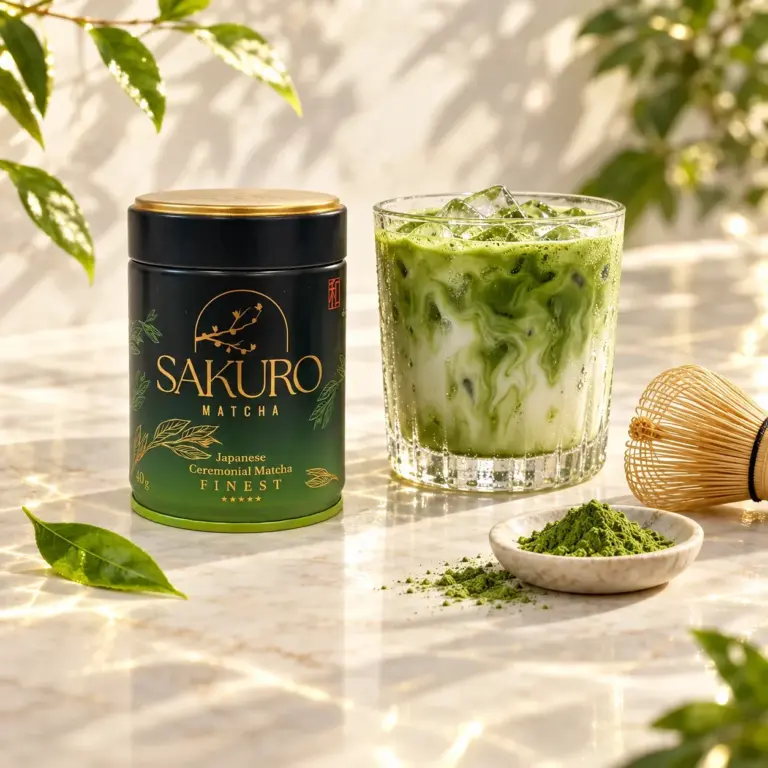

A matcha mocktail bar menu: four drinks that pay
2026-11-16
The zero-proof page is usually the saddest part of a bar list. A juice, a soda, something with elderflower in it, and a guest paying four euros for a drink that took ten seconds and tasted of sugar.
Matcha fixes that for one blunt reason: it brings bitterness and body, which is exactly what a drink loses when you take the alcohol out. Below are four recipes in grams and millilitres, the cost of each glass and the prep that keeps them fast — a matcha mocktail bar menu you can cost on Monday and pour on Friday.
Why matcha earns a place on the no-alcohol list
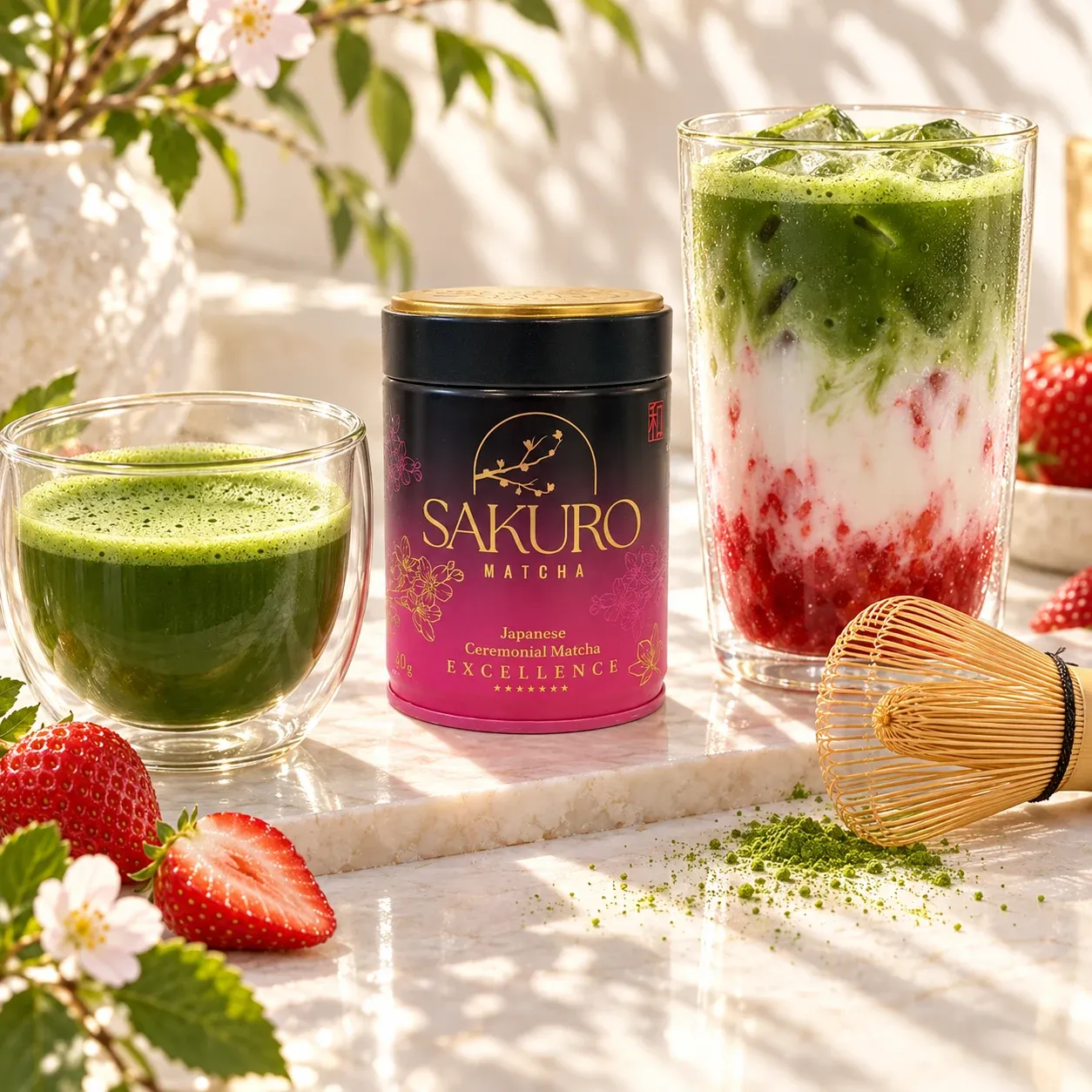
Take the gin out of a gin and tonic and you are left with sweet water. The bitterness left with the spirit. Matcha puts it back: 2 g of ceremonial powder carries astringency and a savoury, almost broth-like depth that reads as grown-up in the glass.
Three practical reasons it works behind a bar. The dose is a number on a scale, not a bartender’s guess. It batches — one bottle of base covers ten drinks and lives in the under-counter fridge. And it is green, so the drink sells itself from two tables away.
One caveat before the recipes. Matcha has caffeine, and a 2 g serving sits around an espresso. These are afternoon and early-evening drinks. The numbers are in the FAQ, and they belong on your menu card too.
Four drinks that can carry the list
All four start the same way: 2 g of sifted matcha whisked smooth with a little water. Everything after that is a build. Weigh the powder. A bamboo scoop holds roughly 1 g, which is fine in a kitchen and not fine on a bar where the drink has to taste identical at 6 p.m. and at 11 p.m.
Matcha tonic — 300 ml, 2 minutes
Ingredients: 2 g Sakuro Finest, 40 ml water at 80 °C, 150 ml tonic water, about 150 g ice, one strip of lemon peel.
Method: Sift the matcha into a small jug. Add the water and whisk for 15 seconds, until nothing is left clinging to the wall. Fill a highball with ice, pour in the tonic, then pour the matcha slowly over the back of a bar spoon so it sits as a green layer. Squeeze the peel over the surface and drop it in. Tell the guest to stir; most want to look at it first.
Quinine and matcha are both bitter, but in different places: tonic at the front of the mouth, matcha at the back. That is why this one needs almost no sugar.
Citrus matcha highball — 350 ml, 2 minutes
Ingredients: 2 g Sakuro Finest, 40 ml cold water, 25 ml fresh lemon juice, 20 ml sugar syrup (1:1), 120 ml soda water, ice.
Method: Shake the matcha, water, lemon and syrup with ice for 10 seconds. Strain into an iced highball, top with soda, finish with a lemon wheel.
Acid holds the colour. This stays bright green far longer than any milk build, which matters when a table orders four and the last glass lands five minutes later.
Matcha sour — 180 ml coupe, 3 minutes
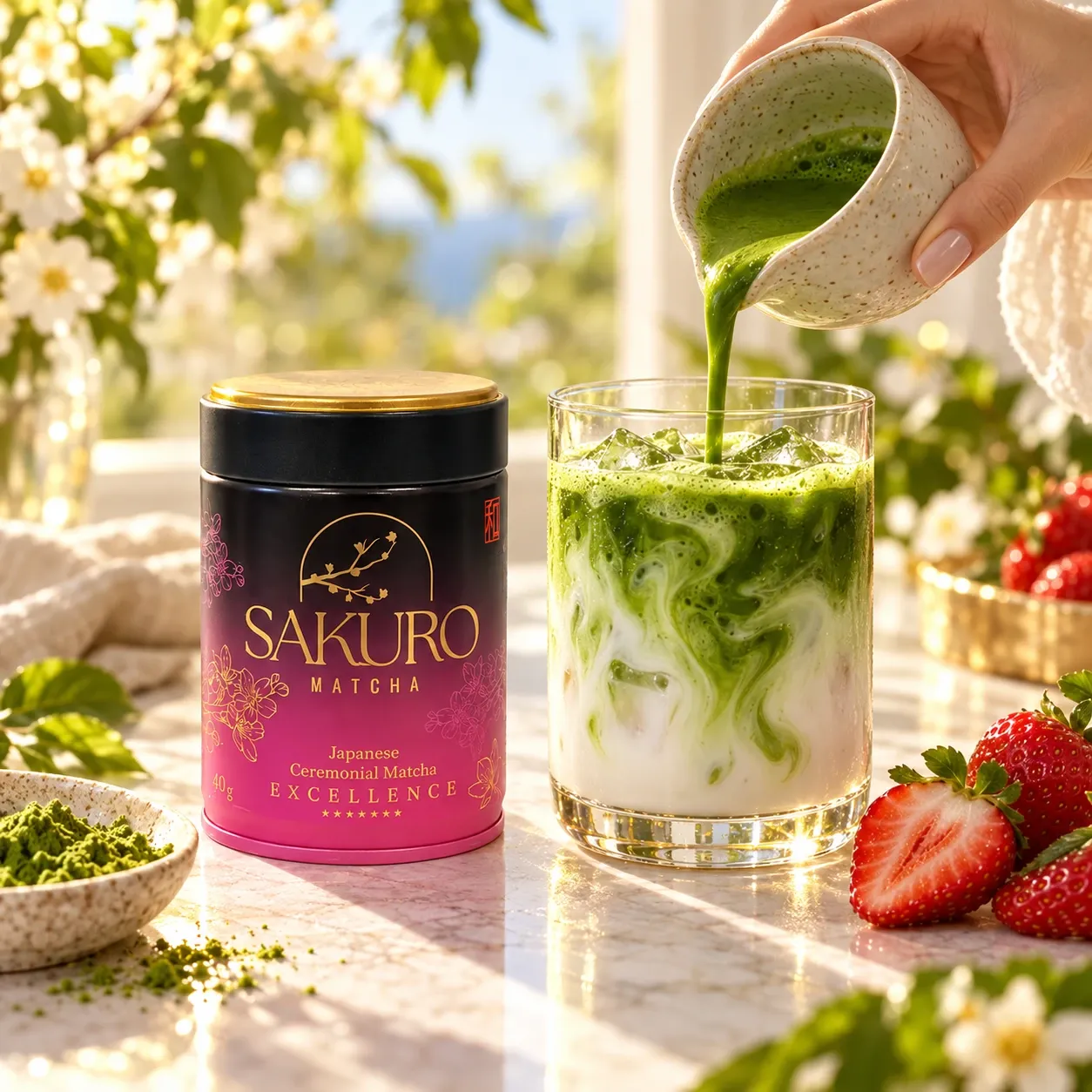
Ingredients: 2 g Sakuro Excellence, 40 ml water, 25 ml lemon juice, 20 ml sugar syrup, 20 ml aquafaba or pasteurised egg white.
Method: Dry shake everything for 15 seconds with no ice. Add ice, shake another 15 seconds, double strain into a chilled coupe. Dust 0.1 g of matcha over the foam through a fine sieve.
Use the better grade here. The drink is short, there is nowhere for a flat, dusty powder to hide, and the foam carries the aroma straight up to the nose.
Coconut matcha — 400 ml, 2 minutes
Ingredients: 2 g Sakuro Finest, 40 ml water, 60 ml coconut cream, 80 ml pineapple juice, 10 ml lime juice, 200 g ice.
Method: Whisk the matcha with the water, then shake everything hard for 15 seconds or blitz it. Pour unstrained over fresh ice, lime wheel on the rim.
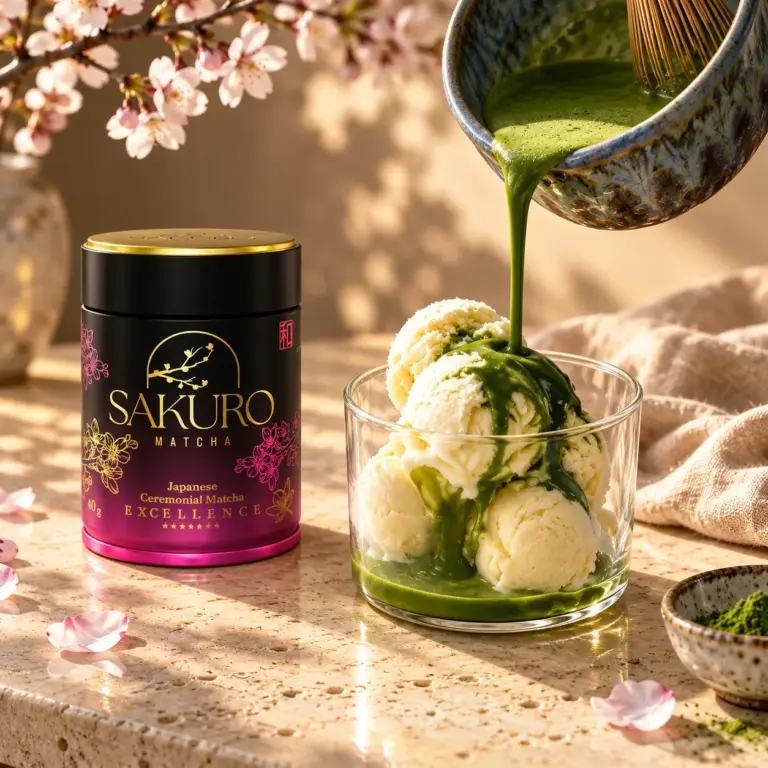
This is the dessert slot, and the one that sells to the guest who says they do not like tea. It is also the priciest of the four.
What each glass costs and what it leaves you
Bought by the kilo, matcha works out at 0.22 € per 2 g serving for Finest and 0.31 € for Excellence. That is the whole tea cost of a drink. Everything else on the ticket is mixer, citrus and ice.
| Drink | Matcha | Matcha cost | Other ingredients | Cost per glass | Menu price, net (example) | Gross margin |
|---|---|---|---|---|---|---|
| Matcha tonic | 2 g Finest | 0.22 € | 0.35 € | 0.57 € | 5.50 € | 90 % |
| Citrus matcha highball | 2 g Finest | 0.22 € | 0.42 € | 0.64 € | 5.50 € | 88 % |
| Matcha sour | 2 g Excellence | 0.31 € | 0.31 € | 0.62 € | 6.50 € | 90 % |
| Coconut matcha | 2 g Finest | 0.22 € | 0.74 € | 0.96 € | 6.50 € | 85 % |
Everything except the matcha is a worked example at ordinary EU wholesale rates — put your own invoices in that column. All figures are net of VAT, and the menu prices are illustrative, not a recommendation.
The comparison an owner actually wants: a 50 ml measure poured from a 0.70 l bottle costs the bottle price multiplied by 0.0714. A spirit at 14 € net is 1.00 € in the glass before the mixer goes anywhere near it. Three of the four drinks above come in under 0.65 € with the garnish included. If you have already costed your hot drinks, the same arithmetic is set out in our guide to matcha drink pricing in a café.
Prep before service
The base: sift 20 g of matcha into a 1 litre bottle, add 1 litre of cold water, shake hard for 30 seconds or blitz for 20. That is 100 ml of base per drink and ten drinks per bottle. Shake the bottle before every pour — matcha is a suspension, and it settles within minutes.
Make the base for the shift and no further. Over several hours the colour dulls and the astringency pushes forward; a bottle left overnight tastes flat and looks grey-green in a clear glass. Mix cold if you want the brightest colour, or make the paste at 80 °C and cool it if you want a rounder, sweeter drink. Pick one, write it on the spec card, and stop re-arguing it on the pass.
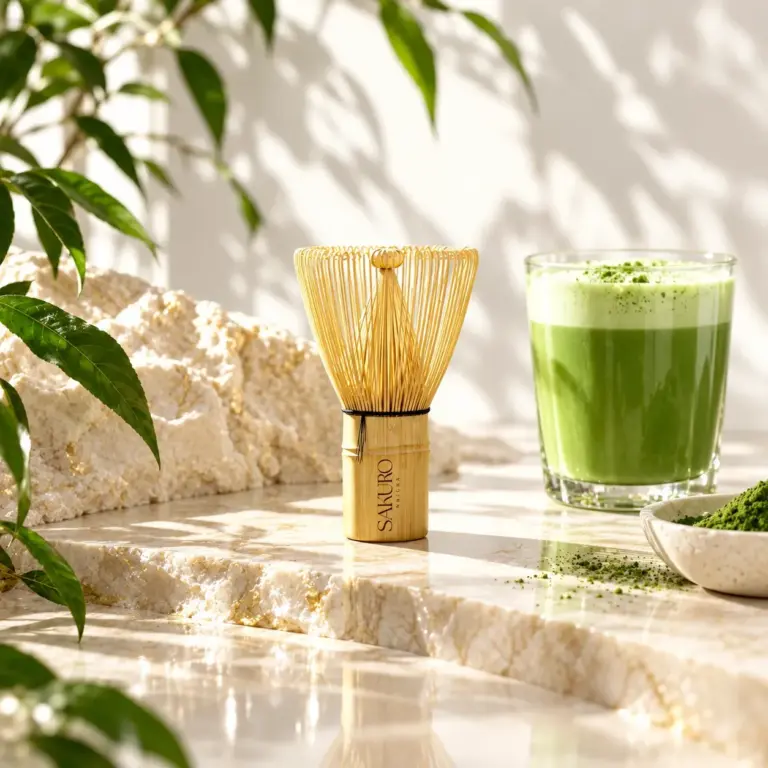
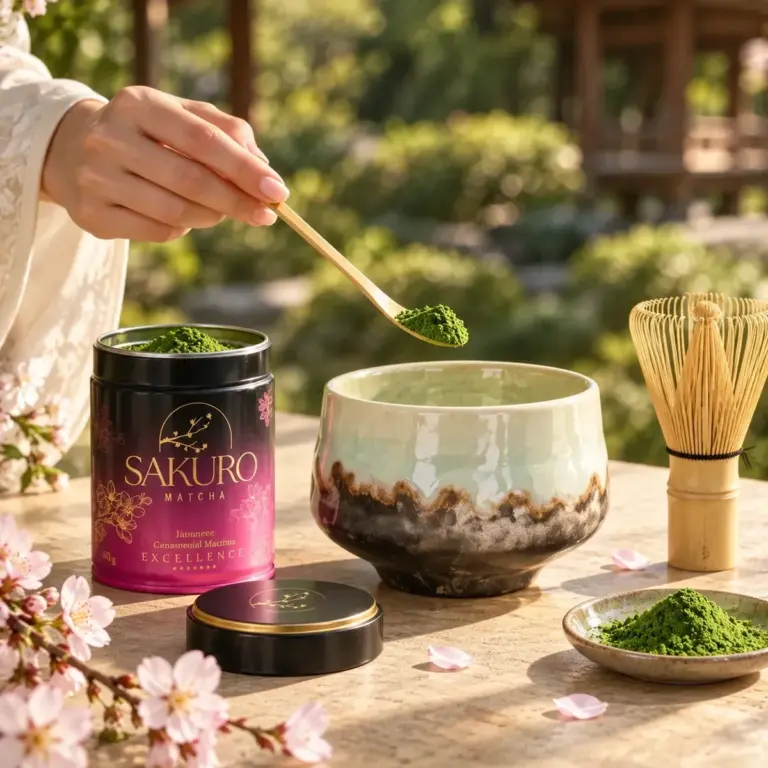
The kit: a 0.1 g scale, a fine sieve, a 1 litre bottle, a shaker and a jigger. That is the working minimum. A bamboo whisk and a bowl matter only if you make the drink in front of the guest — good theatre, about 40 seconds a glass, so keep it for quiet hours or a tasting flight.
Where to buy: tins to test, kilos to pour
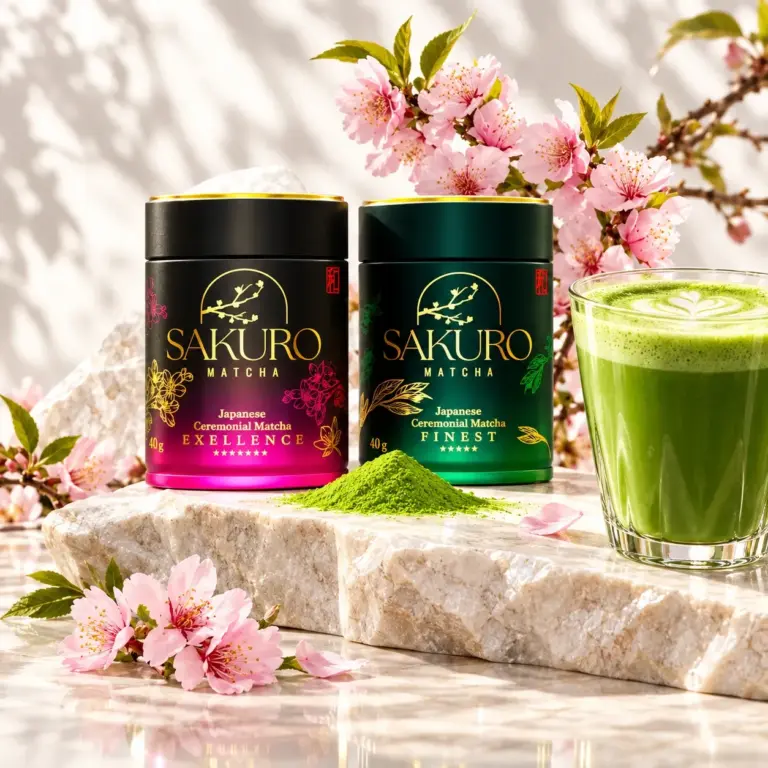
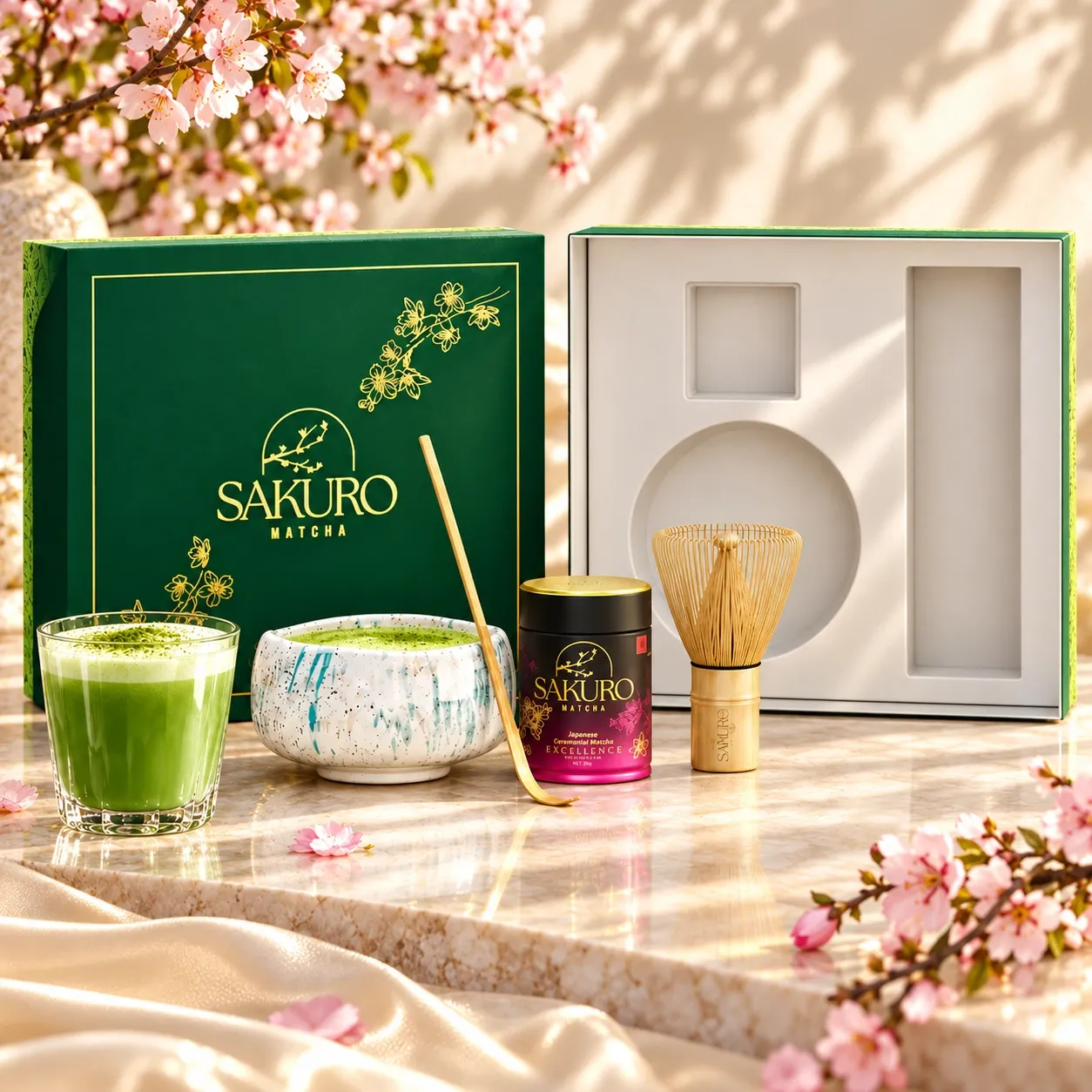
Start with tins. A 40 g tin is 20 servings at 2 g — enough to run all four drinks past your team and a few regulars before you commit to anything. Prices on yerbador.com today: Sakuro Matcha Finest 40 g at 23.90 € and Sakuro Matcha Excellence 40 g at 26.90 €, or the 2+1 pack, three Finest tins for 46.90 €. A bamboo chasen is 14.90 €.
Once a drink has earned its line on the list, stop buying tins — the chart shows why.
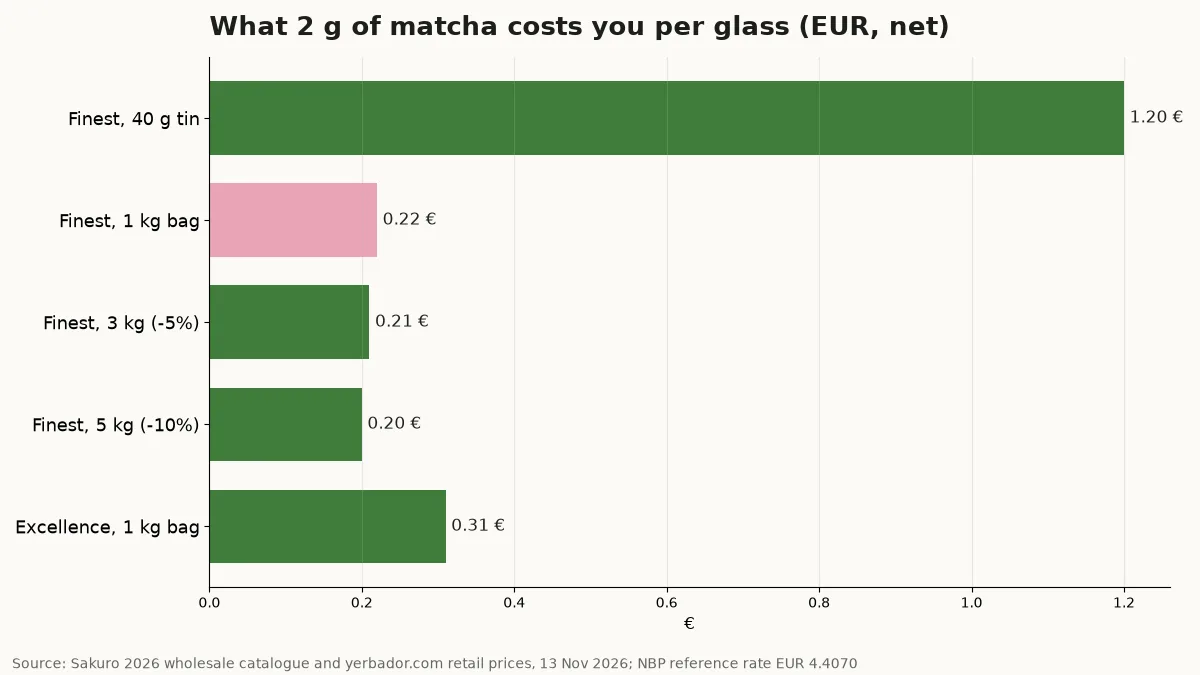
Wholesale, from the Sakuro 2026 catalogue: Finest is 480 PLN per kilo net and Excellence 690 PLN per kilo net, which at the Polish central bank reference rate of 4.4070 on 13 November 2026 is roughly 109 € per kg and 157 € per kg — about 0.22 € and 0.31 € per 2 g serving. Treat that conversion as indicative; the binding offer comes from us by e-mail. One kilo is 500 servings, so a bar pouring 20 matcha drinks a day gets through it in under a month. Bags are 1 kg, discounts are 5 % from 3 kg and 10 % from 5 kg, and everything ships from Poland inside the EU.
Wholesale orders and samples go through Ewelina: [email protected], +48 515 025 329. She sends the current price list, and a sample if you want to taste first. The full B2B picture — grades, order sizes, how cafés run it — is in our page on matcha wholesale for cafés and restaurants.
Questions bar teams ask
How much caffeine is in a matcha mocktail?
Published measurements put matcha powder at 18.9–44.4 mg of caffeine per gram (Kochman et al., Molecules 2021;26(1):85), so a 2 g drink carries 38–89 mg, with the middle of the range near 63 mg — about a single espresso. EFSA puts the habitual daily figure for healthy adults at 400 mg, and 200 mg a day during pregnancy. Print the gram dose on the menu and guests can do their own arithmetic. More detail in our piece on how much caffeine is in matcha.
Finest or Excellence behind the bar?
Finest for long drinks where tonic, citrus or coconut do half the talking. Excellence for the short, foamed drinks where the tea is the flavour and there is nothing to hide behind. Most bars run one kilo of each. The difference between the grades is laid out in our guide to ceremonial and culinary matcha.
Can I batch the base the day before?
No. Mix it at the start of service and bin what is left. Matcha is ground leaf held in suspension, not an extraction, and a bottle that has sat for a day has lost both the colour and the sweetness you paid for.
Won’t tonic make it too bitter?
It is bitter in a useful way — that is the point of putting it opposite a gin and tonic. If a guest finds it sharp, 5 ml of sugar syrup rounds it off without turning the drink into lemonade. Making the paste with cold water also keeps the edge softer than a hot build.
Do we need a bamboo whisk?
Not for volume. A shaker and a bottle do the job faster and more consistently. A chasen is worth buying if you whisk in front of the guest or run staff tastings — it is 14.90 €.
Discover our TOP products!
Your dream figure
Discover new flavors
Yerba mate with tea
Accessories
Superfoods
Certified raw honeys from Poland

Check the current price
free shipping
Up to 90 days
free returns
24 H
shipping