
Matcha overnight oats and smoothie bowl: 5 breakfasts
2026-11-21
Matcha overnight oats are 50 g of rolled oats, 150 ml of oat drink, 1 g of sifted matcha, 10 g of chia seeds and 10 g of maple syrup, shaken in a jar and left in the fridge for at least eight hours. One portion comes to roughly 342 kcal, 11.6 g of protein and about 19 to 44 mg of caffeine. No cooking, no blender, five minutes of work the night before.
The trick that decides whether the jar tastes good is small: the matcha goes in as a cold paste, not as loose powder. Powder dropped on top of oats never dissolves. It sits there, turns into grey-green specks and gives you a mouthful of bitterness somewhere in the middle of breakfast. Two tablespoons of cold water and twenty seconds of stirring solve the whole problem.
Below are five breakfasts built on the same idea, with grams, times and the full calorie table. Four of them are made the night before. One, the smoothie bowl, takes three minutes in the morning because frozen fruit cannot wait in the fridge overnight without turning into soup.
- Base jar: 50 g rolled oats + 150 ml oat drink + 1 g matcha + 10 g chia + 10 g maple syrup. Fridge, minimum 8 hours, ready in the morning.
- Matcha first: whisk or shake 1 g of matcha with 30 ml of cold water before anything else touches the jar. Cold water, not hot, keeps the colour bright green.
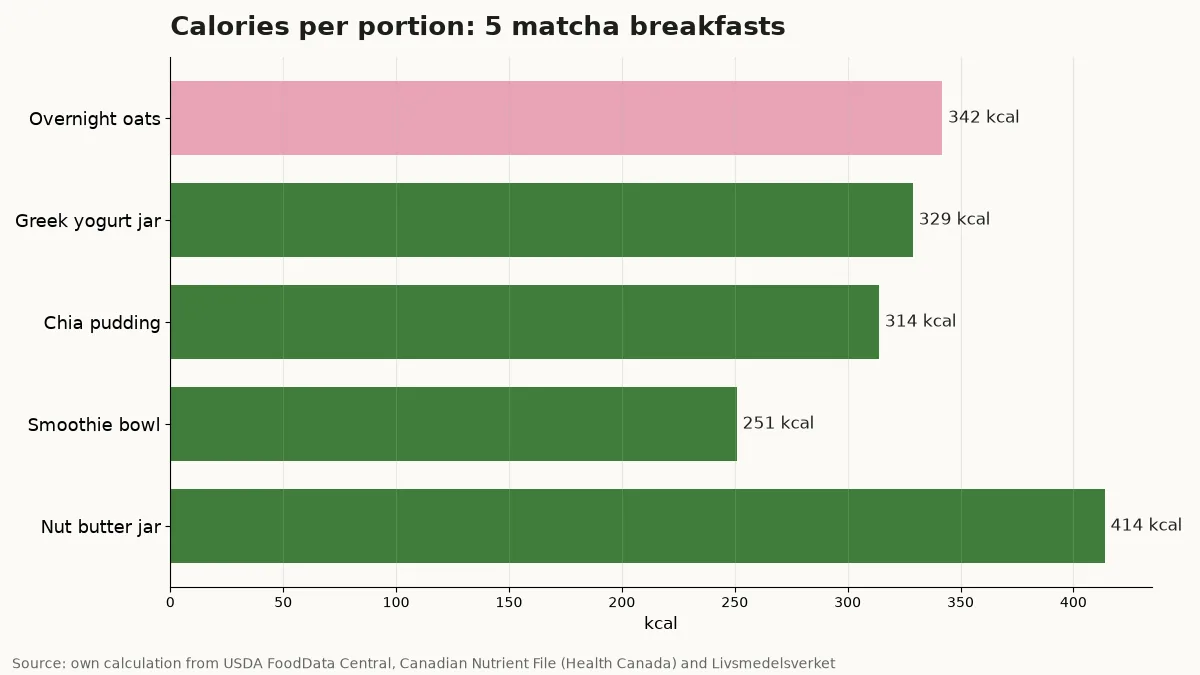
- Calories per portion: 251 kcal (smoothie bowl) to 414 kcal (oats with almond butter). The classic jar sits at 342 kcal.
- Protein: from 4.6 g in the fruit smoothie bowl to 22.3 g in the Greek yogurt jar. The yogurt version is the one that keeps you full until lunch.
- Caffeine: 1 g of matcha carries 19 to 44 mg, 2 g carries 38 to 89 mg (Kochman et al., Molecules 2021). EFSA puts the adult daily limit at 400 mg.
- Keeps: 2 to 3 days in a fridge set to 0 to 5 °C (UK Food Standards Agency). Out of the fridge, chilled food has a four-hour window.
The base recipe: matcha overnight oats in a jar
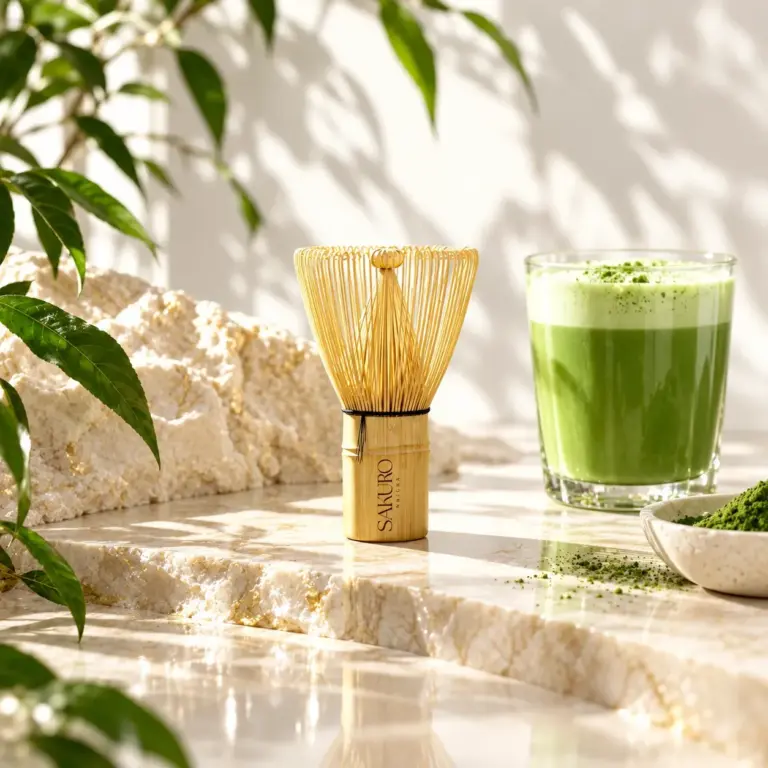
One jar, 342 kcal, five minutes of work. You need a jar of about 400 ml with a lid, a teaspoon and a small whisk or a fork. A bamboo chasen is lovely for a bowl of tea and completely unnecessary here, because you are mixing matcha into 30 ml of water, not aerating it.
Ingredients for one portion:
- 50 g rolled oats (large flakes hold their shape better than quick oats)
- 150 ml oat drink, 1.5% fat
- 1 g matcha, sifted
- 30 ml cold water for the paste
- 10 g chia seeds
- 10 g maple syrup, or 8 g honey
- a pinch of salt
Method, step by step:
- Sift 1 g of matcha into the empty jar through a small tea strainer. This takes ten seconds and removes every lump before water is involved.
- Add 30 ml of cold water. Stir hard with a fork for about 20 seconds, until the paste is smooth and uniformly dark green with no dry islands on the surface.
- Pour in the oat drink and the maple syrup. Stir again.
- Add the oats, the chia and the pinch of salt. Close the lid and shake for five seconds, which mixes the jar far better than a spoon does.
- Fridge, at least 8 hours. The oats soften at around the four-hour mark, but the chia needs the full night to swell and give the jar its pudding texture.
- In the morning, stir once and top with fruit. If the jar is thicker than you like, loosen it with a splash of cold oat drink.
The pinch of salt is not optional. Oats taste flat without it, and matcha without salt reads as more bitter than it is. Same reason a baker salts caramel.
Why the matcha goes in cold
Matcha keeps its bright green colour in cold liquid and loses it in heat. The pigment that makes the powder green is chlorophyll, and chlorophyll holds a magnesium ion in the middle of the molecule. Heat and acid knock that magnesium out, and what remains, pheophytin, is olive-brown. Research published in Foods in 2022 on green tea powder traced colour loss in heated matcha to exactly this loss of magnesium.
For a jar in the fridge this means three practical things. Cold water for the paste, not boiling. No lemon juice in the same jar, because acid pushes the same reaction along. And no warming up the finished jar in a microwave, which turns a green breakfast into a grey one in about forty seconds.
It also means an overnight jar is a friendlier place for matcha than a cake. Nothing gets baked, nothing gets scalded, and the powder you paid for still looks like the powder in the tin when you open the lid in the morning.
Five matcha breakfasts
1. Classic matcha overnight oats
The recipe above: 50 g oats, 150 ml oat drink, 1 g matcha, 10 g chia, 10 g maple syrup. 342 kcal, 11.6 g protein. This is the one to make on a Sunday evening, three jars at a time, and eat Monday through Wednesday. Toppings go on in the morning so nothing goes soft.
2. Greek yogurt jar, the high-protein one
40 g rolled oats, 150 g Greek yogurt 2%, 60 ml oat drink, 1 g matcha, 80 g frozen blueberries. 329 kcal and 22.3 g of protein, which is roughly double the classic jar for fewer calories. Make the matcha paste with 20 ml of cold water, stir it into the yogurt first, then fold in the oats. Frozen blueberries go in straight from the freezer and thaw overnight, colouring the top layer purple while the bottom stays green.
3. Matcha chia pudding, no oats at all
30 g chia seeds, 250 ml oat drink, 1 g matcha, 80 g mango on top. 314 kcal, 13.6 g of fibre, and the highest fibre count of the five. Stir it twice: once when you make it, then again after ten minutes, otherwise the seeds clump at the bottom into a single rubbery disc. On unsweetened almond drink instead of oat drink the same pudding drops to 231 kcal.
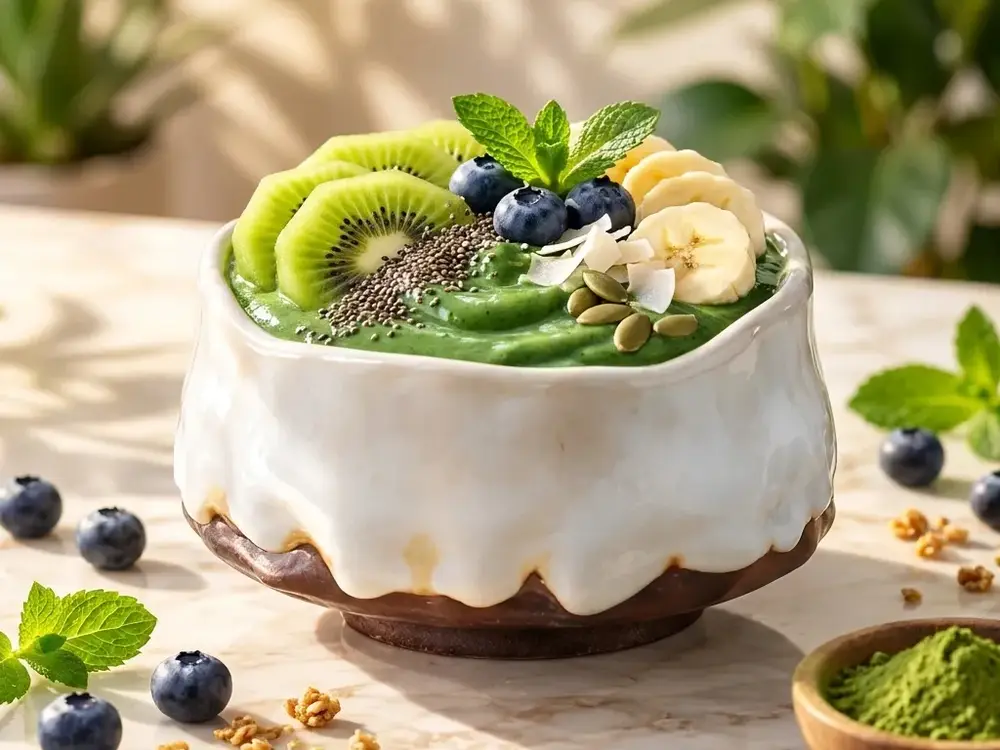
4. Matcha smoothie bowl
120 g frozen banana, 80 g frozen mango, 100 ml oat drink, 2 g matcha, 10 g chia on top. 251 kcal, the lightest of the five, and the fastest once the fruit is already in the freezer. Blend the frozen fruit with the liquid first, add the matcha at the end and pulse for five seconds, because long blending warms the mixture and dulls the colour. Freeze banana in coins, not whole: a whole frozen banana kills blender blades.
5. Oats with almond butter, the heavy one
50 g rolled oats, 180 ml cow’s milk 3%, 15 g almond butter, 1 g matcha, 60 g strawberries. 414 kcal and 17.4 g of fat, which makes it the breakfast for a day with a long bike ride or a shift that runs past lunch. The almond butter needs stirring into the warm-ish milk before the oats go in, or it stays as a single lump at the bottom of the jar.
Calories, protein and sugar side by side
All five portions land between 251 and 414 kcal, so the choice is not really about calories. It is about protein and sugar. The yogurt jar gives 22.3 g of protein; the fruit smoothie bowl gives 4.6 g and 29 g of sugars, nearly all of it from banana and mango. Both are reasonable breakfasts. They just do different jobs.
| Breakfast (1 portion) | kcal | Protein | Fat | Carbs | of which sugars | Fibre | Calcium | Matcha |
|---|---|---|---|---|---|---|---|---|
| Classic overnight oats (oats, oat drink, chia, maple) | 342 | 11.6 g | 8.8 g | 54.7 g | 11.5 g | 9.9 g | 285 mg | 1 g |
| Greek yogurt jar with blueberries | 329 | 22.3 g | 7.2 g | 46.5 g | 14.3 g | 8.8 g | 527 mg | 1 g |
| Chia pudding with mango | 314 | 8.1 g | 13.3 g | 42.4 g | 19.4 g | 13.6 g | 511 mg | 1 g |
| Smoothie bowl, banana and mango | 251 | 4.6 g | 5.3 g | 50.7 g | 29.0 g | 7.6 g | 203 mg | 2 g |
| Oats with almond butter and strawberries | 414 | 18.5 g | 17.4 g | 48.8 g | 12.4 g | 8.2 g | 310 mg | 1 g |
Our own calculation from per-100 g values in USDA FoodData Central (oats), Canadian Nutrient File (chia, yogurt, fruit, maple syrup, almond butter) and Livsmedelsverket (oat drink, cow’s milk). The gram of matcha itself moves the total by a few kilocalories and is left out of the sums.
Swapping the liquid changes the numbers more than people expect. Per 150 ml:
| Liquid, 150 ml | kcal | Protein | Sugars | Calcium | In the jar |
|---|---|---|---|---|---|
| Oat drink, 1.5% fat | 72 | 1.5 g | 5.1 g | 188 mg | Creamy, slightly sweet on its own. The default. |
| Cow’s milk, 3% fat | 90 | 5.4 g | 6.9 g | 185 mg | Richest texture, 4 g more protein than oat drink. |
| Almond drink, unsweetened | 23 | 0 g | 0.2 g | 225 mg | Thin. Good for chia pudding, weak for plain oats. |
Values per 100 ml from Livsmedelsverket, multiplied by 1.5. The calcium in plant drinks comes from fortification, so an unfortified organic oat drink will show close to zero on the label.
How much matcha goes in one jar
One gram per jar is the working dose for breakfast. That is half of what goes into a bowl of usucha, and the reason is dairy and fruit: yogurt, banana and oat drink all mute matcha, but they also mute the sweetness you would otherwise need to hide bitterness. A gram reads clearly without taking over.
| Matcha per jar | Caffeine | Taste in a cold jar | Use it for |
|---|---|---|---|
| 0.5 g | 9–22 mg | Pale green, a whisper of tea | First try, or a jar for someone who dislikes bitterness |
| 1 g | 19–44 mg | Clear matcha note, no bitter edge | The standard breakfast jar |
| 2 g | 38–89 mg | As strong as a latte, needs banana or syrup | Smoothie bowl, or an early start |
| 4 g | 76–178 mg | Chalky and bitter when cold | Nothing, in our opinion. Make two jars instead. |
Caffeine content per gram comes from the review by Kochman and colleagues in Molecules (2021), which puts matcha at 18.9 to 44.4 mg per gram. The range is wide because harvest, shading and cultivar all move the number, so treat the figures above as a band rather than a reading.
For context, EFSA considers up to 400 mg of caffeine a day safe for healthy adults, 200 mg in a single dose, and 200 mg a day during pregnancy and breastfeeding. A 1 g breakfast jar uses between 5 and 11% of the adult daily figure. If you want the full comparison with coffee, we went through it in how much caffeine is in matcha.
Making a batch, storing it, taking it to work
Three jars at once is the sweet spot. More than that and the oats at the bottom of the last jar turn pasty before you get to them. We make the matcha paste in a small bowl for all three jars together, 3 g of powder and 90 ml of cold water, then divide it.
The UK Food Standards Agency sets the fridge at 0 to 5 °C and gives chilled food a maximum of four hours outside it. A jar that travels to the office in a bag at room temperature is inside that window for a normal commute, but a jar that sits on a warm desk from eight in the morning until lunch is not. If your morning runs long, carry it in a small cool bag with an ice block.
Jars with yogurt or milk are the ones to eat first, within two days. The plain oats-and-oat-drink jar holds for three. Chia pudding keeps the longest of the five because it has the least to go wrong, but it also thickens every day, so by day three you are eating something closer to a set dessert.
The mistakes we hear about most
Most complaints about matcha breakfasts come down to four things, and all four are fixable in under a minute.
Specks of powder in the finished jar. The matcha went in dry. Sift it and make the paste in water before anything else enters the jar. A tea strainer costs less than a tin of matcha and will outlive several of them.
Grey or khaki colour by morning. Either the water was hot, or there was something acidic in the jar. Lemon, passion fruit and a lot of pineapple all pull the colour down overnight. Berries and banana do not.
A slimy, jelly-like texture. Too much chia for the liquid. Keep to roughly 10 g of chia per 150 ml and the jar is creamy; at 20 g per 150 ml it sets into something you have to cut.
Bitterness that was not there yesterday. Usually a culinary-grade powder, which is milled from later harvests and tastes sharper by design. It is the right choice in a cake, where sugar and butter carry it, and the wrong one in a cold jar with no sugar to hide behind. The difference between the grades is laid out in ceremonial vs culinary matcha.
Which matcha for breakfast, and what a jar costs
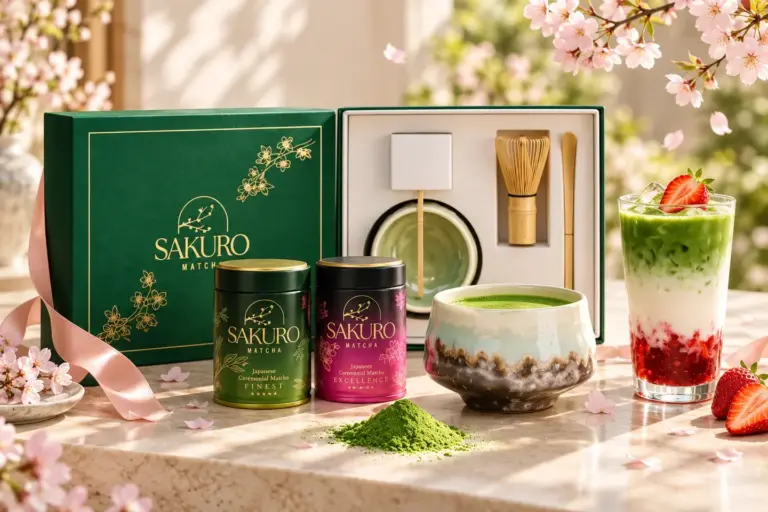
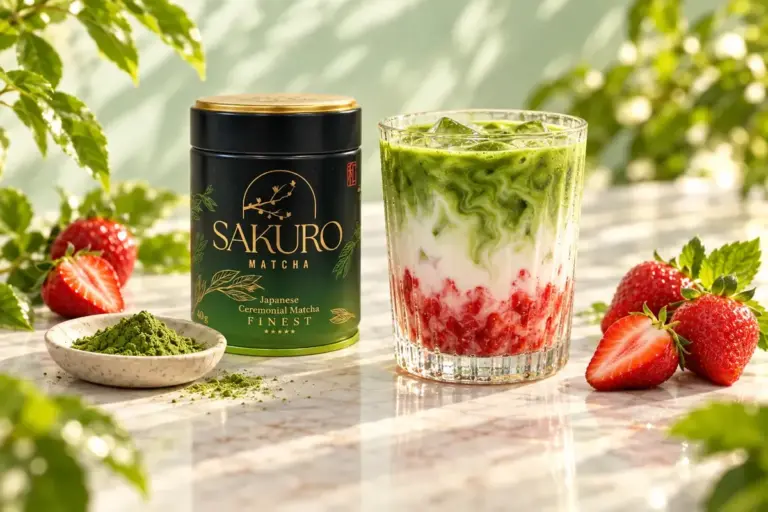
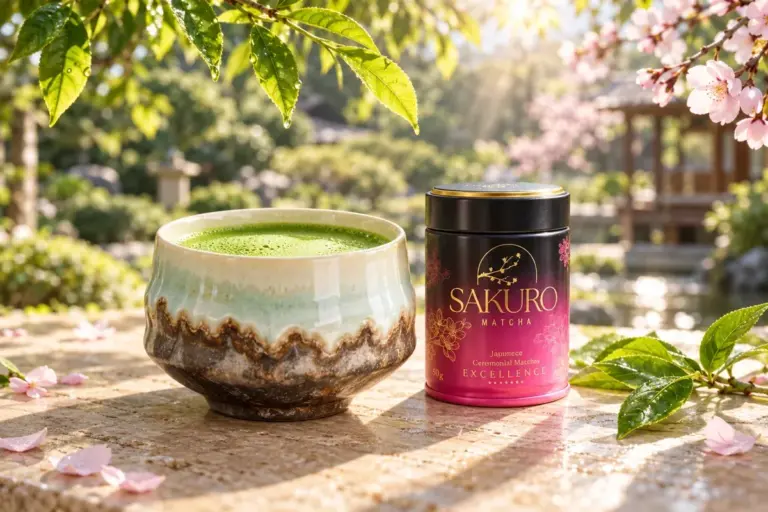
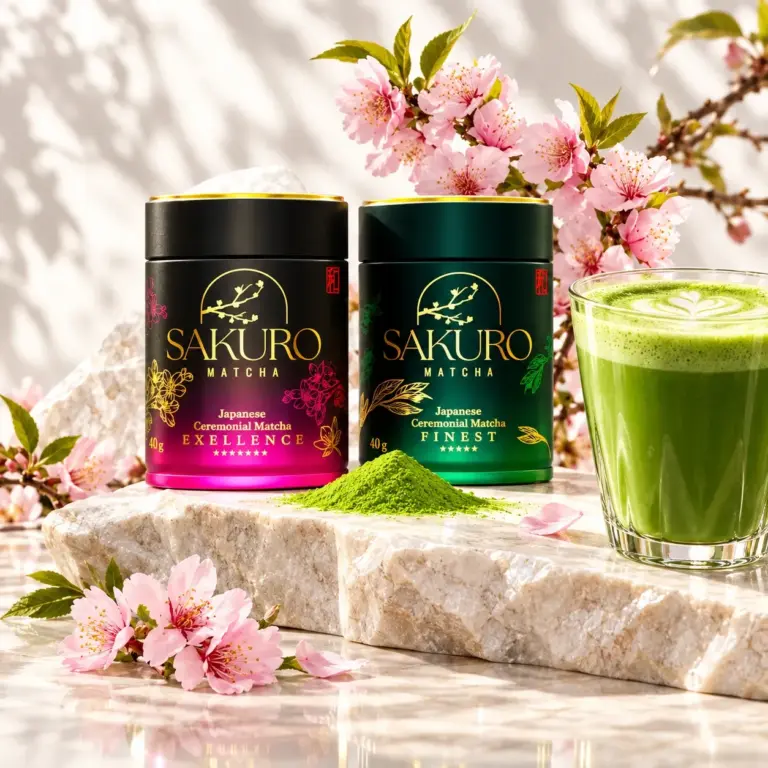
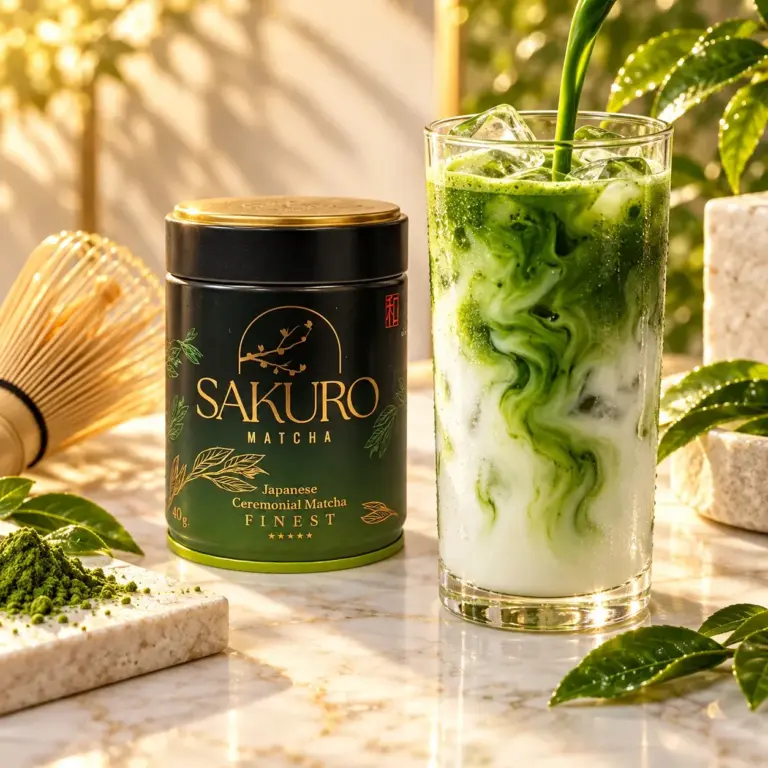
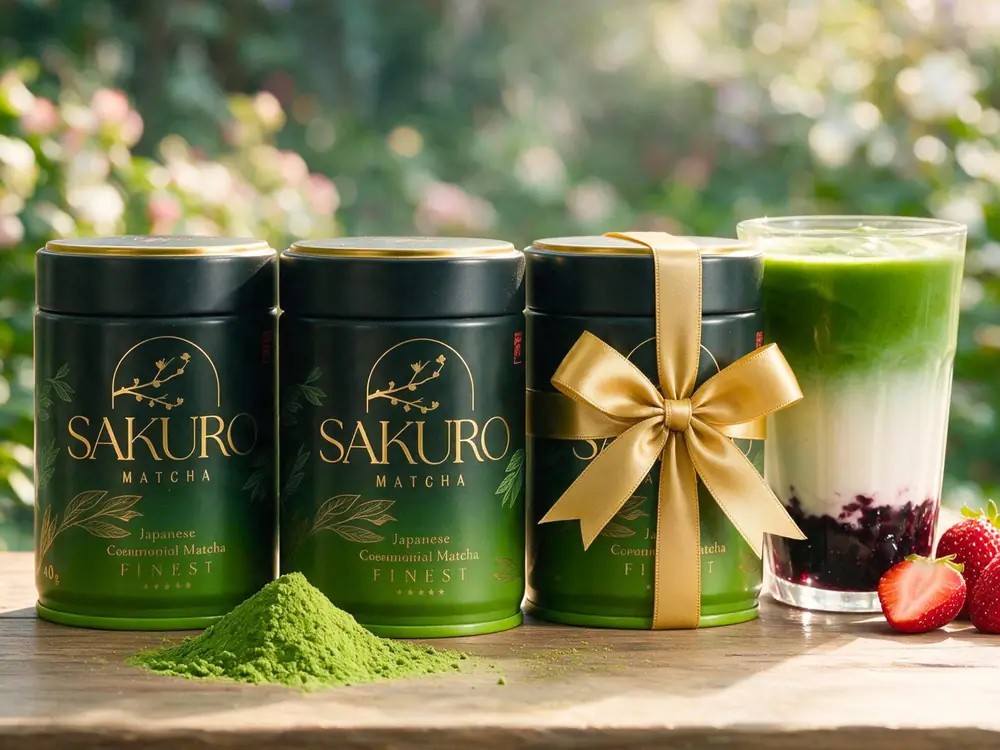
Sakuro Matcha Finest is a Japanese ceremonial-grade matcha from Shizuoka in a 40 g tin, €23.90 at yerbador.com, and it is the one we reach for here. At 1 g per jar a tin makes 40 breakfasts. Finest has enough sweetness to carry a plain oat jar without syrup; Sakuro Matcha Excellence, also 40 g, €26.90, is the finer-tasting of the two and makes more sense in a bowl of tea than under a layer of mango. If you want to taste them side by side, the Finest and Excellence pair is €46.90, and the four-tin Finest set is €80.90 for 160 g.
| Format | Price | Per 1 g | Matcha cost per jar (1 g) | Jars per pack |
|---|---|---|---|---|
| Finest, 40 g tin | €23.90 | €0.60 | €0.60 | 40 |
| Excellence, 40 g tin | €26.90 | €0.67 | €0.67 | 40 |
| Finest, 4 × 40 g set | €80.90 | €0.51 | €0.51 | 160 |
| Finest, wholesale 1 kg bag | approx. €108 | €0.11 | €0.11 | 1000 |
| Excellence, wholesale 1 kg bag | approx. €155 | €0.15 | €0.15 | 1000 |
Retail prices are from yerbador.com on the day of publication. The wholesale figures are the Sakuro 2026 catalogue net prices, 480 PLN/kg for Finest and 690 PLN/kg for Excellence, converted at the National Bank of Poland rate of the day; treat them as an indication rather than a quote.
For cafés, bakeries and canteens: if matcha breakfast jars are going on a menu, matcha in kilogram bags changes the maths completely. Two grams of Finest in a jar costs about €0.22 wholesale against €1.20 from a retail tin. Orders go by the kilo, with 5% off from 3 kg and 10% off from 5 kg, shipped from Poland within the EU. Binding offers come from Ewelina, [email protected], +48 515 025 329. The longer version of the wholesale side is in our guide to matcha wholesale for cafés and restaurants.
FAQ
How much matcha should I put in overnight oats?
One gram per jar, sifted and mixed with 30 ml of cold water before the other ingredients. That carries 19 to 44 mg of caffeine and gives a clear matcha flavour without bitterness. Two grams works in a smoothie bowl, where banana and mango balance it.
Can I use hot water or hot milk for matcha overnight oats?
No. Hot liquid strips magnesium out of the chlorophyll and the jar turns olive-brown by morning. Cold water also pulls less bitterness out of the powder, which matters in a breakfast with no sugar to mask it.
How long do matcha overnight oats keep in the fridge?
Two days for jars with yogurt or milk, three for jars made with a plant drink, in a fridge at 0 to 5 °C. The UK Food Standards Agency allows chilled food a maximum of four hours outside the fridge, so a jar carried to work should be eaten in the morning, not at four in the afternoon.
Do matcha overnight oats have more caffeine than coffee?
Less. A jar with 1 g of matcha has 19 to 44 mg of caffeine; a filter coffee of 200 ml has around 90 mg and an espresso around 80 mg. Per gram of powder matcha wins, because you swallow the whole leaf, but a breakfast jar uses a single gram.
Which matcha grade is right for a cold breakfast jar?
Ceremonial grade. Culinary grade is milled from later harvests and tastes sharper, which works in a baked cake with sugar and butter, but stands out as bitter in a cold jar. Sakuro Matcha Finest, 40 g, is a ceremonial-grade Japanese matcha and makes 40 jars at a gram each.
Can I make matcha overnight oats without chia seeds?
Yes, but cut the liquid to about 120 ml for 50 g of oats, because chia absorbs a good part of it. Without chia the jar is looser and more like cold porridge, and it holds in the fridge for two days rather than three.
Is the smoothie bowl better made the night before?
No. Blended frozen fruit separates and melts within an hour, so the bowl is a morning job. What you can prepare the night before is the fruit: banana sliced into coins, mango in cubes, both straight into the freezer in a bag, which cuts the morning work to three minutes.
If you have never made matcha as a drink, start there before you start layering it under granola. The method takes two minutes and is in our matcha latte recipe. Then put three jars in the fridge tonight and have Monday morning handled.
Discover our TOP products!

Your dream figure


Discover new flavors


Yerba mate with tea


Accessories


Superfoods



Certified raw honeys from Poland

Check the current price
free shipping
Up to 90 days
free returns
24 H
shipping