
Pecan, Macadamia, Almonds, Pistachios and Cashews – Which Nut For What (Comparison Table)
2026-08-14
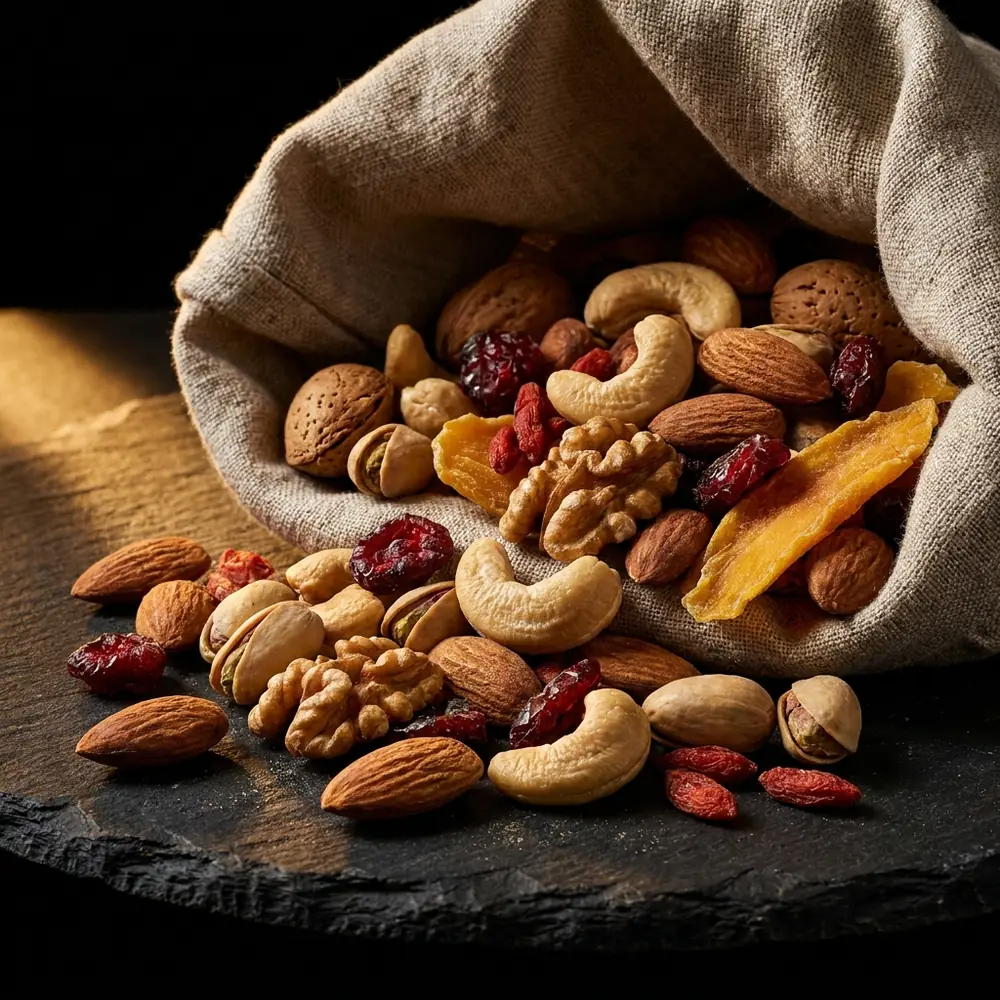
The shortest answer, before we get to the numbers. Pecan nuts are the fattiest and sweetest of the five — great for baking and porridge. Macadamia has the most monounsaturated fats of any nut in the world. Almonds are the record holder for vitamin E and calcium. Pistachios provide potassium and vitamin B6. Cashews have the most magnesium and iron, plus the mildest flavour.
If you need to pick one nut for everyday use and have no special needs — go for almonds, they have the best ratio of nutrients to calories. And if you know exactly why you’re reaching for one (magnesium after a workout, fat for cake, a salt-free snack for work), the table below settles it in thirty seconds.
Which nut for what? Nutritional value table
| Per 100 g of kernel | kcal | Fat | of which monounsaturated | Protein | Fibre | Magnesium | Vitamin E | What to reach for |
|---|---|---|---|---|---|---|---|---|
| Pecan Nuts | 691 | 72 g | 41 g | 9,2 g | 9,6 g | 121 mg | 1.4 mg | the fattiest and sweetest, 4.5 mg zinc |
| Macadamia | 718 | 76 g | 59 g | 7,9 g | 8,6 g | 130 mg | 0.5 mg | record levels of monounsaturated fats, 1.2 mg thiamine |
| Pistachios | 560 | 45 g | 24 g | 20,2 g | 10,6 g | 121 mg | 2.3 mg | 1025 mg potassium, 1.7 mg vitamin B6 |
| Californian Almonds | 579 | 50 g | 32 g | 21,2 g | 12,5 g | 270 mg | 25.6 mg | record vitamin E and calcium (269 mg) |
| Cashews | 553 | 44 g | 24 g | 18,2 g | 3,3 g | 292 mg | 0.9 mg | the most magnesium, 6.7 mg iron, 5.8 mg zinc |
Two things are worth pulling out of this table right away. Calorie differences are smaller than they seem: between cashews (553 kcal) and macadamia (718 kcal) there’s a 30% gap, not a multiple. But differences in micronutrients are huge — almonds have twenty times more vitamin E than cashews. That’s why a mix beats picking a single variety on repeat.
I’m deliberately leaving out Brazil nuts here. They play in a different league: one nut covers your daily selenium requirement, which means they follow their own dosing rules. Looking for selenium? Check out Brazil nuts, not this line-up of five.
Pecan nuts – why are they so sweet and so fatty?
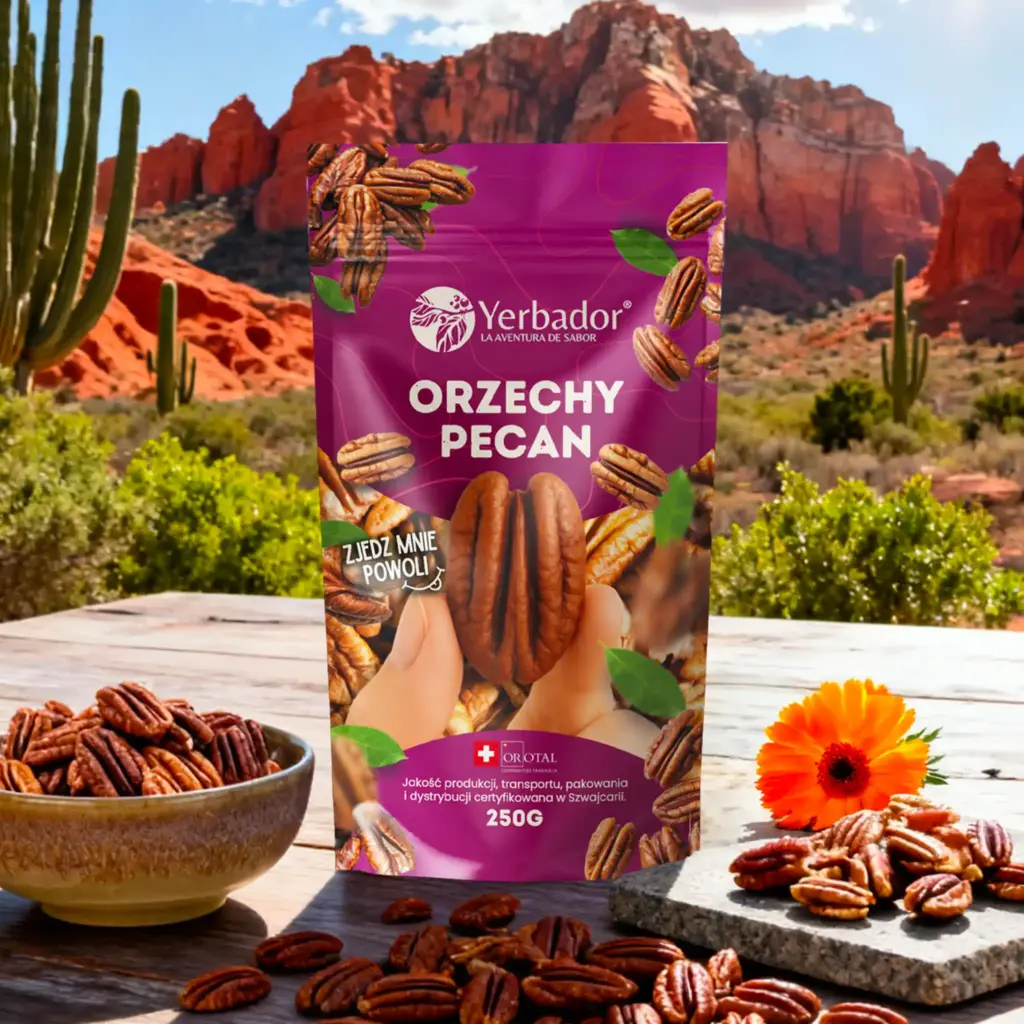
The pecan (Carya illinoinensis) is a cousin of the walnut from North America — Texas, Georgia, northern Mexico. Longer than a walnut, smoother, and without that bitterness that sits in a walnut’s thin skin. Hence the impression of sweetness: pecans don’t have more sugar (13.9 g of carbs per 100 g, including a decent share of fibre), they simply have nothing to make them bitter. What’s left is a buttery, almost caramel note.
72 g of fat per 100 g makes the pecan the fattiest item right after macadamia. That’s not a flaw, just a usage guide: the pecan is an addition, not a base. Half a handful on yoghurt, a handful in a cake, a few halves in a pear-and-blue-cheese salad.
Are pecan nuts healthy?
The fat profile is very good: out of 72 g of fat, only 6.2 g is saturated fat, the rest is monounsaturated (41 g) and polyunsaturated (21.6 g). This same balance underlies the Mediterranean diet and keeps coming up in discussions about lipid profile and cholesterol. Pecans are also among the nuts richest in polyphenols — we wrote about this family of compounds in a separate article, what polyphenols are.
How much magnesium and zinc do pecan nuts have?
121 mg of magnesium and 4.5 mg of zinc per 100 g. A 30 g handful gives 36 mg of magnesium and 1.35 mg of zinc, meaning around 13% of the daily reference value of zinc from a single snack. On top of that, 4.5 mg of manganese, above the daily requirement. If you’re specifically after zinc, cashews are stronger with 5.8 mg.
Our pecan nuts 250 g are shelled halves, with no added sugar and no roasting oil. Production, transport, packaging and distribution quality certified in Switzerland.
Macadamia nuts – nutritional values and the creamiest texture
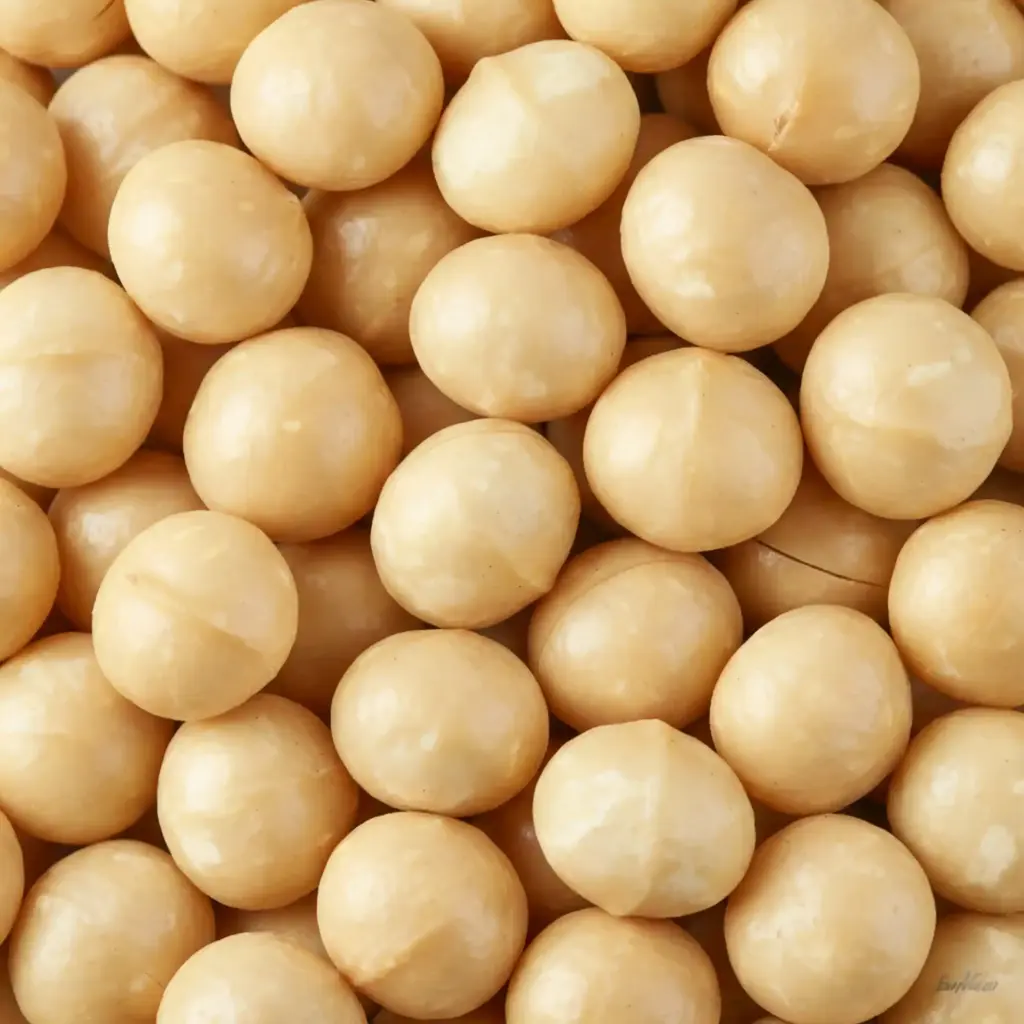
Macadamia beats other nuts in one parameter: 59 g of monounsaturated fats per 100 g, mainly oleic acid — the same one that forms the backbone of olive oil. Almonds have 32 g, pecans 41 g, cashews 24 g.
You can feel the consequence on your tongue. Macadamia doesn’t crunch like an almond, it melts. Buttery texture, mild taste, slightly milky, with barely noticeable sweetness. That’s why it works so well in white chocolate cookies, as a fish topping, or ground into nut butter.
What do macadamia nuts look like and where do they come from?
The kernel is almost perfectly spherical, creamy white, two to three centimetres in diameter, with no skin to remove. The tree originates from Australia (hence the name “Australian nut”), and today it is also grown in Hawaii, South Africa and Kenya. The price is explained by two things: the hardest shell of all commercially available nuts, which in industry is cracked with rollers, and full fruiting only after seven to ten years.
Are macadamia nuts poisonous?
Not for people — the question keeps coming up in search engines because of a real story circulating about dogs. Macadamia is toxic to dogs: it causes weakness in the hind legs, muscle tremors, vomiting and fever, and the doses that trigger symptoms are surprisingly small. The mechanism is still not fully explained. Practical conclusion: a pack of macadamia nuts 250 g is not a treat for your dog.
Pistachios – what vitamins and how much fibre?
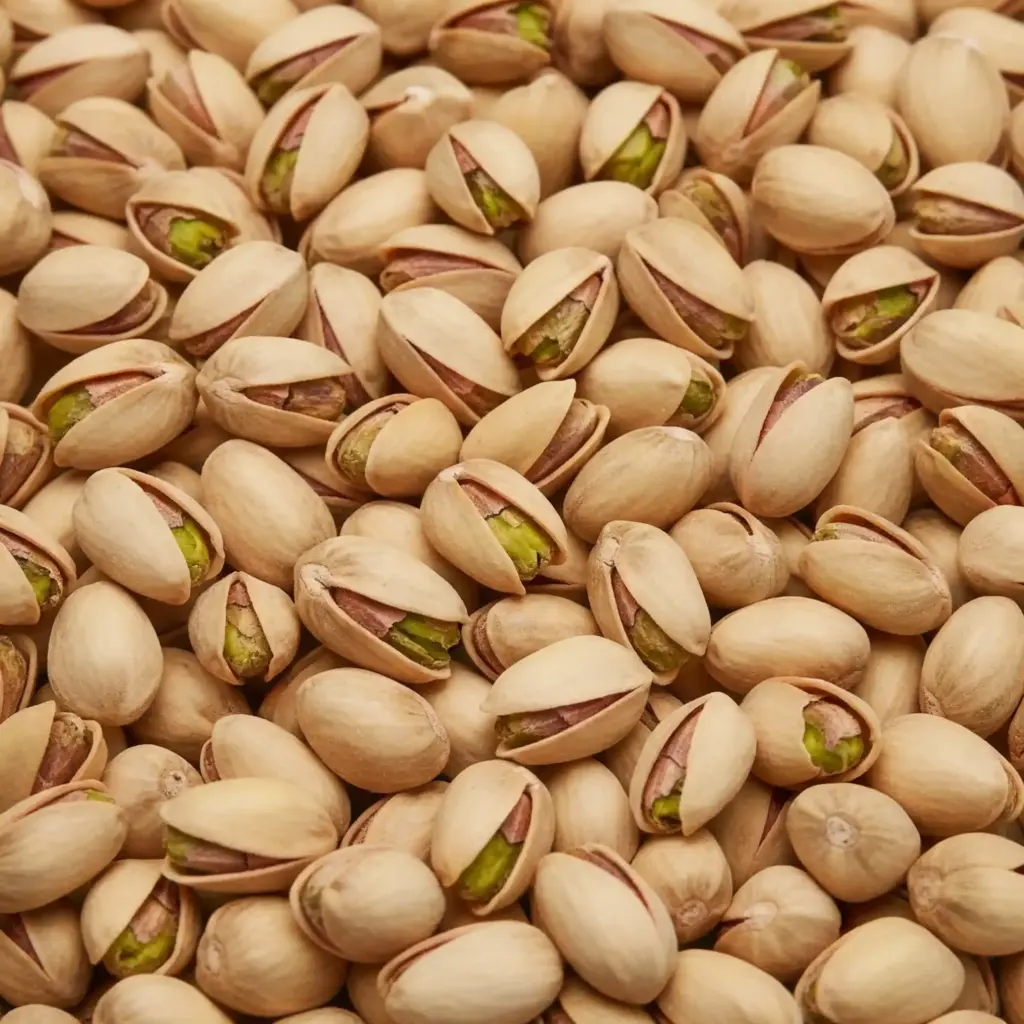
Pistachios are the best vitamin-equipped nut of this group of five. 100 g of kernel provides 1.7 mg of vitamin B6 (over 120% of the daily reference value), 1025 mg of potassium, 0.87 mg of thiamine, plus vitamin K and folic acid. B6 takes part in amino acid metabolism and neurotransmitter production — which probably explains the searches linking pistachios with metabolism.
Fibre content is 10.6 g per 100 g, meaning 3.2 g per handful. That’s a lot, though almonds have more. But pistachios have an advantage you won’t see in a table: you open them one by one in the shell, and the growing pile of shells works better than a calorie counter. Our roasted and salted pistachios 250 g are exactly that — unshelled.
A caveat about the salted version: salt means sodium, and sodium means blood pressure. If you’re watching your blood pressure, treat them as an occasional snack. The green colour of the kernel comes from chlorophyll and carotenoids: lutein and zeaxanthin, which are practically absent in other nuts.
Californian almonds – the vitamin E record holder
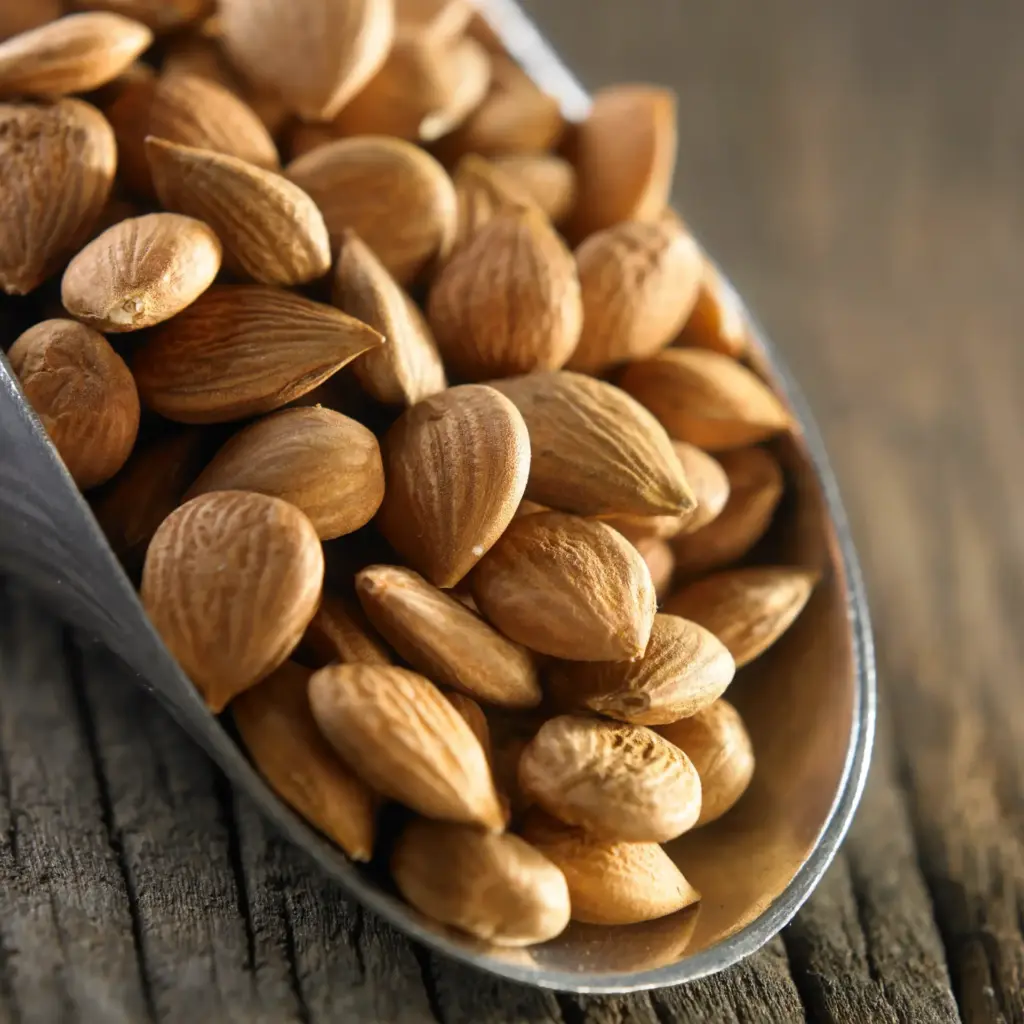
California accounts for well over half of the world’s almond production, and the term “Californian almonds” in practice means a light, smooth kernel of even shape and a noticeably sweeter taste than Mediterranean almonds.
25.6 mg of vitamin E per 100 g is a result that makes the rest of the table irrelevant. A 30 g handful provides 7.7 mg, or about 60% of the daily reference value. Vitamin E is fat-soluble, and almonds deliver it together with fat — hard to find a more convenient carrier.
On top of that, 269 mg of calcium (twice as much as in cashews), 270 mg of magnesium, 21.2 g of protein and 12.5 g of fibre. This combination makes almonds the most sensible nut for a plant-based diet, as we mention in our article about plant-based sources of energy. Almond flour, milk, roasted for salads, marzipan — no other nut has so many uses. Blanched Californian almonds 250 g work straight from the pack and in the blender alike.
Cashew nuts – the most magnesium and the mildest taste
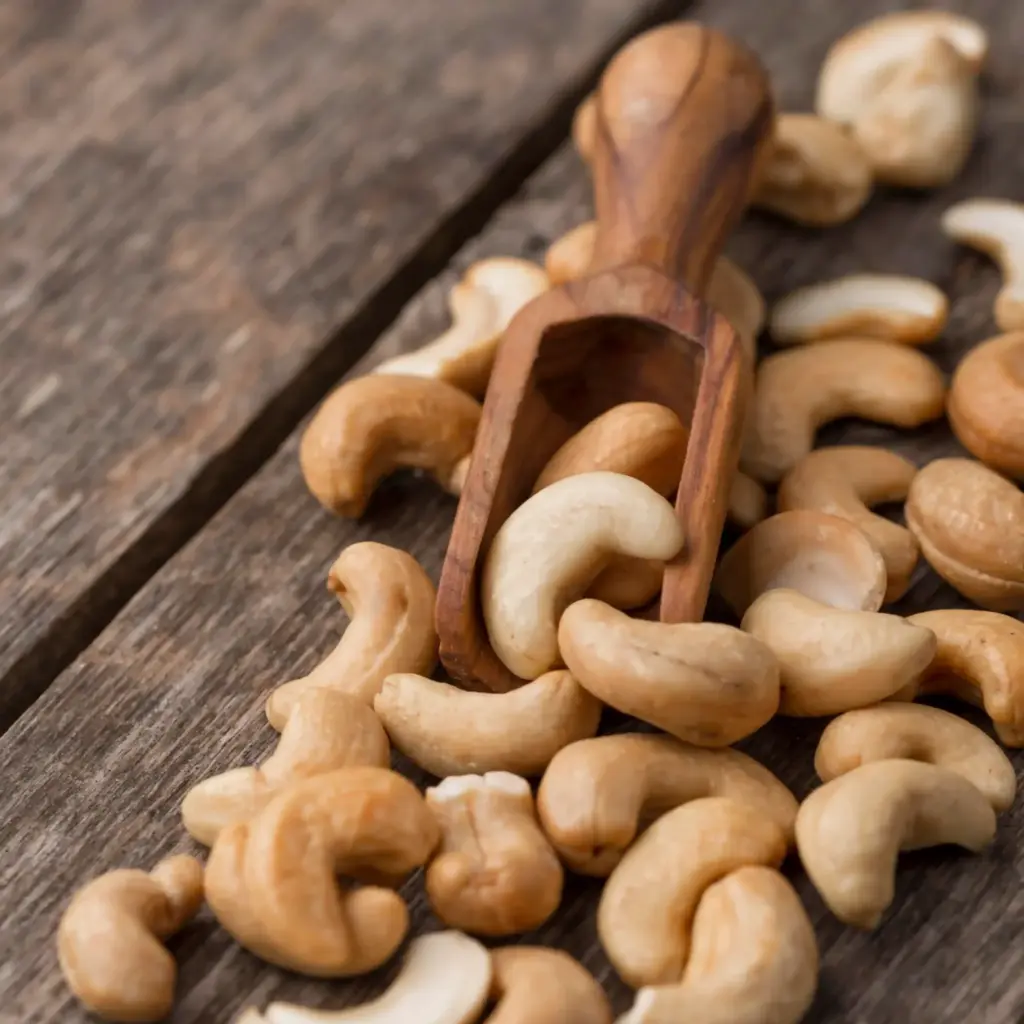
292 mg of magnesium per 100 g is the best result in the table — a 30 g handful gives 88 mg, or 23% of the daily reference value. Add to that 6.7 mg of iron and 5.8 mg of zinc, very good numbers for people limiting meat. There’s a catch: cashews have the least fibre of the five (3.3 g) and the most carbohydrates (30.2 g), so they keep you full for a shorter time than almonds.
You’ll never buy a cashew in its shell, and that’s no accident. Between the shell and the kernel sits a layer of caustic oil containing cardol and anacardic acid, chemically related to a substance found in poison ivy. That’s why cashews are always sold shelled and heat-treated — even those labelled “raw”.
In terms of flavour, cashew is the most neutral of the five: mild, slightly sweet, creamy. Hence its role in plant-based cooking — soaked and blended, it makes a thick, white sauce that replaces cream. It also goes into stir-fries, curries, and simply into a handful before a workout, more on which in the article about energy for physical effort. Cashew Nuts 250 g is one of the items most often added to the cart with us.
How many nuts a day and when to eat them?
The portion recommended by nutrition guidelines is about 30 g a day — a handful that fits in a closed hand. In practice: 20 pecan halves, 12–15 macadamia nuts, 23 almonds, 18 cashews, or roughly 49 shelled pistachios. So a 250 g bag is eight days’ worth of snacking, not just one evening.
- Before a workout — cashews or pistachios: more carbohydrates, less fat, faster digestion.
- For work, to last until lunch — almonds. Protein, fibre and fat give the longest-lasting fullness of the five.
- For baking and salads — pecans. They handle heat well, don’t turn bitter, and caramelise nicely.
- For the evening — macadamia. The most dessert-like texture, but also the most calories, so watch your portion.
- Instead of crisps — pistachios in the shell. Your hands have work to do, and your eating pace naturally slows down.
Nuts pair well with dried fruit and with other products from the superfoods shelf, just watch the total then: 30 g of nuts plus 30 g of raisins is already close to 300 kcal. In case of a nut allergy, it’s a zero-tolerance matter, and no table has anything to say about it.
How to store nuts so they don’t go rancid?
Enemy number one is oxygen, number two is light, number three is heat. Unsaturated fats oxidise and a bitter, “paint-like” aftertaste appears — that’s rancidity, and it can’t be reversed. It hits the highest-fat nuts fastest, meaning macadamia and pecan.
After opening, transfer to an airtight jar or press the zip-lock seal shut, keep away from the stove, and if the bag is to sit for longer than a month — put it in the fridge. Shelled nuts can handle the freezer for up to six months without losing their texture. If a nut smells like old oil paint, throw out the whole batch.
Frequently asked questions about nuts
Which nut has the most vitamin E?
Almonds, by a huge margin: 25.6 mg of alpha-tocopherol per 100 g, more than twice the daily reference value. A 30 g handful covers about 60% of your needs. Second in line, pistachios have 2.3 mg.
Are pecans healthy, given they have 691 kcal?
The calories come from fat, and in pecans it’s mainly mono- and polyunsaturated. The problem isn’t the nut, it’s the portion. 30 g is about 207 kcal, and that’s enough for porridge or a salad.
Are macadamia nuts poisonous?
Not for humans. For dogs, yes — after eating macadamia, dogs get hind leg weakness, tremors and vomiting, and just a few nuts are enough. If you have a dog at home: keep the bag up high and don’t share.
How much fibre do pistachios have?
About 10.6 g per 100 g, or 3.2 g per handful. That’s quite a lot, though almonds have more (12.5 g). Pistachios win on potassium and vitamin B6, and the shell forces you to eat more slowly.
Can you eat nuts every day during pregnancy and breastfeeding?
Usually yes, as long as there’s no allergy — they provide magnesium, calcium and healthy fats. Choose unsalted pistachios in that case, since roasted and salted ones add extra sodium. During pregnancy, breastfeeding or with chronic conditions, check with your doctor.
Discover our TOP products!

Your dream figure

Discover new flavors


Yerba mate with tea



Accessories





Superfoods




Certified raw honeys from Poland




Check the current price
free shipping
Up to 90 days
free returns
24 H
shipping