
Yerba Mate and Magnesium – Is It a Good Source of This Mineral?
2026-08-20
Yerba mate and magnesium is a question we hear mainly from two groups of readers. The first is looking for every extra source of this mineral in their daily diet, because they eat few vegetables or train a lot. The second came across a list of yerba mate’s mineral components, saw the word “magnesium” and started wondering whether matero can be treated as something more than just a stimulating drink. We’re checking this in detail: how much magnesium the dried leaves actually contain, how much of that really makes it into the infusion, and who this topic actually matters for.
Yerba mate and magnesium – how much is really in the dried leaves
Published mineral analyses of the leaves of the Paraguayan holly vary quite significantly depending on the origin of the raw material, the drying method and the testing method – some nutritional tables list several hundred milligrams of magnesium per 100 g of dried leaves, while other, more conservative sources cite values closer to 200–300 mg. It’s worth taking the middle of this range as a rough estimate, i.e. around 300–400 mg per 100 g of leaves, treating it as an approximation rather than a lab certificate for a specific batch. The reference intake value for magnesium for an adult, as adopted in EU food labelling regulations, is 375 mg per day.
The key point, however, is that a matero serving (usually 30–50 g of dried leaves for a whole day of drinking, with water topped up repeatedly) receives much less than that figure suggests, because the leaves stay in the vessel and only part of the soluble compounds pass into the infusion. For comparison: a handful, or about 30 g of almonds, provides roughly 80–90 mg of magnesium, a 20 g piece of 70% dark chocolate is about 40–50 mg, and a glass of cooked spinach can give even more than 150 mg. Drinking yerba mate all day is unlikely to match any of these servings.
Why the composition of dried leaves and the composition of the infusion are two different numbers
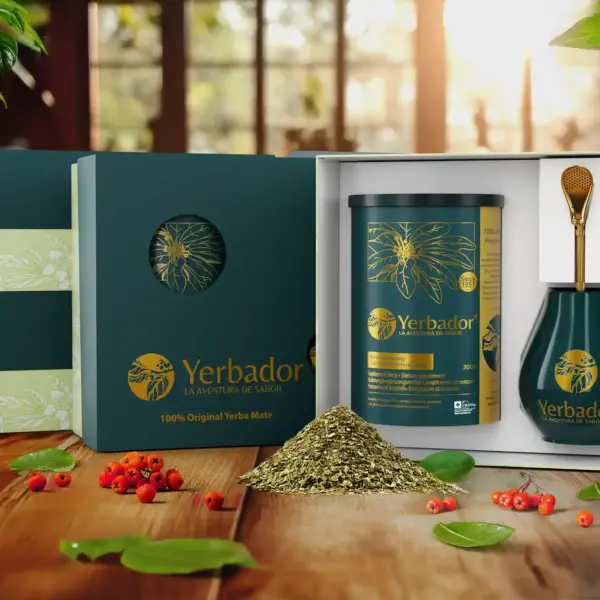
This is where most people get confused, and we already wrote about it in our article on potassium in yerba. The dried leaf is indeed rich in minerals – our Yerbador Immuno dried leaves list magnesium, calcium, silicon, iron, potassium, zinc and phosphorus in the product description as part of the over 160 compounds present in the yerba mate leaf. The problem is that when you drink yerba, you don’t eat the leaf. You pour hot water over it, drink the infusion through a bombilla, and the wet leaves stay in the matero, ending up in the bin after a few rounds.
How much magnesium actually passes from the leaf into the water depends on the water temperature, brewing time and the number of rounds (cebadas). Magnesium dissolves in water moderately – not as easily as potassium, but better than calcium, which we wrote about in a separate article. The first rounds of pouring wash out more minerals than the last ones, so someone who drinks yerba mate until the leaves are “washed out” actually extracts more from the leaf than someone who brews two rounds and throws the rest away.
What the body needs magnesium for
Magnesium participates in hundreds of enzymatic reactions in the body, and its deficiency first shows up in the muscles and nervous system. Among other things, it is responsible for proper muscle function, proper functioning of the nervous system, maintaining electrolyte balance, and reducing the feeling of tiredness and fatigue – these are the functions attributed to it by EU food law in officially approved health claims. It is also involved in normal energy metabolism and in maintaining healthy bones and teeth.
No single drink can replace a balanced diet here, and certainly not yerba mate, which contains relatively little magnesium in absolute terms. If you suspect you have a deficiency – recurring calf cramps, an eyelid twitch, irritability without an obvious cause – that’s a signal to talk to your doctor and get a blood test, not to reach for another round of matero.
Magnesium, muscles and physical activity
People who train regularly lose magnesium through sweat, and the demand for this mineral increases with the intensity of exercise. Hence the popularity of yerba mate as a pre-workout drink – the caffeine provides stimulation and focus, and the infusion itself is also sometimes used as a way to stay hydrated throughout the day. The magnesium from the leaves is, however, only a small addition, not a substitute for electrolytes or a proper post-workout meal.
If you experience calf cramps often, especially at night after intense training, it’s worth looking at the whole picture of hydration, sodium and dietary magnesium, rather than relying on an extra round of yerba mate before a run to fix it.
Do caffeine and tannins in yerba mate limit magnesium absorption?
This question comes up as often as the myth about caffeine causing dehydration. Caffeine does indeed have a mild diuretic effect and slightly increases urinary magnesium excretion – older studies estimated this effect to be small, on the order of single milligrams for a typical daily caffeine intake. Yerba mate does contain quite a bit of caffeine compared to tea, but less than strong coffee, so the effect is even less significant than with espresso drunk several times a day.
A separate issue is the tannins present in the leaf – they partially bind certain minerals, mainly iron, as we wrote about in the article about iron. In the case of magnesium, this mechanism has much less practical significance, because there’s little magnesium in the infusion anyway, so even partial binding by tannins doesn’t change the overall picture – the net balance remains fairly neutral.
Who should pay special attention to magnesium in their diet
For most people with a varied diet, the topic of magnesium takes care of itself. However, a few groups have genuinely increased demand or reduced ability to absorb this mineral, and for these people, yerba mate is not the answer to a magnesium shortfall:
- people who train intensively and regularly, losing magnesium through sweat,
- people under long-term stress, since the body uses up magnesium faster then,
- older adults, in whom magnesium absorption from the digestive tract naturally declines,
- people with celiac disease, Crohn’s disease or other intestinal conditions limiting absorption,
- people with type 2 diabetes, who often have higher magnesium losses in urine,
- pregnant and breastfeeding women, whose magnesium requirements increase.
If you fit into one of these groups, a sensible approach is to talk to a doctor or dietitian about your actual magnesium levels, ideally based on a blood test, rather than guessing based on symptoms alone or the number of matero cups you drink a day.
How much yerba per day for this to matter
Since magnesium from yerba is practically a bonus, the amount is worth choosing based on caffeine, not minerals. For a healthy adult, 2–3 servings a day, meaning a few rounds of matero spread throughout the day, is a range most people tolerate without any issues, as long as you don’t reach for yerba right before bed. If you specifically care about magnesium in your diet, nuts, pumpkin seeds, buckwheat groats or dark chocolate will work far more effectively than an extra round in your matero.
Where our dried leaves come from
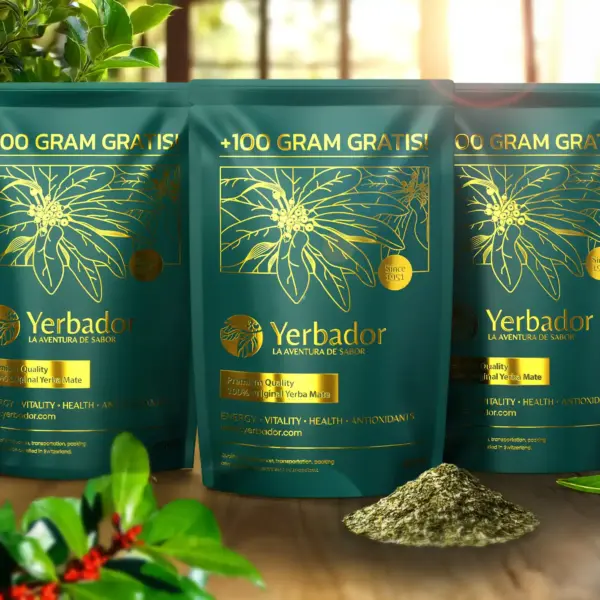
The mineral composition of yerba also depends on where the leaf comes from and how it was dried. Our Yerbador dried leaves come with an analysis certificate from the Institute of Natural Fibres and Medicinal Plants (IWNIRZ, chromatography and authenticity confirmation), compliance with the reference standard confirmed by J.S. Hamilton, and testing for heavy metals, pesticides and PAHs carried out by GBA Polska. On top of that, there are ECOCERT and Organic Brasil certificates plus HACCP throughout the production chain. For anyone asking about the actual mineral content, this is more important information than the numbers in a table alone – dried leaves without reliable testing can have a composition far removed from what’s shown on a competitor’s label.
Our products to try
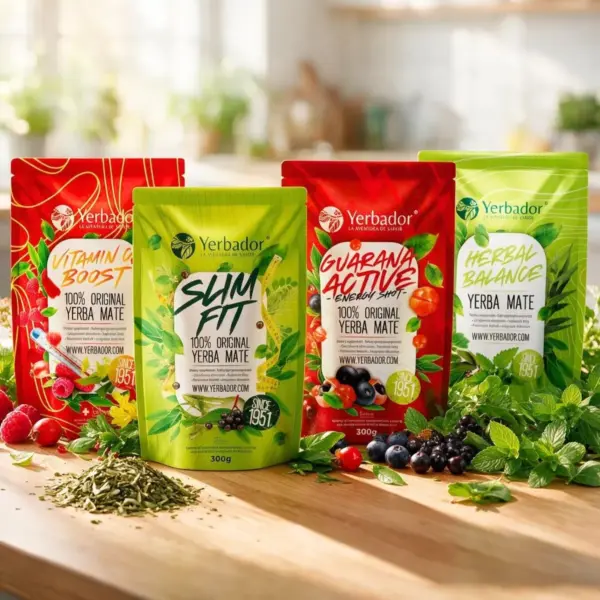
If you want to introduce yerba into your daily diet as a light mineral-and-energy addition, not as a substitute for nuts or green vegetables, start with dried leaves that have a full, classic profile and proven origin.
Check out the product: Yerba Mate Immuno
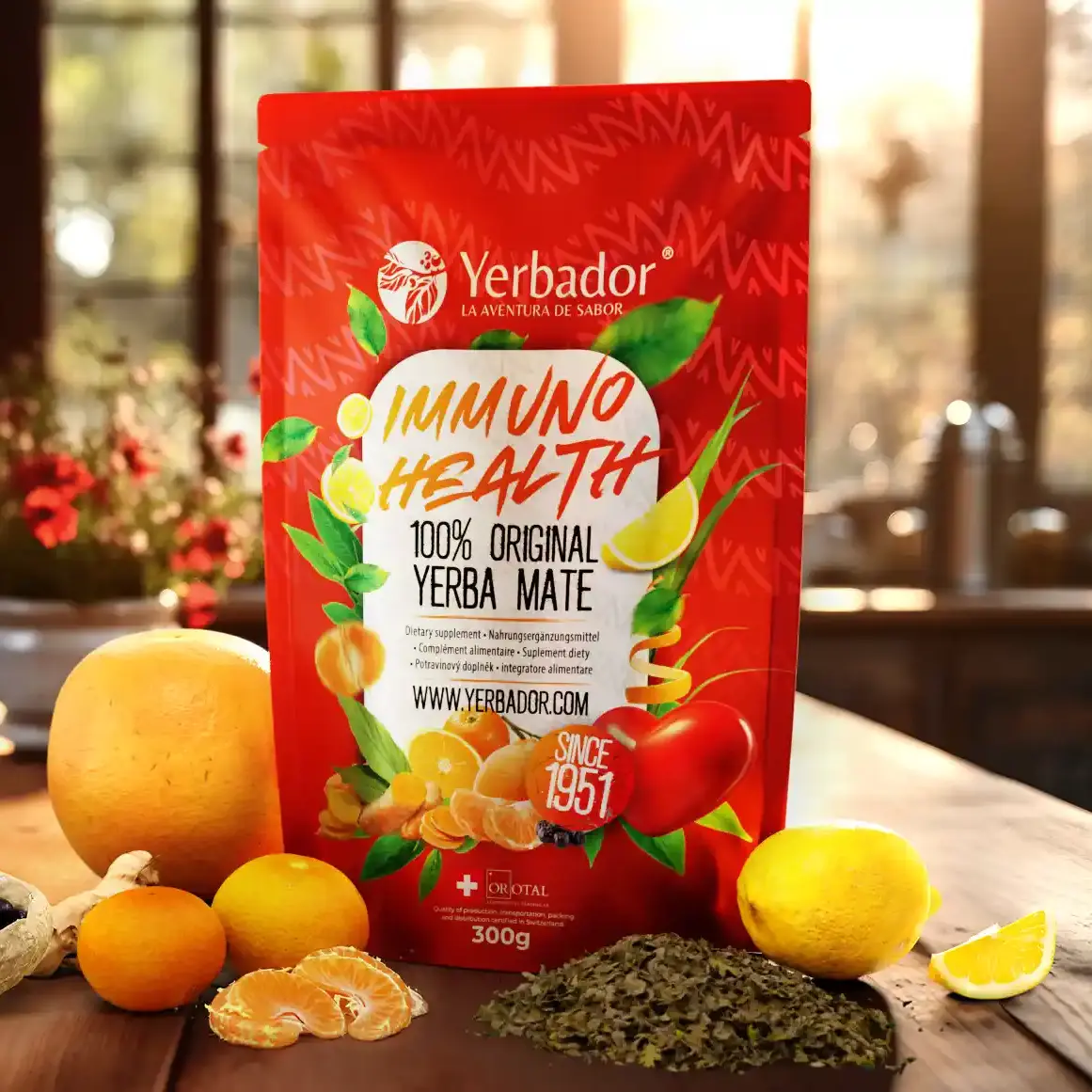
This variant is a good starting point for anyone who thinks of yerba as an addition providing a set of minerals and B vitamins, not as a substitute for a well-balanced diet.
Check out the product: Slim Fit Starter Set – Matero, Bombilla, Scoop and Yerba
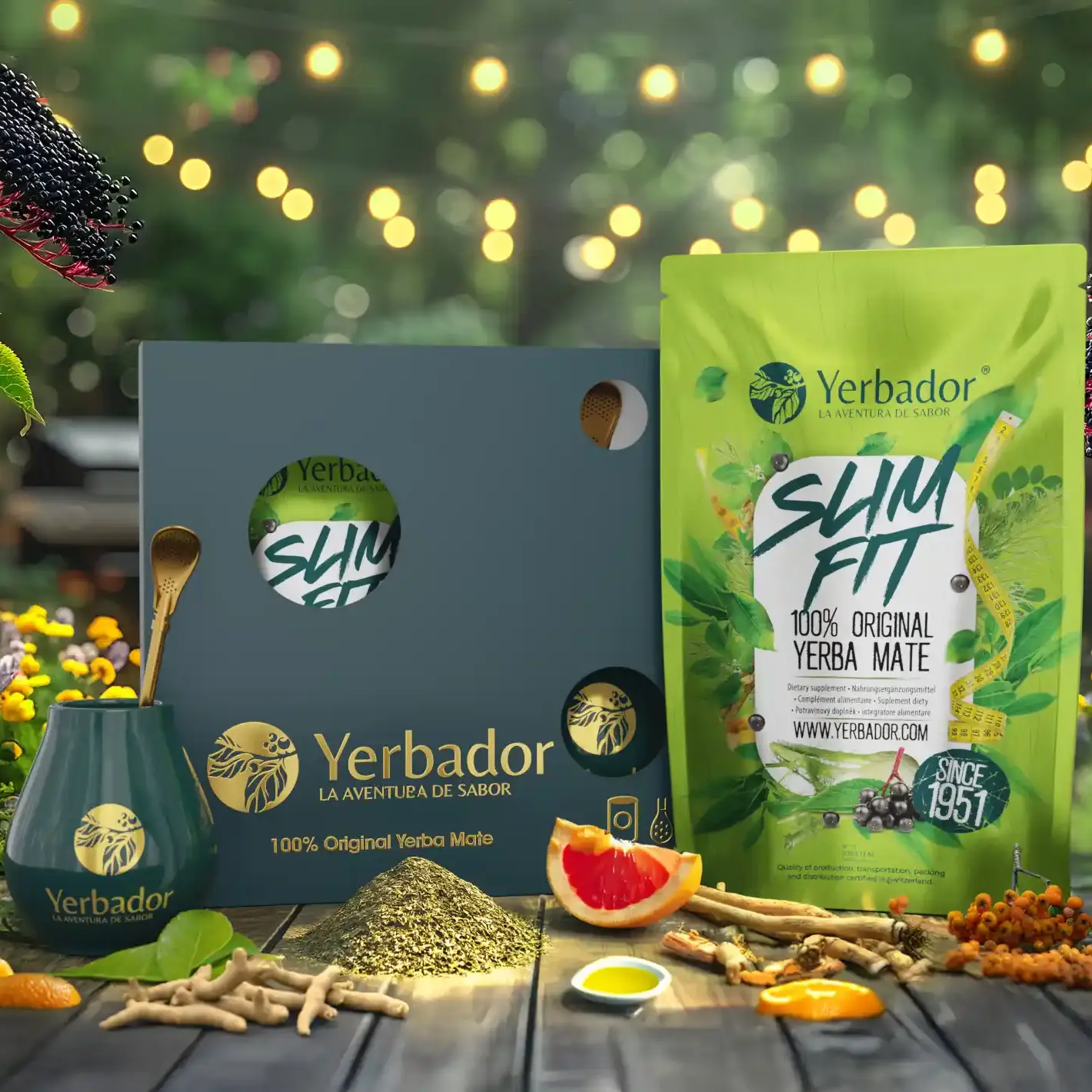
A set for people who are just starting their yerba journey and want to have everything needed for brewing in the classic style right away, including a bombilla and matero – extracting a larger amount of minerals simply requires regular, well-brewed rounds, not a random quick pour.
Yerba mate and magnesium – the most common questions
Is yerba mate a good source of magnesium?
Not in absolute terms. The dried leaves contain roughly a few hundred milligrams of magnesium per 100 g, but only part of that amount ends up in the infusion, and a handful of almonds or a square of dark chocolate will provide more than drinking yerba all day long.
Does caffeine from yerba flush magnesium out of the body?
Only to a small degree, comparable to how much magnesium yerba itself provides. The effect is mild and less significant than drinking strong coffee several times a day.
Does tannin from yerba block magnesium absorption?
It has a much smaller effect on this than on iron absorption. There’s little magnesium in the infusion to begin with, so partial binding by tannin changes practically nothing in your daily balance.
Does yerba mate help with muscle cramps?
On its own, probably not, since the amount of magnesium in the infusion is too small. Recurring cramps are a signal to take a broader look at hydration, electrolytes and diet, and in case of a persistent problem – to consult a doctor.
How much yerba would you need to drink to cover your daily magnesium requirement?
Realistically, far more than anyone drinks in a day, and it wouldn’t make sense anyway because of the caffeine. It’s best to treat magnesium from yerba as a small dietary bonus, not as a plan to fix a deficiency.
Yerba Mate for Your Business or Shop
Do you run a shop, café or office where yerba mate would work better than a vending machine full of energy drinks? We operate wholesale – details are described on our Yerbador B2B wholesale page, and we prepare quotes individually.
Discover our TOP products!

Your dream figure

Discover new flavors
Yerba mate with tea

Accessories
Superfoods


Certified raw honeys from Poland




Check the current price
free shipping
Up to 90 days
free returns
24 H
shipping