
Yerba Mate and Phosphorus – Is It a Good Source of This Mineral?
2026-08-22
Yerba Mate and phosphorus is a pairing that rarely comes up in conversations about this plant – we usually talk about caffeine, metabolism or the ritual of drinking from a bombilla. Yet phosphorus is the second most abundant mineral in the body after calcium, present in every bone and every cell, because without it neither ATP, the energy carrier, nor cell membranes can form. I’m checking how much phosphorus is actually in Yerba Mate leaves, how much of it ends up in the brewed infusion, and whether drinking mate makes sense as a way to supplement this mineral, or whether it’s just a side benefit along the way.
TL;DR
The leaves of the Paraguayan holly, from which Yerba Mate is made, contain phosphorus in amounts similar to those found in many dried herbs and tea leaves – available mineral composition analyses indicate roughly a few hundred milligrams per 100 g of dry raw material. The problem is that when brewed in the traditional style, where the dried leaves are steeped in water and the infusion is drunk, only part of what’s in the leaf ends up in the cup – not its entire content, as is the case with matcha, which is drunk in the form of ground powder. From one gourd, this realistically works out to just a little, maybe a few to a dozen or so milligrams of phosphorus, a fraction of an adult’s daily requirement of about 700 mg. Yerba Mate won’t replace phosphorus, but some of this mineral does still make its way into the body along the way.
Yerba Mate and phosphorus – how much is really in the leaves and in the infusion
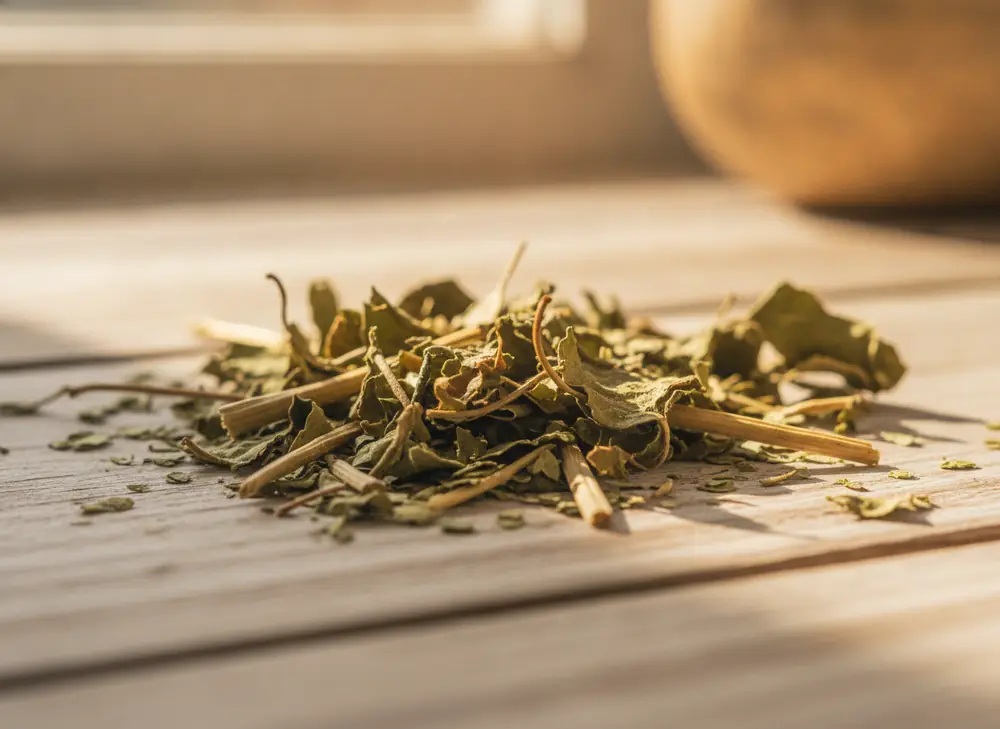
Phosphorus in plants is stored mainly in the form of organic compounds and phytates, which the leaf accumulates together with other minerals taken up from the soil. In the case of Paraguayan holly, available mineral analyses show roughly a few hundred milligrams of phosphorus per 100 g of dry leaf – a similar order of magnitude to other dried herbs or tea leaves. The variation between different analyses stems from the same factors as with other components of yerba mate: the plantation, the region of South America, the harvest season and the drying method all affect the final composition.
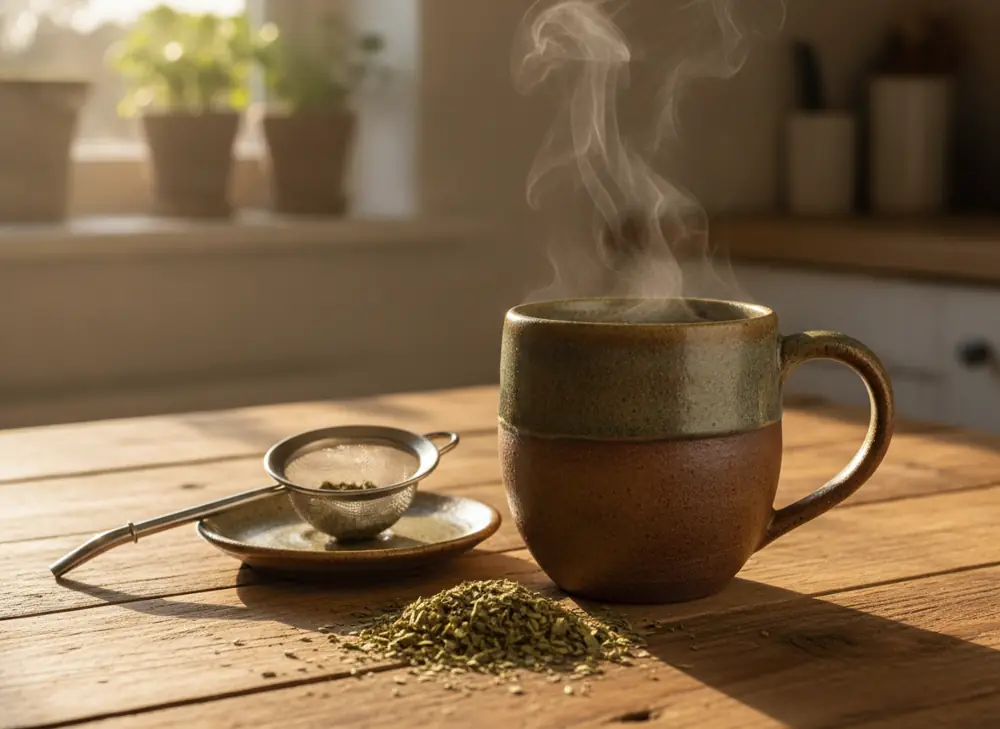
The key difference compared to powdered infusions such as matcha lies in the brewing method. Yerba mate is steeped in water and the infusion is drunk, while the steeped leaves stay in the calabash – you don’t consume the whole raw material, only what has passed into the water during brewing. This means the actual dose of phosphorus from a single calabash is lower than the dry leaf content alone would suggest. In a typical session, with several refills of water over the same leaves, you can estimate that a single to a dozen or so milligrams of phosphorus reach the body – a real but modest value compared to the daily requirement of around 700 mg.
Where does phosphorus in a typical diet actually come from
In a typical diet, phosphorus is rarely lacking – it’s abundant in protein products and in many processed foods. The biggest sources are dairy, especially yellow cheeses, meat, fish, eggs, legumes, as well as nuts and seeds, including pumpkin and sunflower seeds, which happen to be one of the more popular additions to morning oatmeal here in our store. A good deal of phosphorus also enters the diet from phosphates added as preservatives and acidity regulators – in cold cuts, processed cheeses, carbonated drinks or fast food, where the absorbability of this phosphorus is higher than that naturally present in plants.
Against this background, yerba mate is a secondary contributor. It brings a real, though small, amount of phosphorus, closer to what leafy vegetables or herbs provide than to what dairy and meat provide. Treating a calabash as a way to supplement phosphorus would be a misunderstanding – but as part of the overall diet, alongside other sources, it does add its own small share, similar to the case of caffeine from yerba mate, where what matters is the total, not a single cup.
What affects phosphorus absorption from yerba
Plant-based phosphorus, including that from the leaves of the Paraguayan holly, occurs partly in the form of phytates – compounds that the human body digests less efficiently than animal phosphorus or phosphorus added to food as phosphates. The actual bioavailability of phosphorus from the infusion is therefore lower than the milligram figure in a dry leaf analysis would suggest. Tannins present in yerba may also slightly affect the absorption of certain minerals in the digestive tract, although for phosphorus this effect is not as well documented as it is for iron.
Phosphorus works in the body in close partnership with calcium and vitamin D – together they are responsible for bone density and tooth mineralisation. An imbalanced ratio of phosphorus to calcium in the diet, for example with an excess of processed products and a shortage of dairy or vegetables, can over time affect the bones regardless of how many calabashes of yerba someone drinks a day. Yerba alone will neither fix nor ruin this balance.
Who should watch their phosphorus intake – and what this means for yerba
Healthy kidneys efficiently remove excess phosphorus from the body, so for most people who drink yerba this mineral is not a cause for concern, even with a diet rich in dairy and meat. The situation is different for people with more advanced chronic kidney disease – diseased kidneys handle phosphorus excretion less effectively, which leads to its build-up in the blood and, over time, to problems with bones and blood vessels. A low-phosphate diet is a standard medical recommendation for such patients.
Yerba mate isn’t forbidden on such a diet, but it does bring its own, though small, portion of phosphorus, and with several calabashes a day that value starts to add up alongside the rest of the diet. A person with advanced kidney disease is best off discussing yerba mate dosage directly with their treating doctor or clinical dietitian, rather than basing the decision on an article on the internet – including this one. It’s worth mentioning that phosphorus (more about the element itself on Wikipedia) is essential for cellular energy production, so avoiding it entirely is neither possible nor healthy – it’s about moderation, not elimination.
Where our yerba mate comes from
Yerbador sources yerba mate from South America, with certificates confirming the authenticity and purity of the raw material – the IWNIRZ (Institute of Natural Fibres and Medicinal Plants) analysis certificate confirms chromatographically that what’s in the package actually comes from the leaves of the Paraguayan holly, while tests by J.S. Hamilton and GBA Polska check compliance with the reference standard as well as the presence of heavy metals and pesticides. The mineral composition of the leaf, including its phosphorus level, depends on the plantation and cultivation method, which is why we rely on trusted sources instead of random suppliers. You can find the full list of certificates and test results on the Yerbador Research page.
[email protected]
Our products to try
Yerba Mate Immuno
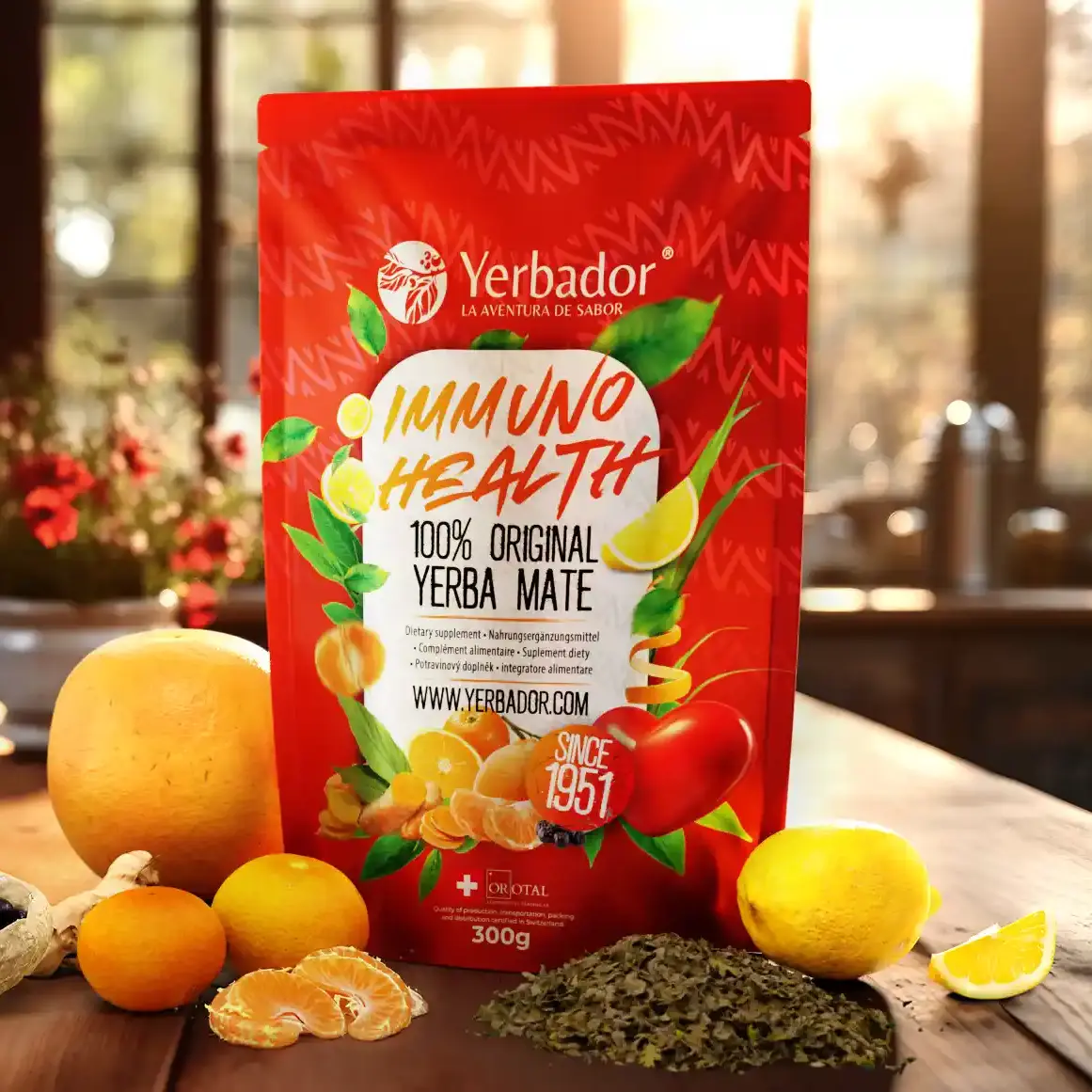
Yerba mate enriched with green barley and sunflower seeds – if you’re looking for a way to add a few more minerals to your diet alongside your daily calabash, including phosphorus from the seeds, this is a natural combination instead of counting milligrams from the leaf alone. Check the current price.
Check out the product: Yerba Mate Immuno
Sunflower Seeds – 100 g
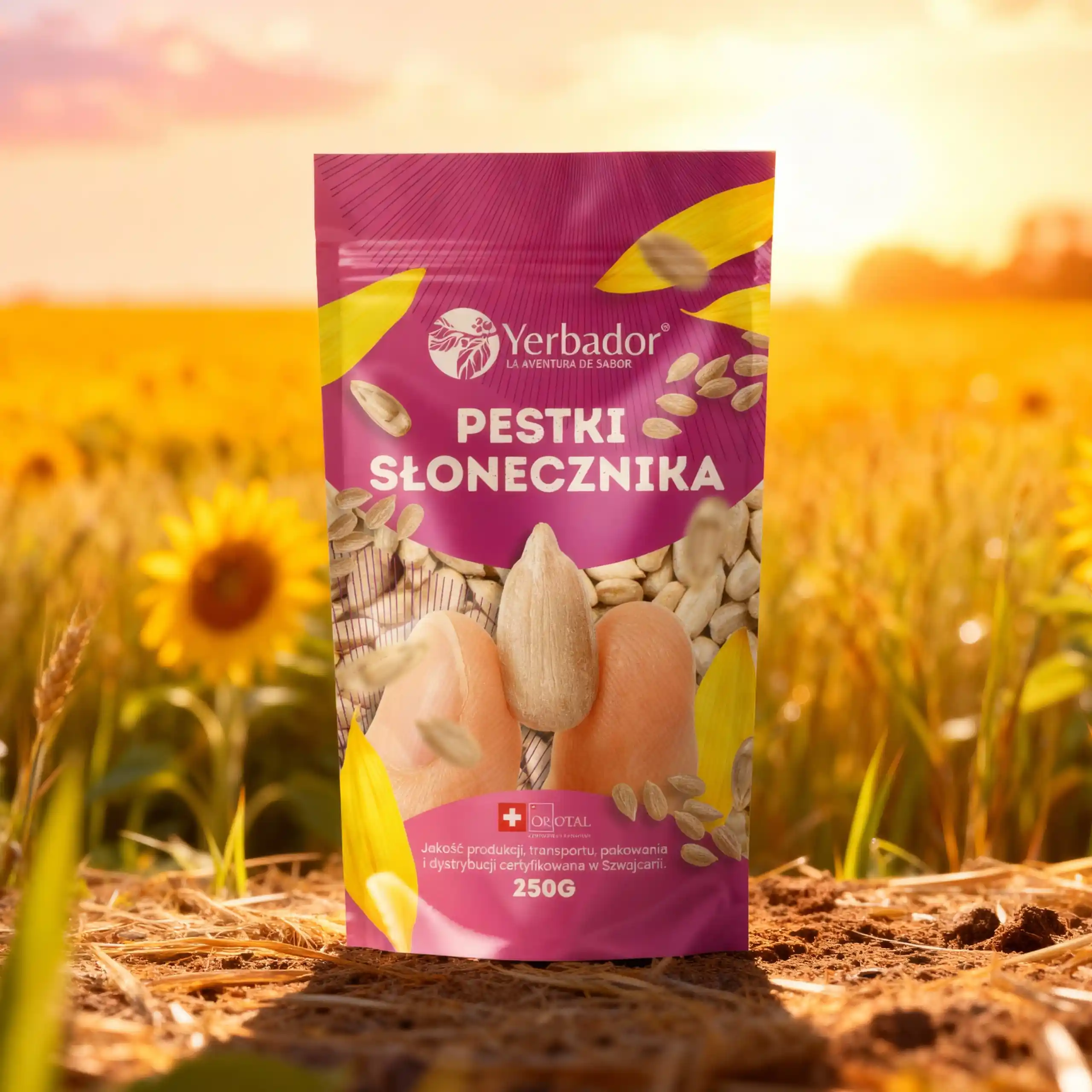
Shelled sunflower seeds – a natural source of phosphorus, magnesium and fibre in a single handful. A good snack for people who really want to top up phosphorus from food, rather than relying on yerba alone as their main source. Check the current price.
Check out the product: Sunflower Seeds – 100 g
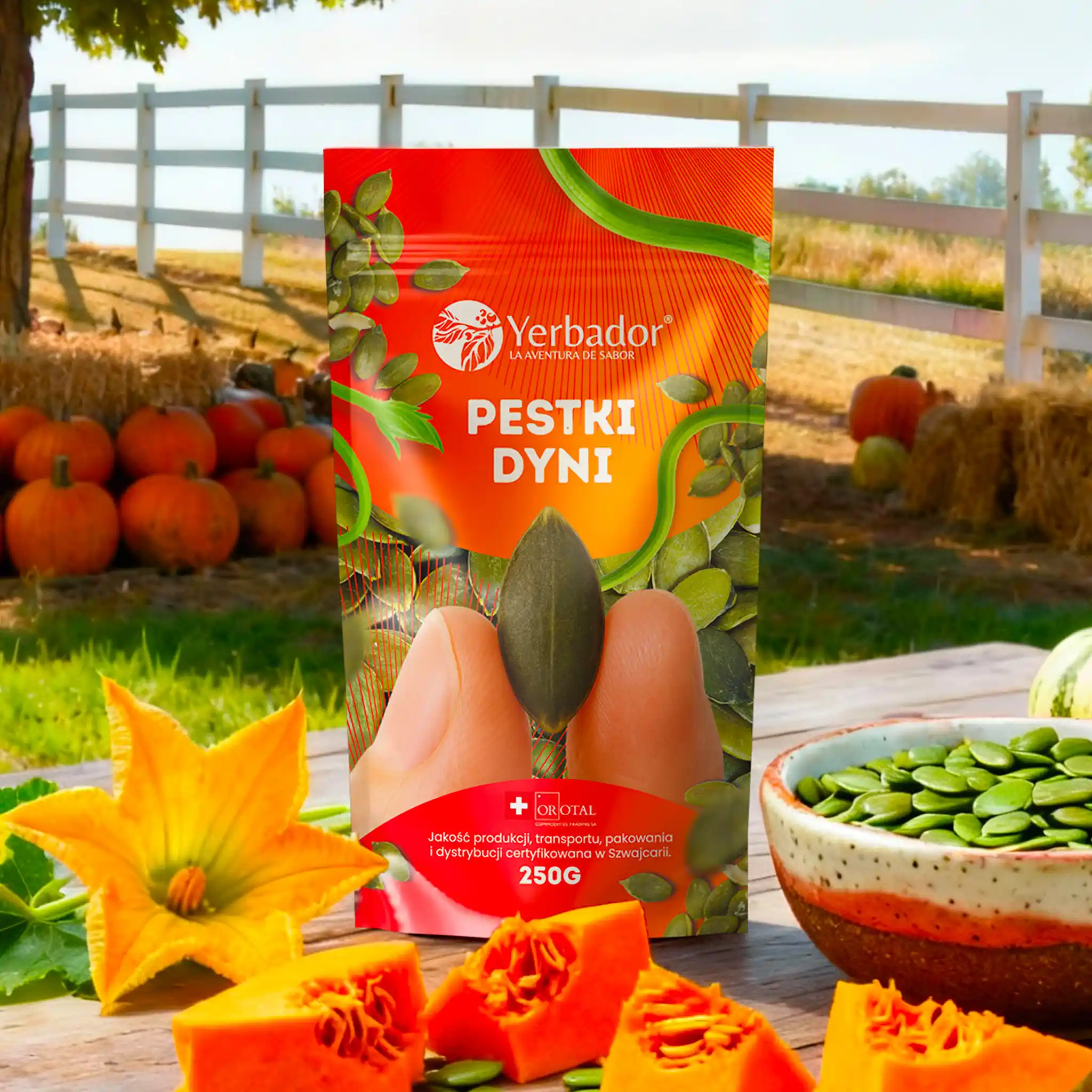
Pumpkin Seeds – 250 g
Shelled pumpkin seeds from our range – besides phosphorus they bring zinc and iron, so they nicely complement the diet of anyone drinking yerba every day. Great as a salad topping or a snack on their own. Check the current price.
Check out the product: Pumpkin Seeds – 250 g
Yerba mate and phosphorus – frequently asked questions
How much phosphorus is in a calabash of yerba mate?
Not much – a single brewing session usually yields anywhere from a few to a dozen or so milligrams, which is a fraction of the daily requirement of around 700 mg for an adult.
Can yerba mate be a source of phosphorus in the diet?
Not in practice – it provides a real but marginal amount compared to dairy, meat, fish or pumpkin and sunflower seeds. Treat it as a dietary addition, not as the main source of this mineral.
Is yerba mate safe for people with kidney disease?
It depends on the stage of the disease and your doctor’s recommendations. On a low-phosphorus diet, yerba mate contributes small but real amounts of phosphorus, so it’s worth discussing dosage with your attending physician or clinical dietitian.
Is phosphorus from yerba mate well absorbed?
Worse than animal phosphorus or the phosphates found in processed food – part of the phosphorus in the yerba mate leaf occurs in the form of phytates, which the body digests with limited efficiency.
Does yerba mate help bones together with phosphorus?
Phosphorus works together with calcium and vitamin D in building bones, but the amount that yerba mate provides is too small to influence this balance on its own. What matters is the whole diet, not a single calabash a day.
Discover our TOP products!

Your dream figure

Discover new flavors

Yerba mate with tea

Accessories
Superfoods
Certified raw honeys from Poland

Check the current price
free shipping
Up to 90 days
free returns
24 H
shipping