
How to change matcha supplier without disrupting your menu
2026-11-19
Changing matcha supplier takes about two weeks if you do it properly: order samples while you still have stock, run a blind test on your own bar, re-weigh the dose, then overlap the old and new powder for a few days instead of swapping overnight. The drink stays the same, and nobody at the counter has to explain anything.
The reason people get it wrong is that the decision usually arrives in a bad week. The email lands on a Tuesday: new price list, effective in three weeks, up again. Or the pallet is late for the second month running. Or the kilo you just opened is a shade duller than the last one and the lattes look tired. You start looking for another matcha, and meanwhile the matcha latte is on your menu at a price you printed in September.
What actually changes when the bag changes
Two ceremonial matchas can both be Japanese, both first harvest, and still make a visibly different drink. Four things move, and all four are things your guests react to.
- Strength per gram. A denser, more umami-forward powder reads as stronger at the same weight. Your 2 g dose may need to be 1.8 g, or 2.2 g.
- Bitterness through milk. Plenty of matchas taste fine in water and vanish under 150 ml of oat milk. That is the test that matters.
- Grind and solubility. A properly stone-milled powder suspends faster and settles slower. A coarse one leaves a green line in the bottom of the glass.
- Colour. A yellow-green latte next to a jade one on the same table is a complaint waiting to happen.
There is a fifth thing nobody mentions until it bites: lot variation. Matcha is an agricultural product blended to a house profile, so the same name in March and the same name in October are not guaranteed to be identical. A good supplier blends to keep that drift small. That is also why you re-taste at reorder, not just at the switch.
None of this argues against changing supplier. It argues for tasting before you commit and weighing before you price. If you are unsure which grade belongs in which drink, read ceremonial vs culinary matcha first. Half the “bad supplier” stories we hear are a culinary grade that was sold for bowls.
Five questions to ask before anyone sends you a sample
Ask them by email, so the answers are in writing and you can compare suppliers side by side a month later.
- Where is it grown and ground? Country, prefecture, stone-milled or not. “Japanese style” is not Japan.
- Which harvest? First flush and later flushes behave differently in milk, and in price.
- What pack sizes? You want a 1 kg bag for service and 40 g tins for the shelf. A supplier who only sells 100 g pouches is a retail brand, not a trade supplier.
- What happens when I reorder in March? Not a promise. Just whether the same grade will still exist under the same name.
- Can I buy a small sample first? Anyone confident in the powder will sell you one without a contract.
What a good answer looks like: a named origin, a named grade, honest words about availability, and no pressure to commit to a year. What a bad answer looks like: “premium Japanese matcha” with no region, a price that only applies to a 10 kg order, and a sample that arrives in an unlabelled zip bag.
Origin prices have moved far enough that an old quote tells you little. Perfect Daily Grind reported on 10 August 2026 that first flush tencha prices in Kyoto rose from JPY 5,500/kg in 2024 to JPY 14,333/kg in 2025, and that growers in Shizuoka and Kagoshima are converting sencha fields into tencha (source). What that means for buyers is in matcha prices in 2026. The short version: a supplier holding last year’s price is not necessarily a bargain, and one raising it is not necessarily taking you for a ride.
The blind test, on your bar, with your water
Do it at 10 a.m. on a quiet day, never during service. Three or four samples, your current matcha among them, unlabelled. Two or three staff score separately, no talking until the end.
Setup. Code the samples A, B, C, D under the bowls. Sift 2 g of each, add 60 ml of water at 80 °C, whisk 20 seconds. Same kettle, same thermometer, same chasen, rinsed between samples. Taste in water first, then repeat every sample as a latte: 2 g, 30 ml water, 150 ml of your house oat milk, unsweetened.
| What you score | What to look for | Why it matters behind the bar |
|---|---|---|
| Dry colour | Deep jade, not olive or khaki | Predicts the latte colour, which guests judge first |
| Dry aroma | Sweet and grassy, no hay or dust | Flat aroma means an old or oxidised lot |
| Bowl at 2 g / 60 ml | Bitterness that fades, not one that builds | A build-up survives the milk |
| Through 150 ml oat milk | Still recognisable, not just “green milk” | This is the drink you sell |
| Foam and dissolving | Under 20 seconds, fine stable foam | Seconds per drink add up in a rush |
| Sediment after 2 minutes | No green line in the glass | Iced drinks wait on the table |
| Cost per serving | Price per kg ÷ 500 at a 2 g dose | Score it last, or it biases the taste |
Score each line 1 to 5, add them up, and only then look at the labels. Teams talk themselves out of a switch the moment they see which bowl was theirs, which is exactly why the labels stay hidden until the sheet is finished.
Three mistakes ruin more tastings than bad matcha does. Water straight off the boil, which makes every sample taste harsh and flattens the differences you were trying to find. Tasting after a double espresso, when your palate is already wrecked. And tasting only in water, then being surprised in week two that the winner disappears under oat milk. If you only have time for one round, make it the milk round.
Recalculate the dose before you recalculate the price
This is the part most cafés skip. If the new powder is stronger and you drop from 2 g to 1.8 g, you have improved your margin without touching the menu. If it is milder and you push to 2.5 g for the same colour, the cost per cup rises by a quarter and nobody notices until the stocktake.
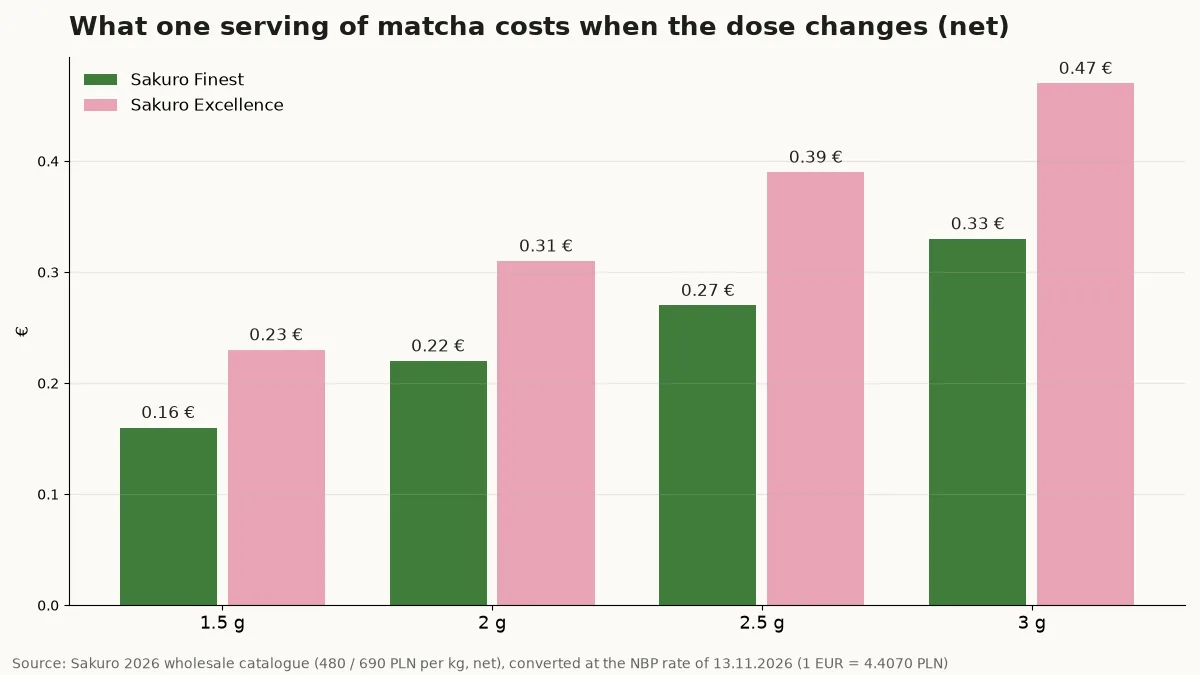
Put real volumes against it. A café selling 40 matcha drinks a day, six days a week, pours 240 drinks a week. At 2 g of Finest bought by the kilo that is about 52 € of powder a week. At 2.5 g it is about 65 €. Thirteen euros a week, close to 680 € a year, decided by a half gram that nobody wrote down.
So weigh the dose with a 0.1 g scale during the test and write it on the card. Then do the arithmetic once, properly:
| Format | Price | Per kg | Per 2 g serving |
|---|---|---|---|
| Sakuro Finest, 40 g tin (retail) | 23.90 € | 597.50 € | 1.20 € |
| Sakuro Excellence, 40 g tin (retail) | 26.90 € | 672.50 € | 1.35 € |
| Finest, 1 kg bag (wholesale, net) | approx. 108.90 € | approx. 108.90 € | approx. 0.22 € |
| Finest, 3 kg (−5 %) | approx. 310.40 € | approx. 103.50 € | approx. 0.21 € |
| Finest, 5 kg (−10 %) | approx. 490.10 € | approx. 98.00 € | approx. 0.20 € |
| Excellence, 1 kg bag (wholesale, net) | approx. 156.60 € | approx. 156.60 € | approx. 0.31 € |
Retail prices are from yerbador.com on 13 November 2026. The wholesale figures come from the Sakuro 2026 catalogue (480 PLN/kg net for Finest, 690 PLN/kg for Excellence), converted at that day’s NBP rate of 1 EUR = 4.4070 PLN. Treat them as indicative; the binding offer comes from Ewelina. A kilo is 500 servings at 2 g, 400 at 2.5 g. For the full menu calculation, including milk, cup and lid, see how to price a matcha drink.
One note on comparing quotes. Ask every supplier for the price per kilogram net, not per pack, and recalculate it yourself. A 500 g pouch at 62 € looks friendlier than a kilo at 109 € until you do the division.
What the new powder does outside the hot latte
A matcha that wins the bowl test can still misbehave in the rest of your menu. Iced drinks and baking are where switches usually go wrong, because both of them punish a coarse grind and a dull colour in ways a hot latte hides.
| Where it goes | Typical dose | What a new powder can change | What to re-test |
|---|---|---|---|
| Hot latte | 2 g | Bitterness under steamed milk, foam stability | One drink, made to the card |
| Iced latte | 2 g, paste first | Sediment in the glass after two minutes | Leave one standing on the pass and look |
| Shaken or bubble tea | 3 g per 500 ml | Flavour lost to ice melt and syrup | Taste at the bottom of the cup, not the top |
| Baked goods | 1 to 3 % of flour weight | Colour after the oven, more than flavour | One tray, same bake, side by side |
| Cold-set desserts | 4 to 8 g per batch | Little. No heat, so the colour holds | Nothing, if the bowl test passed |
The baking line deserves a sentence of its own. Heat dulls matcha, so a powder that starts one shade duller finishes olive. If you sell a green cake, bake one tray with each powder on the same day, in the same oven, and photograph both. The photo settles the argument faster than anyone’s memory of last week.
The fourteen-day overlap
Never let the last scoop of the old bag and the first of the new one land on the same shift. Order while you still have two weeks of stock, then run the changeover like this:
| Day | What happens | Who |
|---|---|---|
| 1 | Order samples; keep at least two weeks of the current matcha in stock | Owner / manager |
| 3–4 | Blind test, scoring sheet, decision. Weigh the new dose to 0.1 g | Two or three baristas |
| 5 | Place the wholesale order. Ask for the delivery date in writing | Owner |
| 6–8 | Rewrite the recipe card: grams, ml, temperature, order of steps | Head barista |
| 9 | Stock arrives. Open one bag, decant, keep the rest sealed | Whoever signs for deliveries |
| 10 | 30-minute briefing: everyone makes one hot and one iced to the card | Whole bar team |
| 11–13 | New matcha on one drink only, usually the iced latte. Adjust the dose by 0.1 to 0.2 g if needed | Bar |
| 14 | Full switch. The last of the old powder goes into baking, not into bowls | Kitchen |
Two housekeeping details cause more trouble than they should. Decant the kilo into a sealed, opaque container and keep the bag rolled shut, because matcha takes on smells and a shelf next to the coffee grinder will flavour it within days. Date the container, so you know which lot was in service on a given day.
If your week does not look like that one, keep the shape and move the days. The only two rules that matter are that the test happens before the order, and that the old powder outlives the first day of the new one.
One briefing, one card, no debate
The drink drifts when every barista has a private method. Print one card on day 6 and tape it where the scale lives:
- Hot latte: 2 g sifted, 30 ml water at 80 °C, whisk 15 s, 180 ml milk steamed to 60 °C.
- Iced latte: 2 g, 30 ml water at 80 °C, whisk, 120 g ice, 150 ml cold milk.
- Bowl: 2 g, 60 ml water at 80 °C, 20 s.
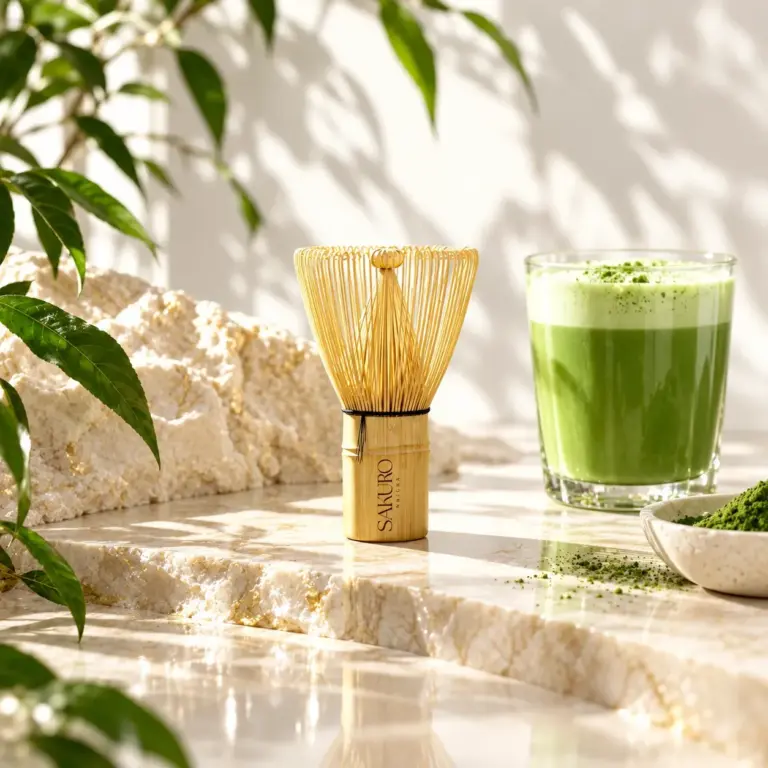
Weigh for the first week rather than scooping. A chashaku scoop is a habit, not a measurement, and the habit was calibrated to the old powder. Keep a bamboo chasen (14.90 €) at the station for tasting. A frother is faster for lattes, but you cannot judge a new powder through steamed milk.
Three habits bring the drift straight back. Pouring water off the boil, because the kettle is faster than the thermometer. Steaming milk past 65 °C, which flattens the tea and makes the drink taste of hot milk. And topping up the working container from the bag mid-shift, so fresh and half-oxidised powder end up mixed and nobody can tell what they are tasting. Empty the container, wipe it, refill it.
Pick one person to own the recipe for the first month. Not a committee. If a barista wants to change the dose, they change it on the card, in pen, with the date, and tell the owner. That single rule is the difference between a café whose matcha tastes the same in February and one that quietly ends up at 3 g because everyone rounded up.
After the switch: stock, colour and waste
The first month with a new supplier is also when you find out whether your storeroom habits were propping up the old powder or fighting it.
Photograph the fresh powder on day one, in daylight, next to a white plate. In four weeks take the same photo. Matcha fades slowly and your eye adapts even slower, so the comparison is the only honest way to tell whether the colour you are getting now is the colour you bought. If the second photo is visibly duller, the problem is storage, not the supplier: heat, light, or a container that is opened twenty times a shift.
Keep stock in order of arrival and open one bag at a time. Weigh what you throw away for two weeks, because waste is where a cheaper kilo quietly becomes an expensive one. And set your reorder point from real usage rather than instinct: if you pour 240 drinks a week at 2 g, that is roughly 2 kg a month, so a 3 kg order at the discounted price is about six weeks of cover, which is comfortable without being a risk if the colour starts to fade.
Finally, finish the old bag honestly. Whatever is left on day 14 goes into cake, cookies or a glaze, where a slightly duller green is invisible. It does not go into a bowl for a guest who ordered a 4.50 € drink.
Samples and kilos: how to order from us
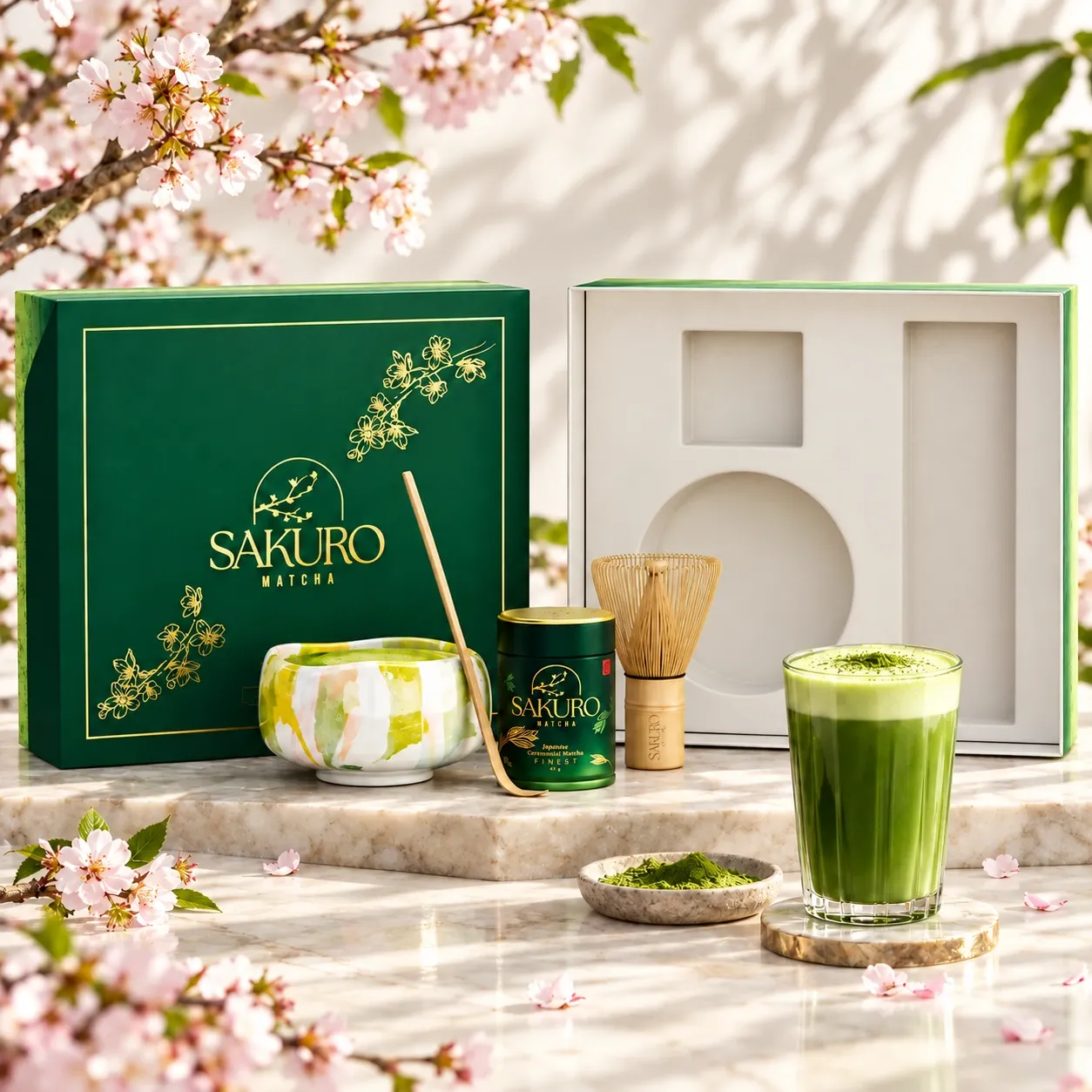
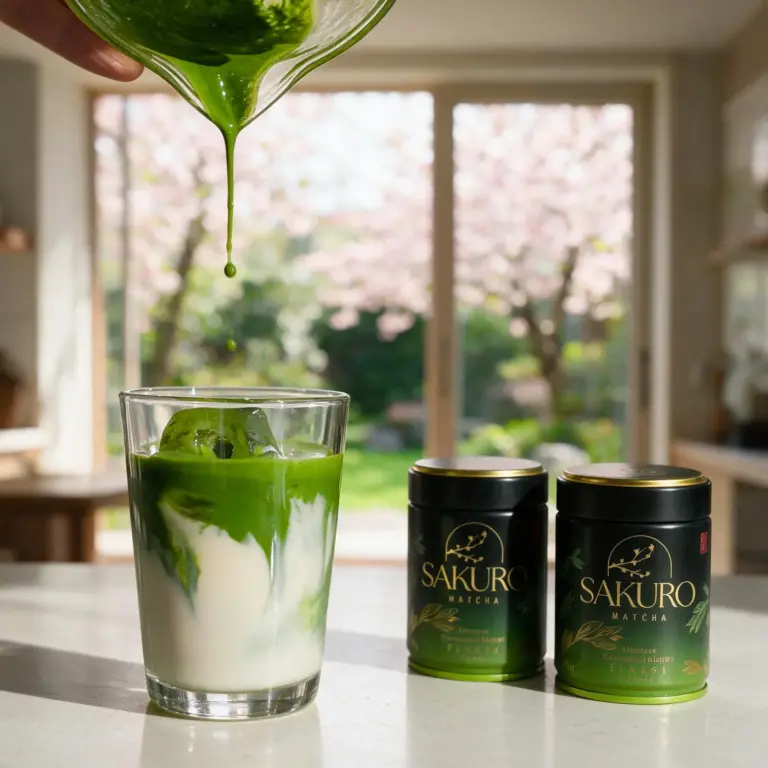
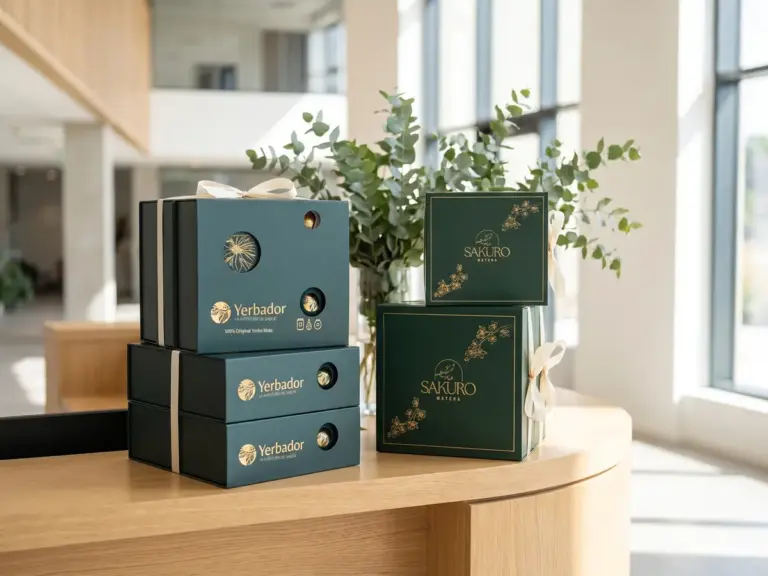
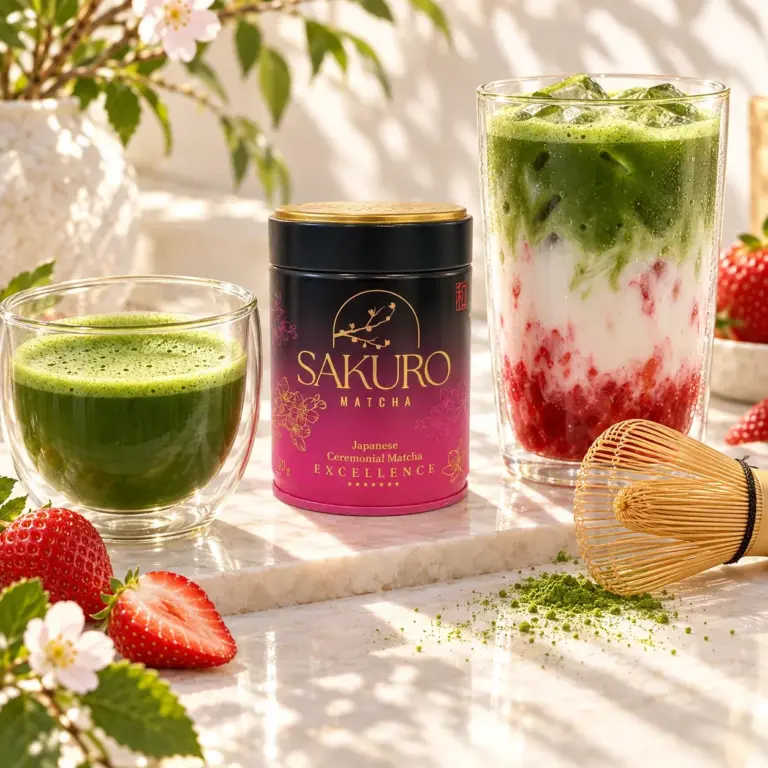
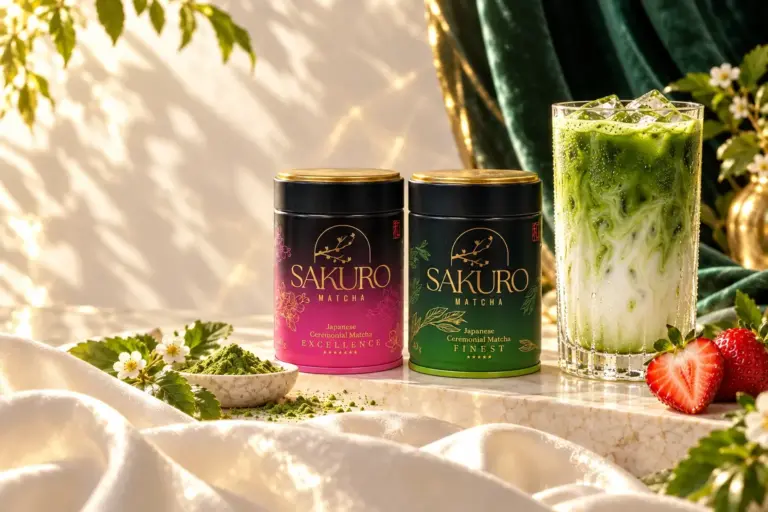
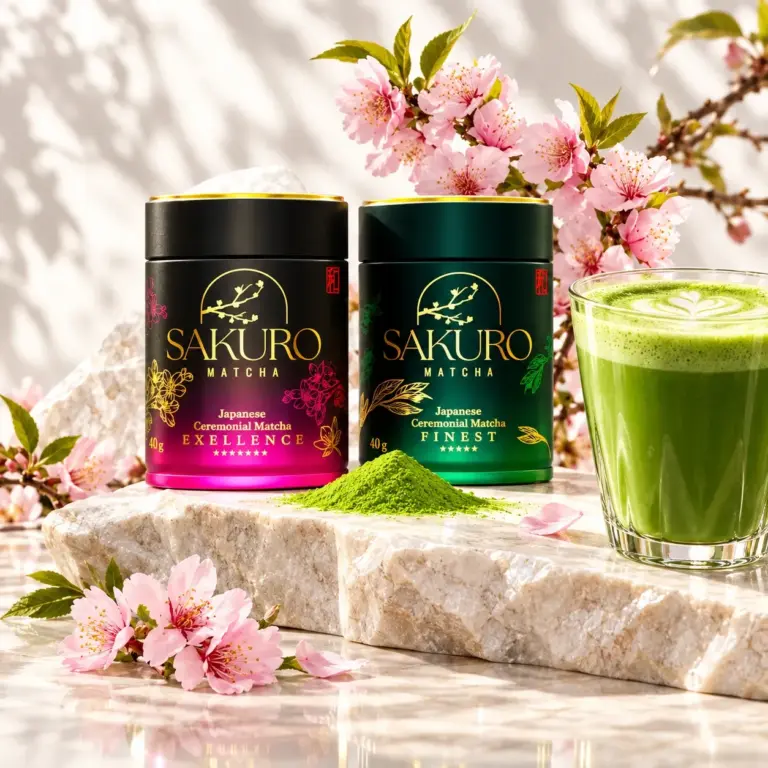
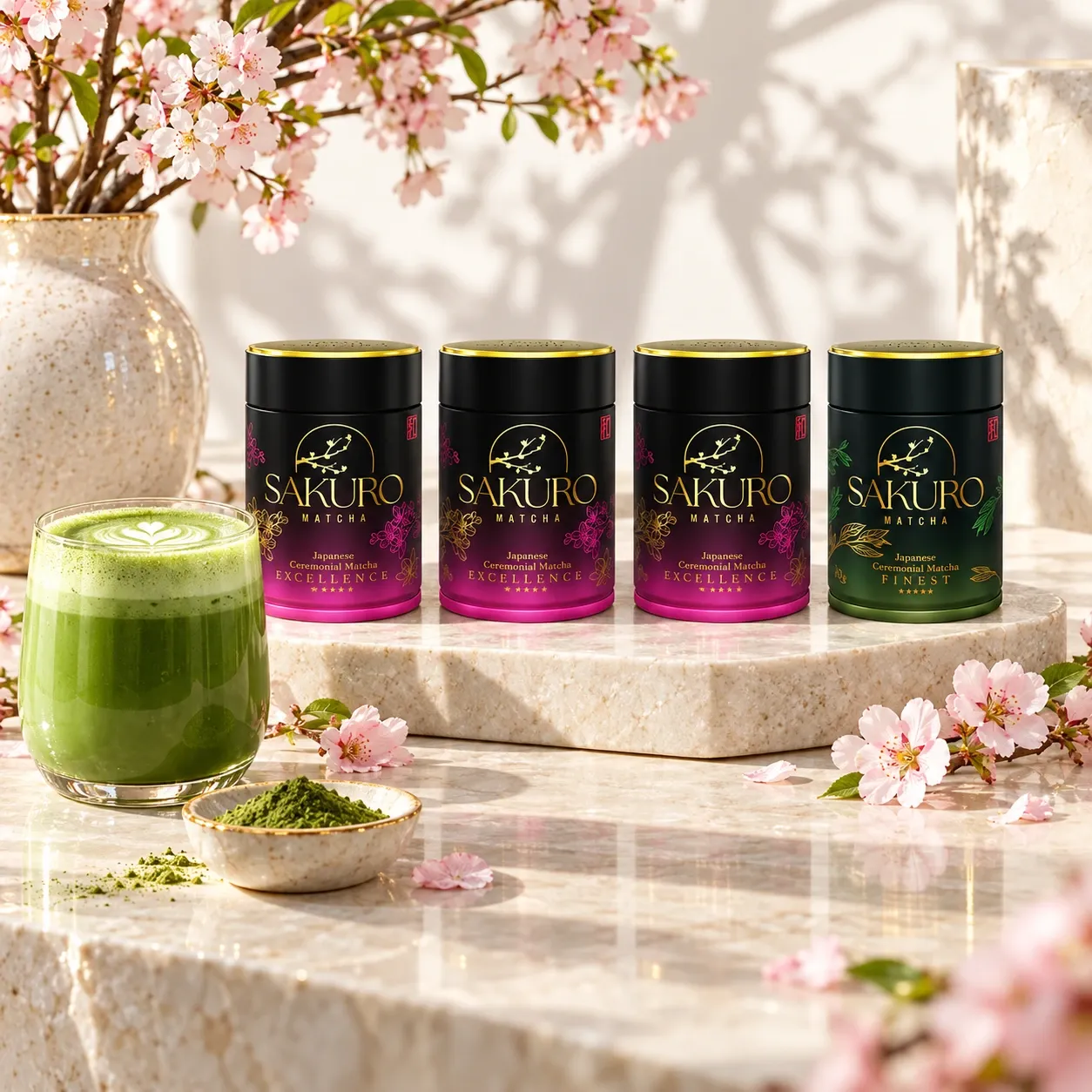
Sakuro is Japanese ceremonial matcha from Shizuoka, shipped from Poland within the EU. For the blind test, start with the pair: Finest 40 g + Excellence 40 g for 46.90 €, both grades, about forty 2 g servings. Single tins work too: Finest 40 g at 23.90 € and Excellence 40 g at 26.90 €.
Which of the two belongs on your bar depends on the drink. Finest is the workhorse for milk-based drinks and for anything that goes in the oven. Excellence is the one to serve in a bowl, or in an iced drink where there is nowhere to hide. Plenty of cafés buy both and use the cheaper one for the latte queue.
Wholesale runs in kilogram bags, 3 kg at −5 % and 5 kg at −10 %. Indicative net prices are about 108.90 € per kg for Finest and 156.60 € for Excellence at the NBP rate of 13 November 2026. The binding offer, availability and delivery terms come from Ewelina: [email protected], +48 515 025 329. Tell her how many drinks a week you sell and she will say whether you are a 1 kg or a 3 kg account. More on the trade side is in our matcha wholesale guide for cafés.
FAQ
How much matcha do I need for a proper test?
Two 40 g tins are plenty. At 2 g a serving that is about forty bowls: a blind test with three tasters, a day of lattes on the bar and a retry at a different dose. Order a kilo once the sheet says yes.
Can I switch between two deliveries, with no overlap?
You can, and that is how the horror stories start. The powder lands on Friday, nobody has tasted it, the dose is wrong and Saturday’s lattes are the test. Two weeks of overlap costs one extra bag and removes the risk.
Will regulars notice a different matcha?
They notice colour and sweetness long before they could name a grade. Keep the dose and the milk ratio honest and most never mention it. What they notice is a drink that changes twice in a month.
The new matcha tastes more bitter. Do I just use less?
Try it: drop 0.2 g and check the colour in milk. If it is still harsh at the lower dose, the problem is the powder or the water temperature, not the quantity. Water above about 85 °C makes almost any matcha taste rough.
Do I have to change the menu price when I change supplier?
Usually not. Matcha is a small share of a latte; milk, cup and labour are bigger. Recalculate and change the price only if the gap is real. Guests forgive a new supplier; they remember a price rise.
How long does an opened 1 kg bag stay usable?
Judge it by colour and smell rather than by the calendar. Rolled shut, decanted into an opaque container and kept cool and dark, a kilo that a busy bar gets through in four to six weeks will hold up fine. A kilo that takes four months to finish in a warm storeroom will not, which is the real argument for ordering 1 kg at a time rather than 5 kg at a discount.
Should I tell guests I changed supplier?
No announcement is needed, and a sign saying “new matcha” mostly invites people to look for a difference. Do keep the practical information right: if your menu states the origin or the caffeine content, update it, and answer honestly when somebody asks what you are using.
If you want to start the clock today, order two tins, book an hour at 10 a.m. on your quietest day and print the scoring table above. Everything else on this page is just what you do after the sheet gives you an answer.
Discover our TOP products!



Your dream figure


Discover new flavors

Yerba mate with tea

Accessories

Superfoods









Certified raw honeys from Poland

Check the current price
free shipping
Up to 90 days
free returns
24 H
shipping