
Yerba Mate and Vitamin C – Is It a Good Source of This Nutrient?
2026-08-28
Vitamin K had its episode in this series, now it’s vitamin C’s turn – because this is a topic surrounded by quite a few oversimplifications. Some descriptions of dried yerba leaves, including our own description of the Immuno product, list vitamin C among the components of yerba mate leaves. A question worth asking honestly: does what’s in the dry leaf actually end up in the cup you drink through a bombilla?
Yerba mate and vitamin C – what’s actually in the leaf
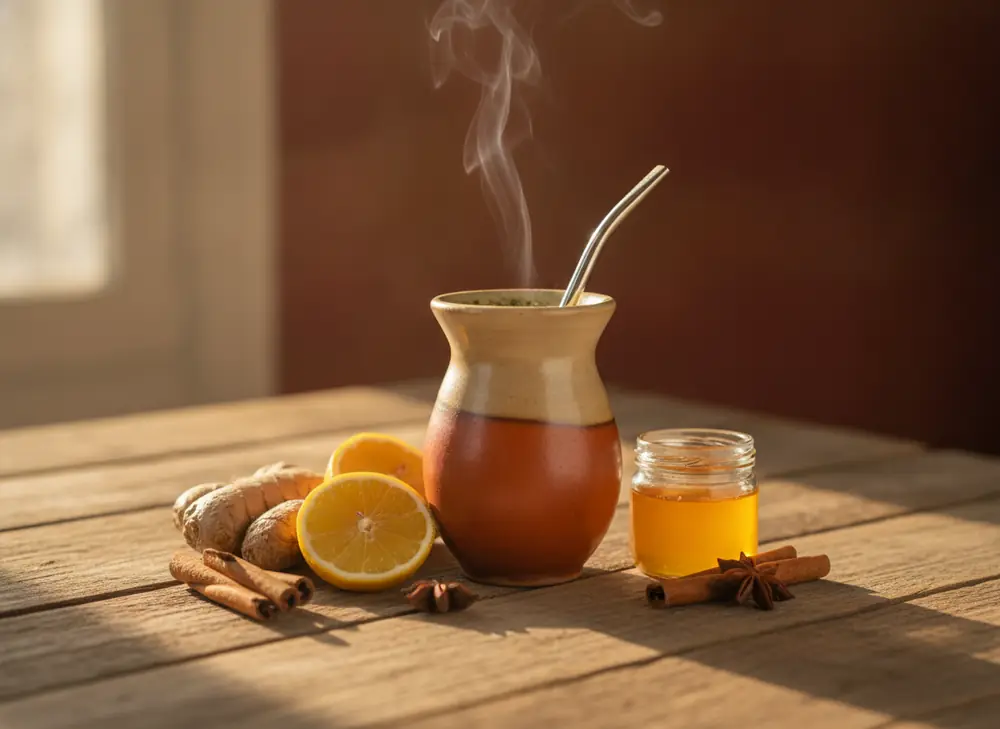
Yerba mate, like most green plants, contains vitamin C in its fresh leaf. That’s no surprise – every green, photosynthesising part of a plant produces ascorbic acid as part of its biochemical defence system. In our description of the Immuno product, we list vitamin C alongside the whole B group and vitamin E as components of the dried leaf, and this matches what leaf analyses of yerba show.
The problem starts with the question of “how much of this survives processing.” The fresh yerba leaf goes through sapecado – a short, intense scorching with fire or hot air that halts the enzymes responsible for fermentation – followed by drying and, for many dried leaves, long ageing. Vitamin C is one of the most unstable vitamins there is: it breaks down under heat, oxygen and light. Fruits and vegetables lose it noticeably even from ordinary steaming. With leaf drying at high temperature over an extended period, it’s realistic to assume that little of it remains in the finished dried leaves compared to the fresh leaf.
Dried leaves aren’t the same as the infusion – the second barrier we already discussed with vitamin K
Here the mechanism works differently than with vitamin K. Vitamin K is fat-soluble and doesn’t transfer well into water, so an infusion made from dried leaves has little of it regardless of how much is in the leaf. Vitamin C is water-soluble – in that sense it theoretically has a better chance of moving from the dried leaves into the infusion during brewing, just like some polyphenols or caffeine.
The trouble is that hot water, which draws vitamin C out of the leaf, also destroys it at the same time. Ascorbic acid is sensitive to temperature – the hotter the water and the longer the contact, the faster it breaks down. Classic yerba brewing involves pouring water at 70–80°C over the dried leaves and refilling the matero multiple times, sometimes stretched over half an hour of drinking with friends. These are exactly the conditions in which even the small pool of vitamin C that survived drying has little chance of surviving brewing as well.
Why vitamin C even appears in descriptions of dried yerba mate leaves
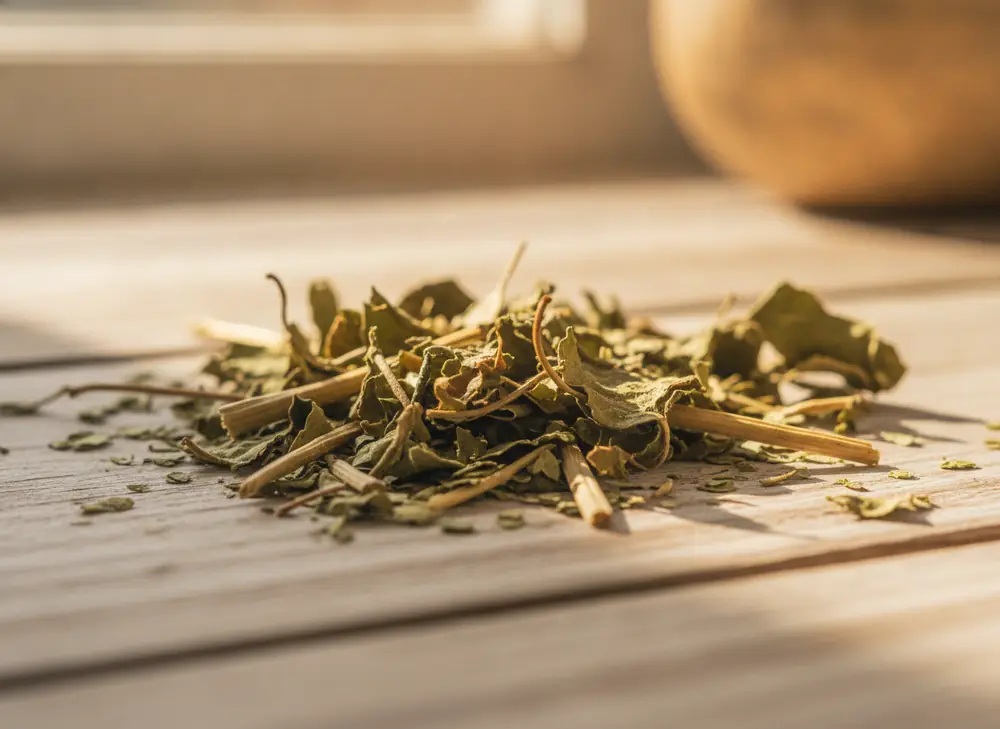
This isn’t a stretch – in analyses of the composition of yerba mate leaves, vitamin C does indeed show up, alongside a whole range of compounds, of which there are over 150 in the leaf. When describing the plant’s composition, it’s fair to list what’s actually in it. What would be dishonest, however, is suggesting that a cup of yerba is a real source of dietary vitamin C, comparable to a citrus fruit or a pepper. We don’t have our own lab certificate with a specific vitamin C value for an infusion made from Yerbador dried leaves, so we won’t give you a figure in milligrams we’re not sure of – the same rule we apply in every article in this series, whether it’s about selenium or manganese.
What we do know with a high degree of certainty: yerba mate contains strong antioxidants from the polyphenol group – chlorogenic acid and caffeoylquinic derivatives – which are far more resistant to high temperatures than vitamin C and actually pass into the infusion in large part. These, not vitamin C, are responsible for most of the antioxidant activity attributed to drinking yerba.
Where to actually get vitamin C, if that’s what you’re after
The reference intake of vitamin C for an adult, as adopted in EU food labelling regulations, is 80 mg per day. One red pepper, two kiwis, a glass of citrus juice, or a handful of fresh parsley will easily provide it – none of these go through a high-temperature drying process, so their vitamin C actually has a chance to survive all the way to your plate.
If you brew yerba with a splash of fresh lemon juice or a slice of orange – which many people do for the taste, not for immunity – it’s that addition, dropped in at the end into an already slightly cooled infusion, that actually brings vitamin C into your cup. Yerba on its own won’t do that job.
What yerba mate actually does for immunity
This doesn’t mean yerba has nothing to do with immunity – just that the mechanism is different from what vitamin C would suggest. The polyphenols mentioned above, including chlorogenic acid, have documented antioxidant effects that help the body cope with oxidative stress. On top of that, there’s caffeine and xanthines, which improve alertness and well-being – which indirectly matters during cold and flu season, when a tired, sleep-deprived person catches infections more easily than a well-rested one.
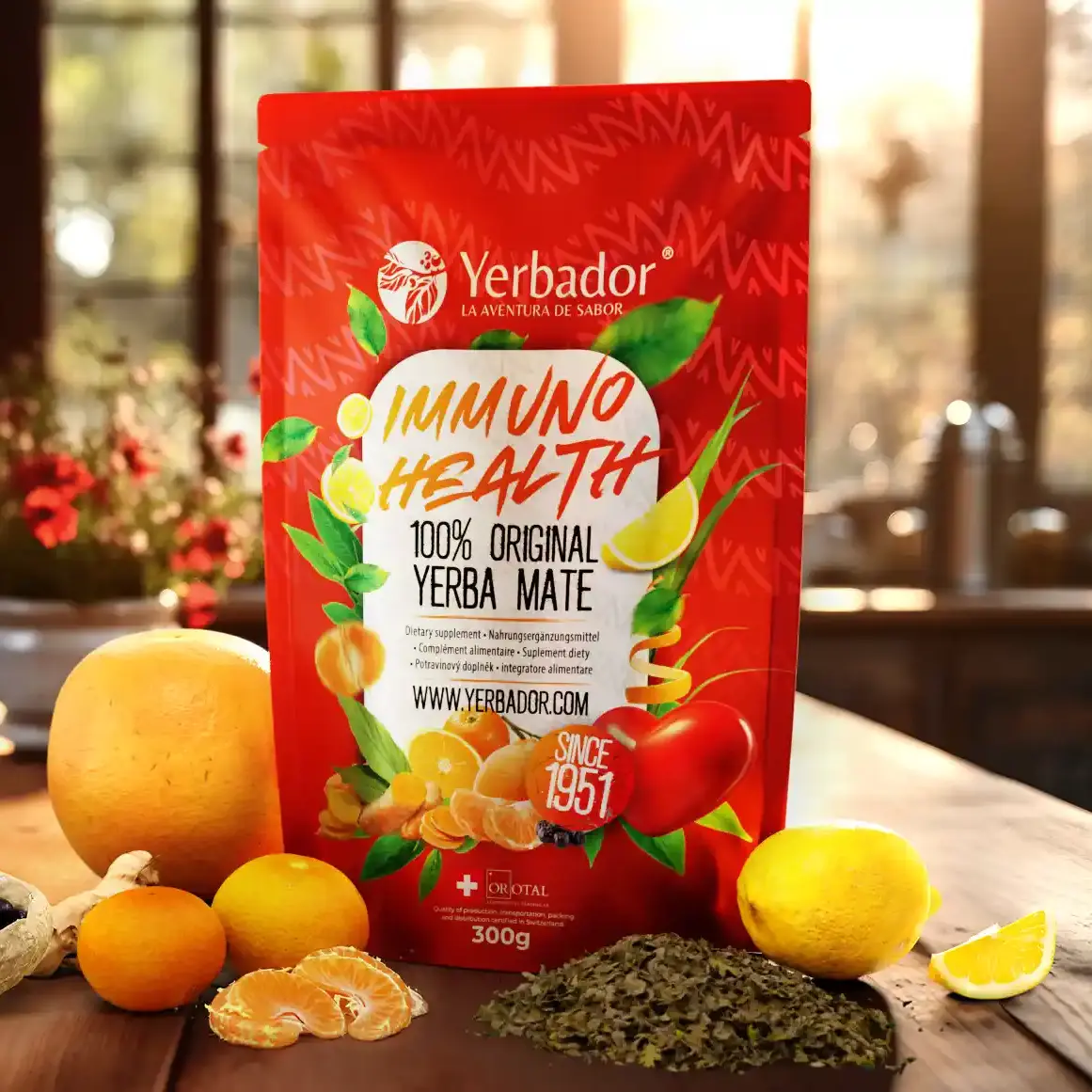
Our Immuno line combines classic dried yerba mate leaves with added green barley and sunflower seeds – and it is these additions, not the yerba itself, that genuinely give a different nutritional profile than pure holly leaves. If you’re specifically after supporting your immunity through diet, it’s worth combining the yerba ritual with ingredients that really deliver what you’re looking for.
Check out the product: Yerba Mate Immuno
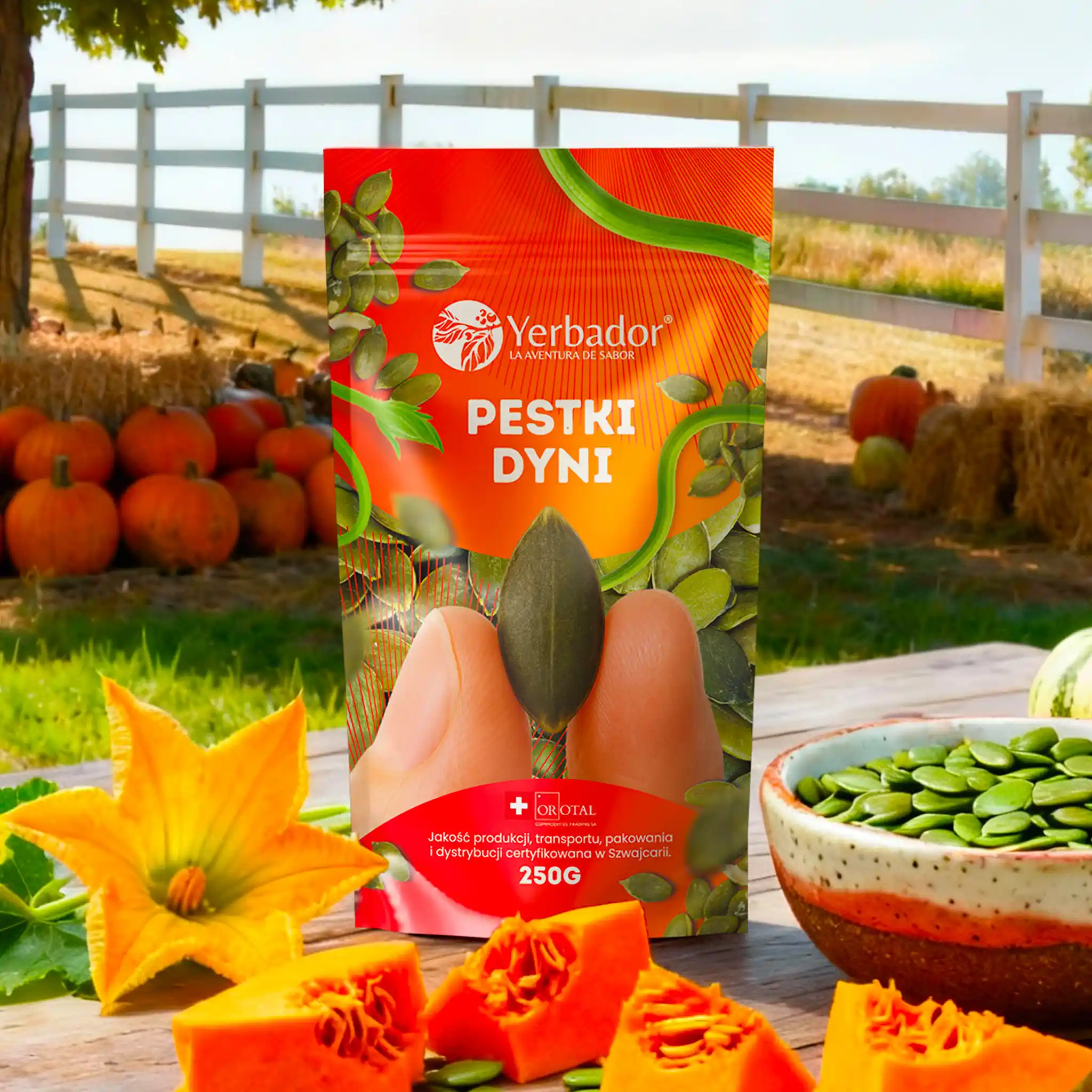
Check out the product: Pumpkin Seeds – Source of Energy and Immunity
FAQ – frequently asked questions
Does yerba mate have a lot of vitamin C?
No. Fresh yerba mate leaves contain vitamin C, but the high-temperature drying process and brewing with hot water destroy most of this vitamin before it ever reaches your cup. Don’t count on yerba mate as a source of vitamin C in your diet.
Does adding lemon to yerba mate make sense?
Yes, but it’s the lemon that provides the vitamin C, not the yerba mate. It’s worth adding fresh juice towards the end of brewing, to a slightly cooled infusion, to limit the breakdown of the vitamin caused by heat.
What does drinking yerba mate actually do for immunity?
Mainly polyphenols (chlorogenic acid) with antioxidant properties, along with caffeine that supports alertness. It’s a different mechanism than vitamin C, but it still has its own justification.
Would the vitamin C from dried leaves survive if you ate a raw leaf?
Theoretically, a fresh leaf contains more vitamin C than dried leaves, but yerba mate leaves aren’t eaten – they’re brewed as an infusion, so this question is more of an academic one.
Do other B vitamins in yerba mate have the same problem?
Some B vitamins are more thermally stable than vitamin C, but we’re still talking about dried leaves and an infusion, not a fresh plant – the actual content in a cup is always lower than in the raw material.
[email protected]
Discover our TOP products!
Your dream figure
Discover new flavors
Yerba mate with tea
Accessories
Superfoods
Certified raw honeys from Poland

Check the current price
free shipping
Up to 90 days
free returns
24 H
shipping