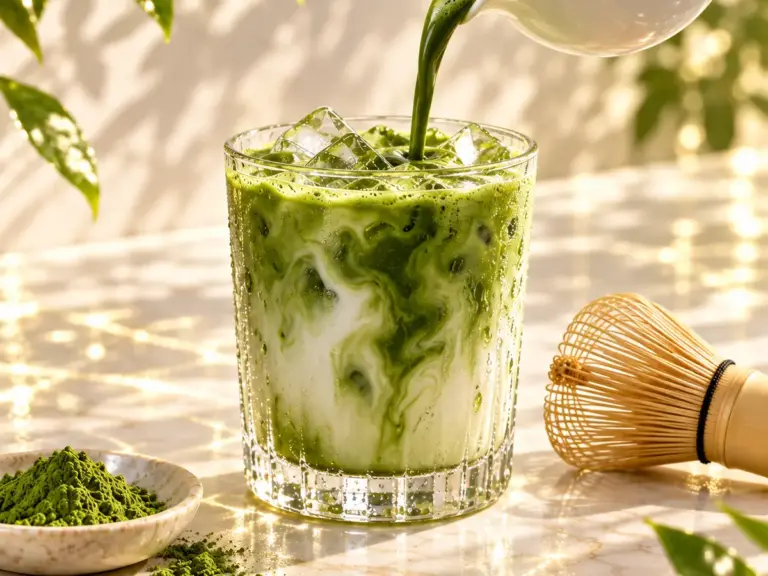

Matcha or Yerba Mate: Which One to Drink, and When
2026-11-26
Drink matcha when you have three minutes and want one small, concentrated bowl to yourself. Drink yerba mate when you have an hour, a kettle within reach and, ideally, someone to pass the gourd to. The choice is far less about caffeine than most comparisons suggest, and far more about how much time you have and whether you are alone.
That is the short version. Below is the long one: what each ritual actually demands of you, how much liquid ends up in the cup, which compounds make the two drinks feel different, and the one piece of the story that surprises almost everybody, including people who have been drinking matcha for years.
In short
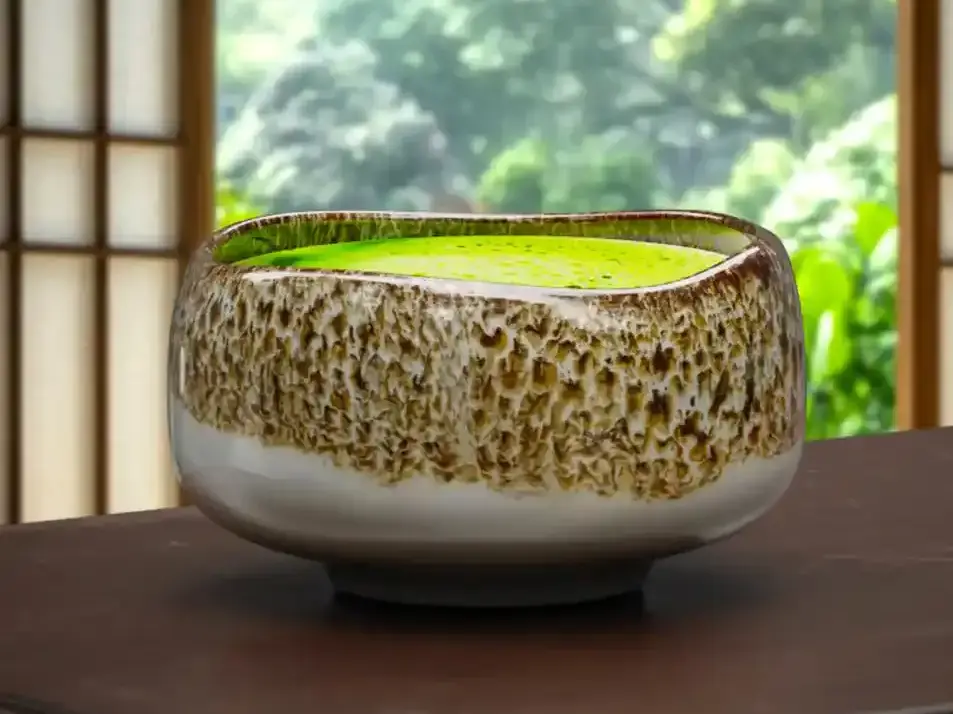
- Matcha (usucha): 2 g of powder, 60 ml of water at 80 °C, whisked for about 15 seconds and drunk straight away (recipe from Ippodo Tea, a Kyoto tea house trading since 1717).
- Yerba mate: roughly 10 g of dried leaf in a 350 ml matero, filled to about three quarters with leaf, water at 65 to 80 °C, refilled ten to twenty times over an hour.
- Caffeine: 2 g of matcha holds about 38 to 89 mg (matcha measures 18.9 to 44.4 mg/g); 10 g of yerba mate holds roughly 90 to 175 mg (8.7 to 17.5 mg/g of dry weight), released gradually across the refills.
- Theanine only comes from the tea plant: Japanese theanine-rich matcha carries 41.4 mg/g, while matcha sold outside Japan averages 8.7 mg/g. Yerba mate has none, but brings theobromine (0.5 to 1.5 mg/g) instead.
- Boiling water hurts both. In mate it pulls out more tannins and makes the cup harsher; in matcha it scorches the powder. Keep the kettle at 70 to 80 °C.
- Sleep: EFSA puts the single dose that can disturb sleep at about 100 mg of caffeine close to bedtime, with up to 400 mg a day for healthy adults and 200 mg a day in pregnancy.
Matcha or yerba mate: which one, and when?
Choose matcha when the time slot is short and you want a clean, concentrated hit with no equipment left soaking in the sink. Choose yerba mate when the time slot is long, you want something to sip through a task or a conversation, and you do not mind a vessel that stays on the desk for an hour. Both are stimulants, both come from leaves, and almost everything else about them is different.
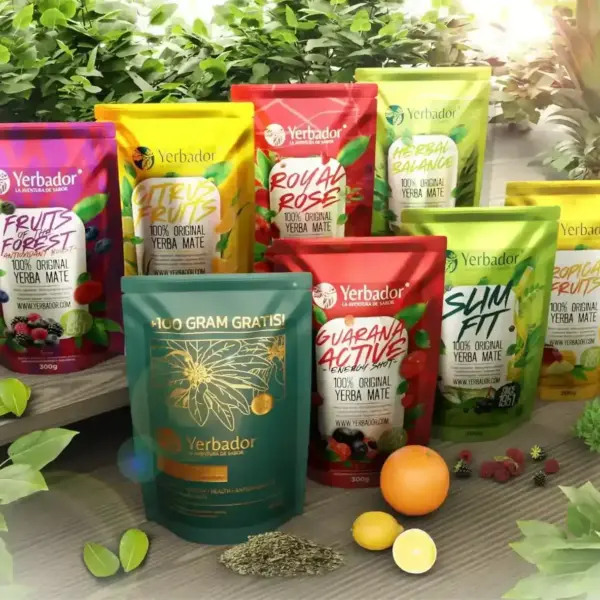
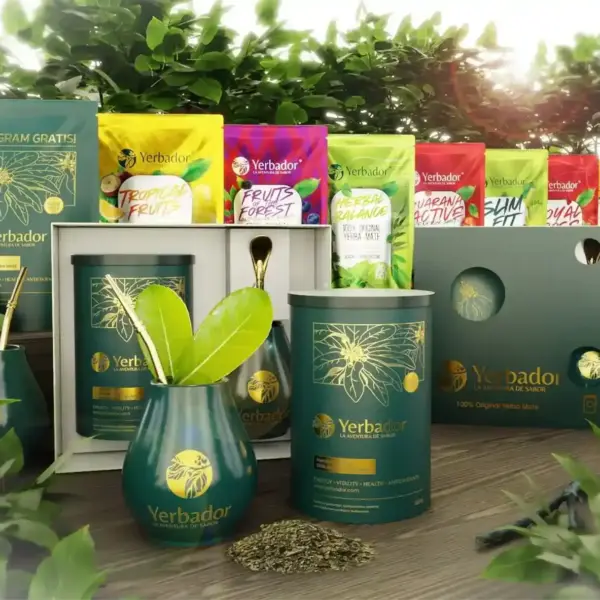
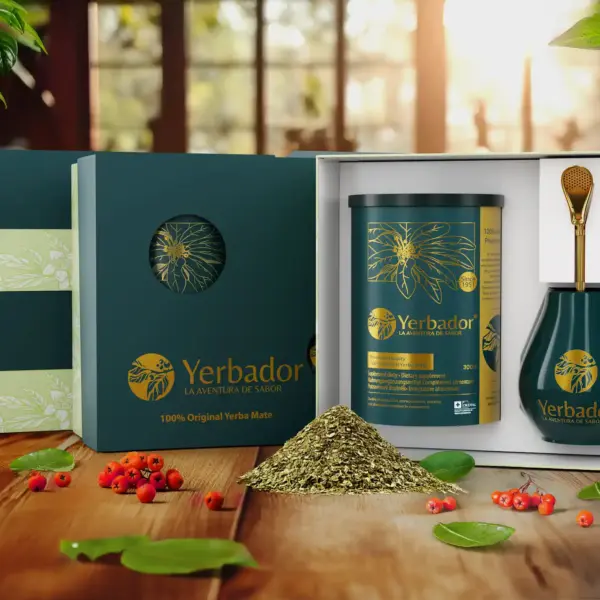
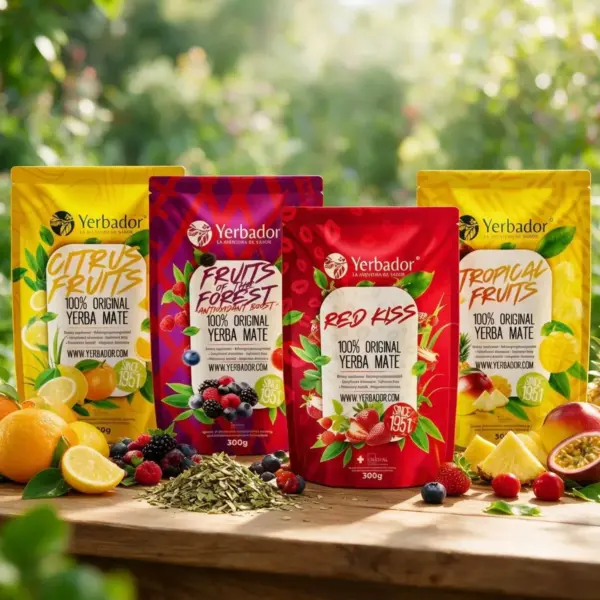
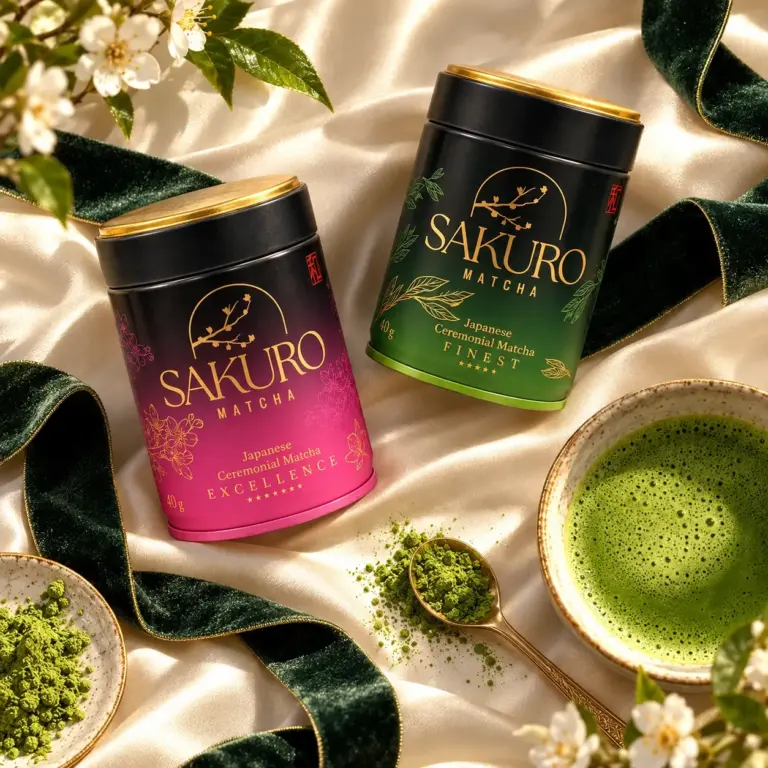
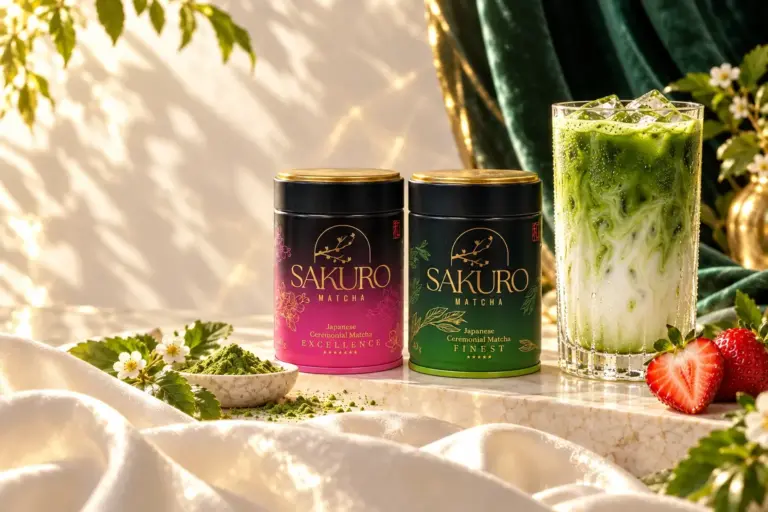
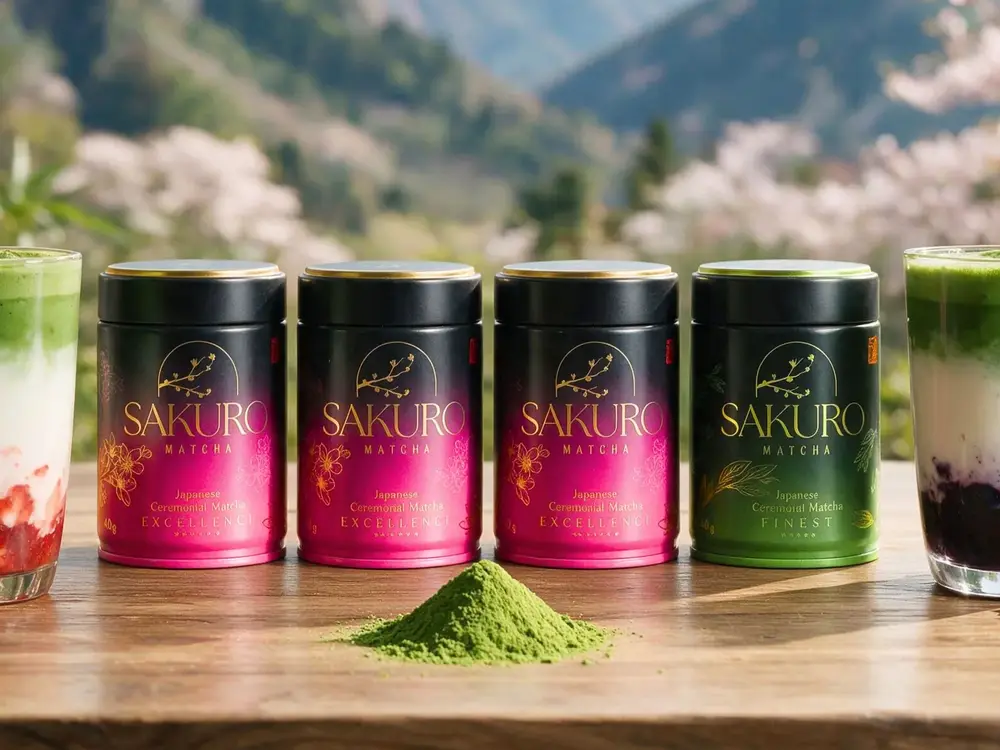
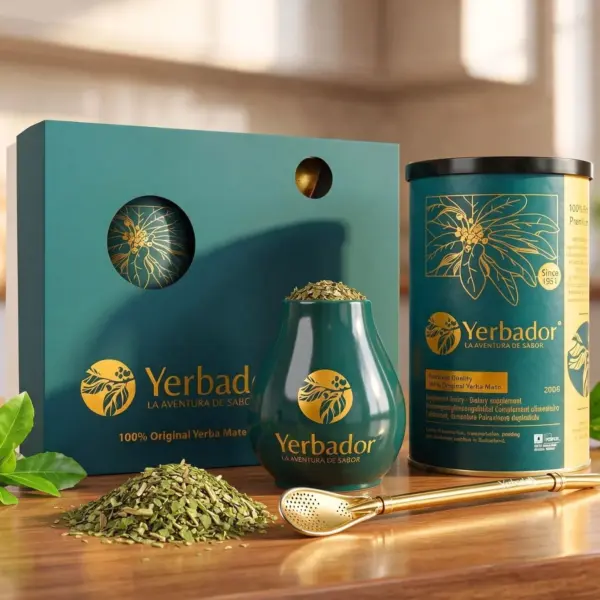
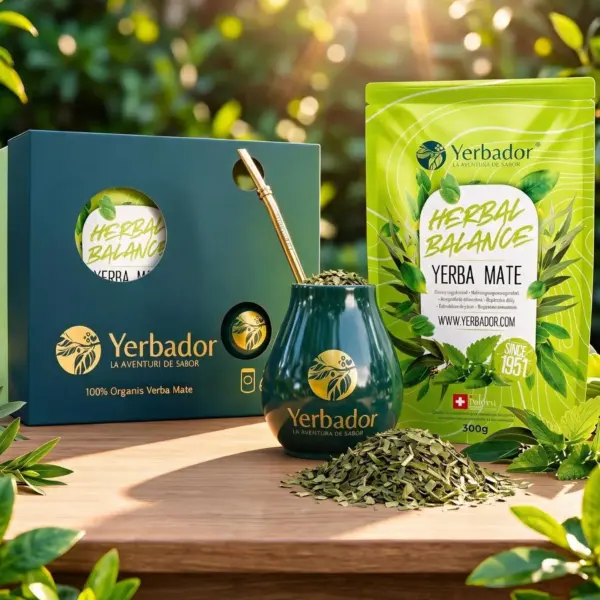
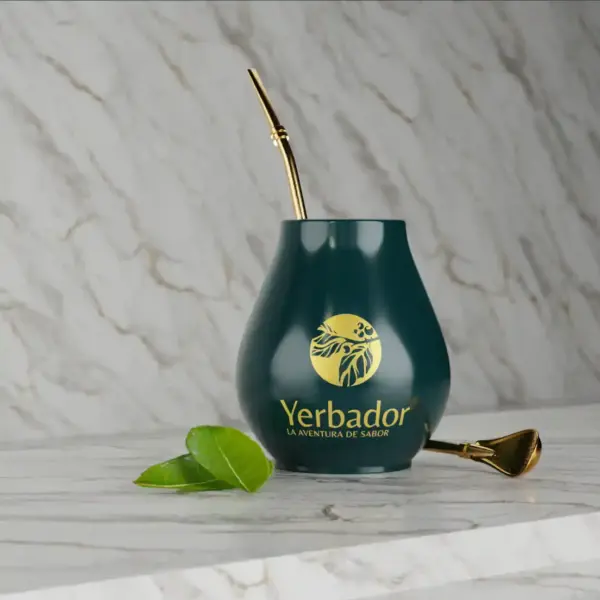
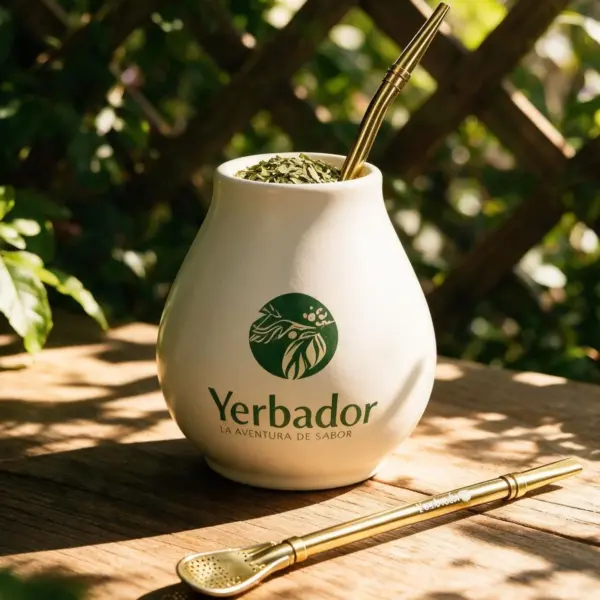
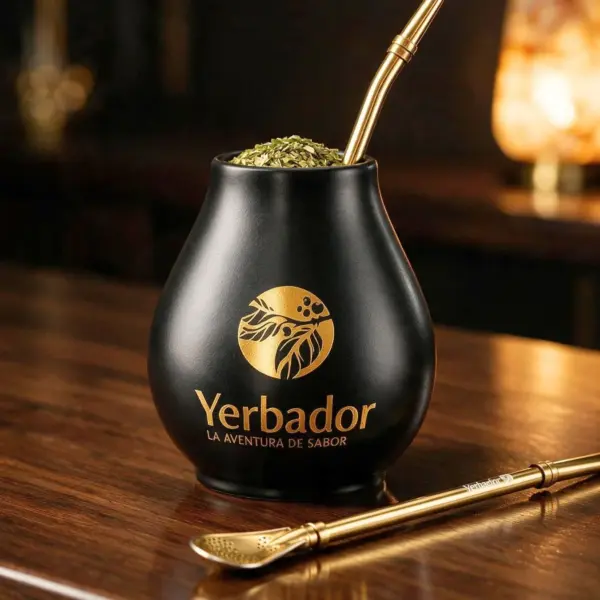
If you are starting from zero and want to try the matcha side first, a 40 g tin of Sakuro Matcha Finest is the obvious entry point: Japanese ceremonial-style matcha from Shizuoka, about 20 bowls per tin, around 23.90 € at the time of writing. For the mate side, the yerba mate starter set bundles the matero, the bombilla, the leaf and the scoop, so nothing is missing on day one.
The cliché says matcha is the morning drink and mate is the afternoon drink. That cliché is a European invention, and the section on mornings explains why the people who have been doing this longest disagree with it.
The two rituals side by side
The table below is the comparison that actually helps when you are deciding what to make right now. Note the two rows that do most of the work: the time from dry leaf to first sip, and how long the drink stays with you afterwards.
| What matters | Matcha (usucha) | Yerba mate (one gourd) |
|---|---|---|
| Dose of dry leaf | 2 g, sifted | About 10 g, no sifting |
| Vessel | Wide bowl, 350 to 500 ml | Matero, 350 ml, three quarters full of leaf |
| Water | 60 ml at 80 °C | About 60 ml per refill, 65 to 80 °C |
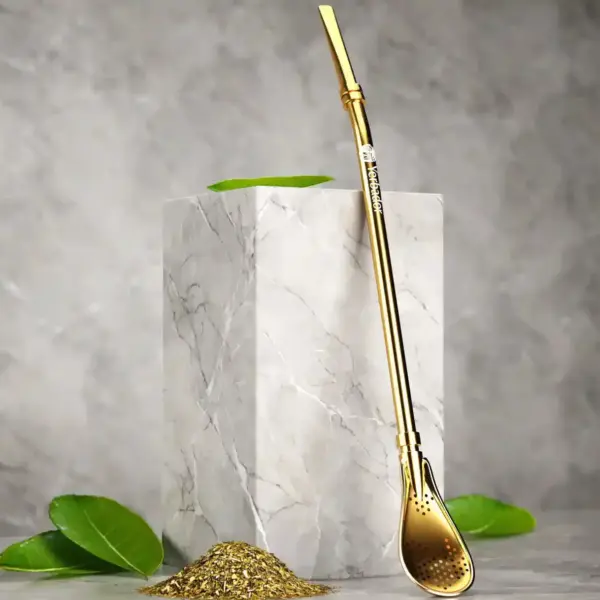
| Tools | Bamboo whisk, scoop, sieve | Bombilla, scoop, kettle or thermos |
| Time to prepare | About 1 minute | 2 to 3 minutes the first time, then none |
| Time spent drinking | 2 to 3 minutes | 40 to 60 minutes, sometimes longer |
| Caffeine per serving | 38 to 89 mg from 2 g | Roughly 90 to 175 mg from 10 g, spread out |
| Other active compounds | Theanine up to 41.4 mg/g, catechins | Theobromine 0.5 to 1.5 mg/g, chlorogenic acid 28.2 to 44.5 mg/g |
| Shared or solo | One bowl, one person | One gourd, passed around a group |
| Washing up | Bowl and whisk, immediately | Rinse the gourd and leave it to dry |
Figures for matcha composition come from a review in Molecules (Kochman and colleagues, 2021); the yerba mate figures come from a 2026 narrative review in Nutrients and from a 2024 study in Molecules on how brewing conditions change the drink. Links to both are at the end of this article.
One serving, wildly different volumes
A bowl of usucha is 60 ml. A session with one scoop of yerba mate can push well past a litre through the same leaf. That single fact explains most of the practical differences between the two: what they do to your bladder, how they fit into a working day, and why mate feels like it lasts and matcha feels like a shot.
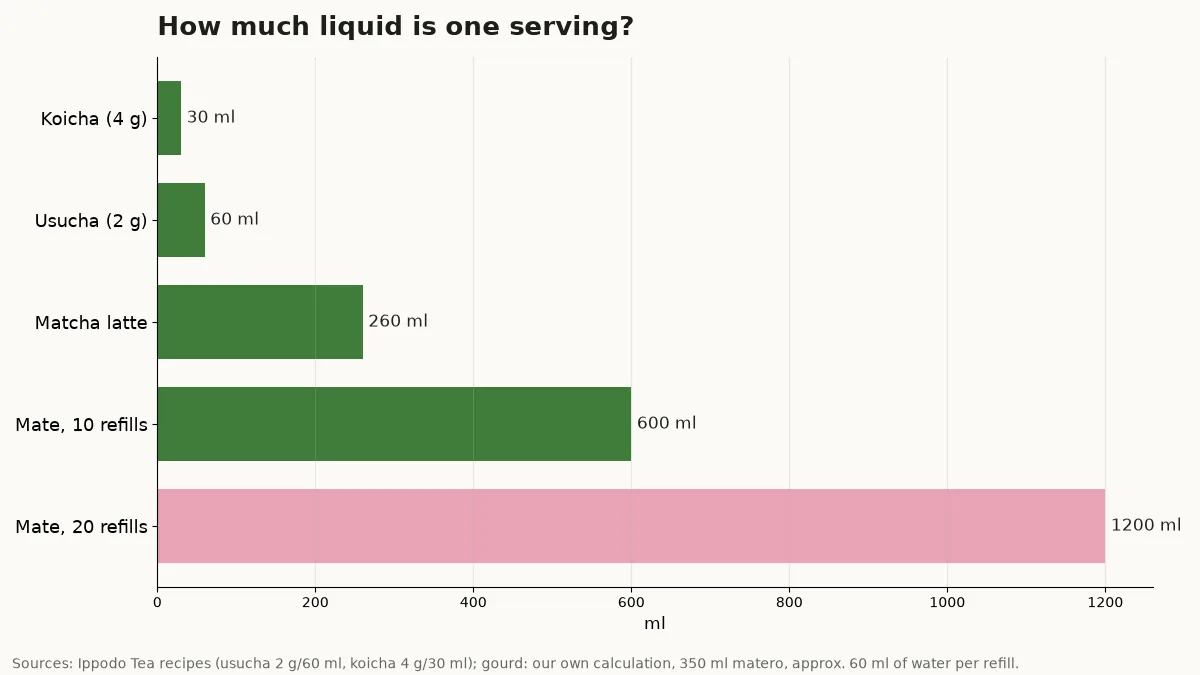
Ippodo describes the standard usucha ratio as something to be enjoyed “almost like an espresso”, and that is the right mental model. It is not a mug of tea. If you want a bigger drink, their own advice is to whisk the concentrated bowl first and then pour hot water or milk on top, rather than drowning 2 g of powder in 300 ml from the start, which makes a thin cup and no foam.
Mate works the other way round. The leaf stays in the gourd the whole time and the water keeps arriving in small doses. Ten refills of about 60 ml is already 600 ml of liquid, and a slow session doubles that. The caffeine does not all come out at once either: in the 2024 Molecules study, a second brewing of the same leaf still delivered 14.28 mg of caffeine per gram against 17.79 mg in the first, a drop of only about a fifth.
Practical consequence: mate is also your drinking water for that part of the day, which is why people who switch to it often stop refilling a separate glass. Matcha is not. If a bowl of matcha is all you have had by 11 a.m., you are 60 ml into the day.
The morning case for matcha, and the myth inside it
Matcha suits a morning because it is quick, because it is the same every day once you have the ratio right, and because the theanine that makes it taste savoury rather than merely bitter is at its highest in good Japanese leaf. In the 2026 Molecules survey of matcha sold in Japan and abroad, theanine-rich Japanese matcha measured 41.4 mg/g, while matcha marketed outside Japan averaged 8.7 mg/g. That is a difference of roughly five times, and it is the clearest argument for buying Japanese matcha rather than the cheapest green powder on the shelf.
Here is the part that surprises people. Ippodo, the Kyoto house whose recipe half the internet copies, introduces usucha with the line that they “recommend drinking usucha at teatime for an energetic boost”, and pairs it with chocolate, cakes and Japanese sweets. In Japan, the classic slot for a bowl of matcha is the middle of the afternoon, next to something sweet, not at 7 a.m. on an empty stomach. The matcha breakfast is a Western habit, roughly as old as the matcha latte.
That does not make the morning bowl wrong. It does mean the “matcha is a morning drink” rule carries no authority behind it, so you can place it wherever it works for you. What does carry evidence is what happens when you drink it before you eat.
In a crossover trial published in Clinical Cancer Research in 2005, taking green tea catechins without food produced average peak levels of free EGCG more than 3.5 times higher than taking the same dose after a light breakfast. More catechin in the blood is not automatically a benefit, and for some people it is exactly what makes an empty-stomach bowl feel rough. Separately, a 2021 study in The Journal of Nutrition found that 300 ml of green tea with a meal cut iron absorption from that meal by more than 85 %. If your iron is low, keep an hour between the bowl and the porridge. That is a question for a blood test, not for a blog.
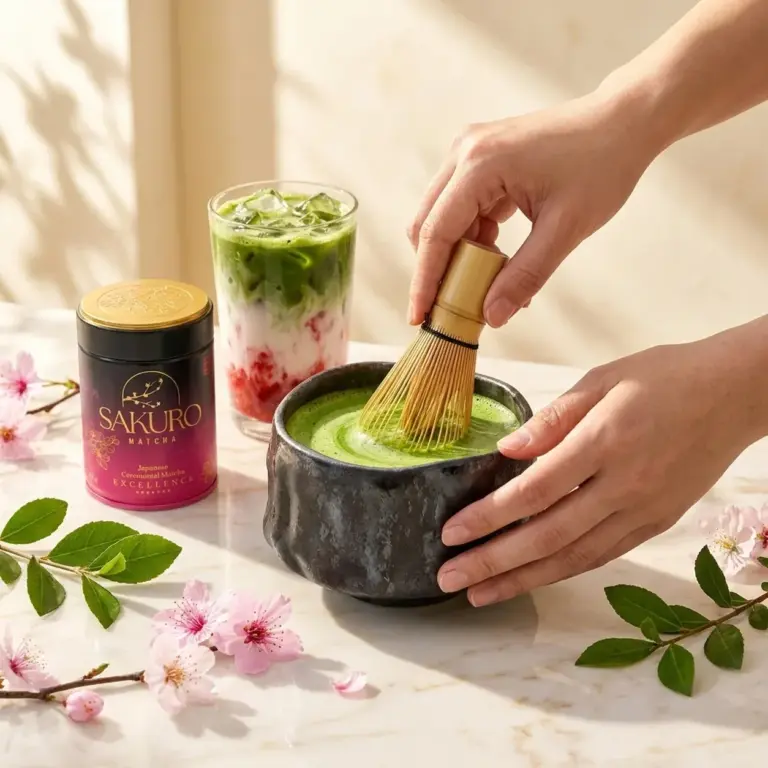
The practical morning routine that works for most people: eat something small, then sift 2 g of matcha into the bowl, pour 60 ml of water at 80 °C, whisk fast for 15 seconds in an M shape, and drink it while the foam is still fine. If the result is bitter or lumpy, the cause is almost always water that was too hot or powder that was not sifted, and we wrote a whole piece on why matcha turns bitter and clumpy. The temperature question has its own article too: why 80 °C is the number that matters.
The afternoon case for yerba mate
Yerba mate earns the afternoon because it survives being drunk slowly. Matcha does not: whisk a bowl, take a phone call, come back ten minutes later and the foam has collapsed and the powder has settled into a gritty layer at the bottom. A gourd of mate is designed for exactly that interruption. The leaf sits in the cup, you add water when you want it, and the drink waits.
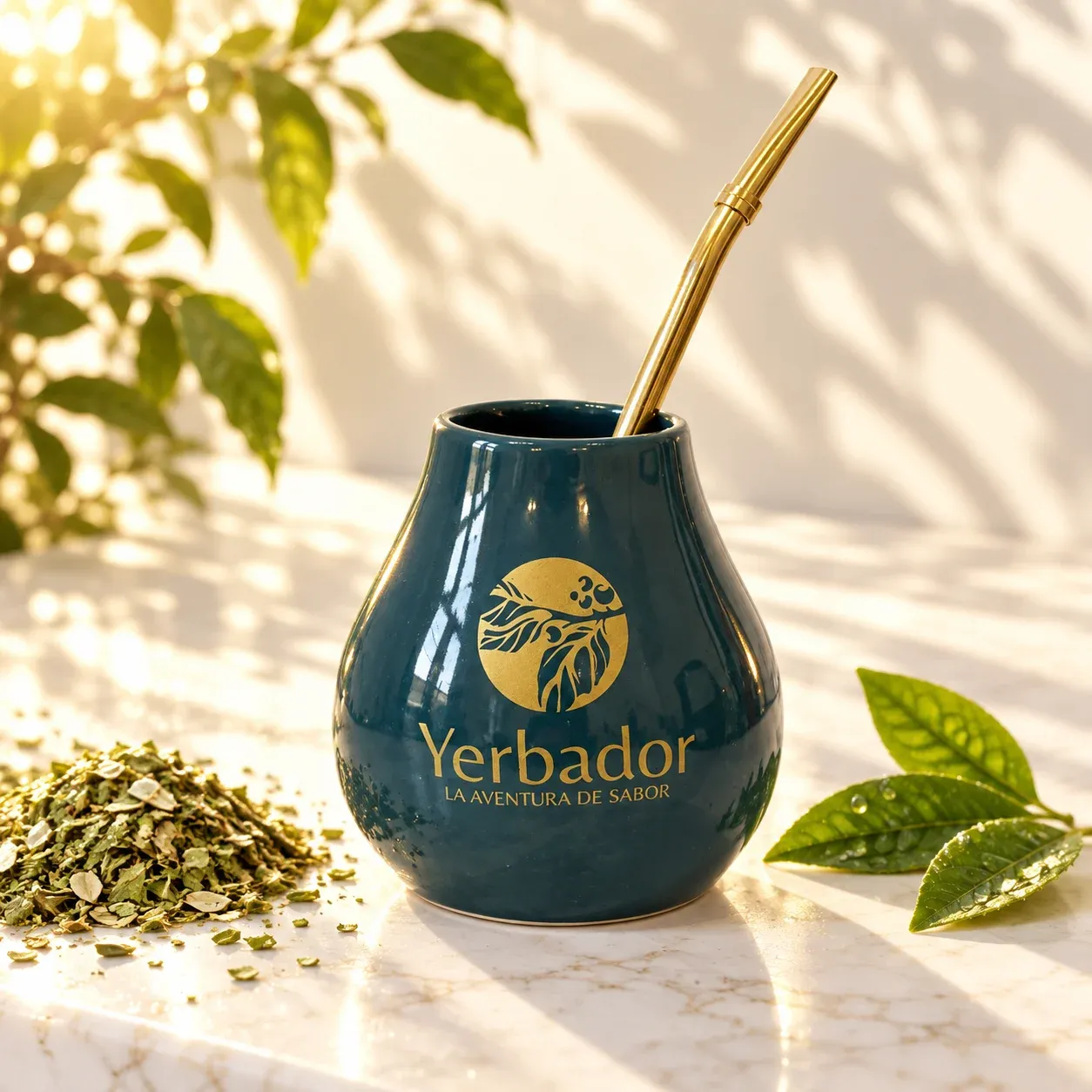
The traditional set-up is more specific than it looks. The 2024 Molecules study describes the classic method as filling about three quarters of the vessel with dried leaf, which in a 350 ml matero means something close to 10 g, and it puts the optimal brewing temperature at 65 to 80 °C. Tilt the gourd, pour a little cool water in first to protect the leaf, insert the bombilla and leave it alone from then on.
Boiling water is the mistake almost every beginner makes. In the same study, infusions prepared at 100 °C had higher tannin levels than those at 70 °C, while total polyphenols and antioxidant activity were higher at the lower temperature. In plain terms: the kettle at full boil gives you a harsher, more astringent cup and takes away part of what you were brewing for. Mate that tastes like chewing a tea bag is usually a temperature problem, not a quality problem.
The compounds also explain the feel of a mate afternoon. Alongside caffeine at 8.7 to 17.5 mg/g, the 2026 Nutrients review lists theobromine at 0.5 to 1.5 mg/g, the same mild stimulant found in cocoa, plus chlorogenic acid at 28.2 to 44.5 mg/g. Mate drinkers tend to describe the effect as flatter and longer than coffee, with less of a spike. That matches the way it is drunk, in sixty-millilitre doses across an hour, rather than any special property of the plant.
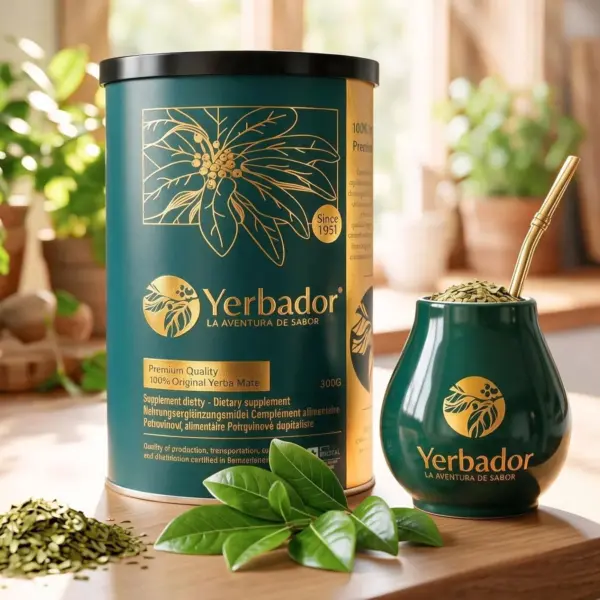
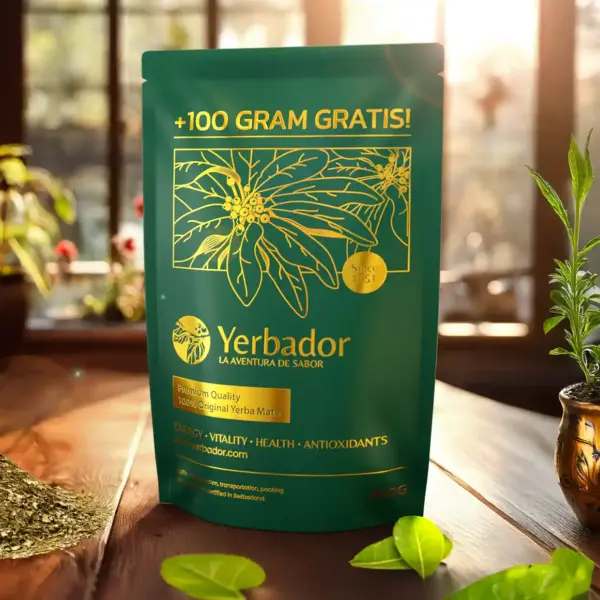
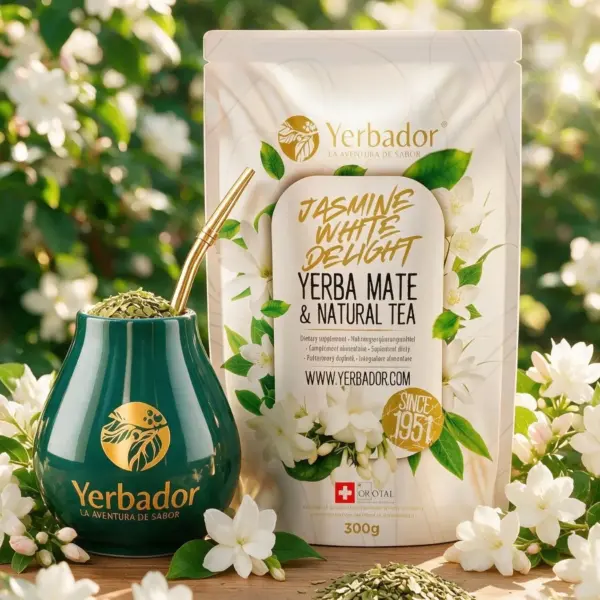
One more practical point about hot days: mate does not have to be hot. The cold version, tereré, uses chilled water at 3 to 11 °C, and the same review notes extraction times of 30 to 60 minutes for it. Same leaf, same gourd, no kettle. A 300 g airtight tube of pure-leaf yerba mate covers roughly thirty sessions, which is about a month if mate is your afternoon habit.
Evening: the hour when both become a bad idea
EFSA’s assessment of caffeine is the number to work from. Single doses of about 100 mg may affect sleep duration and patterns in some adults, particularly close to bedtime; single doses up to 200 mg and daily intakes up to 400 mg raise no safety concerns for healthy adults; pregnant and breastfeeding women should stay under 200 mg a day from all sources; for children and adolescents the figure used is 3 mg per kilogram of body weight.
Put the two drinks against that. A bowl of usucha made with 2 g sits at 38 to 89 mg, which is a late-afternoon drink for most people and a problem for some. A full gourd started at 5 p.m. is the riskier one, not because it is stronger per sip, but because you keep refilling it until 7 p.m. without counting. If you sleep badly, the honest rule is: last gourd by mid-afternoon, last bowl of matcha six hours before bed, and if you want something in the evening, make it the second brewing of leaf you already used, which has given up part of its caffeine.
If you want the full caffeine breakdown for matcha specifically, including how it compares with espresso and filter coffee, we did the arithmetic in how much caffeine is in matcha, and the calming amino acid has its own piece in L-theanine in matcha.
What people actually worry about
“Will mate or matcha upset my stomach?” Both can, on an empty stomach, and for the same reason: tannins and catechins are astringent. Mate is the harsher of the two when brewed with boiling water. Eat something first, drop the water temperature, and the problem usually disappears. If it does not, this is not a drink to force.
“Can I drink both in the same day?” Yes, and plenty of people do. Keep an eye on the total: a 2 g bowl in the morning plus a 10 g gourd in the afternoon lands somewhere between roughly 130 and 260 mg of caffeine, which is inside the 400 mg EFSA figure for healthy adults but leaves less room for coffee than you might think.
“Is one of them better for me?” Neither is medicine and we will not pretend otherwise. They are drinks with different compositions and different rituals. If you are pregnant, breastfeeding, taking medication that interacts with caffeine, or buying for a child, the answer is to ask a doctor or pharmacist, not a tea shop.
“Is expensive matcha a scam?” Not in the way people mean. The 41.4 mg/g versus 8.7 mg/g theanine gap between Japanese theanine-rich matcha and matcha sold abroad is a measurable difference, and it is what you taste as sweetness and body rather than flat bitterness. That said, the phrase “ceremonial grade” is not a protected term, there is no certificate behind it, and Ippodo themselves say it is a marketing expression invented for Western buyers. Judge the powder by colour, smell and taste, not by the word on the tin.
“Do I need all the equipment?” For mate, more or less yes: a gourd and a bombilla are the format. For matcha you can start with a sieve, a small bowl and an electric frother, and add a bamboo whisk when you know you like the drink. The whisk does make better foam, which is why cafés still use one.
Which one to buy for which ritual
| Your situation | What to get | Why |
|---|---|---|
| Three minutes in the morning, bowl drunk solo | Sakuro Matcha Finest 40 g, about 23.90 € | Japanese ceremonial-style matcha, roughly 20 bowls per tin, forgiving if your water is a little hot |
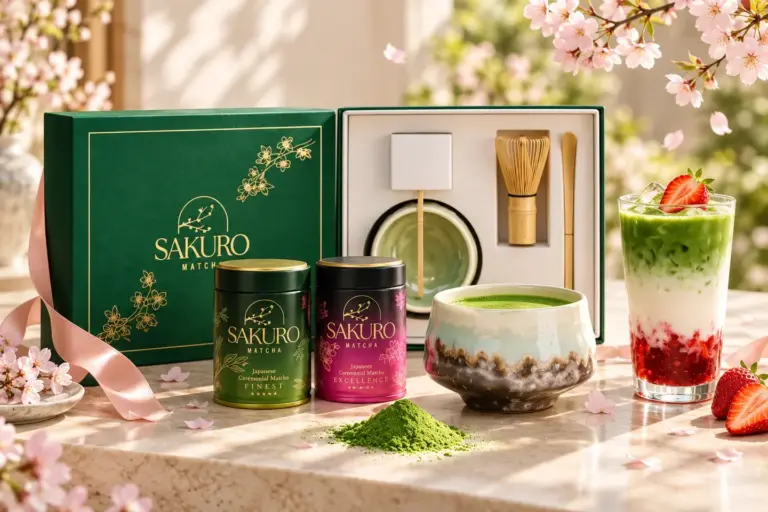
| You want to taste the difference between grades | Finest 40 g and Excellence 40 g together, about 46.90 € | Two tins side by side is the only way to learn what you actually prefer |
| Whisking properly, not stirring | Chasen bamboo whisk, about 14.90 €, and a Hisseki matcha bowl, about 23.90 € | A wide bowl gives the whisk room; a mug does not |
| First gourd, nothing at home yet | Yerba mate starter set, about 61.90 € | Matero, bombilla, leaf and scoop in one box, so the first session actually happens |
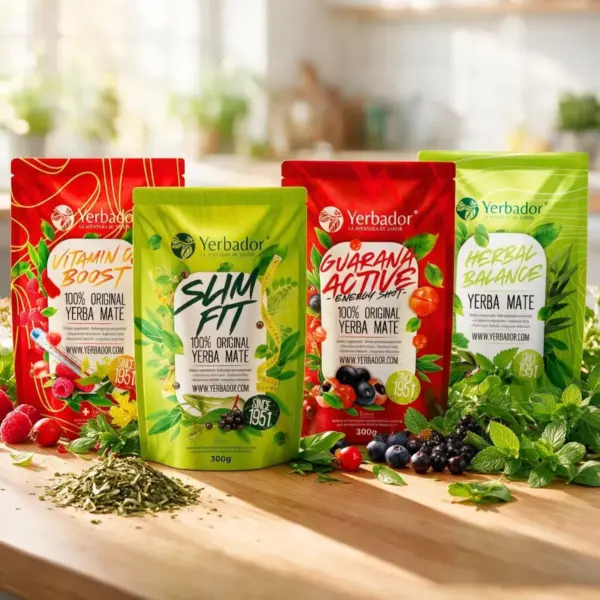
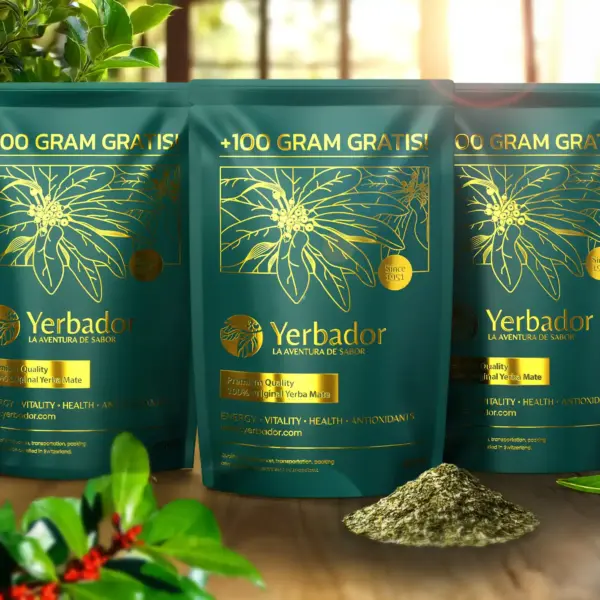
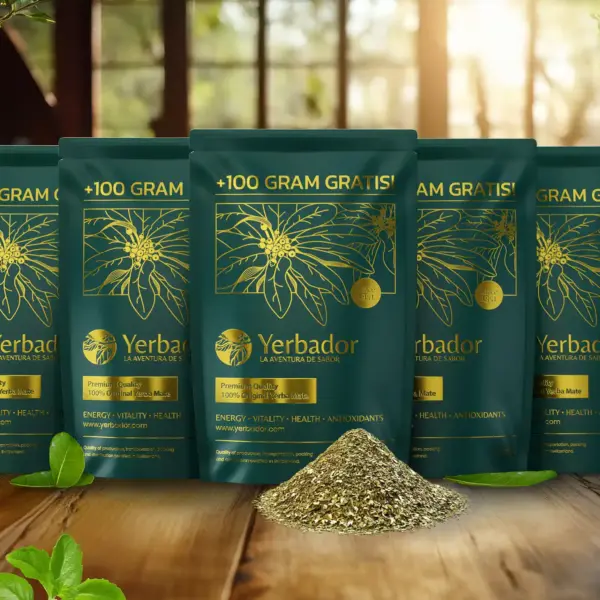
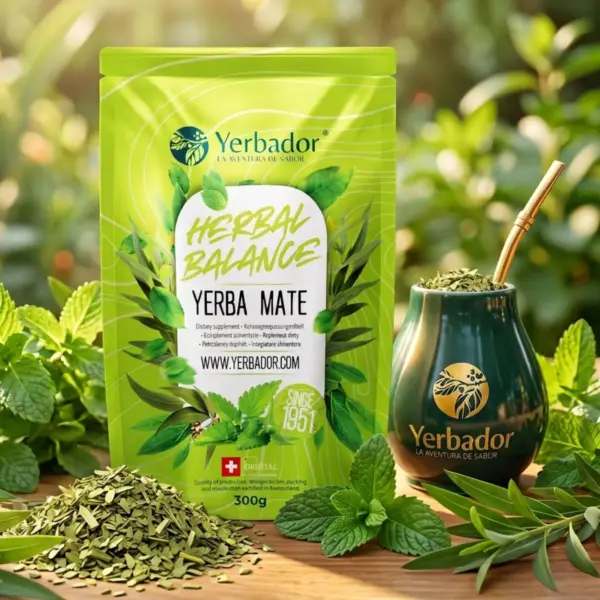
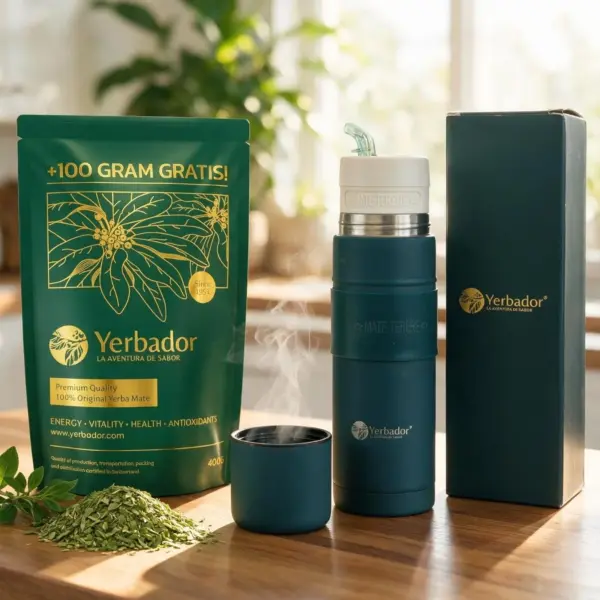
| Mate is already a habit | Yerba Mate Herbal Balance, about 26.90 €, or the 300 g pure-leaf tube, about 46.90 € | Pure leaf with no stems is milder and less dusty; the tube keeps it airtight |
Prices are the ones shown on our shop on the day this was published; the product pages always carry the current figure.
A day with both: what it looks like in practice
This is the shape of a day that we see working for people who keep both on the shelf. Treat the hours as a sketch, not a prescription.
| Time | What | Why that one |
|---|---|---|
| 7:30, after something to eat | Bowl of usucha, 2 g in 60 ml | Two minutes, no washing up beyond the bowl, and the theanine makes it feel steady rather than sharp |
| 10:00, at the desk | Matcha latte, 2 g whisked and topped with 200 ml of milk | Same powder, bigger drink, no second dose of caffeine |
| 14:00, long task ahead | Gourd with 10 g of leaf, water at 70 °C | An hour of small refills; nothing to make again halfway through |
| 16:30, people around | Second brewing of the same leaf | Still has flavour, less caffeine, and it is the social format |
| After 18:00 | Nothing with caffeine, or tereré made with leaf already used twice | EFSA puts 100 mg close to bedtime as enough to disturb sleep in some adults |
If you want to do the morning bowl properly rather than approximately, the full method, including why the whisk moves in an M and not a circle, is in how to make matcha the traditional way.
For cafés, shops and offices
If you are buying for a venue rather than a kitchen, matcha goes by the kilo: Sakuro Finest works out at roughly 107 € per kg, about 0.21 € for a 2 g serving, and Sakuro Excellence at roughly 154 € per kg, about 0.31 € per serving. Those are indicative conversions of our Polish wholesale list at the National Bank of Poland rate from the day of publication (4.4809 PLN per euro, table 229/A/NBP/2026), with discounts of 5 % from 3 kg and 10 % from 5 kg; the binding offer comes from Ewelina, who handles wholesale: [email protected], +48 515 025 329. Shipping is from Poland, within the EU.
Common questions
Which has more caffeine, matcha or yerba mate?
Per gram, matcha: 18.9 to 44.4 mg/g against 8.7 to 17.5 mg/g for dried yerba mate. Per sitting, usually mate, because a gourd holds about 10 g of leaf and a bowl of usucha holds 2 g of powder. The gourd also releases its caffeine across an hour rather than in one go.
Can I drink yerba mate in the morning instead of coffee?
Yes, and in Argentina, Uruguay and southern Brazil that is the normal thing to do. The only practical obstacle is time: a gourd needs an hour of small refills to make sense, so it fits a slow morning better than a commute.
Does yerba mate contain theanine like matcha?
No. Theanine comes from the tea plant, Camellia sinensis, and yerba mate is a holly, Ilex paraguariensis. Mate brings theobromine instead, at 0.5 to 1.5 mg/g, which is the same compound that makes dark chocolate mildly stimulating.
Can you make matcha in a thermos the way you take mate with you?
Not well. Whisked matcha is a suspension, not an infusion, so after twenty minutes the powder settles and the foam is gone. If you need matcha on the move, whisk it with cold water, pour it over ice in a bottle and shake it again before drinking.
Is it safe to drink mate through a metal straw all day?
The straw is not the issue; the volume and the temperature are. Drinking very hot beverages regularly is a habit worth avoiding in general, and mate at 65 to 80 °C is comfortably below that. Rinse the bombilla after every session so it does not clog.
How long does a tin of matcha or a pack of yerba last?
A 40 g tin of matcha is about twenty 2 g bowls, so around three weeks if you drink one a day. Yerba mate goes faster by weight: 300 g at roughly 10 g per session is about thirty sessions. Matcha also loses freshness within a month of opening, which is why 40 g tins make more sense than bulk bags at home.
Which is cheaper per day?
At our current prices a 2 g bowl of Finest works out at roughly 1.20 € and a 10 g gourd of yerba mate at roughly 0.90 €, with the gourd giving you an hour of drinking rather than two minutes. Mate is the cheaper habit; matcha is the cheaper single serving if you compare it to a café latte.
What should I do first if I have never tried either?
Start with the one that matches your day. If your mornings are rushed, buy a tin of matcha and a sieve. If your afternoons are long and sedentary, buy a starter set and learn to pour without flooding the leaf. Trying to begin both in the same week usually means one of them sits unopened.
Sources
Brewing recipes: Ippodo Tea, usucha. Matcha composition: Kochman and colleagues, Molecules 2021 and Unno and colleagues, Molecules 2026. Yerba mate: Najman and colleagues, Molecules 2024 and the 2026 review in Nutrients. Caffeine limits: EFSA.
Discover our TOP products!

Your dream figure

Discover new flavors

Yerba mate with tea

Accessories
Superfoods


Certified raw honeys from Poland

Check the current price
free shipping
Up to 90 days
free returns
24 H
shipping