
A Christmas café menu with matcha: what to order and when
2026-11-18
The week before Christmas is the week nobody wants to discover that the matcha tin is nearly empty. December traffic in a café is lumpy: three quiet mornings, then a Saturday when the market outside doubles your footfall and every second person wants something green, warm and not another flat white. A Christmas café menu with matcha works in that chaos only if two things are settled in advance — how many kilograms you actually need, and which two drinks your team can build in under ninety seconds.
This is the planning guide: the arithmetic, two winter recipes in grams and millilitres, what a serving costs at wholesale prices, and how to order before the January restock queue.
December does not behave like an average month
Most bars plan stock from a monthly average. December breaks that habit. The first two weeks run close to normal, then the shopping weekend peaks hit, then the week between Christmas and New Year drops to a third of usual trade in some towns and rises in others, depending on whether you sit near offices or near a Christmas market.
Matcha sits oddly well in that pattern. People who are tired of mulled wine and on their fourth coffee of the day order it precisely because it is neither. Prices on the supply side have also stopped being boring: Kyoto first-flush tencha — the shade-grown leaf that gets ground into matcha — averaged ¥5,402 per kilogram at auction in 2024 and ¥14,541 in 2025, and opening prices in 2026 were reported higher again, according to an analysis by the Japanese-tea importer Kettl (10 June 2026). That is a reason to order December stock in November rather than to wait and see.
Work out your December kilos before the first Advent weekend
The arithmetic is short. One serving is 2 g of matcha. One kilogram is 500 servings. Thirty-one days of December at twenty cups a day is 620 servings — just over 1.2 kg.
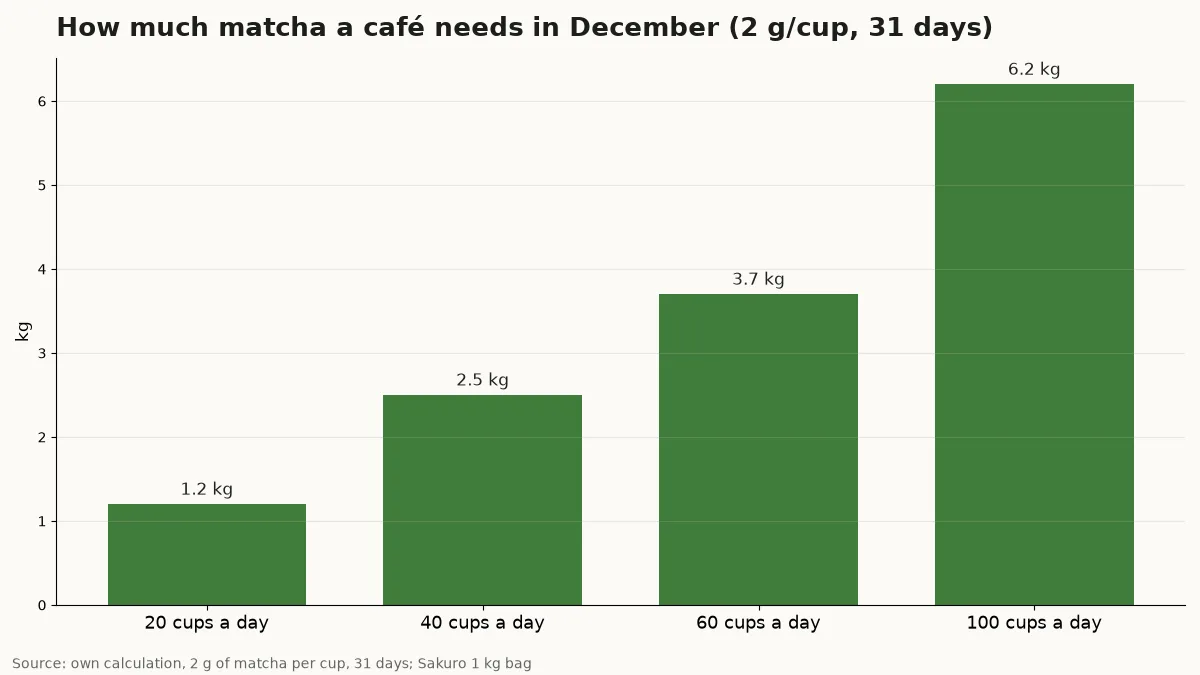
Then add headroom. Staff tastings, the drink that gets remade because the barista over-steamed the milk, the two days when the market runs late — fifteen per cent covers it. Round up to whole 1 kg bags, because that is how the powder is packed.
| Matcha drinks a day | Cups in December | Matcha at 2 g | +15% buffer | Order |
|---|---|---|---|---|
| 20 | 620 | 1.24 kg | 1.43 kg | 2 kg |
| 40 | 1,240 | 2.48 kg | 2.85 kg | 3 kg (−5%) |
| 60 | 1,860 | 3.72 kg | 4.28 kg | 5 kg (−10%) |
| 100 | 3,100 | 6.20 kg | 7.13 kg | 8 kg |
If you have never sold matcha before and are starting it for Christmas, plan from your oat-milk flat white volume rather than from zero: in most cafés matcha lands somewhere between a tenth and a fifth of that number in its first season. Our guide to matcha wholesale for cafés and restaurants goes through the first order in more detail.
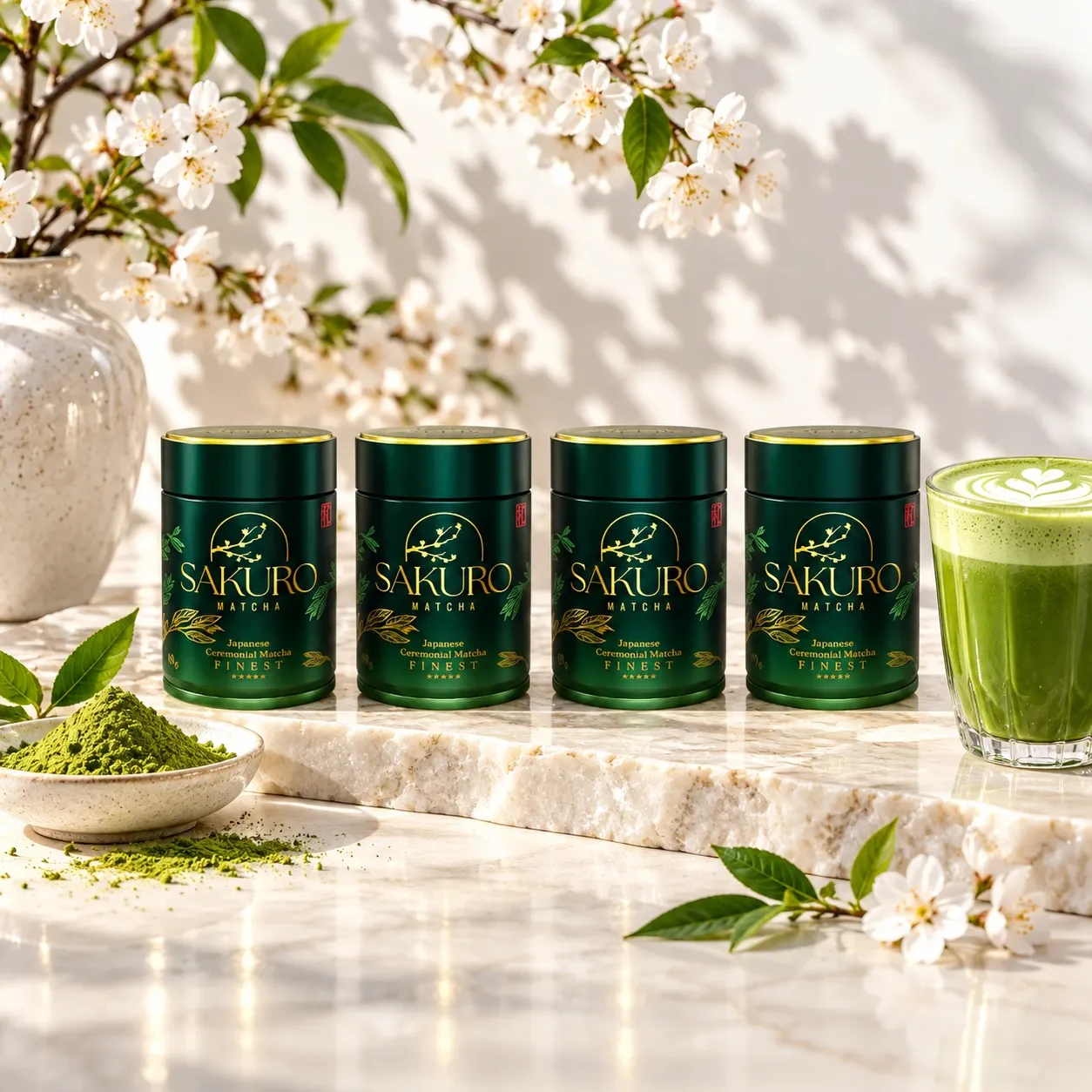
Two winter drinks that do not slow the bar down
Resist the urge to put five matcha specials on the board. Two is the number a team can learn in one shift and still make correctly at 11:40 on a Saturday. Both of these start the same way, which is the point: the same 2 g shot, the same whisking step, two different finishes.
Orange and cinnamon matcha latte (hot, 300 ml cup)
Ingredients: 2 g Sakuro Finest matcha · 60 ml water at 80 °C · 200 ml milk or oat drink · 10 ml orange syrup (or 8 g sugar and the zest of a quarter orange) · a pinch of ground cinnamon.
Method: sift the 2 g into a jug — sifting is the step people skip and then spend thirty seconds chasing lumps. Add the 60 ml of 80 °C water and whisk for 15 seconds, or blitz with an electric frother for 8. Steam the milk to 60–65 °C, no higher, or the drink turns flat and slightly bitter. Pour the syrup into the cup, add the matcha shot, then the milk. Dust with cinnamon and a little orange zest. Total: 60–75 seconds.
Cranberry iced matcha (400 ml cup)
Ingredients: 2 g matcha · 60 ml water at 80 °C · 30 ml cranberry compote · 150 ml milk or oat drink · 120 g ice.
Compote, made once for the week: 400 g cranberries, 120 g sugar, 60 ml water, simmer 8 minutes, cool. About 30 servings; keep it chilled and use within five days.
Method: compote into the bottom of the glass, ice on top, then milk. Whisk the matcha with the 60 ml of water and pour it over the back of a spoon so it floats. It stays layered for a minute or two, which is exactly as long as the photograph takes. Total: 45 seconds.
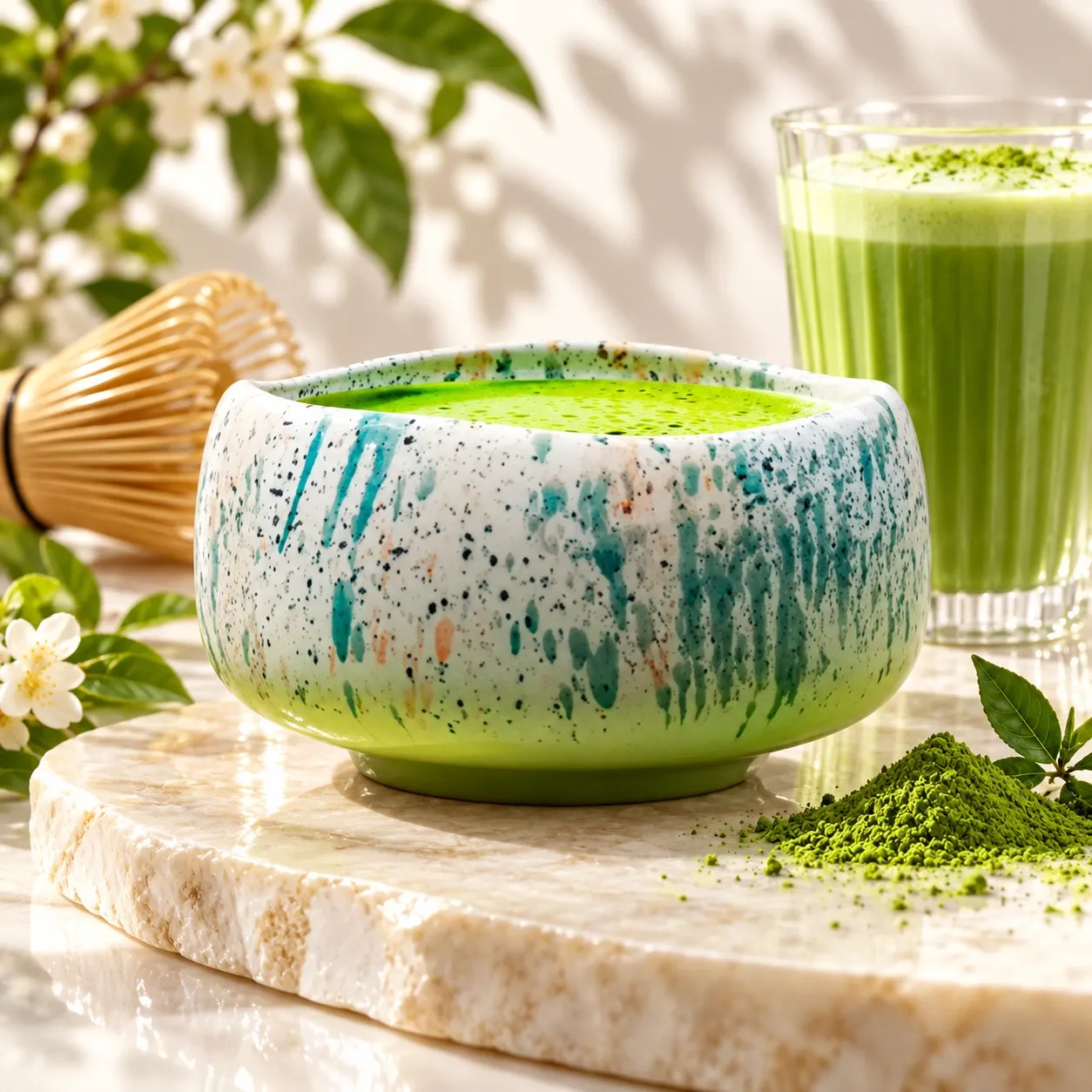
What a cup costs you, and what the menu can carry
Wholesale matcha is sold by the kilogram. Sakuro’s 2026 catalogue lists Finest at 480 PLN and Excellence at 690 PLN per kilogram net; converted at the National Bank of Poland rate of 13 November 2026 (4.4070 PLN to the euro) that is roughly the following. Treat it as an indicative conversion — the binding offer comes from Ewelina, and the euro rate moves.
| Order | Finest — per kg | Finest — per 2 g | Excellence — per kg | Excellence — per 2 g |
|---|---|---|---|---|
| 1 kg | approx. 109 € | approx. 0.22 € | approx. 157 € | approx. 0.31 € |
| 3 kg (−5%) | approx. 103 € | approx. 0.21 € | approx. 149 € | approx. 0.30 € |
| 5 kg (−10%) | approx. 98 € | approx. 0.20 € | approx. 141 € | approx. 0.28 € |
Twenty to thirty cents of powder per cup is the easy part. Milk, cup, lid and the thirty seconds of a barista’s time are what actually set the price, and the seasonal syrup adds a few cents more. We put the whole calculation together in what a matcha latte costs per cup. Two practical notes for December: use the grade that matches the drink — Finest for milk-based lattes, Excellence where the matcha is tasted on its own — and price the seasonal drink slightly above your standard latte, because the compote and the extra step are real work.
Speed in the queue, and the kilo bag between rushes
Three things decide whether matcha survives a busy service. First, pre-portioning: weigh 2 g into a small container at the start of the shift, twenty or thirty of them, and the barista scoops instead of weighing. Second, hot water on tap at the right temperature — a thermal jug filled at 80 °C in the morning, topped up twice, beats boiling the kettle for every cup and saves the drink from being scalded. Third, one person owns the matcha station during peak hours; splitting it across the espresso machine is how you get a queue.
Between rushes, the bag. Matcha oxidises as soon as air reaches it, and it picks up smells from anything aromatic nearby — keep it sealed, cool, dark and away from coffee and spices. Decant 200–300 g into an airtight working tin at the bar, refill it from the bag, and keep the bag itself closed in the dry store. Write the opening date on the bag and work through it in order. A dull, brownish powder makes a dull, brownish latte however good the leaf started out.
Ordering: kilos for the bar, tins for the counter
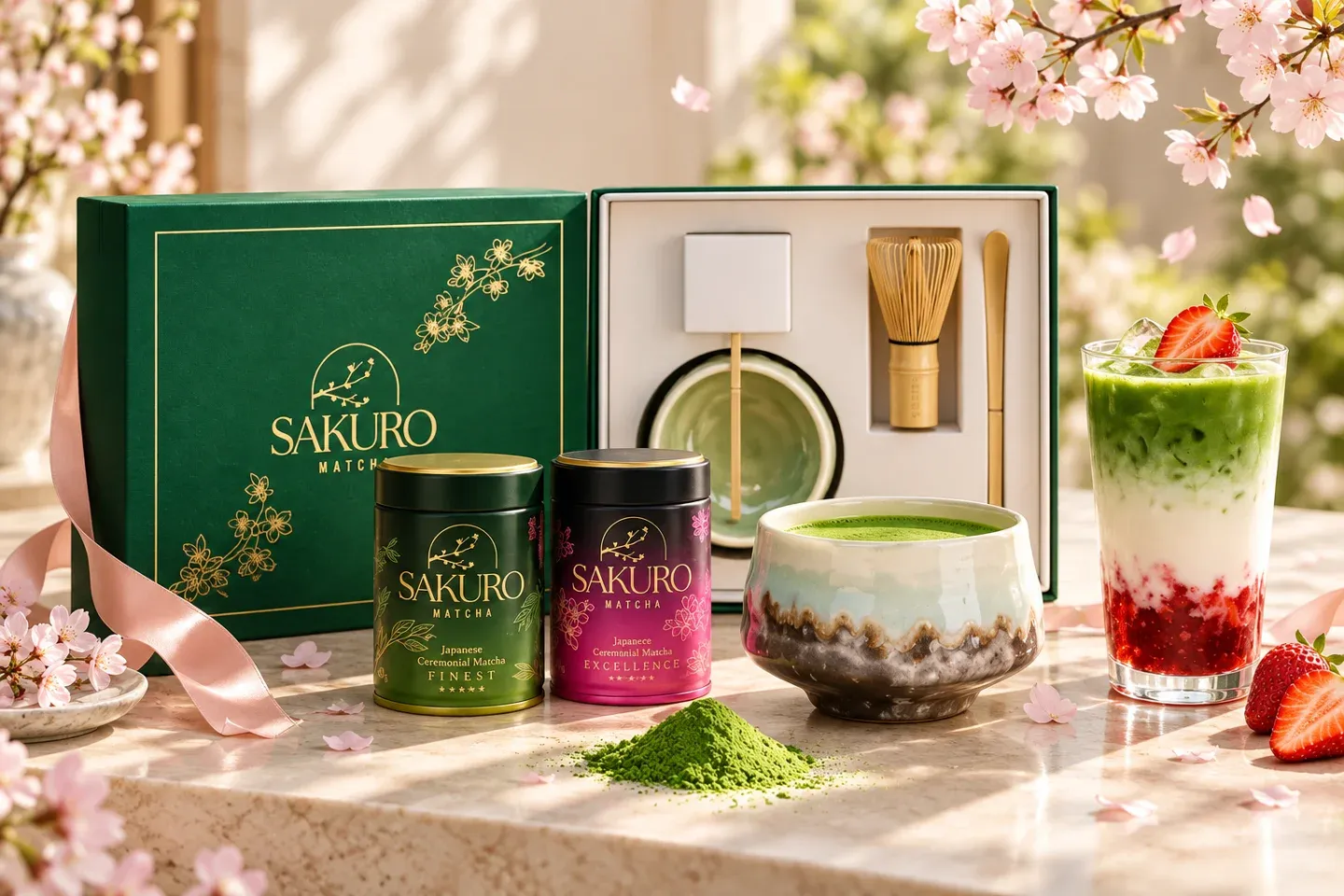
December sells two different things. Behind the bar you need kilograms; on the counter you need something a guest can take home or give away. The retail tins do the second job, and cafés buy them for the shelf next to the beans. Prices on yerbador.com on 13 November 2026:
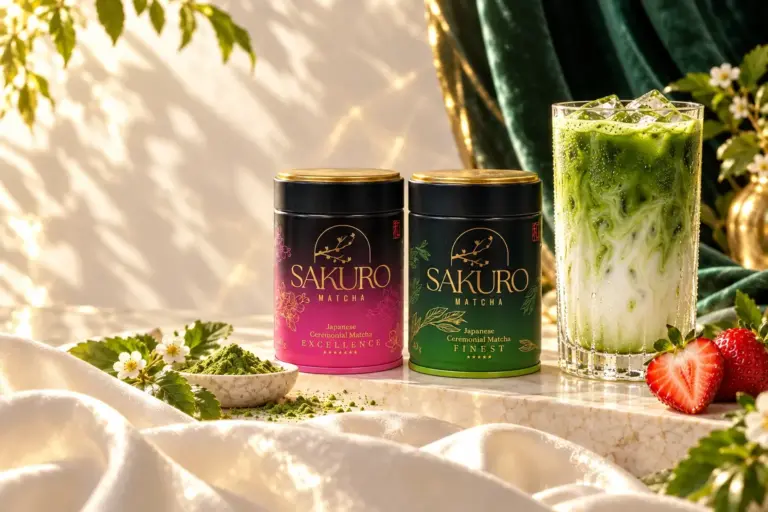
- Sakuro Matcha Finest, 40 g tin — 23.90 € — the everyday ceremonial grade for lattes
- Sakuro Matcha Excellence, 40 g tin — 26.90 € — sweeter, for matcha drunk straight
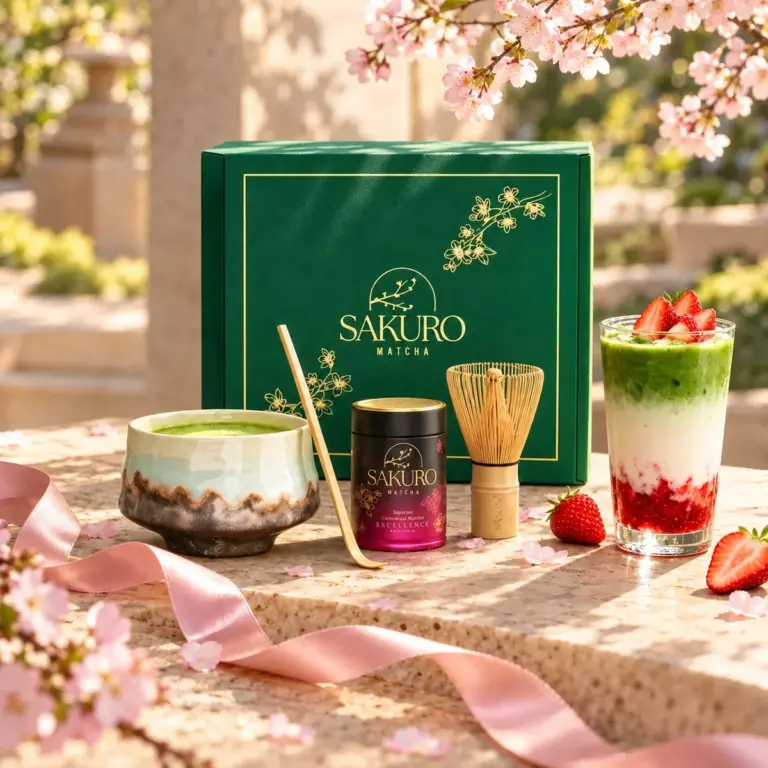
- Three Finest tins, 2+1 free — 46.90 € — the obvious gift three-pack
- Chasen, bamboo whisk — 14.90 € — pairs with a tin for a present under 40 €
Wholesale works in whole kilograms; the bag is 1 kg, three kilograms takes 5% off, five kilograms takes 10%. Shipping is from Poland, inside the EU. Both the matcha itself and tins for resale go through one person, which is what keeps it quick:
Ewelina — e-mail [email protected], phone +48 515 025 329. Tell her the grade, the number of kilograms and the delivery country, and she will send the binding offer with the current euro price. If you are not sure about the grade, say what you sell most of and she will tell you what comparable cafés order.
Questions cafés ask in November
How late can I order for December?
Order in November rather than in the first week of December. Shipping runs from Poland within the EU and the bottleneck in December is never the matcha, it is the parcel network. Ewelina will give you a realistic date with the offer.
Finest or Excellence for a Christmas menu?
Finest for anything with milk and syrup — the flavour has to carry through 200 ml of oat drink, and the price per cup stays sensible. Excellence for a short matcha served in a bowl or a small glass, where there is nothing to hide behind.
How much caffeine is in a matcha latte?
A 2 g serving contains roughly 60–70 mg of caffeine depending on the batch, so about the same ballpark as a single espresso. EFSA considers up to 400 mg a day safe for healthy adults and 200 mg for pregnant women; a guest ordering their third of the afternoon is worth a quiet word. The detail is here.
Can we prepare matcha in advance for the rush?
Pre-portioned 2 g doses, yes. A large jug of whisked matcha standing all morning, no — it separates and the colour goes flat within the hour. If you batch, make small amounts during the peak, keep them cold, and judge by colour and taste.
What if we sell less than we planned?
An unopened 1 kg bag stored cool and dark keeps its best-before date and January still has Veganuary and Dry January, both of which push alcohol-free and plant-based drinks. Matcha does not become useless on 27 December.
Discover our TOP products!
Your dream figure
Discover new flavors
Yerba mate with tea
Accessories
Superfoods



Certified raw honeys from Poland

Check the current price
free shipping
Up to 90 days
free returns
24 H
shipping