
Yerba Mate and Manganese – Is It a Good Source of This Mineral?
2026-08-25
Yerba mate and manganese is the last question in this series about minerals in the yerba mate leaf – earlier we broke down copper, zinc, iodine and sodium in a similar way. The rule is the same: we check what is really known about manganese content in the dried leaf and the infusion, what this mineral actually does for the body, and whether yerba even matters here in a daily diet.
Yerba mate and manganese – what the available data says
Manganese is sometimes omitted from plant composition tables, or given with a wide spread between studies, and yerba is no exception here. Some analyses of the yerba mate leaf indicate manganese content in the range of single milligrams per 100 g of dried leaves, others don’t isolate it as a separate item at all. We don’t have our own lab certificate with an exact manganese value for Yerbador’s dried leaves, so we won’t give a figure we’re not sure of – that’s a rule we stick to in every article in this series.
The reference intake value for manganese for an adult, as adopted under EU food labelling regulations, is 2 mg per day. Even with the most optimistic reading from published tables, the infusion alone from yerba mate delivers this mineral in an amount that’s hard to call a significant part of daily requirements.
Dried leaves vs. infusion – why it’s not the same number
As with copper and zinc in yerba – you drink an infusion poured with hot water through a bombilla, you don’t eat the leaf itself. The wet leaves stay in the matero and after a few cebadas end up in the bin, so what actually ends up in your cup is only part of what’s in the dry leaf. How much manganese passes into the water depends on the solubility of specific manganese compounds in a given batch of leaves, as well as on temperature and the number of infusions.
There are no reliable, repeatable studies that specifically isolate manganese in yerba mate infusion, unlike potassium or magnesium, where the data is much better documented. It’s safest to assume that the value in the infusion is lower than in the dry leaf, and to treat yerba mate as a drink to enjoy for its flavour and caffeine, not to fill mineral gaps.
What does the body need manganese for
Manganese has its place on the list of officially approved health claims in EU food law. It contributes, among other things, to normal energy-yielding metabolism, to the normal formation of connective tissue, to the maintenance of normal bones, and to the protection of cells from oxidative stress. It also plays a role in the normal functioning of the nervous system.
That’s a useful set of functions, but no single drink will replace it, especially when the data on its content in yerba mate is so uncertain. If you suspect a deficiency, the right path is to talk to a doctor and get a blood test, not to count matero rounds.
Pumpkin seeds or yerba mate – which one really gives you more manganese
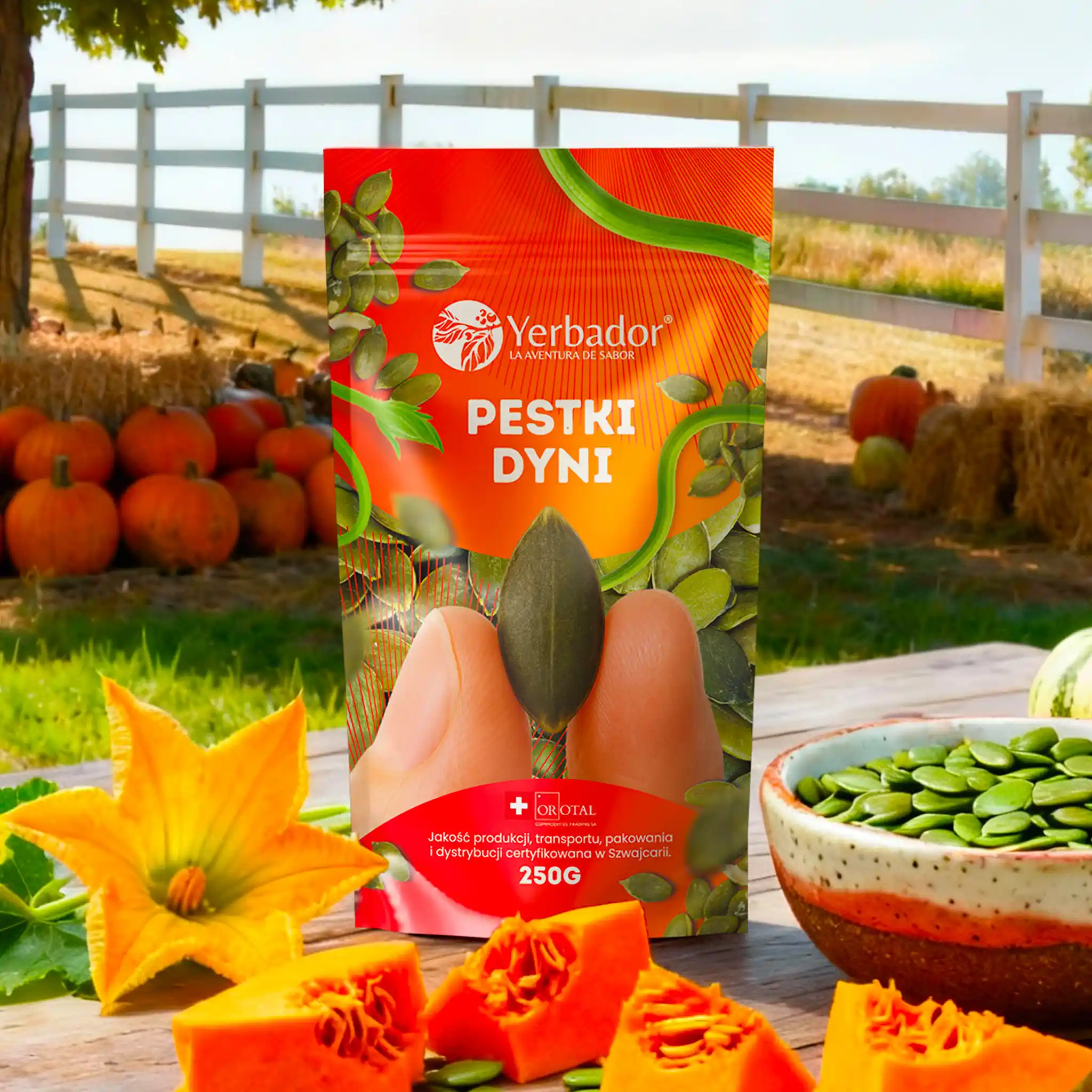
We offer pumpkin seeds, which are among the richest, commonly known sources of manganese in the diet – published nutrition tables give values reaching several milligrams per 100 g for them, which in practice exceeds the daily requirement in a single serving. That’s a completely different order of magnitude than what the infusion alone from yerba mate can provide.
A handful of pumpkin seeds in your porridge, yoghurt or salad really brings you closer to the daily manganese target, in a way that drinking matero simply can’t. Yerba mate remains what we reach for it most often – flavour, ritual and a sensible dose of caffeine.
Who should pay special attention to manganese in their diet
For most people on a varied plant-based diet, manganese takes care of itself – it’s found in nuts, seeds, whole grains and legumes, so a clear deficiency in a healthy person is rare. Slightly higher risk applies to people on very restrictive elimination diets that limit nuts, seeds and whole grain products at the same time.
There’s another side to the coin: people with chronic liver disease should be cautious about manganese supplementation, because excess of this mineral is removed mainly through bile, and with impaired liver function it can accumulate. This is yet another argument for not treating minerals as a “the more, the better” topic, but rather as a matter of balance.
How much yerba per day for this to matter
Since manganese from yerba is, at best, an uncertain, small addition, the amount of infusion should be chosen primarily with caffeine in mind, not minerals. For a healthy adult, 2–3 servings a day, spread throughout the day and not consumed right before bed, is a range that most people tolerate well. If manganese is specifically what you’re after, a handful of pumpkin seeds will work far more effectively than an extra round in the matero.
Where our dried leaves come from
The mineral composition of yerba also depends on where the leaf comes from and how it was dried. Our Yerbador dried leaves come with an analysis certificate from the Institute of Natural Fibres and Medicinal Plants (IWNiRZ, chromatography and authenticity confirmation), compliance with the reference standard confirmed by J.S. Hamilton, and testing for heavy metals, pesticides and PAHs carried out by GBA Polska. On top of that, there are ECOCERT and Organic Brasil certificates as well as HACCP throughout the production chain. In a topic where the manganese figures themselves are uncertain, what matters more is that the dried leaves come from a verified source, free from the risk of contamination that could throw off any mineral balance.
Our products to try
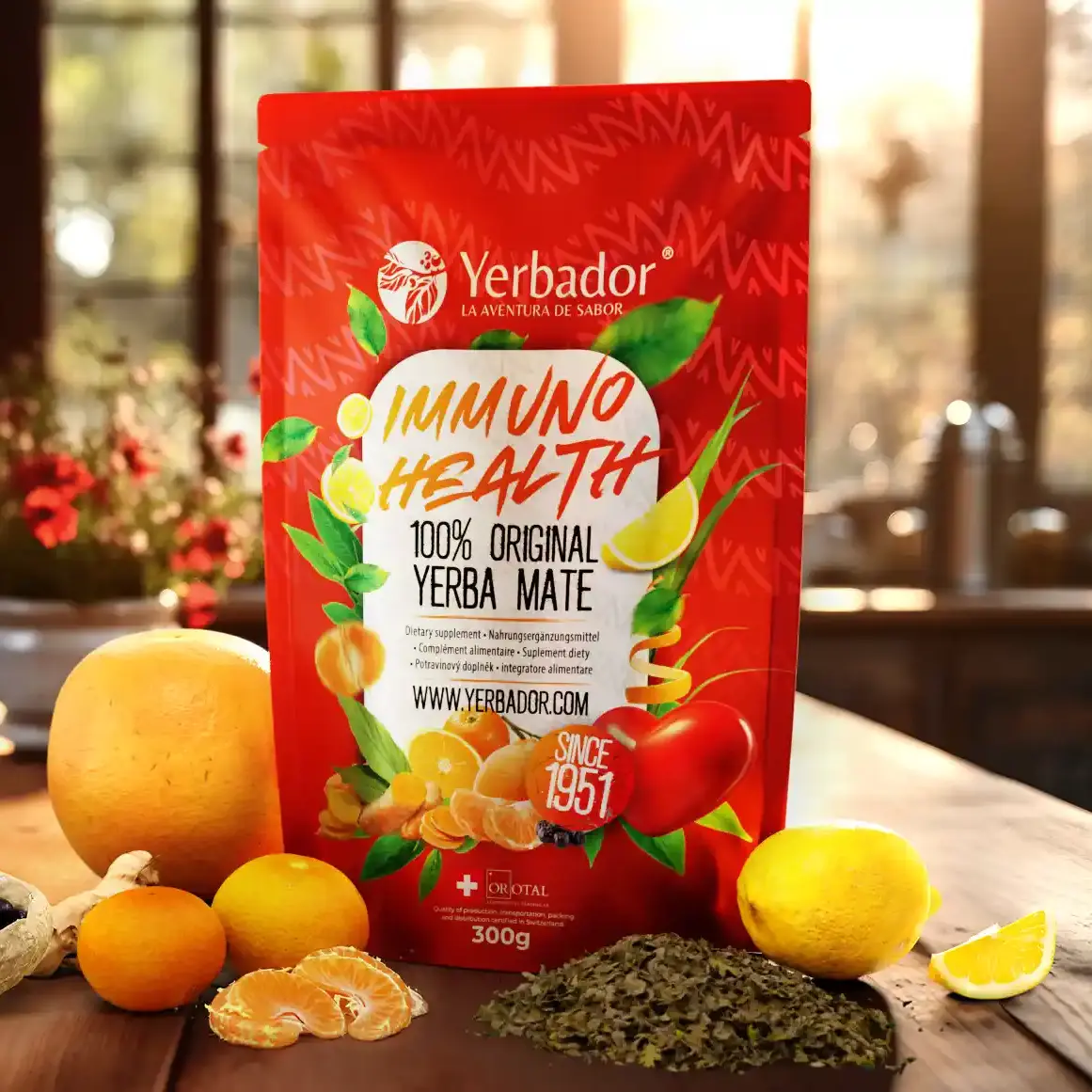
If you want real support for your manganese intake, reach for the pumpkin seeds in our range. If you simply want to introduce yerba mate as a light addition to your daily ritual, check out our Immuno blend with added green barley and sunflower seeds.
Check out the product: Pumpkin Seeds 250 g
Check out the product: Yerba Mate Immuno
Yerba mate and manganese – frequently asked questions
Is yerba mate a good source of manganese?
There’s no clear-cut answer backed by hard data. Available leaf analyses are inconsistent, and even with an optimistic reading, the infusion provides only a small amount of this mineral. Pumpkin seeds are a much more reliable and richer source.
How much manganese is in yerba infusion?
There’s no single reliable figure – published studies rarely isolate manganese specifically for the infusion, as opposed to the dry leaf. We’d rather state this plainly than present an uncertain number as a fact.
Do pumpkin seeds have more manganese than yerba?
Yes, definitely. Pumpkin seeds are among the richest, well-documented sources of manganese in a typical diet, while in yerba this mineral appears in uncertain and probably small amounts.
Who should be cautious with manganese?
Primarily people with chronic liver disease, because excess manganese is removed mainly through bile and can accumulate when liver function is impaired. For a healthy person on a typical diet, this rarely needs attention.
Is it worth drinking more yerba to get more manganese?
No, that’s not an efficient approach. A handful of pumpkin seeds will provide far more than several extra rounds of matero, and the extra caffeine from drinking yerba more often isn’t worth it.
Discover our TOP products!
Your dream figure
Discover new flavors
Yerba mate with tea
Accessories
Superfoods
Certified raw honeys from Poland

Check the current price
free shipping
Up to 90 days
free returns
24 H
shipping