
Acai Berries – Properties, What They Help With and How to Eat Them?
2026-08-02
For years, acai berries were reserved for surfers on the Brazilian coast and regulars at trendy breakfast bars. Today, the purple powder sits on more and more Polish kitchen shelves — and rightly so, since few fruits combine such an intense colour with such a solid nutritional content. In this guide, we check what properties acai berries have, how many calories they really have, what they help with, and how to eat them so they don’t end up in the cupboard next to other “healthy purchases” that no one ever reaches for.
Where do acai berries come from and why do we buy them in powder form?
Acai is the fruit of the Euterpe oleracea palm, growing in the flooded areas of the Amazon. They look like dark purple, almost black balls the size of a grape, of which only a thin layer of flesh around a large pit is edible. And this is where the logistical problem begins: fresh acai spoils within a day or two of being picked. It can’t be packed into a crate and shipped by boat to Europe like bananas.
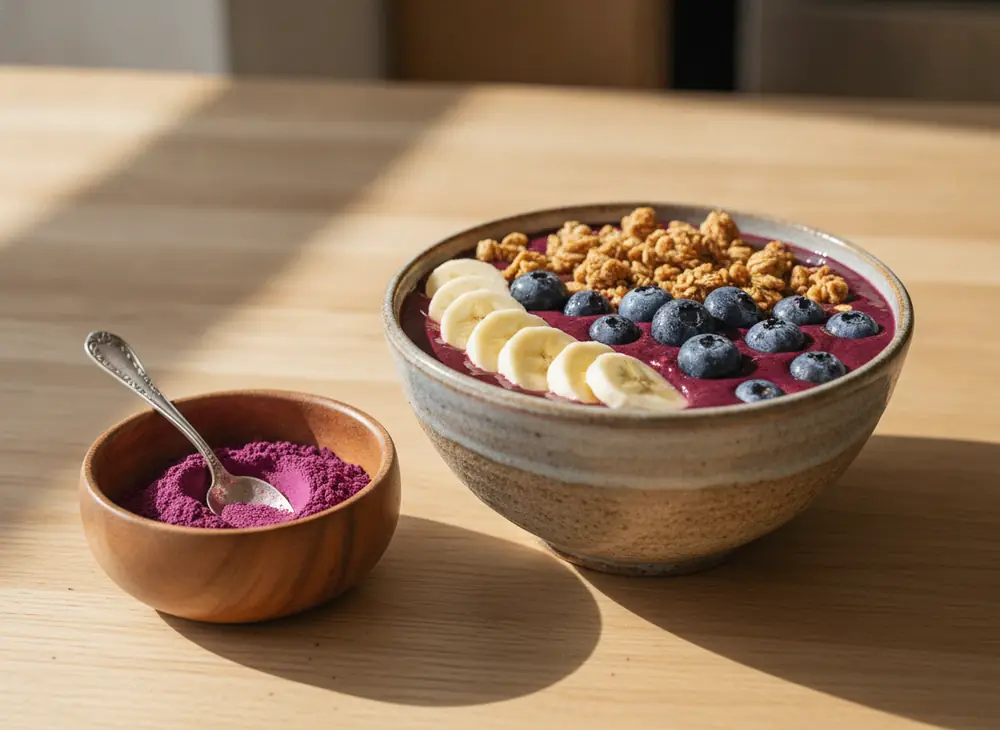
That’s why almost all the acai leaving Brazil is processed on site — the pulp is separated from the seeds, then dried and ground into a fine powder. This form preserves the fruit’s colour, taste and nutrients, and it’s also convenient: a spoonful of powder replaces a portion of fruit that you couldn’t buy fresh at a Polish greengrocer’s anyway. The deep purple colour of the powder is actually the first quality test — the darker and more “wine-like” the colour, the better.
Acai berries – properties. What’s hiding in the purple powder?
Let’s take a look at the nutritional value table of our powder made from 100% acai berries, because numbers speak louder than adjectives here:
- Fibre: as much as 44 g per 100 g of powder. That’s a value that makes bran look modest. In practice, just one teaspoon a day adds a real boost to digestive comfort and the feeling of fullness after a meal — we wrote more about the role of fibre in the article on the effect of yerba mate on digestion.
- Vitamin C — supports proper immune function. It won’t replace common sense in autumn, but a regular portion in your diet is a solid foundation (more on daily support for the body in the article about yerba mate and immunity).
- Vitamins A and E — 100 g of powder contains 767 µg of vitamin A and 25 mg of vitamin E. This duo works to support the skin and protect cells, which is why acai so often appears in the diets of people who care about their complexion.
- Calcium: 260 mg per 100 g — a rarity among fruits, and a nice bonus for those cutting down on dairy.
- Anthocyanins and polyphenols — plant pigments that give acai its colour. They’re the reason purple berries ever landed on the radar of food researchers in the first place.
One honest note before the miraculous claims start rolling in: acai berries are food, not medicine. They don’t “heal”, don’t “take ten years off your age” and won’t replace vegetables on your plate. What they do is more modest, but real — they boost the nutritional value of the meals you’re already eating.
How many calories do acai berries have? The numbers, no spin
The label says: 534 kcal per 100 grams. Sounds like a candy bar, right? Except nobody eats a hundred grams of acai powder at once. A standard serving is 3 g, i.e. a flat teaspoon — which is about 16 kcal. Less than half of a small mandarin.
Where does that calorie count on paper come from? From fat — acai has 33 g per 100 g, most of which is unsaturated fat (only 9 g is saturated). That’s unusual for a fruit, and it’s exactly why acai smoothies fill you up better than juice from a carton. The second impressive number: sugars are just 1 g per 100 g. For comparison — an apple has ten times more, weight for weight. If you’re watching your figure with our guide to yerba mate and weight loss, acai fits right into the plan, guilt-free.
Acai and yerba mate — a purple breakfast, green energy
A common question from our customers: does acai give you a boost? No. Acai berries contain no caffeine — leave the real energy to yerba (60–120 mg of caffeine per matero) or guarana. Acai plays in a different league: it’s concentrated “building fuel”, not ignition.
In practice, this division of roles works great. In the morning, a matero of yerba for a clear head, paired with a bowl of acai porridge that keeps you full until lunch. In the evening — when reaching for caffeine is no longer worth it (we explain why in the article yerba mate and sleep) — a purple smoothie passes the test with flying colours. A similar duo is formed by moringa, only in a green, veggie version. Acai is the option for those who prefer fruit.
How to eat acai berry powder? Three tried-and-tested ways
The basic rule from the packaging: 3 g of powder per 200 ml of water, juice, milk or yogurt — mix well. The taste is intensely fruity, with a deep, slightly wine-like note reminiscent of a cross between blueberry and a hint of cocoa. No need to mask it, rather choose good company for it. Second rule: anthocyanins don’t like high temperatures, so add acai to cold or lukewarm dishes, not to boiling porridge.
Start by trying these three
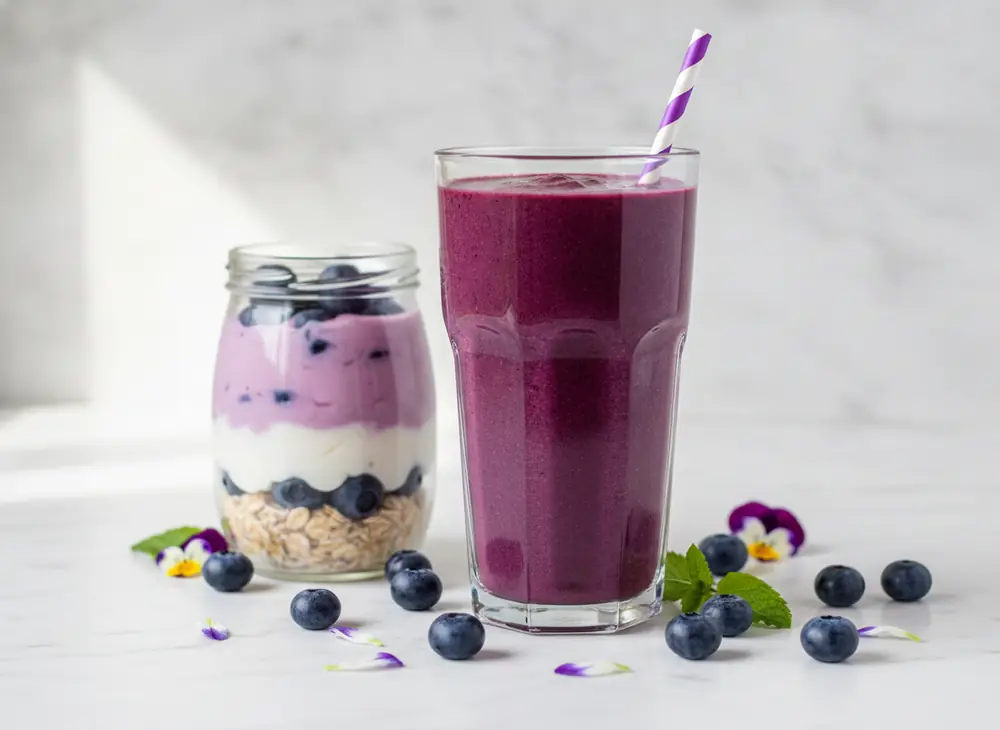
- Purple yoghurt in 30 seconds: a cup of skyr or natural yoghurt, a teaspoon of acai, a spoonful of granola. It looks like a dessert you’d order at a fancy breakfast bar.
- Overnight acai oats: pour milk over oats in the evening, in the morning mix in a teaspoon of powder, add banana and blueberries. Zero cooking, so the colour and nutrients stay intact.
- “Brazilian” smoothie: banana, a glass of plant-based milk, a teaspoon of acai, a handful of frozen blueberries. Thick, cold, unbeatable in the heat.
How to recognise good acai powder?
The superfood market can be wild, so here are three things we check ourselves before anything makes it into our offer. First — ingredients: 100% acai berries and not a gram more. Some cheap powders “improve” the taste with maltodextrin or sugar; in our nutrition table, sugars stand at 1 g per 100 g, because that’s exactly what the fruit itself contains. Second — colour: deep, dark purple. A faded, greyish-pink powder is a sign of old harvest or poor drying. Third — a sensible weight and price per 100 g, not per “serving”, as this makes it easier to compare offers. You can check how we approach quality control for our entire range on our research and certificates page.
The purple shelf at Yerbador — where to start
If acai is going to take the lead role for you, give it a rhythm section. These three products go well together — and all three fit within a breakfast budget.
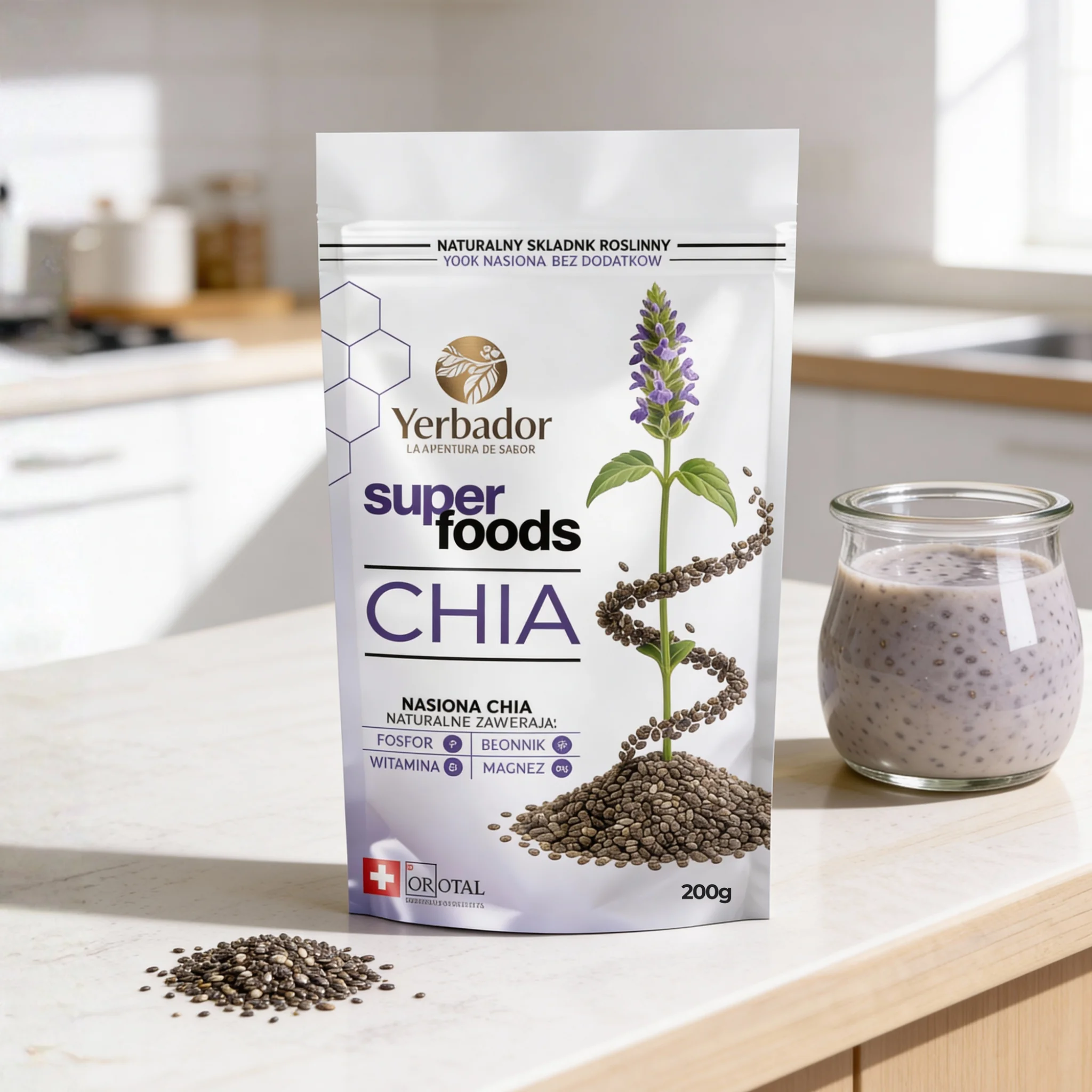
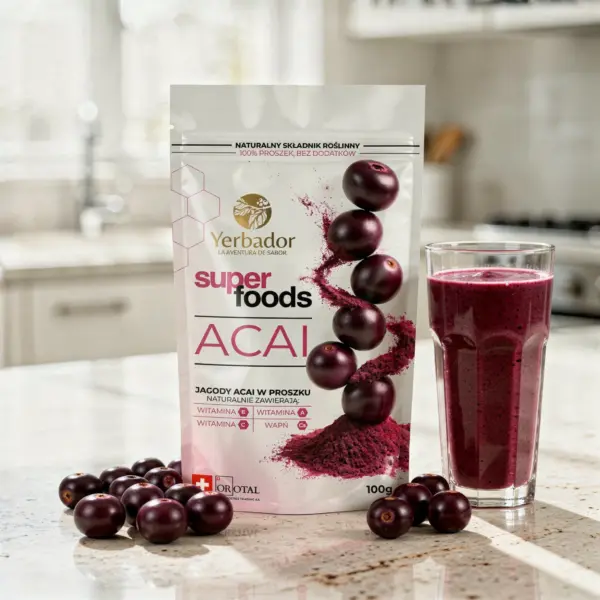
Acai Berry Powder – 100 g – Source of Vitamins A, C and E
The hero of this article: 100% powdered acai berries from the Amazon, with no sugar or fillers. Vitamins A, C and E, calcium and 44 g of fibre per 100 g — and a serving is just 16 kcal. Available in 100 g — check the current price.
Check out the product: Acai Berry Powder – 100 g – Source of Vitamins A, C and E
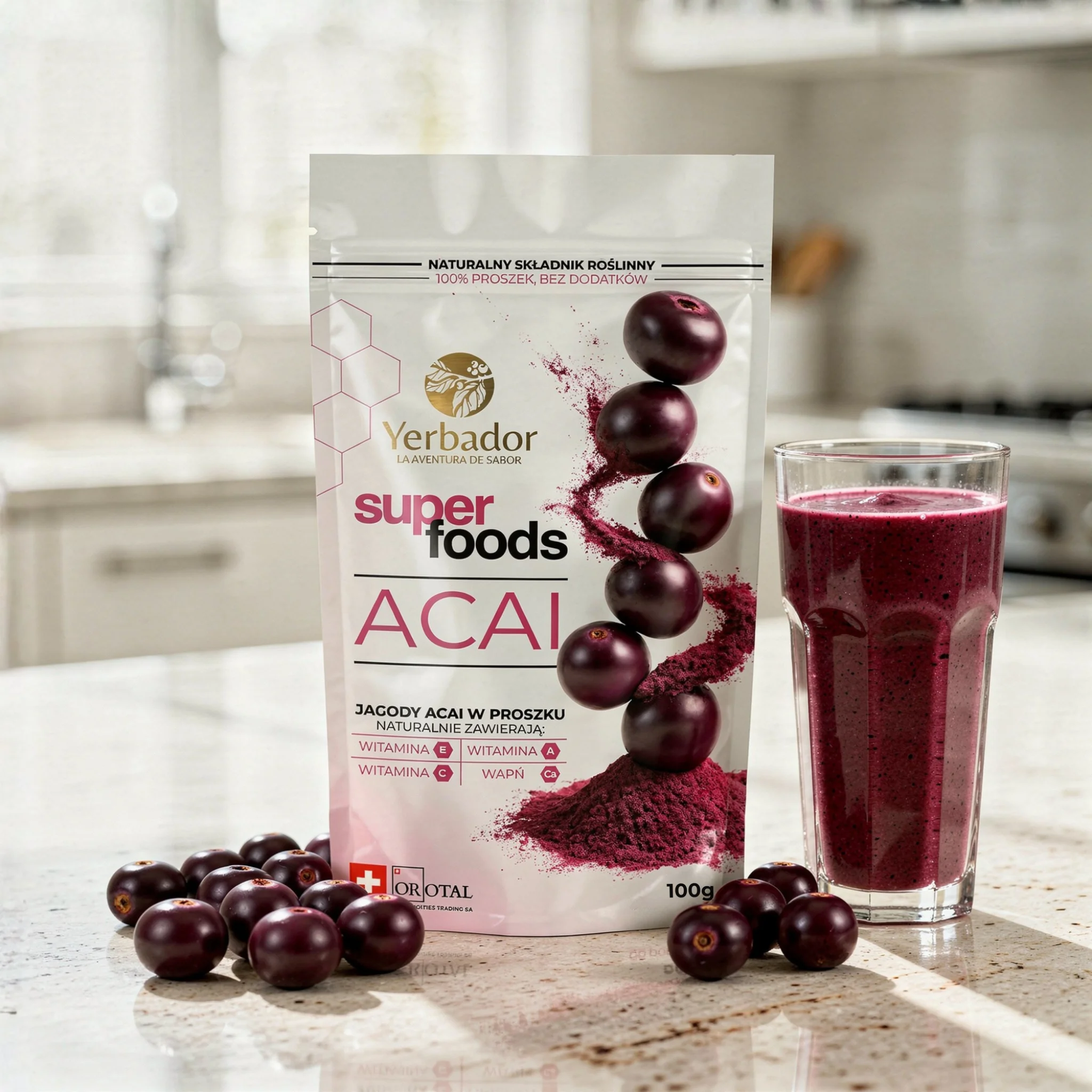
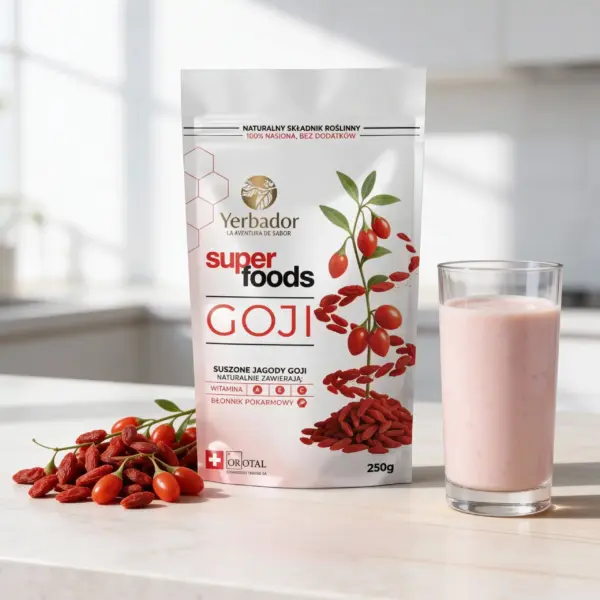
Dried Goji Berries – 200 g – Source of Vitamins A, C and E
Dried goji berries for snacking and sprinkling over porridge — a sweet-and-sour counterpoint to winey acai. Just like acai, they provide vitamins A, C and E. Available in 200 g.
Check out the product: Dried Goji Berries – 200 g – Source of Vitamins A, C and E
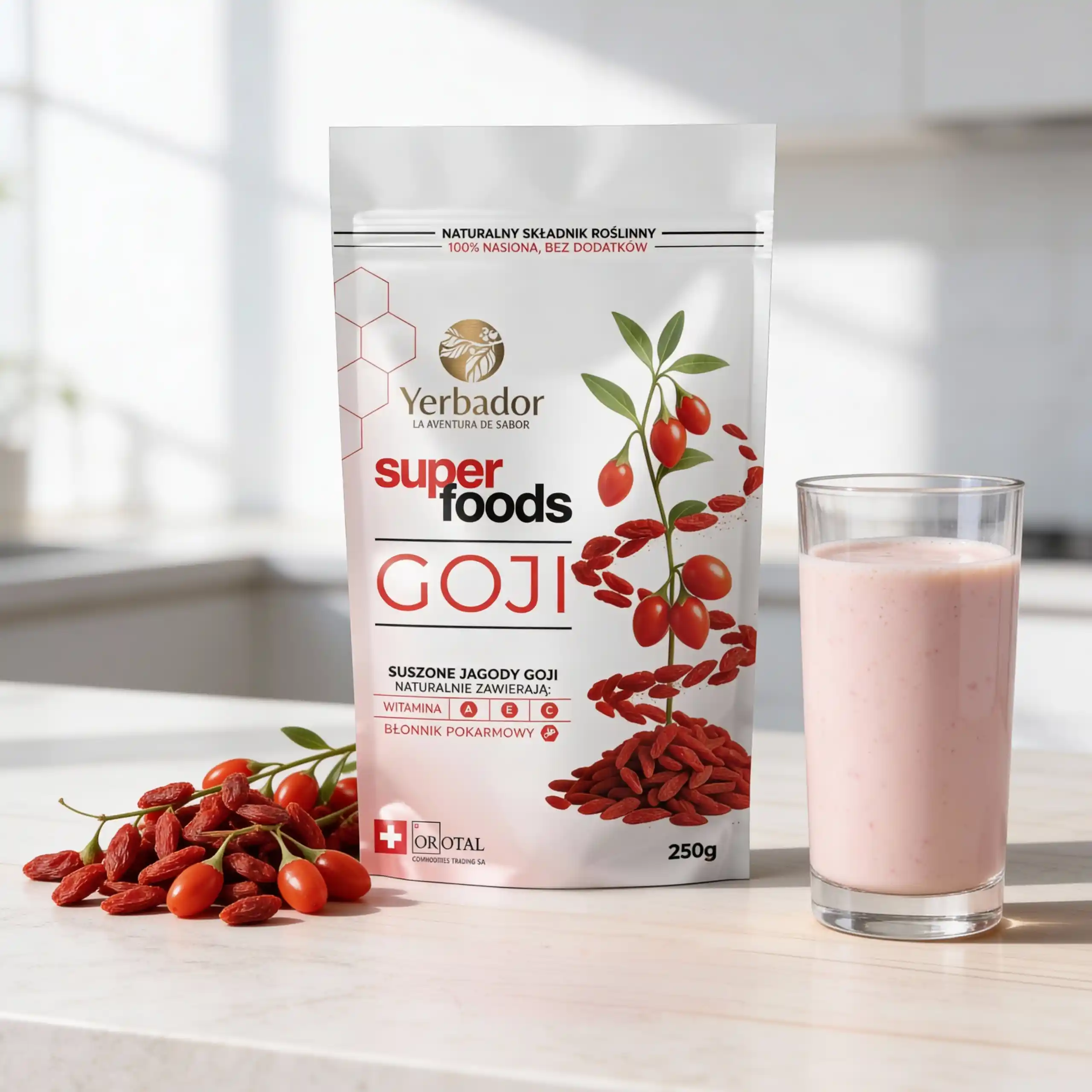
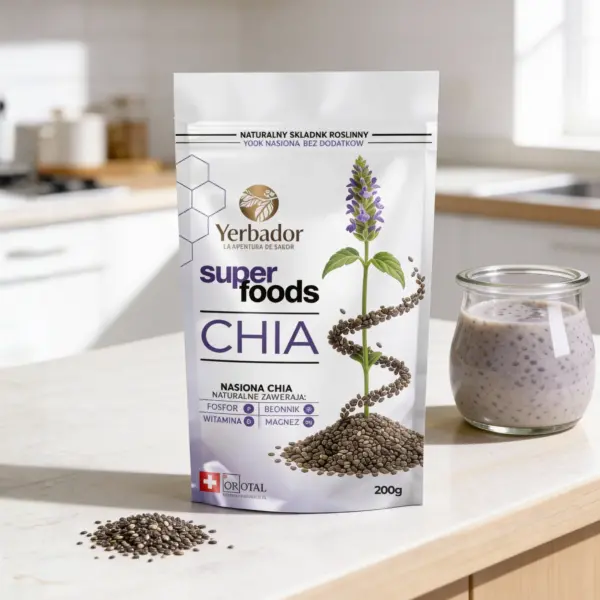
Chia Seeds – 200 g – Natural Source of Fibre and Vitamin B1
Chia seeds — the classic of purple puddings. Mix with milk and a teaspoon of acai, leave overnight and the dessert is ready in the morning. A natural source of fibre. Available in 200 g.
Check out the product: Chia Seeds – 200 g – Natural Source of Fibre and Vitamin B1
For cafés and shops: acai bowl is a magnet for customers
A purple bowl in the display sells itself before anyone reads the menu — and the food cost per portion of acai powder is literally a few pennies. Do you run a café, breakfast bar or shop and want superfoods and wholesale yerba mate? Get in touch and we’ll prepare a quote for your venue.
FAQ — acai berries in questions and answers
Do acai berries help you lose weight?
On their own they won’t burn a single gram — no product does that. They help indirectly: a serving has only 16 kcal, almost zero sugar, and the fibre and unsaturated fats extend fullness after a meal, making it easier not to snack. Paired with a calorie deficit and exercise — an honest ally.
Does acai contain caffeine?
No. Acai berries contain no caffeine, so you can eat them even in the evening. If you’re looking for a natural boost, that’s the role of yerba mate and guarana — acai is about nutritional value, not energy.
How much acai powder can you eat per day?
A standard serving is 3 g, i.e. one flat teaspoon, once a day. At this level the powder genuinely enriches your diet, and a 100 g pack lasts over a month of daily use.
What do acai berries taste like?
Intensely fruity, with a deep, slightly wine-like note — something between a forest berry and delicate cocoa. In yoghurt and smoothies the flavour is distinct but not overpowering; most people will like it from the first spoonful.
The purple powder from the Amazon isn’t a magic pill — it’s something better: a simple way to make an ordinary breakfast work a little harder for you. A bowl of oatmeal with acai in the morning, a matero of yerba for work, and the topic of “how to start eating healthier” is sorted in practice, not just in plans. Check out the shop and see how purple looks on your table.
Discover our TOP products!
Your dream figure
Discover new flavors
Yerba mate with tea
Accessories
Superfoods
Certified raw honeys from Poland

Check the current price
free shipping
Up to 90 days
free returns
24 H
shipping