
10 matcha drinks ranked by calories and caffeine
2026-11-18
A bowl of plain matcha is about 7 kcal. The same 2 g of powder in a whole-milk latte comes to roughly 129 kcal, and in a matcha bubble tea with pearls and syrup it lands near 260 kcal. Calories in matcha drinks come from what you pour over the powder, almost never from the powder itself.
Caffeine behaves the other way round. It rides along with the powder only, so the scoop decides it: 2 g carries roughly 38–89 mg. Milk, ice, fruit purée and tapioca move the calorie count by hundreds and the caffeine by nothing. Ten drinks are ranked below, lightest first, with the exact weights each number was calculated from.
- Lightest: usucha, 2 g of matcha in 70 ml of water — about 7 kcal.
- Everyday latte: 2 g + 200 ml oat drink — about 97 kcal; with whole milk about 129 kcal.
- Heaviest: matcha bubble tea with pearls and sugar — about 260 kcal.
- Caffeine per 2 g serving: 38–89 mg, from a measured range of 18.9–44.4 mg per gram of powder (Kochman et al., Molecules 2021;26(1):85).
- Milk never changes the caffeine. Only the dose does, and a shot of espresso in a dirty matcha adds about 64 mg.
- EFSA safety figures: up to 400 mg of caffeine a day for healthy adults, up to 200 mg in one go; 200 mg a day in pregnancy.
Ten matcha drinks ranked by calories and caffeine
Ten matcha drinks, from 7 kcal to about 260 kcal per serving, all built on the same 2 g of powder except koicha, which uses 4 g. The caffeine column barely moves across the whole table, and that single fact explains more about matcha drinks than any calorie app will.
| # | Drink | Serving as made | Calories | Caffeine | Where the calories sit |
|---|---|---|---|---|---|
| 1 | Usucha, hot | 2 g matcha + 70 ml water | 7 kcal | 38–89 mg | The powder, nothing else |
| 2 | Iced matcha, water base | 2 g + 200 ml cold water, ice | 7 kcal | 38–89 mg | The powder, nothing else |
| 3 | Koicha, thick | 4 g + 40 ml water | 14 kcal | 76–178 mg | Double powder, no additions |
| 4 | Almond matcha latte | 2 g + 200 ml almond drink | 37 kcal | 38–89 mg | 30 kcal of almond drink |
| 5 | Matcha lemonade | 2 g + 150 ml sparkling water + 20 ml lemon juice + 8 g sugar | 43 kcal | 38–89 mg | 32 kcal of sugar |
| 6 | Dirty matcha | 2 g + 25 ml espresso + 150 ml oat drink | 76 kcal | 102–153 mg | 68 kcal of oat drink; espresso adds caffeine, not calories |
| 7 | Oat matcha latte | 2 g + 200 ml oat drink | 97 kcal | 38–89 mg | 90 kcal of oat drink |
| 8 | Whole-milk matcha latte | 2 g + 200 ml whole milk | 129 kcal | 38–89 mg | 122 kcal of milk |
| 9 | Iced strawberry matcha latte | 2 g + 150 ml whole milk + 60 g strawberry purée | 155 kcal | 38–89 mg | 92 kcal of milk plus 10 g of sugar in the purée |
| 10 | Matcha bubble tea | 2 g + 150 ml milk + 15 g sugar + 60 g cooked pearls | about 260 kcal | 38–89 mg | Pearls about 100 kcal, sugar 60 kcal |
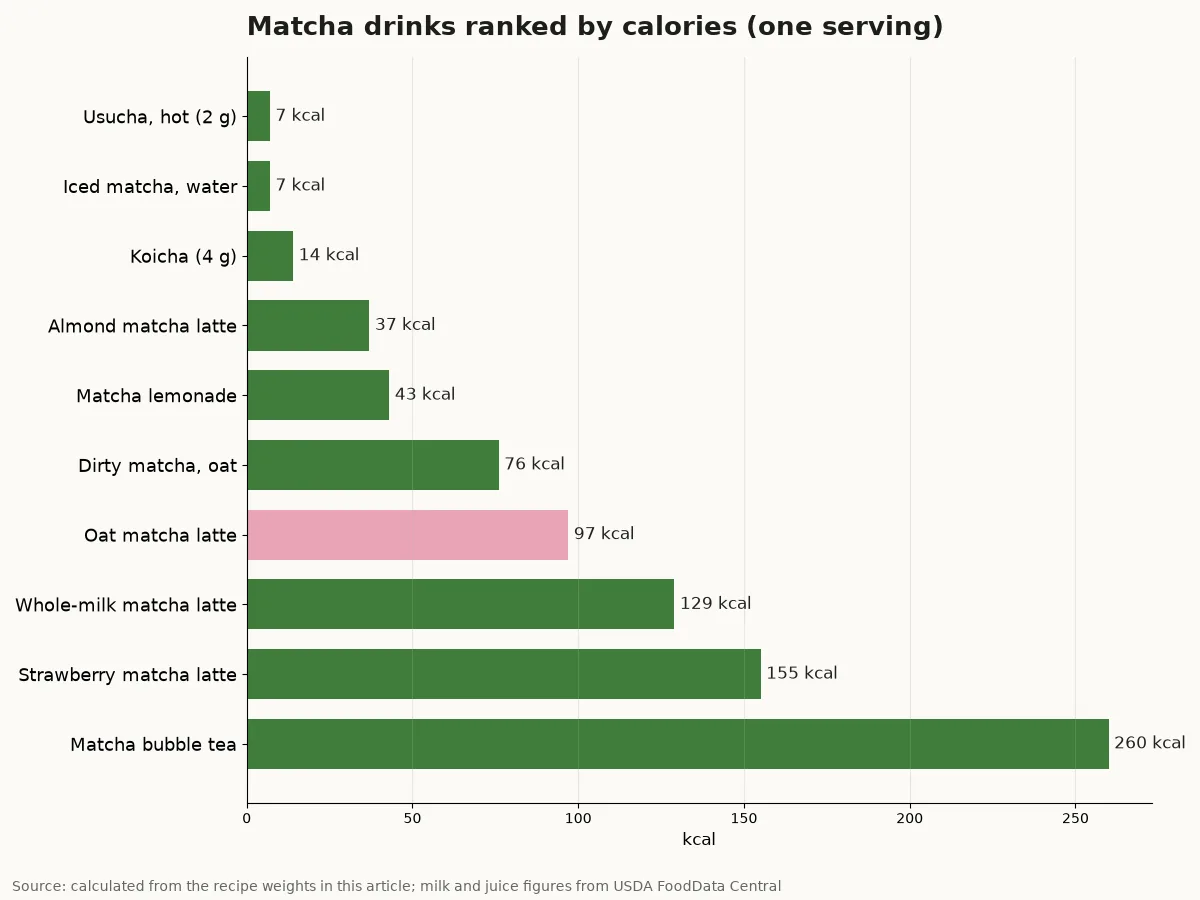
Read the chart from the top and you can see where the line sits. Everything above the oat latte is a tea; everything below it is a small meal. The step that costs the most is not the milk choice, it is the moment sugar, fruit purée or pearls arrive in the glass.
The calorie figures come from the recipe weights in the next sections, using published nutrition values for milk, juice and sugar (USDA FoodData Central). Your tin of oat drink may read 42 or 59 kcal per 100 ml instead of 45, so treat every number as the right order of magnitude rather than a label value. The ranking order does not change if you swap one brand for another.
Why the milk sets the calorie count
Milk accounts for 85–95 % of the calories in any matcha latte. Two grams of matcha contribute about 7 kcal, while 200 ml of whole milk contributes 122 kcal. Changing the milk is therefore the only edit that moves the number much, and it is the first thing to look at before anyone starts counting the powder.
| Milk in a 200 ml latte | kcal per 100 ml | In the glass | Whole drink with 2 g matcha | What it does to the taste |
|---|---|---|---|---|
| Whole milk, 3.25 % fat | 61 | 122 kcal | 129 kcal | Roundest body, hides bitterness, best microfoam |
| Semi-skimmed, 2 % fat | 50 | 100 kcal | 107 kcal | Cleaner, greener flavour, thinner foam |
| Oat drink, barista type | 45 | 90 kcal | 97 kcal | Sweetish, carries matcha well, the café default |
| Soy drink, unsweetened | 38 | 76 kcal | 83 kcal | Firm foam, a beany note some people notice |
| Almond drink, unsweetened | 15 | 30 kcal | 37 kcal | Thin body, lets every edge of the matcha through |
| Water, iced | 0 | 0 kcal | 7 kcal | Nothing to hide behind, so the grade shows |
One practical consequence: if you are drinking a matcha latte every morning with whole milk and want to lose a hundred calories a day without giving anything up, the almond swap does it in one move. The trade is real, though. Almond drink has no body, and a mediocre matcha tastes rough in it. That is the whole reason cafés in Germany and the Netherlands settled on oat as the house option — it sits between the two and forgives a lot.
Sweetened plant drinks are the quiet problem. A sweetened oat or almond carton can carry 60–70 kcal per 100 ml instead of 45 or 15, which puts a supposedly light drink above the whole-milk version. Check the carton once; the difference is bigger than any choice you make about the matcha.
Where the caffeine actually comes from
Caffeine in a matcha drink comes from the powder and from nothing else, so the number depends on the scoop, not the cup size. Published measurements put matcha powder at 18.9–44.4 mg of caffeine per gram (Kochman et al., Molecules 2021;26(1):85), which makes the usual servings easy to work out.
- 1 g — a light iced matcha: 19–44 mg
- 2 g — the standard bowl and the standard latte: 38–89 mg, middle of the range near 63 mg
- 4 g — koicha, the thick ceremonial preparation: 76–178 mg
- Dirty matcha — 2 g plus a single espresso: 102–153 mg
A single espresso sits at about 64 mg, so a standard matcha serving is roughly one espresso. That is the honest comparison, and it holds whether the matcha ends up in 70 ml of water or 300 ml of iced oat drink. Diluting a drink does not dilute its caffeine, which is why a huge iced matcha and a small bowl can keep you awake the same amount. More on the arithmetic in our piece on how much caffeine is in matcha.
The EFSA reference points are worth keeping in mind if matcha is not your only source. The European Food Safety Authority considers up to 400 mg a day safe for healthy adults, single doses up to 200 mg of no concern, and 200 mg a day the limit during pregnancy. Four standard bowls land well inside the daily figure; four koicha preparations, made at the top of the measured range, would not. If you are pregnant, two servings a day is a sensible ceiling, and you should talk to your midwife or doctor about the rest of your diet.
Decaffeinated matcha does not exist in any meaningful form. You drink the whole leaf, so you drink the whole caffeine content. The only lever is the scoop: 1 g makes a perfectly good iced matcha, especially in the afternoon.
Three matcha drinks under 50 kcal
Three drinks come in under 50 kcal a serving: hot usucha at 7 kcal, iced matcha on a water base at 7 kcal, and matcha lemonade at about 43 kcal. All three take under three minutes and none of them needs a milk frother.
Usucha — hot matcha, 7 kcal
- Sift 2 g of matcha into a dry bowl. Sifting is not fussiness; unsifted powder clumps and the clumps taste bitter.
- Add 70 ml of water at 70–80 °C. Boiling water scalds the tea and turns it harsh.
- Whisk with a chasen in a quick W motion for 15–20 seconds, wrist loose, until the foam goes fine and even like cappuccino foam.
- Drink it within a minute or two. Matcha separates as it stands, and reheated matcha is a different, flatter drink.
Total time: about two minutes including sifting. This is the drink that shows what you bought — nothing to hide behind, no milk, no sugar, no ice.
Iced matcha on water, 7 kcal
- Whisk 2 g of matcha with 30 ml of cool water into a smooth paste, 10 seconds.
- Fill a 300 ml glass with ice, pour in 170 ml of cold water.
- Pour the matcha paste over the ice and stir once. It looks better if you do not stir it twice.
Cold water extracts less of the bitter compounds, so iced matcha on water tastes sweeter than the same powder served hot. It is the drink to make in July, and the one to make when you want the caffeine without the 120 kcal of milk.
Matcha lemonade, about 43 kcal
- Whisk 2 g of matcha with 30 ml of cool water.
- Stir 8 g of sugar into 20 ml of fresh lemon juice until it dissolves.
- Combine in a glass with ice and top with 150 ml of sparkling water. Pour slowly or the fizz carries the matcha over the rim.
The sugar is doing the work here: 8 g is 32 of the 43 kcal. Cut it to 4 g and the drink is 27 kcal and still pleasant, because lemon and matcha already balance each other. Lemon juice also keeps the colour bright for longer, which matters if you are making a jug for a table of four.
The everyday middle: oat latte, whole milk and dirty matcha
The three drinks most people order sit between 76 and 129 kcal: dirty matcha at about 76 kcal, an oat matcha latte at about 97 kcal, and a whole-milk matcha latte at about 129 kcal. These are the drinks worth getting right, because they are the ones repeated five mornings a week.
Matcha latte, hot or iced — 97 kcal with oat, 129 kcal with whole milk
- Sift 2 g of matcha, whisk with 30 ml of water at about 75 °C for 15 seconds until there is no grain left on the bottom.
- Heat 200 ml of milk or oat drink to 60–65 °C. Hotter than that and milk goes flat and papery.
- Pour the milk into the matcha, not the other way round, and keep the last centimetre of foam for the top.
- For the iced version: 2 g whisked with 30 ml cold water, 200 ml cold milk over ice, matcha poured last so it makes that green layer.
Time: three minutes hot, two cold. Our full method, with the ratios for a 400 ml takeaway cup, is in the matcha latte recipe.
Dirty matcha — 76 kcal, 102–153 mg of caffeine
A dirty matcha is a matcha latte with a shot of espresso poured through it. The espresso adds about 64 mg of caffeine and two calories, which makes it the only drink on the ranking where the caffeine jumps without the calories following. Build it like the iced latte, then pour a single shot over the back of a spoon so the layers stay visible for a minute.
Most people who drink it are after the caffeine of a double espresso with the texture of a latte. Measured honestly, that is what it is: 102–153 mg in a 175 ml glass. Keep it to the morning.
The heavy end: strawberry latte and bubble tea
An iced strawberry matcha latte runs about 155 kcal and a matcha bubble tea about 260 kcal, which puts both closer to a snack than to a tea. Neither number comes from the matcha; it comes from sugar, fruit and starch.
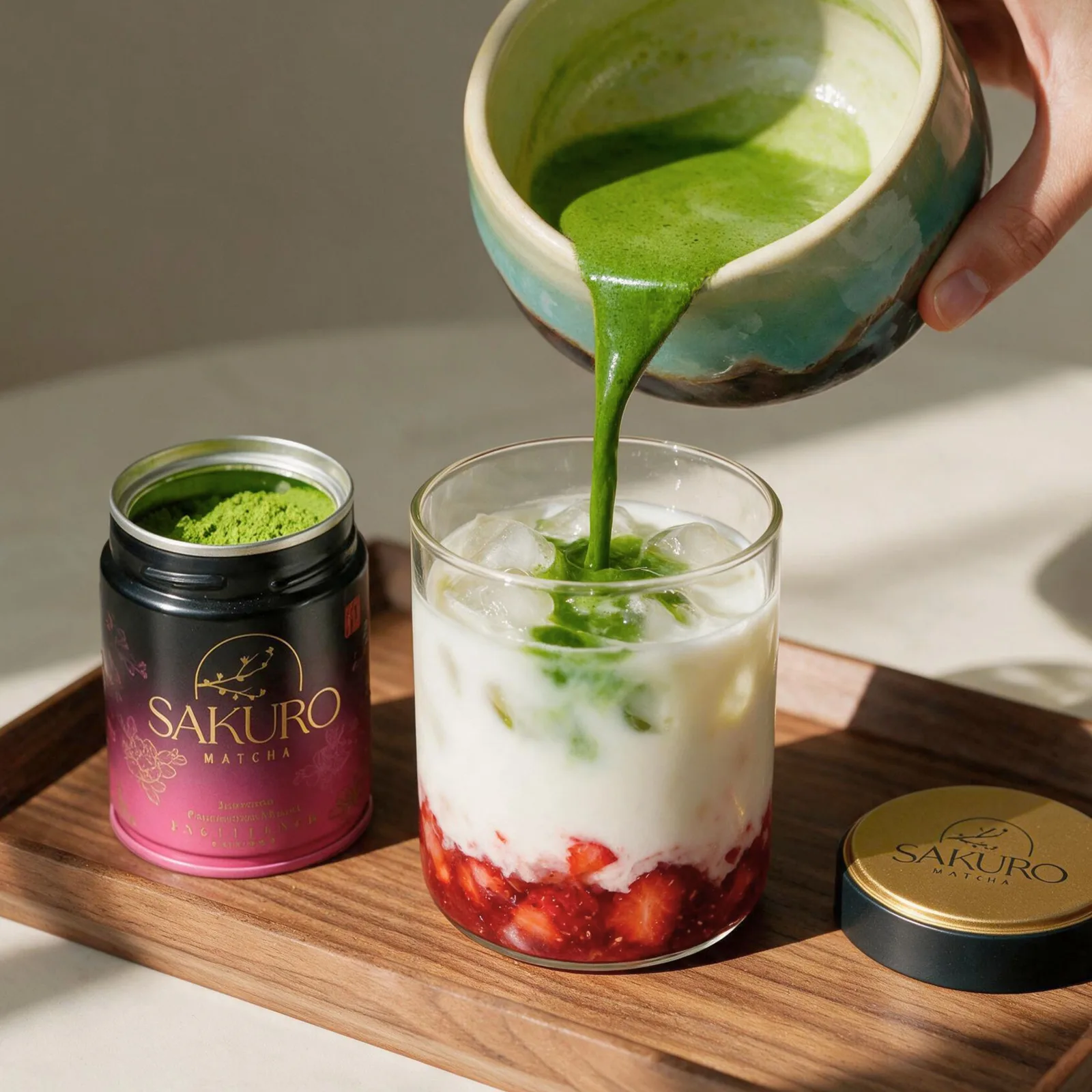
Iced strawberry matcha latte, about 155 kcal
- Crush 50 g of strawberries with 10 g of sugar and leave them for five minutes until the juice runs. That is your purée, roughly 60 g.
- Spoon it into the bottom of a 350 ml glass, add ice, pour 150 ml of cold milk.
- Whisk 2 g of matcha with 30 ml of cold water and pour it over the top.
Drop the sugar to 5 g and you are at 135 kcal with no real loss, because ripe strawberries bring their own sweetness. Our step-by-step version, with four fruit variations, is in the iced strawberry matcha latte recipe.
Matcha bubble tea, about 260 kcal
Tapioca pearls are the reason this one tops the ranking. Sixty grams of cooked pearls, which is a modest scoop, carry roughly 100 kcal, and they are usually soaked in sugar syrup on top of whatever sweetener goes into the drink. Add 15 g of sugar and 150 ml of milk and the glass holds about 260 kcal, with the same 38–89 mg of caffeine as a plain bowl of matcha.
Shop versions run higher. A 500 ml bubble tea with a double portion of pearls and a sweetened base can pass 400 kcal, and no amount of ceremonial-grade powder changes that. If you like the drink, the honest move is to treat it as dessert rather than as tea.
How to take 100 kcal out of any matcha drink
| Swap | Calories saved | What you give up |
|---|---|---|
| Leave out the pearls | about 100 kcal | The chew, which is most of the point of bubble tea |
| Whole milk to almond drink | 92 kcal | Body and foam; the matcha grade starts to matter |
| Milk to iced water | 122 kcal | Creaminess; you gain a cleaner tea flavour |
| Whole milk to oat drink | 32 kcal | Very little, which is why cafés default to oat |
| Halve the syrup, 15 g sugar to 7 g | 32 kcal | Sweetness you stop noticing after four days |
Two of those swaps together take a 260 kcal drink below 130. None of them touches the caffeine, which stays exactly where the scoop put it.
Which matcha belongs in which drink
Grade changes the taste of a matcha drink, not its calories or its caffeine. A ceremonial powder and a cheap culinary one both give roughly 7 kcal per 2 g and both sit inside the same 18.9–44.4 mg per gram range. What changes is how much the drink needs covering up.
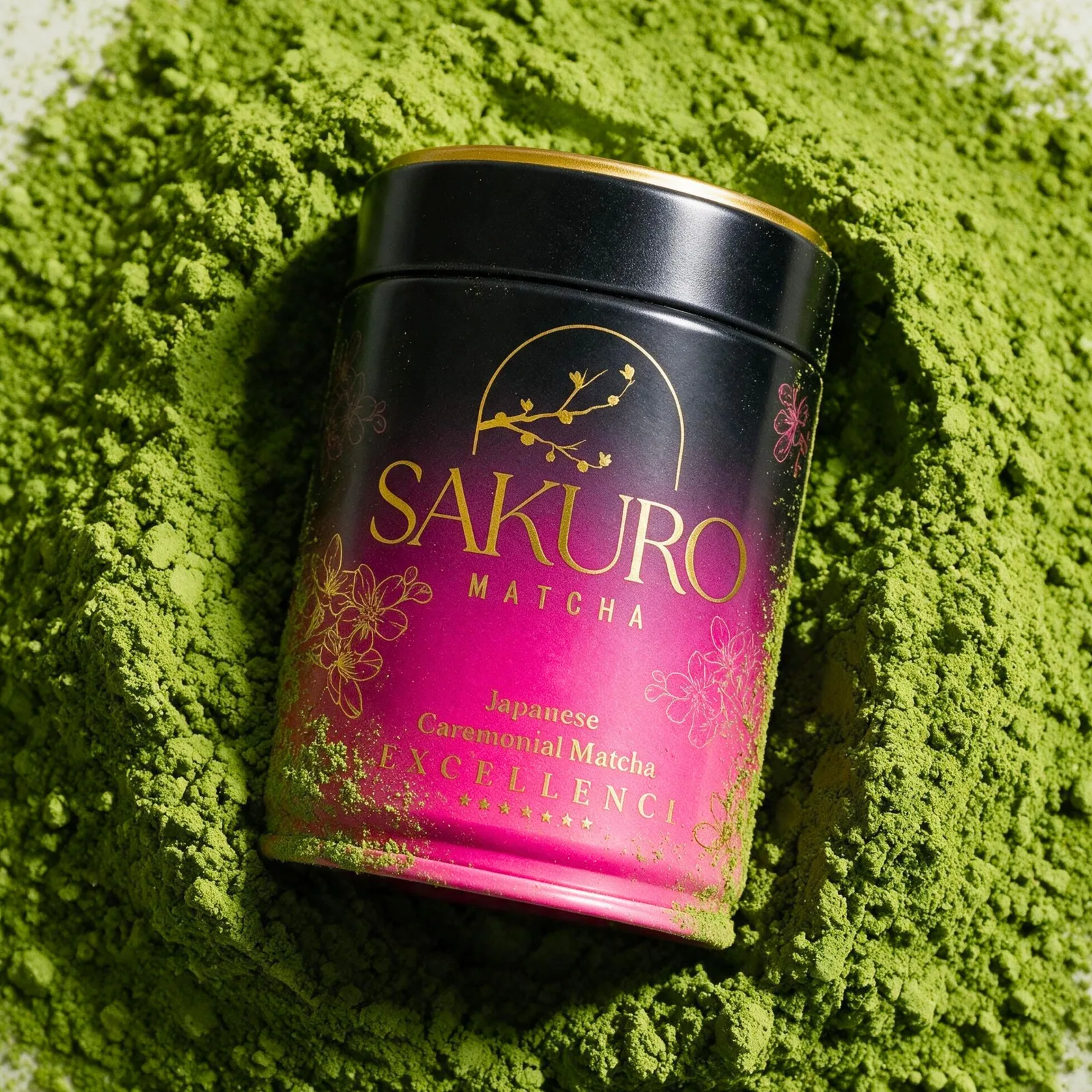
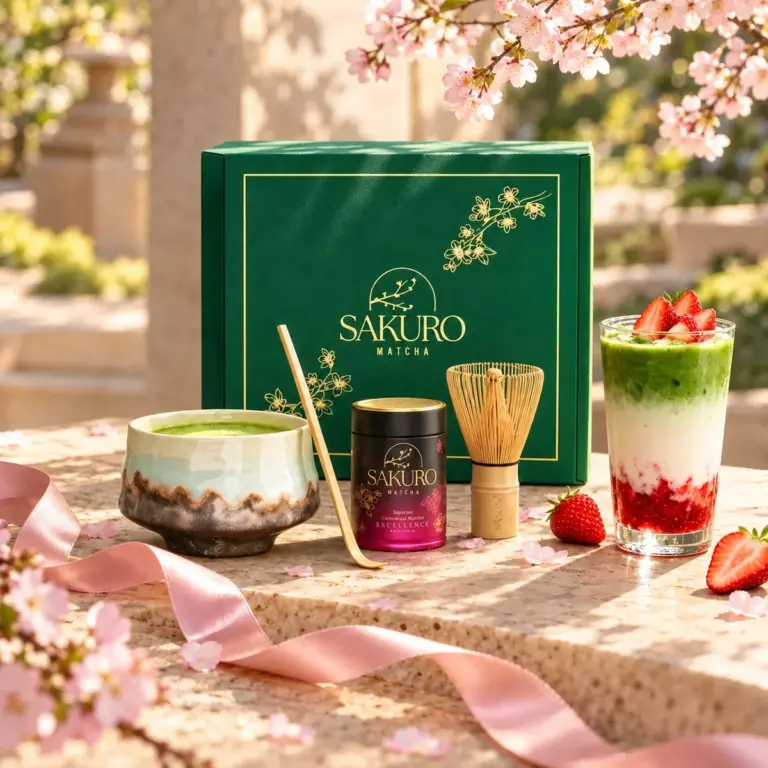
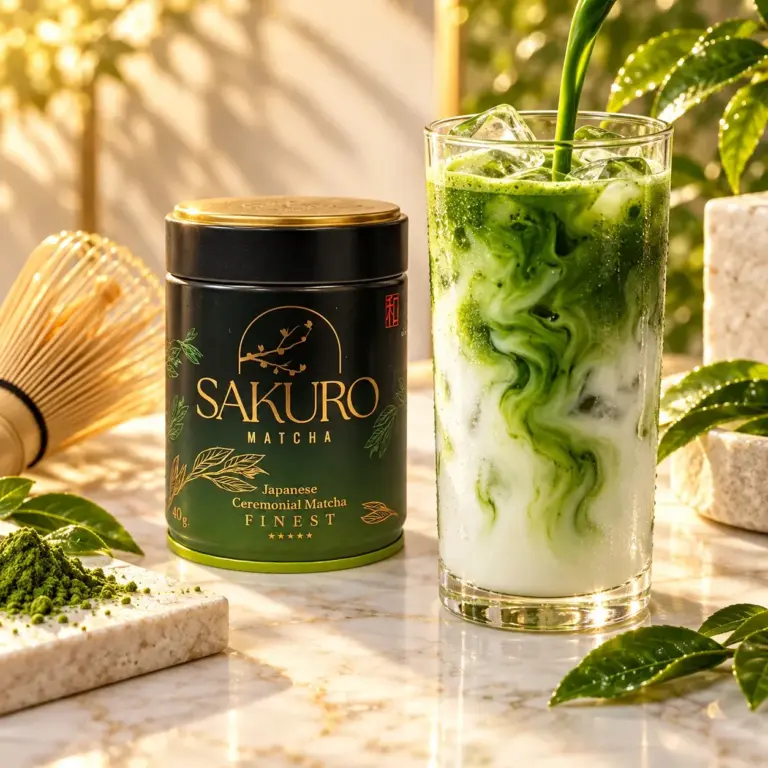
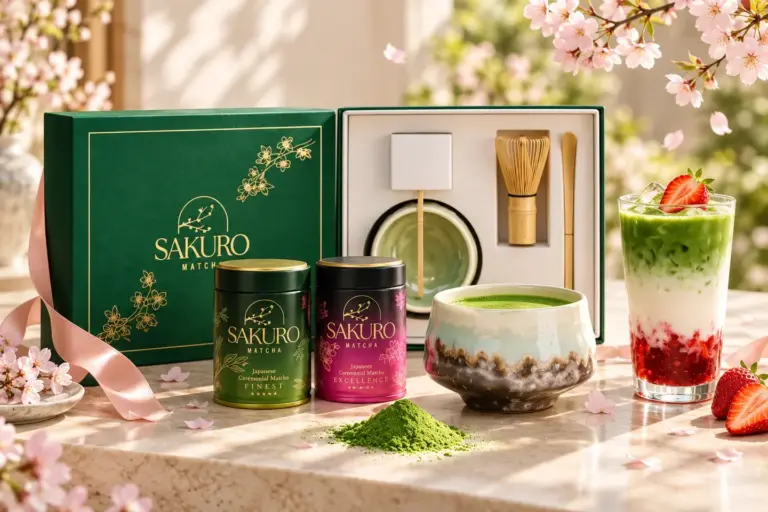
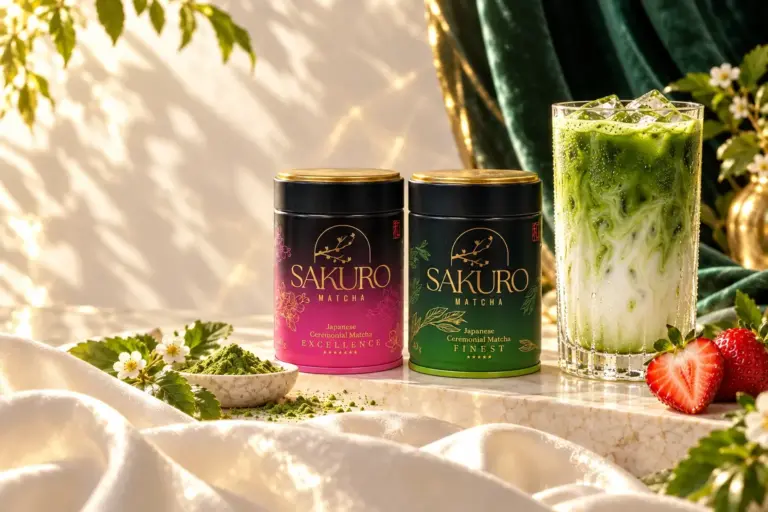
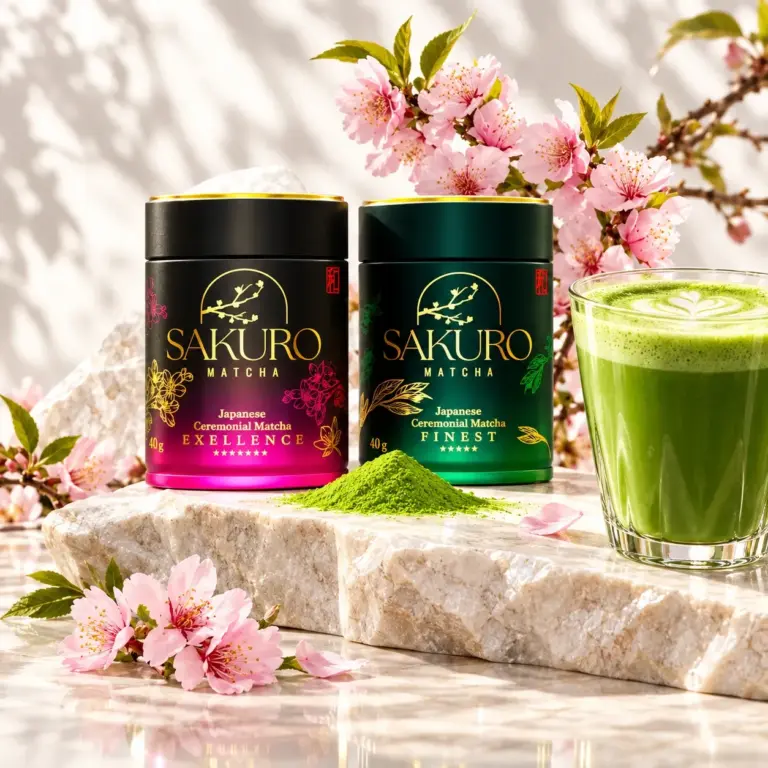
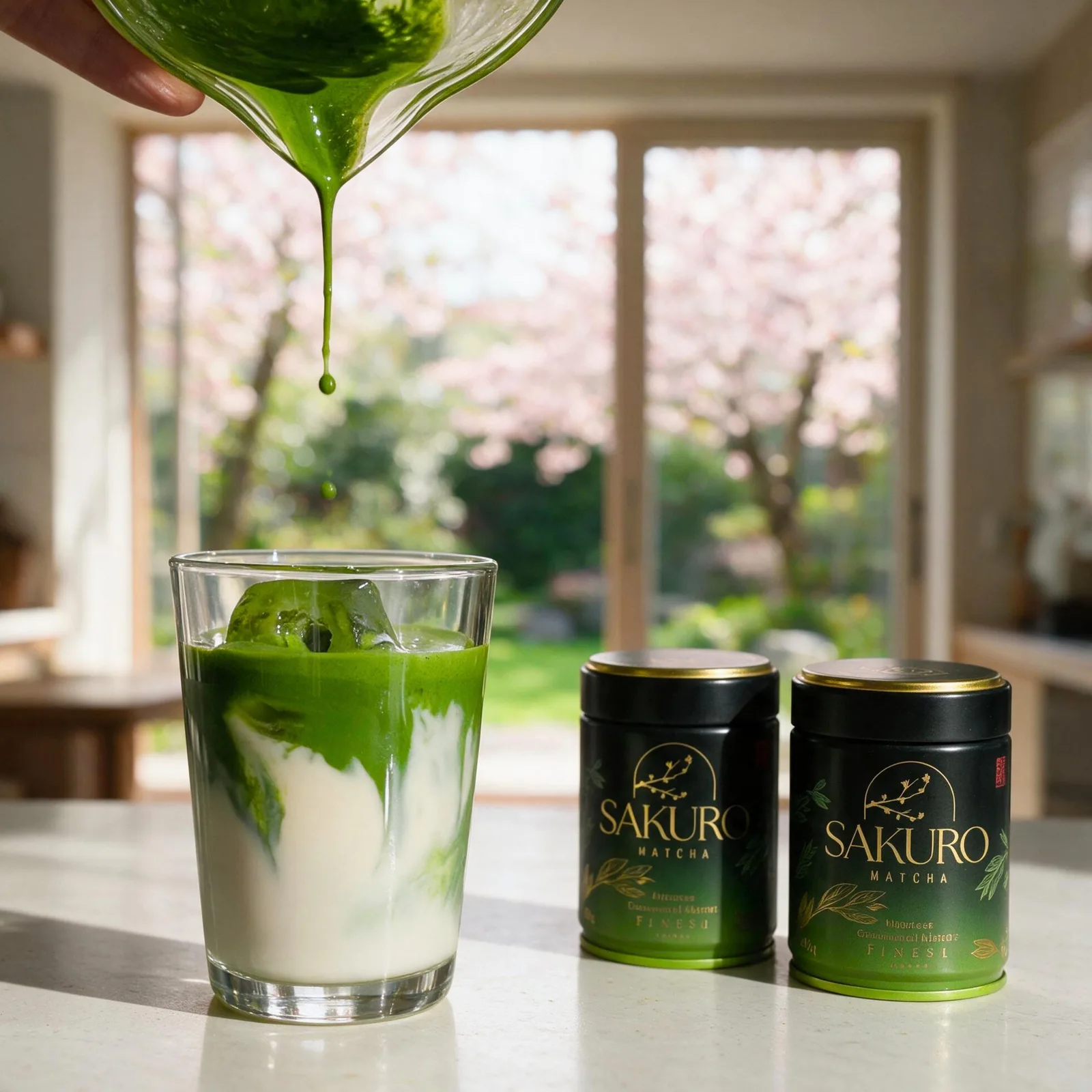
Sakuro Matcha Finest is a Japanese ceremonial-grade matcha from Shizuoka in a 40 g tin, about 23.90 €, which is 20 servings at 2 g, or about 1.20 € a cup. It is the one to use in lattes, lemonades and anything with fruit, where part of the flavour is coming from somewhere else anyway.
Sakuro Matcha Excellence, also 40 g and about 26.90 €, is the finer of the two: sweeter, less edge, built for usucha and koicha where there is no milk to lean on. If you cannot decide, the Finest and Excellence pair is about 46.90 € for both tins, and a side-by-side bowl of each tells you more than any description. Prices are from our shop on the day this was published; the product page always shows the current one.
One more thing worth buying once: a bamboo chasen whisk, about 14.90 €. A fork will mix matcha, but it will not aerate it, and the difference in foam is visible in the first five seconds. For how the grades differ in colour, taste and price per cup, see our matcha grades ranking.
Cafés and offices buying by the kilo work from different numbers: Sakuro Matcha Finest is about 109 € per kg net and Excellence about 157 € per kg net, shipped from Poland within the EU, which brings a 2 g serving down to roughly 0.22 € and 0.31 €. A 1 kg bag is 500 servings, with 5 % off from 3 kg and 10 % off from 5 kg. These are indicative conversions of our Polish catalogue prices at the current NBP rate; for a binding quote write to Ewelina at [email protected] or call +48 515 025 329.
Questions people ask about calories and caffeine in matcha
How many calories are in a matcha latte?
About 97 kcal with 200 ml of oat drink, 107 kcal with semi-skimmed milk and 129 kcal with whole milk, counting 2 g of matcha at 7 kcal. A syrup pump adds another 30–40 kcal. Almost all of it is the milk.
Which matcha drink has the fewest calories?
Plain usucha, 2 g of matcha whisked in 70 ml of water, at about 7 kcal. Iced matcha on a water base is the same drink with ice and comes to the same 7 kcal, which makes it the lightest cold option on any café menu.
Does matcha have more caffeine than coffee?
Per serving they are close. A standard 2 g matcha serving carries 38–89 mg of caffeine, and a single espresso about 64 mg, so a bowl of matcha is roughly one espresso. A 250 ml filter coffee is usually higher than either.
Do matcha calories change with the grade?
No. Ceremonial and culinary powders both give about 7 kcal per 2 g and sit in the same caffeine range. Grade changes flavour, colour and how much sugar a drink needs, which is where it affects the calorie count indirectly.
How much matcha a day is sensible?
Two to three standard 2 g servings keep most people between 76 and 267 mg of caffeine, inside the EFSA figure of 400 mg a day for healthy adults. In pregnancy the EFSA limit is 200 mg a day, which is about two servings, counting every other source of caffeine too.
Does adding milk reduce the caffeine in matcha?
No. Milk changes the taste and the calories, never the caffeine, because the caffeine is already in the powder you swallowed. A 400 ml iced latte made with 2 g of matcha has exactly as much caffeine as a 70 ml bowl made with 2 g.
Is matcha lemonade actually low in calories?
At about 43 kcal it is, as long as you count the sugar. Eight grams of sugar is 32 of those calories, so a café version sweetened with 20 ml of syrup lands closer to 80 kcal. Lemon juice itself adds about 4 kcal per 20 ml.
If you want the single most useful experiment: make a plain usucha tomorrow morning, 2 g in 70 ml at 75 °C, and drink it before you decide what your matcha habit should cost you in calories. Everything on this ranking is that bowl plus something, and knowing how the bowl tastes tells you which of those additions you actually want.
Discover our TOP products!


Your dream figure

Discover new flavors
Yerba mate with tea
Accessories
Superfoods



Certified raw honeys from Poland


Check the current price
free shipping
Up to 90 days
free returns
24 H
shipping