
Matcha Grades Ranked: Colour, Taste and Price per Cup
2026-11-15
Nobody regulates the words on a matcha tin. “Ceremonial grade” and “culinary grade” are sales terms invented outside Japan, and no tea board, no government agency and no certifying body checks whether a tin that carries them deserves it. So a ranking of matcha grades has to be built on things you can actually verify: which harvest the leaf came from, what colour the powder is, how it behaves whisked in water, and what one cup costs you.
That is what this ranking does. Five tiers, from the tea a Kyoto tea house would thicken into koicha down to the khaki powder that belongs in a cake and nowhere else, with the colour, the taste and the price per cup for each one.
- No official grading exists. There is no organisation regulating the phrase “ceremonial grade”, so each brand sets its own bar (VinePair, 15 January 2026).
- Harvest decides most of it. Ichibancha, the spring first flush, is the sweetest and most savoury. Nibancha is picked around 40 days later and tastes more bitter. Later pickings are astringent and belong in baking.
- Colour to look for: vivid jade, close to a highlighter pen. Olive means a later harvest or more stem; khaki or yellow-brown means old powder or ground sencha sold as matcha.
- The test that sorts grades: 2 g of powder, 70 ml of water at 70–80 °C, 15 seconds with a bamboo whisk. Drink it plain. Milk hides everything.
- Caffeine: matcha holds 18.9–44.4 mg per gram (review in Molecules 2021;26(1):85), so a 2 g bowl sits near 63 mg. EFSA puts 400 mg a day for healthy adults and 200 mg in pregnancy as the figures that do not raise concern.
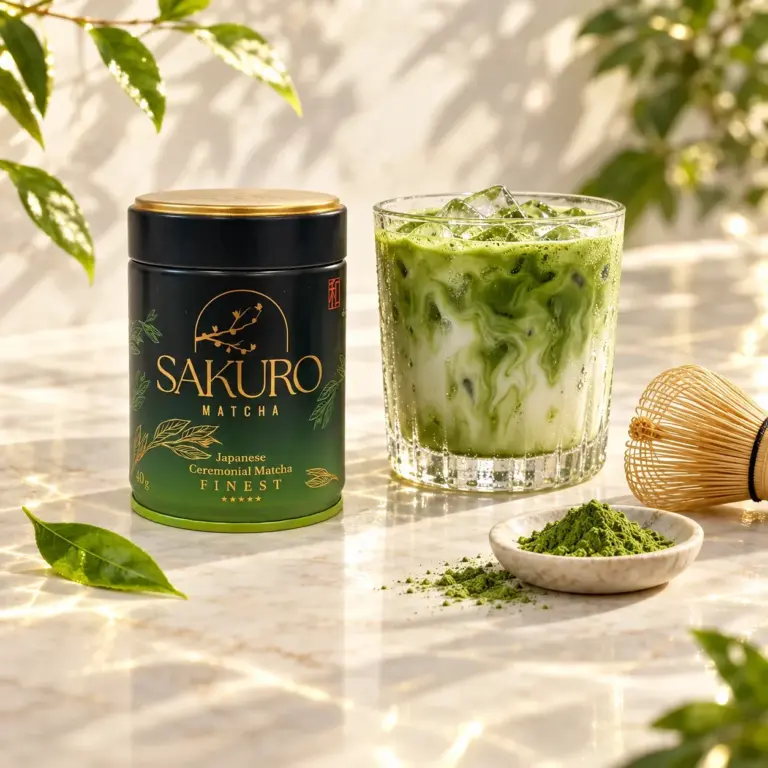
- Cost per 2 g serving: €1.20 from a 40 g tin of Sakuro Matcha Finest, €1.35 from Excellence, and about €0.22 if a café buys Finest by the kilo.
What matcha grades actually mean
A matcha grade describes how good the raw leaf was and how carefully it was processed, not a certified category. Japanese producers sort their own tea by harvest date, field, cultivar and cupping, then price it accordingly. The words “ceremonial” and “culinary” were added later, by importers selling to Europe and the United States.
This matters more than it sounds. Two tins both marked ceremonial can come from leaf picked six weeks apart and cost double one another, and both labels are entirely legal. If you have ever paid a premium for a tin that tasted like bitter spinach, that is how it happened.
So ignore the adjective and look at four things that genuinely change what ends up in your bowl.
The four things that actually move quality
- Harvest. The first flush of spring, ichibancha, gives the sweetest and most umami-rich leaf. Nibancha, picked roughly 40 days afterwards, is noticeably more bitter and suits milk drinks. Sanbancha and the last picking of the season are robust and astringent.
- Shading. Matcha fields are covered for about three to four weeks before picking. The plant answers with more chlorophyll, which is where the green comes from, and holds onto more amino acids, which is where the sweetness and the savoury note come from. Unshaded leaf is not matcha, whatever the bag says.
- Leaf selection and deveining. The young leaves at the tip of the shoot grind into something smooth. Stems and veins, which go into cheaper grades, grind into something gritty and bitter.
- Milling. A granite stone mill turns slowly enough to produce around 30–40 g an hour and gives a very fine, even powder. Faster industrial mills heat the leaf and leave uneven particles, which you feel on the tongue.
Matcha grades ranked, from the top of the bush down
Here is the ranking in one table. The tiers run from the tea that can survive being thickened into koicha, down to powder that only works when sugar and butter are doing the talking. Prices are what one 2 g serving costs, which is the only way to compare tins of different sizes honestly.
| Rank | Grade | Harvest | Colour | Taste plain | Best for |
|---|---|---|---|---|---|
| 1 | Top ceremonial (koicha-capable) | First flush, youngest leaves, often one cultivar | Deep jade, almost glowing | Thick, sweet, barely any astringency | Koicha and usucha, never milk |
| 2 | Everyday ceremonial — Sakuro Matcha Excellence | First flush, broader leaf selection | Vivid green | Sweet, savoury, a light astringent finish | A daily bowl of usucha; a treat latte |
| 3 | Premium / latte grade — Sakuro Matcha Finest | First flush, later picking or an early blend | Clear green, less electric | Fuller, more astringent, carries through milk | Lattes, iced matcha, daily drinking |
| 4 | Culinary grade | Second harvest, more stem | Olive green | Bitter and drying on its own | Cookies, sponge, ice cream |
| 5 | Cooking or ingredient powder | Late harvest, sometimes ground sencha | Khaki to yellow-brown | Flat, dusty, sharply bitter | Colour in mass baking, little else |
Tier one is the tea a Japanese tea house keeps for koicha, the thick preparation where 4 g of powder meets about 30 ml of water and you drink something closer to liquid velvet than to tea. Only leaf with very low astringency survives that concentration. It is expensive, it is usually sold in 20 or 30 g tins, and putting it in a latte is a waste of money.
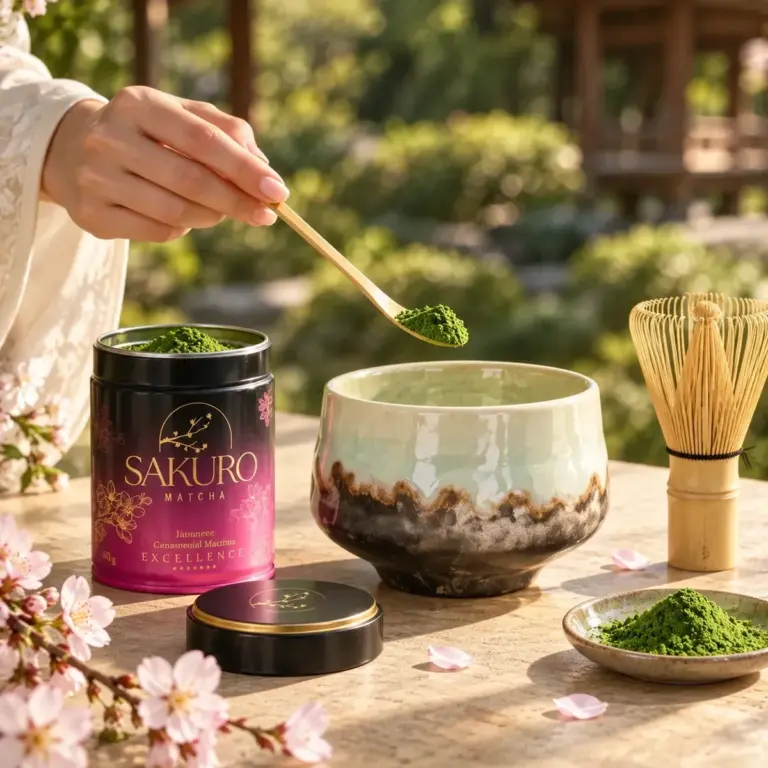
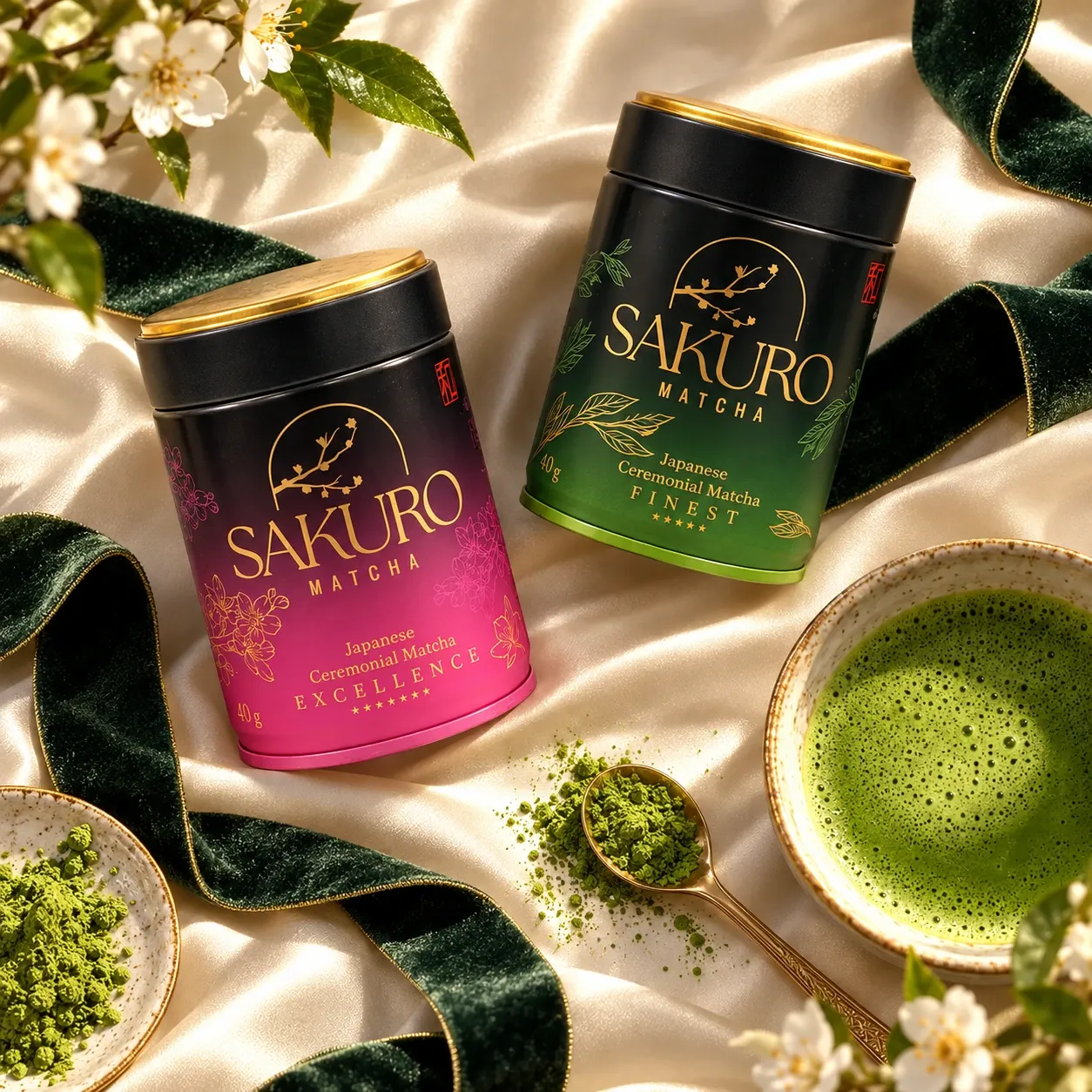
Tier two is where a good everyday ceremonial matcha sits, and that includes Sakuro Matcha Excellence (yerbador.com) — Japanese ceremonial matcha from Shizuoka, 40 g tin, about 20 servings of 2 g, €26.90. First-flush leaf, sweet enough to drink with nothing but water, with just enough backbone that it does not disappear into oat milk when you feel like a latte.
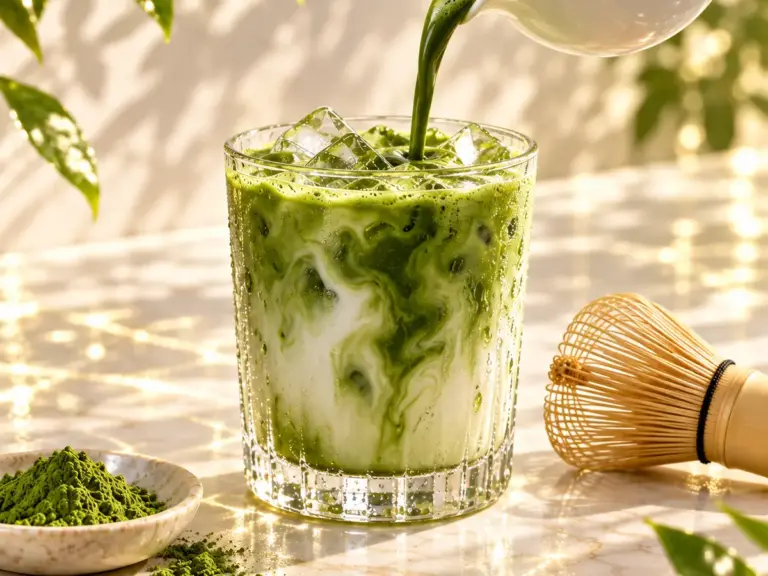
Tier three is the workhorse. Sakuro Matcha Finest (yerbador.com) — Japanese ceremonial matcha from Shizuoka, 40 g tin, about 20 servings, €23.90 — belongs here. It is a touch more astringent than Excellence, which sounds like a criticism and is not: astringency is exactly what stops matcha from vanishing under 200 ml of milk. This is the tin most people should be buying if their matcha mostly arrives with milk in it.
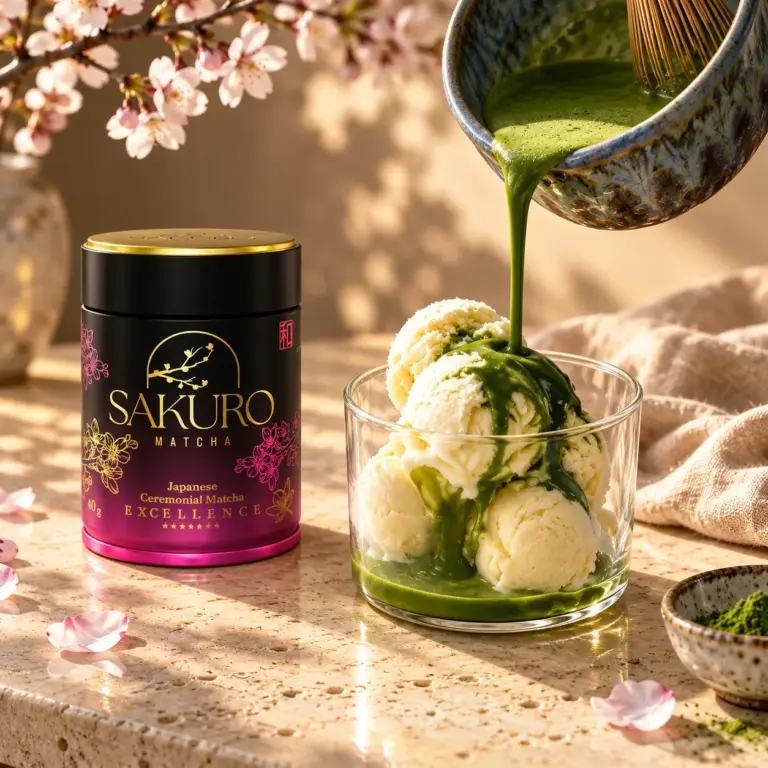
Tier four is culinary grade, and it is not a lesser product so much as a different one. Second-harvest leaf brings bitterness and a stronger green flavour, both of which survive an oven at 170 °C and a bar of white chocolate. Drinking it plain is unpleasant. Baking with tier-one matcha is worse, because the delicate sweetness you paid for burns off.
Tier five is where the trouble lives. Powder at this level is often late-harvest leaf, sometimes ground sencha that was never shaded at all, and occasionally a blend cut with other things. It goes into industrial baking for colour. If a 100 g pouch costs less than a decent lunch, this is what is inside.
Colour: what the powder should look like
Good matcha is a saturated jade green, bright enough that it looks slightly artificial next to a white dish. That colour comes from chlorophyll the plant produced while shaded, so a dull powder usually means a shorter shade period, a later harvest, more stem in the grind, or simply a tin that has been open too long.
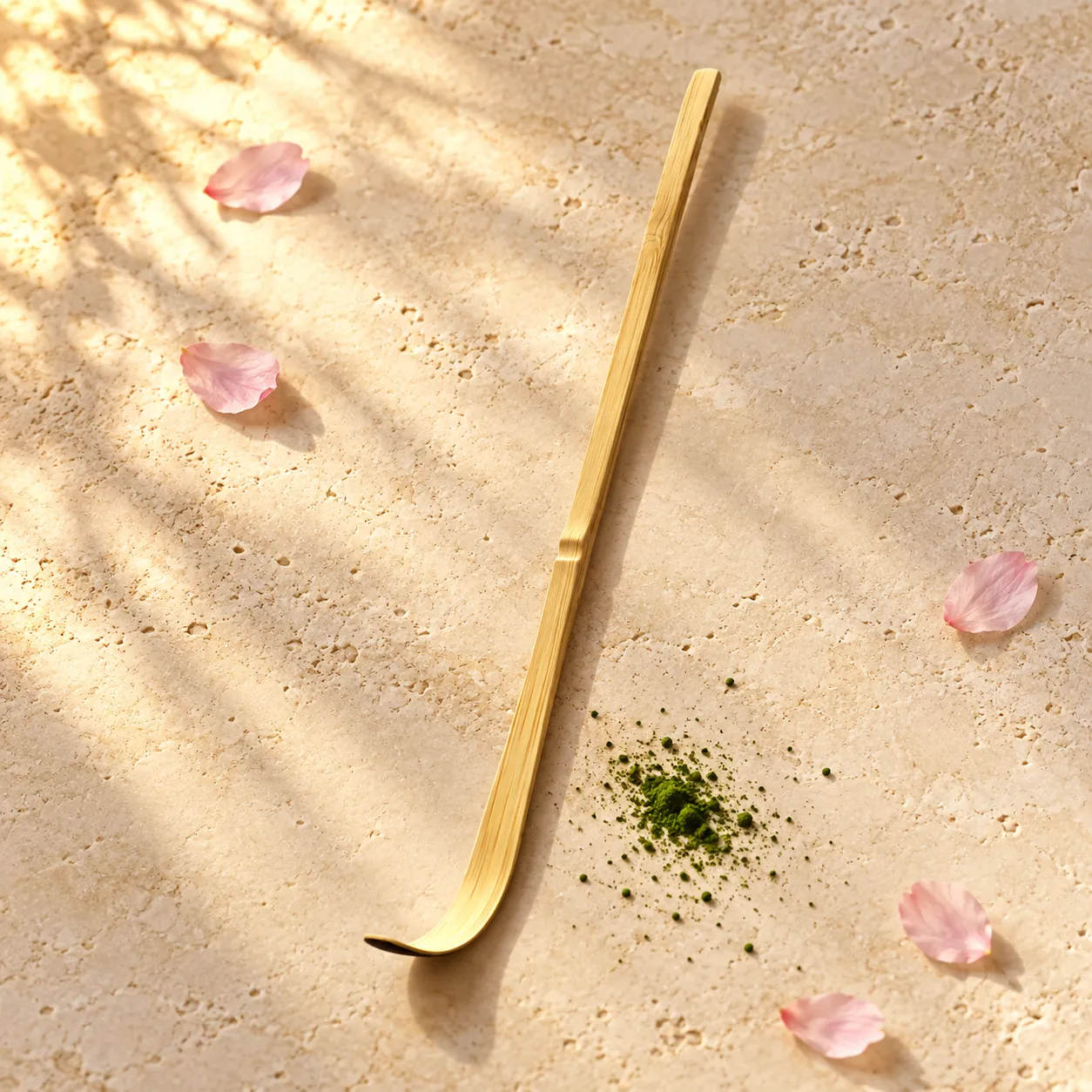
Do it properly: a pinch on a white plate, near a window, no kitchen bulbs. Daylight is honest about green in a way that warm indoor light is not. Then read it like this.
- Vivid jade, almost fluorescent. First-flush, well-shaded leaf. Tiers one to three.
- Olive, a bit muted. Later harvest or more stem and vein in the mill. Tier four, and fine for baking.
- Khaki, yellowish or faintly brown. Oxidised, old, or not really matcha. At this point the colour will not improve and neither will the taste.
Texture is the second tell. Rub a little between finger and thumb: good matcha feels like talc or eyeshadow and clings to your skin, because the particles are only a few microns across. Anything that feels like fine sand was milled too fast or contains too much stem, and it will sink in your bowl instead of suspending.
One honest caveat about colour: it fades. Matcha is a ground fresh leaf, and even an excellent tin left open on a sunny counter will go dull in a couple of months. Keep it closed, cool and away from light, and buy 40 g at a time rather than 200 g unless you drink it daily.
Taste: the bowl test that sorts the grades
The only reliable way to rank two matchas is to whisk both as usucha and drink them plain. Use 2 g of sifted powder, 70 ml of water at 70–80 °C, and about 15 seconds of brisk whisking with a bamboo chasen until the foam turns fine and even. Milk, syrup and ice all hide exactly the faults you are trying to find.
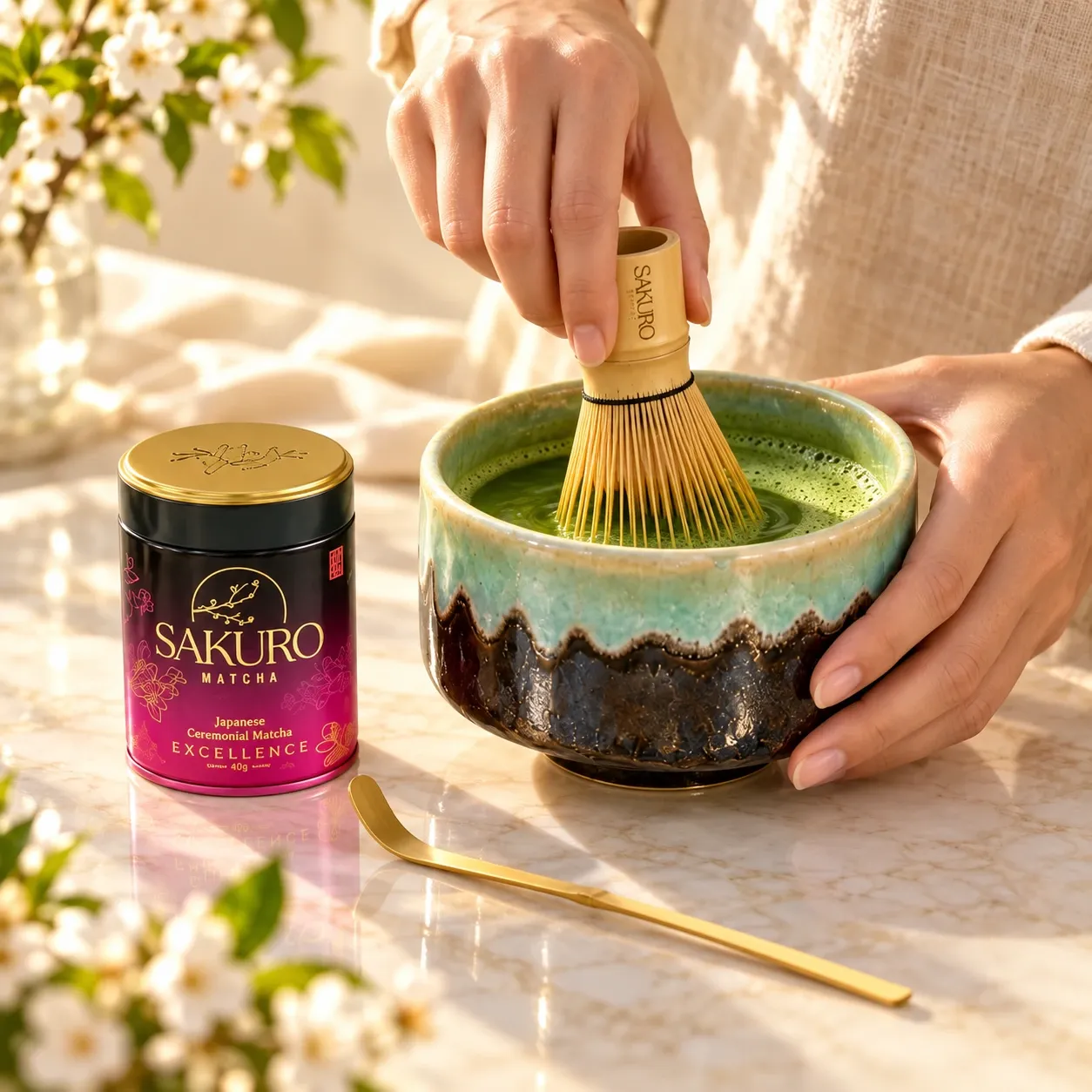
Water temperature is not a detail here. Boiling water scalds the powder and pushes bitterness forward in any grade, which is how a good tin gets blamed for a bad kettle. Boil, then wait two or three minutes, or pour into a second jug and back again.
What you are tasting for, in order:
- Sweetness at the front. A tier-one or tier-two matcha is noticeably sweet in the first second, before anything else arrives.
- Umami in the middle. The savoury, broth-like weight that shading produces. It is the hardest thing to fake and the first thing missing in cheap powder.
- Astringency at the back. A clean drying finish is normal and welcome. A rough, scratchy one that stays on your teeth is the mark of stems and late leaf.
- Bitterness. Some is fine. If bitterness is the first and last thing you notice, you are in tier four or five.
Taste them side by side on the same morning, from the same kettle, in the same bowl shape. Tasted a week apart, two matchas are impossible to compare honestly, and your own appetite that morning will decide the result.
Caffeine does not sort the grades, incidentally, and plenty of people assume it does. Matcha runs 18.9–44.4 mg of caffeine per gram across published samples (review in Molecules 2021;26(1):85), which puts a standard 2 g bowl near 63 mg, roughly an espresso. Shaded first-flush leaf does tend toward the upper half of that range, but the difference between tiers is smaller than the difference between a 1 g iced latte and a 4 g koicha. There is more on that in our breakdown of how much caffeine is in matcha. EFSA’s figures are 400 mg a day for healthy adults and 200 mg a day in pregnancy.
Price per cup: where the money actually goes
Price per tin tells you nothing, because tins come in 20, 30, 40 and 100 g. Price per 2 g serving is comparable, and it is also the number a café needs. A 40 g tin gives 20 servings of 2 g, so you can do the division on any shelf in any shop.
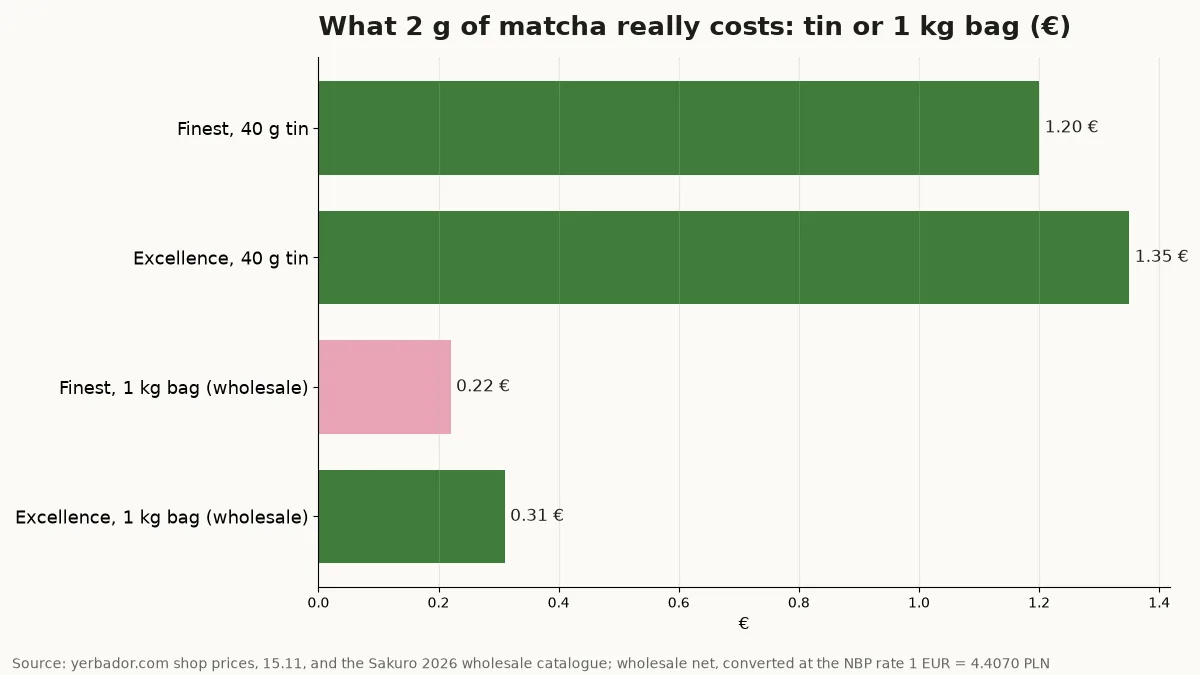
| Format | Price | Servings of 2 g | Cost per serving |
|---|---|---|---|
| Sakuro Matcha Finest, 40 g tin | €23.90 | 20 | €1.20 |
| Sakuro Matcha Excellence, 40 g tin | €26.90 | 20 | €1.35 |
| Finest 40 g + Excellence 40 g together | €46.90 | 40 | €1.17 |
| Finest, 1 kg bag (wholesale, net) | approx. €108.90 | 500 | approx. €0.22 |
| Excellence, 1 kg bag (wholesale, net) | approx. €156.60 | 500 | approx. €0.31 |
Shop prices come from yerbador.com on the day of publishing. The two kilo figures are converted from the Sakuro 2026 wholesale catalogue at the National Bank of Poland rate of 1 EUR = 4.4070 PLN, they are net of VAT, and they are an indication rather than an offer. A binding quote comes from Ewelina, whose details are further down.
Two things stand out in that table. First, the gap between tier two and tier three is 15 cents a cup, which is less than most people expect and considerably less than the gap in the tin price suggests. Second, the gap between retail and wholesale is enormous, which is why a café that sells more than a few matcha drinks a day should never be buying 40 g tins. The arithmetic for a café menu is laid out in our guide to the cost per cup of a matcha latte.
Worth knowing before you compare any of this to a price you saw last year: Japanese matcha has been short and getting dearer since 2024, and the squeeze has not finished. We went through what is actually happening in the matcha shortage and prices.
Which grade to buy for what
Match the grade to the drink, not to your budget or your self-image. The most common expensive mistake is buying a tier-one tin and then pouring oat milk into it, which hides the exact qualities you paid for.
- You drink it plain, in a bowl, most mornings. Go to tier two. Sakuro Matcha Excellence 40 g (€26.90) is the one to pick up. Sweetness and umami are what you are paying for, and nothing is covering them up.
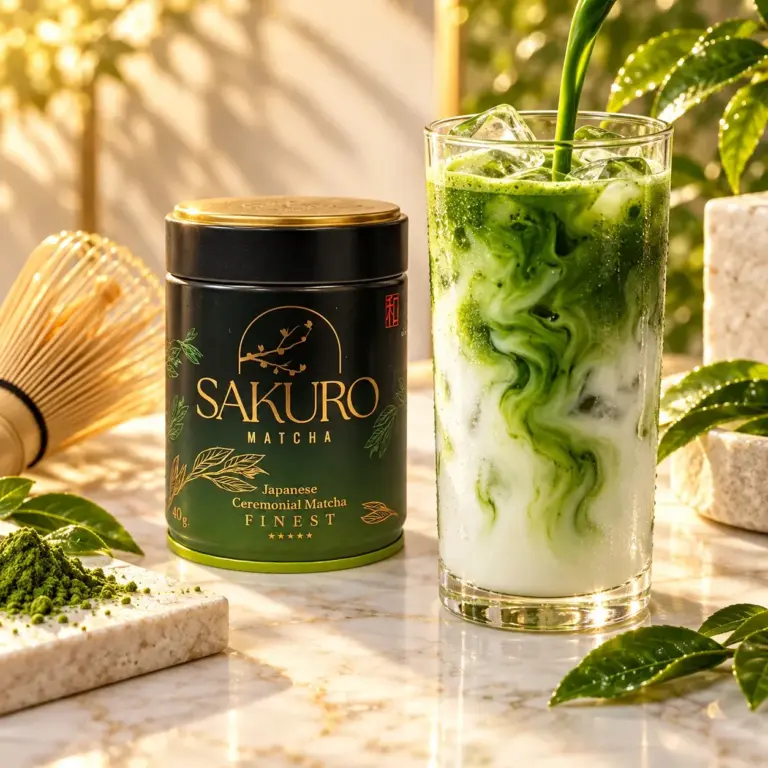
- Your matcha usually has milk in it. Tier three. Sakuro Matcha Finest 40 g (€23.90) holds its own through 200 ml of oat milk and costs less per cup.
- You are not sure which you prefer. Buy both and taste them against each other. The Finest 40 g + Excellence 40 g set is €46.90, works out at €1.17 a serving, and settles the question in one morning.
- You are baking. Use the cheapest grade that still tastes of tea. Paying tier-two money for cookie dough is money burnt off in the oven at 170 °C.
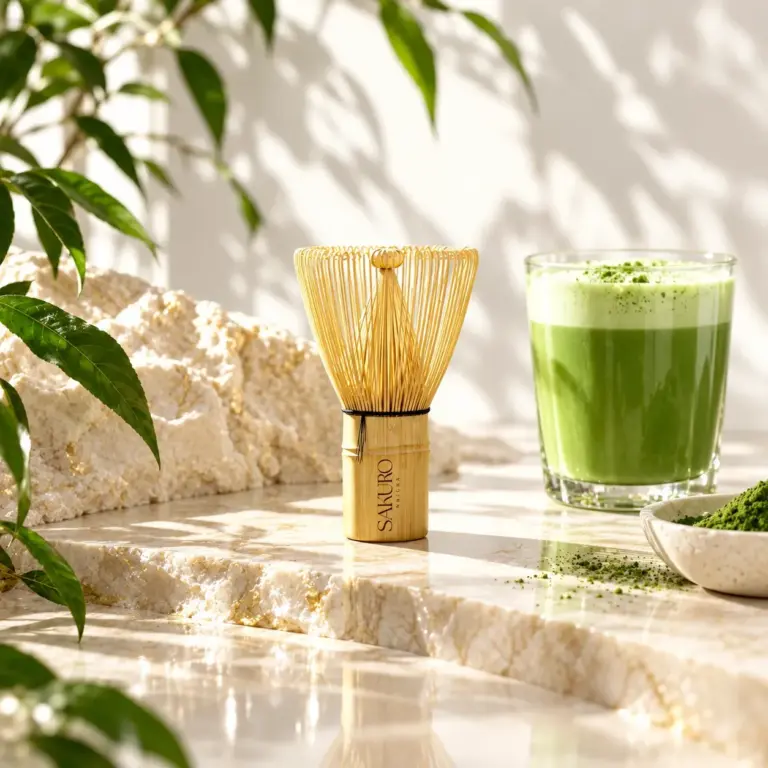
- You have no whisk yet. Get one before you upgrade the powder. A bamboo chasen is €14.90 and will do more for your bowl than moving up a tier. A spoon cannot break up matcha clumps; a hundred bamboo tines can.
If you want the long-form version of the two-way comparison rather than a five-tier ranking, we wrote that one separately: ceremonial vs culinary matcha.
Cafés: how many grades to put on the menu
Most cafés need one grade, not two. A single tier-three matcha bought by the kilo covers hot lattes, iced matcha and the occasional bowl, keeps the bar simple, and costs around €0.22 per 2 g serving. A second, higher grade only earns its shelf space if you actually sell plain usucha, which in practice means a tea-focused room rather than a busy coffee bar.
The numbers for a 1 kg bag: Finest works out at roughly €108.90 per kilo net, around €0.22 per 2 g serving, and Excellence at roughly €156.60 per kilo net, around €0.31 per serving. Both are converted from the Sakuro 2026 catalogue at the NBP rate of 1 EUR = 4.4070 PLN and are indicative. Orders are placed in kilograms, with 3 kg taking 5 % off and 5 kg taking 10 %. Shipping goes from Poland, inside the EU.
One practical note on storage, since a kilo is a different animal from a tin: decant what the bar needs for a week into a small sealed container and keep the rest closed, cool and dark. Matcha dulls with air and light, and an open kilo bag behind a hot espresso machine will lose colour long before you reach the bottom of it.
For prices, samples and a binding quote, write to Ewelina at [email protected] or call +48 515 025 329. She handles wholesale for yerbador.com and will tell you what fits your volume.
Five mistakes people make when choosing a grade
- Trusting the word on the tin. Nobody polices it. Look for the harvest, the prefecture and a date instead.
- Judging the powder through milk. A latte makes a tier-four matcha taste acceptable and a tier-one matcha taste ordinary. Judge in water.
- Using boiling water. It makes every grade taste bitter, then the tin takes the blame. Let the kettle sit for two or three minutes.
- Buying 100 g because it is better value. It is better value only if you finish it in six to eight weeks. Otherwise you are paying for colour and aroma that fade on your shelf.
- Skipping the sieve. Matcha clumps in the tin. A small sieve removes most of what people mistake for poor quality, and costs nothing to use.
FAQ
Is ceremonial grade matcha actually better than culinary?
Usually yes, but the words themselves guarantee nothing, because no organisation regulates them. Tins labelled ceremonial are generally made from first-flush leaf and taste sweeter; tins labelled culinary are generally later harvest and taste more bitter. Check the harvest and the colour, not the adjective.
What grade of matcha is best for lattes?
A good mid-tier ceremonial matcha, like Sakuro Matcha Finest. It has enough astringency and green flavour to come through 200 ml of milk, which a very delicate top-tier matcha does not, and it costs about €1.20 a serving from a 40 g tin instead of considerably more.
Why is my matcha brown or yellowish?
Either it is old and has oxidised, or it was never high-grade to begin with. Matcha loses colour with exposure to air, light and heat, so a tin opened months ago will dull even if it started bright. Khaki powder straight out of a fresh tin points to late-harvest leaf or ground sencha.
How many cups do I get from a 40 g tin?
Twenty, at the standard 2 g per serving. A lighter iced latte at 1 g gives you 40, and koicha at 4 g gives you 10. At €23.90 for a 40 g tin of Finest, the standard bowl costs €1.20.
Can I use ceremonial matcha for baking?
You can, but you will not taste the difference you paid for. Oven heat and sugar flatten the sweetness and umami that make a high grade worth buying. Use a culinary grade for cookies, sponge and ice cream, and keep the good tin for the bowl.
Does a higher grade mean more caffeine?
Only slightly, and not reliably. Published samples put matcha at 18.9–44.4 mg of caffeine per gram, so your dose matters far more than your grade: 2 g lands near 63 mg whatever tier it came from. EFSA considers 400 mg a day fine for healthy adults, and 200 mg in pregnancy.
If you want to settle the grade question for yourself rather than take anyone’s ranking on trust, do the two-bowl test this weekend: 2 g of each, 70 ml of water at 75 °C, whisked the same way, drunk plain within a minute of each other. You will know within two sips which tier you actually want to keep buying.
Discover our TOP products!
Your dream figure
Discover new flavors
Yerba mate with tea
Accessories
Superfoods


Certified raw honeys from Poland

Check the current price
free shipping
Up to 90 days
free returns
24 H
shipping