
Strawberry matcha latte: the iced recipe and four fruit variations
2026-11-13
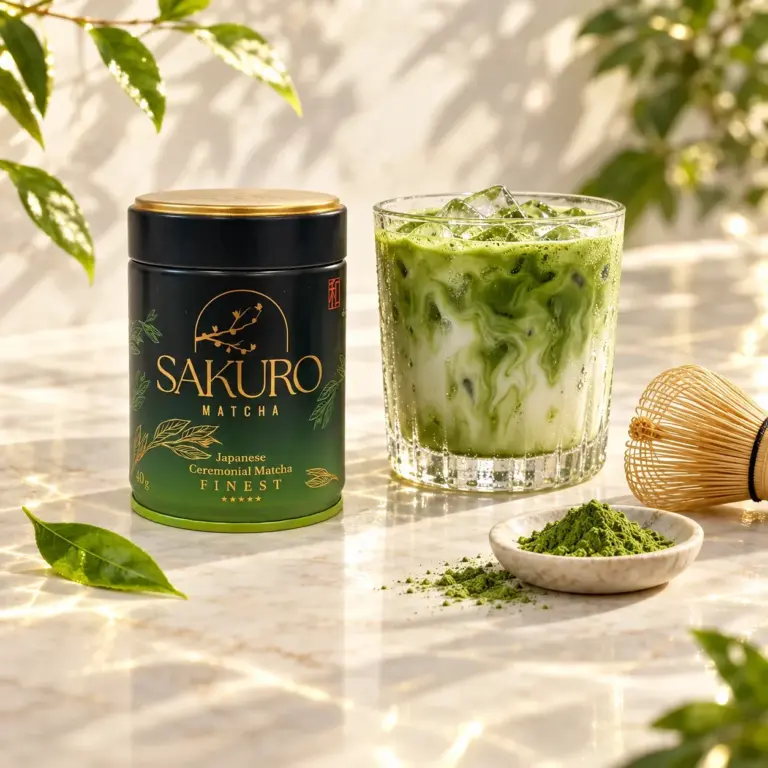
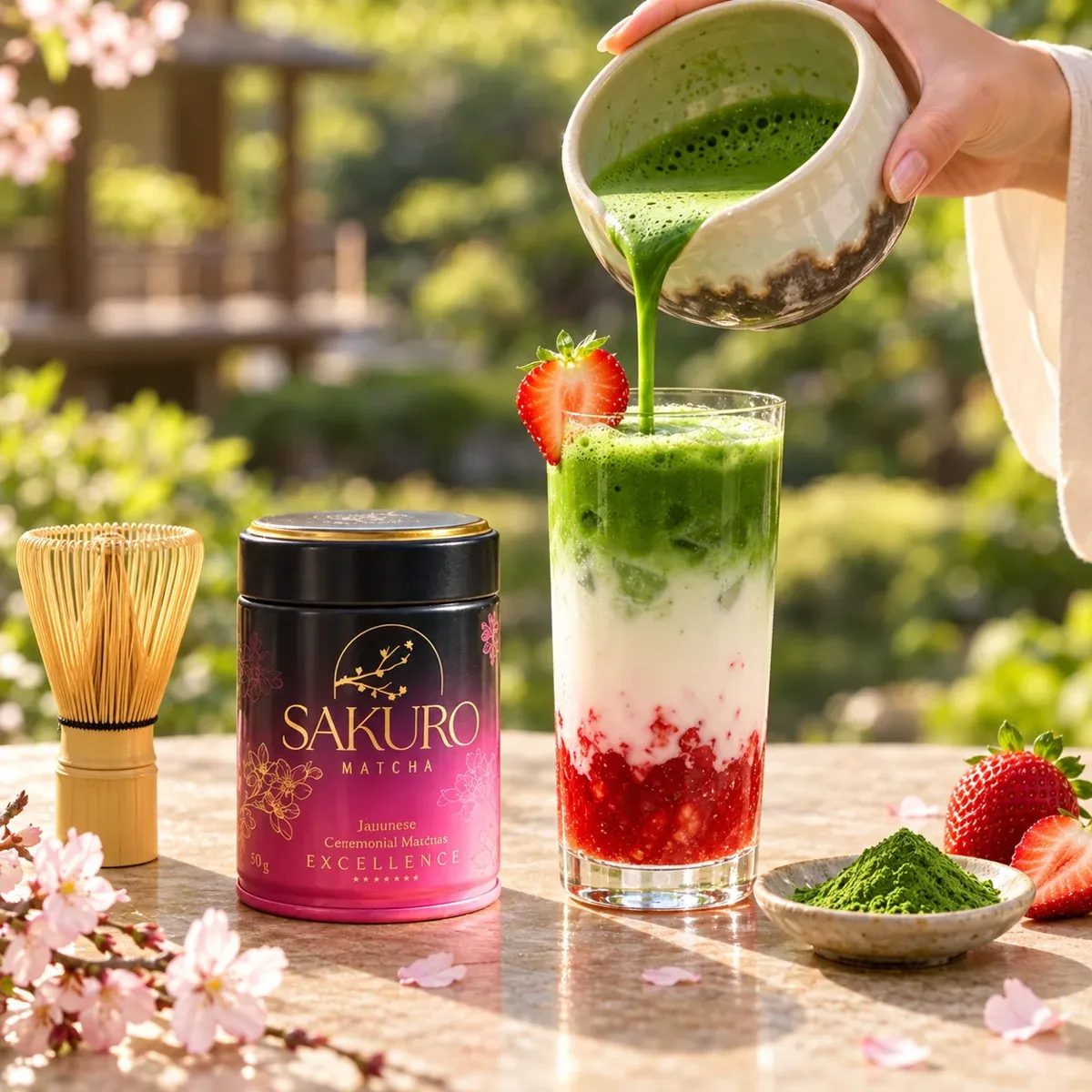
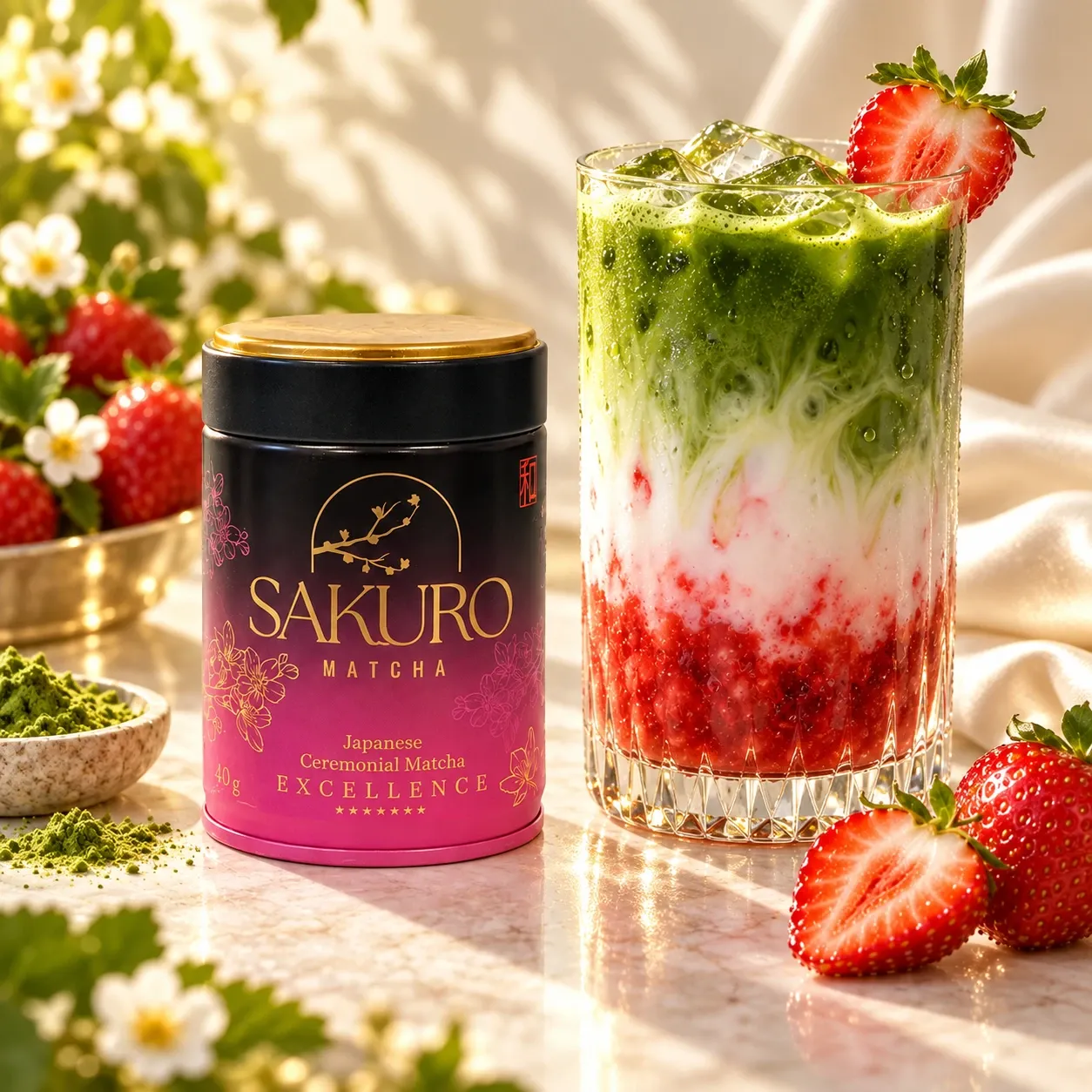
Three layers, and the order is the whole trick. Crushed strawberries go in first, because the pulp and the sugar make them the heaviest thing in the glass. Cold milk next. The matcha shot last, poured thin so it sits on the white for a minute before everything turns sage green. A strawberry matcha latte is not a difficult drink. It only collapses if you build it in the wrong order, or if you tip the powder straight into cold milk.
Below: the recipe in grams and millilitres, the fruit base done three ways, four other fruits that each need different handling, and what a glass costs to make at home.
Why strawberries work against matcha
Matcha tastes green in a way that is closer to spinach and nori than to black tea, with a savoury depth that comes from shade-grown leaf and a dry, astringent finish. That finish is the part most people want to soften. Milk does it by coating the tongue. Fruit does it differently: sugar covers the astringency, acid cuts the fat, and the drink ends up lighter than a plain matcha latte rather than heavier.
Strawberries fit best because they are mild. 100 g carries under 5 g of sugar and just enough acid to be noticeable without fighting the tea. Mango brings nearly three times the sugar and sits on top of the matcha instead of beside it — still good, but a different drink.
One practical warning. Keep the lemon juice in the fruit, never in the milk. Acid stirred straight into cold plant milk — soy especially — curdles it into grains that no amount of stirring will fix. Mixed into the strawberries first, buffered by pulp and sugar, it never reaches the milk in a concentrated form.
Iced strawberry matcha latte — the recipe
Serves 1 · 6 minutes · a 350–400 ml glass
Strawberry base: 100 g strawberries (fresh or thawed) · 5 g sugar or 5 ml maple syrup, optional · 5 ml lemon juice.
Matcha shot: 2 g matcha · 40 ml water at 70–80 °C.
To finish: 150 ml cold milk or oat drink · 120–150 g ice.
- Hull the strawberries and chop them roughly. Mash with a fork together with the sugar and the lemon juice, about 30 seconds, then leave them five minutes. The sugar pulls out juice and you end up with syrup that still has pieces in it. Do not blend — a smooth purée slides straight into the milk and the layers are gone.
- Spoon the mash into the bottom of the glass and push some of it up the sides with the back of the spoon. That is the streaked look.
- Sift the 2 g of matcha into a bowl. Add about 10 ml of the hot water and work it into a smooth paste for ten seconds, then add the remaining 30 ml and whisk fast for 15–20 seconds, until fine foam covers the surface.
- Fill the glass with ice to roughly two thirds.
- Pour in the cold milk, leaving three centimetres at the top.
- Pour the matcha over the ice, slowly. The cubes break the stream and keep the green sitting on the white.
- Stir before you drink it. The layers are for looking at.
Two details decide whether this works. The water has to be warm: matcha will not dissolve in cold milk, and that one mistake accounts for most of the green specks floating in homemade versions. And the powder has to be sifted, because it cakes in the tin the way cocoa does. A fine tea strainer and the back of a spoon take ten seconds.
The strawberry base, three ways
Fresh and mashed is the summer version and takes two minutes. Ripe fruit in season often needs no sugar at all, so taste one before you add any.
A quick compote is better from November to May, when the strawberries in the shop are pale and firm. 150 g fruit, 15 g sugar, 10 ml water, four minutes in a small pan over medium heat, stirring, until the juice turns syrupy. That makes three servings and keeps four days in a jar in the fridge. Cool it completely before it goes anywhere near milk.
Frozen is the cheap option out of season and genuinely good here, because freezing ruptures the cells and the fruit gives up more juice than fresh. Thaw it first — 100 g takes about 20 minutes on the counter — then mash and cut the sugar back. Mashing it while still frozen gives you cold gravel.
Four other fruits, and how each one behaves
Same method, same 80 g of fruit, different handling. Raspberries have seeds. Blueberry skins stay whole unless you heat them. Mango is fibrous enough to need a blender. The figures below are for raw fruit, from USDA FoodData Central.
| Fruit (80 g per glass) | kcal / 100 g | Sugars / 100 g | How to prepare it | Against matcha |
|---|---|---|---|---|
| Strawberry | 32 | 4.9 g | Mash with a fork, 5 ml lemon, five minutes to macerate | Acid and perfume; the one everybody orders |
| Raspberry | 52 | 4.4 g | Mash, then push half through a sieve to lose the seeds | The sharpest of the five; wants 5 g sugar |
| Peach | 39 | 8.4 g | Dice small, 5 ml honey, skip the lemon | Mildest; the one to make with dairy milk |
| Blueberry | 57 | 10.0 g | Two minutes in a pan with 5 ml water, until the skins burst | Low acid, deep colour; purple against green |
| Mango | 60 | 13.7 g | Blend to a purée; 5 ml lime instead of lemon | Sweetest; very good with a coconut drink |
Raspberry is the surprise on this list. It reads as the sweetest of the lot and actually carries the least sugar per 100 g — the sharpness is what your tongue registers, not the sugar. Blueberry is the opposite: twice the sugar, almost no acid, and it needs a squeeze of lemon to stop the glass tasting flat.
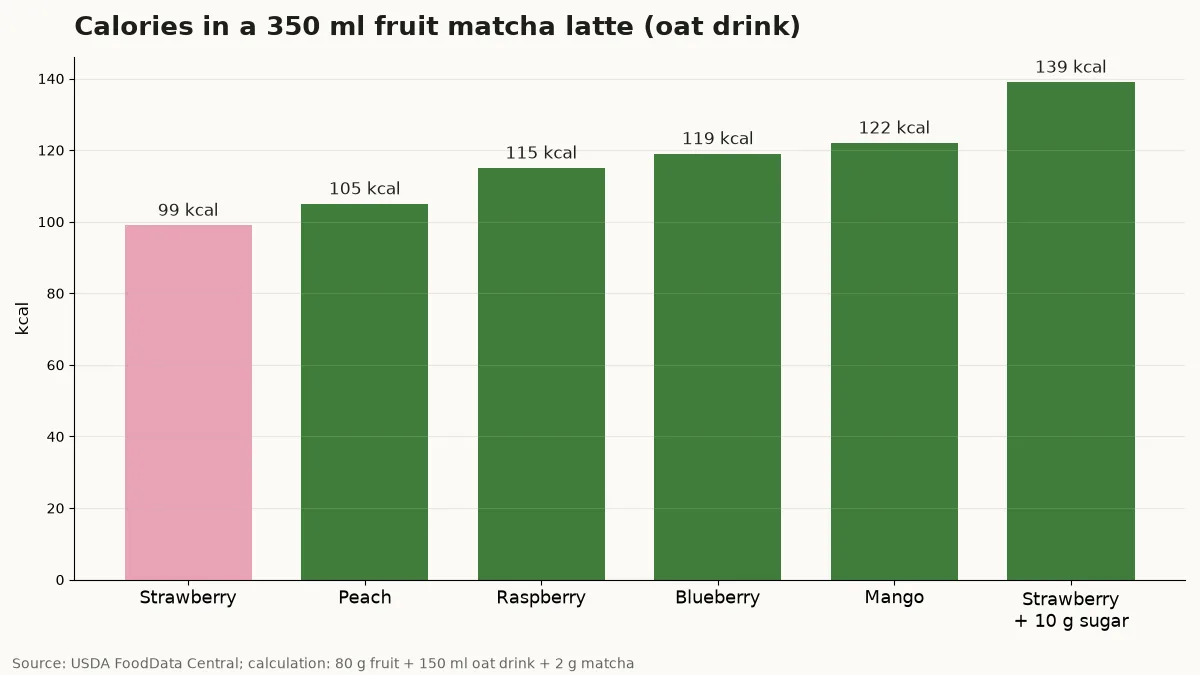
The whole spread between the lightest and the heaviest fruit is about 23 kcal a glass. Two teaspoons of sugar add 40. If you are counting anything, count the sweetener rather than the fruit.
Which matcha, and what a glass costs
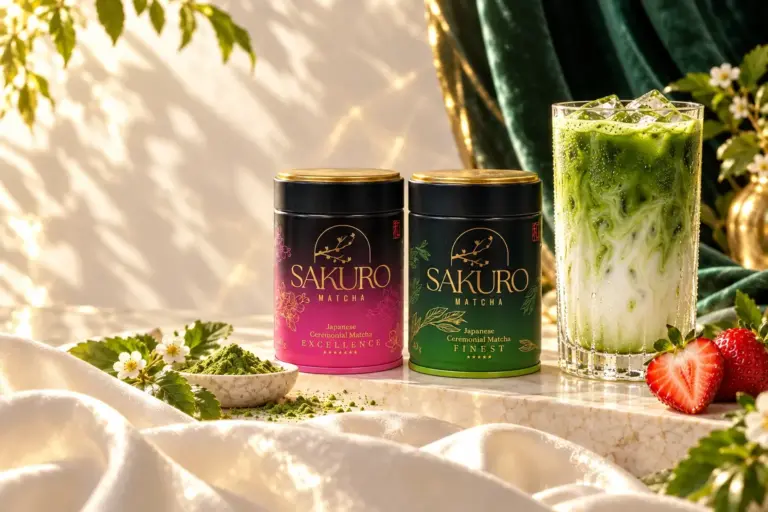
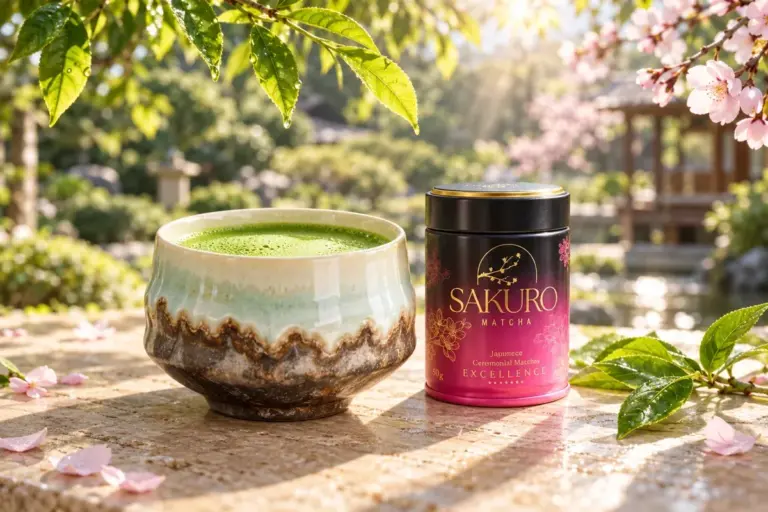
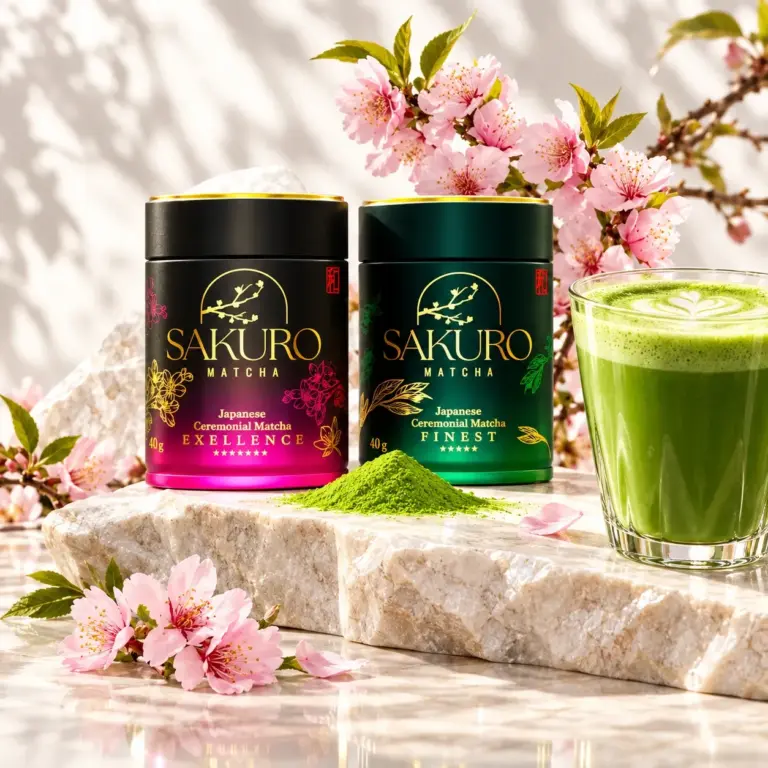
We import Japanese ceremonial matcha from Shizuoka, sell it under the Sakuro name and ship from EU stock. Prices below are from yerbador.com on 13 November 2026.
| Product | Price | Servings of 2 g | Matcha per glass |
|---|---|---|---|
| Sakuro Matcha Finest, 40 g tin | €23.90 | 20 | €1.20 |
| Sakuro Matcha Excellence, 40 g tin | €26.90 | 20 | €1.35 |
| Finest 40 g + Excellence 40 g | €46.90 | 40 | €1.17 |
| Chasen, bamboo matcha whisk | €14.90 | — | — |
Finest is the tin for this drink. It has the body to come through fruit, milk and ice, and it holds its colour in the glass. Excellence is finer and sweeter, and that detail is wasted under strawberries — keep it for matcha drunk plain from a bowl. The rest of the cost is fruit and milk, which depends entirely on the season.
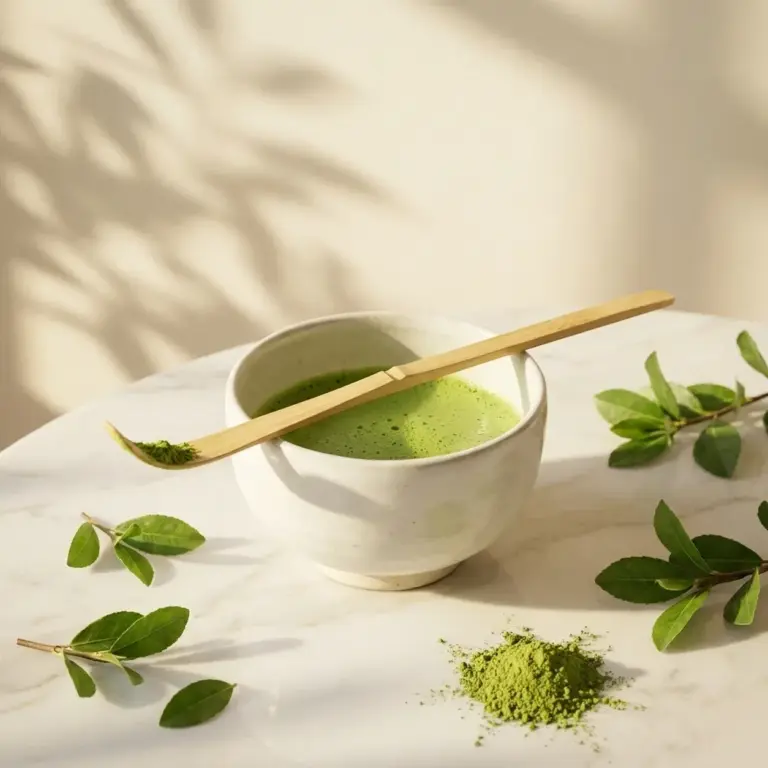
The chasen is the one tool that changes the result. Its eighty-odd tines break up clumps a teaspoon only pushes around the bowl. An electric frother does the same job; a jar with a tight lid and twenty seconds of shaking is a decent substitute; a teaspoon on its own is not.
On caffeine: 2 g of matcha carries roughly 40–90 mg depending on harvest and grade, around 60 mg in the middle of that range. EFSA considers intakes up to 400 mg a day from all sources unproblematic for healthy adults, and up to 200 mg a day during pregnancy and breastfeeding. Count the glass alongside your coffee, not instead of it.
Running a café, a bakery or an office kitchen and going through more than a tin a week? Matcha is sold by the kilogram too — Finest works out at roughly €109 per kg net, about €0.22 for a 2 g serving (our price list converted at the NBP rate of 4.4070 PLN/EUR on 13 November 2026; indicative conversion, the binding quote comes from us). Wholesale enquiries go to Ewelina: [email protected], +48 515 025 329.
Questions people ask about strawberry matcha latte
Can I use frozen strawberries?
Yes, and out of season they are usually the better choice. Thaw them first, then mash. Frozen fruit releases more juice than fresh once it has thawed, so start with half the sugar and taste. Never mash it while it is still frozen.
Why is my matcha full of green specks?
Almost always one of two things: the powder went into cold liquid, or it was never sifted. Matcha needs water at 70–80 °C to dissolve, and it needs to be broken up first because it compacts in the tin. Make the shot in a bowl, then add it to the cold glass.
Do I have to add sugar?
No. Ripe strawberries in June need nothing. Pale ones in January need about 5 g, or a splash of maple syrup. Taste the fruit before you decide — that is the only reliable guide, and sugar is the biggest single lever on the calorie count of this drink.
How long do the layers last?
About a minute, which is long enough for a photograph and then it is a drink. If you want them to hold longer, make the strawberry base thicker (the compote version) and pour the matcha over the back of a spoon.
Can I make it ahead for the morning?
Make the fruit base ahead — it keeps four days in the fridge. Whisk the matcha fresh. A matcha shot kept overnight loses its foam and turns olive, and the taste goes with the colour.
Discover our TOP products!



Your dream figure


Discover new flavors


Yerba mate with tea


Accessories


Superfoods



Certified raw honeys from Poland

Check the current price
free shipping
Up to 90 days
free returns
24 H
shipping