
Buckwheat Honey – Properties, Composition and How to Recognise It
2026-09-09
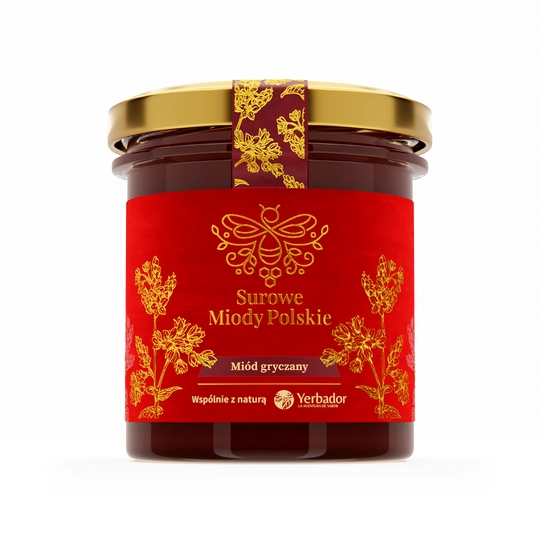
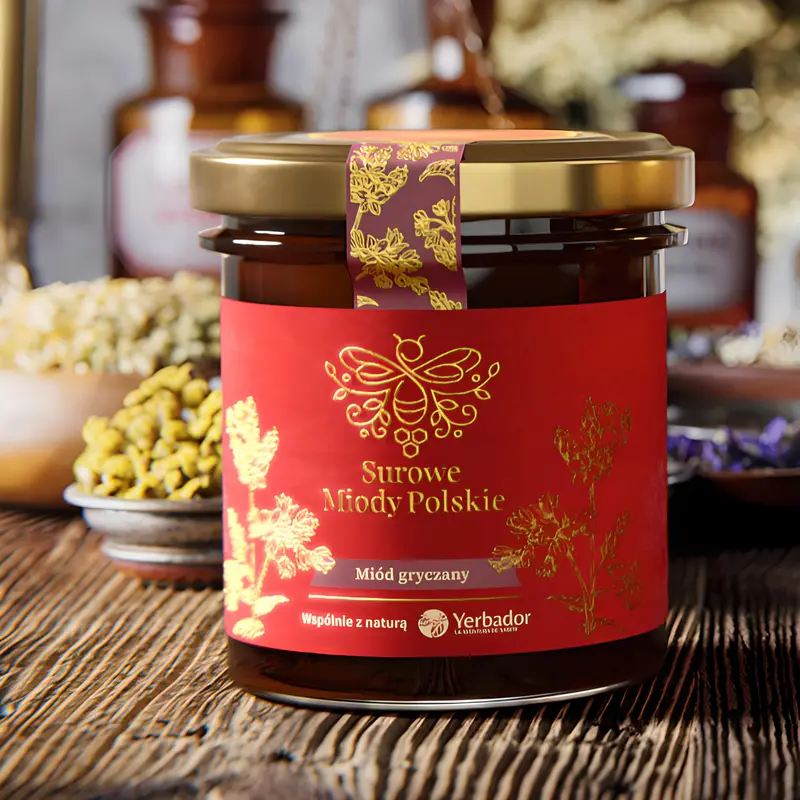
You’ll recognise buckwheat honey by its colour right away: it’s the darkest of Polish honeys, almost black in the jar and amber when held up to the light. Its flavour is just as distinctive, slightly sharp at the back of the throat, completely different from the delicate acacia or multiflower honey. In this article, we take a closer look at Raw Buckwheat Honey from Yerbador: where its colour and flavour come from, what really sets buckwheat honey apart from other varieties, and how to use it so you don’t waste its properties.
Buckwheat honey – where it comes from
Common buckwheat, Fagopyrum esculentum in Latin, blooms with small white flowers that look unassuming but give off an intense, sweetish scent noticeable from afar. It’s this strong aroma that attracts bees, even though the buckwheat flower itself isn’t much to look at. The plant originates from Asia, but has been cultivated in Poland for centuries, mainly for groats, so buckwheat fields in bloom are a natural, well-known nectar source for beekeepers.
Yerbador’s Raw Buckwheat Honey comes from apiaries in the West Pomeranian Voivodeship, surrounded by fields and wild nature, where bees have access to nectar from buckwheat, heather, goldenrod and linden depending on the time of season. The honey is made without heat treatment and without dilution, in small, artisanal batches.
What sets buckwheat honey apart from other honeys
The dark color is the most recognizable feature of buckwheat honey, but there’s a specific composition behind it too. Dark honeys, including buckwheat, belong to varieties with a higher content of polyphenolic compounds and flavonoids compared to light floral honeys such as acacia, as confirmed by studies on Polish varietal honeys. It’s precisely these compounds that are responsible for the antioxidant effect, meaning the neutralization of free radicals in the body. Buckwheat honey is also often mentioned as one of the richer sources of iron among honeys, although compared to meat products or legumes it’s still a small share of the daily requirement.
The taste is equally distinctive: intense, spicy, with a slightly tingling, almost malty-caramel note in the aftertaste. It’s a variety that sparks extreme opinions — some love its power, others prefer milder wildflower or linden honeys.
What does “raw” mean in Yerbador Raw Polish Honeys
Raw honey is honey that hasn’t undergone pasteurization or high-temperature heating, so it retains bee enzymes, B vitamins and vitamin C, as well as minerals: magnesium, potassium, iron and calcium. Honeys sold in bulk in supermarkets are usually heated so they stay liquid on the shelf longer, but this process destroys some of the enzymes and volatile aromatic compounds. Yerbador honeys are undiluted and made by hand, in limited batches, without added sugar or syrups.
Who buckwheat honey works especially well for
Buckwheat honey most often ends up in the baskets of people looking for an intense flavor, not just sweetness, and those who pay attention to iron in their diet, for example on a plant-based diet low in meat. It also works well in autumn and winter, when honey is reached for more often than in summer, for instance in warm — but not hot — tea with lemon. However, it’s a dietary supplement, not a medicine, so treat it as support for your daily diet, not a way to treat a cold or anemia.
Important safety notice: no honey, including buckwheat honey, should be given to children under 1 year of age. Honey may contain spores of Clostridium botulinum bacteria, which are harmless to older children and adults, but can cause infant botulism in babies. This is a standard pediatric recommendation, regardless of the brand or quality of the honey.
How to use buckwheat honey every day
The simplest way is a teaspoon of honey in the morning, straight from the jar or dissolved in a bit of warm, not hot, water. Temperatures above 40 degrees destroy bee enzymes, so adding honey to boiling water defeats the purpose if you want to preserve its properties — it’s better to stir it into tea once it has cooled down a bit. Buckwheat honey also works well on a sandwich, in natural yogurt with fruit, or as an addition to oatmeal. Thanks to its intense, spicy flavor, it also pairs well with savory dishes: it works great in marinades for game, duck, or roasted pork neck, where its strength doesn’t get lost among the other ingredients.
How much does this cost per serving
A 400 g pack of Raw Buckwheat Honey gives you nearly 57 servings at a typical teaspoon portion of about 7 g, so the cost per serving is very modest. That’s less than many an addition to your morning coffee, with the difference that buckwheat honey, instead of dissolving without a trace, leaves behind a distinct, memorable taste.
Products worth starting with
Two options from our Raw Polish Honeys line, depending on whether you’re looking for a single everyday jar or a gift.
1. Raw Buckwheat Honey – 400 g
The base of this article, one type of honey in a full package, without heat treatment and without added sugar.
Check the product: Raw Buckwheat Honey – 400 g
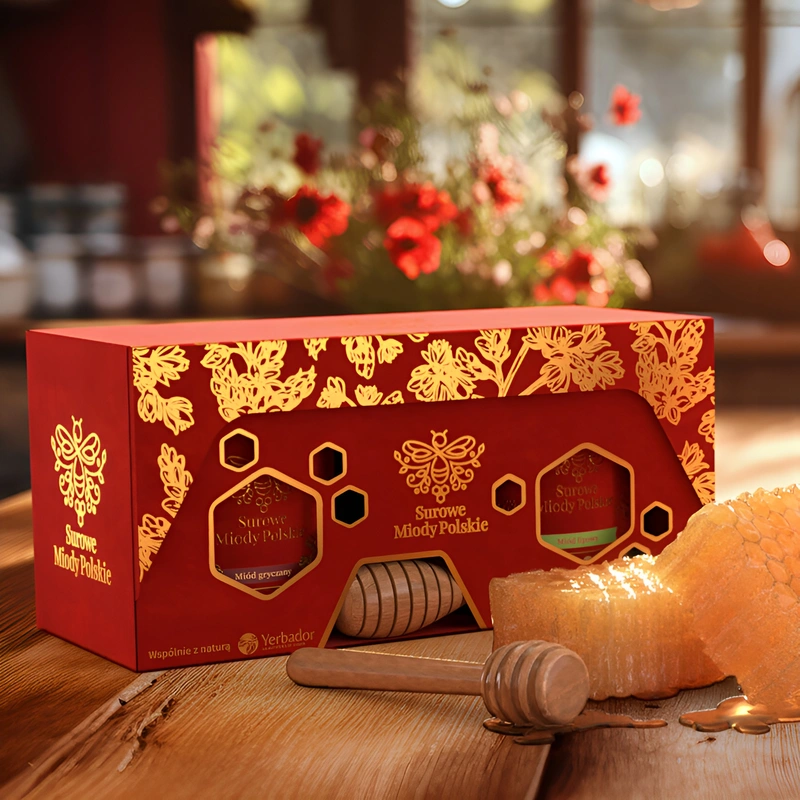
2. Raw Buckwheat Honey Gift Set
Two jars of buckwheat honey together with a beech wood honey scoop, a ready-made gift with no extra wrapping needed.
Check the product: Raw Buckwheat Honey Gift Set
Frequently asked questions about buckwheat honey
Can buckwheat honey be given to children?
Only after the child turns 1 year old. In infants, honey, regardless of variety, carries a risk of infant botulism due to the possible presence of Clostridium botulinum spores.
Does buckwheat honey crystallize?
Yes, and it’s a natural process, not a sign of spoilage. Raw, undiluted honey crystallizes faster than honeys heated during mass production. If you want to restore a liquid consistency, place the jar in a bowl of warm, not hot, water below 40 degrees.
How can you tell real raw buckwheat honey from a fake?
Real raw buckwheat honey has a dark, almost black color, an intense, spicy aroma, and crystallizes over time. Honeys diluted with glucose-fructose syrup often stay liquid all year round and have a weaker, more one-dimensional flavor.
Can you cook with buckwheat honey?
You can, but high temperatures destroy some of the enzymes and vitamins. If you want to preserve its properties, add honey towards the end of cooking or to dishes and drinks that have already cooled down.
How should buckwheat honey be stored?
At room temperature, in a tightly closed jar, away from sunlight. A fridge isn’t necessary, and it even speeds up crystallization, so it’s better to keep the honey in a regular kitchen cabinet.
Buckwheat honey isn’t a honey for every occasion, since its bold flavor can overpower more delicate dishes. But wherever a distinct, spicy accent is needed, whether in tea on a winter evening or in a marinade for roast meat, it’s hard to find a better choice among Polish honeys.
You can find more about the plant itself and its cultivation in the article on common buckwheat on Wikipedia.
Discover our TOP products!




Your dream figure




Discover new flavors






Yerba mate with tea




Accessories





Superfoods







Certified raw honeys from Poland
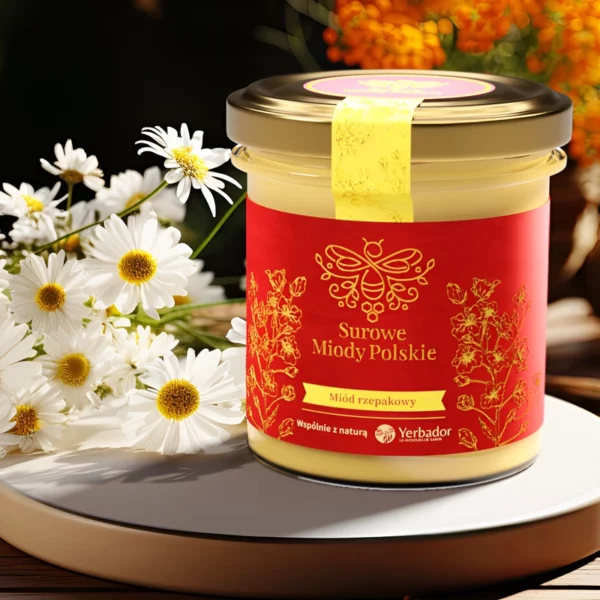
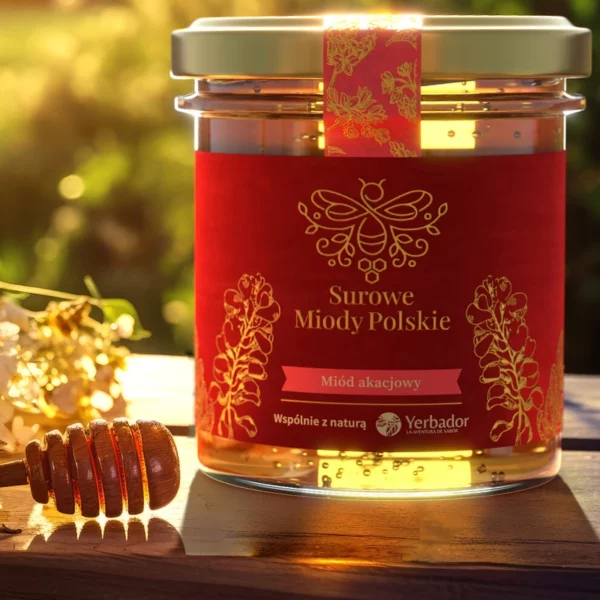

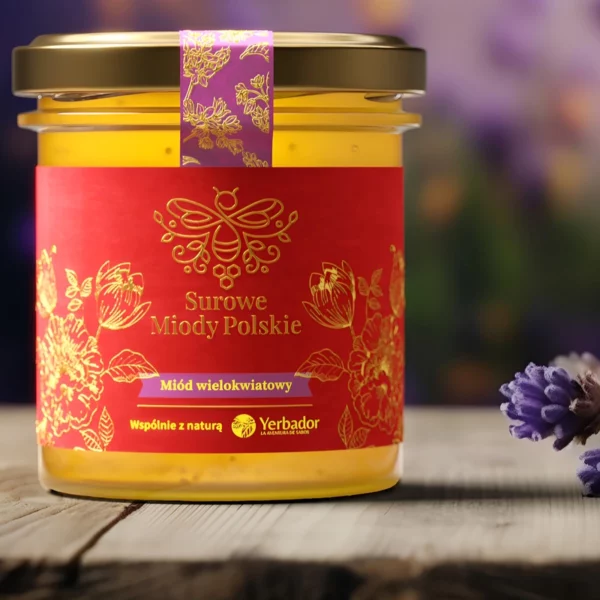

Check the current price
free shipping
Up to 90 days
free returns
24 H
shipping